Saint Maud

Saint Maud is one of those films that will confound you and disturb you while you’re watching, and then haunt you before you even have time to get cocky enough to congratulate yourself for surviving. It is not the kind of horror film that’s going to frighten you. There are no cheap jump scares, no triggering gore. It is simply chilling.

Maud (Morfydd Clark) is a fervently if newly pious woman whose belief bleeds into her work as a hospice nurse. New client Amanda (Jessica Ehle) is a former dancer currently dying of cancer. For the most part they get along but visits from Amanda’s lover Carol have Maud fearing for Amanda’s very soul (which is a matter of some urgency, if it’s not too crude to say). Maud has only recently turned devout (some trauma is vaguely hinted at), and is now of the certain belief that humanity is amoral, lustful, and terribly wicked and needs very badly to be saved. And since God has ever so kindly and every so explicitly told her that He has very special plans for her, Maud connects the dots and finds that perhaps she is meant to be its saviour.

What’s the difference between religious fanaticism and mental illness? Maud’s zealotry is depicted as a compulsion, indeed an obsession. She feels it necessary and right, but there is a gulf between what she believes and what others believe – Amanda specifically, though clearly not solely. However, writer-director Rose Glass leaves a little wiggle room for doubt. Is it possible, is it just the slightest bit possible that God really is speaking to Maud?

Part horror, part psychological thriller, part character-driven drama, Saint Maud can be read in a variety of ways and this expert ambiguity is the film’s coup de grace. Glass has the temerity to respect Maud either way; this dignity, this refusal to dismiss her, is bold and singular. Whether miracle or mental breakdown, Maud is entitled to compassion, which makes Glass’s film all the more deliciously vexatious.

Clark gives a stunning, visceral performance. The story is told almost entirely from her perspective, so where one might see delusion or psychosis, Maud sees only signs from her God, and burning bushes. It’s convincing and disorienting yet Glass always plays it both ways, like that picture of the animal that’s either a rabbit or a duck, depending on how you’re looking at it at any given time. While the intention may be shrouded, Saint Maud is still a deeply satisfying not to mention profoundly atmospheric piece of cinema that’s either supernatural or a psychotic break, and I don’t even care which. It is fascinating, carefully crafted, thematically complex, and fantastically unsettling.

Saint Maud will be available digitally and on demand in North America February 12 2021.

Wander Darkly

Well this was unexpected.

Adrienne (Sienna Miller) and Matteo (Diego Luna) are new parents on their first night out post baby, half giddy, half drunk on the mere thought of that first drink, half on edge because things have been tense, half fighting before they even reach the party. Mathematically that’s too (two) many halves, so let’s just say it’s not the fun and fancy free night out they’d envisioned, and that’s before they get in that brutal car wreck that half kills them both.

I’m only half being cheeky. The thing is, Adrienne wakes up dead, or believes herself to be dead, despite assurances from others that she isn’t, which leaves the couple in a rather, erm, surreal situation. Together they revisit the highlights and lowlights of their troubled relationship, trying to piece together a version of their life where it all makes sense, is all worth while. Whether your soul is actually in limbo or you’re simply experiencing a psychotic break due to trauma, taking such a stark account of one’s life is always a harrowing and naked experience. Interestingly, we get to see the major milestones of their relationship from both sides. There is no impartial witness in a relationship, no official accounting of who is right and who is wrong. But in tallying up their love and their losses, the grief and the guilt, the score actually seems besides the point.

I often have a low tolerance for movies (and stories generally) that go out of their way to be obtuse but this one managed to keep my interest, and harder still, my positive regard. Wander Darkly is effective and enticing, drawing us in to a mystery but always keeping enough momentum that we’re never bogged down in the not-knowing. The film is introspective, ruminative, poetic, experimental. Its sliding timelines isn’t always easy to keep track of, but magnetic performances from Miller and Luna smooth the ugly transitions. Miller mines for emotional gold and finds lots of gems along the way. Luna, meanwhile, runs the whole spectrum from good guy to bad and back again.

A romance crossed with a supernatural thriller, Wander Darkly is unpredictable and uneven, but writer-director Tara Miele has something to add about the complexity of relationships, and even this startling story line has plenty to relate to.

Sundance 2021: Strawberry Mansion

Some movies exist to be viewed at a film festival and worn like a badge of honour: I watched a purposely obtuse film from the “eccentric” section and only complained a little! It’s a film festival rite of passage.

Strawberry Mansion’s premise is ripe with promise. In a future where the government records dreams in order to tax them, dream auditor James Preble (Kentucker Audley) gets caught up in the tangled dreams of an aging eccentric woman named Arabella (Penny Fuller). Arabella wears a special helmet to sleep at night – to prevent dream commercials, she tells Preble, which sounds a lot like the other nonsense generated by an old lady’s dementia. But once Preble begins reviewing her dream tapes, he finds that certain products are strangely censored. These, she claims, are the advertised products the dream helmet filters out. She’s frankly surprised he hasn’t figured it out himself yet. Imagine what the ability to advertise to people personally and subconsciously through their dreams would do to the industry. Suddenly Preble’s cravings for fried chicken are suspect. Suddenly everything is suspect. Even accepting that anyone has the right to view your dreams, or tax them, who has the right to infiltrate them with targeted content? Love, love, love this premise.

Did not love the execution. It possibly goes without saying that Strawberry Mansion is low-budget, bordering, I think, on no budget. Still, there were plenty of cheap things that look great on camera, like the egg cartons and juice containers painted an array of aesthetically pleasing colours that fill an entire room. So when others, like Preble’s auditing helmet, look comparatively bad (ie, looks exactly like what it is: a cardboard box and a couple of plastic cups), I can only surmise that this is a stylistic choice to deliberately antagonize us.

Plenty of movies, however, have excelled despite and sometimes because of low-budgets. Where Strawberry Mansion lost me is in its frequent, and frequently obfuscating, dream sequences. It takes a flight of fancy and runs it straight into the ground, burning through its grace period very quickly. I’m usually more tolerant and more forgiving of movies that dare to exist outside the box, but this one seems to value wackiness over story in a way that makes it hard to relate to and harder still to like.

I loved this movie’s imaginative premise and its outsized ambitions, and I think it was trying to say something sincere about human connection and our collective existential dread, but despite a few pleasing, fleeting images, Strawberry Mansion just felt inaccessible to me. I want story-tellers to dream big, but to reach an audience, you must also dream smart.

Sundance 2021: Judas and the Black Messiah

This is the true story of Fred Hampton, young Chairman of the Illinois Black Panther Party, and his ultimate betrayal by FBI informant William O’Neal.

William, or Bill (LaKeith Stanfield), is a low-level hustler and car thief who gets caught by the wrong guy at the wrong time. FBI agent Roy Mitchell (Jesse Plemmons) is looking for a way to impress his boss, J. Edgar Hoover (Martin Sheen), and Bill is just the kind of guy he could use. Dangling his crimes and the threat of life in prison, Roy will be able to manipulate Bill into doing just about anything, and the thing at the top of everyone’s list these days is increasingly noisy Fred Hampton and his Black Panther Party in Chicago. Fred (Daniel Kaluuya) is agitating for things like equality and education, which of course infuriates the institution. How dare he? Worse still, Fred is so charismatic and galvanizing that he’s actually uniting not just his own party, but members of different and sometimes adversary groups that share, at their core, some common ground. Roy will have Bill infiltrate the Black Panther Party to get close to Fred.

As FBI informant, Bill will eventually betray Fred, ultimately leading to his assassination, but Shaka King’s brilliant film tells the tale of not one but two lives ruined by the FBI and its machinations. Bill is a victim too, and the film finds empathy for a man even its title suggests is a villain.

Daniel Kaluuya and LaKeith Stanfield both had break out performances in Jordan Peele’s Get Out and both have chosen extremely well and wisely since, their careers pointed ever upward. How lovely to see them reunited here, and to such splendid effect. Kaluuya gives off such a strong, committed, and lyrical vibe that I must constantly remind myself that Hampton was but 21 years old when he died. Stanfield suffers quietly, his internal conflict not verbally expressed but no less apparent for it.

It can be difficult for an historic thriller to capture an authentic sense of excitement, but Shaka King’s perspective brings new urgency to the story, making for a compelling, electrifying watch, ready to pounce.

Space Sweepers

In 2092, forests have vanished and deserts spread over the land. Fading sun and acidic soil mean plants have disappeared and home has become unlivable. Fleeing the dying Earth, UTS Corporation builds a new orbiting home for humanity, but only a chosen few can ascend, and the head of the Corporation (Richard Armitage) has plans to unveil a new habitat on Mars, leaving those on Earth to their fate.

Meanwhile, a ship of non-UTS citizens search for valuable scraps. Captain Jang (Kim Tae-ri), Tiger Park (Seon-kyu Jin), Tae-ho (Song Joong-ki), plus a robot named Bubs are a bunch of misfits and outcasts who do dirty work because they’re broke, collectively and individually, and badly in need of cash. And then a little girl puts a wrench in their plans.

Dorothy is no ordinary kid, she’s actually a highly weaponized android that merely looks like a 7 year old girl. A bomb, basically, in the busy little body of a child. Not only is a bomb an obvious threat to their ship, but Dorothy is pursued by a few different factions, and any one of them is ready to sacrifice the whole crew of a space sweeper ship to get their hands on her. Our resourceful sweepers resolve to sell her to the highest bidder in order to turn a tidy profit, but along the way they grow pretty attached to the munchkin, even though she’s not quite what she seemed.

Space Sweepers isn’t a great movie, but it’s perfectly serviceable if you like space robot sci-fi action dramas about the inevitable end of the world and the humans who continue to destroy it even beyond its breaking point. It’s effects heavy, action heavy, explosion heavy, fun heavy. The story is secondary, and arguably sometimes gets in the way. We’re here to see robots in space and little girls explode and apocalyptic terrorism, let’s not get up in our feelings. If dumb fun is in your future, this little adventure can be found on Netflix.

Sundance 2021: Jockey

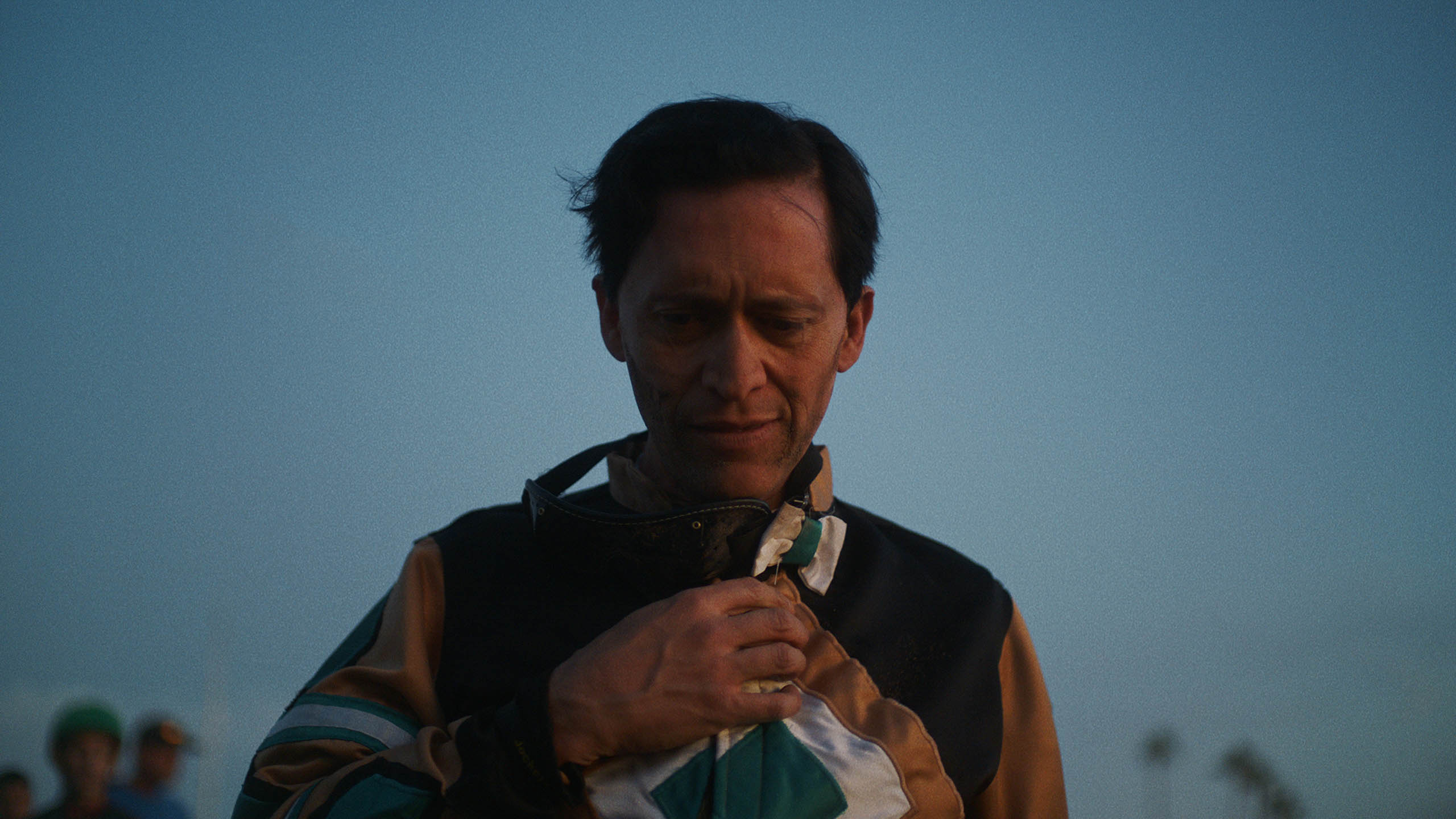
Jackson Silva (Clifton Collins Jr.) is an aging jockey who wants to win one last time before his body breaks down completely. It’s against the advice of his doctor, of course, and he’s already past his prime, but he doesn’t know when to quit, or what he’d do after, so he just keeps doing the one thing he’s good at.

Gabriel (Moises Arias) is a young jockey with his whole career in front of him, and a lot of promise. He’s come to be Jackson’s protégé but also claims to be his son – a son Jackson didn’t know he had.

Have you ever seen a one trick pony in the field so happy and free? You don’t really have to answer that, it’s a lyric from a Bruce Springsteen song from the movie The Wrestler. The Wrestler is about an aging wrestler whose body is past its prime but he doesn’t know when to quit or what he’d do after so he just keeps doing the one thing he’s good at.

Jockey is actually a perfectly good movie. Clifton Collins Jr. is never better as a man coming to terms with his own expiration date. It’s an intimate, low-key character study with a weighty impact. But I’ve seen this movie. I’ve seen it dozens of times and probably you have too. Director Clint Bentley shows a real mastery but I just can’t forgive it for being The Wrester, with horses. If you love horses then maybe Jockey will be your The Wrester – though I believe The Wrestler is the much superior film, and the one you should watch if you’re going to watch any. And anyway, this movie isn’t called The Horse. It’s about the small people who ride atop them, most of whom didn’t go to college first to get a “fallback career” as their mothers likely counselled them. Jackson is forced to contemplate his exit, and to consider his legacy, and his life beyond. Mickey Rourke did the same in The Wrester, and found there wasn’t much for him outside the ring. Its subtle heartbreak still haunts me more than a decade later. Jockey, while well made and beautifully acted, I’m already on my way to forgetting.

Sundance 2021: Violation

I hardly know what to say or indeed what can be said about a movie such as this.

We have watched many horror films at the 2021 Sundance Film Festival and seen buckets of blood shed, sometimes literally. Why, then, is this the first one that required me to manually enter my birthday, verifying my age? It’s the dick, of course. Americans will tolerate all kinds of blood and guts and gore, but an erect penis makes them shy. This movie, be warned, will have all of the above, and more.

Miriam (Madeleine Sims-Fewer) and husband Caleb (Obi Abili) are on the brink of divorce and are visiting her younger sister Greta (Anna Maguire), who almost seems to rub her happy marriage to Dylan (Jesse LaVercombe) in her face. Not intentionally, I’m sure, but they’re happy, they’re intimate, their relationship is a stark contrast to Miriam’s, which has been cold and dispassionate for months. One night, after a few drinks by the fire, Miriam opens up to Dylan, and the confession turns flirty, the two sharing a kiss before falling asleep by the fire. The next morning, Miriam wakes to Dylan fucking her. Raping her, in fact, though he’ll later tell her it was mutual, that she’d seemed into it, despite being unconscious. This betrayal is the basis for Miriam’s revenge plan, which will be both brutal and elaborate.

Miriam’s tools include a baseball bat, a hoist, a cooler, a motel toilet, but most of all, the sense of outrage and indeed of violation in her heart, powerful motivators indeed.

Violation is as savage as any horror I’ve ever seen, but with a female director (Sims-Fewer co-directs with Dusty Mancinelli) in charge, there are suddenly new aspects to vengeance that we haven’t seen on screen before. Miriam is perhaps emotionally elusive, methodical but still very much guided by a ruinous thirst for revenge. The true horror is of course in the honest way the aftermath of trauma is exposed. Violation is purposely difficult to watch, and even harder to swallow, but that’s because it’s rooted very much in reality, and reenacts what for most victims can only be fantasy. It is deeply unsettling because the emotional damage is just as raw and ruthless as the physical wounds inflicted. It’s the kind of film that dares you to flinch, but as tough as it may be to watch, it may actually hide some valuable if disturbing insight.

Violation will be available via Shudder on March 25 2021.

Sundance 2021: Land

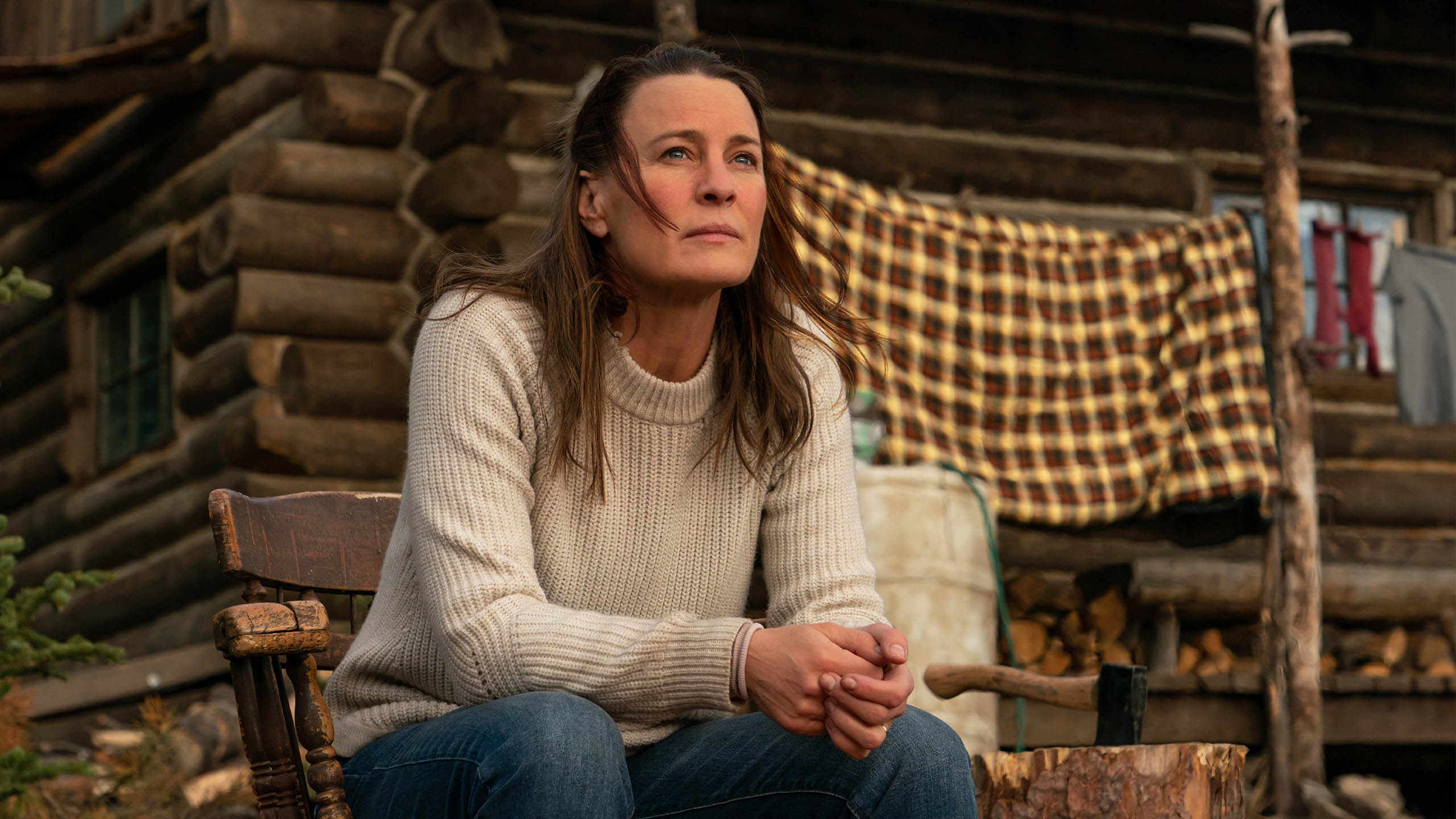
Bereft from some ambiguous tragedy, some half-crazy white lady drops everything to go live on a mountain, totally alone, without being adequately prepared. No phone, no car, nor running water even, this scenario spells disaster to absolutely everyone except her, who persists against all common sense.

Edee (Robin Wright) seems not to have thought of pretty obvious things, like cold, and like bears, which are both pretty big threats to isolated cabins in the woods. This is shaping up to be a pretty short movie. Lucky for Edee a hunter (Demián Bichir) happens by and thoughtfully notes the absence of smoke from her chimney (Edee having lacked the skill to chop wood and the sense to stack it inside). He saves her from the brink of death, and when she’s finally healthy enough to speak, she tells him to get the heck out. She’s come up here to be alone, you know. Grudgingly she consents to semi-regular visits as long as he brings no news of the outside world. He teaches her all the survival skills that she had no business living up here without, and in exchange she’s barely grateful. Because she’s sad! And because she doesn’t consider that others might be sad too.

Land isn’t a bad movie – how could it be? It’s been made so many times there’s a tried and tested blueprint to follow, and as a first time director directing herself, Robin Wright follows it pretty closely. There’s some very pretty scenery and a quietly commanding performance from Wright, but nothing we haven’t seen before, no new insights, no new tricks. It’s hard enough having empathy for a woman who’s so cavalier and careless, but truth be told, neither character is well-developed and we need more to get a true connection.

Wright is a competent director but Land is a retread of places we’ve seen, people we’ve known, emotions we’ve explored. It’s safe and it’s familiar and it probably didn’t need to get made.

Sundance 2021: Together Together

What does a middle aged loner do when he finds himself single but ready to start a family? Of course it would be ideal for Matt (Ed Helms) to have a partner, but time is running out and he’s ready now. Hence the surrogate. Anna (Patti Harrison) is a bit of a loner herself, so in a sense, they’re a well-matched pair. And then there’s the money, which Matt has and Anna needs. It’s a nice transaction for one womb’s rental for a 9 month period.

Except it turns out Matt’s enthusiasm for fatherhood supersedes his loner tendencies. He’s not just showing up for doctor’s appointments, he’s commenting on Anna’s eating habits, showing up at her work with maternity wear, taking her shopping, checking up on her love life, just generally getting very involved, not just in baby’s life, but in Anna’s. A beautiful but strange kind of friendship grows from this garden, one that neither saw coming, nor could they. With nothing much in common and from different generations, the baby is the thing that unites them, and that’s a temporary condition. Normally when the baby is born, the surrogate’s role would end, but with genuine friendship brewing, expectations are getting murkier, and Anna’s finding it very difficult to set boundaries.

This movie navigates an extremely complex and touchy subject with a light heart and a tender sweetness that’s hard to get right without accidentally overdosing on it. Ed Helms is a clever choice, of course, to play a doting, goofy guy with good intentions and a big heart. But Patti Harrison has the harder role to cast. We meet her in the middle of her surrogacy interview, so we don’t get to know her pre-pregnancy. Yet her sparkly and slightly spiky energy is so endearing and welcoming we can hardly blame Matt for being drawn into her orbit. But don’t be fooled by Together Together’s charm; this isn’t your typical Hollywood movie. The mere act of emphasizing platonic over romantic love is subversive, as is casting a trans woman in the lead role. Writer-director Nikole Beckwith knows the kinds of expectations you’ll have for a movie like this, and watching her swerve is pure pleasure.

Below Zero

Below Zero, despite its stupid name, is actually about a prison break – or a prison transport break, anyway. Yeah, it’s also cold outside. Big whoop. Calling it Below Zero is like calling Drive ’70 Degrees and Sunny’ or Blade Runner ‘Smoggy With a Chance of Rain.’ Incidental weather does not a title make.

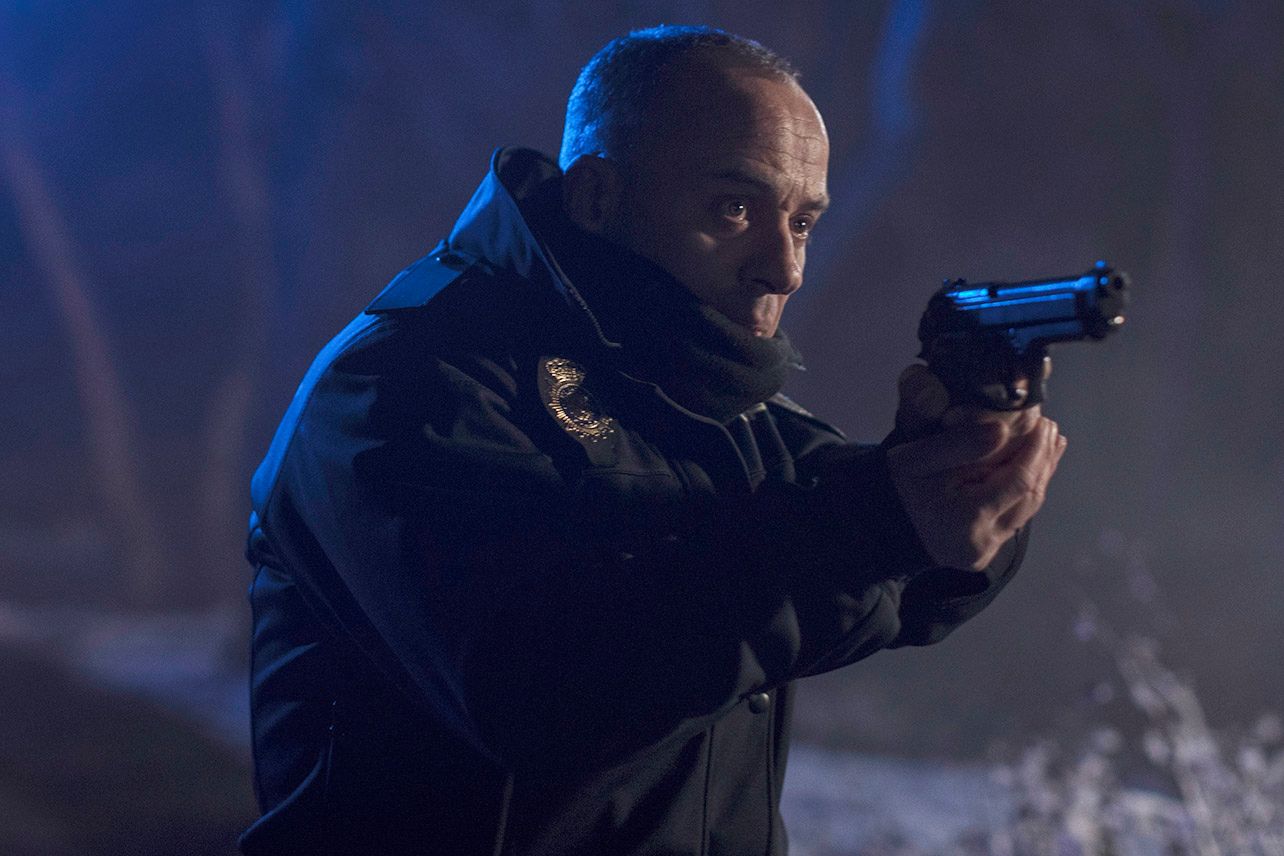
Anyway. It’s Martin’s first day on a new police force so he’s been assigned to prisoner transport. Martin (Javier Gutiérrez) will be driving the truck, earringed officer Montesinos (Isak Férriz) will be in the back, and at least half a dozen prisoners will fill the little prisoner cubby holes en route to…well, who cares, the point is, they’ll never make it there. On a dark and foggy road, the truck loses track of the cop car escort that was leading the way. The truck blows a tire and the truck veers off the road. This is actually the least of Martin’s concerns. When this ambush is over, Martin will be the only officer still standing, trapped between the unknown baddies trying to break into the truck and the now loosed prisoners trying to break out. It’s a tough spot that’s only going to get tougher. The guys on the outside want one specific prisoner and will kill everyone and anyone else to get to him. That prisoner knows a bad deal when he sees it and refuses to leave. The truck is impenetrable except for the one key in Martin’s possession so there’s a three way standoff and the guy on the outside will stop at nothing to get his way.

This is not an exceptional movie, but it’s a pretty good one in the action crime genre, if less so from a character point of view. It’s effective, it’s tense, it’s nothing new but it’s well executed, and it’s playing on Netflix right now for your convenience.