
I have read and watched as much as I could about the Lost Boys – their story, though beginning in such tragedy, usually ends in quiet triumph but you never stop marvelling at it. One of my favourite books about the subject is called What Is The What by Dave Eggers, but if you’re more of a watcher than a reader, I think The Good Lie is faithfully rendered (by Canadian director Philippe Falardeau) and really quite moving.
It follows 5 of the Lost Boys (one actually a girl) who watched their parents, their village, and 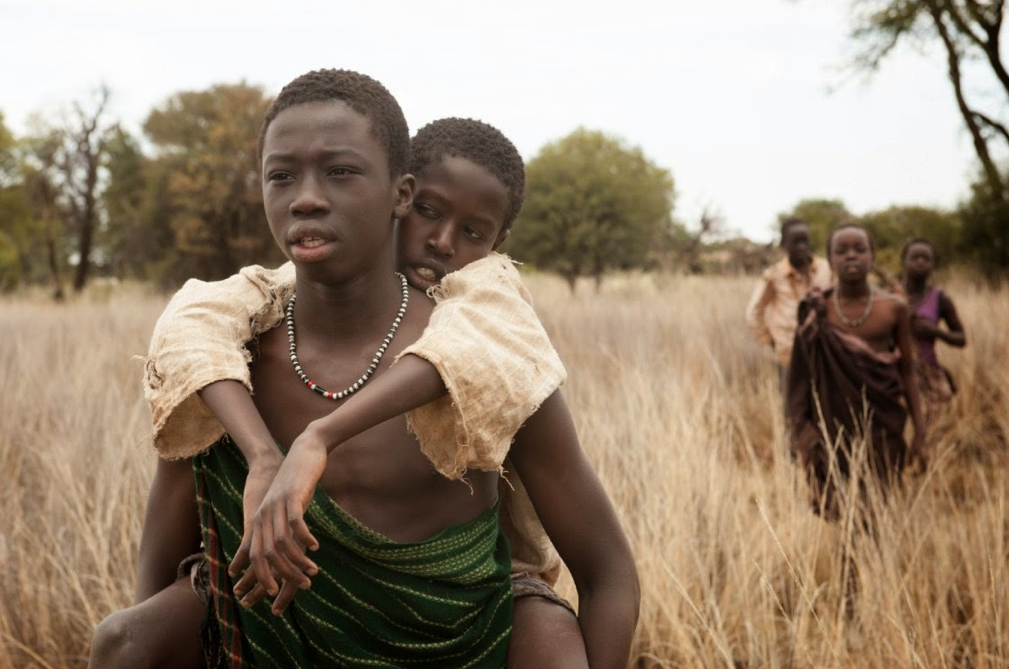 millions of their fellow Sudanese be slaughtered (though the movie goes a little “light” on these atrocities). Displaced from their homes, these orphaned children walked for hundreds of miles to reach a refugee camp where they grew up in temporary shelters wearing Americans’ cast-offs. After 13 years in camp, this group, now in their early 20s, are fortunate enough to land on one of the last flights to American (these flights dried up after 9\11).
Once in Kansas City, you can imagine that there is culture shock and a certain amount of homesickness. Reese Witherspoon eventually appears to help them find employment (a condition of their refugee status). Although technically billed a Reese movie to appeal to Western audiences, she’s in a supporting role. She is not there as a white saviour, but as a witness and sometime facilitator who can’t save them, but can certainly root for them as they save themselves. The actors portraying the Lost Boys are actual Sudanese refugees and what they lack in experience they make up for in earnestness.
 This movie seems like one you ‘should’ see but it’s not a chore, it’s actually a really uplifting and heart-rending trip to Africa that you can make from the comfort of your own couch with a surprising amount of light-heartedness about it (ie, Matt kept shooting me weird, judgy looks every time I giggled). It’s actually one you’ll want to see and be glad you did.
 ASSHOLES WATCHING MOVIES