Monthly Archives: September 2019

TIFF19: Hustlers

It’s hard out there for a ho.  You’ve got to be a certain kind of broke, maybe a certain kind of desperate, to take to the pole.  When Dorothy (Constance Wu) a.k.a. “Destiny” does it, she’s saving her Nana from debt.  She makes money but not loads – the club takes a big cut, and maybe she’s just not that good.  So call it Dorothy’s lucky day when stripper extraordinaire Ramona (Jennifer Lopez) takes Destiny under her wing.

Ramona makes it rain.  Er, well, money rains down hard on her.  The stage is coated so thickly in cash it looks like it’s been blanketed in snow.  After rolling around in it, Ramona clutches the bills to her like it’s fur.  Ramona IS money.  But then the recession hits, and with Wall Street hit hard, the strip club’s big spenders disappear.

hustlers_0HERO-ForWebsiteONLYThat’s when Destiny and Ramona make a little luck of their own.  Both single mothers, they are struck with the entrepreneurial spirit.  Sex, money, drugs – they’re a match made in heaven.  Or in a gentlemen’s club.  Where the men are ANYTHING but gentlemen.

You can try to extrapolate themes of…friendship, greed, revenge?  Sure.  Let’s call it a rebellion where the poor and disenfranchised rise up against the rich, entitled assholes.  But the truth is, the film is rather light on theme but heavy on girl-on-girl action.  Lots of skimpy costumes that mostly just consist of strings with which to cling dollar bills to glitter-streaked bodies.  There’s lots of booty shaking and titty popping and hip gyrating and pole humping.  Which, let’s face it, is what the people want.  On that score, you couldn’t possibly be disappointed.

Is it hard to root for the protagonists?  Absolutely.  Is it even harder to feel sorry for their victims?  Darn tootin’.  Is it morally murky?  Of course.  It’s a movie about strippers who want more and get it.

Should we bother objectifying the women?  Let’s not.  Jennifer Lopez: you’ve seen her.  She’s amazing.  And she’s 50.  That woman works the pole like her thighs are made of margarine.  So while this isn’t the most fervent review of Hustlers, it’s a 1000% endorsement of J-Lo’s fitness regimen.

TIFF19: Murmur

Donna has just been convicted of impaired driving and is sentenced to hours of community service. She lives alone in a serviceable apartment, her only company empty bottles of wine, and regret. Her grown daughter wants nothing to do with her.

Serving her time at an animal shelter, Donna gets the grubby, grotty tasks, which she performs uncomplainingly. She moves through her day, from mopping up shit, to alcohol counseling, back home to her wine, with little fuss, and little connection. It’s not until a mangy scruffball named Charlie is scheduled to be put down that we see Donna’s softer side. She begs her boss to allow Charlie to come home with her instead; Charlie is old, and sick, but she vows to take good care of him for his remaining days.

Her relief is obvious. Estranged from her daughter, isolated in her little apartment, Charlie is the first sign of affection we’ve seen from Donna. They bond. Are they maybe kinda sorta two of a kind? Both rejects? At any rate, the arrangement is so satisfying that Donna doesn’t stop at just one. Pretty soon she’s popping puppies like Pringles (no, she doesn’t eat them), her small apartment brimming with pets and still she can’t stop bringing them home.

Shan MacDonald is wonderful as Donna. She doesn’t try to pretty her up, or make her more likable. Donna is tough, and MacDonald rises to the occasion. I don’t imagine it’s an easy role to play, but there’s a universality in the loneliness that really resonates.

Murmur was a little slow to engage me as Donna’s life is bleak, and has so little personal interaction. But the dogs open her up in a lovely, tragic, humane way. It becomes easy to guess at the many ways in which Donna may relate to the dogs, may see herself in them. She certainly seems to find companionship easier with animals that with humans, and you know she’s not the first or the last to do that. Her social isolation is heart-breaking, and the film really manages to say something meaningful about addictions – empathetic without letting anyone off the hook.

TIFF19: Greed

Have we made Steve Coogan an honourary asshole yet?  He’s at his best playing someone despicable, and they don’t come more despicable than retail fashion billionaires, who’ve “earned” their fortunes by exploiting third-world workers and the “rules” of corporate governance.  Coogan’s character, Richard McCreadie, is not a real person but is clearly inspired by the owners of Zara and H&M, both of which are running the same scheme in the real world as McCreadie does onscreen.

Having come under some scrutiny for his business practices (though not as much as he deserves), McCreadie hopes to gain some more favourable press by throwing an extravagant 60th birthday party for himself, shelling out for numerous celebrities to attend, and building a plywood colosseum in which a rented lion and McCreadie’s aides will put on a spectacle worthy of Caesar.  It is all too real, this game of distraction that McCreadie plays, and having gladiator games as entertainment sets up a good parallel between the ancient Roman slaves who died in service of their emperor and the factory workers who are suffering in service of McCreadie’s business empire.

greed_0HEROGreed’s comedic and satirical elements work well, with Coogan ably and expertly leading the way.   I am sure Coogan could play this role in his sleep but he’s not phoning it in at any point.  He clearly relishes the chance to play this type of character and he delivers a wonderfully over-the-top take on a selfish billionaire (though really, is there any other kind?).

But outside of the scenes featuring Coogan, Greed seems to lose its way.  It felt like Greed was too ambitious. In addition to the party scenes, Greed also shows McCreadie’s early days, both in private school and as he first sets up his business, factory scenes that are filmed documentary-style at real locations featuring real workers,  and a large number of side stories involving McCreadie’s ex-wife (Isla Fisher), their three kids (Asa Butterfield among them), McCreadie’s biographer (David Mitchell), and one of McCreadie’s top staff (Sarah Solemani).  There’s just too much going on, and it seems impossible for one movie to combine so many disparate parts  into a cohesive whole.

Undoubtedly, Greed’s failure in that regard is due to Michael Winterbottom having too much to say about the increasing divide between the rich and the poor, and it’s hard to fault him for being so ambitious.  But I have to think Greed would have been more effective, both in delivering its important message and in delivering its comedy, if it had taken a more focused approach and left a few side stories (including the story featuring McCreadie’s younger self) on the cutting room floor.

TIFF19: The Lighthouse

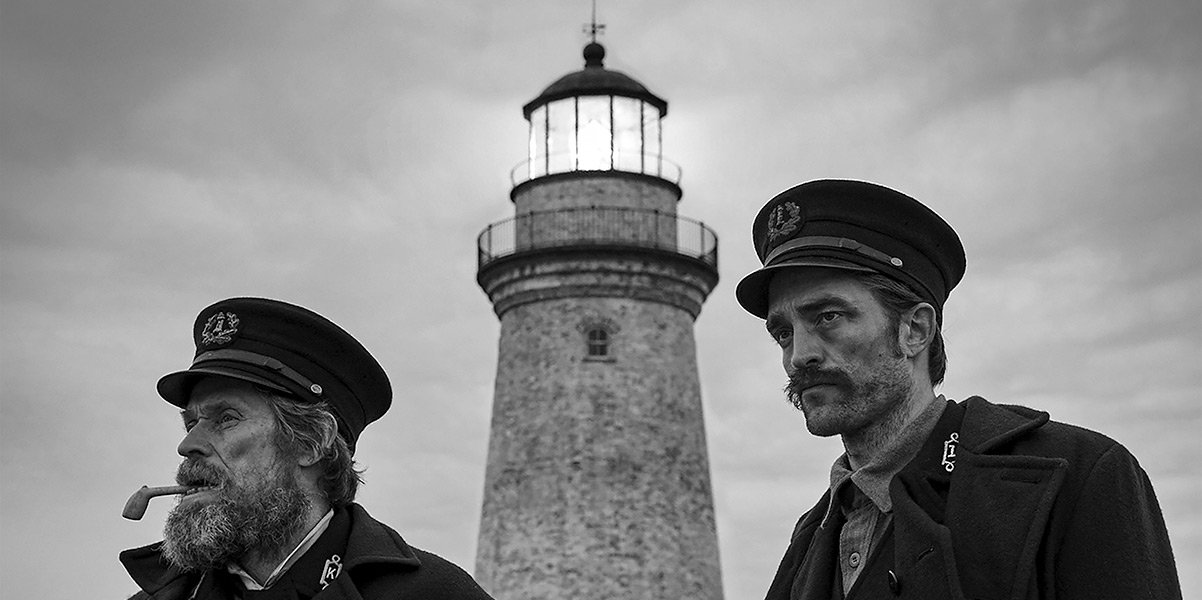
Two men are dropped off on a rock in the middle of the ocean, left alone to tend the lighthouse.  The men, let’s call them Wick and Winslow, though they mostly go by “Sir” and “lad”, are strangers about to get extremely cozy during the four weeks of their isolation.

Winslow (Robert Pattinson) is a young guy, a bit of a drifter, here to make some serious money and go home.  Wick (Willem Dafoe) is gruff yet poetic, exacting yet frustrated by Winslow’s rule-abiding nature.  The two rub each other wrong right from the start, and the thing about having absolutely nothing but each other’s company is that you’ll either become best friends or the worst of enemies.lighthouse

The weeks pass slowly, marked by back-breaking work.  There’s wanking and drinking and farting, but eventually their time is up.  They’ve made it!  Except that’s really just where the story starts.

A storm blows in, which means no boat can come for them.  They’ve been stranded, but for how long?  Days?  Weeks?  Time becomes meaningless, reality blurred.  We’re witnessing a descent into madness, but the question is: whose?  Winslow’s? Wick’s? Our own?

Shot in stark black and white, with an aching cinematography and an arresting sound design, Robert Eggers (director of the Witch) returns with a dizzying, disorienting film about madness.

The candlelight serves perfectly to illuminate Dafoe’s lined face, his fevered eyes leaving us to wonder whether he’s a psychopath or just a drunk.  Dafoe and Pattinson spar thrillingly on screen, each pushed by the other to unravel even further.  It’s magnetic even if it’s not always easy to watch.

The Lighthouse is full of omens and mythic imagery awaiting decoding.  This film doesn’t have the same sense of unending, unbearable dread that the Witch did, but it will surprise and confound you in new and unique ways, daring you to look away.

TIFF19: Human Capital

Drew is an ex-gambler who has borrowed money he doesn’t have to invest in a hedge fund. When it tanks, he’s pretty desperate, with bills piling up and not one but two babies on the way. Drew (Liev Schrieber) also happens to be the father of a teenage daughter, Shannon (Maya Hawke), who is dating Jamie (Fred Hechinger).

Jamie’s parents are rich, which gives Drew a lot of envy. humancapital_0hero-hr__1_2Jamie’s dad, Quint (Peter Sarsgaard) just happens to be the manager of that hedge fund I was talking about, and he’s super stressed, selling assets to stop the bleeding. He’s not a particularly nice guy, it probably goes without saying. His wife Karen (Marisa Tomei) is fairly pragmatic about their flawed marriage, but she cries a lot. She recently bought a theatre to renovate and run, but with the hedge fund having a coronary, she’s about to lose it.

Jamie and Shannon are actually recently broken up because Jamie is gay and Shannon has a new boyfriend, a bad boy with a record. But for now, both families are together for a high school fundraiser, after which there will be a hit-and-run, and one of them will be responsible.

Human Capital is a tale of guilt and innocence, and how much they’re worth, and to whom. It’s about greed and compromise. It’s based on a novel, and another movie besides, and ultimately fails to justify its own existence. It’s moderately interesting and the performances are fine, but there isn’t a single aspect of this movie that distinguishes itself. Even the whodunnit feels beside the point.

With nothing to uplift it, it may as well have stayed on the page.

TIFF19: The Personal History of David Copperfield

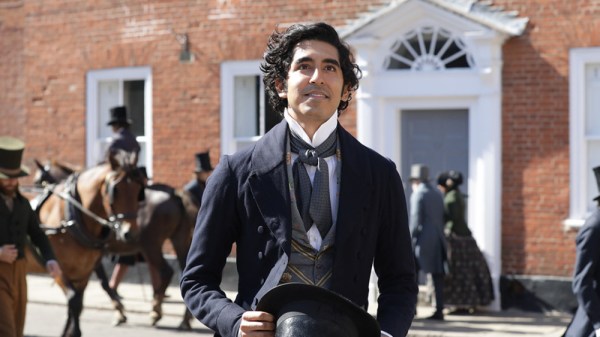
Dev Patel is David Copperfield – it’s an inspired bit of casting that’s instantly a perfect fit. In fact, the whole film is so overwhelmingly cast to perfection it’s almost embarrassing.

I worried about this film because though director Armando Iannucci’s previous film, The Death of Stalin, was extremely well-received by critics, it was not my the-personal-history-of-david-copperfieldcuppa, not by a long shot. As an introduction to this film’s premiere at TIFF, Iannucci informed/assured us the two films could not be more different. And while I’m not sure that’s true, I was relieved and elighted to find myself really enjoying it.

I hope it’s obvious that this movie is inspired by Charles Dickens’ David Copperfield, though TIFF Artistic Director & Co-Head Cameron Bailey rightly called it an “audacious” interpretation, and it is that. Iannucci was struck by how timeless the themes of love and friendship were, so though the film is undoubtedly a period piece, Iannucci reminds us that for the characters, it’s present day.

As for myself, I was most struck by how convincingly Copperfield is portrayed as a budding writer. Even as a child he’s wildly observant, with a knack for accents and a fondness for “collecting” lovely turns of phrase. The way this movie explores and plays with language is unlike anything I’ve seen onscreen. It was setting off fireworks in the verbal parts of my brain. And there are plenty of visual treats too – beautiful costumes, dingy apartments, bustling markets, whimsical seaside abodes, and blooming gardens teeming with donkeys.

Sean did not feel so positively about the film – though he liked it, he also found it boring and meandering. Well, he said slow. I thought meandering sounded better.

The Personal History of David Copperfield is a funny, perceptive, and inventive twist on an old favourite. I can’t help but think Dickens would approve.

TIFF19: Black Conflux

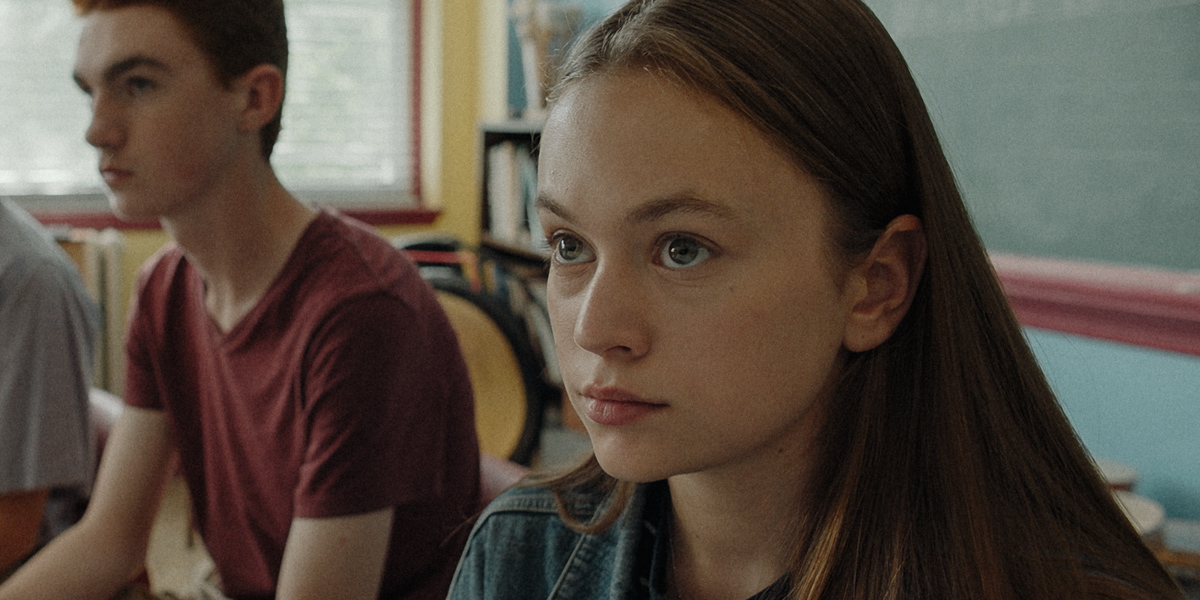
Set in 1980s Newfoundland, Black Conflux has an air of inevitability, and a foreboding sense of dread. There can be no doubt that this story will end badly. It seems certain that Jackie (Ella Ballentine) is going to cross paths with Dennis (Ryan McDonald). It also seems certain that if she does, it will not go well. You see, Dennis is an incel, or he would have been if that term had existed in 1987. He has a beer truck full of imaginary women who worship him, but he has nothing but contempt for the real women he meets. Jackie is a high schooler who has somehow caught Dennis’ attention, even though the two don’t seem to ever have met before. The more time we spend with Dennis, the more we come to think that the women in the beer truck might not be imaginary. They might be ghosts of other women that caught Dennis’ attention, and it seems like Jackie could be next.blackconflux_0HERO

Writer-director Nicole Dorsey’s talent and confidence are on full display in her first feature-length film. She has written two great characters in Jackie and Dennis. We quickly feel like we know them and can predict them, and Dorsey uses that to generate a great deal of tension in anticipation of the convergence (/conflux) of their stories. Adding to the tension are the slow pacing and the atmospheric shots of Newfoundland’s wild beauty, which reminded me there are plenty of places on the rock to hide a body or two or ten.

Dorsey is aided by two great performances from Ballentine and McDonald, who make their characters feel real. We care what happens to Jackie because we like her and we can relate to the teenage world she is trying to navigate, having been there ourselves. And while we don’t really like Dennis, we feel a bit sorry for his struggles to navigate the world he inhabits, even though he’s clearly making things more difficult than they need to be. Jackie is the more sympathetic one (mainly because she is not acting like a serial killer) but despite Dennis’ issues (or maybe because of them) I found myself fascinated by both characters.

It’s not that Black Conflux keeps the audience guessing, because a confrontation between Jackie and Dennis seems inevitable (after all, it’s in the title!). What makes Black Conflux so enjoyable is that it keeps the audience engaged, invested and interested in the journey to the climax. It’s a great debut feature for Dorsey and a great start to my 2019 Toronto International Film Festival viewing.

TIFF19: Awards

The Toronto International Film Festival always elects a People’s Choice: the festival’s most-loved film, as voted by the regular people who bought tickets and went to the shows. They have not, historically, been big into awards, but that changes this year. They’re not going to declare best actors in the movies screened, but they are giving out several honourary awards in a glitzy ceremony meant to raise money for their year-round efforts.

Meryl Streep is, fittingly, receiving the inaugural TIFF Tribute Actor Award. As the most Oscar nominated actor in history, it would be hard to go with anyone else, as she’s gracing the festival as part of Steven Soderbergh’s The Laudromat. Is that the smell of nomination #22 in the air?

And after the world’s first TIFF Tribute Actor Award comes its second, into the hands of Joaquin Phoenix, whom you may have heard is in a little film this year called Joker in which he plays an emaciated loner named Arthur.

Even more excitingly (to me), is the Roger Ebert Director Award. Historically, the Roger Ebert Golden Thumb Award has been given out at TIFF, so it’s nice they’re continuing to honour Ebert’s passion and love for films. The Golden Thumb has been given to people like Scorsese, Claire Denis, Ava DuVernay, Wim Wenders, and Agnès Varda. This year, the newly minted Roger Ebert Director Award is going to one of my absolute favourites, Taika Waititi. Not only have I loved him for more than a decade, I used his early films as a Rorschach test of sorts for potential boyfriends. I will be delighted to be in the audience when he screens Jojo Rabbit for an assuredly enthusiastic TIFF crowd.

Also wonderful: the Variety Artisan Award will be presented to Roger Deakins! If you know movies, you know Deakins’ work, even if you haven’t noticed his name in the credits. But movie lovers know him, in fact, practically have a cult dedicated to his honour. His cinematography is out of this world – sometimes almost literally. The man has amassed 14 Oscar nominations before finally winning his first in 2018 (for Blade Runner 2049). He lensed Sicario, Unbroken, Prisoners, Skyfall, True Grit, The Reader, No Country For Old Men, Fargo, The Shawshank Redemption…and the list goes on. This year his work can be seen at the festival in The Goldfinch.

And finally we have the Mary Pickford Award for emerging female talent. If I may, just a quick word about Mary Pickford if you fail to recognize the name.She was the pioneering actor, producer, and co-founder of United Artists (which is celebrating its 100th anniversary this year, not coincidentally). Pickford was a Toronto native and Hollywood’s highest-paid actor (male or female) in the late 1910s. She helped turn the industry into what it is today. So her award goes to an emerging female talent who is also making groundbreaking strides in the industry. Who better, then, to receive this honour than French actress and director Mati Diop? Her film, Atlantics, screened at Cannes earlier this year, making her the first black female director to screen a film in competition there. Her film went on to win the Grand Prix.

TIFF19: Female Directors Edition

Welcome to the first day of TIFF!!! If you’re anything like me, you might be overwhelmed by the sheer volume of excellent programming at the Toronto International Film Festival, and the curating only seems to get strong year after year.

To help narrow the field down just a tiny bit, here are some titles helmed by women, because it’s 2019, and if you came to the festival and didn’t see something directed by a woman, you did it wrong. There, I said it.

Pelican Blood (Katrin Gebbe): drop everything and see this movie. It’s about a woman who adopts a second daughter, and this second daughter turns out to be…well, it’s not PC to say “a psychopath” but basically, she feels no empathy, and claims dark spirits are rooting for her to do terrible things. So the poor mother had to decide whether to give this daughter back (and we all know what the return policy on kids is like), or risk her other daughter’s safety. Because oh yeah: of course they live out in the countryside. This movie is unnerving and fascinating and very, very tense.

Murmur (Heather Young): Young explores her signature theme of isolated women with a 60 year old who starts compulsively adopting dogs to keep the loneliness at bay. The film is stark and haunting, a slow burn that rewards patience.

Abominable (Jill Culton): Culton writes and co-directs this absorbing animated fairy tale about a magical yeti who needs to get home. Audiences of all ages will love this one.

How To Build A Girl (Coky Giedroyc): Fans of Caitlin Moran will be thrilled with this one, based on her novel of the same name. Beanie Feldstein stars as the impoverished young writer who reinvents herself as a music journalist and lady-sex-adventurer. Emma Thompson and Chris O’Dowd co-star.

The Father (Kristina Grozeva): co-written AND co-directed by Grozeva, The Father is hard to pin down but easy to like.  

It’s A Beautiful Day In The Neighborhood (Marielle Heller): is there a single beating heart among us who isn’t looking forward to this Mr. Rogers biopic starring the inestimable Tom Hanks? I doubt it. The first time I saw the trailer in theatres, I teared up. I haven’t seen this yet, and if I’m smart, I’ll leave it for the end of the festival, when I can be a big sloppy mess and then just go home. I have such high hopes. It’s almost sure to be a crowd pleaser.

Honey Boy (Alma Ha’rel): actually I haven’t seen this one either, but I’m willing to take a chance on it. Written by Shia LaBeouf about his own life, Noah Jupe and Lucas Hedges star as LaBeouf at different stages, and LaBeouf stars as his own father. It might be awful and it might be wonderful, but either way, I’m betting it will be interesting.

Blow The Man Down (Bridget Savage Cole and Danielle Krudy Blow The Man Down): two sisters in Maine bond over the inheritance of their mother’s fish shop, and also the covering up of a crime. Gritty and bare, this one was a favourite out of Tribeca and is worth the watch.

Harriet (Kasi Lemmons): I mean, it’s hard to believe we haven’t had a big biopic of Harriet Tubman’s life before now. Crazy. And Cynthia Erivo is already getting Oscar buzz for her performance about a woman who escapes slavery only to go back to help others do the same. Powerful stuff.

Hustlers (Lorene Scafaria): literally could not be more different from the above, a bunch of strippers including Jennifer Lopez and Constance Wu turn the tables on their Wall Street customers after the 2008 financial crisis leaves them strapped, and they do the scamming for a change. Hear them roar!

Speaking of which. I Am Woman (Unjoo Moon): yes, that’s literally a Helen Reddy biopic. I wouldn’t know the name if not for my mother, who always had time for Reddy’s feminist anthem (was Helen Reddy the Katy Perry of the 1970s? Am I going to hell for even suggesting it?)

Hala (Minhal Baig): I admit it, I looked at this one primarily for its star, Geraldine Viswanathan, who I thought was the breakout star of Blockers, another female-directed film I enjoyed courtesy of SXSW. This movie is another coming of age tale, but here she plays the daughter of strict immigrant parents, which makes for a very interesting shift in perspective and a fascinating twist in the genre, which never seems to go out of style.

Radioactive (Marjane Satrapi): Rosamund Pike plays Marie Curie, a woman I hope to heck you’ve heard of before; she’s the only person ever to win the Nobel Prize in two different fields, physics and chemistry. This film’s based on an excellent graphic novel, and I encourage you to check it out as well.

My Zoe (Julie Delpy): honestly, I’m there for whatever Delpy puts out, but by all accounts, this one is much different from her usual fare – a psychological drama with hints of science fiction. Yes please. In fact, I’d take two (not to be greedy, but I would).

Honestly, I could go on, I could double and triple this list and stand by each and every one of them. This is me, exercising restraint. And this is you, pretending to believe that I am capable of restraint.

And may I just say, before signing off, that I am extremely proud of TIFF for going the extra mile to present us with such a wealth of choice. Other festivals have shirked the responsibility by claiming that women directors are such a minority that they’re happy to have their programming reflect that. Of course it’s true. Female directors are still very much the minority. But they’ll also stay that way if not for bold initiatives like this one from TIFF. And I think their lineup speaks for itself: there is no lack of talent here. Does it perhaps take more time to find all of these gems? Certainly. But female directors are telling such a wide breadth of stories at this festival, their presence feels essential, and of course it is. TIFF is the festival of the future, only they’re doing it now, and we get to live it. There is no better time to be at TIFF. The women are here. In numbers too big to ignore.




One Last Thing

Dr. Dylan Derringer, D.D.S. (Sorry, I couldn’t resist. Well, I didn’t try all that hard, so maybe I could have, but I didn’t) is a lonely dentist with not a whole heck of a lot going on in his life besides golf when he learns some surprising news: he has a daughter. A 25 year old daughter.

Dylan (Wendell Pierce) stalks his daughter before working up the courage to introduce himself. Stalking has such a negative connotation, but it’s only about half as creepy when you’re watching a father fall in love with his grown daughter from afar. And I mean fall in love in the father-daughter bonding way, totally above-board and asexual and all that good, appropriate, wholesome stuff. Lucy (Jurnee Smollett-Bell) is at least as surprised to learn she has a father, as she’s always believed him to be dead.

Of course, a relationship doesn’t just pop up out of nowhere. It needs to be earned, so they go about putting in the time, getting to know each other. They do the What-If dance over and over, ruing their absence in each other’s lives. His is fairly empty save for a sexy hygienist back home (Joanne Froggatt), and hers is extremely empty, her mother having died and left her to be raised in foster care. She does have a girlfriend who isn’t very nice to her, though it’s a little dicey as to how much her brand new father can really object.

But anyway: she’s also desperately in need of a kidney, it turns out. Which seems quite fortuitous for her, and less so for him, or at least for his favourite kidney. It’s kind of sticky, asking your new dad/total stranger for a vital organ. And it’s also kind of awkward watching your new friend/new daughter die, right in front of your eyes. You can shuffle your feet and avoid eye contact all you want, but reality is, she’s gasping painfully for breath, and you’ve got life-extending capability right inside your body cavity.

Family is generally (though not always) good for more than just organs, so there’s a bargaining to this relationship that’s interesting to navigate. The film is utterly predictable of course, but sweetly executed. I found this movie streaming on Netflix and you can too!