Author Archives: Jay

Sundance 2021: Violation

I hardly know what to say or indeed what can be said about a movie such as this.

We have watched many horror films at the 2021 Sundance Film Festival and seen buckets of blood shed, sometimes literally. Why, then, is this the first one that required me to manually enter my birthday, verifying my age? It’s the dick, of course. Americans will tolerate all kinds of blood and guts and gore, but an erect penis makes them shy. This movie, be warned, will have all of the above, and more.

Miriam (Madeleine Sims-Fewer) and husband Caleb (Obi Abili) are on the brink of divorce and are visiting her younger sister Greta (Anna Maguire), who almost seems to rub her happy marriage to Dylan (Jesse LaVercombe) in her face. Not intentionally, I’m sure, but they’re happy, they’re intimate, their relationship is a stark contrast to Miriam’s, which has been cold and dispassionate for months. One night, after a few drinks by the fire, Miriam opens up to Dylan, and the confession turns flirty, the two sharing a kiss before falling asleep by the fire. The next morning, Miriam wakes to Dylan fucking her. Raping her, in fact, though he’ll later tell her it was mutual, that she’d seemed into it, despite being unconscious. This betrayal is the basis for Miriam’s revenge plan, which will be both brutal and elaborate.

Miriam’s tools include a baseball bat, a hoist, a cooler, a motel toilet, but most of all, the sense of outrage and indeed of violation in her heart, powerful motivators indeed.

Violation is as savage as any horror I’ve ever seen, but with a female director (Sims-Fewer co-directs with Dusty Mancinelli) in charge, there are suddenly new aspects to vengeance that we haven’t seen on screen before. Miriam is perhaps emotionally elusive, methodical but still very much guided by a ruinous thirst for revenge. The true horror is of course in the honest way the aftermath of trauma is exposed. Violation is purposely difficult to watch, and even harder to swallow, but that’s because it’s rooted very much in reality, and reenacts what for most victims can only be fantasy. It is deeply unsettling because the emotional damage is just as raw and ruthless as the physical wounds inflicted. It’s the kind of film that dares you to flinch, but as tough as it may be to watch, it may actually hide some valuable if disturbing insight.

Violation will be available via Shudder on March 25 2021.
Sundance 2021: Land

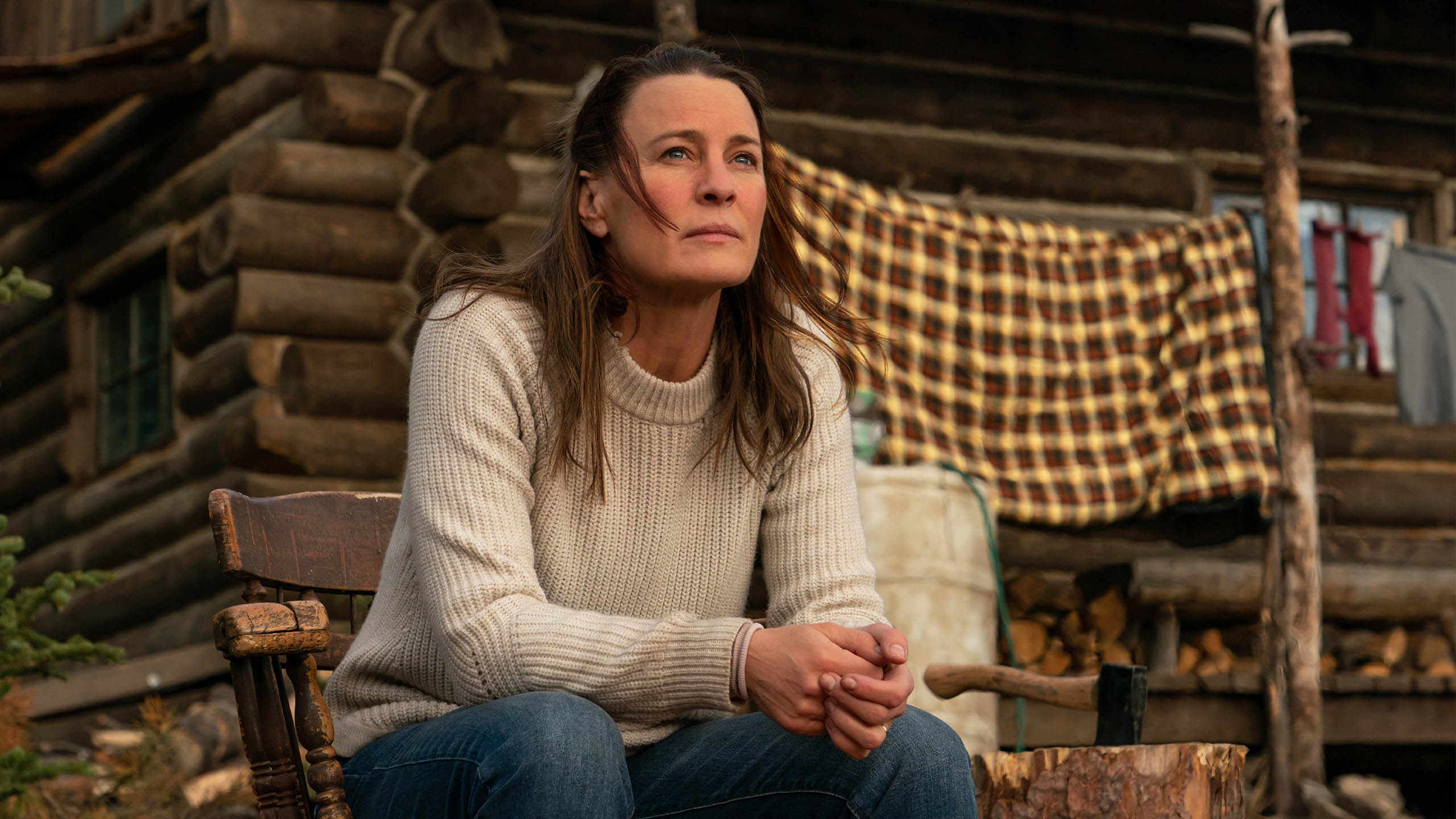
Bereft from some ambiguous tragedy, some half-crazy white lady drops everything to go live on a mountain, totally alone, without being adequately prepared. No phone, no car, nor running water even, this scenario spells disaster to absolutely everyone except her, who persists against all common sense.

Edee (Robin Wright) seems not to have thought of pretty obvious things, like cold, and like bears, which are both pretty big threats to isolated cabins in the woods. This is shaping up to be a pretty short movie. Lucky for Edee a hunter (Demián Bichir) happens by and thoughtfully notes the absence of smoke from her chimney (Edee having lacked the skill to chop wood and the sense to stack it inside). He saves her from the brink of death, and when she’s finally healthy enough to speak, she tells him to get the heck out. She’s come up here to be alone, you know. Grudgingly she consents to semi-regular visits as long as he brings no news of the outside world. He teaches her all the survival skills that she had no business living up here without, and in exchange she’s barely grateful. Because she’s sad! And because she doesn’t consider that others might be sad too.

Land isn’t a bad movie – how could it be? It’s been made so many times there’s a tried and tested blueprint to follow, and as a first time director directing herself, Robin Wright follows it pretty closely. There’s some very pretty scenery and a quietly commanding performance from Wright, but nothing we haven’t seen before, no new insights, no new tricks. It’s hard enough having empathy for a woman who’s so cavalier and careless, but truth be told, neither character is well-developed and we need more to get a true connection.

Wright is a competent director but Land is a retread of places we’ve seen, people we’ve known, emotions we’ve explored. It’s safe and it’s familiar and it probably didn’t need to get made.

Sundance 2021: Together Together

What does a middle aged loner do when he finds himself single but ready to start a family? Of course it would be ideal for Matt (Ed Helms) to have a partner, but time is running out and he’s ready now. Hence the surrogate. Anna (Patti Harrison) is a bit of a loner herself, so in a sense, they’re a well-matched pair. And then there’s the money, which Matt has and Anna needs. It’s a nice transaction for one womb’s rental for a 9 month period.

Except it turns out Matt’s enthusiasm for fatherhood supersedes his loner tendencies. He’s not just showing up for doctor’s appointments, he’s commenting on Anna’s eating habits, showing up at her work with maternity wear, taking her shopping, checking up on her love life, just generally getting very involved, not just in baby’s life, but in Anna’s. A beautiful but strange kind of friendship grows from this garden, one that neither saw coming, nor could they. With nothing much in common and from different generations, the baby is the thing that unites them, and that’s a temporary condition. Normally when the baby is born, the surrogate’s role would end, but with genuine friendship brewing, expectations are getting murkier, and Anna’s finding it very difficult to set boundaries.

This movie navigates an extremely complex and touchy subject with a light heart and a tender sweetness that’s hard to get right without accidentally overdosing on it. Ed Helms is a clever choice, of course, to play a doting, goofy guy with good intentions and a big heart. But Patti Harrison has the harder role to cast. We meet her in the middle of her surrogacy interview, so we don’t get to know her pre-pregnancy. Yet her sparkly and slightly spiky energy is so endearing and welcoming we can hardly blame Matt for being drawn into her orbit. But don’t be fooled by Together Together’s charm; this isn’t your typical Hollywood movie. The mere act of emphasizing platonic over romantic love is subversive, as is casting a trans woman in the lead role. Writer-director Nikole Beckwith knows the kinds of expectations you’ll have for a movie like this, and watching her swerve is pure pleasure.

Below Zero

Below Zero, despite its stupid name, is actually about a prison break – or a prison transport break, anyway. Yeah, it’s also cold outside. Big whoop. Calling it Below Zero is like calling Drive ’70 Degrees and Sunny’ or Blade Runner ‘Smoggy With a Chance of Rain.’ Incidental weather does not a title make.

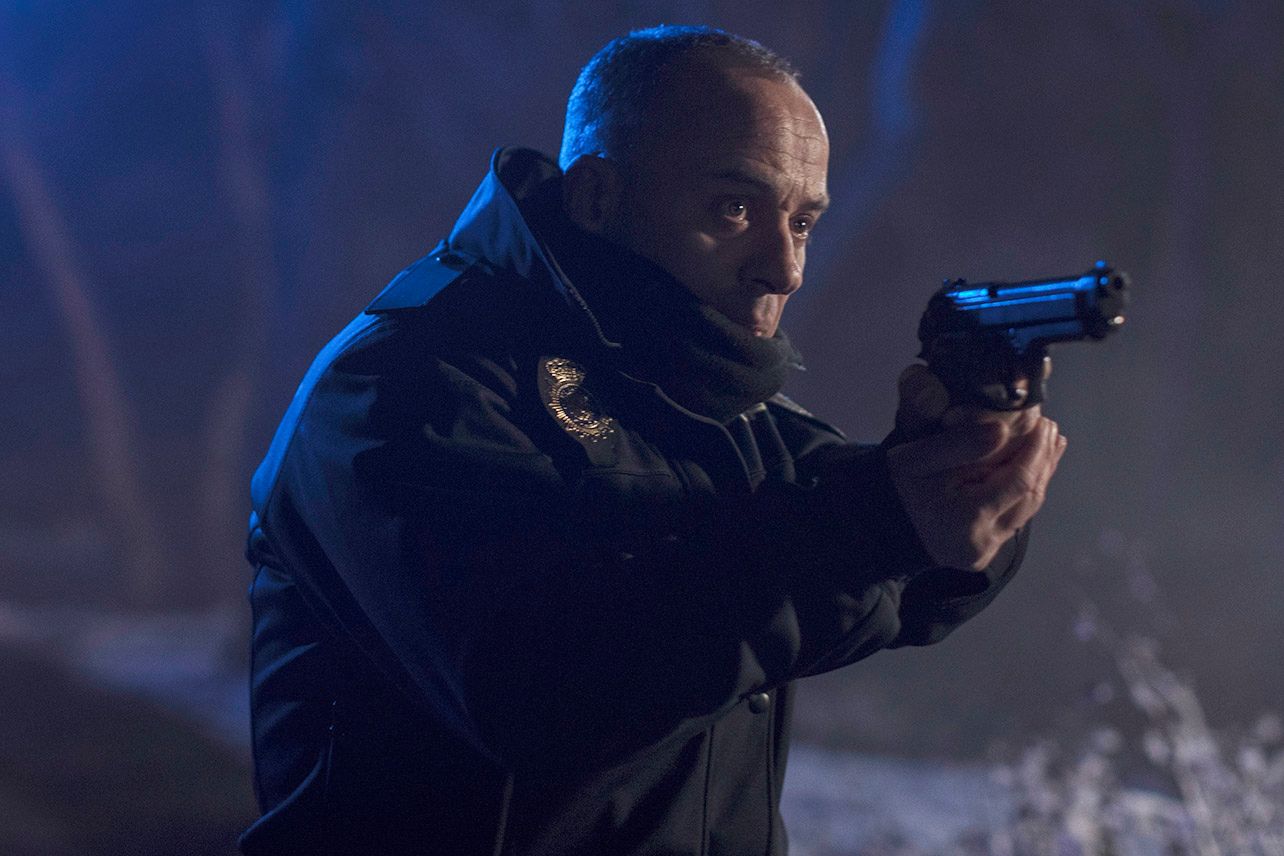
Anyway. It’s Martin’s first day on a new police force so he’s been assigned to prisoner transport. Martin (Javier Gutiérrez) will be driving the truck, earringed officer Montesinos (Isak Férriz) will be in the back, and at least half a dozen prisoners will fill the little prisoner cubby holes en route to…well, who cares, the point is, they’ll never make it there. On a dark and foggy road, the truck loses track of the cop car escort that was leading the way. The truck blows a tire and the truck veers off the road. This is actually the least of Martin’s concerns. When this ambush is over, Martin will be the only officer still standing, trapped between the unknown baddies trying to break into the truck and the now loosed prisoners trying to break out. It’s a tough spot that’s only going to get tougher. The guys on the outside want one specific prisoner and will kill everyone and anyone else to get to him. That prisoner knows a bad deal when he sees it and refuses to leave. The truck is impenetrable except for the one key in Martin’s possession so there’s a three way standoff and the guy on the outside will stop at nothing to get his way.

This is not an exceptional movie, but it’s a pretty good one in the action crime genre, if less so from a character point of view. It’s effective, it’s tense, it’s nothing new but it’s well executed, and it’s playing on Netflix right now for your convenience.

Malcolm and Marie

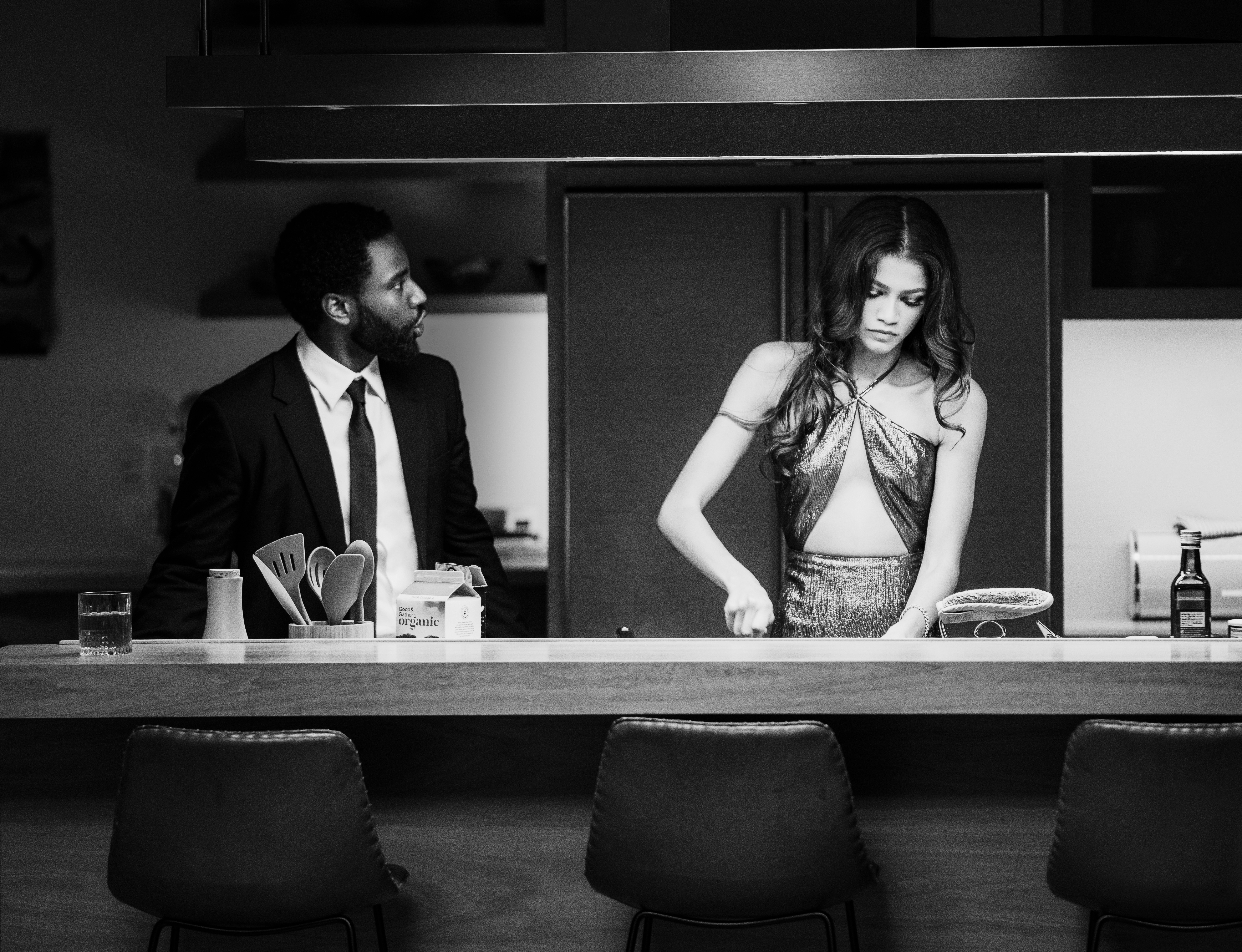
Malcolm (John David Washington) returns home after the premiere of his movie in celebration mode, having lapped up nothing but praise in its wake. His longtime girlfriend Marie (Zendaya), however, is in a darker mood. As she prepares some kraft dinner for him, she cautions him that they should wait until morning to discuss but Malcolm doesn’t recognize good advice when he hears it and insists on airing things out.

Is Marie mad because Malcolm forgot to thank her in his speech? Yes and no. It’s a symptom, she thinks, of a larger disease in their relationship. At any rate, it’s the starting point to a very big, very bad fight that will last for hours – that is, in fact, the entirety of this movie. Sam Levinson writes and directs, and shoots these two in just a handful of room in a rental house where the feeling is claustrophobic, and the need for air is never quite satisfied. Marcell Rév’s cinematography is to die for, and sometimes you feel as though you just might, because this fight is so tense and raw and horrible it seems easier to just drop dead than to continue on in this vein.

That said, is this a fun watch? No it is not. It feels very heavy at times. But you continue watching, almost glued to your seat, transfixed by two heavy weight performances. John David Washington shows full spectrum range, his character careening wildly from love to hate and back again, always at full steam, full froth, full strength. Malcolm goes off on several volatile tangents, taking shots at Hollywood, criticism, perspective, and identity; in this state, anything and everything makes him angry and nothing escapes his vitriol. Zendaya as Marie is perhaps slightly more stable but no less emotional. Giving your heart to someone else also means giving them ammunition and these two know how best to wound each other, and neither is pulling any punches. With deliberate cruelty, they pick at every scab they’ve inflicted over the course of their relationship and it’s hard to watch.

Malcolm and Marie will understandably be polarizing. It’s hard to spend any of your precious time watching another couple fight, yet I believe the performances are so stunning and relentless that it makes it all worth it. There’s no plot at all, just insults and accusations, yet this is how Levinson’s script allows us to discover these characters, their back story, their hurts and hopes and ambitions and secrets. Levinson carefully balances and imbalances the dynamics of this relationship over the course of the night. Neither comes off as overly likeable or entirely sympathetic. A fight like this inevitably shows you at your worst, but for Washington and Zendaya, these performances are career best.

Sundance 2021: Marvelous and the Black Hole

Sammy’s been misbehaving at school and copping an attitude at home. You might be tempted to give her a pass considering she’s a teenager who has recently lost her mother, but Sammy’s dad is not. He’s had it up to here with her, and believe me, I’m indicating a pretty high marker over here. He’s threatening the equivalent of military school, but she’ll get one last chance that involves acing a college business course he’s forcing her to take. It’s lame and she’s not happy, especially since they’re supposed to choose a local business person to interview. To do the absolute minimum required, Sammy (Miya Cech) interrogates a nosy woman she meets in a public washroom.

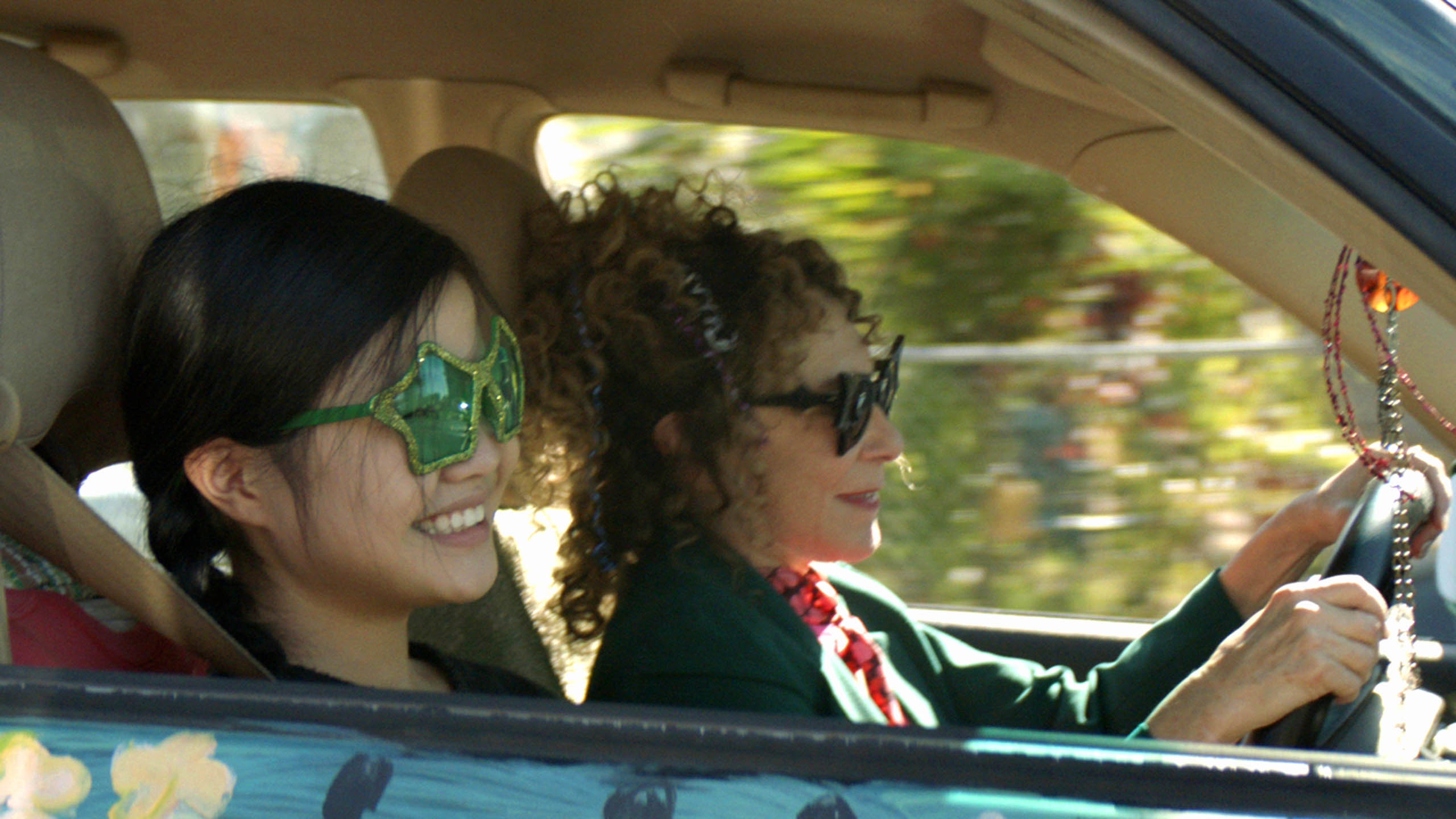
“Magician” is not on the approved list of business people, but Margot the Marvelous (Rhea Perlman) is hard to deny. Certainly the kindergarteners for whom she performs are mesmerized by her work. Even surly, sulky Sammy is drawn in, practicing magic in secret, longing to be invited to one of Margot’s “salons.” Of course, this also means she’s skipping class to pursue a very much dad-unsanctioned pastime with a woman he doesn’t even know exists. Sammy isn’t really worried about pleasing her father right now because he’s just announced his engagement to a new woman, who, you know, isn’t Sammy’s dead mom. Which means DRAMA.

Marvelous and the Black Hole exists to to add sweetness and light to your cinematic experience this year. Resilience and perspective are at the heart of this unlikely, oddball little intergenerational friendship founded in common pain. Miya Cech gives a believable performance as a bad girl, all brooding and sass, who’s not actually that bad, just hurting and lost. Meanwhile, Perlman’s special brand of snark is a quirky treat. Together they have a kismet that just kind of works.

We’ve seen a million coming of age tales and this one may be conventional but it’s still worthy of a watch. Director Kate Tsang’s imagination lends itself to some flashy sequences that help distinguish it from the pack. Marvelous and the Black Hole falls short of movie magic but it is cute and it is kind and it is relentlessly warm-hearted.

Sundance 2021: Coming Home In The Dark

Coming Home in the Dark takes only a few minutes to get to the point: Hoaggie (Erik Thomson) and Jill (Miriama McDowell) have brought their sons to a beautiful scenic point for a lovely picnic lunch. The teenage boys are livid of course, to be dragged outdoors, to be forcibly unplugged, even for a minute. But then the family picnic is crashed by some uninvited guests, who hold the family at gunpoint, wanting more from them than just wallets and phones.

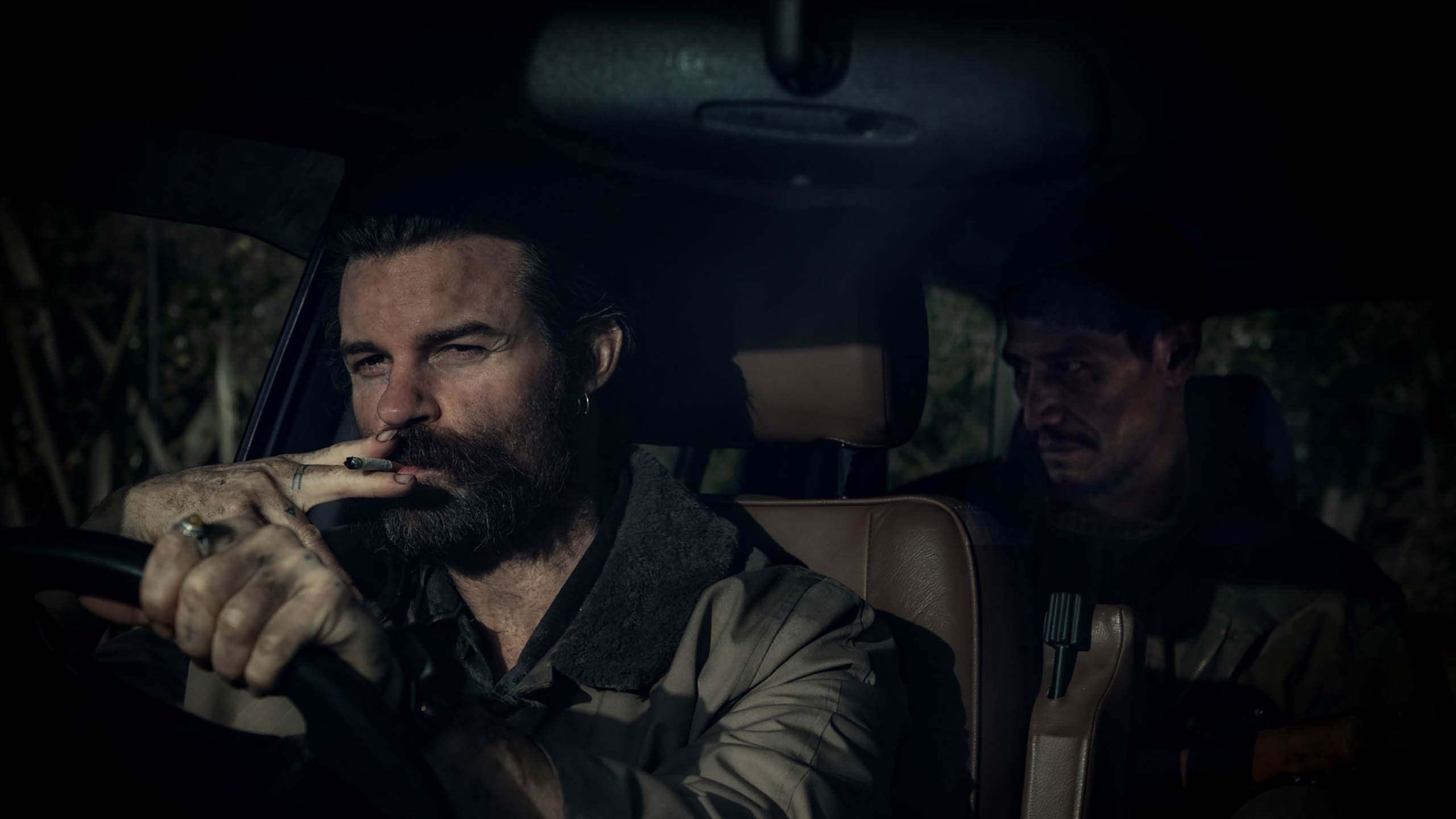
Holding them hostage, the two men with guns, Mandrake (Daniel Gillies) and Tubs (Matthias Luafutu), take them on a road trip nightmare that can’t possibly end well. But this isn’t some random stick up. Hoaggie has been specifically targeted because of his past as a school teacher and his survival might hinge on a terrible confession. This is a tale of revenge that skewers us with the question of whether or not silence equals complicity. Is allowing something bad to happen the same as doing the bad thing?

This movie will stun you with its intensity, its brutality, and its emotional impact. It doesn’t quite have enough to fully justify a feature length run time but it’s such an effective gut-punch that I’ll give its sparsity a pass. Though this movie is from New Zealand, I could still relate to the cultural trauma as a Canadian; we have sins in common. Many filmmakers here have worked with the subject but I’ve never seen it done so nakedly honest as this, a horror movie for horrific events. It’s an interesting way to comment on collective trauma and a new way to add to the conversation that clearly needs to keep happening.

Coming Home In The Dark stands on its own merits. More than just gripping terror, it features some magnetic, powerful performances that will make this film hard to shake. James Ashcroft I know I’ll come back to, because I’m certain he has more to say.

Sundance 2021: R#J

I think every generation deserves their own version of Romeo & Juliet, and this film is definitely targeted at today’s kids, while maintaining the soul of Shakespeare. Told exclusively through online content like Instagram posts and stories and lives, and through text messages written entirely in 2021’s unique gif-heavy jargon, R#J is set in modern day but is still identifiably Shakespeare’s most infamous romantic tragedy, told in his unforgettable language.

The beef between the Montagues and the Capulets has bathed the streets of Verona in blood from both sides. Romeo (Camaron Engels) knows better than to attend a party at the house of Capulet, but Benvolio and Merc entice him out, where he instantly starts crushing on a new girl with an arty IG account. After lots of back and forth flirting, Romeo and Juliet (Francesca Noel) find out they are mortal enemies, and it’s crushing. But they’re determined to lead with love, hoping their relationship will blaze a new path toward forgiveness. Of course, we all know how it goes; their families aren’t ready yet to let bygones be bygones.

Adding this new filter of social media lets us explore this age-old saga in new light. Online bullying, the viral destruction of someone’s reputation, the loss of control of one’s story; director Carey Williams has the privilege of a bold and savvy script, and together they manage to make these new aspects seem like they’ve always been part of Shakespeare’s intention. I don’t think classics are necessarily untouchable, but this is Shakespeare, so if you’re going to be ballsy enough to to make changes, the changes had better justify themselves unequivocally. I am astonished that after centuries of retellings, Williams still finds new ground here, fertile ground, new facets of the story worth expressing. He gathers an ensemble of young actors as talented as they are beautiful, including Maria Gabriela de Faria, Siddiq Saunderson, and Diego Tinoco, most of them born after Baz Luhrmann’s Romeo + Juliet was released, who help reinvigorate a play they probably studied four days ago in high school.

I know the mobile media aspect has been done to death, but so has Shakespeare, but we always make time for the stories that move us. I’m excited that a new generation will discover Romeo and Juliet with this smart and sexy film, and I’m pleased that even an old biddy like me can still find value in a story about impetuous teenage lust.

Sundance 2021: Passing

This film is based on the electrifying 1920s novel by Nella Larsen depicting two former friends who run into each other randomly in New York City. Irene (Tessa Thompson) and Clare (Ruth Negga) were friends in high school but haven’t seen each other since. Both women are biracial; Irene lives in Harlem with her husband and sons while Clare lives in Chicago with her own husband and child. The major difference being that while Irene lives authentically, Clare is passing for white. Even Clare’s husband John (Alexander Skarsgard) believes her to be white. In fact, needs her to be white, since, as he tells us, the only person who hates Black people more than he does is Clare herself. He’s even given her a “cute” racially-charged nickname that he loves to boast about. Clare lives deep, deep under cover. Irene sees the danger in the situation and resolves to stay away from her, unwilling to keep denying her own race to hide Clare’s.

However, when Clare and John move to New York City themselves, the two women reignite their friendship, despite Irene’s reluctance. Clare has been desperate for the unique comfort of being among her own people, but Irene is terrified of John, and of what might happen should he find out. But a mutual obsession grows the more time Clare spends in Harlem; they seem almost unable to untangle from each other even as their friendship threatens their carefully curated Truths.

Passing isn’t just about race. It takes on gender, sexuality, and importantly, class. Clare’s constructed identity revolves around her passing as white, but Irene’s identity is more wrapped up in her status. As the wife as a doctor, she strictly maintains her middle class boundaries, going as far as to isolate herself in order not to be mistaken for someone of a lower class, while Clare is much more comfortable straddling the lines and treating class as more fluid. Writer-director Rebecca Hall paints a beautiful portrait in which these two women exist, and develop, and she allows Negga and Thompson the space to explore who their characters are and why. Through lenses of happiness, jealousy, security, fear, and desire, we come to know these women and what guides them in their choices.

This is a fertile character study where psychology and motivation are layered in richness and depth. With its deliciously ambiguous ending, Rebecca Hall honours the masterful source material while also creating something impactful of her own.

Sundance 2021: Mass

I’ve seen a unicorn rip a man’s guts out, an axe chop a man’s toes off, and an eyeball skewered on a sharp metal tent peg. It’s Sundance, and I’ve seen some shit. And yet nothing prepared me to watch Mass, a movie about four middle aged adults sitting around a folding table in a church rental space.

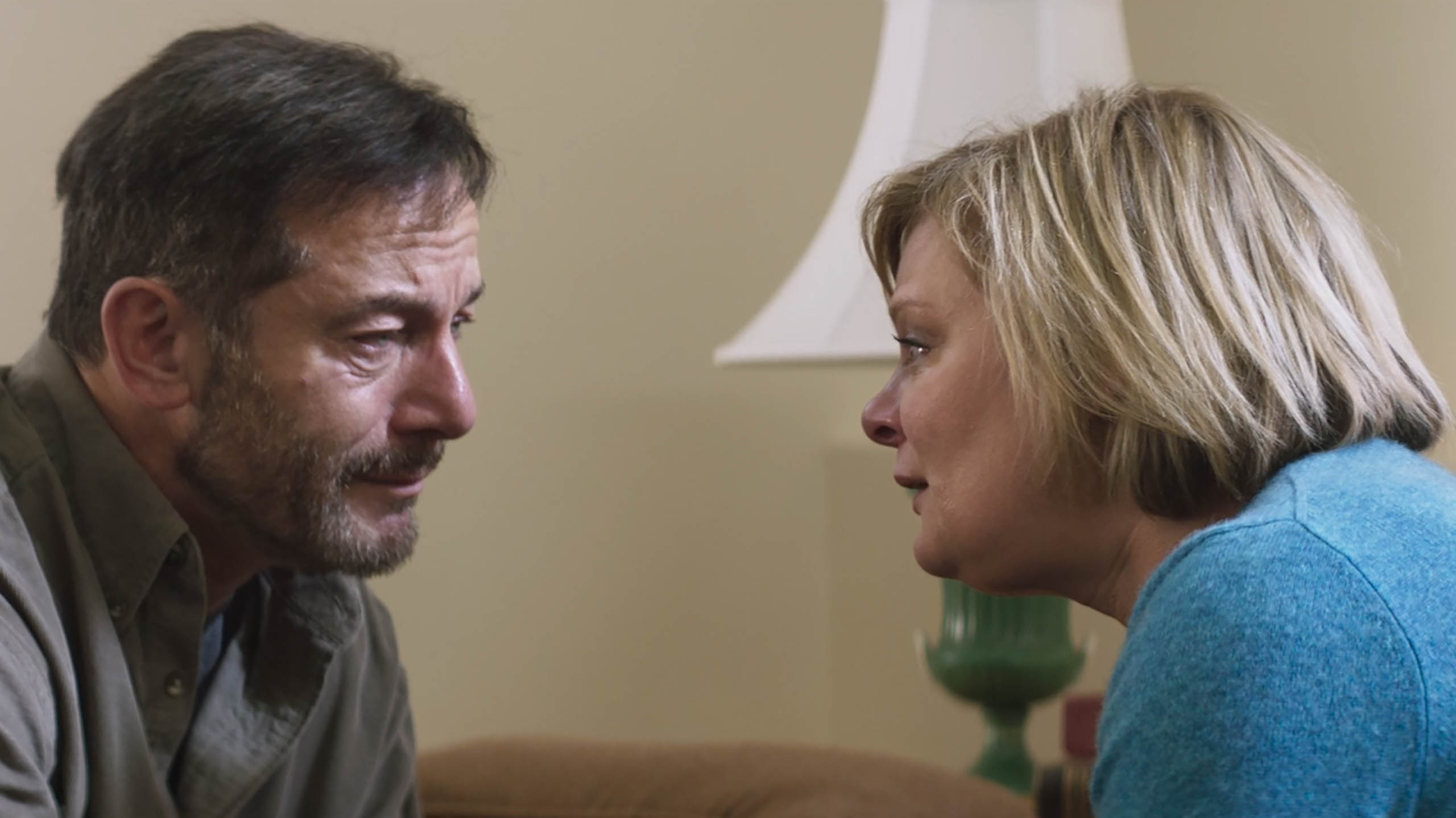
It’s hard to say who’s more reluctant to be there – Richard (Reed Birney) and Linda (Ann Dowd), or Jay (Jason Isaacs) and Gail (Martha Plimpton). Richard and Linda’s son killed Jay and Gail’s in a school shooter incident years ago, and this is an attempt for healing, or closure, or something other than the smothering pain they’ve been living in.

One room, 4 people, 110 minutes of emotionally exhausting confrontation, conversation, and contemplative silence. A movie like this either succeeds or it doesn’t based on two things: the script, and the performances.

The script, by director Fran Kranz, is restrained, nimble, as revealing as it is concealing. It’s almost voyeuristic to sit in on such an intimate and fraught conversation, but while we think we know where the lines will be drawn, Kranz shows the grief, victimhood, and aftermath of a mass school shooting is as complex as the event itself. It is natural to want to identify causes and assign blame, but here, in this room, guilt and innocence overlap.

Kranz is himself an actor with an intuitive sense of how dialogue can rise and fall, and how grief can express itself in more than just words. In this claustrophobic space, all four performances are committed; there is trauma and sorrow on both sides of the table. Each has lost a son. But Jay and Gail persist. They want, nay, they need to know: did Richard and Linda see this coming? Is there something they could and should have done? There isn’t going to be an easy answer here, just pain across four faces. Recrimination, bitterness, anger, empathy, and loss. There are heavy burdens in this room and perhaps Kranz is a little inclined to tidy them up by the end, but grief isn’t something you fix or get over. It’s something you learn to live with – the question is, will this conversation help them do so, and if not, can anything?