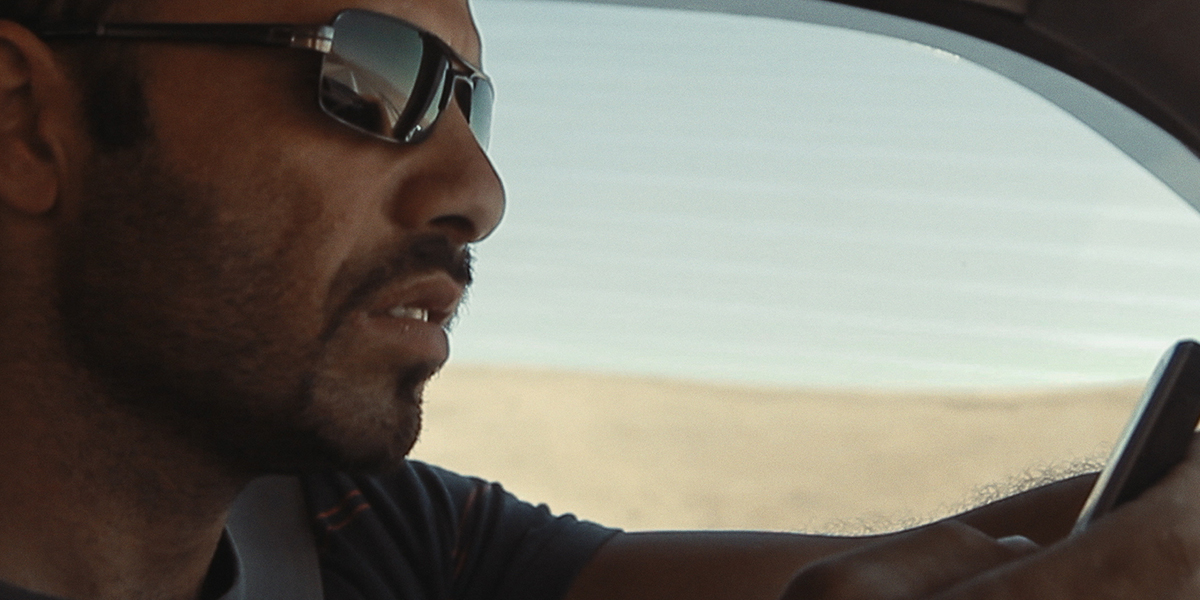
Hamouda and his cousin Ismail are Palestinian Bedouins living in the town of Yatta. With few ways to make a decent living, they offer a unique taxi service, driving Palestinian workers across the Negev desert to a southern gap where Israel’s border wall hasn’t been finished. Or smuggling Palestinian workers, I should say, as this is technically extremely illegal. If caught, everyone in the car will go to jail. Both driver and passenger is risking his life to feed his family. Neither sees any alternative.
Documentary filmmakers Mohammed Abugeth and Daniel Carsenty spend eight years in the passenger seat, capturing these dangerous drives with a sense of urgency many will liken to a 1970s car chase, but for these men, the stakes are real. They drive stealthily, obscured by clouds of dust, they live suspiciously, paranoid that neighbours may be spies, they work reluctantly, carefully evading the military but always fearing getting caught; they survive precariously, living amid hostilities.
At the end of the day, these are just regular men, with homes and children and jobs they don’t like. Living under occupation has taken its toll, and Abugeth & Carsenty deftly capture what it’s like to exist under such difficult circumstances, to try to be a decent guy – a day who comes home to play with his kids, a neighbour who still waves hello, a brother still dutiful to his family. Life in Palestine is rough. Living and working in a pressure cooker changes you. Hamouda and Ismail won’t be the same men when this film closes.
Abugeth and Carsenty work well together, bringing a full and authentic picture of the human condition flailing under such conditions, yet persisting, irrepressible.
The Devil’s Drivers is an official TIFF2021 selection.
A rural farming township since 1850, Scarborough became the easternmost borough of Metropolitan Toronto in 1953 but grew to be such a busy suburb it became its own city in 1983 – only to amalgamate once again in 1998 into the present City of Toronto, though it remains a distinct, fully urbanized and diverse cultural community. A popular destination for immigrants, it is home to many religious groups and places of worship. It is still the greenest place in Toronto, but it is also the poorest. More than half of residents are foreign-born, and nearly three-quarters are visible minorities. It is a neglected neighbourhood, with fewer of the city’s resources being diverted toward its infrastructure, education, etc, purposely forgotten because of race and class. This is the space in which the film Scarborough and its characters exist.
Three kids meet in a Family Literacy program in their school. Free breakfast is the biggest draw for these kids and their parents, but while there, the program’s teachers emphasize good parenting techniques and reading as a family activity. The program’s directors arrogantly presume that these children have fallen behind because of poor parenting rather than housing instability, unemployment, the demands of special-needs children, English as a second language, inadequate nutrition, racial inequalities in the education system, and other important risk factors. Social factors are outside their purview, so they are roundly ignored even when clearly an obstacle to a child’s development.
Luckily for these three friends – Bing (Liam Diaz), Sylvie (Essence Fox), and Laura (Anna Claire Beitel) – they see each other more clearly than any government agency, social worker, or teacher ever well. They’re just kids, learning to read, yes, but also learning to cope, to fit in, to survive. Bing and his mother fled abuse in the middle of the night. Laura gets shuttled between an addict mother and an angry father, and Sylvie tries not to be forgotten between her autistic brother and disabled father.
Scarborough moved me. These kids go through so much, grow up so fast, and yet all they desire is a friend and a piece of candy. Their wants are so modest that it breaks the heart to see them disappointed time and again, to see them failed by the very people meant to protect them. The film isn’t accusatory, though. That would be futile. Instead, it invests in a generation tasked with saving itself, with somehow escaping the cycle of poverty while being forced to run its gamut.
The filmmakers have done a wonderful job generating authenticity and empathy for its characters while showing them with nothing but the dignity they deserve. The casting is particularly commendable as most are non-actors and yet the kids are natural and charming despite some really tough topics.
Scarborough will sit in my heart for a while. It’s a beautiful film, both visually and spiritually, and brave for making its world premiere in the heart of Toronto itself, at the Toronto International Film Festival.
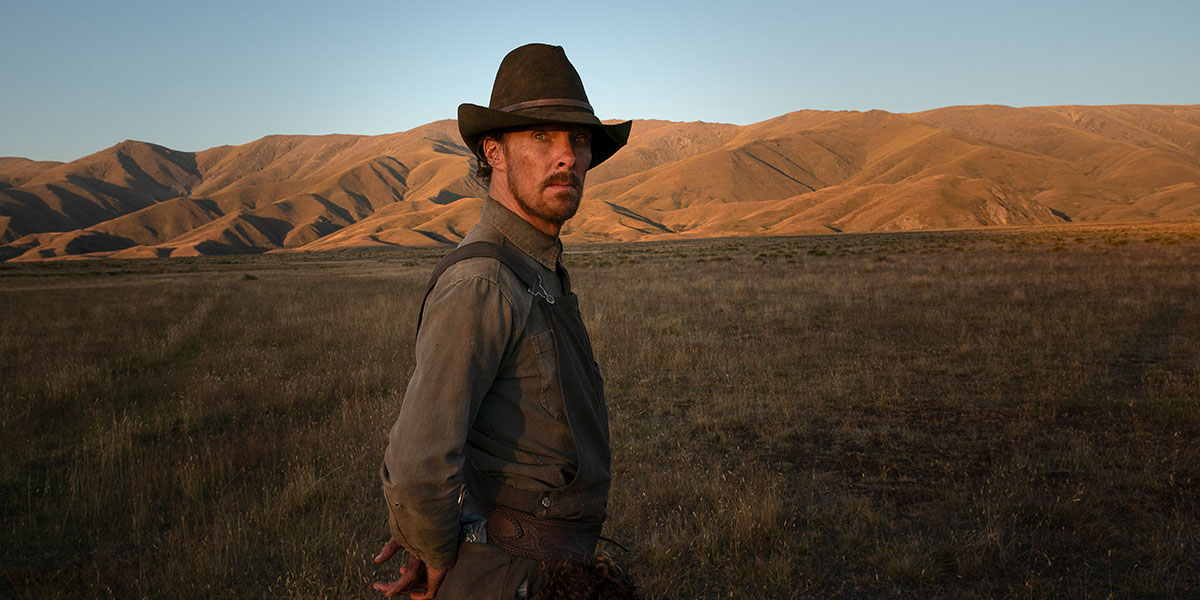
Rose (Kirsten Dunst) is a widow running a dusty little restaurant in the middle of nowhere, Montana, 1925. She has a gangly, sensitive son named Pete (Kodi Smit-McPhee) with an interest in medicine and a fondness for flowers. One night, a bunch of crude and rowdy cowboys come in for supper. Their bosses, ranch owners Phil and George Burbank, are brothers you’d swear were from different mothers. George (Jesse Plemons), the more mild-mannered of the two, wears a literal white hat. Phil (Benedict Cumberbatch), is the mean one, the man with the sharp edge, who eggs on the cowhands as they verbally abuse Pete as he waits on them. Pete dissolves into nervous ticks, his mother dissolves into tears. Tender-hearted George checks in on them and one thing leads to another – pretty soon he’s confessing to brother Phil that he and Rose are married.
Rose’s life at the ranch isn’t a happy one. Phil is determined to make her life miserable, and Rose wilts and regresses under his misathropy and mistreatment. Husband George, clueless when it comes to women, tries to cheer her up with a piano she can’t play, and social engagements that are more of a burden. The Burbanks are gentleman farmers, which George embraces, well-dressed in bowties, hands kept clean, nothing but gentility for him. Phil, meanwhile, has no time for baths because he’s too busy riding the land, castrating the bulls, and bullying everyone in his vicinity. With Rose turning to bourbon to escape her unhappiness, tensions are about to get even worse with Pete about to join for his summer break from med school. His delicacy makes for an easy target on the ranch, and seems to bring out a particular cruelty in Phil.
Writer-director Jane Campion may not seem like the obvious choice for a film about toxic masculinity, but trust that she is a master story-teller and will get the job done. The Power of the Dog may be a little slow to start, but the tension Campion builds is powerful, even uncomfortable. From the moment Cumberbatch punches a horse in the face, you know without a doubt that something terrible (well, more terrible) is going to happen. There’s a certain fatalism about it; with every character that’s hiding something, repressing or sublimating something, we feel that tension tightly coiled and ready to spring like a predator on its prey.
Campion digs deep into their psyches, and a talented cast goes a long way in helping her establish bits of torture and trouble roiling beneath, but it’s never what you expect. Though Phil despises weakness, it can sometimes be an asset, hiding things in plain sight. This is also a metaphor for the film, the way it creeps up on you, even though you’re expecting it, even though you see it coming, it will still surprise you.
Dunst and Plemons are very good in this, their real-life romance lending authenticity to their quiet, couply moments. The film, however, comes down to the strange, complicated, and antagonistic relationship between Peter and Phil. Peter brings out the worst in Phil, he triggers something in Phil that he seems powerless to ignore. Smit-McPhee plays Peter meekly, deferring and often cowering to Phil, but also seeming to understand something essential about Phil that no one else can see. And although this is not the kind of role Cumberbatch is known for, he finds so many nooks and crannies in Phil that he makes him a truly compelling, almost charming, character. He’s educated, and cultured, but he prefers to walk around in stinking chaps, with testicle juice caked around his fingernails. His misanthropy seems automatic, his cruelty instinctual, and yet when no one else is around, we see a softer side of Phil, a side he takes great pains to keep secret. Yet somehow Cumberbatch can take those two sides of the character and make them feel both at home in the man who always remains a bit of a mystery, perhaps even to himself.
The Power of the Dog implies that everyone has a tormentor, and Campion delights in dangling them with astonishing talent and assured mastery. I can’t wait to see it again.
The Power of the Dog is an official selection of TIFF 2021.
It is scheduled to be released in an Oscar-qualifying, limited theatrical release on November 17, 2021, and then heads straight for Netflix on December 1. It is already a Best Picture front-runner so catch it any way you can.
In director Panayioti Yannitsos’s new documentary, a bunch of firefighters in New York City, Toronto, Detroit, and Vancouver discuss the difficulties of working this job. As first responders, they’ve seen some shit, the worst of which is difficult if not impossible to ever forget. They bring those disturbing images and experiences home with them, intentionally or not, colouring their entire lives, affecting time spent with family. For a long time, the mental health aspects of the job just weren’t discussed. They attended each other’s funerals, never mentioning the word suicide but knowing what it was nonetheless. The post-traumatic stress is real, whether it’s named or diagnosed or not. This job takes its toll.
This documentary offers up an interesting cure. Florian’s Knights is a motorcycle club for firefighters. “Wind therapy,” one of them calls it. There’s something about the quiet and peace of the open road that allows them the time and space to process the pain and foster brotherhood with people who actually understand. [Florian is the patron saint of firefighters, fyi]
Silence and solitude have been the default and dominant methods of ‘dealing’ with the demands of the job for as long as holding a hose has been someone’s job. Finally, this club offers up the chance to actually express themselves in a safe space where family and work don’t have to be separated. It’s a solution they found themselves, and by offering new chapters to fire departments in different cities and countries, it seemed Florian’s Knights were likely to be a healthy alternative for battling the effects of PTSD.
Except not all motorcycle clubs are created the same, and some have an incredibly long history of violence and criminality. Once associated with the Hell’s Angels (in part by wearing 3 piece patches, emblematic of outlaw MCs), Florian’s Knights flounders. What will happen to men who have nothing else if this is taken away? Who wins?
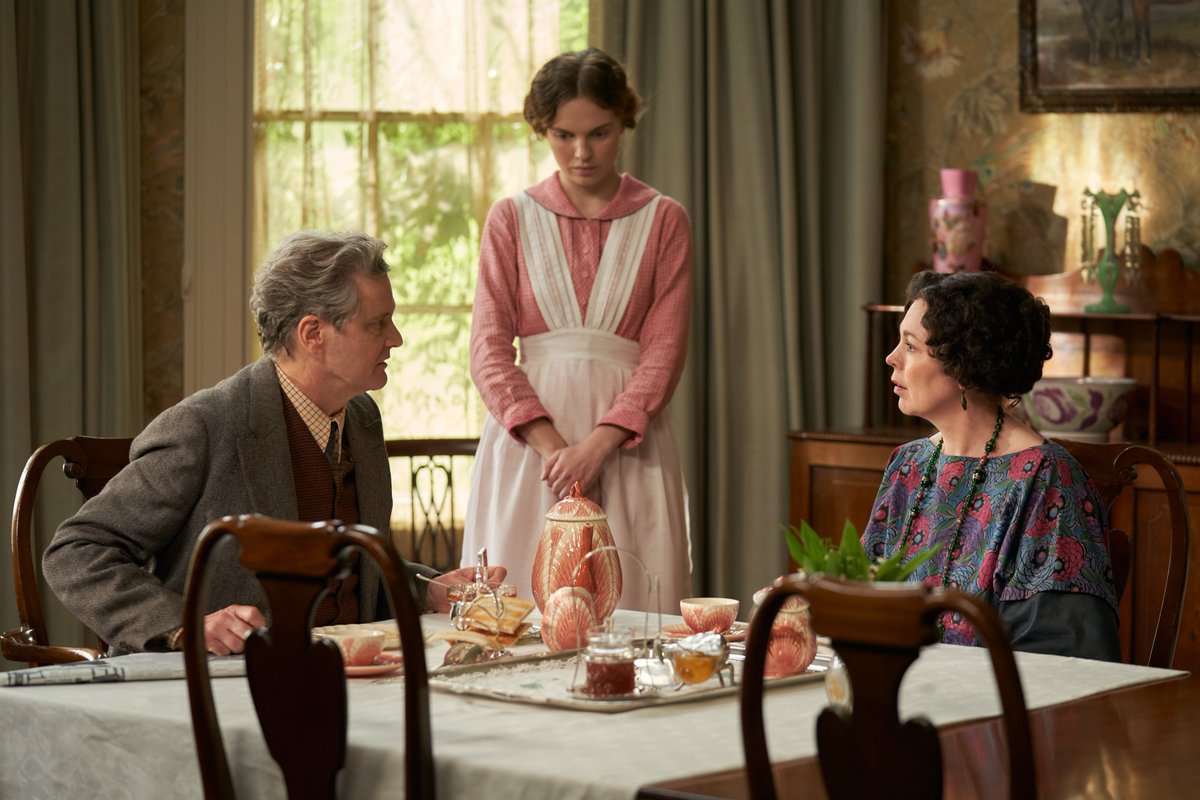
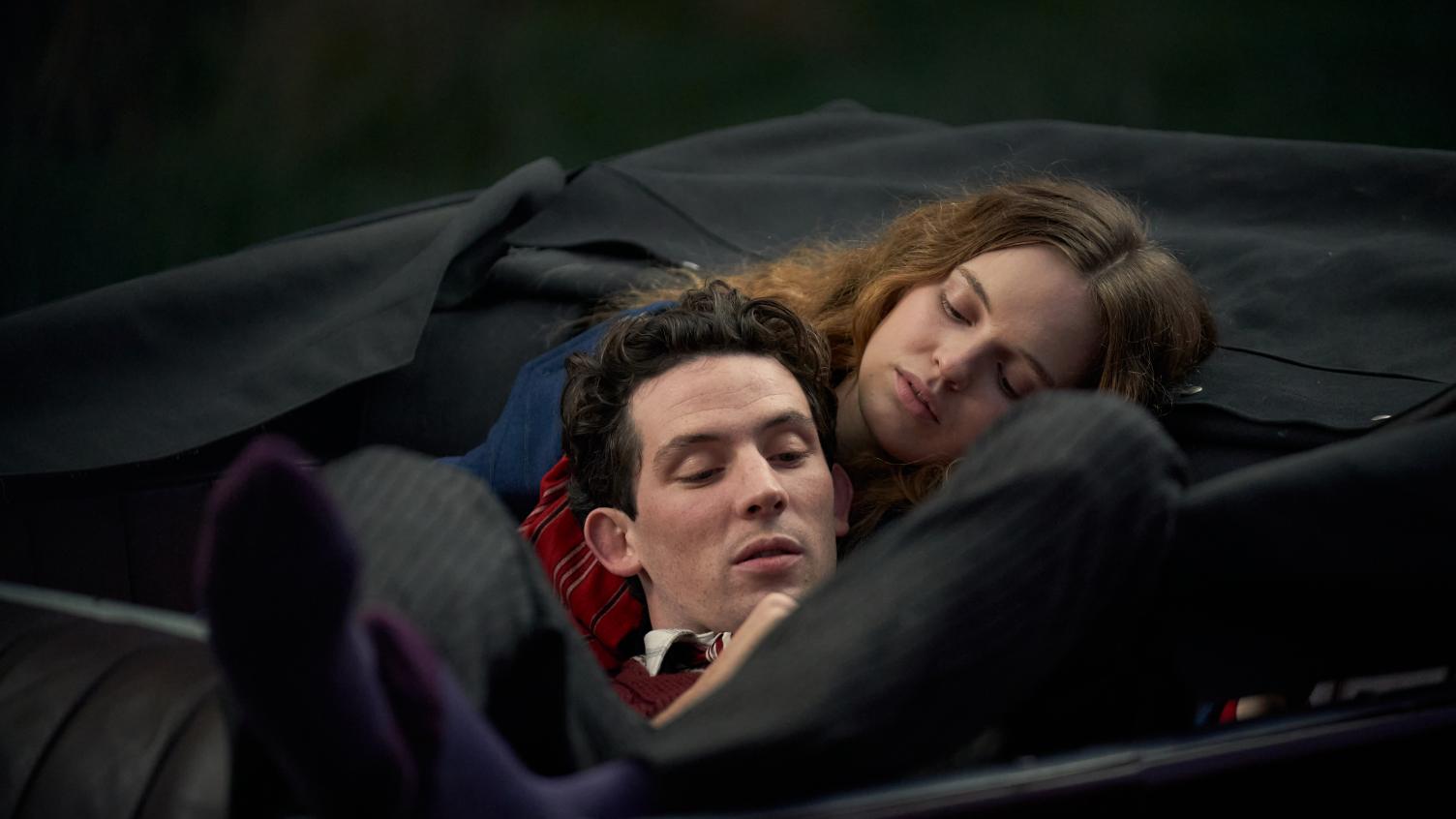
Jane Fairchild (Odessa Young) grew up in an orphanage and was turned out at the age of 14 and pressed into a life of service. She works as a maid in post-WW1 England for the Nivens (Olivia Colman & Colin Firth), who lost both sons in the war. Their dearest friends the Sheringhams also lost two sons in the war but have one remaining – Paul (Josh O’Connor). All 5 boys grew up together and were quite close. The Nivens have come to think of Paul as a little bit theirs.
Jane, too, has come to think of Paul as a little bit hers because they’re having secret sex at every opportunity, which are admittedly few. In addition to the upstairs-downstairs wrinkle, there’s also the small problem of Paul’s being engaged to marry (someone else). He’s actually engaged to a woman who was meant to become the Nivens’ daughter-in-law, but now goes to Paul, by default. As you can imagine, it’s not the most romantic of engagements, but he considers it his duty as sole survivor to do what the others cannot.
The movie looks gorgeous, of course. This is what British cinema does best. But it’s also completely morose, unrelentingly gloomy, and unforgivably languid. Grief and loss shimmer insistently in the corners, but the British propensity for a stiff upper lip prevails, and all these grief-stricken parents do their best to muddle on in their big empty homes that feel more like memorials.
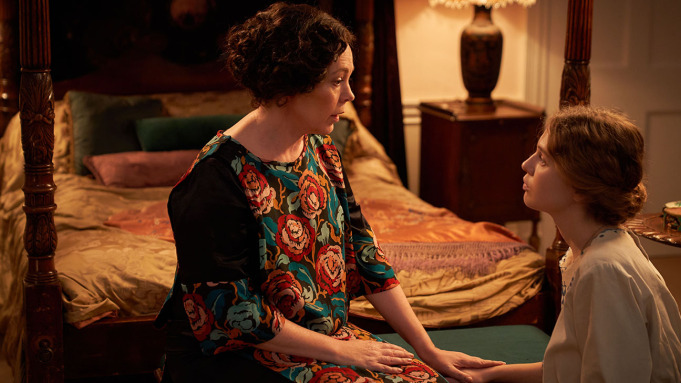
Traditionally, before mother’s day, mothering Sunday was a day off you gave the servants to go visit their mums. The title used here makes us painfully aware of so many sad circumstances. What is a mother when all her children are dead? And what is a daughter when her unknown mother gave her up? In her fog of despair, Mrs. Niven tells Jane how lucky she is to have been “born bereaved;” with no parents or family to lose, Jane will never know the pain of their loss. Being motherless is a gift, so says a woman drowning in grief and cynicism, Jane is free because she has no-one to care about. It’s both true and not true (not to mention a pretty awful thing to say, though we’ll forgive her because she’s completely heart broken but trying plenty hard not to let the mask slip). Jane has no mother to visit on Mothering Sunday, but that leaves her free for a fuckfest with her lover. And though Paul’s just a fortnight away from marrying (this is likely their last encounter), their time together isn’t tinged with sadness. They linger over each other with fondness, naked and unafraid. But Jane isn’t going to find a happily ever after here (nor, for that matter, is Paul). At most, suggests a future Jane, played brilliantly if briefly by Glenda Jackson, it is fodder for a brilliant writing career.
Unfortunately, the film lingers over literally everything, and though there are some brilliant bits, they are too few and too far between to really gather momentum or build emotion. The whole thing comes off as rather cold, an old woman’s memory of a torrid love affair that’s lost its heat.
Mothering Sunday is an official selection of TIFF 2021.
I know I don’t need to tell you what today is. 20 years. Everyone remembers.
In 2002, artist Ruth Sergel set up a plywood video booth, inviting people, including eye witnesses of the attacks, from New York City, Washington, D.C., and Shanksville, PA to share their experiences. It wasn’t an interview; people stepped into the booth, hit a button, and shared whatever was in their hearts, as much as they could. Directors Bjørn Johnson and David Belton sifted through that raw footage and cobbled together an emotional tribute to that horrible, fateful day, telling the story from personal, intimate accounts of what it was like to survive that day, to lose on that day, to live through that day. As Johnson puts it: “the human story behind the tragedy.”
“Enjoy” is not the right word, but I did appreciate the film. It’s rather affecting to hear people speak from such a raw place, the wound not yet scabbed over. But for Memory Box: Echoes of 9/11, the filmmakers go one step further, building a new box but asking back the same people, people will revisit those wounds 20 years later and find them, if not exactly healed, then scarred at least. The tragedy is not so immediate, the emotions not so high. The people – survivors/victims/witnesses – have had time to reflect. To grow as people, to move on as casualties.
The box itself evokes the confessional, and inside, people admitted to guilt, grief, rage and resilience. We sit with them – the grieving parents, the young widower, the first responder, etc – and we hear their unfiltered stories. There are plenty of gruesome images in the media of that day; this documentary focuses not on what people saw that day, but what they felt. Like One World Trade Center (Freedom Tower) now standing in lower Manhattan, these testimonials form a de facto memorial, a living memorial, not just to people and places, but to the way the world used to be.
Memory Box: Echoes of 9/11 is an official selection of TIFF21.
Look for it on NBC/Peacock.
If you’d like some way to mark the occasion without dredging up so many painful memories, Apple TV has Come From Away, an uplifting Broadway musical about the best of humanity on that tragic day.
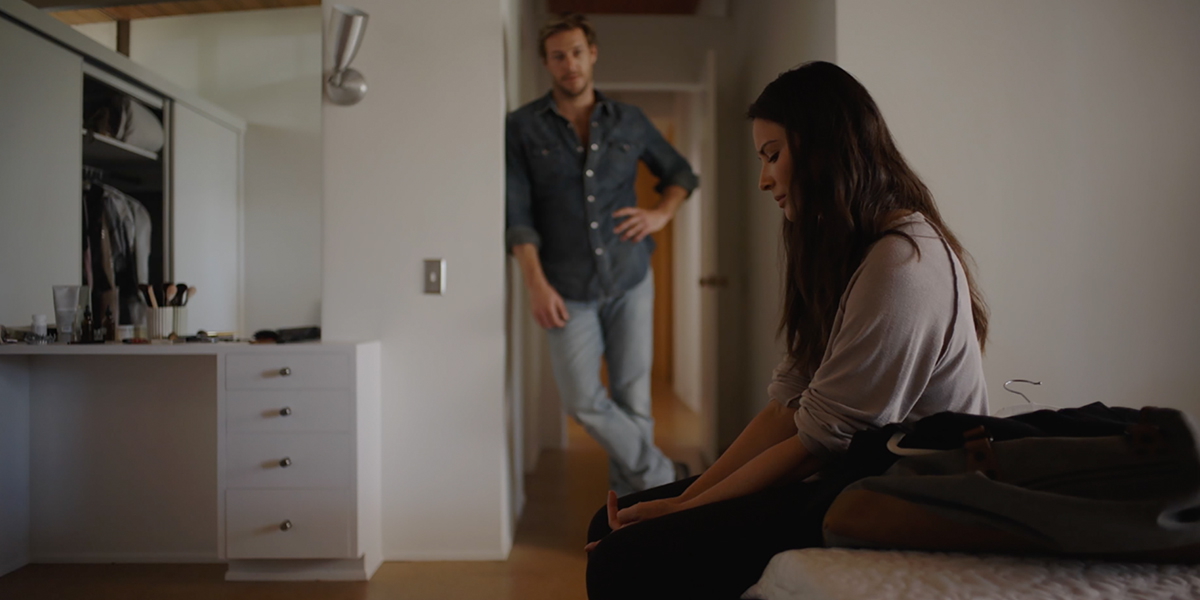
By outward appearances, Violet (Olivia Munn) is very successful. Her career is thriving, her beautiful home is under renovation to become even more beautiful, and everyone who knows her is largely jealous. But Violet has become crippled with self-doubt. Those nasty voices in her head (she calls them The Committee) have become highly critical and belligerent. She’s been allowing her inner fears to choose for her, guided not by what she wants, but what she should want.
Writer-director Justine Bateman insists that the most important character in the movie is you – YOU, the audience member. I suppose that she means that how we relate to Violet (or not) will inevitably colour our experience of the film.
The Committee is voiced by Justin Theroux: we literally hear her anxiety, always nagging, always insisting that she’s less capable, less valuable, less desirable, less worthy. Her innermost thoughts, the ones where she allows herself to be vulnerable and honest, to express her needs and wants, go unvoiced, never even whispered. We’re made aware of them only by writing on the screen. So we see the push-pull between what she truly wants, what her self-doubt thinks she deserves, and then the path she actually chooses, rarely the one she actually wants. We see her long for comfort and company even as she pushes someone away, and that inner conflict resonates so deeply that it almost takes your breath away.
Bateman has actually captured the essence of the human spirit. Negative thoughts are loud and cyclical, difficult to ignore because they voice our darkest fears. The heart’s private desires are so much harder to express; we fear their rejection so wholly that we’d rather not give them voice at all. But how are we to find happiness while repressing so much of our true selves? That’s not just Violet’s quest, it’s all of ours. To live openly and authentically is to be exposed. Violet is a grown woman, some would say in the prime of her life, yet she’s still grappling with this basic, foundational notion of self-image.
Violet is part of the Toronto International Film Festival’s lineup this year, and anyone who’s attended TIFF with any kind of regularity knows that by day two, audiences are intimately acquainted with the commercials aired before each film (often audiences will have perhaps even spontaneously developed call-and-answer reactions to each, which will haunt us all for the duration of the festival). This year, one of TIFF’s regular sponsors, L’Oréal, has a commercial starring Viola Davis about self-worth, about how it’s not a destination but a journey. I almost cannot believe that a commercial from the beauty industry feels like a companion piece to this thoughtful film, but there you have it. Quashing negative thoughts takes a lifetime of diligence and practice. First we have to learn to identify them, which is where Violet’s at when we meet her. The Committee has become aggressive, but she’s on to them. Next we’ll have to actively challenge them, which is much harder, especially for women who are conditioned to be deferential, and to expect less. Violet is fighting her fight, forging identity, worth, and satisfaction, essential tasks of adulthood. Between a lovely cursive font and Justin Theroux, we’re aware of her fight, but also subtly conscious that the other characters in the film must also be experiencing something similar, battling their own self-doubts, dousing their own anxieties. And so must we all. And learning that is perhaps the greatest lesson of all. It’s called empathy.
Man makes crude bet with friend, vows to marry the next girl who walks in.
Sounds like the premise of one of those beach-reads romance novels, or a cheesy teen romance, but in fact, this is writer-director Ildikó Enyedi’s latest period drama. So what’s the difference?
Sea Captain Jacob Störr (Gijs Naber) is ready to marry, he declares to his friend. “To whom?” the friend inquires, naturally. Jacob doesn’t know yet, so he proposes that he will marry the very next woman who enters the café. Lucky for him it’s the lovely Lizzy (Léa Seydoux), who proves surprisingly amenable to his plan.
Is it a good idea to marry so impetuously? Jacob and Lizzy will soon find that love and marriage are about as turbulent as the seas he routinely conquers as captain of a large vessel, and not so easily navigated. Marriage without courtship, indeed without even basic familiarity, does pose its challenges. The Story of My Wife is the story of a man discovering his wife after he’s already married her. She’s coy, and teasing, and he can never get a good read on her, and since we know Lizzy only through Jacob’s eyes, neither can we. Is she sincere? Serious? Unfaithful or just a flirt? Whatever charm resides in her mysterious character evaporates in the sheer repetitiveness of the film, Jacob’s jealousy coming to a head over and over again.
Jacob is awkward on land, and even more uneasy when he finds himself unable to captain his marriage and steer it in the direction of his choosing. Used to taking people at their word to a fault, Jacob cannot credit his wife’s womanly wiles. It’s mildly interesting but this clunker takes on water steadily but takes almost as long as Titanic (the movie, about 3 hours) to sink. I’m quite sure that you’ll have jumped overboard long before then. The Story of My Wife beguiles us with its pretty 1920s setting and Seydoux’s luscious ringlets, but it ultimately fails to hold the attention.
The Story of My Wife is an official selection of TIFF21.
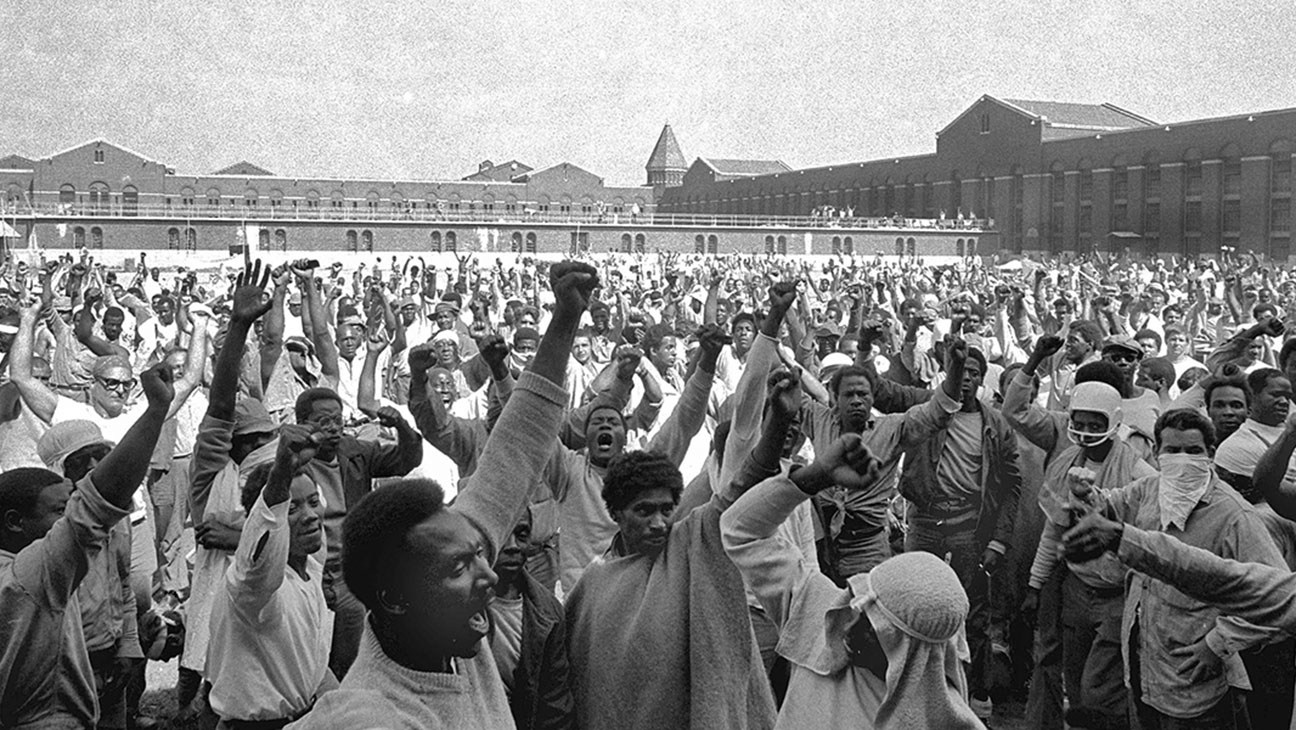
On September 9th 1971, the inmates at Attica took over the prison; it was the largest prison rebellion in U.S. history. 1200 prisoners now held half the prison in their power.
Tension had been brewing for months, at least, over the poor conditions of the prison. In fact, two months earlier, the prisoners had peacefully sent a list of 27 demands to the commissioner of corrections, and the governor. No actions whatsoever were taken, and the prison warden retaliated against those inmates by increasing restrictions.
The prisoners once again put forth a list of demands and prepared to negotiate in good faith. They asked for simple things like better medical treatment, fair visitation rights, edible food, religious freedom, an end of physical abuse, and for basic necessities like toothbrushes, showers, and toilet paper. They held 42 guards and civilian employees as hostages.
When negotiations broke down, blood was spilled as the corrections commissioner ordered the prison taken back by force. It needn’t have happened.
Director Stanley Nelson examines all angles of this most deadly riot, interviewing surviving prisoners, victims’ family members, lawyers, and journalists. He tries, perhaps in vain, to understand the series of poor decisions that led to violence as a response to men simply asking for basic human rights. And not only that, but when troopers stormed the building, they shot inmates who were not resisting as well as hostages, using ammunition banned by the Geneva Conventions. Law enforcement shot at least 128 men, killing 10 hostages and 29 inmates. That’s right, the operation was so disorganized that they killed ten of their own. How did this happen?
The answers are never going to be satisfying, but Nelson does his best to untangle this mess and bring some sense to it, maybe even some closure.
Attica is an official selection of the Toronto International Film Festival 2021.
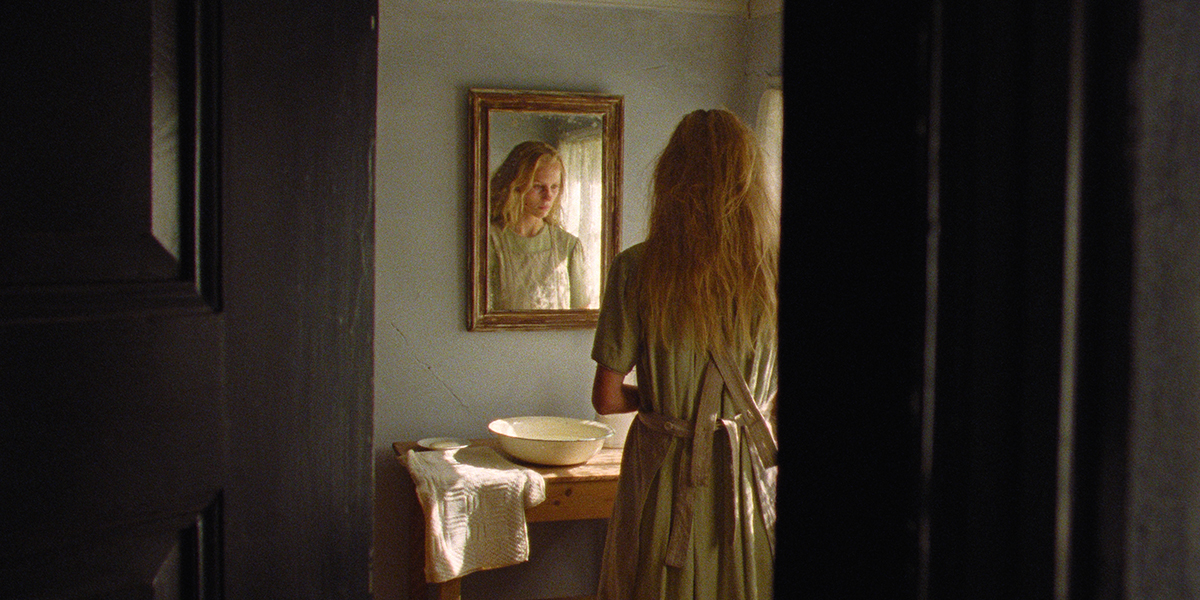
In 19th century rural Denmark, Lise is a 14 year old girl on the cusp of what her time and place would consider womanhood. Her father thinks educating girls is a waste of time, but Lise’s mother Anna sees her intelligence and her need for more, and insists she be sent off to school, which means leaving the farm, her family, and her crush.
Anna, at the end of a difficult pregnancy, goes into labour. It is bad, immediately bad, but Anna refuses to call for a doctor. She had a dream wherein a doctor was called, and she died. Her mother-in-law, the stern and taciturn Old Sine, presides over the birth, guided by her own portents, prayers, and visions. The hours drag on as blood soaks through the mattress and Anna’s moans grow increasingly savage. Meanwhile, Lise tries to comfort her siblings as they cower together just out of sight. They wonder what will become of them should their mother die, and Lise, as the eldest, considers that this might be a punishment from God – and that Lise herself might be the cause.
Director Tea Lindeburg was drawn to the material because its themes felt alarmingly contemporary. Anna’s poor choices are made out of fear and ignorance – these are uneducated farmers, established enough to have options but superstitious enough not to use them. Today ignorance doesn’t have to be an excuse, the science is there, yet we still see misinformation and dogma offered as reasons not to follow doctor’s orders.
As In Heaven is thoughtfully created but slow to watch. As young Lise, Flora Ofelia Hofmann Lindahl contains multitudes and stirs empathy, particularly as she begins to doubt herself, and her motivations. Contemplating her mother’s death is awful for many reasons, but selfishly, Lise wonders if this will affect her ability to go to school. As a modern audience, we understand the consequences more keenly, aware that if she doesn’t go, the cycle of ignorance continues. As In Heaven shows us the personal cost of ignorance, but more importantly, it hints at the greater social costs as well.








 ASSHOLES WATCHING MOVIES