Malcolm and Marie

Malcolm (John David Washington) returns home after the premiere of his movie in celebration mode, having lapped up nothing but praise in its wake. His longtime girlfriend Marie (Zendaya), however, is in a darker mood. As she prepares some kraft dinner for him, she cautions him that they should wait until morning to discuss but Malcolm doesn’t recognize good advice when he hears it and insists on airing things out.
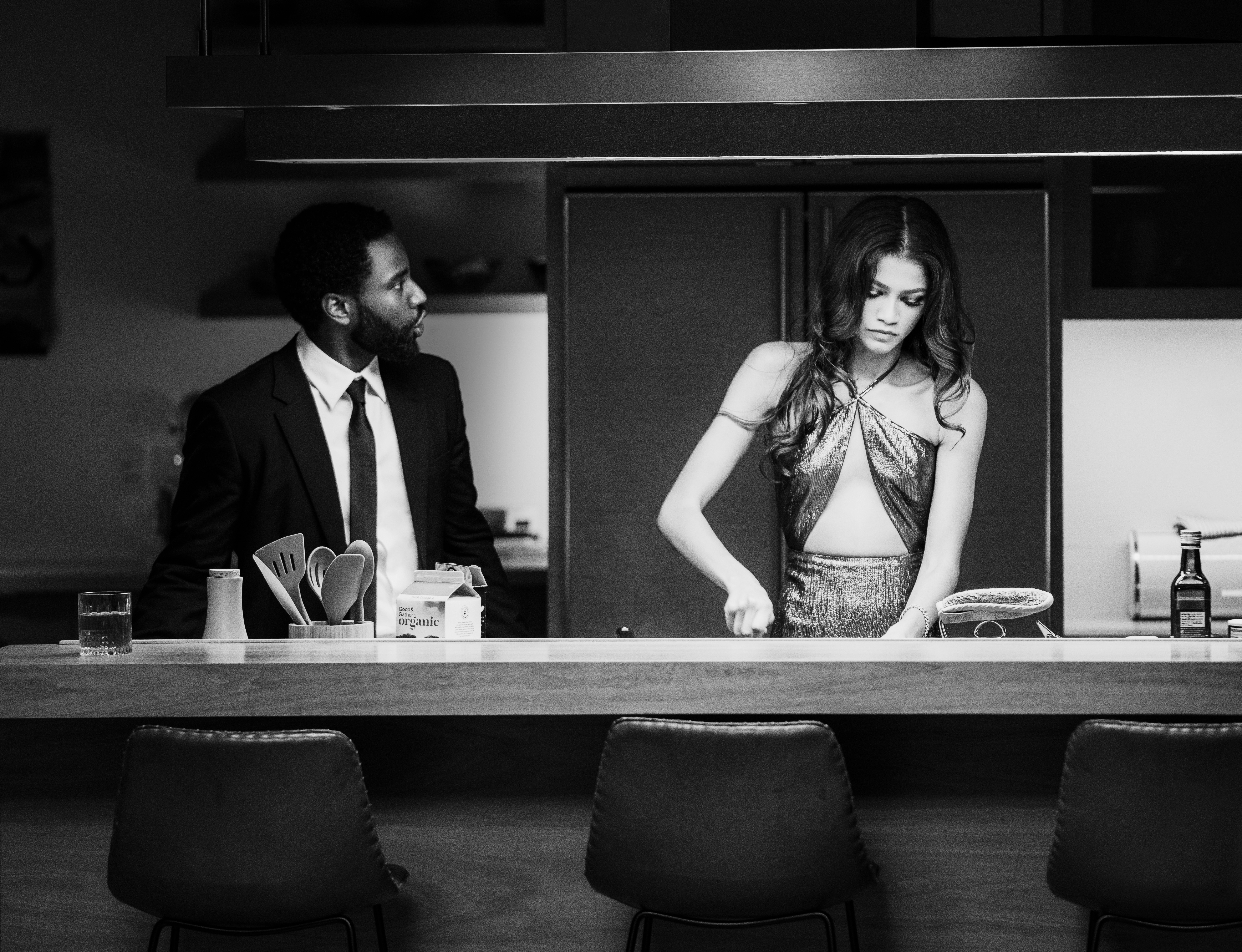
Is Marie mad because Malcolm forgot to thank her in his speech? Yes and no. It’s a symptom, she thinks, of a larger disease in their relationship. At any rate, it’s the starting point to a very big, very bad fight that will last for hours – that is, in fact, the entirety of this movie. Sam Levinson writes and directs, and shoots these two in just a handful of room in a rental house where the feeling is claustrophobic, and the need for air is never quite satisfied. Marcell Rév’s cinematography is to die for, and sometimes you feel as though you just might, because this fight is so tense and raw and horrible it seems easier to just drop dead than to continue on in this vein.

That said, is this a fun watch? No it is not. It feels very heavy at times. But you continue watching, almost glued to your seat, transfixed by two heavy weight performances. John David Washington shows full spectrum range, his character careening wildly from love to hate and back again, always at full steam, full froth, full strength. Malcolm goes off on several volatile tangents, taking shots at Hollywood, criticism, perspective, and identity; in this state, anything and everything makes him angry and nothing escapes his vitriol. Zendaya as Marie is perhaps slightly more stable but no less emotional. Giving your heart to someone else also means giving them ammunition and these two know how best to wound each other, and neither is pulling any punches. With deliberate cruelty, they pick at every scab they’ve inflicted over the course of their relationship and it’s hard to watch.

Malcolm and Marie will understandably be polarizing. It’s hard to spend any of your precious time watching another couple fight, yet I believe the performances are so stunning and relentless that it makes it all worth it. There’s no plot at all, just insults and accusations, yet this is how Levinson’s script allows us to discover these characters, their back story, their hurts and hopes and ambitions and secrets. Levinson carefully balances and imbalances the dynamics of this relationship over the course of the night. Neither comes off as overly likeable or entirely sympathetic. A fight like this inevitably shows you at your worst, but for Washington and Zendaya, these performances are career best.
Sundance 2021: Marvelous and the Black Hole

Sammy’s been misbehaving at school and copping an attitude at home. You might be tempted to give her a pass considering she’s a teenager who has recently lost her mother, but Sammy’s dad is not. He’s had it up to here with her, and believe me, I’m indicating a pretty high marker over here. He’s threatening the equivalent of military school, but she’ll get one last chance that involves acing a college business course he’s forcing her to take. It’s lame and she’s not happy, especially since they’re supposed to choose a local business person to interview. To do the absolute minimum required, Sammy (Miya Cech) interrogates a nosy woman she meets in a public washroom.

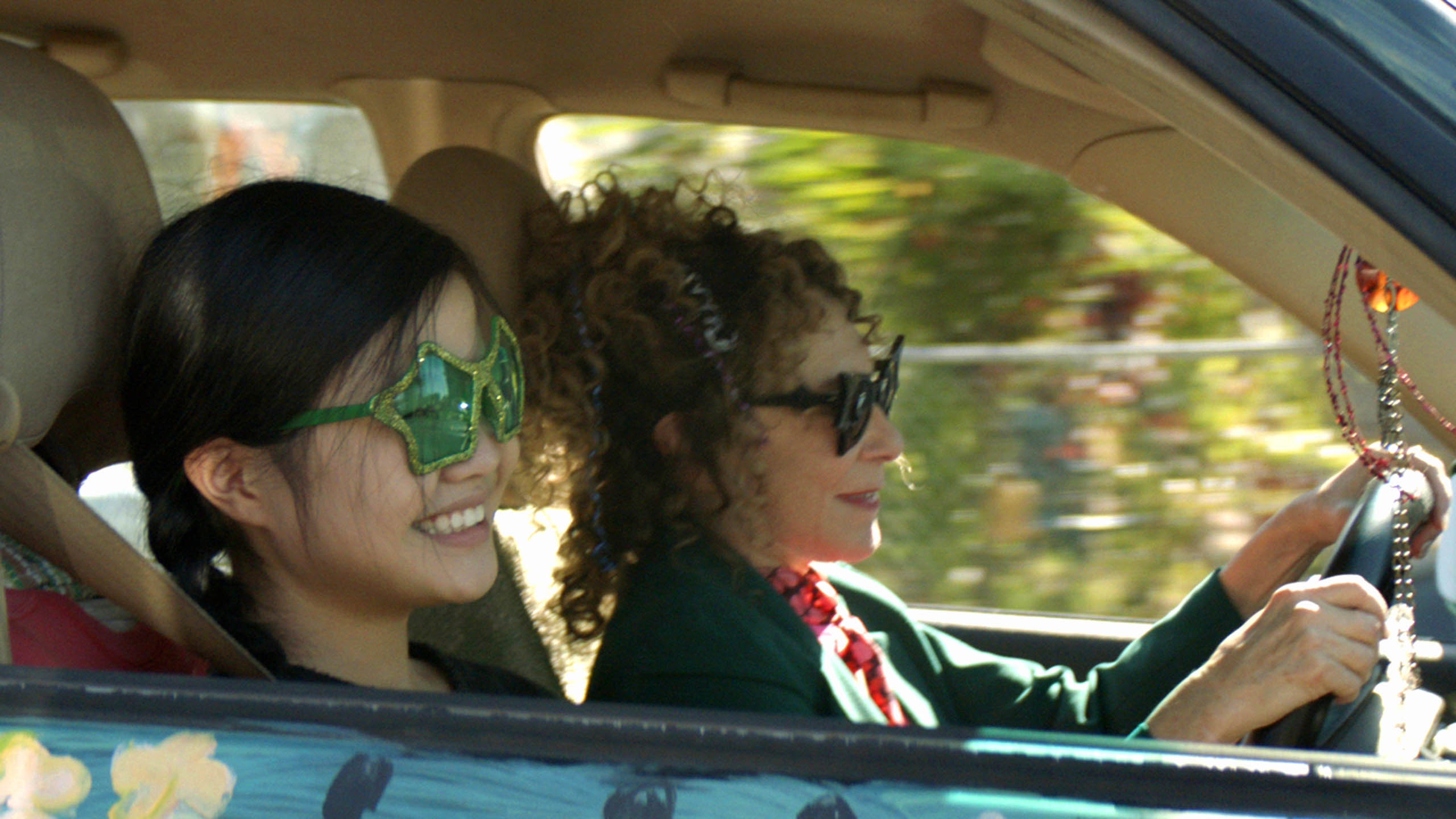
“Magician” is not on the approved list of business people, but Margot the Marvelous (Rhea Perlman) is hard to deny. Certainly the kindergarteners for whom she performs are mesmerized by her work. Even surly, sulky Sammy is drawn in, practicing magic in secret, longing to be invited to one of Margot’s “salons.” Of course, this also means she’s skipping class to pursue a very much dad-unsanctioned pastime with a woman he doesn’t even know exists. Sammy isn’t really worried about pleasing her father right now because he’s just announced his engagement to a new woman, who, you know, isn’t Sammy’s dead mom. Which means DRAMA.

Marvelous and the Black Hole exists to to add sweetness and light to your cinematic experience this year. Resilience and perspective are at the heart of this unlikely, oddball little intergenerational friendship founded in common pain. Miya Cech gives a believable performance as a bad girl, all brooding and sass, who’s not actually that bad, just hurting and lost. Meanwhile, Perlman’s special brand of snark is a quirky treat. Together they have a kismet that just kind of works.

We’ve seen a million coming of age tales and this one may be conventional but it’s still worthy of a watch. Director Kate Tsang’s imagination lends itself to some flashy sequences that help distinguish it from the pack. Marvelous and the Black Hole falls short of movie magic but it is cute and it is kind and it is relentlessly warm-hearted.

Sundance 2021: Coming Home In The Dark

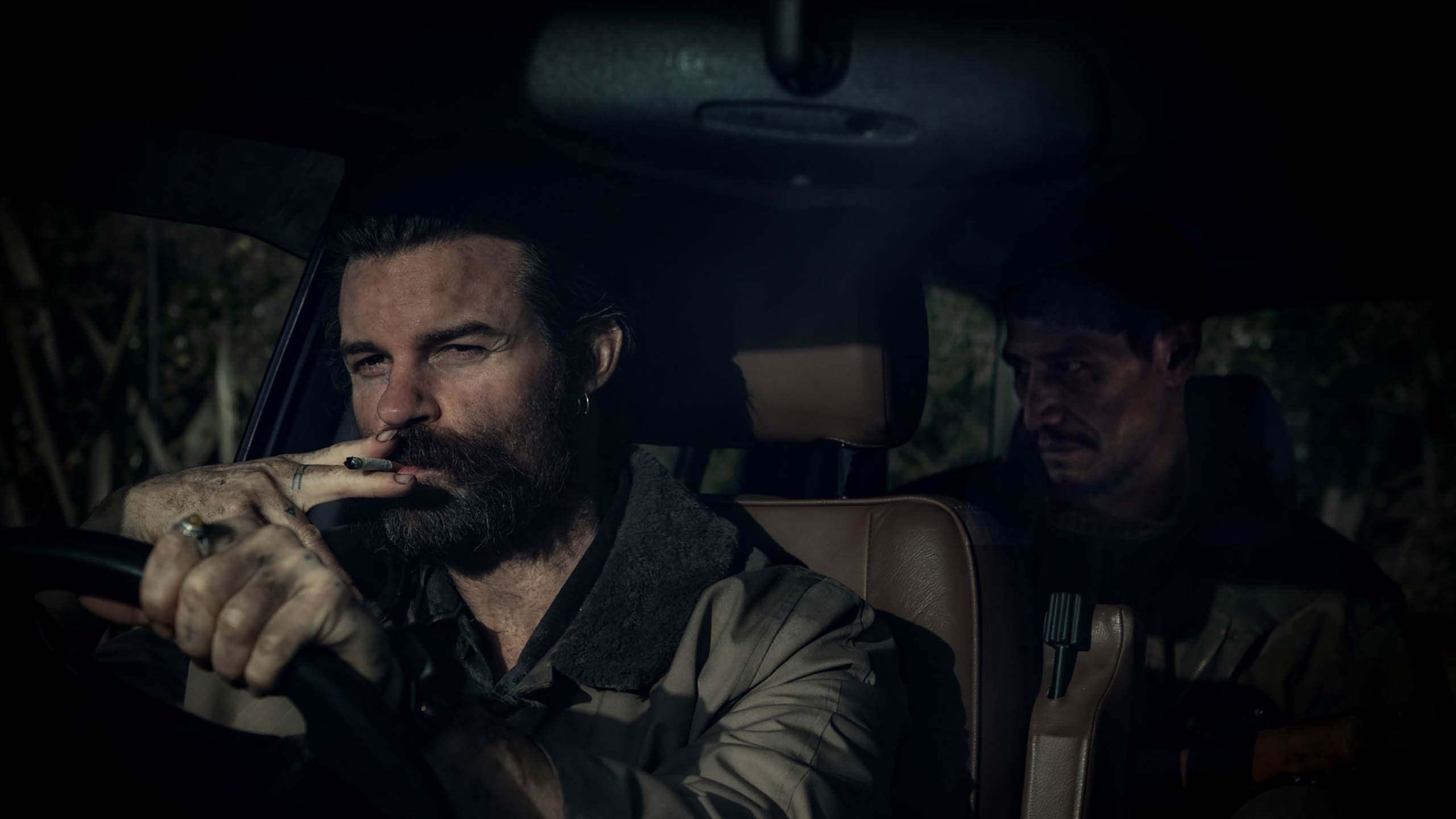
Coming Home in the Dark takes only a few minutes to get to the point: Hoaggie (Erik Thomson) and Jill (Miriama McDowell) have brought their sons to a beautiful scenic point for a lovely picnic lunch. The teenage boys are livid of course, to be dragged outdoors, to be forcibly unplugged, even for a minute. But then the family picnic is crashed by some uninvited guests, who hold the family at gunpoint, wanting more from them than just wallets and phones.

Holding them hostage, the two men with guns, Mandrake (Daniel Gillies) and Tubs (Matthias Luafutu), take them on a road trip nightmare that can’t possibly end well. But this isn’t some random stick up. Hoaggie has been specifically targeted because of his past as a school teacher and his survival might hinge on a terrible confession. This is a tale of revenge that skewers us with the question of whether or not silence equals complicity. Is allowing something bad to happen the same as doing the bad thing?

This movie will stun you with its intensity, its brutality, and its emotional impact. It doesn’t quite have enough to fully justify a feature length run time but it’s such an effective gut-punch that I’ll give its sparsity a pass. Though this movie is from New Zealand, I could still relate to the cultural trauma as a Canadian; we have sins in common. Many filmmakers here have worked with the subject but I’ve never seen it done so nakedly honest as this, a horror movie for horrific events. It’s an interesting way to comment on collective trauma and a new way to add to the conversation that clearly needs to keep happening.

Coming Home In The Dark stands on its own merits. More than just gripping terror, it features some magnetic, powerful performances that will make this film hard to shake. James Ashcroft I know I’ll come back to, because I’m certain he has more to say.

Sundance 2021: R#J

I think every generation deserves their own version of Romeo & Juliet, and this film is definitely targeted at today’s kids, while maintaining the soul of Shakespeare. Told exclusively through online content like Instagram posts and stories and lives, and through text messages written entirely in 2021’s unique gif-heavy jargon, R#J is set in modern day but is still identifiably Shakespeare’s most infamous romantic tragedy, told in his unforgettable language.

The beef between the Montagues and the Capulets has bathed the streets of Verona in blood from both sides. Romeo (Camaron Engels) knows better than to attend a party at the house of Capulet, but Benvolio and Merc entice him out, where he instantly starts crushing on a new girl with an arty IG account. After lots of back and forth flirting, Romeo and Juliet (Francesca Noel) find out they are mortal enemies, and it’s crushing. But they’re determined to lead with love, hoping their relationship will blaze a new path toward forgiveness. Of course, we all know how it goes; their families aren’t ready yet to let bygones be bygones.

Adding this new filter of social media lets us explore this age-old saga in new light. Online bullying, the viral destruction of someone’s reputation, the loss of control of one’s story; director Carey Williams has the privilege of a bold and savvy script, and together they manage to make these new aspects seem like they’ve always been part of Shakespeare’s intention. I don’t think classics are necessarily untouchable, but this is Shakespeare, so if you’re going to be ballsy enough to to make changes, the changes had better justify themselves unequivocally. I am astonished that after centuries of retellings, Williams still finds new ground here, fertile ground, new facets of the story worth expressing. He gathers an ensemble of young actors as talented as they are beautiful, including Maria Gabriela de Faria, Siddiq Saunderson, and Diego Tinoco, most of them born after Baz Luhrmann’s Romeo + Juliet was released, who help reinvigorate a play they probably studied four days ago in high school.

I know the mobile media aspect has been done to death, but so has Shakespeare, but we always make time for the stories that move us. I’m excited that a new generation will discover Romeo and Juliet with this smart and sexy film, and I’m pleased that even an old biddy like me can still find value in a story about impetuous teenage lust.

Sundance 2021: Passing

This film is based on the electrifying 1920s novel by Nella Larsen depicting two former friends who run into each other randomly in New York City. Irene (Tessa Thompson) and Clare (Ruth Negga) were friends in high school but haven’t seen each other since. Both women are biracial; Irene lives in Harlem with her husband and sons while Clare lives in Chicago with her own husband and child. The major difference being that while Irene lives authentically, Clare is passing for white. Even Clare’s husband John (Alexander Skarsgard) believes her to be white. In fact, needs her to be white, since, as he tells us, the only person who hates Black people more than he does is Clare herself. He’s even given her a “cute” racially-charged nickname that he loves to boast about. Clare lives deep, deep under cover. Irene sees the danger in the situation and resolves to stay away from her, unwilling to keep denying her own race to hide Clare’s.

However, when Clare and John move to New York City themselves, the two women reignite their friendship, despite Irene’s reluctance. Clare has been desperate for the unique comfort of being among her own people, but Irene is terrified of John, and of what might happen should he find out. But a mutual obsession grows the more time Clare spends in Harlem; they seem almost unable to untangle from each other even as their friendship threatens their carefully curated Truths.

Passing isn’t just about race. It takes on gender, sexuality, and importantly, class. Clare’s constructed identity revolves around her passing as white, but Irene’s identity is more wrapped up in her status. As the wife as a doctor, she strictly maintains her middle class boundaries, going as far as to isolate herself in order not to be mistaken for someone of a lower class, while Clare is much more comfortable straddling the lines and treating class as more fluid. Writer-director Rebecca Hall paints a beautiful portrait in which these two women exist, and develop, and she allows Negga and Thompson the space to explore who their characters are and why. Through lenses of happiness, jealousy, security, fear, and desire, we come to know these women and what guides them in their choices.

This is a fertile character study where psychology and motivation are layered in richness and depth. With its deliciously ambiguous ending, Rebecca Hall honours the masterful source material while also creating something impactful of her own.

Sundance 2021: Mass

I’ve seen a unicorn rip a man’s guts out, an axe chop a man’s toes off, and an eyeball skewered on a sharp metal tent peg. It’s Sundance, and I’ve seen some shit. And yet nothing prepared me to watch Mass, a movie about four middle aged adults sitting around a folding table in a church rental space.

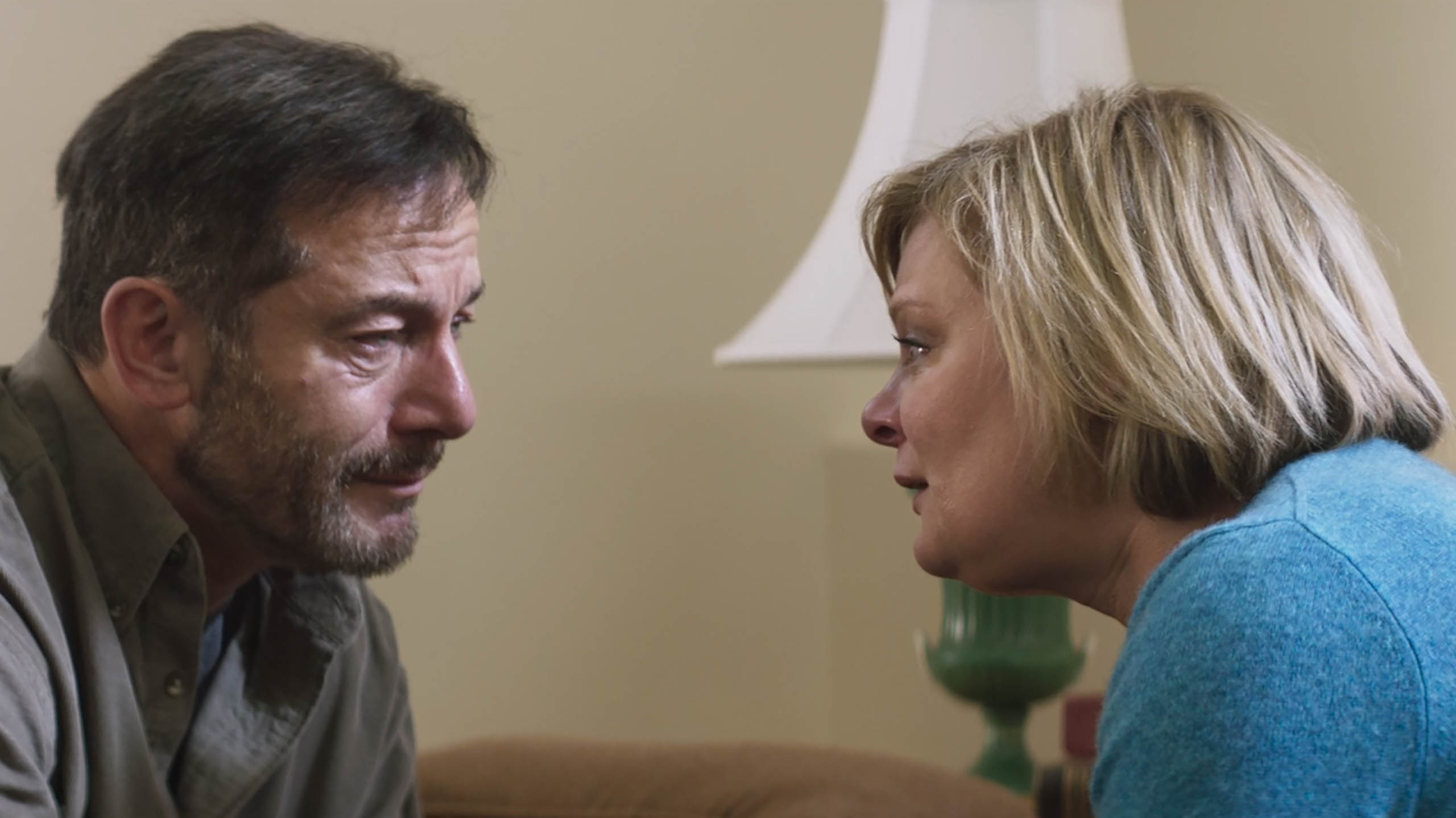
It’s hard to say who’s more reluctant to be there – Richard (Reed Birney) and Linda (Ann Dowd), or Jay (Jason Isaacs) and Gail (Martha Plimpton). Richard and Linda’s son killed Jay and Gail’s in a school shooter incident years ago, and this is an attempt for healing, or closure, or something other than the smothering pain they’ve been living in.

One room, 4 people, 110 minutes of emotionally exhausting confrontation, conversation, and contemplative silence. A movie like this either succeeds or it doesn’t based on two things: the script, and the performances.

The script, by director Fran Kranz, is restrained, nimble, as revealing as it is concealing. It’s almost voyeuristic to sit in on such an intimate and fraught conversation, but while we think we know where the lines will be drawn, Kranz shows the grief, victimhood, and aftermath of a mass school shooting is as complex as the event itself. It is natural to want to identify causes and assign blame, but here, in this room, guilt and innocence overlap.

Kranz is himself an actor with an intuitive sense of how dialogue can rise and fall, and how grief can express itself in more than just words. In this claustrophobic space, all four performances are committed; there is trauma and sorrow on both sides of the table. Each has lost a son. But Jay and Gail persist. They want, nay, they need to know: did Richard and Linda see this coming? Is there something they could and should have done? There isn’t going to be an easy answer here, just pain across four faces. Recrimination, bitterness, anger, empathy, and loss. There are heavy burdens in this room and perhaps Kranz is a little inclined to tidy them up by the end, but grief isn’t something you fix or get over. It’s something you learn to live with – the question is, will this conversation help them do so, and if not, can anything?

Sundance 2021 Street Gang: How We Got To Sesame Street

Street Gang: How We Got To Sesame Street is an easy documentary to love. Not many among us grew up without Sesame Street. The thought is inconceivable. Sesame Street IS childhood. It was a mainstay in our home thanks to my mother’s exuberant rate of reproduction; there was always a toddler falling in love with it for the first time. Although I haven’t seen an episode in years (decades more likely), I could still recognize not just characters but recurring sketches, animations, and songs. This stuff really soaked into my brain, and that’s exactly what it was born to do.

Aimed at preschoolers, specifically those from underprivileged and inner city backgrounds, it was an educational program built with a curriculum to teach to, guided by princes of early childhood development. The people behind the show realized that kids were spending up to 8 hours a day in front of the television set, and wanted to seize the opportunity to give them a leg up when it came to the fundamentals, like abcs and 123s.

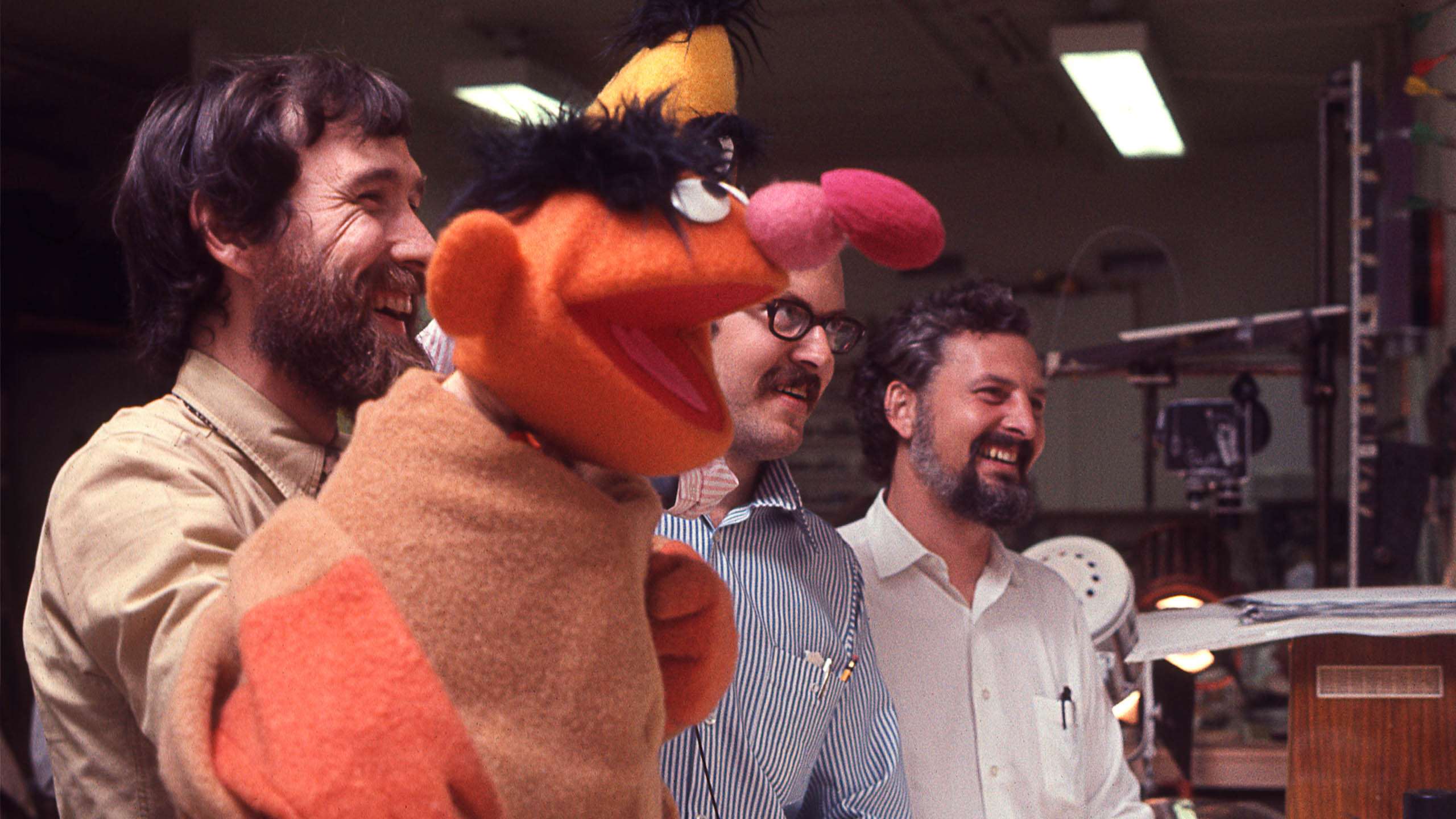
Director Marilyn Agrelo interviews from an impressive breadth of sources, including camera operators, actors, puppeteers, writers, songwriters, and more. Jim Henson and director Jon Stone are consulted repeatedly through archival footage, and it’s a pleasure to hear from them both. It’s also quite fascinating to see the joy and the intention with which this show was conceived and created. Of course, the best part is, unsurprisingly, the Muppets themselves. It’s exciting to revisit childhood friends, but it’s also a delight to see Big Bird’s first design, to hear Bert and Ernie address the nature of their very special relationship, to learn how Count got his name, to discover why Oscar was always so very hard to please, and why Kermit felt it was so difficult being green. The show fearlessly took on Big Topics like race, death, and inequality, but they did it with such joy in their hearts and with the very best interests of children in mind that Sesame Street transcended mere television. It has an intangible quality that this documentary does its best to describe.

Sundance 2021: John And The Hole

Imagine waking up in the bottom of a hole – you, your spouse, your kid. You’ve been drugged, and now you’re being held hostage. There’s no way out. Worse, your son is missing. What happened to him? Is he hurt? Worse? Who’s doing this, and why?

Imagine waking up in the bottom of a hole and realizing it was your teenage son who put you there.

Imagine finding a hole and thinking: I should put my family in there.

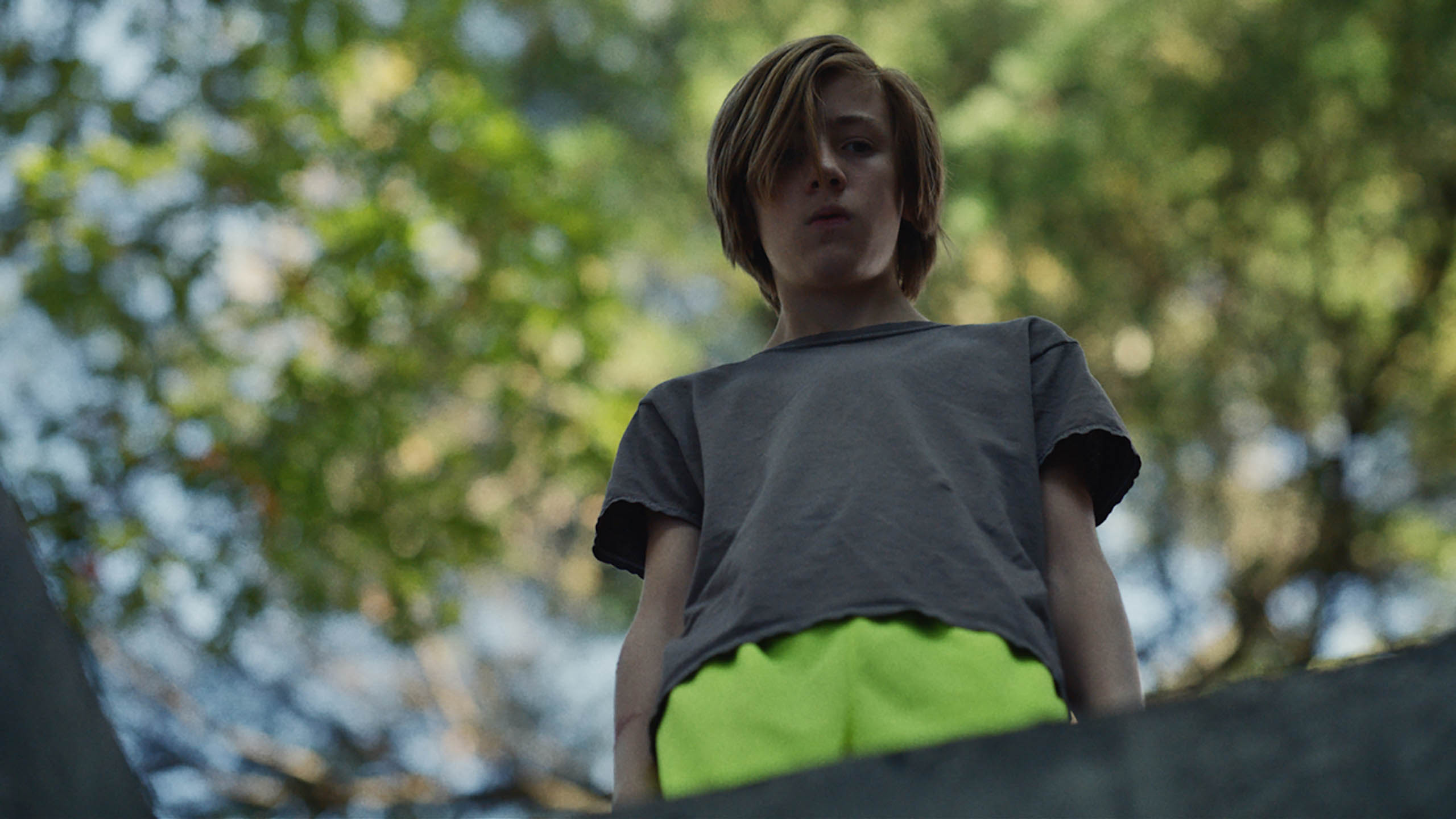
John (Charlie Shotwell) is the kid who found a hole, drugged his family, dragged their bodies out to the hole and tossed them in. And then he walked away.

It’s like Ferris Bueller’s Day Off for kids who make their own luck. With the run of the house, John gets to play video games, drink juice from the container, and keep up with his piano practice. It’s actually a lot like his old life, which was pretty privileged, but with more driving, and more cash, though he has little need for either. Sean called it a staycation and indeed John does seem to be adapting well to his new circumstances.

Meanwhile, in the hole, mom Anna (Jennifer Ehle), dad Brad (Michael C. Hall), and sister Laurie (Taissa Farmiga) are having a much less fun time. Hungry, dirty, cold, and weary, they’re coming to terms with the act that not only is it their very own John doing this to them, he may very well intend for them to die.

Before we’d seen the end of the film, we discussed a hypothetical – say the family eventually escapes the hole. What then? Do they call the cops on their son? Have him arrested? They’d already been held against their will for days at this point, but the parent-child attachment can be incredibly strong. What would you do?

John himself is starting to wonder what his endgame is and to be honest, I’m wondering whether the writer even knows. Director Pascual Sisto’s style is sleek and carefully calibrated, but the film is just too shrouded in ambiguity to have a lasting impact. The premise had so much potential, much like its pro(?)tagonist John, a young man figuring out who he is in the world, eager to try on adulthood like a jacket but not quite sure what to do with it once it’s on.

Imagine making a movie about a boy who puts his family in a hole, only to realize you don’t have much to say about it.

Sundance 2021: In The Earth

During quarantine, plenty of us baked bread, some of us picked up diamond painting, a few overdid it on video games, and the fertile imagination of writer-director Ben Wheatley looked around and thought “I can make a horror movie out of this.” Because OF COURSE he can.

As a deadly virus ravages the world, Dr. Martin Lowery (Joel Fry) sets off toward Olivia Wendell’s research camp deep in the woods, accompanied by park scout guide Alma (Ellora Torchia). Local lore warns of a mystical being who haunts the forest but the attack on their first night seems a little more pedestrian in nature; they suffer bruises and are left shoeless and confused, but are otherwise fine. Still, they are glad to run into Zach (Reece Shearsmith), a man living off-grid under the leafy protection of the woods. He tends to their wounds and feeds them some dinner and the pair might have gone off the next morning, if the forest didn’t have other ideas. Clearly two grown adults should have been a little more leery of a shady man living alone in the woods, especially after a violent attack, but this is a horror movie, so Martin and Alma make bad, befuddling choices. Granted, even the lead scientist Olivia (Hayley Squires) isn’t what she seems, and between these two wilderness nutjobs, Martin and Alma are in for a very bad time. And that’s saying nothing of the malignant forces of the forest itself, which seem to prevent them from leaving.

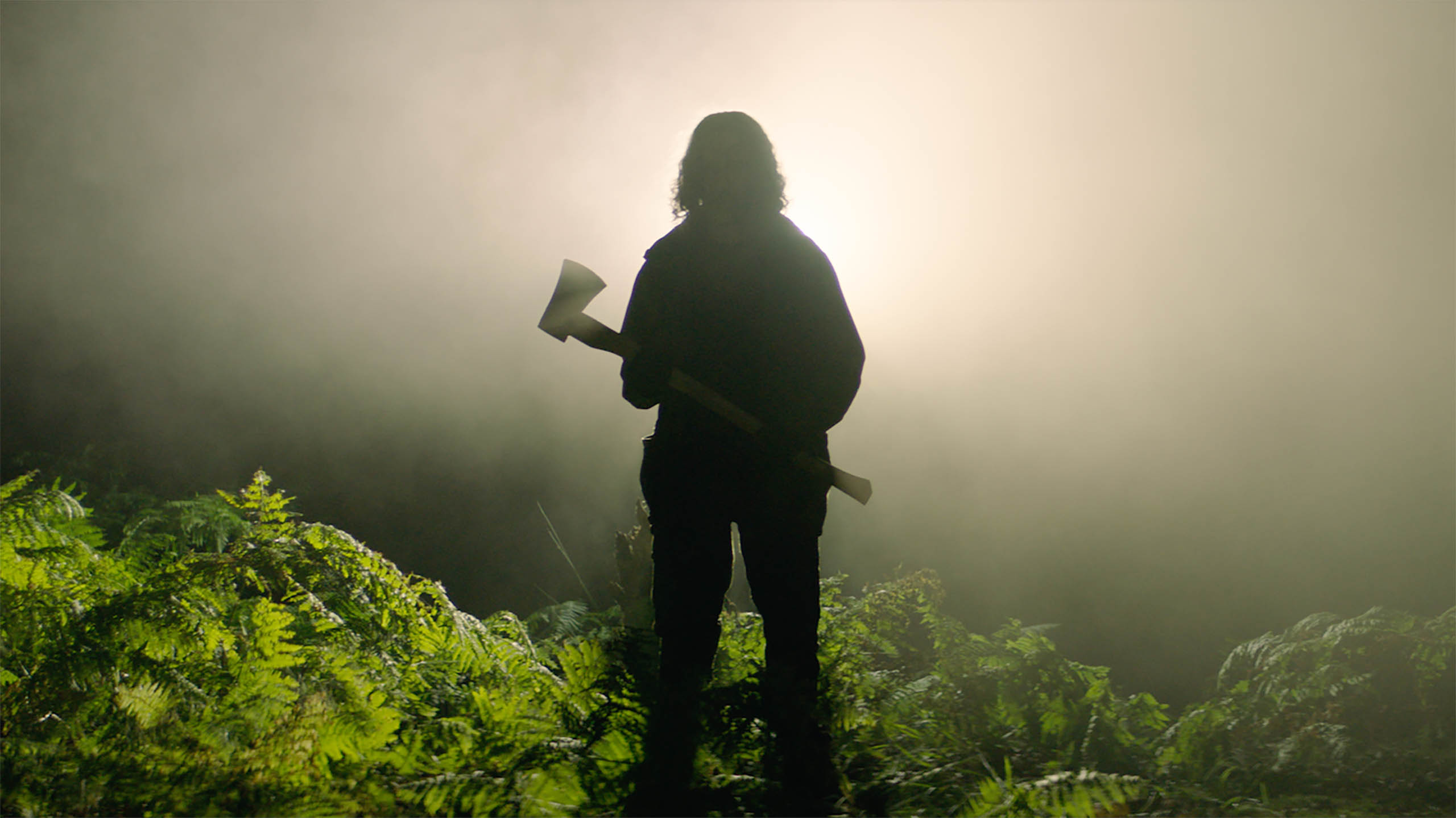
Ben Wheatley’s In The Earth is deeply disorienting and unnerving. An ominous score by Clint Manswell mixes synth dread with sounds made by actual leaves and plants found in the arboreal woods outside of London where they filmed. We likely all felt the call of nature during lockdown, and Wheatley’s beautiful visuals are dizzying, especially paired with hallucinogenic kaleidoscopes of lights and colour, and stultifying bursts of noise.

A sense of unease and danger permeates the woods, and we’re kept further off-kilter wondering if the main antagonists are indeed the human ones, or if the intangible forces are perhaps the more worrisome. A cross between Annihilation and The Blair Witch Project, with mystical allusions, ritualistic sacrifice, and necromancy: these dark woods have it all, and Wheatley’s stripped down approach is perfectly spooky and provoking. As alarm mounts, Nick Gillespie’s cinematography gets shakier as he morphs into handheld mode, the camera’s precursor to fight or flight. The imagery becomes more opaque, the woods even more forbidding, and when the end comes, its implications will trouble and disturb you.

Sundance 2021: Cryptozoo

Film festivals like Sundance draw top tier directors and the finest actors, but they’re also a great space for branching out of your comfort zone and trying something different. Cryptozoo is going to be so different, apparently, that the programmer compliments us on our “adventurous taste” before we’ve even seen the film.

Writer-director Dash Shaw impressed Matt at the Toronto International Film Festival back in 2016 with his entry, My Entire High School Is Sinking Into The Sea. This year I’m just grateful he’s given us a shorter title to remember.

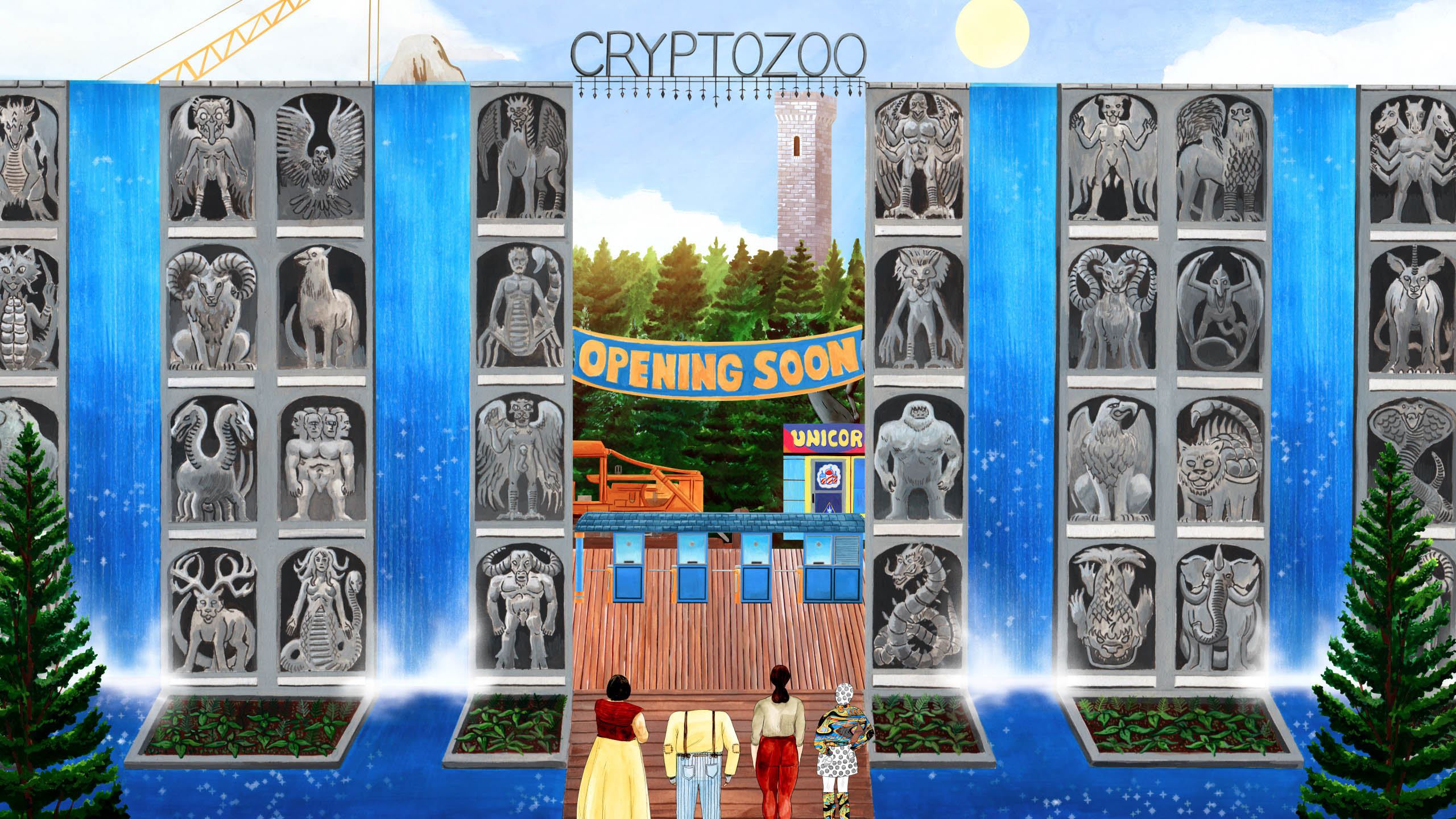
Cryptozoo is a strange beast, which is funny considering it’s literally about mythical hybrid creatures whose existence is disputed or unsubstantiated. Lauren (voiced by Lake Bell) doesn’t just believe in them, she collects them, having dedicated her life to rescuing them and sheltering them in a zoo she hopes will challenge public perception and move the dial toward acceptance once it’s open. For years she’s been pursing a Baku, a dream-eating creature that looks like a cross between a baby elephant and the neon-painted spirit animals from Coco. Of course, lots of Lauren’s work is battling the other factions who would also like to get their hands on these creatures, for exploitation or worse.

Hand drawn (translation: wonky boobs) and distinctively animated, Cryptozoo isn’t just populated with gorgeous, fantastical beasts and imaginative hybrid humans, it’s got people at the heart of its story, people with good intentions who will debate the merits of displaying these mythical creatures versus helping them to remain hidden and unknown.

This animated film for adults takes on the complexities of utopian visions and explores them in a very spirited and penetrating manner, with a visual style that is vibrant and unusual. A strong voice cast including Jason Schwartzman, Michael Cera, Grace Zabriskie, Peter Stomare, Zoe Kazan, Louisa Krause, and Angeliki Papoulia, breathe life into an epic fantasy world that starts with sex and unicorns and ends in a place much more wondrous. If you yourself are strange and unusual, Cryptozoo is not to be missed.