Tag Archives: foreign films

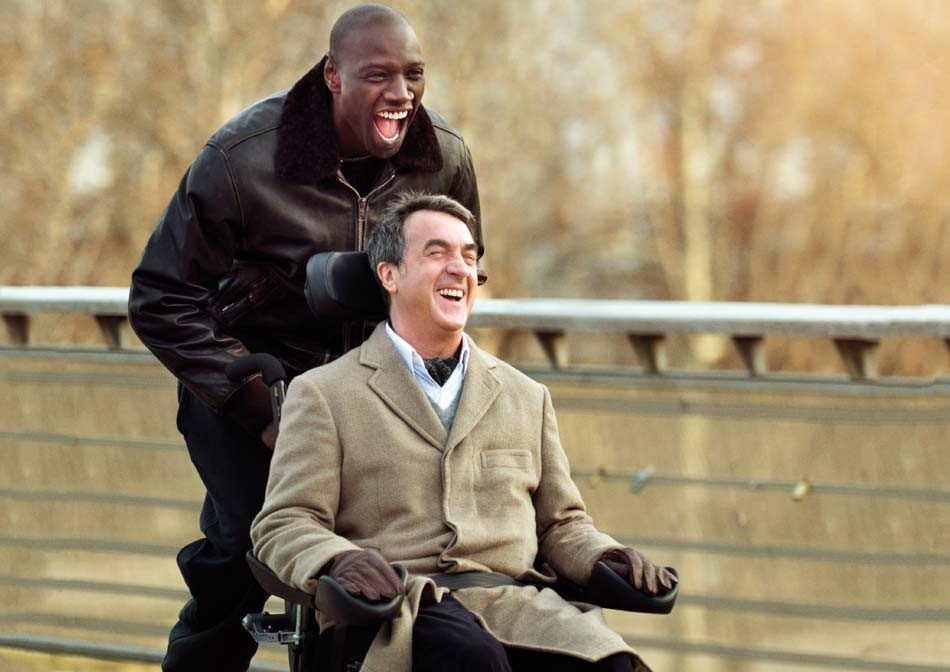
Intouchables

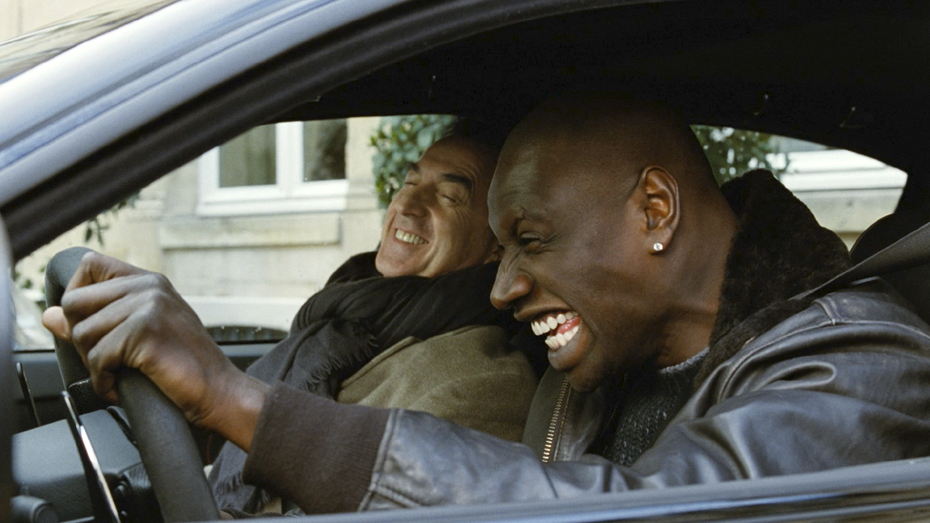
I can’t tell if this movie is Cinderella or Driving Miss Daisy or The Diving Bell and the Butterfly. I suppose it’s most accurate to call it some fairy tale hybrid of all three.

It’s about a black dude from “the street” who goes to work for a stuffy white one, who happens to be paralyzed from the neck down. A super tough situation for even a trained personal support worker, which of course he isn’t. But Driss and Philippe form the obligatory bridging-theThe-Intouchables1-race-gap friendship, and white guy comes back to life, as it were, thanks to, you know, watching the black guy dance to Earth, Wind & Fire and stuff.

I actually like this movie. I should have said that first, because reading the above has probably given you the wrong impression. Everyone will like this movie because you’re supposed to. It’s feel-good, dammit. I dare you NOT to have your goods felt after this. I’m all felt up.

Basically, the two actors are pretty great. Omar Sy as Driss and  Francois Cluzet as Philippe are an excellent pair. They play off each other well and have great on-screen chemistry that makes their friendship seem real. Their “unlikely” friendship, I should say, because I have a feeling that’s what the blurb on the back of the DVD would say if I had it here in front of me. It’s probably a little insulting that in 2015 we still think of an interracial friendship as unlikely. Even thinking of it as interracial is unnatural. But the film keeps reminding us that it is, because all of Philippe’s uptight (white) friends keep stage-whispering it to him, as if quadriplegia has also affected his eyes.

In fact, Philippe hired the likes of Driss because he’s tired of being pitied. Driss doesn’t have a pitying bone in his body, but apparently he’s got a lot of tender ones because very quickly he’s intouchables-carthe best little nursemaid in town. Never has looking after a severely disabled individual for money seemed so fun! Plus, there’s the Pretty Woman aspect – he gets exposed to (white) culture – you know, museums, expensive cars, classical music. And yes, Philippe even buys him a new suit so he can look pretty at a party. But don’t you worry. Driss contributes too. He buys the weed.

Okay, now this review is making ME think I didn’t like the movie. And I did! It’s just a little facile, I suppose, compared to the Diving Bell. It’s sugary and sweet and avoids the sticky spots by a wide margin. It’s really just a buddy movie with pretensions. The acting saves it from slipping into maudlin and the two make an irresistible (interracial) pair.

The White Ribbon

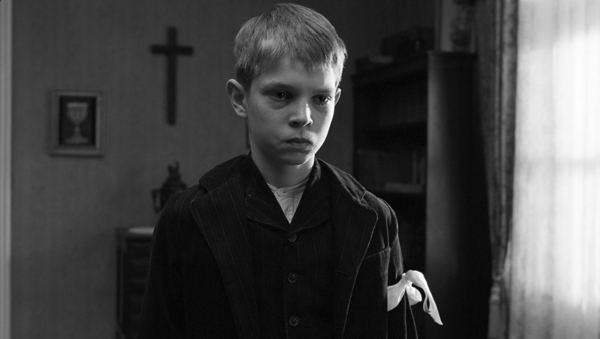
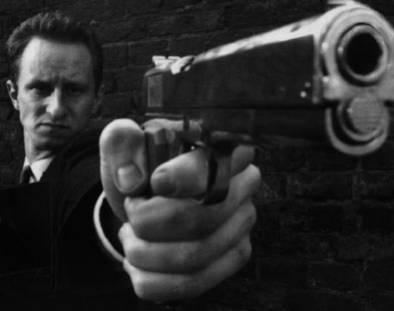
A brutal black and white film by Michael Haneke about the shame of masturbation, animal mutilation, incest and the symbolism of pierced ears, torturing the retarded, bleak and swift whitesuicide, a meditation on sin,ritualized punishment, cruelty and the hardness of hearts, guilt and innocence, apathy and revenge. So many crazy events occur in this little German village on the eve of WWI that pretty soon the villagers are looking around at each other with very suspicious eyes – and so are we. The children seem to be at the heart of this mystery and I can’t help but think that they’re exactly the generation who would become Nazis. The children, whether or not they’re responsible for the mysterious atrocities, have no escape from their relentlessly punitive lives, and for nearly two and a half hours, neither do we.

Whose job is it to prevent evil? Why do we strive to puzzle out random acts? Are we willing to surrender freedom to mitigate danger? Heneke hints at a lot of uncomfortable questions and if you dare to watch, you’ll find it’s not just a question of whodunnit, and even if you ask the right questions, there’s no telling if you’ll ever find the answers.

Leviathan

It won the Golden Globe, was nominated for an Oscar, and was even considered for the Palme d’Or at Cannes. I was bored stiff.

This is one of those movies that make me feel bad about myself because although it’s a film about ‘ordinary’ people, it’s also supposed to be about more than just what’s on the surface. And I get that.

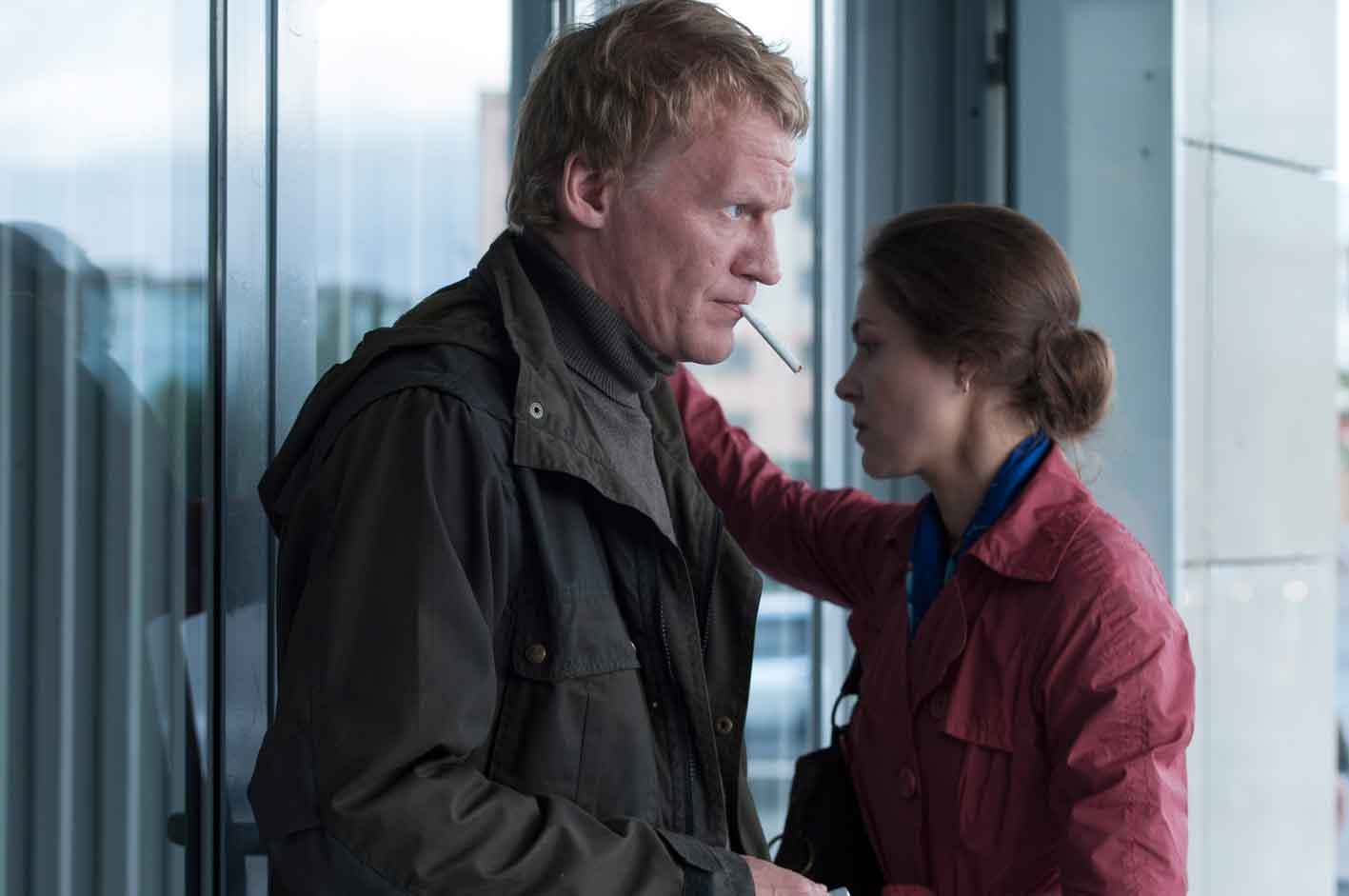
In a very pretty but alsmaxresdefaulto coastal town in Russia, Kolya has a wife who’s just not that into him and a son who’s just not that good at life. The town’s crooked mayor is trying to take his home and property, ostensibly for a telecoms mast, but Kolya suspects more personal reasons and is fighting him in court. In the dullest court scene ever shot, a woman drones on as she reads a summation of the case for several long-ass minutes without a breath at punctuation, if indeed there was any punctuation, which was hard to distinguish.

Most of his friends are only using him for his free mechanic services but he calls on one, an old army friend named Dmitri who’s now a lawyer, to help him with his property fight. Dmitri isn’t afraid to fight dirty in court, or in his personal life apparently, because before long he’s fucking Kolya’s wife.

So there’s hypocrisy. Crazy, crazy hypocrisy. Blind love, pretend friendship, misplaced trust. Badleviathan religion. And the symbolism of the leviathan that’s obligatory but heavy-handed. I can see that it’s well-acted, and the outdoor shots were breathtaking. I don’t usually think of Russia like this and I’m glad I got to see it. But I didn’t connect with this film, at all. It was too harsh, and too dry. I know that critics loved it, and the Academy has called it one of the 5 best foreign movies in the world for 2014. Personally, I preferred both Mommy and Force Majeure (preferred both to Ida, which won, for that matter). But you know what? No one asked me.


German Language Films

TMP

Matt

First, we’d like to send our weekly Thank You to Wandering Through the Shelves for encouraging us to broaden our horizons. Because one can’t survive on a diet of Office Space and superhero movies alone, this week we tried to catch up on the German-language movies that we’ve missed. I for one had some serious catching up to do. If not, I would have been stuck picking Das Boot or something.

I re-watched Michael Haneke’s The White Ribbon (2009) to keep its complex themes and Funny Gamesnarratives fresh enough in my mind to be able to write about it. As I struggled once again to read the subtitles camoufalged by the black and white background, I thought about the impact that Haneke’s sadistic Funny Games (1997) had on me. A few months ago, I blasted Haneke’s rationale for his brutal and twisted home invasion story. While at first I resented being shamed for sitting through torture porn, I now appreciate the film for what it made me think about and the discussions it inspired with some of you. Also, while at first I was struck by the film’s sadism, now in retrospect I find myself admiring its restraint.
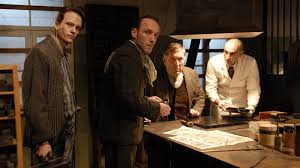
counterfeitersI’m only just now getting around to 2007’s Oscar-winning The Counterfeiters. Stefan Ruzowitsky’s film tells the true story of a counterfeiting operation within within a concentration camp manned by Jewish prisoners forced by the Nazis to make loads of fake currency. The counterfeiters face a dilemma. Helping the Nazis complete their mission could help them win the war bu failing to meet their deadline could get them executed. Not all the prisoners agree on how to proceed and the tensions between them separate this from other Holocaust movies by focusing on the characters and their complex thoughts and feelings.

Finally, Revanche (2008) tells the story of a cop who kills an accompliceto a bank robbery in the revancheline of duty and the dead girl’s bank robber boyfriend who has sworn revenge. The cop’s wife gets caught in the middle Departed-style. There’s nothing sexy about being either a cop or a crook in this movie and nothing exciting about using your gun. The weight of a single act of violence is felt by everyone involved throughout the movie as both men carry a crushing feeling of guilt with them everywhere they go. Revanche means both revenge and new beginning. This movie’s about both.
 

Jay

Screw you, German language films. I waded my way through Metropolis (a 1927, 2.5 hour black and white non-talkie monstrosity about “the future”) and A Coffee in Berlin (a greasy, effeminate James McAvoy lookalike whines his way around cafes), and bits and pieces of The Blue Angel (Marlene Dietrich failed to inspire) and Christiane F. (mostly a David Bowie tribute) and I decided, fuck this, I’m just gonna talk about Werner Herzog instead.

wernerHerzog is a German film director, producer, screenwriter, author, actor, and (apparently) opera director, considered to be one of the greatest heavyweights in New German Cinema. Roger Ebert once said that Herzog “has never created a single film that is compromised, shameful, made for pragmatic reasons or uninteresting. Even his failures are spectacular.”

At age 14, he was inspired by an encyclopedia entry about filmmaking, which he claims gave him “everything I needed to get myself started” as a filmmaker – well, that plus the 35mm camera he stole from the Munich Film School. Oh, sorry, Werner, “I don’t consider it theft—it was just a necessity—I had some sort of natural right for a camera, a tool to work with.” Artist, thief, sometimes both.

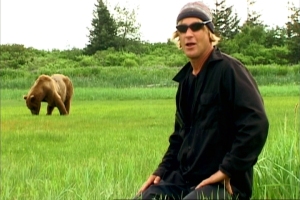
I know him and love him especially for his documentaries. In fact, Grizzly Man might be the grizzlymanweirdest and most spectacular documentary I’ve ever seen. It’s about this grizzly bear “enthusiast” Timothy Treadwell who loved them so much he decided to live among them. He believed himself to be to be the Jane Goodall to bears, spending something like 13 summers with them, but he was also kind of an idiot, shooting Steve Irwin-like footage that no one asked for while ignoring the number one rule that even children know about bears. You need to watch this film. Ebert, delighted and appalled by the film, said that Treadwell “deserved” Herzog.
Herzog once promised to eat his shoe if Errol Morris finally finished a film project he’d been working on for years. In 1978, when Morris’ film Gates of Heaven premiered, Werner publicly cooked then ate his shoe, an event capture and made into a documentary by Les Blank (called Werner Herzog Eats His Shoe). Herzog hoped to encourage others to tackle incomplete work, but he could never be mistaken for a slouch himself.

IntoTheAbyssIn Into The Abyss, Herzog changes direction a bit. There’s not much narration, and he doesn’t appear on-screen. Instead, he lets a convicted murderer on death row tell about the crimes he says he didn’t commit just 8 days shy of his impeding execution. The film doesn’t dwell on guilt or innocence. Although Herzog is upfront about being anti-capital punishment, the movie is mostly apolitical but seeks simply to contribute to the conversation.

Werner Herzog always picks interesting subjects to study, but he himself is nothing short of a fascinating one himself.

 

Song of the Sea

I was angry and disappointed when The Lego Movie failed to get even a nomination from The Academy Awards this past year, because it deserved to take home the trophy. In its place were a couple of movies no one had heard of, much less seen – Song of the Sea, and The Tale of the Box OfficePrincess Kaguya (alongside Big Hero 6, The Boxtrolls, and How To Train Your Dragon 2). Of those, I was glad that Big Hero got the Oscar, but this was an unusual category for me, in that I hadn’t actually seen all of the nominees. Those two unknowns were impossible to see in theatres (at least here in Ottawa – and I did try, combed VOD, the works). A while ago I noticed that Song of the Sea was available through Google Play, and I meant to get around to it, but wasn’t in much of a rush since I’d been harbouring festering resentment toward it since January.

The truth is, this is not the movie that took a slot away from our beloved Legos. This movie deserved to be there.

song-of-the-sea-2Now, before we get started, let me warn you, this isn’t for the faint of heart. It’s rated PG, for some mild peril, and pipe smoking images. Do you think you can handle that? If not, better go call your mother right now, get some guidance, talk it out, see if she thinks you’re up to it.

Once upon a time, a little boy is soothed by the stories told to him by his mother. She’s expecting a baby and he can’t wait to be its big brother. But then a baby appears but mama disappears. Through the magic of movies, a few years elapse, and big brother is quite resentful of his little sister, subconsciously blaming her for his mother’s death. Their father is deep in his grief and unable to care of his children, so his mother takes them away, against their wishes, with only mom’s conch shell to remind them of safe_imagehome. Turns out, that conch shell can summon magic when it’s blown by little sister, who is a selkie like her mama (a selkie being a girl who can turn into a seal when she wears her special coat). I’m making this sound more complicated than it is, because it’s actually a very simply told little Irish myth.

The animation is hand-drawn and absolutely stunning. I was impressed from word go and it never stopped, was never less than amazing. I’ve never seen a traffic circle look so ethereal. It Song_of_the_Sea_Embedmay lack the thousand digitally produced hairs, or 57 moving facial muscles, but their little faces remain quite expressive. Attention has been paid. The glowy, magical imagery makes you feel like you’re inside a Klimt painting, and there’s a timelessness about it that’s both comforting and inspired. There are no singing snowmen, or talking cars, or yellow sidekicks; this movie is pure, and heartfelt, and embodies a mastery that we haven’t seen in a long time (maybe since The Secret of Kells). It looks the way a warm blanket feels, totally enveloping, which I suppose is appropriate: curl up, and hear a fine tale.

Funny Games (1997)

Director Michael Hanake has an explanation for what makes his controversial 1997 film different from more recent torture porn movies but I’m not buying it. funny games 2

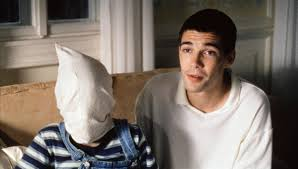
Haneke was frustratingly vague in his comments during the DVD bonus features of the intentionally ambiguous Caché. Usually a fan of leaving his films open to interpretation, he was unusually forthcoming though on how he would like Funny Games to be interpreted. On the surface, the film tells the story of a home invasion where two surprisingly privileged and aritculate young men barge in on a married couple and their young son at their beautiful cottage and proceed to torment them both psychologically and physically for the rest of the movie. What’s strange is that, the longer this continues, the more clues we get that the two psychopaths are aware that they’re in a movie, especially when they look directly into the camera and wink at the audience. “Hey, don’t look at me. This has got nothing to do with me,” we’re meant to protest. Or does it? Are we, as an audience to such sadism, somehow complicit in it? The film has a habit of giving us lots of warning every time something awful is abofunny games 3ut to happen, giving us ample time to get out while we still can and Haneke the chance to ask haters “Why the hell did you stay til the end?”.

Horseshit. Shame on you Michael Haneke for shaming me for sitting through your movie and keeping faith that you were going somewhere with all this. Sure, i got the sense that Birdman was mocking me for appreciating it but at least that was funny, thought-provoking, and wasn’t nearly as gut-wrenching an experience. Commenting on sadism isn’t a good enough excuse to bring something so sadistic into the world and, as many critics have already pointed out, not without it’s hypocrisies.

While I resent Haneke for insinuating that he’s smarter than me, I may not buy that this is the anti-horror film that Haneke claims that it is. I see it more as a cinephile’s horror film filled with the director’s signature long takes, an excellent setup, and fantastic performances (especially by Susanne Lothar and Ulrich Mühe as the couple in peril). Today’s horror fans that are used to funny games 1liberal use of gore and torture may find I’m overstating the depravity. In fact, almost every act of violence occurs offscreen. Taking advantage of the power of suggestion and anticipation is a lost art though and Michael Haneke has found it. Every act of cruelty in the movie begins with a long build up filled with clever wordplay. I was literally on the edge of my seat and feeling queasy throughout the entire experience of watching it.

Funny Games is a brilliantly executed and punishing work of suspense and is perfect for those looking for a perverse thrill. I just don’t buy that it’s anything more than that.

Caché

Here’s a film that couldn’t be more different from the teen comedies that I’ve enjoyed watching all week. I’ve been hard at work catching up on all the movies I missed to prepare for Wandering Through the Shelves’ Thursday challenge but I took a break from all the dick jokes to rewatch one of my favourite movies from 2005 (one of my favourite years). Last week’s challenge got me thinking about The Piano Teacher and the films of German filmmaker Michael Haneke.

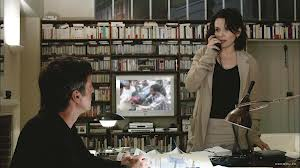
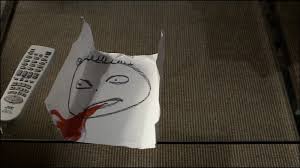
While I admire the technique and honesty of The Piano Teacher and Haneke’s more recent and Oscar-winning Amour, watching them can feel like chores due to the former’s unpleasantness cacheand the latter’s sleepy pacing. Here, though, is a movie that I can honestly say that I enjoy watching. Even though he’s asking tough questions about class, reality, and deception, he is generous enough to structure Caché like a thriller. It begins with Georges and Anne (Daniel Auteuil and Juliette Binoche) watching and discussing a videotape that was inexplicably left at their front door. The video is simply a two-hour wide shot of their beautiful Paris home. It might just be a prank by one of their teenage son’s friends but, still, it’s pretty creepy. Somebody seems to be trying to show them that they’re under surveillance. Well, the tapes keep coming and the footage starts hitting closer and closer to home and it starts wreaking havoc on Georges and Anne’s seemingly happy home.

cache 2One of the things that make Haneke’s films so unsettling is he’s not fond of easy answers and there’s always a lot I still want to know when they’re over. The mystery of who’s sending these tapes and why kept me riveted from start to finish but is never fully explained. As I always do when I’m afraid I might be missing something, I ran to the DVD bonus features looking for answers and it turns out the director is as vague in interviews as he is in his writing. He said that he likes to leave things open to interpretation because reality is.

Fair enough. When I invest so much time in a whodunnit, I like to know who dun it but Caché still gives us a lot to be thankful for. Haneke’s examination of a marriage full of secrets is made even more compelling by the performances from the two leads and, unlike most Marvel movies, viewers who stay through the credits will be rewarded.

Man Bites Dog (C’est arrivé près de chez vous)

I feel like the word “mockumentary” was not invented for a film like this. Mockumentary, with the word mock front row and centre, seems better suited to something like Spinal Tap. A movie like Man Bites Dog, however, should have its own set of rules.

“Man Bites Dog” is journalism shorthand for how unusual events are more likely to be reported 600full-man-bites-dog-posterin the news. A (fake) documentary team is following and filming a charismatic serial killer named Ben as he commits his increasingly gruesome crimes. Of course the crew gets drawn in and soon find themselves to be accomplices. Ben takes advantage of the rolling cameras to boast about the murders he’s racking up, but loves the sound of his own voice so much delivers stream-of-consciousness monologues on just about any subject.

It doesn’t exactly surprise the audience that he’s a misogynist, a racist, and that he preys on the elderly. We witness his crimes in graphic detail. Yes, it’s horrible to watch the crew help to subdue a young boy who will then be smothered to death. Not for everyone. But this is not a violent for no reason film. Remember the mock part? Well think of it more as satire, or critique – a sad, sad critique of what sells at the movie theatre, or for that matter, on your 6 o’clock news. Why are we attracted as a society to serial killers, why do we find so magnetic, and why do so many seem to glorify them? Serial killers are the new icons. The media isn’t about the story, which is horrifying, but about the personality. We often learn more about the man committing the crimes than about his defenseless victims. If you think back to the last school shooting, for example, you are more likely to know the name of the gunman than the name of the innocent kid that he shot.

This is a highly interesting film out of Belgium, shot on a dime as I understand it, but it has manbitesdog1garnered quite a cult following from people who recognize it as intelligently deviant. I found it hard to watch but I liked the questions I found myself asking. Plus, I learned how to successfully sink the corpse of a dead baby, and how to save a bullet by scaring the elderly to death, and that seems like it’ll come in handy, right?

Amelie

Sean and I are celebrating our wedding anniversary in Paris; today we’re actually renewing our wedding vows at the Eiffel Tower so I’m posting about a wonderfully romantic French film about love and life in Paris through the eyes of an idealistic and imaginative young woman.

Gloriously known as Le fabuleux destin d’Amélie Poulain (translation: The Fabulous Destiny of Amelie Poulain), this film introduced the rest of the world to Audrey Tautou, seemingly born to play the role though it was actually written specifically for Emily Watson, who turned it down because she doesn’t speak French. A passion project for director Jean-Pierre Jeunet, he’s been collecting the various memories and curiosities that make up the story of Amélie since 1974. Who knew that the guy who brought us Alien: Resurrection had such magic and whimsy in him?

audreytautou

Amélie was brought up in a rather protected fashion, her father being very concerned about her supposed heart condition. To make up for her isolation, a young Amélie lives in her imagination, and her grown-up self is still very much a dreamer, a wondrous observer and devoutly introverted. She devotes her life to making others happy, and lucky for us, she’s surrounded by a very quirky bunch.

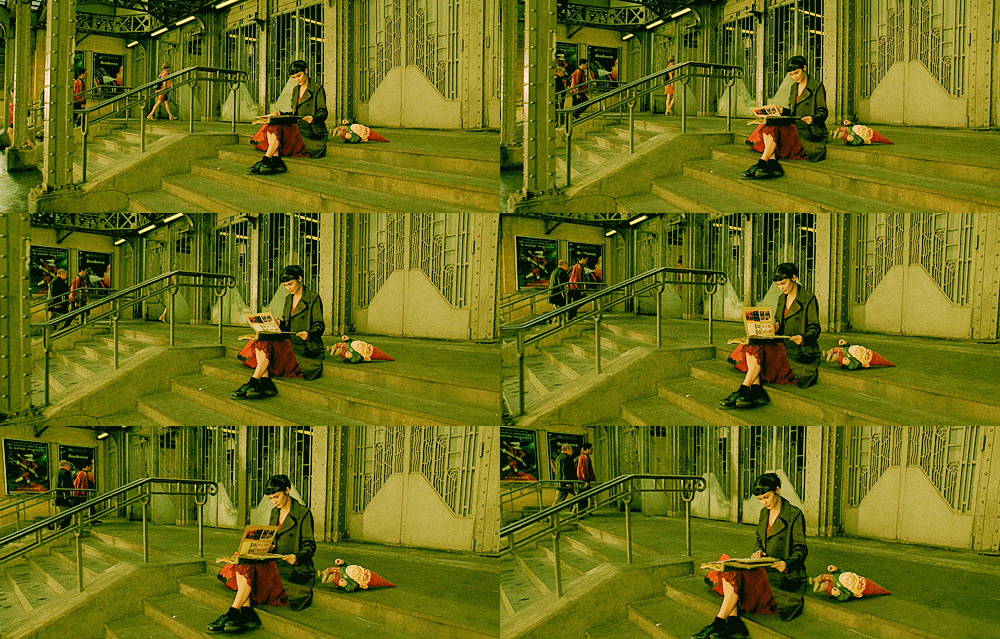
For her father, she fulfills his lifelong dream of travel (tough for a recluse) by stealing his treasured lawn gnome and sending it all over the world. This was inspired by true events – in fact, a rash of pranks perpetrated in the 1990s in England and France.

amelie

The traveling gnome was inspired by a rash of similar pranks played in England and France in the 1990s. In fact, the theft of garden gnomes is so pervasive it even has a name – “gnoming.” A gnome is taken from someone’s garden and released back “into the wild” (wherever that is for an inanimate object – the shelves of Walmart?). In 1997, a the leader of the Garden Gnome Liberation Front was convicted of stealing over 150 gnomes – his prison sentence was suspended, but he did pay a hefty fine.  (A couple of years later, there was a “mass suicide” of garden gnomes in a small town in France – residents woke up to find 11 gnomes hanging from a bridge, swinging from the nooses around their necks). At any rate, Amélie was responsible for bringing the whole garden gnome kidnapping thing to our attention, and the idea was later used by Travelocity in an ad campaign.

colignon

Although the movie is shot in a dreamy sort of way, with Paris polished, glowing, and blemish-free, some of the locations can actually be found in Montmartre. The cafe where Amélie works, for example, can be found on Rue Lepic (and is conveniently also named “Les Deux Moulins”). The fruit store run by M. Collignon is at 56 rue des Trois Frères. And of course the church where Amélie’s mother is crushed to death by a suicidal jumper is none other than the uber-famous Notre Dame  cathedral.

ameliegif

Amélie’s watchful neighbour paints the same painting yearly – he’s up to 40 copies of Renoir’s Luncheon of the Boating Party, and he still hasn’t got the girl-drinking-water’s expression quite right. Pierre-Auguste Renoir is a French artist of the impressionist variety and I’m looking forward to ogling his stuff at the Museé de l’Orangerie, but that particular painting can actually be found in The Phillipps Collection in Washington, DC.

If you haven’t seen this, you should, and if you  have, no time like the present for a re-watch!

ameliemetro

Two Days, One Night

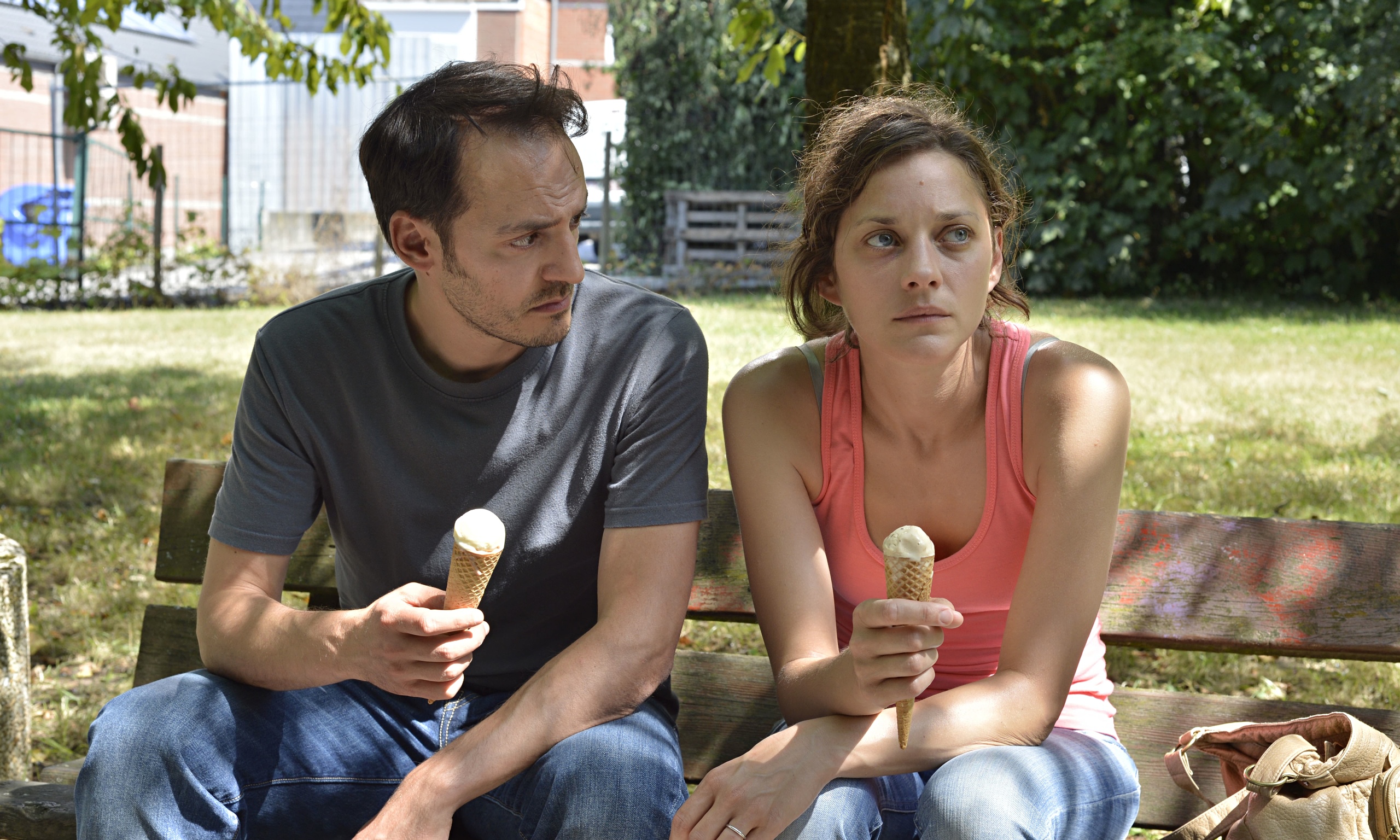
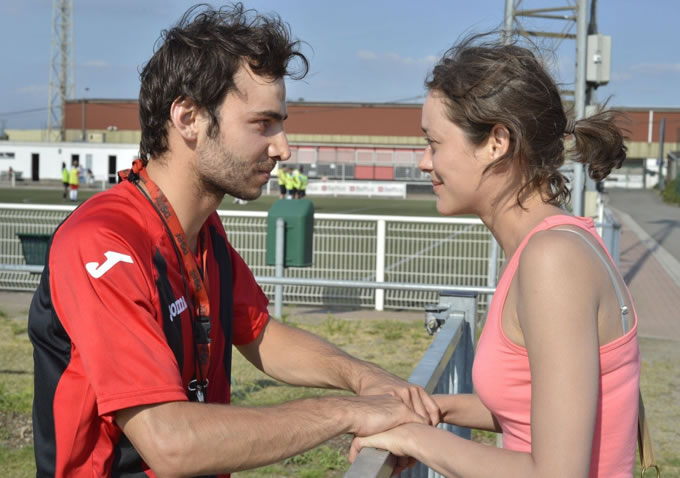
The brilliant Marion Cotillard plays Sandra, a woman who’s returning to work from sick leave only to find herself fired, apparently because her co-workers voted to receive their much-needed yearly bonuses and sacrifice her employment in return. She’s got one measly weekend before they vote again, so she makes the rounds and many humbling appeals.

This is a really interesting movie because while it presents a genuine hurdle, beautifully simple Two Days, One Nightbut so timely, it’s also a great hypothetical. Would you give up $1300 in your pocket to save someone else’s job? If she was a friend? If she was a stranger? If she’d do the same for you?

Solidarity: what the fuck does it mean to you? Are you a team player, or are you out for number one? Would you be more comfortable betraying her by secret ballot? Could you look her in the eye and tell the truth? Can you put your desire for a new patio above her need to feed her children?

We know that Sandra’s been away on medical leave. It’s hinted that it may have been mental-health related. And of course the work of convincing people, some she’d consider friends, to not ruin her life just to pad their own, is humiliating. She doesn’t want to beg. She’s riddled with doubt. But the fight also seems to strengthen her somehow; she seems invigorated.

The Dardenne brothers are known for sensitive, brooding work, but this is their first venture two-days-one-night-picture-5with an A-lister. Cotillard, for her part, doesn’t look like a star in this movie. She looks like a harried, anxious woman. Jean-Pierre said of her “Hiring such a famous actress was an additional challenge for us. Marion was able to find a new body and a new face for this film.” Although I’ve always found her to be stupidly talented, watching this movie back to back with Midnight in Paris, where she plays a woman infamously beautiful, it’s clear that part of her talent is in adhering chameleon-like to her characters.

I really liked this movie and am heart-broken to have watched it alone (I’m Oscar-cramming before vacation) because I need to discuss it. Have you seen it? How did you measure up?