
Two men are dropped off on a rock in the middle of the ocean, left alone to tend the lighthouse. The men, let’s call them Wick and Winslow, though they mostly go by “Sir” and “lad”, are strangers about to get extremely cozy during the four weeks of their isolation.
Winslow (Robert Pattinson) is a young guy, a bit of a drifter, here to make some serious money and go home. Wick (Willem Dafoe) is gruff yet poetic, exacting yet frustrated by Winslow’s rule-abiding nature. The two rub each other wrong right from the start, and the thing about having absolutely nothing but each other’s company is that you’ll either become best friends or the worst of enemies.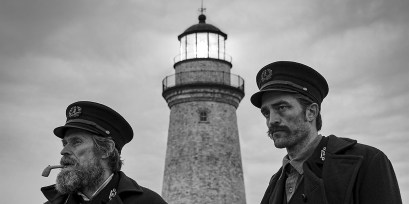
The weeks pass slowly, marked by back-breaking work. There’s wanking and drinking and farting, but eventually their time is up. They’ve made it! Except that’s really just where the story starts.
A storm blows in, which means no boat can come for them. They’ve been stranded, but for how long? Days? Weeks? Time becomes meaningless, reality blurred. We’re witnessing a descent into madness, but the question is: whose? Winslow’s? Wick’s? Our own?
Shot in stark black and white, with an aching cinematography and an arresting sound design, Robert Eggers (director of the Witch) returns with a dizzying, disorienting film about madness.
The candlelight serves perfectly to illuminate Dafoe’s lined face, his fevered eyes leaving us to wonder whether he’s a psychopath or just a drunk. Dafoe and Pattinson spar thrillingly on screen, each pushed by the other to unravel even further. It’s magnetic even if it’s not always easy to watch.
The Lighthouse is full of omens and mythic imagery awaiting decoding. This film doesn’t have the same sense of unending, unbearable dread that the Witch did, but it will surprise and confound you in new and unique ways, daring you to look away.
 Jamie’s dad, Quint (Peter Sarsgaard) just happens to be the manager of that hedge fund I was talking about, and he’s super stressed, selling assets to stop the bleeding. He’s not a particularly nice guy, it probably goes without saying. His wife Karen (Marisa Tomei) is fairly pragmatic about their flawed marriage, but she cries a lot. She recently bought a theatre to renovate and run, but with the hedge fund having a coronary, she’s about to lose it.
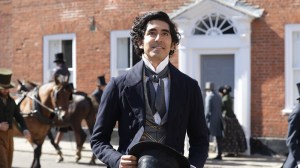 cuppa, not by a long shot. As an introduction to this film’s premiere at TIFF, Iannucci informed/assured us the two films could not be more different. And while I’m not sure that’s true, I was relieved and elighted to find myself really enjoying it.
 ASSHOLES WATCHING MOVIES