Tag Archives: TIFF21

Memory Box: Echoes of 9/11

I know I don’t need to tell you what today is. 20 years. Everyone remembers.

In 2002, artist Ruth Sergel set up a plywood video booth, inviting people, including eye witnesses of the attacks, from New York City, Washington, D.C., and Shanksville, PA to share their experiences. It wasn’t an interview; people stepped into the booth, hit a button, and shared whatever was in their hearts, as much as they could. Directors Bjørn Johnson and David Belton sifted through that raw footage and cobbled together an emotional tribute to that horrible, fateful day, telling the story from personal, intimate accounts of what it was like to survive that day, to lose on that day, to live through that day. As Johnson puts it: “the human story behind the tragedy.”
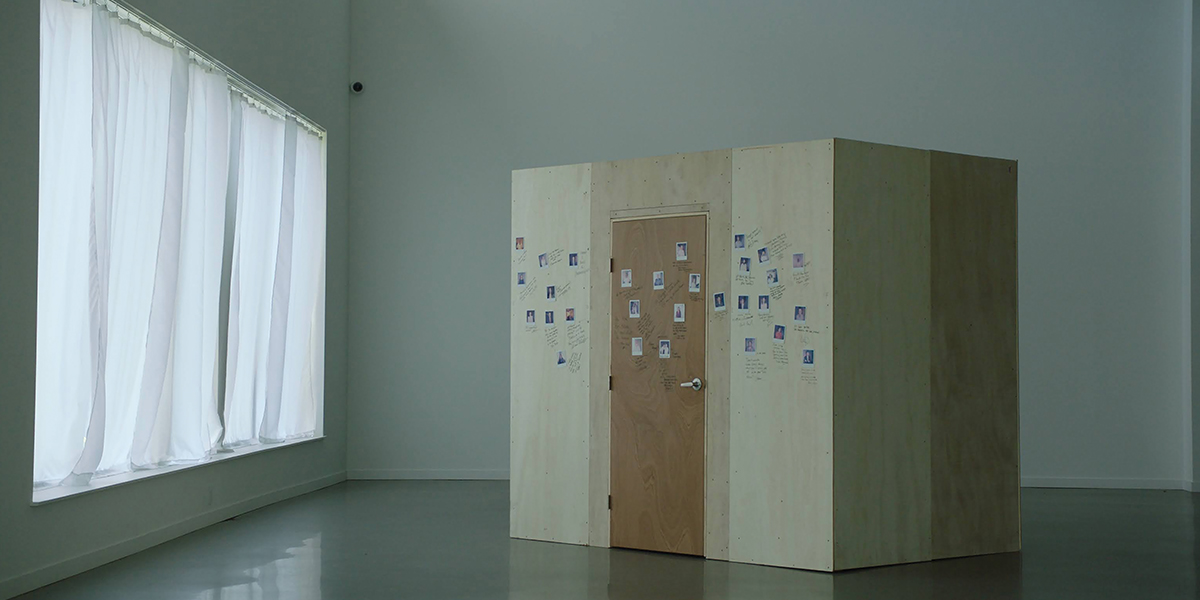
“Enjoy” is not the right word, but I did appreciate the film. It’s rather affecting to hear people speak from such a raw place, the wound not yet scabbed over. But for Memory Box: Echoes of 9/11, the filmmakers go one step further, building a new box but asking back the same people, people will revisit those wounds 20 years later and find them, if not exactly healed, then scarred at least. The tragedy is not so immediate, the emotions not so high. The people – survivors/victims/witnesses – have had time to reflect. To grow as people, to move on as casualties.

The box itself evokes the confessional, and inside, people admitted to guilt, grief, rage and resilience. We sit with them – the grieving parents, the young widower, the first responder, etc – and we hear their unfiltered stories. There are plenty of gruesome images in the media of that day; this documentary focuses not on what people saw that day, but what they felt. Like One World Trade Center (Freedom Tower) now standing in lower Manhattan, these testimonials form a de facto memorial, a living memorial, not just to people and places, but to the way the world used to be.

Memory Box: Echoes of 9/11 is an official selection of TIFF21.

Look for it on NBC/Peacock.

If you’d like some way to mark the occasion without dredging up so many painful memories, Apple TV has Come From Away, an uplifting Broadway musical about the best of humanity on that tragic day.
Violet

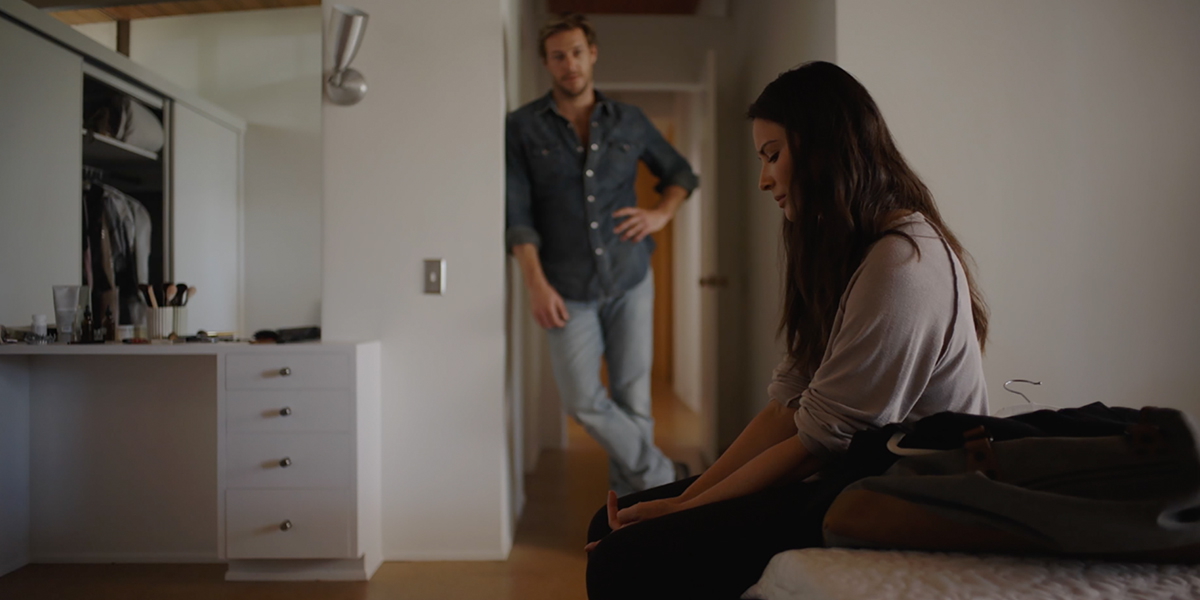
By outward appearances, Violet (Olivia Munn) is very successful. Her career is thriving, her beautiful home is under renovation to become even more beautiful, and everyone who knows her is largely jealous. But Violet has become crippled with self-doubt. Those nasty voices in her head (she calls them The Committee) have become highly critical and belligerent. She’s been allowing her inner fears to choose for her, guided not by what she wants, but what she should want.

Writer-director Justine Bateman insists that the most important character in the movie is you – YOU, the audience member. I suppose that she means that how we relate to Violet (or not) will inevitably colour our experience of the film.

The Committee is voiced by Justin Theroux: we literally hear her anxiety, always nagging, always insisting that she’s less capable, less valuable, less desirable, less worthy. Her innermost thoughts, the ones where she allows herself to be vulnerable and honest, to express her needs and wants, go unvoiced, never even whispered. We’re made aware of them only by writing on the screen. So we see the push-pull between what she truly wants, what her self-doubt thinks she deserves, and then the path she actually chooses, rarely the one she actually wants. We see her long for comfort and company even as she pushes someone away, and that inner conflict resonates so deeply that it almost takes your breath away.

Bateman has actually captured the essence of the human spirit. Negative thoughts are loud and cyclical, difficult to ignore because they voice our darkest fears. The heart’s private desires are so much harder to express; we fear their rejection so wholly that we’d rather not give them voice at all. But how are we to find happiness while repressing so much of our true selves? That’s not just Violet’s quest, it’s all of ours. To live openly and authentically is to be exposed. Violet is a grown woman, some would say in the prime of her life, yet she’s still grappling with this basic, foundational notion of self-image.

Violet is part of the Toronto International Film Festival’s lineup this year, and anyone who’s attended TIFF with any kind of regularity knows that by day two, audiences are intimately acquainted with the commercials aired before each film (often audiences will have perhaps even spontaneously developed call-and-answer reactions to each, which will haunt us all for the duration of the festival). This year, one of TIFF’s regular sponsors, L’Oréal, has a commercial starring Viola Davis about self-worth, about how it’s not a destination but a journey. I almost cannot believe that a commercial from the beauty industry feels like a companion piece to this thoughtful film, but there you have it. Quashing negative thoughts takes a lifetime of diligence and practice. First we have to learn to identify them, which is where Violet’s at when we meet her. The Committee has become aggressive, but she’s on to them. Next we’ll have to actively challenge them, which is much harder, especially for women who are conditioned to be deferential, and to expect less. Violet is fighting her fight, forging identity, worth, and satisfaction, essential tasks of adulthood. Between a lovely cursive font and Justin Theroux, we’re aware of her fight, but also subtly conscious that the other characters in the film must also be experiencing something similar, battling their own self-doubts, dousing their own anxieties. And so must we all. And learning that is perhaps the greatest lesson of all. It’s called empathy.

The Story of My Wife

Man makes crude bet with friend, vows to marry the next girl who walks in.

Sounds like the premise of one of those beach-reads romance novels, or a cheesy teen romance, but in fact, this is writer-director Ildikó Enyedi’s latest period drama. So what’s the difference?

Sea Captain Jacob Störr (Gijs Naber) is ready to marry, he declares to his friend. “To whom?” the friend inquires, naturally. Jacob doesn’t know yet, so he proposes that he will marry the very next woman who enters the café. Lucky for him it’s the lovely Lizzy (Léa Seydoux), who proves surprisingly amenable to his plan.

Is it a good idea to marry so impetuously? Jacob and Lizzy will soon find that love and marriage are about as turbulent as the seas he routinely conquers as captain of a large vessel, and not so easily navigated. Marriage without courtship, indeed without even basic familiarity, does pose its challenges. The Story of My Wife is the story of a man discovering his wife after he’s already married her. She’s coy, and teasing, and he can never get a good read on her, and since we know Lizzy only through Jacob’s eyes, neither can we. Is she sincere? Serious? Unfaithful or just a flirt? Whatever charm resides in her mysterious character evaporates in the sheer repetitiveness of the film, Jacob’s jealousy coming to a head over and over again.

Jacob is awkward on land, and even more uneasy when he finds himself unable to captain his marriage and steer it in the direction of his choosing. Used to taking people at their word to a fault, Jacob cannot credit his wife’s womanly wiles. It’s mildly interesting but this clunker takes on water steadily but takes almost as long as Titanic (the movie, about 3 hours) to sink. I’m quite sure that you’ll have jumped overboard long before then. The Story of My Wife beguiles us with its pretty 1920s setting and Seydoux’s luscious ringlets, but it ultimately fails to hold the attention.

The Story of My Wife is an official selection of TIFF21.

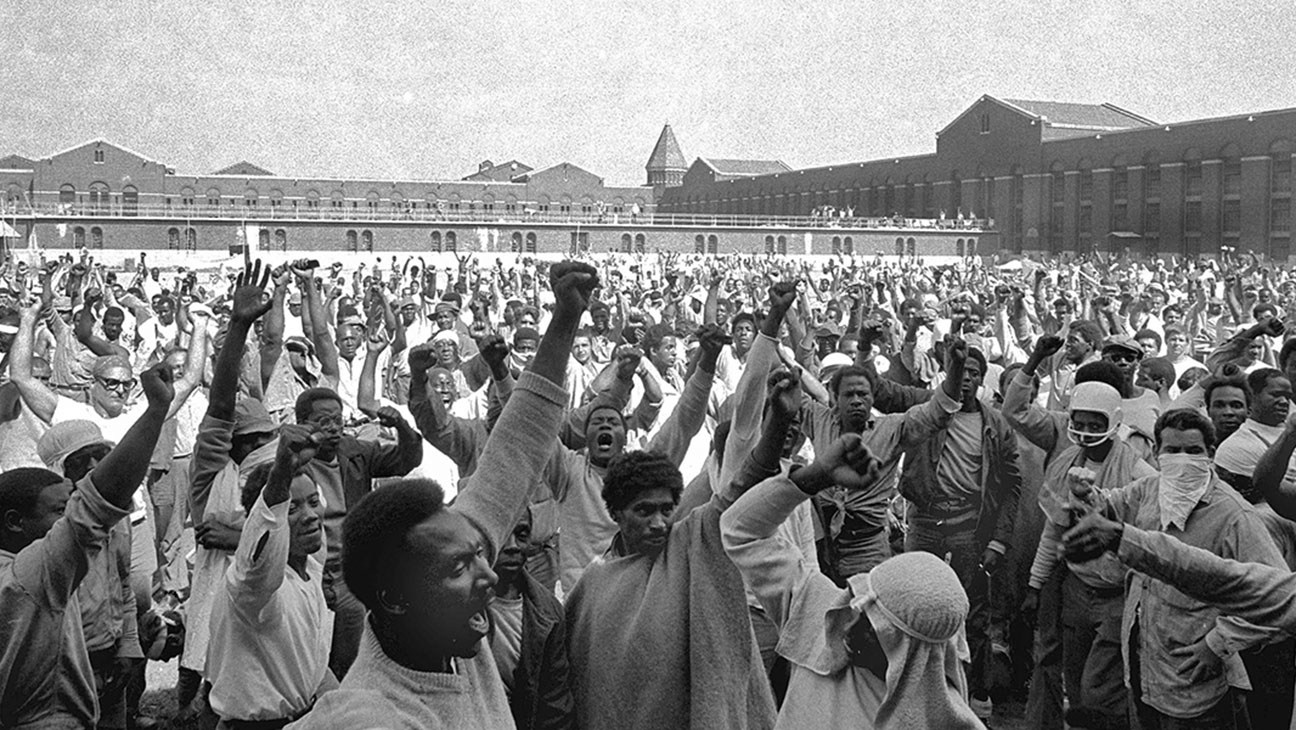
Attica

On September 9th 1971, the inmates at Attica took over the prison; it was the largest prison rebellion in U.S. history. 1200 prisoners now held half the prison in their power.

Tension had been brewing for months, at least, over the poor conditions of the prison. In fact, two months earlier, the prisoners had peacefully sent a list of 27 demands to the commissioner of corrections, and the governor. No actions whatsoever were taken, and the prison warden retaliated against those inmates by increasing restrictions.

The prisoners once again put forth a list of demands and prepared to negotiate in good faith. They asked for simple things like better medical treatment, fair visitation rights, edible food, religious freedom, an end of physical abuse, and for basic necessities like toothbrushes, showers, and toilet paper. They held 42 guards and civilian employees as hostages.

When negotiations broke down, blood was spilled as the corrections commissioner ordered the prison taken back by force. It needn’t have happened.

Director Stanley Nelson examines all angles of this most deadly riot, interviewing surviving prisoners, victims’ family members, lawyers, and journalists. He tries, perhaps in vain, to understand the series of poor decisions that led to violence as a response to men simply asking for basic human rights. And not only that, but when troopers stormed the building, they shot inmates who were not resisting as well as hostages, using ammunition banned by the Geneva Conventions. Law enforcement shot at least 128 men, killing 10 hostages and 29 inmates. That’s right, the operation was so disorganized that they killed ten of their own. How did this happen?

The answers are never going to be satisfying, but Nelson does his best to untangle this mess and bring some sense to it, maybe even some closure.

Attica is an official selection of the Toronto International Film Festival 2021.

As In Heaven

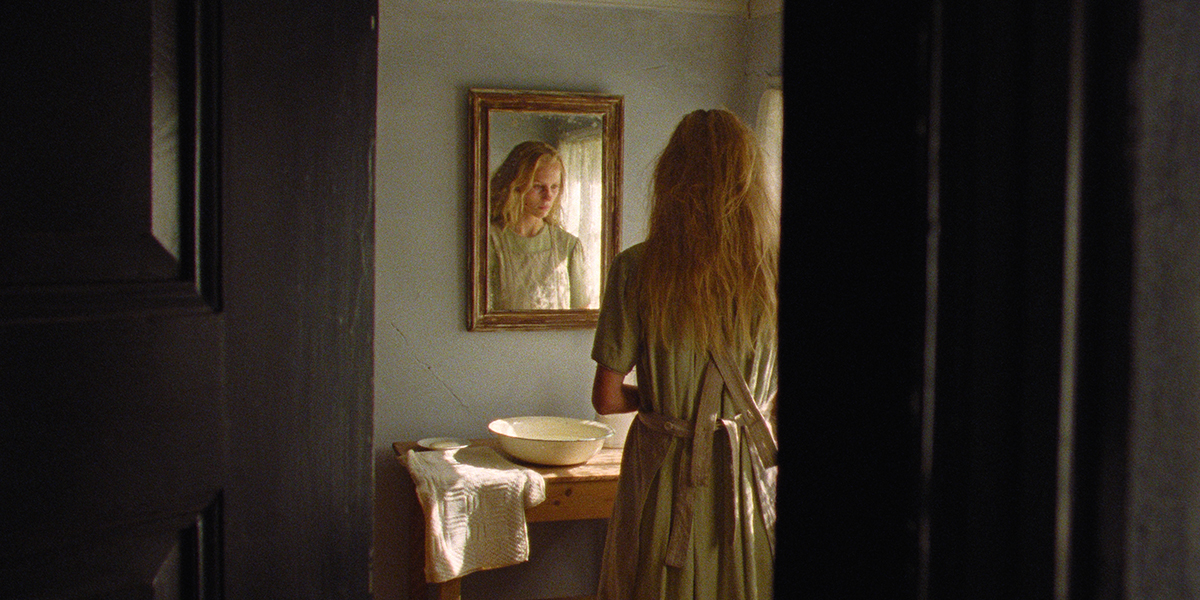
In 19th century rural Denmark, Lise is a 14 year old girl on the cusp of what her time and place would consider womanhood. Her father thinks educating girls is a waste of time, but Lise’s mother Anna sees her intelligence and her need for more, and insists she be sent off to school, which means leaving the farm, her family, and her crush.

Anna, at the end of a difficult pregnancy, goes into labour. It is bad, immediately bad, but Anna refuses to call for a doctor. She had a dream wherein a doctor was called, and she died. Her mother-in-law, the stern and taciturn Old Sine, presides over the birth, guided by her own portents, prayers, and visions. The hours drag on as blood soaks through the mattress and Anna’s moans grow increasingly savage. Meanwhile, Lise tries to comfort her siblings as they cower together just out of sight. They wonder what will become of them should their mother die, and Lise, as the eldest, considers that this might be a punishment from God – and that Lise herself might be the cause.

Director Tea Lindeburg was drawn to the material because its themes felt alarmingly contemporary. Anna’s poor choices are made out of fear and ignorance – these are uneducated farmers, established enough to have options but superstitious enough not to use them. Today ignorance doesn’t have to be an excuse, the science is there, yet we still see misinformation and dogma offered as reasons not to follow doctor’s orders.

As In Heaven is thoughtfully created but slow to watch. As young Lise, Flora Ofelia Hofmann Lindahl contains multitudes and stirs empathy, particularly as she begins to doubt herself, and her motivations. Contemplating her mother’s death is awful for many reasons, but selfishly, Lise wonders if this will affect her ability to go to school. As a modern audience, we understand the consequences more keenly, aware that if she doesn’t go, the cycle of ignorance continues. As In Heaven shows us the personal cost of ignorance, but more importantly, it hints at the greater social costs as well.

As In Heaven is an official TIFF 2021 selection.