Author Archives: Jay

Music

You may already know about this movie even if you haven’t seen it. Sia, the popular singer-songwriter with the oversized wigs, is its director and co-writer, but more importantly, is the woman who made a movie about a young woman on the autism spectrum without casting or seemingly consulting anyone on the spectrum. And when she was called out about it, she got kind of defensive. Understandable, maybe, but not a great look. She has since half-apologized, the very definition of too little, too late.

While I definitely believe that inclusion is good and right, and representation important, I decided to see if I could set the controversy aside and enjoy the movie anyway. The short answer is NO. The long answer is:
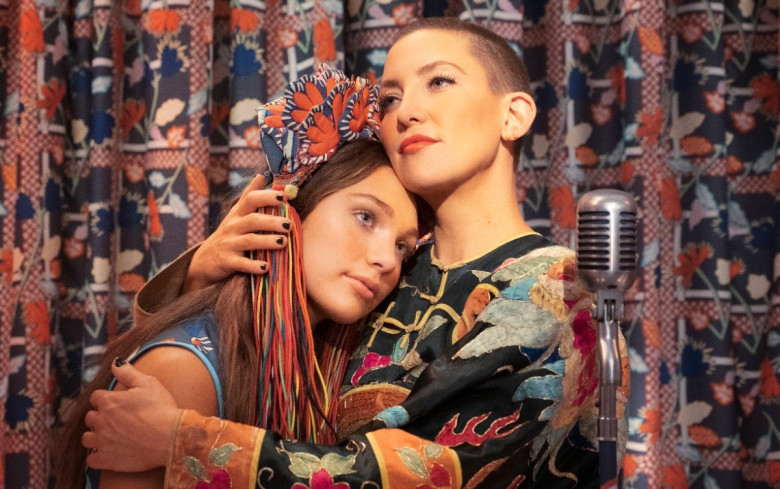
Music is not about a young woman on the spectrum named Music. Music (Maddie Ziegler) lives with grandma Millie (Mary Kay Place), who has carefully constructed a safe space in which Music can exist. Music is barely verbal, but she likes to go for walks and visit the library, and she’s never without her headphones. But then Millie suffers a deadly stroke and Music’s sister Zu (Kate Hudson) has to step up and take custody, which is a real head scratcher since Zu is an addict and a drug dealer recently released from prison and currently on parole. How she gets custody is beyond me. She can barely care for herself, she’s 40 but hardly an adult. Caring for a special needs sister seems wildly beyond her, which is probably why things get so wildly out of control. Anyway, this movie is not about Music, it’s about Zu. Music is merely used as a prop to help Zu achieve her goals. She’s a plot device on Zu’s road to redemption.

While this is hardly Hollywood’s first ‘marginalized person as a plot device’ narrative, it is a particularly offensive portrayal by Maddie Ziegler, who, by her own admission only prepared for the role by watching Youtube videos of kids on the spectrum having meltdowns. Ziegler’s performance is without depth or nuance. It’s one-dimensional, insensitive, and doesn’t begin to describe a person as a whole. But director Sia doesn’t understand this, and the script, co-written by Sia and children’s author Dallas Clayton, isn’t interested in fully-realized characters anyway. Music remains opaque and unknowable, Zu is hardly treated to anything resembling an arc or development, and other characters aren’t just basic but sometimes downright offensively stereotypical. It’s surprising that Sia was able to get the likes of Hector Elizondo, Mary Kay Place, Ben Schwartz, and Leslie Odom Jr. to sign on, but then again, none of them would have seen Ziegler’s patronizing performance until everyone was already on set and the ink on contracts was good and dry. But the whole notion that Zu can achieve some sort of absolution merely by learning to love her “challenging” sister is gross. Music doesn’t exist to make Zu look good. She shouldn’t be used as a way to illustrate someone else’s good vibes and positive intentions. She’s not an instrument or a stop along her big sister’s victory tour; her depiction as such is cruel and irresponsible. Why does a movie named after her fail to see Music as a person?

This patronizing and poorly judged filmed is frequently interrupted by an entire album’s worth of Sia songs – performed by Ziegler, Hudson, and Odom Jr. – and their accompanying music videos, which masquerade as insight into Music’s interior life but are really just an excuse to trade on the director’s only real talent. If only she had merely put out 10 videos instead. The musical interludes are of course pastel pieces of choreography heaven, but they not only have little if anything to do with the film itself, they also get really old really fast. Sia lacks the skill to connect these interjections to the larger story and the videos feel shoe-horned into a film that doesn’t want them. And though Maddie Ziegler’s other Sia collaborations (on her videos for Chandelier, Elastic Heart, and Big Girls Cry) are borderline genius, these are of course tainted by Ziegler’s self-evidently problematic aping of disability.

The film’s ignorant and infantilizing portrayal of autism is disastrous, so it might be a good time to yet again point out that actually involving people on the spectrum in this film’s conception, casting, development, and shooting would have resulted in something more authentic and representative. I know it’s tempting, in today’s cancel-prone culture, to dismiss or boycott this film, but I think that we can still learn valuable lessons from bad art. And Music is very, very bad. It’s so bad that it should serve as a new benchmark for productions going forward. It’ll be harder for mistakes like this to be made in the future. That’s not so much a silver lining as a tin foil lining, paltry perhaps, meager consolation, but it’s important to remember that a movie like this doesn’t just do a disservice to a marginalized community, it sets us all back, our understanding and our empathy and our ability to build a more inclusive society. Music isn’t a disease, it’s a symptom, and the only way we can be part of the cure is to talk about the way forward.

Barb and Star Go to Vista Del Mar

Kristen Wiig and Annie Mumolo, the duo who wrote the runaway hit Bridesmaids, are back at it again, cracking us up with a less raunchy but no less funny comedy about women in the prime of their life.

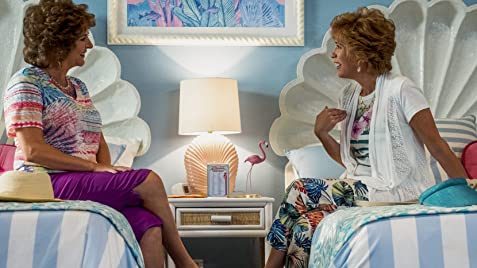
Okay, maybe not quite prime, but if they’re no longer bridesmaids, they’re not quite old maids. They’re single (divorced/widowed) and ready to mingle. Barb (Mumolo) and Star (Wiig) do everything together these days: they live together, work together, and go to Talking Club together. Rather awkwardly, Talking Club’s topic of the day is ‘jobs’ and Barb and Star have just been fired. Not even their famous hot dog soup can soothe these wounds. Listless, they take a cue from an acquaintance who’s just returned from a vacation she describes as a “douche for the soul.” Inspired, Barb and Star pack a whole range of culottes and some other essential items and head for that special section of Florida where luxury meets coconuts.

Barb and Star are about to have the vacation of their lives, and not just because it’s the first time they’ve ever left Nebraska. An evil villain named Sharon (also Wiig), an evil paperboy named Yoyo (Reyn Doi), and evil minion Edgar (Jamie Dornan) are plotting, well, evil, and its epicentre is Vista Del Mar! Luckily or unluckily, henchman Edgar just happens to be hunky, and Barb and Star have been starved for some luvin. Boy does this complicate their vacation! Barb’s lying to Star, Star’s sucking face with Edgar, they’re all dancing to a Celine Dion Titanic remix, and a soul douche is about to become a very wild ride!

The plot manages to make some sense despite being wildly absurd, but mostly you’re watching because Barb and Star are just so darn charming. Mumolo and Wiig still got it going on. I worried that these characters might seem like something better suited to an SNL sketch, but I didn’t need the trappings of the film, I would have been happy just spending time with the Talking Club. Although Barb and Star are caricatures, they’re made up of so many clever little details you won’t fail to find something familiar about them. They’re over the top but never annoying and never too much.

Production design, art direction, and costumes all come together in a wacky, tacky riot of pastel kitsch – and did I mention the random musical numbers? Barb and Star Go To Vista Del Mar is unapologetically and exuberantly silly, fully committed to the twin performances by hilarious comediennes Mumolo and Wiig, and pretty much the perfect comedy and it has been a long while since I said that about anything. We’re all in need of a little escapism right now and this movie is a glossy brochure for a middle aged vacationer’s delight – it smells like Red Lobster and looks like a Metamucil-yogurt commercial. What more could you possibly want?

Sundance 2021: Mayday

After a terrible encounter with her boss inspires her to put her head in an oven, Ana finds herself on a mysterious island of girls – but this is no Themyscira.

On this island, Ana (Grace Van Patten) joins Marsha’s (Mia Goth) army of girls where war is constantly being waged against men. Along with Bea (Havana Rose Liu), Gert (Soko), and June (Juliette Lewis), they lure what appear to be WWII-era planes of soldiers with mayday calls of distress. Planes that answer the call and steer toward the island are mysteriously wrecked, and any men who survive and wash ashore are taken out by the girls, who’ve been training as snipers.

If the island is meant to be some sort of limbo for suicides, it’s populated by women who’ve been done wrong by men and are out for revenge. There is strength in numbers and strength in taking one’s power back, but while the island’s unique mission is exhilarating at first, Ana comes to realize she’s not entirely the killer Marsha wants her to be. Leaving won’t be so easy, though. Even if there’s a way to leave, Marsha isn’t keen to lose her newest recruit.

I love the vision and I love the attempt but I didn’t love the movie. The island is a great premise for exploring feminism and suicide but it doesn’t know how to create tension or sufficient reason to keep watching. Director Karen Cinorre is clearly very talented at putting together snappy, stylish visuals and has a knack for emotional dexterity, but Mayday needs a better grounding, better world building, better character development. Without those things, the film lacks dramatic propulsion and a good idea just never really becomes a good movie, but Grace Van Patten makes a strong case for future roles and Cinorre is a director to look out for.

Sundance: On The Count of Three

Work sucks. Home sucks. Life sucks. Val (Jerrod Carmichael) springs his best friend Kevin (Christopher Abbott) from the psychiatric facility where he’s being held so they can commit suicide together. Kevin attempts it regularly, which is why he’s currently being held, and Val has recently begun to think that this is the only logical solution. Two best buds, two guns, one parking lot, and one suicide pact. But at the last minute, Kevin doesn’t shoot his best friend in the head, which admittedly is a little hypocritical since he’s usually pretty cavalier about suicide. But Kevin’s recent brush with death and even more recent suicide pact has him thinking that one last day might be in order before they go.

Val’s idea of ‘one last day’ involves things like riding dirt bikes and drinking beers, while Kevin’s is a little more revenge-based, so the actual trajectory is a mix of both, with stops to see Val’s pregnant girlfriend (Tiffany Haddish), Val’s deadbeat dad (J.B. Smoove), and the doctor who messed up Kevin as a kid (Henry Winkler). Kevin thinks this is an opportune time to commit some murder – he can save future kids from the sick doctor, and avoid paying any consequences. Val isn’t exactly on board, so there’s some negotiating to do here, but that’s the unique and oddly wonderful thing about this film. In between all this tragedy and trauma is a very strong friendship between these two men. They’ve been there for each other and continue to be on their last day, and will each pull the trigger on the other when the day is over. Their bond is surprisingly sweet and at times even intimate. It’s not exactly what you might expect from a couple of guys plotting suicide in a parking lot.

Jerrod Carmichael is a first time director yet seems to have a natural inclination for strutting the thin curvature of such a dark comedy. On The Count of Three is edgy just by virtue of its premise but at its heart are some pretty universal themes of despair and hopelessness. The film doesn’t have a lot of bells and whistles but it does have the balls to take on this heaviest of topics and Carmichael’s skill is sharp enough to pull it off in a way that is completely disarming. How can this little film fill you with heartbreak but leave you with hope? It isn’t as bleak as it sounds, for one – the camaraderie here is infectious, and the pairing of Abbott and Carmichael is inspired. The characters are wounded and neurotic but they balance each other out and have some moments of truly beautiful connection that make you root for them even as they plan for their own demise.

Sundance 2021: The World to Come

Picture it: mid-19th century American East Coast frontier. Life is hard; it’s round the clock, back breaking work just to stay alive. It’s dirty, full of drudgery, isolating, dark, and monotonous.

Dyer (Casey Affleck) is a poor farmer who will toil his whole life away and never have anything to show for it. His wife Abigail (Katherine Waterston) works just as hard at even more menial tasks. Their relationship is predicated on hard work and common sense. Their life is colourless, hard-scrabble, and bereft after the loss of their only child. When another couple appears in the “neighbourhood” (which is to say, another isolated cabin miles and miles away), their dreary lives are cheered just a little bit by the ability to see another face once in a while. Abigail becomes particular friends with the wife, Tallie (Vanessa Kirby), though Tallie’s husband Finney (Christopher Abbott) is a real stick in the mud, another burden to be borne, but worth the price of seeing Tallie.

If Dyer notices that Abigail and Tallie are growing closer by the day, he’s hardly the type to say anything, but Finney is much more jealous, and perhaps this isn’t the first time his wife has wandered over to someone else’s homestead. Abigail and Tallie relieve their loneliness and ignite something in each other’s company. Their relationship turns intimate, and physical, a balm on their otherwise psychologically taxing existence.

The World To Come is based on Jim Shepard’s lyrical story of the same name, which is fine for a piece of literature but translated less well on screen. Katherine Waterston provides a poetic voice-over that grows tiresome very quickly, not to mention suspicious. Dyer, who eats potatoes for every meal of every day of his sad little life, hardly seems the type to have said that “contentment is a friend who rarely visits” although the sentiment, at least, rings true, the biggest excitement in his life provided by a molasses enema when he gets the flu.

Waterston and Kirby are wonderful together, and the setting is absolute perfection. The sense of longing and emptiness are well conveyed, and Waterston does a fine job embodying both Abigail’s stoic reticence and the private, flowery language of her journal. The World to Come has plenty of isolated aspects to admire but they amounted to a boring film and a frigid love story that I didn’t need to see (again: this is hardly the first of its kind). Mona Fastvold is an excellent director who picked a crummy script and failed to breathe enough life into the story to justify it or indeed to hold any emotional heft. This one left me cold.

 The World To Come will be released via video on demand on March 2, 2021.

To All The Boys: Always and Forever

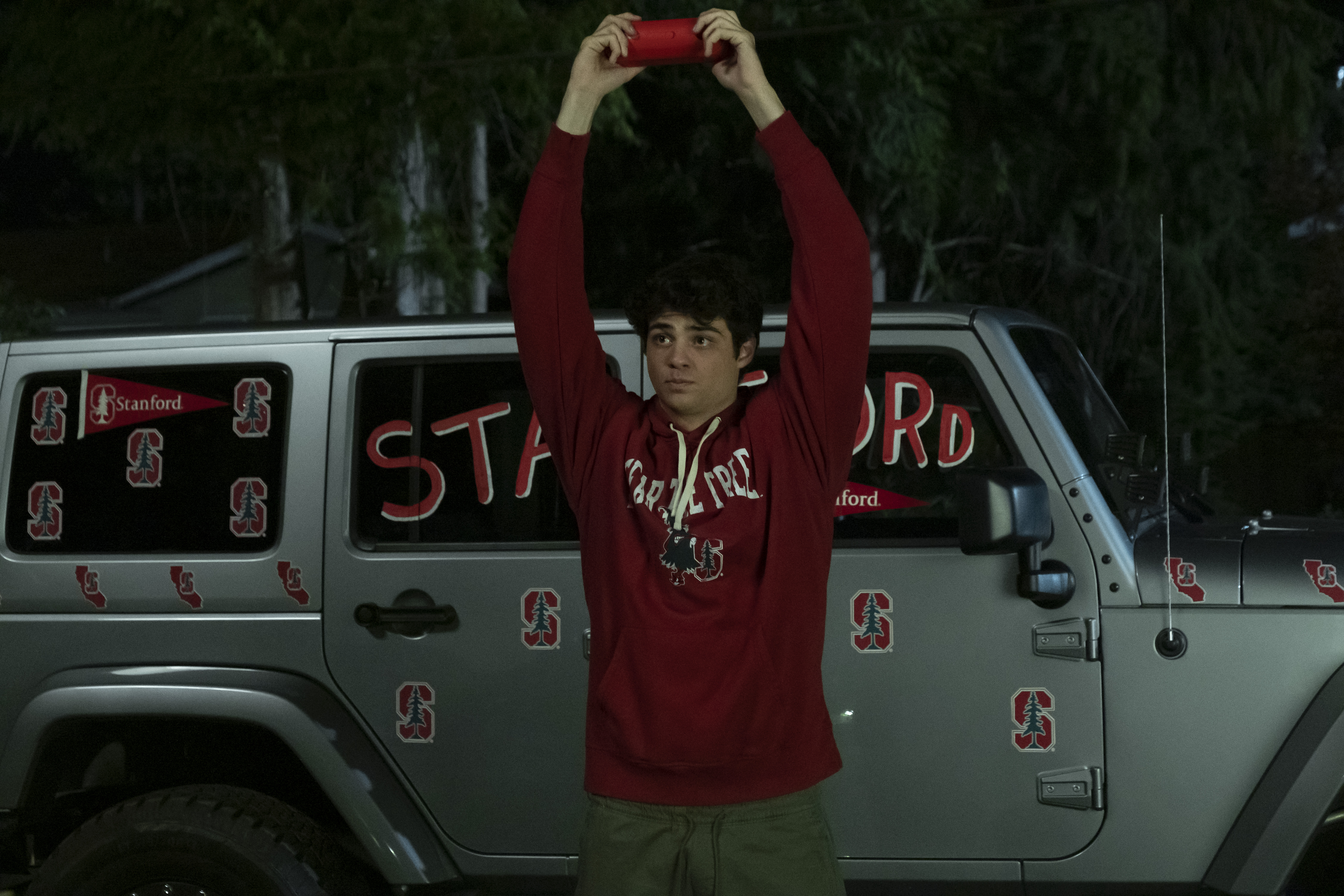
Prepare your tender hearts for possible breakage: this is the third (and final) installment in the To All The Boys series and in it we’ll bid adieu to our favourite young couple, Lara Jean and Peter. They’ve come a long way from merely posing as a couple in the first film to being threatened by charming rival suitors in the second. Seniors in high school, they’re about to graduate and go to Stanford together – or are they?

Back from a spring break in Seoul, Lara Jean learns she hasn’t been accepted to Stanford and suddenly the entire future she and Peter have envisioned together is in flux. With a class trip to New York City, prom, and graduation on the horizon, these milestones might have to be borne solo. If Lara Jean and Peter aren’t going to college together, they may as well just go through with the inevitable break up now and get it over with.

After three movies worth of emotional investment, it’s hard to say goodbye to Lara Jean and Peter, but first loves aren’t necessarily forever, and it’s sort of sweet to see Lara Jean finding happiness on her own terms, with or without Peter. In the first two movies she wondered who she loved but now she’s wondering what else she values and who else she is. Now this is growing up.

Director Michael Fimognari called this movie “an unintentional love letter” and he’s got a point; filmed back to back with the second one, this movie didn’t predict that the class of 2021 would be disrupted by a global pandemic, so this movie’s graduating class is perhaps the only one that will get to slow dance at prom and don caps and gowns without social distancing. Most of their real-life contemporaries have given up so much so in a sense we’re all living vicariously through Lara Jean and Peter.

It’s heartbreaking to say goodbye to these two high school sweethearts but all good things must come to an end and all things considered, this is a pretty fitting farewell for our two star-crossed lovers.

Red Dot

Engaged and pregnant, Nadja (Nanna Blondell) and David (Anastasios Soulis) travel to the north of Sweden for a hiking trip to hopefully check out the northern lights. A little parking lot scuffle involving scratched cars, racism, and dead deer turns into something much more sinister, turning their romance under the stars into a real nightmare.

Sleeping in their tent wayyyyyy out in the middle of the snowy nowhere and “keeping warm,” they suddenly notice lights on the horizon that aren’t northern. Outside the tent, a red dot appears in the middle of Nadja’s chest, and then David’s head. They can’t see anything, but a red dot would make anyone nervous. Trying to get back to their car, the gunshots start. The first to fall is their dog, Boris. Poor, innocent Boris. But no time for mourning! Unknown psychotic gunmen are out there, apparently very upset about some cosmetic bumper damage. Cold and increasingly wounded, Nadja and David are chased out into the frozen wilderness where crazed shooters are only a portion of their worries. Survival becomes all-consuming and increasingly unlikely.

Director Alain Darborg’s movie really has nowhere to go but deeper and deeper into the fray and we go limping along with it. If you’re in the mood for a harrowing movie about constantly almost dying, this might be right up your alley, or across your frozen tundra or what have you. The pursuit is relentless and after a while, borderline monotonous. And then there’s a twisty ending that’s kind of infuriating because it comes out of absolutely nowhere and is kind of unfair and totally unearned. But there it is. If you’re in it just for the action I bet you can overlook it but if you were hoping for a good, satisfying movie, keep moving, it’s best to look elsewhere.

Bliss

Greg (Owen Wilson) is having a very bad day: he’s getting divorced, estranged from his kids, living in a motel, and now he’s getting fired. And now he’s accidentally killing his boss while getting fired! And how he’s hiding the body and fleeing the building! A very bad day indeed. In the bar across the street (note: not the wisest place to hide out), he meets Isabel (Salma Hayek), who tells him not to sweat it. Why? Good question. Because this whole world is fake, she tells him, a mere simulation of her own creation. She and Greg are real (in fact they’re “together”) but nearly everyone else is essentially an NPC, just a simulated person able to walk around and interact, but nothing more than a character in a very sleek video game. And there’s proof: Greg and Isabel have powers! They can make the fake characters do things with their minds. How about that?

Greg and Isabel go on a bit of a bender, Greg intoxicated by his newfound powers, happy to forget the woes of his other life and to reap the benefits of a new partner in crime. But there’s more. This world, remember, is a mere simulation. In the real world, Greg and Isabel are scientists, and this is Isabel’s research, and her creation. When they exit the simulation, Greg finds himself in a utopia, a world made perfect by science and technology. A little too perfect, actually; because you need bad in order to appreciate good, the utopia has become less and less satisfying, hence Isabel’s creation – a world in which you can live a rough life in order to better appreciate the perfection back home. Except Greg and Isabel have exited the simulation too abruptly and now both worlds are starting to bleed into each other and they’ll need to risk going back and getting stuck in order to correct it.

Or.

Or there’s another way to watch and interpret this movie. Perhaps Greg’s addiction to painkillers takes a turn for the worse when he loses his job and his home. Maybe Isabel is just a schizophrenic addict and they’re sharing a common hallucination in order to escape their life on the streets.

Bliss is purposely ambiguous and this movie is going to be very divisive because of it. Sean hated it because he made up his mind very early on and felt the whole exercise was pointless once he’d “figured it out.” I felt differently, having embraced the dichotomous possibilities. Writer-director Mike Cahill is careful to scrub the film of any telling language. No one says drugs. No one says addict. Yet there remains evidence for both sides of the coin. Greg has a grown daughter who never gives up looking for him. Isabel is adamant that Emily (Nesta Cooper) is just another fake character, but if that’s the case, why does the story sometimes get told from Emily’s point of view? That would seem to indicate that she’s real. Which goes double for Isabel, who might be just a figment of Greg’s imagination (or a side effect of his high), but she, too, is seen working independently in the movie. Sean insists that Greg is an addict, case closed, but this easy interpretation doesn’t account for the fact that we glitches in the matrix very early on. His wallet, for example, suffers a glitch, unobserved by Greg, seen only by us. Why would Cahill go out of his way to show us this if he wasn’t planting seeds of doubt? Of course there’s a third possibility here, that neither of these worlds is the “real” world and we haven’t seen the end of the simulations. Of course, you’ll have to watch the movie to find out where on the spectrum your belief lays. Some will see this in black and white and others will rejoice in the grays. But I believe there’s some hidden pink, and a very careful watch may uncover it still.

If you’re interested in taking on this puzzle, you can find it on Amazon Prime – but do promise to come back and let us know what you think, because Bliss is only 90% a movie. The other 10% depends on what you bring to the table.

Sundance 2021: Prisoners of the Ghostland

Prisoners of the Ghostland is a collaboration between America’s most bonkers actor, Nicolas Cage, and Japanese auteur Sion Sono, known for grotesque violence, extreme eroticism, and surreal imagery. I’m not the biggest fan of Nic Cage’s recent reincarnation as a b-movie cartoon, but I thought this combination was made in movie heaven and couldn’t wait to check it out at the Sundance Film Festival.

But you know what? It wasn’t that great. It was okay, but I expected some pretty bananas action from these two knuckleheads and instead Cage seems to be playing it straight, giving us a film that’s far more conventional than I ever would have guessed. Had they embraced the subversive, unhinged kind of film I was expecting/hoping for, Prisoners of the Ghostland could have been an instant cult classic, instead I’m left feeling disappointed after having been promised “the wildest movie I’ve ever made” by Cage himself, which is patently untrue.

Cage plays Hero, a notorious bank robber who’s released from prison in the savage, post-apocalyptic frontier city of Samurai Town in order to rescue the wealthy warlord Governor’s granddaughter, Bernice. The Governor (Bill Moseley) will guarantee Hero’s freedom in exchange for Bernice’s swift return, but straps him into a leather suit programmed to self-destruct in just a few days as a little extra incentive. And while we’re at it, the suit is also loaded with explosives should Hero raise a hand against a woman, and more explosives in the crotch region should Hero pop a boner for Bernice (Sofia Boutella).

Hero does indeed find Bernice, by accident, and I do mean accident – he immediately crashes his car and is rescued by the people in Ghostland, where Bernice is being held. Ghostland is under some mysterious curse that prevents anyone from leaving and is guarded by the “survivors” of a prisoner transport bus crash who were turned into monsters thanks to radiation. The people of Ghostland are obsessed with time, and they’re not even the ones strapped into leather jumpsuits charged with deadly explosives. The town is peppered with crumbling mannequins that house prisoners inside them; Bernice is broken out of her shell but is still voiceless, and not much help against the curse, the cult, the gunslingers, the ghosts, the samurai, or the irradiated convicts.

Prisoners of the Ghostland isn’t a complete wash. There are some crazy-cool visuals, a western-spoof vibe, an interesting soundtrack, and plenty of dirty neon lighting up our Hero’s path. And there’s Chekhov’s gun, of course: if in the first act you have rigged a suit with ball-sac bombs, then in the following one they should explode. And indeed they do. But I wanted more than just scrotal thrills, I wanted a whole anatomy of weird and wonderful, I wanted a rainbow parade of the absurd, I wanted Nic Cage at his best worst most demented, I wanted Cage and Sono to make a movie that would get banned in 17 countries and give me a nosebleed and an ice cream headache and leave me out of breath and intellectually bedazzled. Okay, that’s asking a lot, but I dared to dream big, and what I got was a strange, supernatural cinematic question mark that’s not half as nuts as anything else Cage has made in the last decade.

After We Collided

In the first film, simply titled After (which I never saw), a young woman named Tessa (Josephine Langford) is in her first semester of college, sweet, shy, bookish, devoted to her high school sweetheart back home. But then she meets the dark and brooding Hardin (Hero Fiennes Tiffin), whose mysterious magnetism is undeniable. Good girl meets rebel, it’s an age old story that every generation needs to tell for itself. But Hardin is hiding another tired trope: he’s made a bet that he can bed her. Their whole rocky relationship is predicated on a lie, and it’s hard to say which is worse, that Tessa loses her virginity to a bet, or that Hardin has actually fallen in love with her and is now going to lose his first love to a stupid bet.

[Not that I actually believe in this garbage – it’s super toxic and should only result in immediate breakup and block, but in the world of movies, this shit passes as romance and is an idiotically common occurrence.]

Cut to part two: After We Collided.

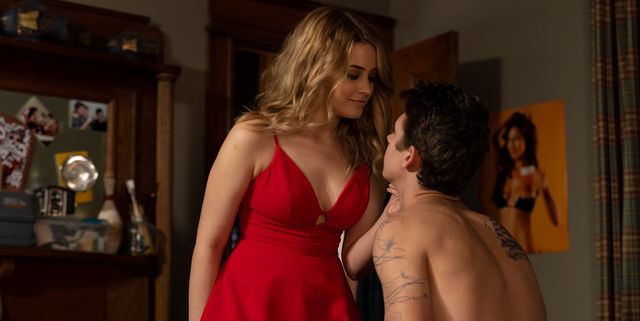
Tessa is heartbroken and single, but things are looking up as she starts a new internship where her hunky/nerdy (nunky? herdy?) colleague Trevor (Dylan Sprouse) is getting friendly. But when they get drunk at a club (for work!), Tessa goes back to her hotel room and calls Hardin, who you can be sure zips right over, only to find Trevor in a (misleading) state of undress! Hardin attempts to do the right thing and resist Tessa’s advances since she’s crazy drunk, but, you know, consent plays second fiddle to desire, and we already know he’s the kind of guy who takes a woman’s virginity over a bet, so he’s not a super ethical dude, despite the film trying to convince us otherwise. The next morning Tessa is predictably upset, and the two continue to be on and/off again for most of the movie. Even when he’s not taking disgusting bets, he’s got anger issues and daddy issues and jealousy issues, plus those nasty flashbacks and nightmares and an overall simmering rage that young women mistake for sexy but is actually a major red flag.

Two very big differences between the first and second movies. First, it lost its female director and would up with Roger Kumble, who directed my generation’s movie about a guy who makes a bet to take a young woman’s virginity and then falls in love with her – it was called Cruel Intentions, starring Reese Witherspoon and Ryan Phillipe…and Selma Blair, who depressingly plays Tessa’s uptight mom in this movie. Oh how times have changed. Second, this movie is much more heavy on the sex, and gets an R rating rather than PG-13. It’s the light version of 50 Shades, for young people who have plenty of passion but absolutely no technique.

I did not care for this movie but I suppose if you were a fan of the first you might be glad to see these two fighting like cats and dogs and fucking like rabbits. It’s a whole petting zoo of toxic masculinity and if that’s how you define romance, then by all means, have at it – but be safe.