Category Archives: Jay

Summer Night

Mere hours ago I wondered to myself what “the kid” from Boyhood was up to. I vaguely remembered seeing him in one other thing, maybe, and then all of a sudden this movie pops up on my Netflix recommendations, and there he is. Ellar Coltrane. So yes, he has continued to have a career after that one seminal experience. By the looks of him he’s had more movie roles than he’s had hot showers, but who knows, I guess “unkempt” is a look, more or less, and “shampoo” could be an allergy. I suppose.
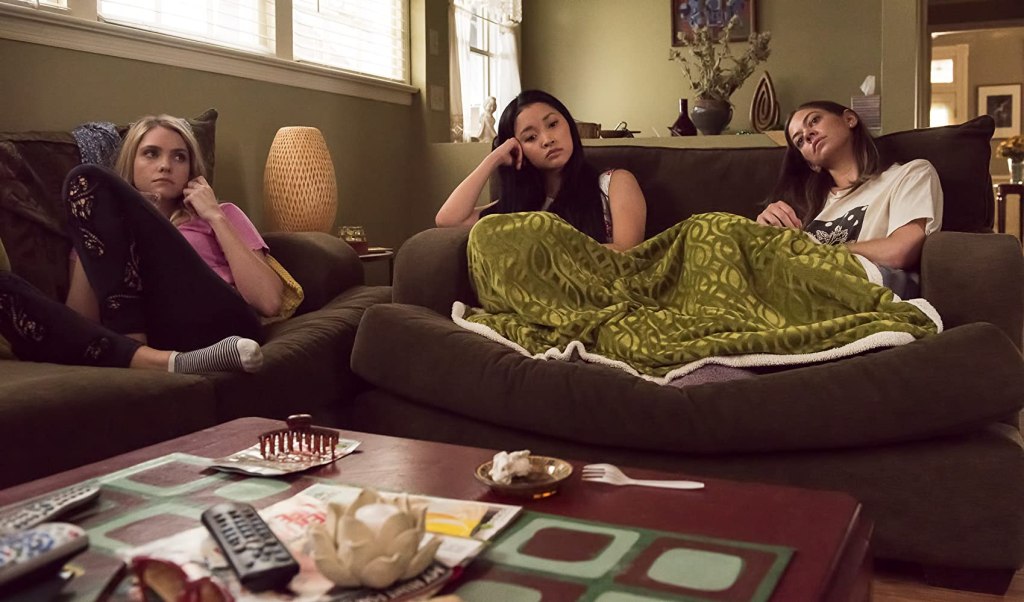
Anyway, he’s just one of many 20-somethings in this film. Others are played by Lana Condor, Analeigh Tipton, and Victoria Justice. In a 24 hour period, they mostly mope about, wondering what they’ll do with themselves, bemoaning the state of their relationships while also avoiding their relationships, and just generally succumbing to small town ennui. Until night beckons, and they all turn up at a bar which may actually be the bar. As in: one and only, but not particularly happening. The bar’s about one third full, and not only does everyone there know each other, most of them are playing in one of several bands featured on this night, and yes, we’ll hear quite extensively from all of them. Not to worry, this still leaves plenty of room for exes to side-eye each other, and future exes to eye-fuck each other.

This is Generation Z, so they are named Harmony and Corin and Jameson, and nobody ever shortens it or gives him a nickname, it’s just Jameson every time because if his mama went to all that trouble to give him a name that’s as special as he is, his buds are all going to respect it.

They’re young and they think they’re the first people to ever have these problems, and they seem so important when nothing has really ever happened to you yet. I don’t think all young people are vapid and clueless, but they are in this movie, and it was nearly unbearable.

I haven’t been this bored by a movie in a long time. First, there were entirely too many characters, and it’s impossible to keep track of who is who. Don’t even bother trying because their problems are interchangeable and their identities are non-existent. It’s impossible to care for people you know nothing about and it is far too easy to be annoyed by people who wear “don’t care” as a badge of honour.

Between director Joseph Cross and writer Jordan Jolliff, there’s a lot of Richard Linklater wannabe-ism going on but you can’t really call this a coming of age when it’s mostly just a lot of treading water while having remarkable unprofound conversation. This movie has no spark, no joy, no life. Forgettable characters go about their banal little lives and no one gives us a reason to take notice.

Trixie Mattel: Moving Parts

Sean and I are so movie-intensive that we don’t leave a lot of room for TV and we don’t mind that one bit. But we make exceptions for the exceptional, and if nothing else, Rupaul’s Drag Race is just that. Squirrelfriends, if you’re not watching it, I simply cannot fathom why. This is not mere reality television, it is LIFE. Over its many seasons we have had many favourites – and truly, with so many outsized personalities, it’s hard not to fall just a teensy bit in love with them all. That said, Trixie Mattel’s all-star win just about knocked our fishnets off with sheer delight. But with this documentary, Moving Parts does one better: it gives us a glimpse of the man behind the makeup.

Brian Firkus doesn’t get recognized often. Without a wig and heels, you might not guess that this mild-mannered, handsome man is capable of confidently captivating an audience, but in Trixie’s shape-wear and rhinestones, there’s nothing but sass and sparkle. Trixie is clearly the more dominant side of Brian’s personality; even outside of drag, he seems to reach for her persona and distinct speech patterns when he’s uncomfortable. But to give Trixie her own special trademark, he’s made accessible a more vulnerable side, channeling his life experiences into music. On stage, Trixie is vivacious and funny, but when she’s strumming a guitar, or playing an autoharp, she is somehow more than the sum of her (moving) parts. Like any great artist, from David Bowie to Dolly Parton, there’s a certain amount of glitter and pizzazz, but behind the warpaint is someone willing to take risks.

Director Nick Zeig-Owens documents Trixie’s enormous success, but if he catches her at her highest, he also catches her at her lowest. Trixie is a fantasy and a character, not built for disappointment, so it’s Brian who handles the blows. And perhaps the most revelatory nugget from the documentary is that Brian, unlike alter-ego Trixie, seems to be a bit of an introvert. So no matter how many people line up outside the venue just to shake her hand, or how many tiaras she’s crowned with on stage, Brian is at heart a humble guy trying to navigate the same murky waters as everyone else.

Trixie Mattel: Moving Parts is a nifty little peek behind the curtain of one of drag’s most successful performers – but climbing to the top always comes with a cost.

The Yellow Birds

Sean and I have been sharing the 90s movies we’re nostalgic for, movies that I so treasured in my youth that they still make me feel young to this day. I wondered if there was a specific movie that made me realize I’ve crossed over to old. Does such a movie exist? I do remember watching a not very good movie called Better Off Dead and realize that rather than empathizing with the young John Cusack character, I actually sympathized for the dad. Gah! And lately, because we’ve been able to binge-watch 30 years worth of The Simpsons on Disney+, I’ve realized that when that show first came on the air, I was Lisa’s age, and now I’m older than Homer and Marge. Oof. But today I stumbled upon the real answer: war movies. I’ve never been more acutely aware just how young 18 is than watching war movies.

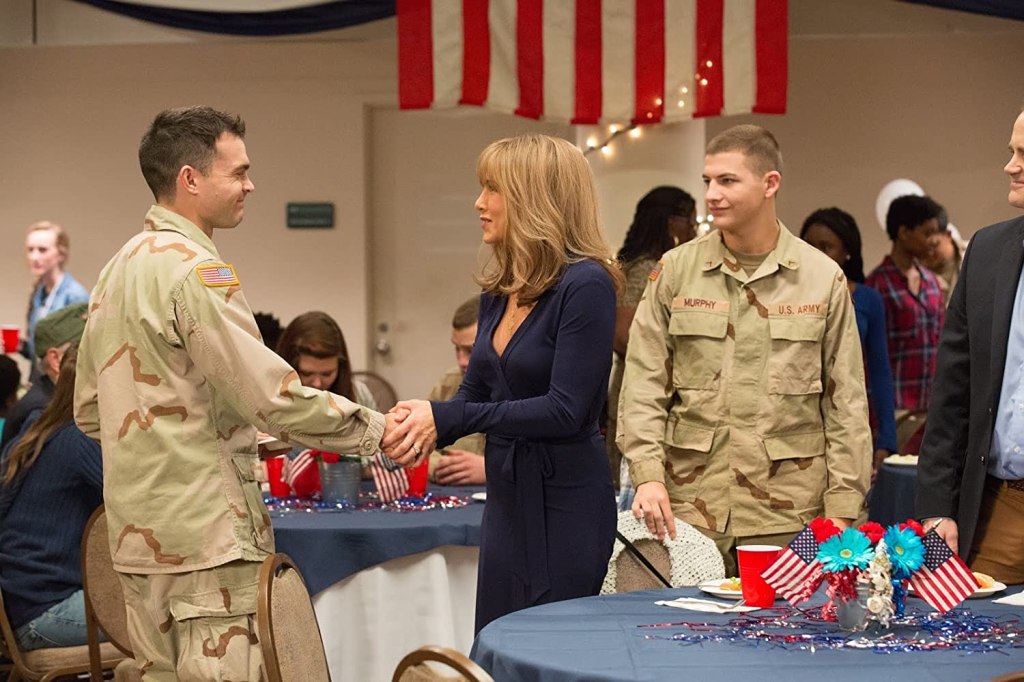
Daniel Murphy (Tye Sheridan) is 18 and still has no need for a razor when he enlists in the army. He makes fast friends with Bartle (Alden Ehrenreich), who is barely older than he is, but just barely is enough for Murph’s mom (Jennifer Aniston) to make Bartle promise to look after him. Then, before they can fully lace up their boots, they’re shipped to Iraq.

I think 18 is young to choose a major in college. Not necessarily for a lack of maturity but at 18 you’ve hardly seen the world, you hardly know the choices, or what that degree actually means, and whether it will actually translate into a well-paying job you won’t immediately hate. Eighteen is certainly too young to make a commitment that could get your limbs blown off – or worse. It’s too young to really understand what you’re getting into, and what’s truly on the line. It’s too young to understand the politics of war and whether all engagements are worthy (and even seasoned politicians don’t understand, but nor do they care – it’s not their asses on the line). It’s too young to really understand the sacrifice; the teenage brain still believes itself to be invincible. Statistics are just things that happen to other people who aren’t and never could be you.

It’s achingly young; Murph sees some shit that no kid should ever see. He’s not supposed to think for himself. Orders are orders. But killing people is killing people and young Murph just can’t make that right in his head. And I don’t need to tell you how very scant the mental health resources are in the army. The army eats up young people and spits out mangled bodies and mangled souls. Murph becomes a lost soul, disconnected and disillusioned. Bartle is haunted by that promise to Murph’s mom.

When Bartle returns home, his mother (Toni Collette) finds him changed, disturbed. But Murph’s mom finds that her son is missing. Bartle knows the answers but might be too broken to tell.

The Yellow Birds has uniformly stellar performances. It’s a little familiar, perhaps not a very distinguished addition to the war movie canon, but I do think its message is worthy. We all know that war is hell, but this film reminds us that the hell extends beyond the battlefield.

The Parts You Lose

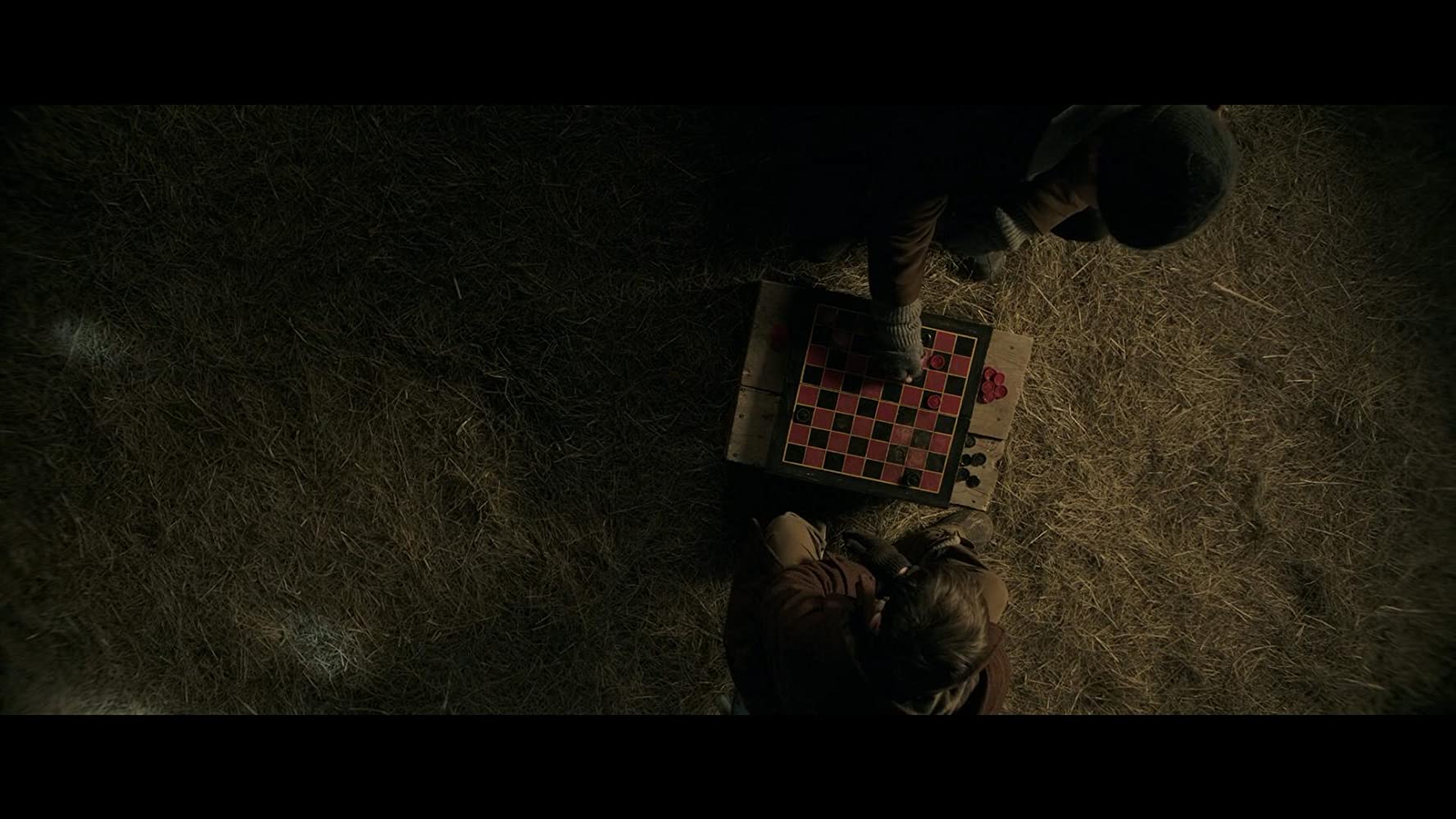
Wesley (Danny Murphy) loves being at home with his sister and his mother (Mary Elizabeth Winstead), who is loving and fiercely protective. She’s had to be – she’s alone with the kids much of the time, and Wesley going to a school for kids with special needs. He’s deaf, but there’s something else that sets him apart. He’s bullied at school and on the bus, and the space where he’s comfortable and safe shrinks even further when his father returns from whatever labour keeps the men in North Dakota away from home for weeks or months at a time. His dad is less kind, less patient. And sometimes unkind and impatient.

And then one day Wesley makes a friend. I should say, Wesley stumbles upon a badly injured fugitive (Aaron Paul). But with so few friends, Wesley endeavours to show this man kindness. He hides him, feeds him, cares for his wounds, all very stealthily. The police presence is increasing, his father ever-watching, and the pressure mounts as it dawns on Wesley that there perhaps isn’t going to be a happy ending.

MV5BMzY2NzNiMDMtZDFkZi00NmZjLWE1N2ItZTk4ZmIyMmFlNTRmXkEyXkFqcGdeQXVyNzI1NzMxNzM@._V1_SX1777_CR0,0,1777,999_AL_

Wesley is a young boy who is weighing the difference between right and wrong, and determining the gulf between morality and loyalty, and which circumstances are worth compromising one for the other.

For all that, the movie is rather small, mostly revolving around an abandoned barn where one might hide a wanted man. There’s not much plot, not much action. It’s a lot of static, which is wonderful for establishing character and portraiture, but for a thriller, it’s awfully contained. Still, with fine performances and decent direction, The Parts You Lose is a worthy gamble.

My Perfect Romance

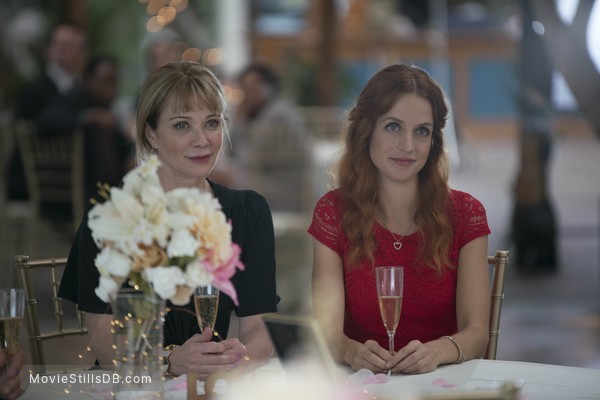
Wes Robinson (Christopher Russell) has just taken over as CEO of the family business and he’s under pressure (mostly from his mother, played by Morgan Fairchild) to increase sales and make his mark right out of the gate, so he taps developer Vivian (Kimberly-Sue Murray) who’s been working on an algorithm that will be able to select someone’s perfect match based strictly on compatibility (no photos allowed). According to her “research” (go with it), this is the only real factor for long-term relationships, so she’s going to revolutionize the dating app industry by taking it back to E-Harmony days rather than Tinder. For the sake of the film, let’s pretend it’s legit.

Anyway, somehow it’s contrived that the only way the media will be convinced it’s for real is if Wes and Vivian use the app successfully themselves. Vivian’s friends help her make a profile, but all the men it matches her with are variations of awful. And while Wes keeps putting off his own profile, he certainly hangs around to tease Vivian about all of her dismal failures, almost like this isn’t their actual job and this app isn’t the only thing standing between the company and bankruptcy.

Anyway, the app really is a giant failure, as predicted by Vivian’s abysmal track record, but somehow this whole thing can turn right around if only Wes and Vivian, who you may remember have done nothing but push each other’s buttons up until now, confess their true feelings for each other on live television. Which, in reality would actually only prove that you should ditch the app and date your boss, but through the magic of television somehow means happily ever after.

Oh, and if Morgan Fairchild wasn’t enough enticement, Lauren Holly also co-stars as Wes’s long-suffering secretary.

And not for nothing: if you’re looking for some holiday romance that’s actually sweet and watchable, try Dash & Lily, a bingeable series, also on Netflix.

Uncorked

Another entry into the “dad wants to mould his son into his own image” trope. Dads. Can’t live with them, can’t make life without them (yet). We ask so little of them but so many manage to screw things up anyway.

Louis (Courtney B. Vance) isn’t a bad dad, not exactly. He just assumes that son Elijah will do as he did – subsume his own desires and dreams and follow his father’s path, keeping the family business going. The family business, a barbecue joint, isn’t a huge money maker but that’s not why Elijah (Mamoudou Athie) isn’t interested. The truth is, he’s a wine guy. In his spare time he works in a liquor store just to be near it. He’s mustering up the courage to try sommelier school and while his mother Sylvia (Niecy Nash) doesn’t understand it, she supports him. His father, however, is another story, varying from passive aggression to outright hostility. If even a tiny fraction of him is proud of his son, he doesn’t show it.

This may be a tired trope, but both the setting and the actors perfume it above its normal station. Vance and Athie craft very watchable characters, grounded in sincerity and tenderness.

Between commitments to class and a new relationship, Elijah has less time for the Memphis bbq joint, which Louis of course reads as personal rejection. But children aren’t clones. They’re not meant to be replicas of their parents. And parents are supposed to want better for their kids. Easier said than done, especially for a certain brand, and perhaps generation, of father whose manhood and identity is so tied up in work that they can’t really see around it. Movies like this give them permission to let go, to find new sources of pride, and maybe even a new sense of self. Which is a lot for one little movie to accomplish of course, but even if Uncorked doesn’t quite manage to heal all the father-son bonds of the world, at least it’s got some very charming performances and an honest attempt at connection.

Keep the fun going on Youtube!

The Occupant

Javier is a middle-aged job who has lost his job, and his dignity. He interviews for jobs that are well beneath him and is turned away for being too qualified. Next Javier (Javier Gutiérrez) loses his luxury apartment, and his car. Well he should have lost his car, he certainly told his wife he sold it, and yet he drives it still, unable to let go of this last tangible trace of his former life, his former self, his very identity.

And yet Javier is not a sympathetic man. He bullies his son. He belittles his wife when she takes a job cleaning to support the family. And through it all he feels very, very entitled. He’s certain he’s better than everyone else, and he’s filled with rage when his lifestyle cannot reflect his ego. So Javier does what any fragile white male’s ego would: he begins to stalk the family living in his old home.

Yeah, it’s not a great trajectory and yet it gets so much worse. It gets so much worse in an inexplicable way. One day he’s a bristling interviewee and the next he’s a complete psychopath. He makes terrible choice after terrible choice and we never really understand why. This is not mere anger, not disappointment or even resentment. Javier’s soul turns completely inside out, his actions cross the line into evil, and the film never bothers to justify or explain it. So while Javier is never a man you root for, he quickly becomes a man you despise, and no fate imaginable seems harsh enough.

Javier Gutiérrez must be a very good actor because his character turns on a dime. You don’t see it coming but nor do you doubt it. The rest of the cast, including Mario Casas, Bruna Cusi, and Ruth Diaz, are equally adept, but unfortunately this film just doesn’t live up to its premise or its promise. The concept is good but the execution is bad. Written and directed by David Pastor and Àlex Pastor, you can’t help but wish the film were more grounded, less concerned with shock value. It plays like a psychological thriller but we’re deprived of the psychology. And because Javier is so despicable and without any apparent or sufficient motivation, the thriller aspect is hard to buy into. There’s definitely tension but it never pays off. The film leaves you with an ending that won’t satisfy even the most lenient critic among us. Netflix hasn’t yet stepped up to help us fight the boredom of self-isolation and instead has stuck to its schedule of dumping really heavy, really gloomy titles on us. But even in the best of times, this movie would still rank among the worst.

3022

In 2190, four American astronauts are taking their turn peopling a refueling station halfway between Earth and a moon of Jupiter where an outpost is being built. It’s a long shift: 10 whole years. Jackie (Kate Walsh) says goodbye to her daughter and joins captain John (Omar Epps), Richard (Angus Macfadyen), and Lisa (Miranda Cosgrove) aboard their space station, all of them in it for a very long haul.

The first year goes smoothly – the nobility of their calling, the novelty of outer space, yadda yadda yadda. The second one is fine: they dance, they play soccer, they hop beds. By the third year, the veneer has worn off and the mission is sprouting cavities. John in particular is having difficulty, experiencing night terrors that are increasingly violent and problematic. They don’t even make it halfway before the doctor on board, Richard, decides John is unfit for duty and they should pull the plug on the mission and return home. No one is happy with this decision, but in either case it gets taken out of their hands when something even more concerning happens. Experienced on board as a flash, Earth seems to have disappeared, had an extinction-level event, or at least that’s what happened to the best of their knowledge now that communication’s been cut. And if you thought they were going a little nutty before they were the last four humans in existence, guess what’s coming down the comet!

The movie takes places entirely aboard this refuelling station so we don’t get any outside knowledge, outside context, or any backstory on any of these characters. They’re astronauts, that’s all you’re going to get, and the qualification for astronauting seems to have diminished quite a bit somewhere in the next 150 years. I wish we had known them better, known their grief, known their motivation, known how a mother could leave her daughter to be raised by someone else.

Although there are some plot holes (inevitable in sci-fi, probably), director John Suits does a good job of cultivating tension. And you can’t deny the premise is a good one. It’s just a little wasted in this movie. They start rationing food and life support, but for what? There’s no one to save, nowhere to go. At what point is life not worth preserving? To be fair, the film does take a stab or two at fear of death versus fear of dying alone, and that theme is its own black hole. Bobbing around out in space, rational decisions already on short supply, nothing retains the same value. And yet some will always struggle to live on.

This isn’t the worst thing on Netflix. It isn’t great, but it may satisfy a craving for science fiction. Just know that some details will niggle and learn to let go. Or bring a calculator and prepare to double check some math.

Check out our review on Youtube.

The Golden Compass

I watched this back in 2007 because I adored the book(s) (by Philip Pullman) and was optimistic. Oh 2007, the days of wild optimism.

The movie is…not good. It’s not rotten, there are some attempts at goodness, especially from Nicole Kidman and the visual effects department. But it’s like someone put The Golden Compass through a strainer to sift out all the best bits and made a movie with the wrong bowl.

Yes, movie studios were desperate to recreate that Harry Potter magic, but Pullman’s His Dark Materials trilogy was always a little more cumbersome than its wizarding counterpart; Pullman’s work was not specifically meant for young audiences. But some intrepid readers found him anyway, and loved the way he combined physics, philosophy, and theology but made them accessible via a young protagonist. Those are not exactly movie-friendly themes, and the trilogy’s criticism of religion was of course controversial. When the film got released, christians boycotted it for its anti-religion reputation but secularists balked at this theme’s dilution (and some would say absence).

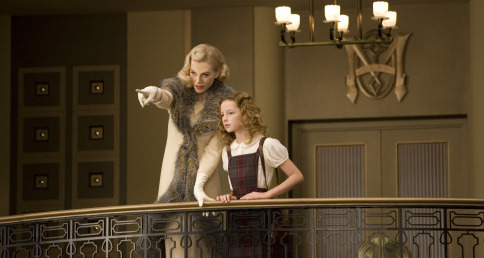
The film shows the adventures of Lyra Belacqua (Dakota Blue Richards), an orphan living in a parallel universe where a dogmatic ruling power called the Magisterium opposes free inquiry and every person has their inner spirit manifested as an animal, which they call a daemon. Before settling into a single shape in adulthood, the deamons of young children tend to shape shift quite a lot. Which is not much use when children are being kidnapped by an unknown group called the Gobblers who are supported by the Magisterium. Lyra joins a tribe of seafarers on a trip to the far North, the land of the armoured polar bears, in search of the missing children.

MV5BMTc4MzIwNTM0Nl5BMl5BanBnXkFtZTYwOTAzNzc4._V1_

There’s more to it than that, a lot more to it. It’s not so bad when you’ve got the book in your hands. You can take a break when you need to think on things, or digest others. You can flip back a few pages, read with new insight and understanding. But movie audiences have to take what you’re given, and if a director foolishly tries to stuff too much detail into too thin a story, it’s not just overwhelming but it turns what should be a fun entertainment or a version of escapism into an exercise in fact sorting and memory retention.

There are some dazzling effects and I’m not going to lie: armoured polar bears are kinda the best. Which is why so many of us rooted so hard for the movie. But the movie was too self-important, too busy setting up the next in the series that it forgot to give us a satisfying experience in the present. Which, as you know, not only resulted in its poor performance at the box office, but it ground production on the next two to a complete and final halt. No one will reattempt this for another quarter century. Which is really too bad, because if you’ve read the book(s), you know there’s a compelling story in there, and it shouldn’t be this hard to tease it out.

The Invisible Man

Lots of movies have been rescheduled due to COVID-19’s impact on world box offices, but a few movies were released just as things got tricky and got short shrift releases. Movie studios are fighting back but they’re basically inventing their responses as we go so right now they’re experimenting with what people at home might tolerate. Disney released Frozen 2 early on its Disney+ platform, and Onward will soon follow, on April 3rd, which is a real coup for parents who are dealing with the challenges of having kids on their hands full-time.

Universal took 3 of their big titles – Emma, The Invisible Man, and The Hunt, each of which were performing as well as they could at theatres where attendance has been understandably low – and that was before they all closed down indefinitely. So each of these titles has been released for early rental, at a premium. They’re called Home Premieres and they rent for $20 for 48 hours. It’s certainly more than you’d normally pay to rent a movie but it’s quite reasonable compared to a night at the cinema – you can provide your own snacks, your own wine, you don’t need a babysitter, and as an extra bonus, you won’t put your health at risk from exposure to germs.

You’ve already seen our review for Emma, which we very much liked and very much thought was well worth the 20 bucks.

The Invisible Man, however, is a whole other thing, isn’t it? We all know I’m a chicken and there wasn’t a slightest chance of my seeing this in theatres. Sean and I stopped going to movies well before the theatres closed since I’m high risk for the virus, with both an underlying illness and immuno-suppressing medication, but let’s face it: the true reason is that I’m just too fragile for horror. And though I’ve made exceptions for exceptional films (A Quiet Place, The Witch, and Midsommar, for example), I felt comfortable not making an exception for this, though it was relatively well reviewed.

But now that it’s available for Home Premiere, it seemed like the perfect chance to step outside my comfort zone while in the privacy of my own bedroom.

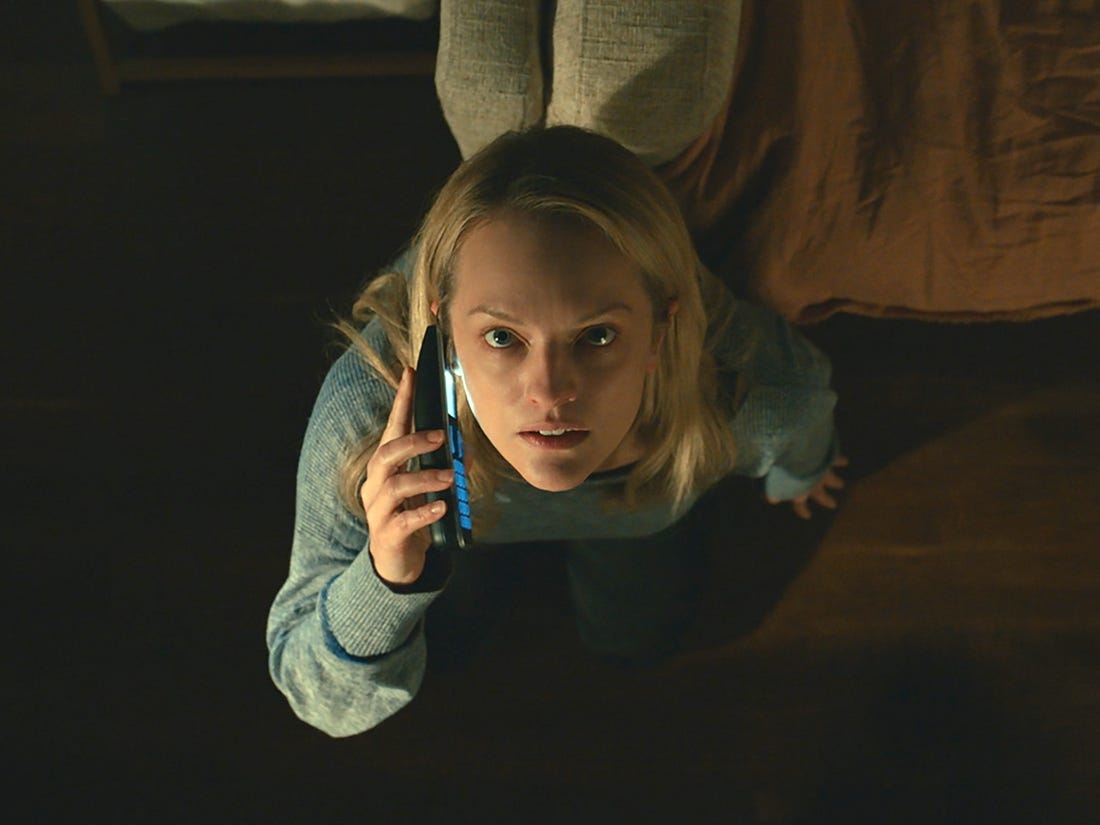
Basically, Cecilia (Elisabeth Moss) goes to great lengths to leave her abusive boyfriend. She’s clearly terrified of him but he’s a respected scientist and inventor, and his money has gone a long way in insulating him from repercussions. He’s been controlling but with the help of her sister Emily (Harriet Dyer) and friend James (Aldis Hodge), she’s able to slip away – barely. He soon after takes his own life, but Cecilia isn’t convinced. She becomes haunted by a presence – she believes it to be her supposedly dead ex, Adrian, but that theory doesn’t hold a whole lot of water with anyone else. I mean, how do you prove that your ex is so vindictive he faked his own death to taunt you via some invisibility cloak? Try it, I dare you. It doesn’t go well for Cecilia. She’s mistaken for a raving lunatic, but Adrian’s invisible actions are getting increasingly violent and looking crazy is the least of her worries.

Director Leigh Whannell creates and sustains a painfully tense atmosphere from start to finish, constantly ratcheting up the stakes and guaranteeing our breathing is shallow at best.

MV5BNGFiOThiMTgtZDQ5MS00MTRhLWIzMTYtNzNkODg3MDVlYzRjXkEyXkFqcGdeQXVyNjczOTE0MzM@._V1_

I had help getting through the movie: dogs, and caramel popcorn, and some eyebrow tutorials on Youtube. But I still screamed a few times and even upturned the popcorn bowl (which was mercifully lidded at the time). Like any good horror movie, the director knows that your own imagination will always be far worse than anything he can conjure, so he allows for lots of lingering, vaguely threatening shots containing worlds of possibility around every corner. And the score by  Benjamin Wallfisch informs your anxiety, feeds it, and capitalizes on it.

Mostly I got through the movie by telling myself it was basically a comic book movie and that this is exactly what they were warning us about in Civil War. At any time, some “hero”could turn villain on a dine just because his ego’s a little sore. Certainly Adrian incurs an awful lot of collateral damage in the name of revenge against the only person who’s ever left him. The suit he’s engineered is exactly the kind of tech that Iron Man might have, or Batman, and all that stands between them and villainy is a broken heart, which is alarming since the one hallmark of a so-called super hero besides their super powers is treating women like shit.

Anyway, The Invisible Man is a pretty good movie. It’s not just an exercise in jump scares, it has a wholly realized story and a character who has to reclaim her agency. Elisabeth Moss’s costar is invisible, so the whole thing rests on her very capable shoulders. She’s equally believable as both victim and conqueror. And though it wasn’t an easy watch for me, it’s survivable for even moderate wusses, which is saying something indeed.