Eleanor (Jillian Bell) is the youngest trainee and the only person who’s bothered to apply in decades; fairy godmothering just isn’t what it used to be. But head mistress Moira (Jane Curtin) keeps on teaching the same tried and true formula: 1. glittery gown 2. true love 3. happily ever after. Except humans stopped believing in ‘happily ever after’ a long time ago. No fairy godmother has been on assignment in years – the school’s about to close, the godmothers to be retrained as tooth fairies. Eleanor is devastated. Godmothering is all she’s ever wanted to do and now she’ll never even get the chance to start, so she takes matters into her own hands and finds a neglected assignment, a request for a fairy godmother that was never granted. She heads down to earth to fulfill the godmothering duties, and hopefully prove that godmothers are still in demand.
Of course, when she eventually finds herself in Boston, she finds not a 10 year old girl, but a full grown woman named Mackenzie (Isla Fisher) (apparently the letter was a little dated). What a disaster: in what way could a single mother in a dead end job possibly need godmothering? Well, both Mackenzie and Eleanor are about to find out because Eleanor refuses to go back to the motherland a failure.
Godmothered doesn’t exactly skewer the popular Disney fairy godmother formula, but it expands on what was traditionally a pretty narrow definition of happily ever after. Welcome to the modernization of Disney. They’ve been rehabbing their image and redefining the princess genre in movies like Frozen and even Ralph Breaks The Internet. Godmothered asks whether magic, wishes, and belief still have a place in modern society, and if not, what should take their place. It doesn’t quite go all the way as a ‘message’ movie but it does get some pretty great mileage out of good old-fashioned kindness and cooperation, which never go out of style.
Eleanor is charming as a fish out of water, a magical being in the land of humans for the first time, not unlike Enchanted Giselle or even Elf’s Buddy the Elf. Jillian Bell is simply enchanting, more grounded than flighty, but with enough fairy dust on her performance to give her wings. Director Sharon Maguire delivers a warm and feel-good story that is perfect for cozy family viewing.
December 3rd is the International Day of Persons with Disabilities. You may have heard some rumbling about disabled representation in the movies lately – Anne Hathaway took some flak for her limb difference in The Witches, and Sia’s movie, Music, has been criticized for casting a non-autistic actor in the lead role. Representation matters, and while the Oscars LOVE disabled characters, they don’t show the same love for disabled actors, who are rarely cast to portray themselves on screen, and almost never cast to portray anyone else. Although 20% of us live with some sort of disability, less than 5% of movie and TV characters are disabled, and of those few who are, less than 3% are played by actually disabled actors. That math is abysmal. Are disabilities the last place of the civil rights movement?
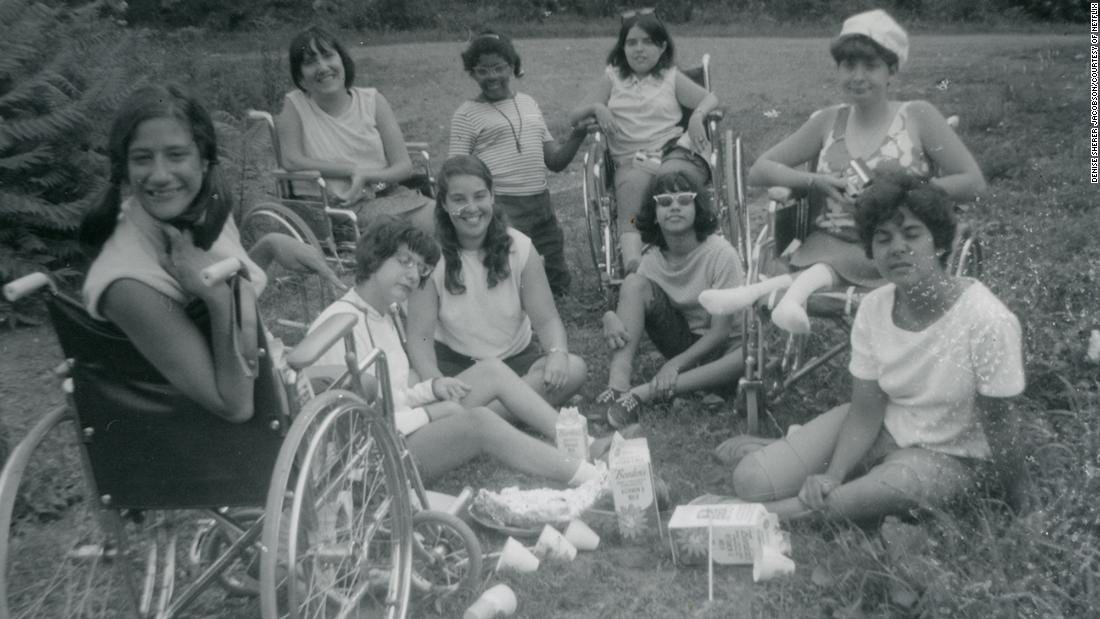
Camp Jened (its legal name), had actually been in existence for years, but in the early 1970s it was run by hippies who created an oasis of sorts for disabled teenagers. To anyone else, it would have looked like a run-down, ramshackle summer camp of nightmares, but to those who attended, it was practically utopia. In the 1970s, the world was not accommodating to those with disabilities. Most disabled persons lived in relative isolation, dependent on others, if not outright institutionalized. At Camp Jened, they were free. Not free of their disabilities, but free of the judgement and discrimination. In a camp where everyone was disabled, no one was; the disabilities virtually unnoticed, the campers were allowed to be defined by other things, perhaps feeling fulfilled as human beings for the first time. Like any teenager, they played sports, sang songs, smoked and made out – for many this was the only opportunity to “date.”
When they grew out of camp, this close-knit group stuck together, and started advocating and disrupting for disabled rights, inclusion, and accessibility.
Crip Camp is co-directed by filmmaker Nicole Newnham and former camper Jim LeBrecht, an overdue tribute to the place that ultimately changed the world for millions of disabled people.
Although the Americans with Disabilities Act was passed 30 years ago (in 1990: that is actually shamefully recent!), disabled people to this day are fighting just for the right to exist with dignity and anything resembling equality.
I myself live with several (mostly invisible) disabilities. 2020 has been a strange year for people with disabilities. On the one hand, the whole world has gotten a taste of what it’s like to be me. Because I am immuno-compromised, I’ve always battled against viruses, each one potentially very serious for me as I lack a basic immune system to fight them. With the pandemic, every Canadian across this country automatically got all of the accommodations I’ve had to fight to have at my own work: clean work stations, physical distancing, even the right to work at home, which seems a small ask when it’s potentially life saving. I’ve been in medical isolation at home since March. When restrictions were starting to ease up over the summer, many Canadians ventured out of their homes while I stayed in mine. Like many people with disabilities, it’s hard not to feel like life sometimes moves on without us, forgets the people still trapped in their homes. Now that the COVID numbers are increasing again, Canadian regulations have once again changed to reflect it, to protect the majority, while those of us in the minority try not to take it personally that our lives are not worth the same consideration.
Before COVID, I led a relatively normal life, at least to outside eyes. I went to work, I travelled, I spent time with family and friends. My life is permanently etched with pain, and my health is constantly compromised by every passing virus, but since I don’t have a choice, I deal with it. Sometimes I miss things. Sometimes I cancel. Sometimes I can’t get out of bed. But I lived. I made significant contributions to my field, I found joy, I was a presence in the lives of my niece and nephews, I hosted dinner parties and attended film festivals and fell in love. Every moment also in pain, sometimes unable to drive or walk or sleep, but doing my best, which was still pretty good. And now my life is on pause. It’s disconcerting, it’s unfair, but it’s not without its positives: 2020 was the first year I didn’t get pneumonia in at least a decade. How about that?
Because actual representation in film is so rare, this is a very short list of actors with disabilities excelling in film:
CJ Jones: he played Ansel Elgort’s disabled foster father in Baby Driver, stealing scenes and providing the film with warmth and heart. But for Jones, parts like these are almost unheard of. “It’s hard to find a black deaf role” although it looks like he’s found another in Avatar 2.
Kiera Allen: she recently played opposite Sarah Paulson in Hulu’s Run, a mother-daughter Munchausen by Proxy thriller. The role is extremely physically demanding, but Allen, who uses a wheelchair in real life, nailed the part and showed us all what she can do.
Adam Pearson: in Chained For Life, Pearson portrays an actor with facial deformities with whom his leading lady struggles to connect while working together. Pearson has neurofibromatosis, type 1 in real life and gives a formidable performance in this film.
Zach Gottsagen: he won hearts in The Peanut Butter Falcon, playing a young man with Downs Syndrome who escapes his care home to pursue his dreams of being a pro wrestler. Starring opposite Shia LaBeouf and Dakota Johnson, Gottsagen holds his own and proves himself more than capable.
Millicent Simmonds: who can forget the deaf actress’ stunning performance in A Quiet Place, a horror film in which monsters hunt what they hear, and one family survives thanks to their ability to communicate in sign language.
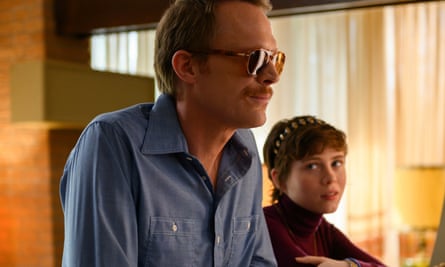
Growing up in Creekville, South Carolina in the 1970s, Beth (Sophia Lillis) has always felt like an outsider, even especially in her own family. The only relative to whom she relates is Uncle Frank (Paul Bettany), who seldom attends the various family functions meant to bring them all together. She feels surrounded by small minds and limited experience, and she’s not wrong. Which is why she eagerly follows in Uncle Frank’s foot steps to Manhattan as soon as she graduates.
Between college and the big city, Beth is growing up and expanding her world view, but nothing hits home like finding out that Uncle Frank is gay and that his roommate Wally (Peter Macdissi) is his lover and partner of many years. She’s never known anyone gay before. No; she never knew she knew anyone gay before. As if this wasn’t milestone enough, Frank’s father (and Beth’s grandfather) Daddy Mac (Stephen Root) has died, leaving uncle and niece to get reacquainted in the context of this new information during their road trip home for the funeral. On the one hand, it’s kind of a nice opportunity to meet each other’s authentic selves, but on other hand, they’re driving toward utter disaster and they don’t even know it.
South Carolina wasn’t the happiest place to be a gay kid growing up, and if Frank isn’t exactly choked up by his father’s death, going home does stir up quite a few traumatic memories, threatening his sobriety, his relationship, and even his life. Uncle Frank is both a coming out story of sorts for Frank, and a coming of age for Beth, two misfits from the same people and place finding out whether you can go home again or if you should have stayed in NYC where you belong. Writer-director Alan Ball seasons the script with achingly realistic family dysfunction, layers of hatred as well as opportunities for healing. Young Sophia Lillis has really hit the ground running in her career, starting out already on top with several leading lady roles in a row. She’s fantastic in this, but this movie belongs to Uncle Frank, and it’s Paul Bethany’s stoic and grounded performances that really see us through. Frank has navigated his life with careful precision but his father’s death is the one iceberg he couldn’t avoid. It feels like we’d tread uncomfortably close to melodrama, but Bettany’s performance is quiet, calm, and convincing, with not one shred of over-acting in a career-defining turn.
Uncle Frank has something to say about how things were in the past, but it also implies a lot about us now, 50 years in the future, and yet somehow still living in a world full of prejudice, where in some places and for some people, Frank’s experience is still the norm. For an unspoken statement, it’s pretty profound.
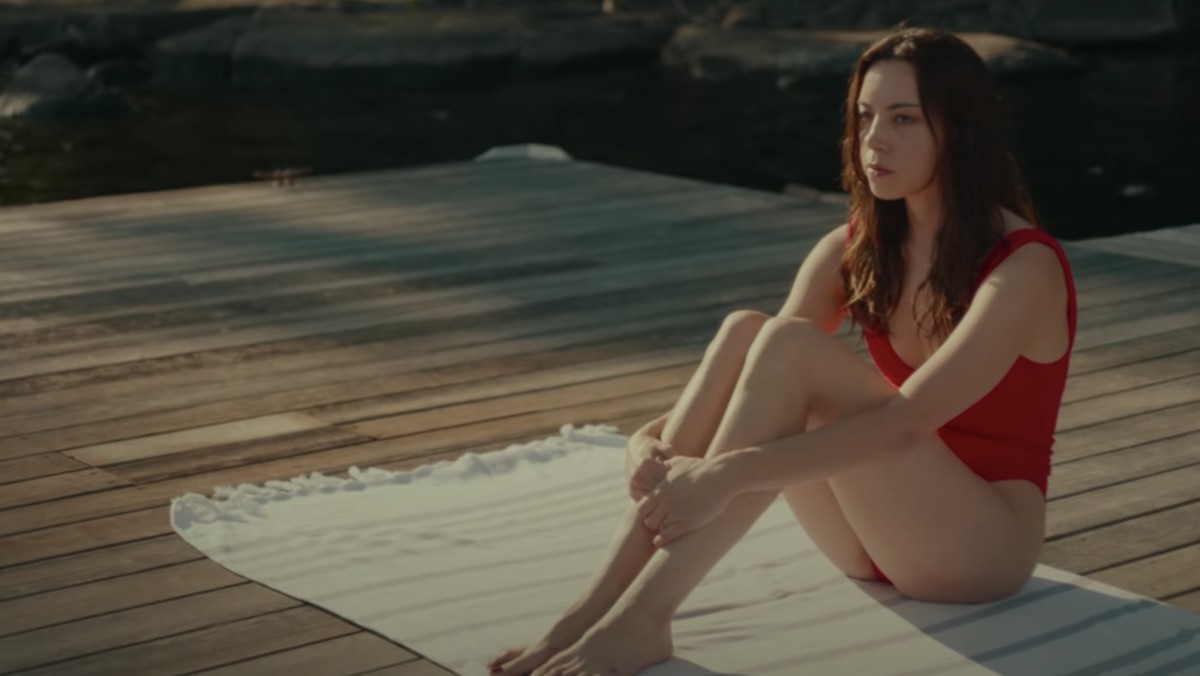
Allison (Aubrey Plaza) is a filmmaker who’s treating her writer’s block to a remote lake house retreat. There she finds a young, pregnant couple who have perhaps been living in isolation a little too long. Gabe (Christopher Abbott), a musician, and Blair (Sarah Gadon), a former dancer, seem to actively loathe each other; it’s an awkward situation I would never choose to take part in but Allison doesn’t just stay, she picks at the scabs. She even gets in a few fresh jabs herself. These frustrated artists release on each other with pretentious arguments. It’s awful for Gabe and Blair’s relationship but apparently that’s a sacrifice Allison’s willing to make, baby on the way or no.
That’s where Allison’s little game of muse-inducing desire and jealousy takes a turn for the decidedly meta. Blurring the line between autobiography and invention, the film divides itself between two chapters – perhaps both the inspiration and its result. Clearly the bears in the woods have dark companions.
Watching this film is like getting to peek behind the curtain at the Wizard of Oz manipulating all his levers and pulleys. It basically deconstructs itself right in front of us and we get to decide how much of it is fact or fiction, and where exactly it turns into a work of imagination. It is certainly an act of ringing art out of pain, telling the story in a brain-teasing sort of way. Writer-director Lawrence Michael Levine enjoys playing with us, and I admit, the game is addictive.
Props to Aubrey Plaza, who has transformed herself from prime time cable sitcom star to veritable art house indie queen. She has sought out many brilliant, risky, offbeat roles over the years, but this is one suits her and stretches her in new and fascinating ways. Her dark and caustic seems tailor-made for the part, which is actually at least two parts, subtly defined, and maybe more. Black Bear is a bit of a mind-bender, definitely not straight-forward story-telling, perhaps not to the taste of all, but a near-perfect morsel for true cinema lovers.
Available in select Canadian theatres as well as On Demand and Digital on Friday December 4th, 2020.
Canadian theatre openings on Dec 4th: Kingston, ON – The Screening Room Sudbury, ON – Sudbury Indie Cinemas Ottawa, ON – Mayfair Theatre Calgary, AB – Canyon Meadows Cinemas Leduc, AB – Leduc Cinemas Wetaskiwin, AB – Wetaskiwin Cinemas
Black Beauty has been adapted many times, but in Ashley Avis’ movie, Black Beauty is female, and so is the little girl who loves her.
When we meet Black Beauty (voiced by Kate Winslet), she is a young Mustang running wild and free, just starting to be wary of new animals encroaching upon the land. Not wary enough, as it turns out; Black Beauty is captured and sent to live in a stable so she can be broken and sold. John (Iain Glen) who runs the stables and trains the horses isn’t a bad man, and he’s soon joined by his orphaned niece Jo (Mackenzie Foy). Jo is not your classic Horse Girl; in fact, she’s never ridden. But she must see a bit of herself in Black Beauty, who is also adjusting to new surroundings having just lost her parents and her home. Their bond is immediate and undeniable. Jo insists not on breaking Beauty, but on “partnering” her, based on friendship , respect, and gentleness. But the stables are a business, and Beauty is leased out to a wealthy family whose daughter is training to be competitive in dressage. Georgina (Fern Deacon) isn’t a natural horsewoman but makes up for what she lacks with spurs and whips. She is not kind to Beauty (nor to Jo), but sadly nor is she the worst owner that Black Beauty will encounter in her life.
Told from Black Beauty’s unique perspective (don’t worry, she’s not a talking horse, we merely hear her thoughts voiced by Winslet), we follow her as she’s transferred from home to home, owner to owner, many more pitiful or abusive than the last. Anna Sewell’s wildly popular novel from many moons ago opened people’s eyes to the mistreatment of horses, but it’s clear from Avis’ adaptation that things have not changed nearly enough for horses in nearly 150 years. Set in various modern American environments, Black beauty knows pain, overwork, and perhaps worse still, loneliness. The bond she shared with Jo endures and holding her memory in her heart is the only reason Beauty has the strength to go on.
I didn’t expect to like Black Beauty as much as I did. It doesn’t feel emotionally manipulative – Black Beauty is a horse, and though we inevitably anthropomorphize her, she isn’t asking to be pitied. But her indominable spirit is enviable and some pretty cinematography, we feel a sort of empathy, a sort of kinship with animals of all kinds, and an emotional attachment to Beauty herself, whose loyalty and resilience remind us of the four-legged family members in our own homes. Not without its flaws, Black Beauty is still a worthy version for 2020 audiences and a nice little treat on Disney+.
In the first The Christmas Chronicles, Kate and brother Teddy had recently lost their father. With their mom covering an overnight shift at the hospital, the kids are alone on Christmas Eve, and devise a trap to catch Santa on tape once and for all. But their trap works a little too well and they soon find themselves on his sleigh and on a pretty epic adventure.
Two years later, Kate (Darby Camp) and Teddy (Judah Lewis) find themselves on the beaches of Mexico for Christmas, courtesy of mom’s (Kimberly Williams-Paisley) new boyfriend Bob. Kate isn’t thrilled to about a tropical Christmas but she’s even less enthused about her mom tarnishing dead dad’s memory with a new guy. That’s why she resolves to run away, which unfortunately plays right into the plans of disgraced elf Belsnickel (Julian Dennison), who uses Kate (and Bob’s son Jack) as bait to distract Santa while he makes off with the star that powers all of Santa’s Christmas magic. Big disaster. Huge. Now Santa (Kurt Russell) and Kate will be off on a sleigh-riding, time-traveling adventure while Jack (Jahzir Bruno) and Mrs. Claus (Goldie Hawn) defend Santa’s village from an onslaught of evil elves.
This movie is basically a nerf gun aimed right into the hearts of children and when it hits, it delivers a dose of holiday cheer and joy that’s undeniable. In sequel mode, this one has a little more razzle dazzle and a little less natural charm and sparkle than the first, but it’s still a good, clean, fun time for the whole family. Kurt Russell is a hot Santa who injects more than a little Elvis into the jolly old guy, donning sunglasses and swiveling his hips to belt out another show-stopping tune once again. And rather happily we see much more of Goldie Hawn, who brings her own twinkle to the mix, sweet but pro-active, not exactly the passive knitter in a rocking chair Mrs. Claus is often made out to be.
The Christmas Chronicles 2 is wonderfully, effortlessly cheerful. It has great acting and its attention to detail surpasses even the first, for a glossy look that feels, well, merry and bright. And if it is perhaps pandering and slightly disjointed, well, at least it knows its audience. The exploding gingerbread cookies, gravity gloves, dance breaks, flying jackotes ( jackal-coyote hybrids that look more like giant, extra-inbred pugs), and crossbow battles will all be very well-received by young audiences tuning in to get a second look at this Santa guy who’s so much cooler than the one at the mall. And who can blame them? He is pretty great and I count myself rather unashamedly among his fans.
When the Americans were finally self-interested enough to join WW2, they needed a lot of boots on the ground, and some in the air, and a few if by sea.
Captain Krause (Tom Hanks) is in command of an escort force protecting an Atlantic convoy consisting of 37 Allied ships on their way to Liverpool. They’re passing through the Mid-Atlantic gap, so called because no antisubmarine aircraft are able to reach them. They’re on their own. Still three days out of range from protective air cover, they intercept German transmissions. It is likely U-boats are near. This is merely the start of 13 back to back covers (or 52 hours) on the Greyhound’s bridge as Krause fights to save his ship, protect those in his convoy, and rescue those who succumb.
As a war movie, director Aaron Schneider makes very effective use of his 90 minute runtime, keeping the focus on a very intense combat. It’s basically a race against time, a fight for survival until they reach precious, essential air cover once again.
But the reason Greyhound really shines, as did its source material, The Good Shepherd by C. S. Forester, is in its fascinating and intricate character study of the man behind the wheel. Captain Krause has been a career Navy officer for many years. His seniority is unquestionable, but in truth, this is his first wartime mission. The other captains are younger and junior to him in rank, but they’ve been at war for two years already. Although we see him act in competent and level-headed ways, we are also privy to his self-doubt. The combat is relentless as the minutes and hours tick by, Krause unwilling to leave his post, and only the kindness of a mess attendant (Rob Morgan) ensures he doesn’t go hungry.
Hanks adapted the material himself, and though we never see the guy make an acting misstep, he is clearly suited to this character, slipping on the captain’s skin as if it were a comfortable, monogrammed slipper. You feel his fatigue, and inklings of inferiority, but with the weight and fate of an entire fleet on his shoulders, he never gives less than his best. The constant danger is exhausting, the many snap judgments that must be made while in command are overwhelming, and above all, we see Krause struggle with his conscience – muttered prayers for the souls on board, but also a refusal to celebrate enemy kills, a necessary part of war perhaps, but one with which Krause is not entirely comfortable. It’s a facet rarely explored in war movies and Hanks is up for its portrayal, but cleverly, the points are merely plotted, the lines themselves drawn by the audience.
I expect nothing less that complete satisfaction from the material Hanks is choosing, and he’s so unvaryingly good it’d be almost tedious if it wasn’t so wonderful. And this, too, is wonderful, and not even annoyingly so. Hanks truly is a master and Forester’s carefully observed novel cannot be over-rated.
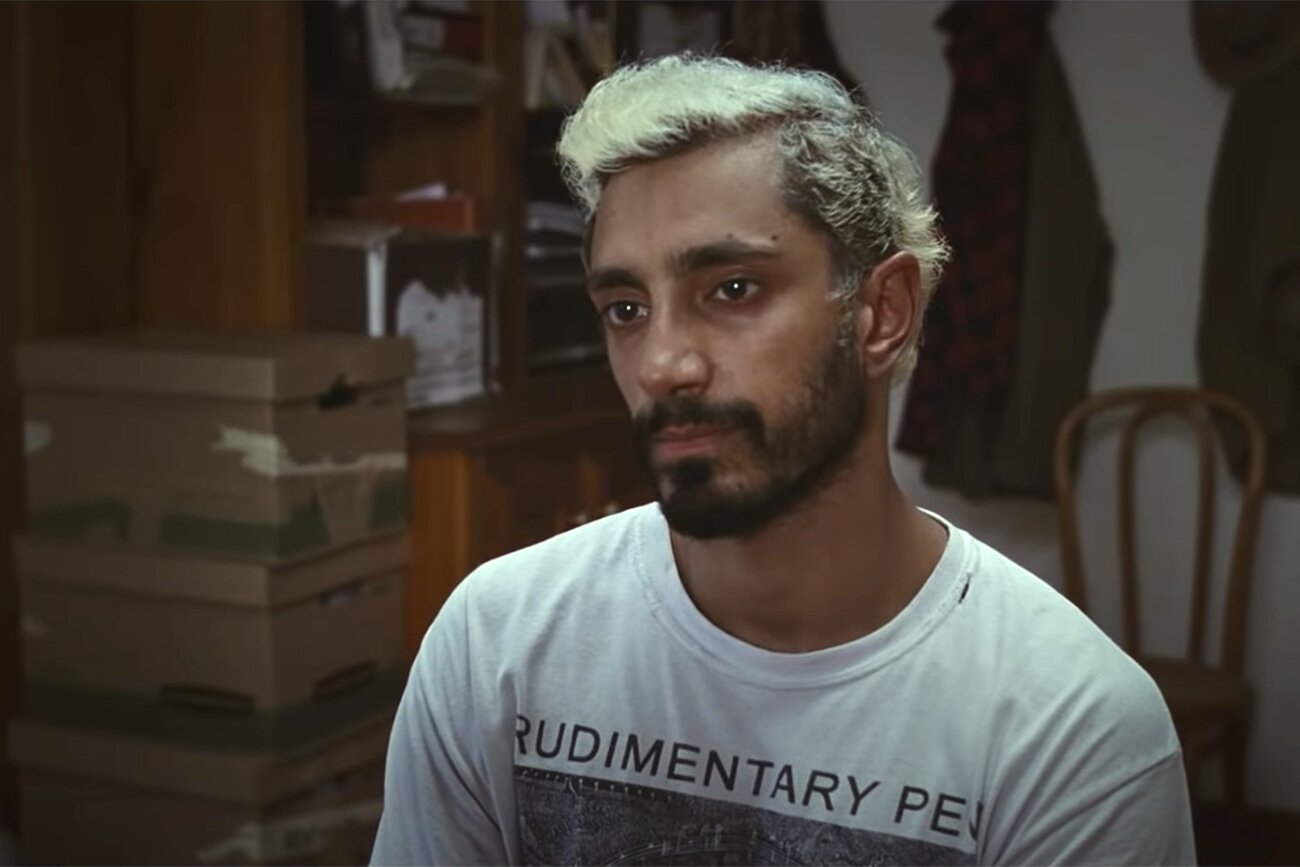
Ruben (Riz Ahmed) is a heavy metal drummer. He and girlfriend Lou (Olivia Cooke) are in a two-person band and they just love to bang on shit and make noise. They travel the country in their Airstream; it’s not a glamorous life or a well-remunerated one (yet, there are talks of an album), but they’re happy. Which means the universe is hiding around the corner waiting to deliver a great big wallop.
One day, Ruben wakes up deaf. It has likely been a bit more progressive than this, but this movie doesn’t document it, it just dumps us into his sudden new reality, which clearly takes him by surprise. The verdict: his hearing’s not coming back. A cochlear implant may give him some approximation of hearing (and a bill for $80 grand regardless), but Ruben is deaf, and it’s permanent. As you might imagine, being a transient drummer in a largely unsuccessful band does not come with insurance. Desperate in his new deafness, Ruben is of course fixated on the miraculous-sounding implant, but the reality is that for now, he just has to learn to live with his new situation. He’s still in denial, and he’s depressed, and Lou worries that his sobriety is about to be compromised, but traditional meetings, and even his sponsor, won’t be much help if he can’t hear them. Which is how they wind up reaching out to Joe (Paul Raci), who runs a deaf community and is an addict himself. The community has everything Ruben needs right now: a safe space to learn to be deaf. The only problem is, it needs to be a fully immersive experience, cutting him off from the rest of the world, including Lou. Ruben hasn’t just lost his hearing. He’s lost his love, his home, his music. He is a wayward soul who doesn’t know how to begin to grieve, let alone cope.
Though Ruben isn’t exactly a demonstrative person, we sense how profoundly changed his life is; his reactions feel authentic if unhelpful, and we can’t honestly say we wouldn’t do the same ourselves. Ahmed’s commitment to the role is evident in every frame; he spent 6 months learning to drum, which his character can only do for about 6 minutes of film time. He also learned American Sign Language, a vital skill not only for his character, but for communicating with his deaf colleagues on set. In his directorial debut, Darius Marder, who co-wrote the screenplay with his brother, Abraham, knew the value of seeking out deaf actors for deaf parts.
Ruben is reimagining his entire identity, which can obviously be a scary process. Ahmed allows himself to be vulnerable on screen as he tries to absorb his new realities. Acceptance is key, but its path has such rough terrain. Told from a hearing perspective, or at least a former one, Sound of Metal is an interesting bridge into the deaf community. But it’s also at its just one man’s struggle with self-acceptance. He needs to let go of his past to reimagine his future, but as we all know, that’s easier said than done.
Sound of Metal is in select theatres now and will be available digitally and on demand December 4th.
I am woman, hear me roar In numbers too big to ignore And I know too much to go back and pretend Cause I’ve heard it all before And I’ve been down there on the floor No one’s ever gonna keep me down again
Oh yes, I am wise But it’s wisdom born of pain Yes, I’ve paid the price But look how much I gained If I have to, I can do anything I am strong I am invincible I am woman
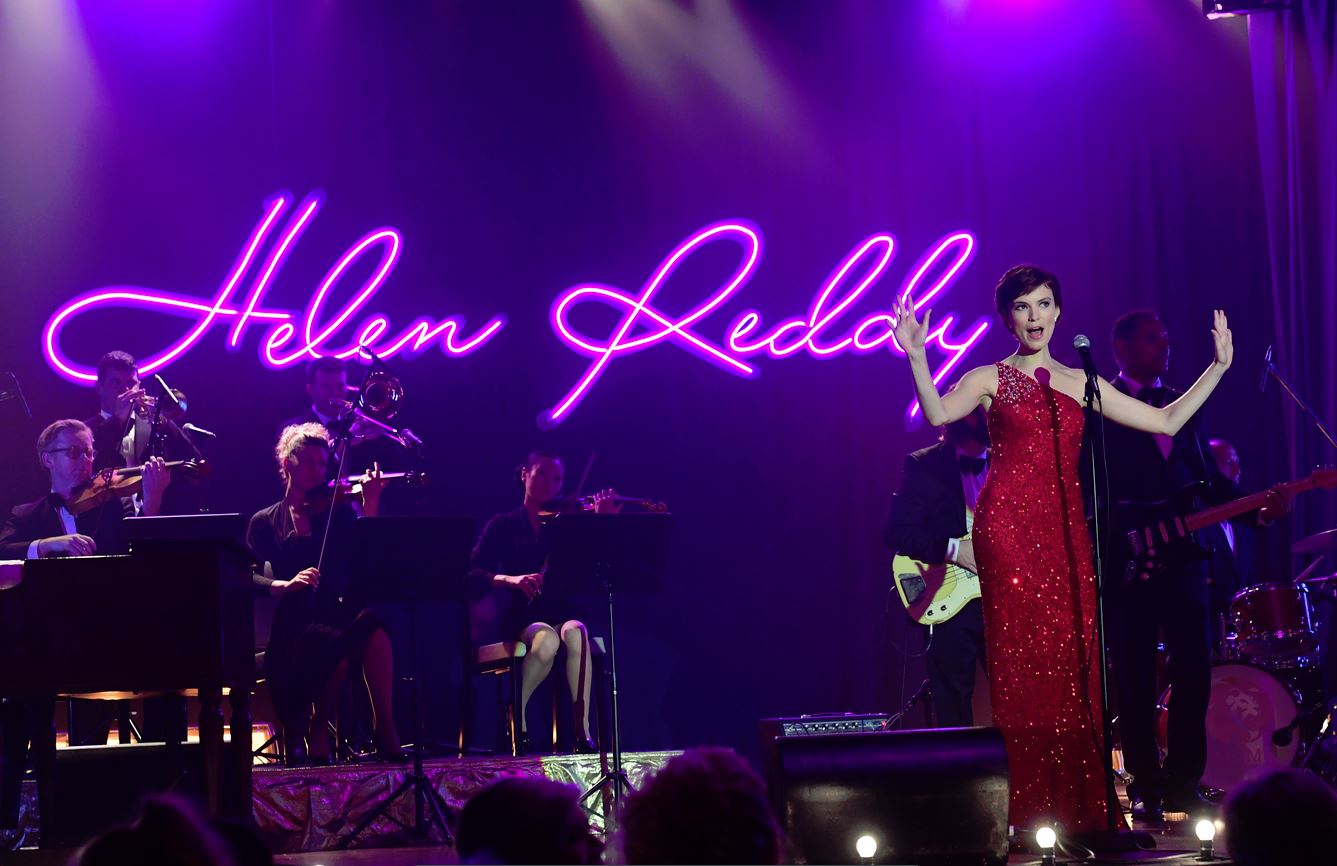
I grew up just knowing the lyrics to Helen Reddy’s I Am Woman, the way I just knew my own name. I grew up in a house of 4 sisters and 1 mother and there was nothing we liked better than putting on some Whitney Houston and singing/dancing along. But there were only two songs my mother ever sang unprompted, unconsciously, without a backing track: Amazing Grace, and I Am Woman (one of the many things she has in common with Barack Obama). At the time I didn’t think much of it. I knew the lyrics but it sure as heck wasn’t playing on MTV. And anyway, weren’t we already a female-led household of strong sisters doing it for ourselves? I didn’t think about why both my mother’s brothers went to university while she, even more intelligent and competent, was a high school drop out who got engaged to a trucker at 16, married at 18, and had me at 20, by which time she’d given up her “career” (hairdressing) to raise children at home – she had 4 of us by 26 and did it all alone, even when she was diagnosed with cancer. During divorce proceedings she gave up spousal support to keep our childhood home; as a single mother with no work experience or credit history of her own, she would have struggled to keep the 5 of us in a 2 bedroom apartment, and she failed to qualify for a loan to replace our rusted out van. Now I have to wonder: was my mother, a stay at home mother and perpetual caregiver, a secret feminist? All evidence points to yes, and not so secretly either. She taught us to “carry our own canoe” (that sounds like a particularly Canadian brand of feminism), to work hard enough to be able to support ourselves, to live with someone before committing to marriage. MY MOM WAS A FEMINIST? I grew up in the 90s, when feminist was a dirty word, but that didn’t mean the struggle for equality was dead, and clearly Helen Reddy’s 1971 song was still an anthem to women raising their own daughters now.
Helen Reddy wrote a feminist anthem in response to the sexism she encountered repeatedly in her life and career. It will not surprise you to know that the (male) record executives didn’t get the song and didn’t want to include it on her album. Or that her (male) husband stole all her money and put it up his nose.
Tilda Cobham-Hervey is absolute perfection as Helen Reddy; she’s the reason to watch. Director Unjoo Moon sticks pretty close to the usual biopic formula, but a magical spark from Cobham-Hervey is all this film needs to ignite not only a strong performance but a stunning musical performance as well.
Helen Reddy was the Katy Perry of her time. She was the first to make us roar. But while Perry’s pregnancy was announced to fanfare and unveiled rather dramatically in a music video, Reddy’s motherhood was considered a liability and proof she could never truly commit to her career. Fighting sexism has turned out to be a very long struggle and sometimes we need to look back in order to appreciate just how far we’ve come.
Chloe (Kiera Allen) is a super smart teenager who’s hounding the mail carrier every day for some news of her college acceptances. With many medical challenges including diabetes, a heart condition, and paraplegia, Chloe’s been home schooled all her life by devoted mother Diane (Sarah Paulson), but that’s left her incredibly sheltered, with no friends and no other family, she has very little contact with the outside world.
Which makes it extra difficult when she begins to suspect that her mother might be dosing her with medication she doesn’t need…or medication that’s deliberately making her sick. The more Chloe tries to get to the truth, the more her mother tightens the vise. It’s not until Chloe is trying to escape that she realizes her mother has carefully constructed a prison.
Run is an incredibly effective thriller. Diane is inarguably deranged and psychotic but Sarah Paulson underplays her to such perfection that we never truly know what to expect from her, and the ambiguity makes her feel even more threatening because of it. Allen, a newcomer to the big screen, is surprisingly strong playing her opposite. Director Aneesh Chaganty runs a tight ship; Run’s pacing leaves you breathless, it keeps ramping up the stakes and then exceeding your expectations. Chloe is obviously a vulnerable young woman but Allen plays her with such grit and strength she’s got more staying power than you can possibly imagine.
If the film has a flaw it’s that it suffers from the heavy presence of the Munchausen by Proxy subgenre recently. But while the plot may be a little familiar, the suspense is taut and nerve-jangling, to say nothing of the worst terror of all, the one that speaks to our most base fear: that a mother could turn on her child, and hurt her.
Run is available to stream via Hulu on November 20th.
Big ups to Aneesh Chaganty who prioritized casting a disabled actor and found a very strong one in Kiera Allen. Even bigger props for writing a character, not a disability.





 ASSHOLES WATCHING MOVIES