Category Archives: Kick-ass!

The highest honour we can bestow on a film. Anyrhing in this category is a must-see.

BLACKPINK: Light Up The Sky

BLACKPINK doesn’t like to be thought of as “just K-pop” and while you can quibble about the “just” part, the “K-pop” is hard to argue.

South Korea’s government rather brilliantly decided to really invest in its arts some years ago, knowing that they could be the nation’s most important exports. With considerable funding and a business approach, today its video games, television series, and movies have global appeal and success; last year Parasite took home the top Oscar, the first time ever for a foreign-language film. However, one could argue that music, namely K-pop, is South Korea’s greatest triumph, and I’m not just talking Gagnam Style. BTS fever has replicated the same fervour as Beatlemania once did. BLACKPINK became the first K-pop group to play Coachella. South Korea has a well-oiled machine churning out pop acts, and Blackpink may be more than K-pop, but they’re certainly also representative of it.
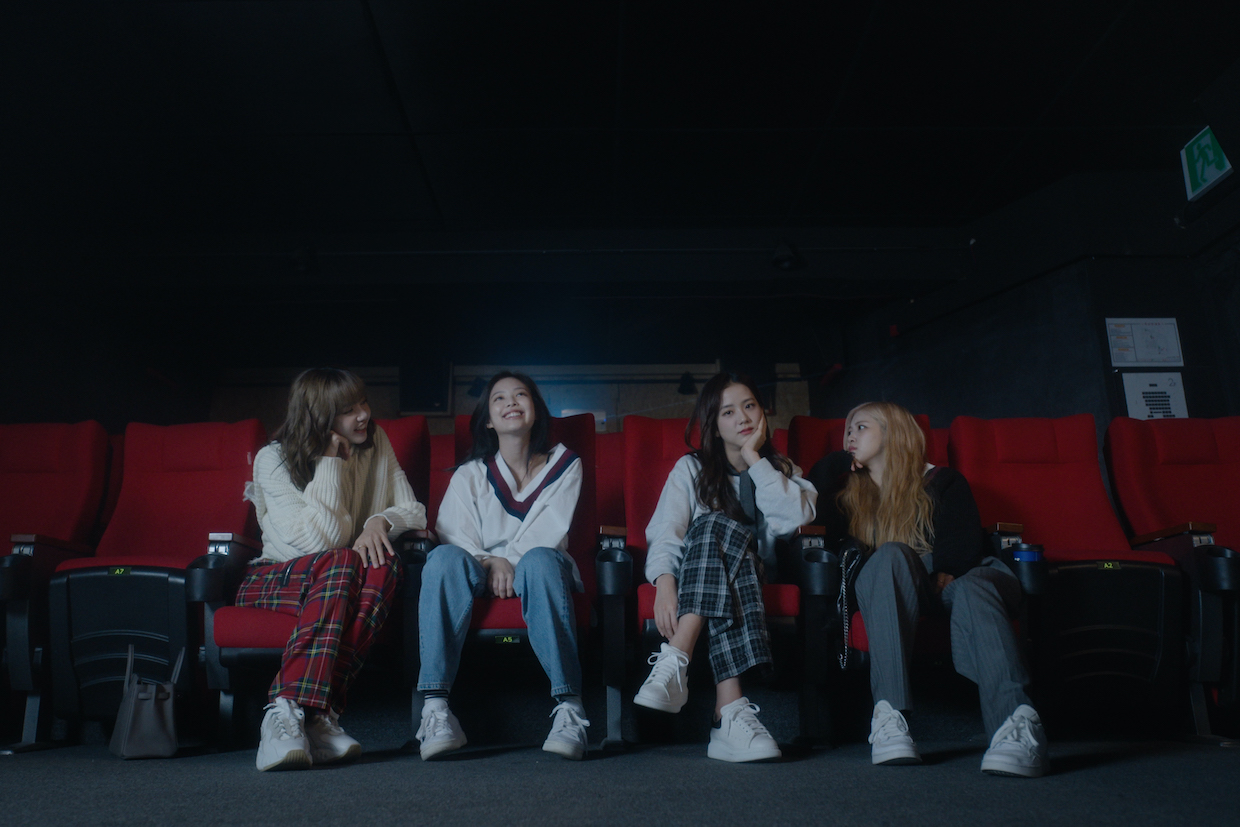
Children as young as 11 may enter this special training academy of song and dance and while most will eventually be asked to leave for failing to make the grade, others may last as long as a decade in the system, honing the skills and the look for eventual distribution into a group. Nothing left to chance, nothing unorchestrated, individuals are evaluated on a weekly basis, and asked to perform as a group in a rotating roster until something gels and a foursome such as Blackpink is plucked from obscurity for pop superstardom.

This documentary weaves in home videos of each of the girls, audition reels, practice footage, and video from their massive world tour to recreate the massive few years they’ve just had. And of course, hearing from Jennie, Lisa, Jisoo, and Rosé, we get to know a little bit about the personalities behind the carefully curated personas. It’s nothing that YG Entertainment (the parent company that recruited, trained, and launched the group, among others) doesn’t want you to know, but if it’s not quite as “all-access” as billed, it’s still plenty informative and loaded with charm.

BLACKPINK: Light Up The Sky will give K-pop novices a look behind the scenes at the grueling selection process of putting together a group, and will please fans with previously unseen footage and personal interviews with each member. You can watch it now on Netflix.

Hungry for more? Check out BLACKPINK review and music on Youtube.
Conscience Point

Manhattan is famously unlivable in the summer, and the wealthy have used the Hamptons as their personal playground and easy summertime escape for generations. This cozy town had about 60 000 year-round residents, from diverse social and economic backgrounds. Many live below the poverty line, trying to eke out existence in a place that has skyrocketing cost of living. Their modest population quadruples in the summer months, making it very difficult to serve all people equally.

To the ultra-wealthy, the 1% of the 1%, the Hamptons is a rustic vacation spot offering rural charm and first-class amenities. The Shinnecock Indian Nation has been continually marginalized on their own ancestral land as newcomers change the landscape to suit their own needs, with an emphasis on opulence, consumption, and greed. Not much thought let alone respect is given to the Shinnecock land, its resources used up and artifacts neglected.

White people have edged Native peoples out of their land all over the world. Many years ago, local government “compromised” by leasing the Shinnecock 3000 acres of their own land to them for a contract period of 1000 years. In flagrant opposition to their own proposal, they then stole them back to build a commuter railroad between Manhattan and Montauk, the Shinnecock helpless to fight against the move since, as non-citizens, they weren’t even allowed to sue. That land now holds multi-million dollar homes and several world-renowned golf courses built on sacred burial ground, “borrowing” the Shinnecock name, and using a stereotypical “chief” as a logo.

Meanwhile, the regular citizens of the Hamptons can no longer afford to stay in their houses with monstrous property taxes. The working class who serve as care-takers for the massive estates and the service industry who wait on the ultra wealthy tourists commute in from increasing distances, priced out of living anywhere near where they work.

The Shinnecock Hills Golf Club is about to host of the U.S. Open and members of the Shinnecock Nation stage regular protests, hoping to bring their struggle to national attention. Filmmaker Treva Wurmfeld is in the thick of it, where profit and protest clash, values collide, and ugly inequality is exposed.

This and other terrific titles are available to stream through the Planet In Focus, an international environmental film festival.

TIFF: The Truffle Hunters

Truffles are a delicacy, one we are happy to indulge in when they’re being offered at a nice restaurant, and they’re only offered at a nice restaurant. At home they’re wildly out of our price range, or at least any responsible grocery budget, and we made do with truffle oil, for special occasions.

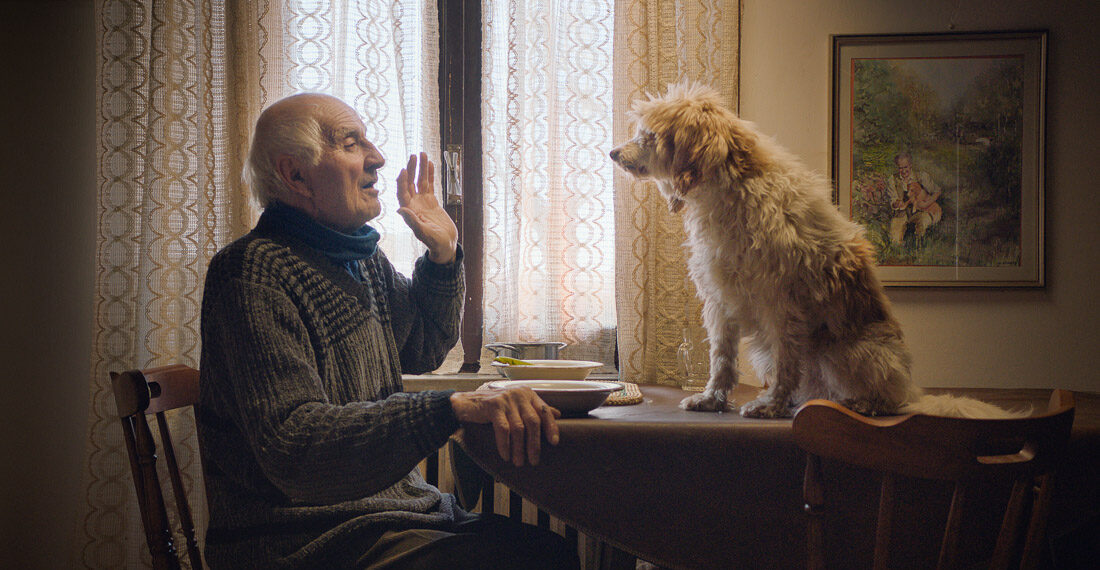
White truffles, trifola d’Alba Madonna (“Truffle of the White Madonna” in Italian) is found mainly in the Langhe and Montferrat areas of the Piedmont region in northern Italy, and most famously, in the countryside around the cities of Alba and Asti. They can go for $4000USD per pound in a good season; in one where truffles are more scarce, like they were a couple of years ago, a set weighing just under 2lbs went for $85,000. Why so expensive? Well, they’re nearly impossible to cultivate. You basically have to find them growing wild in nature, but they grow underground with no above ground marker, nearly impossible to find. Plus, once they’re out of the ground, they start losing mass, so they need to go from underground to on the table in less than 36 hours. Truffle hunters are a rare, and possibly a dying breed. It’s mostly a group of aging men, their particular skill set nearly as elusive as the truffles themselves. They comb the countryside woods with their trusty dogs, looking to find their pot of gold.

This documentary focuses on the eccentric octogenarians who have made this treasure hunt their trade. Directors Michael Dweck and Gregory Kershaw saturate us with romantic notions of nature while the old men charm us as they play for the camera. The camera is an impartial audience who listens to stories attentively and doesn’t roll its eyes like grandkids do.

These old men guard the secrets to their success like precious gems. Tradition is of the utmost importance, but modern challenges like climate change and deforestation are whittling away at the time-honoured art and science of truffle hunting. And as the truffles grow more scarce, and therefore more valuable, the competition stiffens. Competitors are even leaving poison out for the dogs.

And let’s face it: the dogs are the real stars here. Aurelio and his pal Birba steal the show; they are each other’s faithful companions, their relationship touching and sweet.
Carlo is a passionate and feisty forager but his wife doesn’t like him hunting at night any more. Titina is always by his side, ever loyal, even in church they both receive a blessing for a bountiful season ahead. Gabby Sergio is lucky enough to have two gifted canine friends, Pepe and Fiona, and crafty enough to go to great lengths to keep adversaries off his scent.

This unique and sometimes curiously comical documentary slyly draws a picture of a wildly diverging socioeconomic class between those who hunt the truffles and those who consume them. But despite the high demand and the vast business machinery driving the market, the real elites are the dwindling number of people who can actually supply those tasty little treasures. Some resources just aren’t renewable.

We saw this at TIFF, but it will also be the closing night film at the Devour! Food Film Fest.

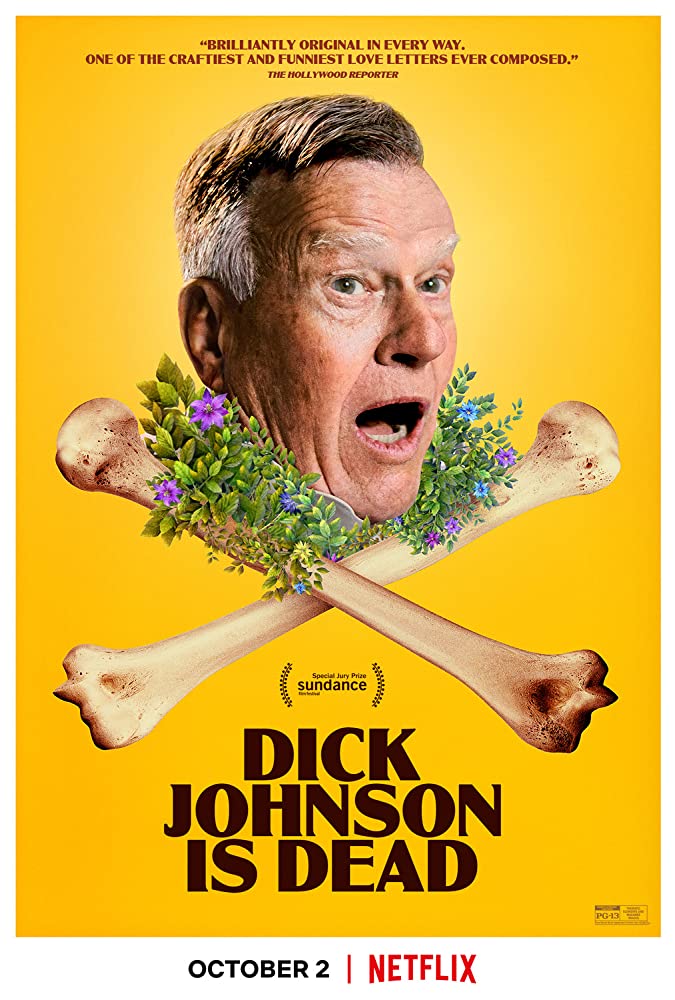
Dick Johnson Is Dead

Kirsten Johnson is a documentary film maker who is grappling with her father’s dementia and his mortality. With her mother already gone and her father slipping away piece by piece, she decides to confront his death head-on by filming him in the various ways he might die (a fall down the stairs, an air conditioner falling on his head, etc). Dick, who is visibly declining in health but still relatively sound in body and mind, clearly shares his daughter’s dark sense of humour. Having given up his independence, he lives with her and her children in a New York City apartment where every day a new death is enacted.

Kirsten Johnson finds the thought of her father to be very painful and almost surreal. Perhaps she is training herself toward that eventuality, familiarizing herself with the concept of his death, shocking her system into, if not acceptance, then at least preparedness. Dick Johnson still has some vigour. He is game for this experiment, less for himself and more out of a parent’s attempt to soothe and prepare his child, even if she’s already in her middle age. It’s a balm he can offer even as the balance of their relationship has recently been recalibrated. But during an elaborate staging of his funeral where tearful friends make testimony and tribute to Johnson’s life, it’s clear that he is moved, appreciative if sheepish of all the attention which is not usually lavished upon a man whilst he is still alive.

It took me a while to appreciate this documentary, as it felt so personal and self-indulgent. However, our culture is so afraid of death that we seldom approach it in such an open and honest manner, and it was refreshing to reflect on what mortality, legacy, and memory really mean, and what they’re really worth. Unfortunately, daughter Kirsten will not likely get to direct Dick Johnson’s death when it really does come. If anything, I hope this film is a reminder that death is rarely controlled and goodbyes should never be put off.

David Attenborough: A Life on Our Planet

For most of us, David Attenborough is the voice of nature. His soothing narration has taken us across the globe, from the coldest arctic waters to the hottest deserts to the wettest rainforests. The 93 year old Attenborough has spent his whole adult life exploring the world and documenting nature. During that time, he has seen drastic changes, and he has taken it upon himself to try to help us avoid an impending disaster.

Themes of conservation are not new to Attenborough’s documentaries but Netflix’s new A Life on Our Planet has no time for subtlety. Clearly, Attenborough feels he has no time to waste, which is less a function of his age and more an indication that catastrophe is imminent. Wisely, Attenborough’s warnings are interspersed with the beauty of our world, to show what is at stake and what could be saved or lost depending on which path we choose. Even better, Attenborough lays out a plan for saving ourselves, which he presents clearly and sells by pointing out that our planet is going to keep spinning, but our place on it is not guaranteed.

Unfortunately, Attenborough’s pleas will probably be dismissed by those who deny the changes that Attenborough, and all self-respecting climatologists, are documenting. Instead of ignoring the problem, I wish the deniers would be honest in their selfishness, and admit they don’t want to make sacrifices to preserve the future for coming generations. Of course, that would require them to admit they’re bad people, so I’m not holding my breath.

It is up to the rest of us to take action. A Life on Our Planet shows us how to do it, and more importantly, Attenborough reassures us that we can still undo the damage we have caused. A Life on Our Planet manages to be hopeful without minimizing the problems we face. It is a nature film that is about us, and it is a fitting capstone for Attenborough’s life work.

Z-O-M-B-I-E-S 2

What more really needs to be said? Zed and his friends effected a zombie revolution in the last film, achieving equality for their people. It seemed like things in the sister communities of Seabrook and Zombietown were on the up and up – but what is a sequel without a new and terrible conflict?

Werewolves!

Turns out, Seabrook legend has “always” told of werewolves in the forest, but they’ve only chosen now to reveal themselves. Of course, Seabrook immediately forgets all the important lessons it learned last time and re-enacts the “monster laws,” the worst of which, in Zed’s (Milo Manheim) biased opinion, his inability to take cheerleader Addison (Meg Donnelly) to prom (to “prawn” actually, Seabrook students are the “Shrimps”). The situation, or Zed’s situation anyway, is only exacerbated when werewolf Wyatt (Pearce Joza) pays a little too much attention to his girl, trying to steal Addison away to their pack.

It’s very convenient to the plot how quickly humans abandon lessons of the past and yet it is also extremely and depressingly true to life. People are always afraid of what’s different, and they let fear blind them to the things that unite them. Even the zombies, themselves oppressed in the very recent past, are not sympathetic to their plight but eager to to leverage a new underclass to bolster their own status. It is a perfect allegory for the American class system, but surprising to find it in a Disney produced movie for tweens about prom and cheerleading.

Like the first one, production design on Z-O-M-B-I-E-S 2 is A-M-A-Z-E-B-A-L-L-S. The sets and the costumes have incredible theming that really emphasize the story. I particularly enjoyed the glitter fog, or as they called it, colloidal silver – you know, for subduing werewolves. These are the touches that force me to like a movie that is pure bubblegum and lollipops.

The whole cast is back, including Trevor Tordjman, Kylee Russell, Carla Jeffery, and James Godfrey from the first film, and newcomers Chandler Kinney and Ariel Martin. They’re talented, they’re all talented, even Tordjman, who remains my one beef. He’s just a little too “on.” Everyone else is making a movie, and he’s playing to the back of the house of a children’s theatre, hammy and exaggerated.

I still say these are surprisingly tolerable movies, definitely a fun time for kids to watch with parents. The monsters make it Halloweeny but the singing and dancing and gelato carts make it harmless with a side of sweet messaging.

We’ve been depending on generation Z to save us, but if not them, generation Z(ed) seems up to the task. Armed with pompoms and dance battles, they’re a lot more prepared for change than we’ve been. Zombies 2024.

Z-O-M-B-I-E-S

Seabrook is a perfectly planned community, where everyone is uniformly beautiful and bright. Fifty years ago, there was an accident involving lime soda at the local power plant, unleashing a green haze that turned people into zombies. Seabrook survivors erected a barrier to keep themselves save, and it has lived securely beside Zombietown ever since.

The ensuing 50 years have harkened 50 years of zombie improvements; they now wear a device on their wrists that emits a soothing electromagnetic pulse that keeps them from eating brains (it probably counts their steps as well). Zombies are are now like anyone else, though they are easily identified thanks to green hair and a pale pallor. Unfortunately, zombie phobia is rampant in the Stepford-like community of Seabrook, and the division is still pretty strict. Zombies wear uniforms, work the worst jobs, aren’t allowed to keep pets, etc, etc. Today, however, Zed (Milo Manheim), a teenage zombie, is super pumped because it’s the first day of school and for the first time, zombies are allowed to attend human school. He shouldn’t be surprised that the school is still very much segregated, with the zombies all relegated to the dank basement and not allowed to mix with human kids or join extra-curriculars. Luckily Zed’s got a zombie edge when it comes to football, and the Seabrook Shrimps are utterly awful without him. Can one zombie jock heal the hearts and prejudices of a xenophobic town? With a little help from his zombie friends and one brave, blonde cheerleader named Addison (Meg Donnelly), yes. Yes they can.

This little ditty is available on Disney+ and will make for some fun, family friendly viewing this Halloween.

Meanwhile, I’m a little embarrassed to say that I really liked this film myself. It’s corny and earnest as heck, but it’s also extremely well put together. I never saw High School Musical, but I imagine this is not unlike it, only half the kids are zombies.

Someone production-designed the heck out of this thing. That person is Mark Hofeling, and he deserves an awful lot of credit. The Seabrook side looks like a Taylor Swift music video and the Zombietown half looks like a Katy Perry video, and for the first time in my life, I mean that as a compliment. Costumes by Rita McGhee follow the aesthetic brilliantly (Sean even commented on the pastel football uniforms), so when they all break out into dance, the effect is rather pleasing. Oh did I mention it was also a musical? And the songs aren’t bad – not worse than a lot of what plays on the radio, anyway. The choreography’s decent too, more current and involved than I would have predicted from a Disney movie. The young cast (Manheim, Donnelly, Trevor Tordjman, Kylee Russell) are talented and charming and quite polished. And the script isn’t terrible either. Or, it’s terrible in a self-aware way, leaning extra hard on archetypes but making use of them and landing a few clever quips along the way.

Do I have a school girl crush on this movie or what? It’s really not meant for adults and I would never inflict this on anyone other than Sean. It’s a living, breathing cupcake of a movie and I guess I was in the mood for dessert.

Inheritance

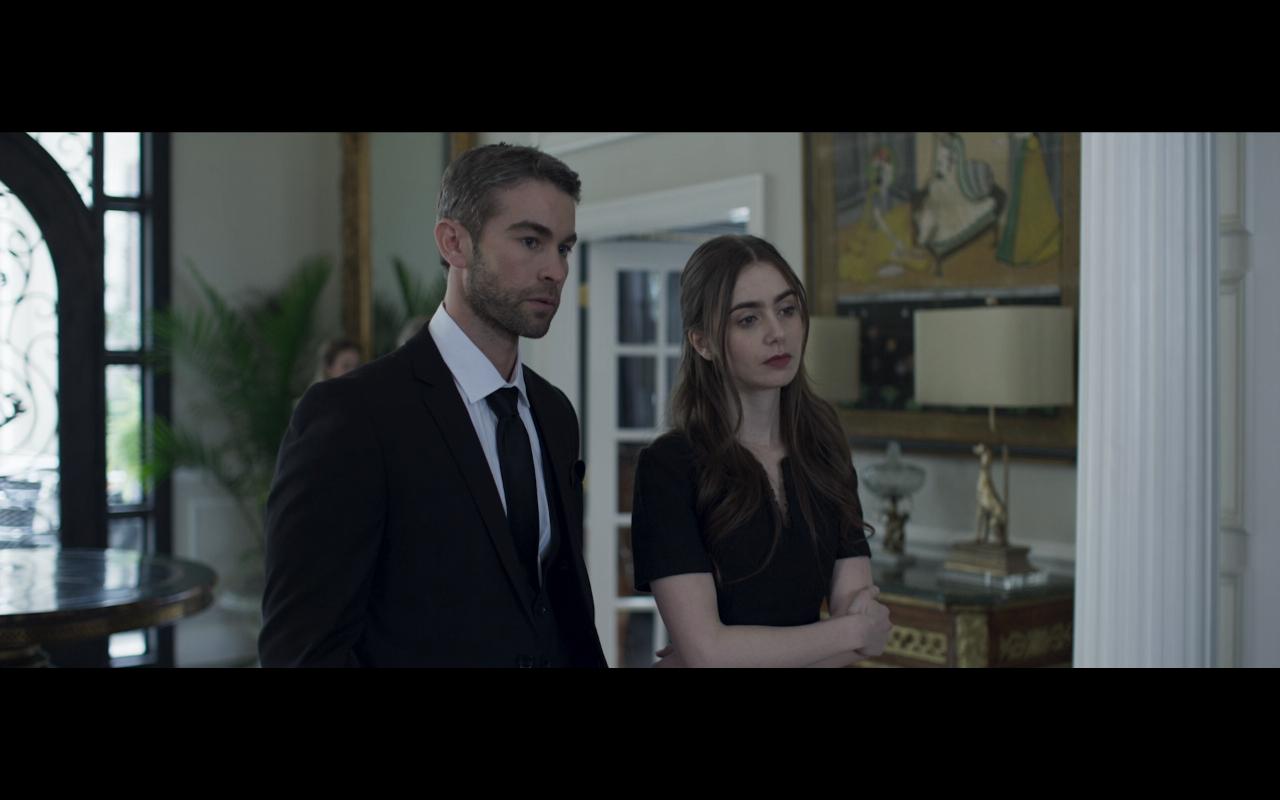
Lauren Monroe (Lily Collins) is the privileged daughter of a white and very wealthy family. She seems quite young to be the District Attorney already, and yet that it what she is. You might think this is reason to be proud, but her father (Patrick Warburton), a banker, sneered at public service and would have preferred she work for a private firm where she could be defending her family’s interests. Her younger brother William (Chace Crawford) is a Congressman running for a second term. He also seems young for his position, but let’s just go with it. He’s vehemently denying that the family has made financial contributions in exchange for union votes, but his campaign has the slight whiff of scandal. There is no doubt in anyone’s mind that William is his father’s favourite child, a valuation that seems starkly measured in his will when their father dies unexpectedly. It would seem that he loved his son about 20 times as much as he loved his daughter, if love can be measured in the millions of dollars inherited by them.

But Lauren doesn’t just get a slap in the face in the will, she also inherits a family secret. And boy is it a doozie. A serious, serious doozie, but I will refrain from saying anything more and I implore you to go into this film not knowing any more than this. A thriller works best when you allow it to thrill you, and thrills function best with the element of surprise on their side. Modern movie trailers seem to have forgotten this, but since Inheritance is found on Netflix, there’s a good chance you can make it there without accidentally spoiling it for yourself.

Netflix has vast resources and it churns out content at a truly remarkable rate. This results in both hits and misses, but I heard a Netflix executive tell their team that they weren’t failing enough, which meant they weren’t taking enough risks. Being Netflix means you can afford to take more risks on the kind of content that big studios have all but given up on: indie movies, untested directors, new formats, and more. Their deep pockets are attracting increasingly impressive talent, and it is quickly becoming a real Oscar contender. Audiences have largely learned to go into Netflix movies with low expectations; the movie might be great, but is much more likely to be mediocre, and quite often they’re very, very bad. But having paid a monthly fee rather than a per-movie rental, it’s easier to take chances on movies we’re not sure we’ll like. It’s movie watching with no strings attach. But once in a while, it achieves cultural zeitgeist; early on in our global quarantine, the world consumed The Tiger King together, and it united us even in our isolation. Before that, it was Making a Murderer that stirred us into disrupting the legal system. Inheritance isn’t going to be universally beloved. It is not a great film or an important one, but is a good, solid thriller, the way thriller should be made. It’s also an increasingly rare opportunity to go into a movie fairly blind, and allow one’s self to be surprised, and entertained.

Yes

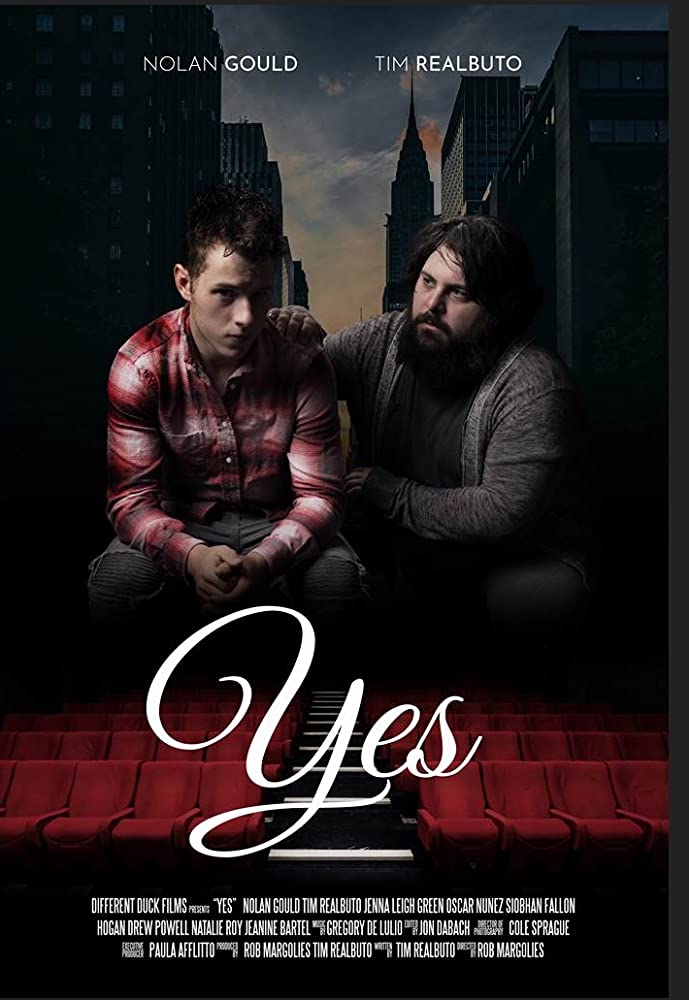
Patrick Nolan (Tim Realbuto) is a washed up former child actor, tainted by scandal, all but forgotten by Hollywood, addicted to any kind of numbing he can find, scraping by as an acting coach to teenage hopefuls.

He attends a high school staging of Romeo + Juliet starring his protégé and niece. He’s not sober and she’s not good, but Jeremiah (Nolan Gould), the young man playing Romeo, catches his eye, and Patrick reaches out to take him under his wing. Everyone knows about Patrick, or think they know, about the ‘perversion’ for which he was charged but never convicted, but Jeremiah meets with him anyway, anxious to hone his new craft.

Patrick’s technique may seem unorthodox to you and I, but he believes that all acting comes from a place of pain, and his lessons revolve around eliciting Jeremiah’s pain. It’s something they have in common, their tortured pasts, their private pain. Patrick is never sober, not even close, but he’s also never intoxicated enough to shake the memories that haunt him. Jeremiah’s is too young to know how to handle a profoundly depressed teacher, or the mentorship that transforms into something rather more intimate and intense.

Tim Realbuto is strangely at home in the skin of a man clearly on the brink of personal apocalypse, as he should be, having written and performed the play off-Broadway. Patrick is a portrait of barely suppressed rage, a hopeless heap of man who doesn’t believe in salvation. He dreams of the actress who played his mother on screen, and imagines her giving him the mothering he needed but never received. Gould’s portrayal is mature and nuanced, playing Jeremiah as slightly less innocent as he seems. Together, the two navigate a relationship that teeters on the fine line of inappropriate, Patrick’s disgrace so palpable it’s a third character in the room. Rob Margolies’ confident direction moves the story from stage to cinema seamlessly, soundly avoiding the temptation to over-produce.

The result is a slow build toward a well-earned finale, two restrained performances each deeply felt in different ways, and an ending that gnaws at the heart.

The Kid Detective

He’s no relation to the Holmes clan, but when he was 13, Abe Applebaum solved the case of the missing fundraiser money. He was such a good little sleuth the townspeople celebrated his successes and rewarded him with his own office. He was the toast of the town, beloved by all, his parents impressed by his initiative, the newspaper chronicling his triumphs, but then he got a case he couldn’t solve. A young girl named Grace went missing and Abe couldn’t find her.

It was an unfair burden to put on a 13 year old kid. The townspeople never said as much, not directly, but young Abe knew what they expected, and he felt the weight of their disappointment when he wasn’t able to crack the only case that really mattered.

Now Abe (Adam Brody) is in his 30s, still working out of the same office the town bequeathed him as a kid detective. He’s occasionally contracted to find missing cats or track down secret admirers, but there isn’t much money in it, and his parents are both embarrassed for him and tired of supporting him. He drinks to numb the self-pity but the hangovers leave him even more despondent. At least until a wildly optimistic high school student hires him to find out who brutally murdered her boyfriend.

I had very few expectations for this film so colour me surprised when I actually quite liked it (what IS the colour of surprise?). It was genuinely funny, it poked fun at the genre and at itself, it felt fresh and unexpected. Brody was well-cast and entirely believable as a man-boy who hasn’t left behind his childhood obsessions. The film struggles tonally, swinging between banter-y, smart-alecky comedy and the sobering facts of an actual murder investigation, which Abe is very much unqualified to conduct. But this guy’s had a cloud hanging over him for the past 20 years and if there’s a chance at a silver lining, he’s going whip out the old deerstalker and oversized magnifying glass and work this case like his life depends on it. And maybe it does.