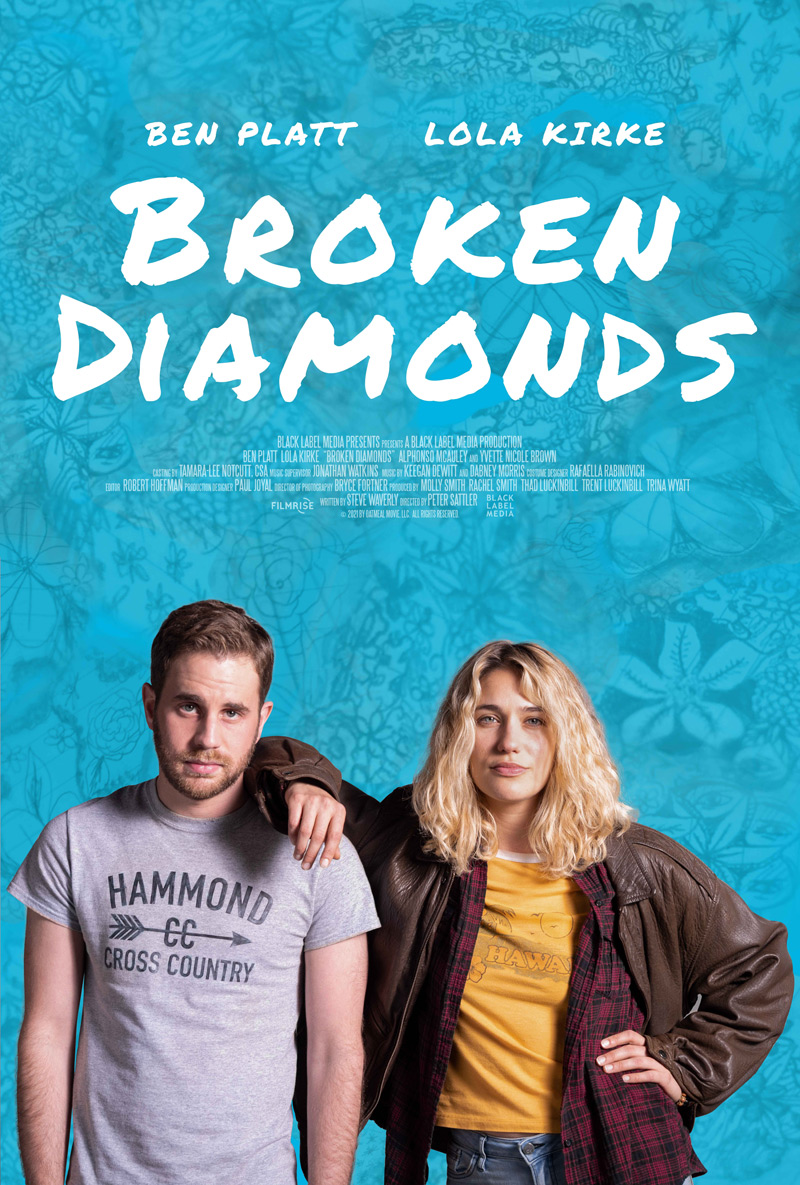
The Premise: Scott (Ben Platt) is finally following his dreams all the way to Paris to become a writer. But the universe is a bitch, and by way of obstacles, Ben’s got a newly dead dad, a mother lost to dementia, and a sister, Cindy (Lola Kirke), who is normally hospitalized with schizophrenia is about to become unhospitalized, unmedicated, and very much Scott’s problem. Is he his sister’s keeper?
The Verdict: Movies about mental illness often flirt with exploitation, and while Cindy’s character, and her plight, do serve her brother’s growth and character arc, Broken Diamonds tries to paint a full picture of an illness that is disruptive and damaging and sometimes just part of the package. Platt and Kirke are both very good, very watchable, and the story benefits from its small scope. Schizophrenia is a family disease. Their family has suffered together, and apart. It has left its members battered. It has demanded sacrifice. Platt is of course very good at showing us the inner turmoil of deciding when enough is enough, but it is Kirke who has the heavy load, allowing Cindy to be a woman who is more than just sick. Emotional but undemonstrative, Broken Diamonds is character-driven and intimate, an interesting exploration of the complicated equation between siblings.
Directed by: Peter Sattler, starring Ben Platt, Lola Kirk, Yvette Nicole Brown; find it July 23rd in theatres and on demand.
John Wick’s wrath was incited by the slaughter of his beloved dog. For hermit Rob (Nicolas Cage), it’s his bunny rabbit. Just kidding. It’s his PIG!
The Premise: Rob the Recluse has been living the shack life for 15 years, his only companion a pig with whom he gathers truffles, trading them for supplies with Amir (Alex Wolff) on a weekly basis, his only contact with the outside world. But when Rob is attacked and his pig stolen, he’s forced to re-enter society to track down his esteemed swine and bring her home. In the city, we come to understand what caused Rob to leave it behind in the first place, and we get to know the man he was before the trauma.
The Verdict: Surprisingly, a win. Although Cage has had some cult favourites over the past decade, this is his true return to acting as opposed to Nic Cage impression he’s been doing on camera for years. A tale of love and loss, Cage is toned down, identifiably human, quietly emotive, broken in humbling ways. We’ve been accustomed to “Cage Rage” and maniacal acting from him for so long, it’s a nice reminder that he can, indeed, turn in a moving performance. Rob is a man desperately holding on to the one thing in his life that still has meaning, and Cage is strangely enough the perfect delivery guy.
The college admission scandal was a hot and juicy news item for a minute. Rick Singer was getting rich kids into college through a “side door” called money. Money paid to Singer inflated test scores while bribes to college coaches went to fabricating phony athletic profiles for the prospective student, allowing the coach to “recruit” them. Kids who stood no chance of getting admitted into a good college were now strolling right through a side door thanks to mommy and daddy’s wallet. This got a lot of play in the media because it meant rich white people were scamming a system already designed to highly favour them. There was not a lot of sympathy in the story (except maybe for the clueless kids whose own parents knew them to be too dumb to earn anything meritoriously). Plus the whiff of disgraced celebrities (Lori Laughlin, Felicity Huffman) was hard to resist.
This documentary enlists a host of actors including Matthew Modine and Josh Stamberg to reenact an FBI investigation that went after not just kingpin Rick Singer, but the bribed officials and the shady parents as well.
What it does particularly well, and makes it worth the watch, is keeping its target on the “victim” of these crimes, the colleges themselves. The true victims are of course the many applicants who were refused because their rightful places were taken by undeserving kids, but in the court’s eyes, it was the colleges who were defrauded. But as the documentary cleverly points out, the colleges have not only benefited (and not been required to pay back the bribes) from the situation, they’re the ones who created it. The side door was used primary by rich families who weren’t quite rich enough to use the back door that American colleges and universities leave purposefully propped open. Donations of about $10 million tend to net candidates preferential admissions consideration. And that’s to say nothing of the problematic front door, where the most elite schools are only accessible only to those rich enough to pay the exorbitant fees, privileged enough to attend schools that adequately prepare them, and white enough to ace culturally-biased entrance exams. The law may have let these schools off the hook, but Operation Varsity Blues does not.
Dr. Miami (Michael Salzhauer) is a Miami-based plastic surgeon who specializes in Brazilian Butt Lifts, whose most valued employee is a social media consultant. He has assembled a multinational team of like-minded surgeons who are happy to pay to be part of his network. Salzhauer spends most of his time filming Game of Thrones spoofs and appearing in music videos, and may or may not have time left over to actually perform surgeries in his namesake clinic, within his namesake tower. Salzhauer is also an Orthodox Jew who seems fully aware of the fundamental conflict between his religion and his work, but believes it is necessary to sacrifice his beliefs to get what he wants. And also believes that everyone else is doing the same.
Dr. Miami should not be a doctor. He is focused on fame above all else, above family, work, and religion. Without even a cursory nod to professionalism, every aspect of his life is secondary to fame, and it’s not close. Dr. Miami is an irredeemable character who would, I think, be quite happy with how he is portrated in this documentary. So it is a credit to filmmaker Jean-Simon Chartier that a documentary about this unlikeable person manages to stay neutral and, more impressively, stay interesting, as we follow Dr. Miami’s relentless pursuit of more.
If you are anything like me you will be horrified by much of what you see in They Call Me Dr. Miami, and yet you will be unable to look away. This is an unflinching look at a person whom I cannot resist judging as a buffoon, yet I have to admit he is more introspective and self-aware that I would ever have guessed from his social media content. They Call Me Dr. Miami manages to humanize an individual even as he is trying so very hard to make a caricature of himself. That is no small feat, and it is all due to Chartier’s ability to remain objective, to which every true documentarian aspires but so few acccomplish.
I watched this movie on a whim as the logline hadn’t particularly called out to me. But you know what? A single sentence movie synopsis can’t convey the charm and warmth and quirkiness of its stars.
Two directionless sisters brave a cross-country road trip to rescue their grandmother from a COVID outbreak at her nursing home.
See? It doesn’t sound terrible but I’m not sure I’m terribly invested in another COVID story. They’re already a dime a dozen on the indie circuit and truthfully, we don’t even have enough perspective or even closure on this stupid pandemic to really tell its stories. But in Recovery, COVID quarantine is merely the setting. The true meat is this delightful road trip with two sisters who I wish I knew in real life. Blake (Mallory Everton) and Jamie (Whitney Call) are fun and funny, down to earth in offbeat ways that are interesting and endearing rather than annoying. The actresses each have their own distinct style but their chemistry together is effortless and effervescent.
I loved the writing, I loved the two leads. Recovery isn’t so much about plot as it is a showcase for two talented actresses, and an opportunity to hang out with friends. An actually funny COVID comedy: who saw that coming? Breathlessly paced with an almost manic energy, Recovery will be a fun time capsule some day, but it’s got a humour that transcends the pandemic. I can’t wait to see more from these two.
I grew up in a small town where absolutely no concerts that I didn’t perform myself were ever given. NO ONE came to town and of course we didn’t even blame them. I was lucky, though, to live a very drivable distance between several large cities, which means I didn’t miss out on much. I saw tonnes of shows (not in the last year – I miss live music!) but not everyone is nearly as lucky. Take the good people of Cesena, Italy. They were fed up with being passed over for concerts and they did something about it.
Anita Rivaroli’s We Are The Thousand documents Cesena’s attempt to lure the Foo Fighters to perform in their town by staging their own concert – 1000 musicians playing Learn to Fly at the same time. Go behind the scenes to see the year’s worth of preparation that goes into a four minute song as volunteers figure out logistics, equipment, and financing on the fly – after all, this has never been done before.
Watch the thrilling ensemble of 250 drummers, 150 bass players, 350 guitarists, and 250 singers, known collectively as Rockin’1000, on the warm day one thousand musicians learned to play together. Can this many drummers really play in sync? Can that many guitarists be convinced not to engage in musical masturbation? And even if they can, will it work? Will Dave Grohl hear their plea? Will Foo Fighters play their town?
We Are The Thousand is a heck of a great way to find out.
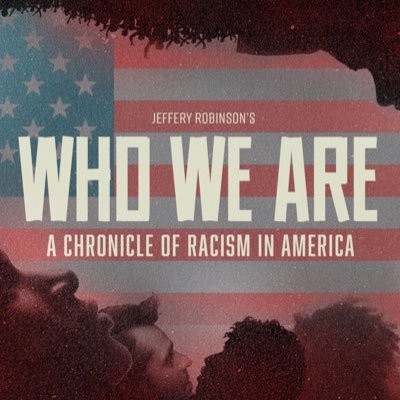
Racism is bad. Inarguably, unequivocally bad. And yet it’s had a persistent history in the USA (and most other places, but this is about racism in America) and is baked right into its constitution, making it all but impossible to shake.
This documentary doesn’t need to convince you that racism is bad. Jeffery Robinson is a lawyer, which makes sense, because he’s exceptionally good at building a case. America is on trial, and Robinson is the crusading prosecutor with such compelling and relentless evidence you can’t help but convict.
Although Robinson’s approach is very fact-based, his stories add up to something as moving as it is convincing. I could go on and on but the truth is, this is a strong documentary that deserves to be seen, end of story.
Paul Dood (Tom Meeten) is an odd duck, a middle aged man working part time at a second hand shop but a full time dreamer. An aspiring triple threat (singing/dancing/acting), his act has garnered very little attention on social media but this hasn’t deterred him from his ambition of auditioning for a competitive talent reality show, or from live streaming nearly every aspect of his life via a chest cam. His greatest champion, his mother/roommate Julie (June Watson), applauds his every move, despite a glaring lack of talent, and sews all his tacky, out of date, sequined costumes, of which he is terribly fond.
When the reality show is in his town holding auditions, it is of course his top priority to wow the judges and dominate the stage, but his journey there, pushing his ailing mother in a wheelchair, is fraught with bad luck and a series of unfortunate encounters which make him late for the audition, which he leaves humiliated and broken, and that’s before he realizes it’s killed his mother. Used to being disappointed, Paul returns to his dismal life, but one day at work, something in him snaps. Taking an extended lunch break, he seeks revenge on the selfish people who made him late that fateful day.
If Paul Dood wasn’t so pathetically funny, you’d call this is a horror. Five pretty spectacular and fairly graphic murders are about to take place. Yet Paul’s bumbling ineptitude and soul-crushing resilience mean these murders are more slap stick than terrifying. But do remember that Paul’s chest cam is always filming, and if his singing and dancing didn’t get many views, a murder spree sure will, no matter how sloppily executed.
Paul Dood’s Deadly Lunch Break is low-budget and uneven, yet I found as I watched that I was drawn to the character and entertained by his hijinks. It’s not a perfect film but if you give it a chance, it’s warm and silly and I couldn’t help but join in the fun.
Free hugs. Free hugs for everyone, because I regret to inform you: you’re absolutely going to need them.
The Father is unintentionally the perfect film to have released during a global pandemic which has meant many things to many people, but has put a particular emphasis and burden on caregivers. Sean lost his Granny last spring; though her death certificate doesn’t state COVID as the cause of death, hers is one of many likely hastened by mandatory isolation (not that she was alone: she received wonderful care at her residence, but these have been lonely times, and particularly hard on people living with dementia). My own grandparents moved into a nursing home for the first time not many months ago, my mother unable to cope as their sole carer any longer. My grandfather’s failing health has meant he’s in and out of the hospital quite frequently, and must always be quarantined upon his return. He’s in the hospital right now, in fact, unable to return to his residence which is suffering an outbreak of a variant. His hospital bed is not far from the one in which his younger brother died last week, yet he was unable to go to him for one last goodbye. But it’s his wife, my grandmother, who suffers from dementia, and my mother who has to tell and retell all this news to her, news of a constantly changing world and its new and evolving rules which many of us hardly keep pace with ourselves. My mother’s only break has been courtesy of her own mandatory quarantine, having also been exposed to the variant at their residence.
The Father is a duet between father and daughter; the experience of dementia from both the victim’s perspective, and the caregiver’s. It is impossible to say who suffers more. Anthony (Anthony Hopkins) is a charming and vibrant old guy who values his independence even though daughter Anne (Olivia Coleman) judges it no longer sustainable. Anthony is defiant in the face of the carers she presents, resents even their implication, though both the script and Florian Zeller’s direction make their necessity abundantly clear to us. Anthony confuses people, names, faces, conversations, places, time, reality, even his own identity.
The film is of course extremely empathetic to Anthony’s plight, but it allows us to truly know this character, and perhaps even the disease, by donning his slippers and showing the truth, warts and all. As his world tilts and blurs, Anthony reacts variously, sometimes sad and scared, sometimes angry and aggressive. We see him self-possessed one moment, asserting his role as homeowner and head of household, and completely depleted the next, sobbing and unsure. It’s heartbreaking, not just to see a man reduced to such disparate elements, but because so many of us can easily recognize our own loved ones in this man, in his simple needs, his volatile moods, his disappearing self. Anthony Hopkins is doing incredible work in this film. He’s no spring chicken himself, but he’s in complete command, a psychological/emotional contortionist. Give him all the awards.
Caregiver Anne is living in her own hell. Since her father can’t remember one conversation to the next, nor even parse one sentence after the other, reasoning with him and negotiating with him are completely off the table. Often unable to even recognize her, he’s certainly not able to appreciate that these tough decisions are for his own good, his safety, his well-being, and her peace of mind. She has clearly sacrificed much of herself to be his carer for as long as she has, and it is a mostly thankless job, Anthony’s twisted mind more likely to be suspicious or critical than to recognize the time and patience expended on his behalf. He is not a bad person, just a sick one, and his daughter is losing him bit by bit, disguising her grief even though it’s happening right in front of him, as he lives and breathes. Coleman is of course absolutely fantastic, a portrait of anguish under a mask of affection. But Anne isn’t a saint, she’s just doing her best under complex circumstances, and with less support than she deserves.
The film is as ruthless as the disease it describes; it will break your heart. It reminds us not just of dementia’s devastation, but of its humanity. The Father is a damn fine piece of cinema.
Kris Bowers is a rising Hollywood film composer and now he can add director of an Oscar-nominated documentary short to his impressive resume as well.
Having just premiered a new violin concerto, “For a Younger Self,” at the Walt Disney Concert Hall in Los Angeles last year, Bowers felt himself compelled to take a look back at this own lineage and trace the path of his success. Relying on his 91 year old grandfather, Horace Bowers, recently diagnosed with cancer, Kris can follow his road all the way back to Jim Crow Florida, which his grandfather left with only a few dollars in his pocket. Facing racism and discrimination, Horace soldiered on, determined to provide a better life for his family, and if grandson Kris is any indication, he’s obviously done an excellent job. Kris Bowers knows that, as a Black composer, his success has come from the sacrifices of generations before him, and to be able to share his gratitude with his grandfather in such a tangible way is a very moving experience for the documentary’s subjects as well as its audience.





 ASSHOLES WATCHING MOVIES