Yes Day

Allison is tired of being the bad guy in her family, always the one to say no, to stop the fun before it turns into fights or unfinished homework or the destruction of public property. Moms have such a bad reputation for being the ruiners of fun, and somehow dads seem to get off easy, don’t they? So after one too many dictator jokes, Allison agrees to a Yes Day – a period of 24 hours where the parents have to say everything the kids propose. Yes Day!
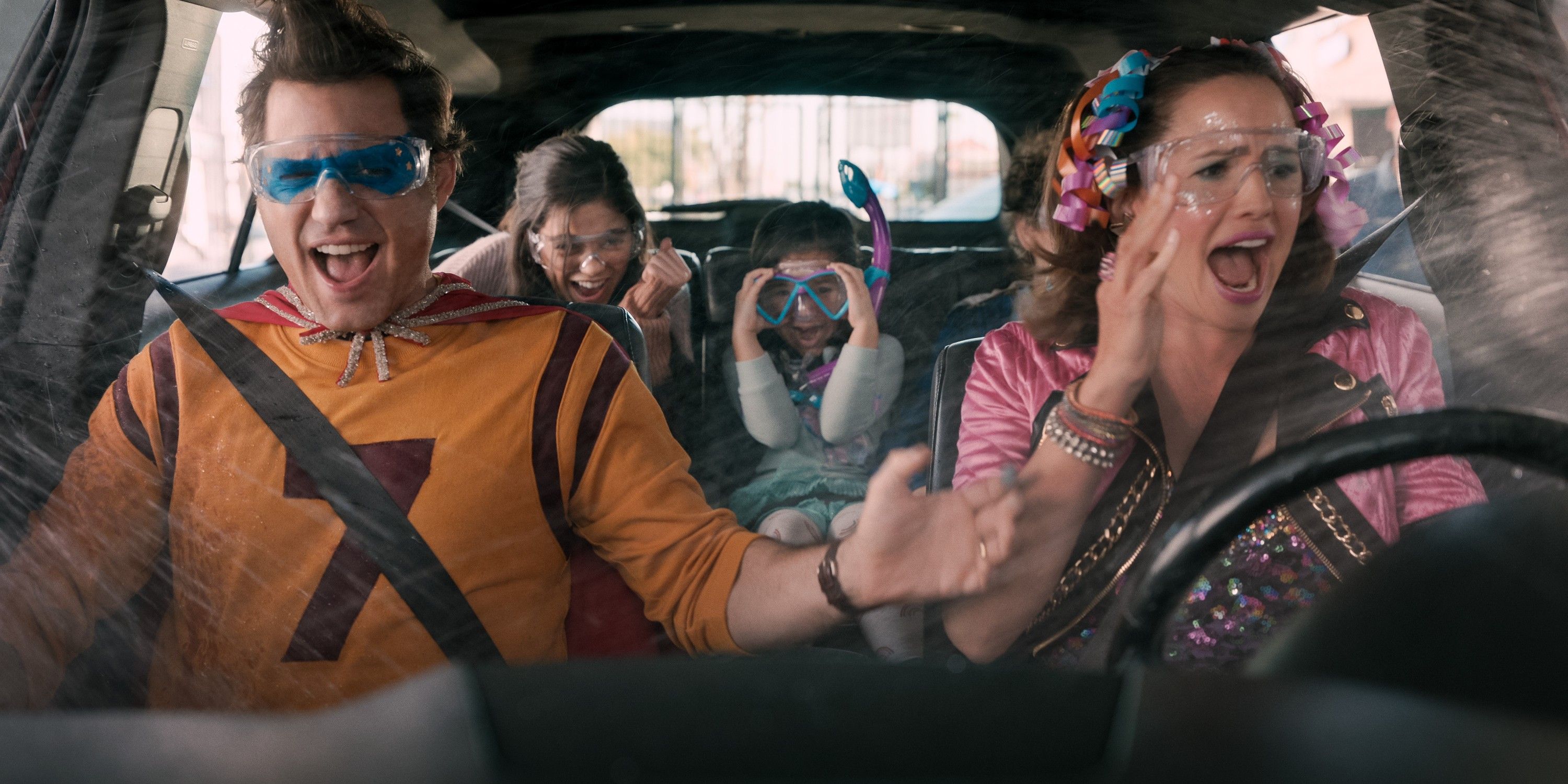
Allison (Jennifer Garner) is a stay at home mom, husband Carlos (Edgar Ramirez) the typical overworked dad who likes to come home and take it easy. Their three kids think they’ve got it tough. Mom is SO strict! [Sidebar: I actually thought the mom was perfectly fine and I resent making mothers into villains just for attempting to raise their kids.] But this is why a no-nonsense mom like Allison would agree to say nothing but yes to angelic little Ellie (Everly Carganilla), troublemaker Nando (Julian Lerner), and rebellious teenager Katie (Jenna Ortega) for an entire day.

Now, technically speaking, this is a sweet little family film about getting your priorities straight and spending quality time together. But let’s be real: do you want to give your kids devilish ideas? I know my nephews are very impressionable, and I worried for my sister’s car when Big Ask #2 was driving through a car wash with the windows open. Are you curious now? Do you wonder what kids will ask for if given free reign? Will you lose sleep tonight worrying about what your kids are cooking up? Will they get you in a weak moment and extract a Yes Day promise you’ll live to regret? Or, god forbid, not live to regret? Will your kids be reasonable? Hahaha, just kidding. They will not.

So up to you: is 90 minutes of screen time so you can take a bath undisturbed going to be worth the price you may ultimately pay? If you need help deciding, here are bit a few of the consequences evident in the film: public humiliation, diarrhea, ruined upholstery, incarceration. Sound good to you? If you’re brave enough to continue, know that you’re going to get Jennifer Garner at her Garniest – goofy and super earnest and very believable as a mom who routinely embarrasses her children. She’s hard to resist. Pro tip: if your kids do start agitating for a Yes Day, keep in mind that’s what aunts and uncles are for. We’re physically incapable of saying no.


Ladies In Black

Picture it: Sydney, Australia, 1959, a fancy department store. The shop girls are called Ladies in Black because their uniforms consist of black cocktail dresses, impeccable hair, and elegant makeup.

Lisa (Angourie Rice) is a high school student hired as temporary help around the holidays. She’s an excellent student though her father doesn’t believe in higher education for women, and she’s about to learn some very important life lessons from her new coworkers.

Magda, over in formalwear, is particularly alluring to Lisa. Magda (Julia Ormond) and her husband are war refugees with exotic accents and food and friends. They’re expanding Lisa’s worldview, but also her self-concept.

There isn’t much of a plot here, it’s mostly just one of those sumptuous period pieces that you’re meant to just luxuriate in, and I did. But make no mistake: Ladies In Black isn’t as thin as it might appear. It’s actually really interesting to see how different women are living during this time, a time when it optimistically seemed possible to welcome different people into a country, to sample other cultures for the first time and not have it turn political. It wasn’t an ideal time of course, but it felt like better times were right around the corner, like maybe we were about to turn a page. We weren’t, but sometimes it’s nice just to soak in an isolated little bubble of hope and glamour.

Berlinale 2021: Je Suis Karl

This one is juicy, folks!

Maxi is a teenage survivor of a terrorist attack that blew up her building, killing her whole family save for her father. Maxi (Luna Wedler) and her dad are grieving separately, her father consumed by guilt and doubt and obsessed with keeping his family’s memory alive, leaving Maxi to mourn alone, and drift apart.

Maxi is still a kid herself, and very vulnerable, so we’re not terribly surprised when she falls under the spell of a cute boy named Karl (Jannis Niewohner). She’s desperate for someone to lean on. Unfortunately, Karl’s ready shoulder is no coincidence. He’s the leader of a “youth movement” (a WHITE SUPREMACIST “youth movement”) that’s all about protecting “native Europeans” and excluding all non-whites. And who better to become the spokesperson of this youth movement than a young, beautifully broken girl who’s just lost her family to terrorism? A perfectly haunting example of the threat of “others,” her testimony will be powerful and persuasive. But what we know and Maxi doesn’t is that Karl’s appearance in her life isn’t just well-timed. It was Karl himself who set off the bomb that killed her family, eager to stir up some anti-immigrant sentiment, and proving it’s all too easy to do so.

Je Suis Karl is not a perfect film by any means. In fact, as you can probably tell by my description so far, it’s a little on the nose, with perfect parallels to real-life. But those parallels are frightening. Karl’s movement has major ambitions, and clearly will stop at nothing to achieve them. Recruitment is deliberate and intense, the organization is cult-like but self-aware, its leaders charming and charismatic. For many of us, it’s scary to watch history repeating itself while these disillusioned kids are using history as a blueprint to improve upon. Of course, the temptation to scapegoat someone is not exclusive to the youth, and we’re seeing this kind of thing far too often. Maxi is obviously a compelling and tragic character, but I wish we’d seen things more from Karl’s point of view. He may be reprehensible and sociopathic, but we’d gain more from understanding his perspective. Are these truly his beliefs, or has he merely calculated this to be his best way to power? A drama could easily turn into a horror asking questions like these, but director Christian Schwochow plays it safe and keeps things relatively superficial, taking everyone at their word. The result is not a bad movie; in fact, I admired it for even broaching the subject, but I did hope we’d get our hands a little dirtier. I don’t expect a movie to solve racism, but I do hope that a movie that takes such careful aim would handle things a little more responsibly.

Supernova

You were looking to have a cry today, weren’t you?

Sam and Tusker are driving around England in an RV, and I suppose that’s not technically the sad part, but honey, it is. The sad part is that it’s basically a farewell tour, visiting all their special spots and friends and family along the way. No one’s dying, but Tusker’s thinking about it, while he still can.

Diagnosed with dementia a couple of years ago, Tusker (Stanley Tucci) may not have a lot of good time left, and they’re determined to make the most of it. But with Tusker losing little bits at a time, every moment is tinged with sadness for Sam (Colin Firth), who is losing his great love, and with hopelessness for Tusker, who is powerless to stop it.

Supernova is a quiet and intimate movie, perfect for getting close to these characters – though maybe don’t get too attached. Tusker has a secret plan to avoid the worst of what’s coming. Writer-director Harry Macqueen allows them to explore their grief and loss in a multitude of ways. Tucci and Firth are of course the reason to watch and they’re really terrific. Tragedy is always lurking at the seams but this is really a story about time – the time they’ve shared, and the time they have left. It’s bittersweet, deeply moving, but never maudlin. The film is restrained and subtle, allowing Tucci and Firth to shine until it breaks your little heart.

Berlinale 2021: Ninjababy

Rakel is a young woman with her whole life ahead of her: astronaut, forest ranger, comic book writer. She’s not sure which path to follow but enjoys contemplating her options. One thing that’s definitely not on her list: motherhood. Which makes her pregnancy highly inconvenient. Worse still, the abortion clinic won’t perform the procedure because it turns out Rakel (Kristine Kujath Thorp) isn’t just pregnant, she’s 6 months pregnant, and this thing is really happening, whether she likes it or not.

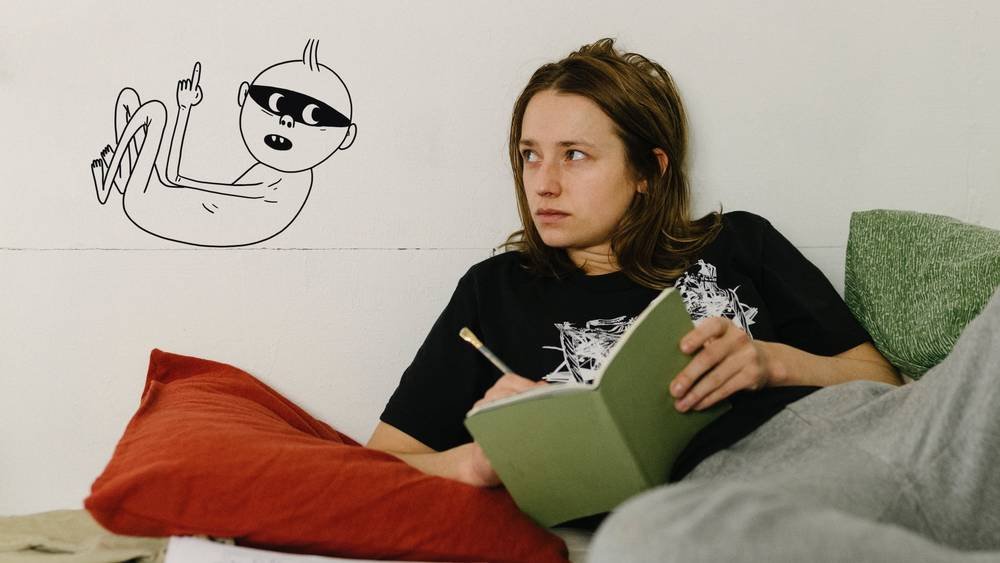
Ninjababy is the fetus comic book character she starts drawing in order to sort out her feelings. Pretty soon Ninjababy is off the pages and interrupting her real life with his own thoughts, needs, complaints, and suggestions. Director Yngvild Sve Flikke brings the character to life with selective animation, and we’re treated to the unusual screen representation of a young woman speaking directly to the baby she doesn’t want. The baby’s daddy, a booty call situation Rakel calls Dick Jesus (Arthur Berning) isn’t exactly an ideal candidate for fatherhood either, and Ninjababy (voiced by Herman Tømmeraas) objects pretty heartily.

Rakel is not your typical protagonist. She’s rough around the edges, reckless and youthfully arrogant. She doesn’t have it together, and not in a cutesy movie way, in a very real, slovenly, rudderless, impoverished way. Ignorant of her pregnancy, she’s been drunk, stoned, and slutty. Yet Flikke manages to balance her wildness with warmth and humour, resulting in perhaps not the most sympathetic of characters, but a realistic and resilient one, grounded in tough choices and a growing attachment.

Ninjababy has some laugh out loud moments and some truly heartbreaking ones. It’s an honest look at unwanted pregnancy, told through the young mother’s perspective as well as the unborn fetus’s, who will not be ignored. Ninjababy is a cool and almost magical take on the situation, but the real treasure is that the film isn’t afraid to put Rakel first, to let her really explore her own wants, needs, and ambitions, and to choose her path accordingly. Thorp is up to the task, showing flexibility and range as she transitions from earnest to sardonic, even skirting among emotional landmines with dexterity. Ninjababy isn’t breaking new ground thematically but its tone and execution are refreshing and unique and exciting to watch.

Berlinale 2021: Albatros (Drift Away)

Laurent is a good cop in a small town in Normandy, where little ever happens. The police work may be on the dull side but his recent engagement to Marie means his personal life makes up for it. Laurent (Jérémie Renier) and Marie (Marie-Julie Maille) have already been together long enough to share a home and a daughter, Poulette (Madeleine Beauvois), who was excited to be part of the low-key proposal. But then things take a turn for the more interesting.

A local farmer goes missing, armed with a rifle and seemingly suicidal after a series of failed inspections that threaten his livelihood. This being a small town, the farmer is known to Laurent, a friend. Laurent is obviously very motivated to have this man found safely, but does his familiarity cloud his judgement? When the farmer is eventually located, it leads to an altercation, resulting in Laurent discharging his weapon in an effort to prevent the farmer from taking his own life. Laurent kills him.

The aftermath is as messy as you’d expect. Everyone agrees it was an accident, but was it reckless? Negligent? The farmer’s sister obviously thinks so; she’s suing both Laurent and the force. Thrown into self-doubt, recrimination, and emotional turmoil, Laurent takes off on a journey he must take alone. Which, honestly, is where the film lost me. Up until it veers off into a very different direction, I was enjoying this slow-burn character study. Renier kept things dignified, stoic but just expressive enough to hint at upheaval behind the façade. Unfortunately, director Xavier Beauvois muddies the water with some confusing and unnecessary subplots, taking away from the power and potency of Renier’s performance.

Albatros’s final moments redeem some of its earlier mistakes but there’s no way the film needed to be two hours long, which seems to dilute the urgency and impact of what should have been the movie’s central themes. Albatros is a good idea unevenly executed, not quite saved from a stellar star performance.

Jiang Ziya

In the war, fierce warrior Jiang Ziya’s mission is to take down the fox spirit clan leader who instigated it, but before he can execute that nine-tailed fox demon, he finds an innocent child possessed by the fox spirit and won’t let her be killed. As punishment, the Grand Master banishes Jiang Ziya to the mortal world, because everyone knows gods shouldn’t show kindness, they’re all about the greater good. In the mortal realm, Jiang Ziya spends ten years despondent, because ugh: Earth. Major bummer. Anyway, he makes friends with the little amnesiac fox spirit girl, and a Tiger God, and together they go on an adventure to figure out how to save the kid’s mortal soul.

The nine-tailed fox demon, though, threatens the very fabric of humanity. Ooooh. Tough decision, folks. Should he follow the will of heaven, killing the demon thus condemning the girl, or find his own path to redemption. Any bets?

The animation in Jiang Ziya (also called Legend of Deification) is pretty stellar, with excellent world-building. It’s almost reminiscent of a video game, all spastic violence and not a lot of character development. That’s not necessarily a problem if you love big thunderous punches though.

Jiang Ziya is a popular Chinese mythological figure; the plot is loosely based on the novel Investiture of the Gods by Xu Zhonglin. It is a follow-up to 2019’s Ne Zha (but don’t worry, it’s nowhere near as complex) and the second installment of the Fengshen Cinematic Universe, which have been pretty consistent so far, a nice way to celebrate Chinese culture, and a cool exploration of what makes a true hero.

Fans of this style of animation will certainly be pleased. Jiang Ziya gives non-stop action and stunning visuals, and a story you just won’t get anywhere else.

Sophie Jones

Sixteen is already a difficult age, with lots of challenges to navigate, but Sophie Jones has just lost her mother, so the regular rhythms of adolescence are tinged with grief and loss, which somehow makes normal rites of passage seem more trivial, yet each holds the potential power to make her forget, even for a moment, her deep sadness. Sophie (Jessica Barr) is throwing herself rather recklessly from one milestone to another, hoping to pierce through the numbness of grief and feel something, feel anything.

Sophie’s nervous giggle belies the fact that she’s still a young girl, lacking the maturity to handle all that life has dumped in her lap, not that she’s got a choice. Barr herself is still a young woman, a convincing teenager, playing the role with a natural authenticity. She and cousin Jessie Barr co-wrote the script, and Jessie Barr directs, informed by their own experiences with grief.

Sophie’s primary means of coping is boys, of course, who mostly offer comfort mostly of a physical sort. Trying her best to wear a brave face at school and at home, grief sneaks out in unpredictable ways, heightening emotions that are already fully charged. We float through time as if in a fog; the film is mostly muted, visually and emotionally, enveloping us in a very specific, highly intimate universe.

Some may find Sophie Jones to be a slow watch, maybe not the most exciting, but it’s honest in its portrayal of mourning, raw in its loss of innocence, in more ways than one. The Barr cousins prove themselves to be immensely talented, and if you don’t mind a slow-burn character study, this is a very good one.

Berlinale 2021: Petite maman

Nelly (Joséphine Sanz) is eight years old when her grandmother dies. Nelly and her mother (Nina Meurisse) are both sad as they empty her room at the nursing home and say farewell to her elderly friends. Next they meet Nelly’s dad at Nelly’s mom’s childhood home, which also needs to be packed up. Nelly and her grandma were quite close, and the death has taken a toll on them all. But the next day, Nelly’s mom is gone, and only her dad (Stéphane Varupenne) is left to box up an old woman’s life. The sadness was too much for mom, Nelly is told, though mom is often sad, and Nelly is worried that mom might not come back.

While her father works diligently, Nelly explores the outdoors in search of a cabin her mother constructed out of sticks as a child many years ago. In the woods she finds something even better: a playmate. Marion (Gabrielle Sanz) is also eight years old, and is devoting her time to building a little cabin out of sticks. Nelly knows right away who Marion is; it’s her mother, as a child. When Marion brings Nelly back to her house, grandma is alive and well, and 20-some years younger. The girls, who look like they could be twins (and are indeed played by twins), are immediate best friends. Being eight, Nelly doesn’t much care how or why this time anomaly has permitted her such an intimate new playmate, she just takes it at its face value and enjoys the time with her little mother.

Imagine, if your old brain still has any magic left in it, encountering your own mother as a child, when you yourself are also a child. This is such a beautiful, innocent thought experiment I can’t believe I’ve never seen it done before.

Nelly takes full advantage, asking her mother things that are much harder, and sometimes impossible, to broach between mother and child under normal circumstances. And Marion has questions too. “Did I want you?” she asks in all innocence. “Yes,” comes the reply. “I’m not surprised,” Marion responds, while gently stroking Nelly’s cheek, “I’m already thinking of you.”

Writer-director Céline Sciamma infuses this film with such tenderness that I constantly feel like weeping, though the film is not particularly emotional or fraught. The two young actresses are absolute perfection, like little dolls who are made for each other. It helps us to understand that his manifestation is somehow essential to Nelly’s grief and loneliness during a painful time. This is next-level self-soothing and the whole thing is coated in such a thick layer of loving kindness that I’m pretty sure I want some too.

Coming 2 America

It’s been 33 years since pampered African Prince Akeem (Eddie Murphy) first came to America, and in 2021, he will return.

King Jaffe Joffer (James Earl Jones) is getting older, and as he prepares his son Akeem to take his place, he reveals that he has tracked down Akeem’s bastard American son, a son Akeem didn’t know he had, a little souvenir from that trip to Queens more than thirty years ago. Akeem and Lisa (Shari Headley) have three daughters, but women can’t inherit the throne in Zamunda. Fearing instability upon his passing, particularly from General Izzi (Wesley Snipes), King Joffer urges Akeem to go to America and bring home his first-born male heir in order to keep their kingdom peaceful.

As you can imagine, learning that you’re a prince is a bit of surprise, and it’s a bit of a culture shock when Lavelle (Jermaine Fowler) does indeed return to the palace with the dad he never knew, with Mom Mary (Leslie Jones) and Uncle Reem (Tracy Morgan) in tow to add a little…flavour to the royal proceedings. Akeem has selected a bride for his son, the alluring and diplomatically wise choice, Bopoto, daughter of General Izzi. But it is the palace groomer Mirembe (Nomzamo Mbatha) who catches Lavelle’s eye. As every man becomes his father, Akeem finds himself in the position of forbidding Lavelle’s love match and enforcing the political one. Akeem was supposed to be different when he was king but it looks like he’ll follow in his father’s footsteps, for better of worse.

This movie isn’t a remake but it’s awfully close, following the events of the first film like they’re identical twins, even repeating a lot of the same jokes. Murphy reassembles the entire team and there’s no denying this sequel is an extreme act of fan service and that Eddie Murphy himself is having a grand old time reliving his youth and revisiting a pivotal time in his life and career. The result is surprisingly watchable. Is it great? No. But it’s fun and familiar improving on the first, delivering a more modern and more quickly paced comedy. Murphy and director Craig Brewer work well together, but since both are mega fans of the first film, they’re content to coast on its fumes. Ultimately Coming 2 America is 110 minutes devoted to remembering how great Coming To America was. It’s a cast reunion with some great costumes and some fun cameos. It’s a celebration 33 years in the making and if you were a fan of the first, you’re walking away happy.