Greyhound

When the Americans were finally self-interested enough to join WW2, they needed a lot of boots on the ground, and some in the air, and a few if by sea.

Captain Krause (Tom Hanks) is in command of an escort force protecting an Atlantic convoy consisting of 37 Allied ships on their way to Liverpool. They’re passing through the Mid-Atlantic gap, so called because no antisubmarine aircraft are able to reach them. They’re on their own. Still three days out of range from protective air cover, they intercept German transmissions. It is likely U-boats are near. This is merely the start of 13 back to back covers (or 52 hours) on the Greyhound’s bridge as Krause fights to save his ship, protect those in his convoy, and rescue those who succumb.

As a war movie, director Aaron Schneider makes very effective use of his 90 minute runtime, keeping the focus on a very intense combat. It’s basically a race against time, a fight for survival until they reach precious, essential air cover once again.

But the reason Greyhound really shines, as did its source material, The Good Shepherd by C. S. Forester, is in its fascinating and intricate character study of the man behind the wheel. Captain Krause has been a career Navy officer for many years. His seniority is unquestionable, but in truth, this is his first wartime mission. The other captains are younger and junior to him in rank, but they’ve been at war for two years already. Although we see him act in competent and level-headed ways, we are also privy to his self-doubt. The combat is relentless as the minutes and hours tick by, Krause unwilling to leave his post, and only the kindness of a mess attendant (Rob Morgan) ensures he doesn’t go hungry.

Hanks adapted the material himself, and though we never see the guy make an acting misstep, he is clearly suited to this character, slipping on the captain’s skin as if it were a comfortable, monogrammed slipper. You feel his fatigue, and inklings of inferiority, but with the weight and fate of an entire fleet on his shoulders, he never gives less than his best. The constant danger is exhausting, the many snap judgments that must be made while in command are overwhelming, and above all, we see Krause struggle with his conscience – muttered prayers for the souls on board, but also a refusal to celebrate enemy kills, a necessary part of war perhaps, but one with which Krause is not entirely comfortable. It’s a facet rarely explored in war movies and Hanks is up for its portrayal, but cleverly, the points are merely plotted, the lines themselves drawn by the audience.

I expect nothing less that complete satisfaction from the material Hanks is choosing, and he’s so unvaryingly good it’d be almost tedious if it wasn’t so wonderful. And this, too, is wonderful, and not even annoyingly so. Hanks truly is a master and Forester’s carefully observed novel cannot be over-rated.

Dreamland

Last month I dove into the depths of horror in honour of Halloween, and among the gems, I came across Crawl, which literally had me asking: has anything good ever happened in the crawlspace beneath a house? Aggressive alligators with a taste for human flesh had me thinking no, but in Dreamland, a teenage boy named Eugene finds just about the best thing ever: Margot Robbie. I would crawl over quite a few alligators for Margot Robbie. So, it seems, would Eugene.

Like all of the people in his small Texas town, Eugene’s (Finn Cole) family is struggling to get by at the unfortunate intersection where the Great Depression met the Dust Bowl. As luck would have it, Allison (Robbie) is a wanted criminal, a sexy bank robber with a bullet hole in her leg who needs to hide out and rest up for a few days. Can Eugene help? He can. But Allison’s got a ten thousand dollar bounty on her head, and that will go a long way to help his family survive the famine. But she is a very sexy bank robber and he is a very teenage boy. So he hides her in the barn.

For a gangster movie, Dreamland is extremely slow. Extremely. And if it wasn’t for Robbie’s performance, I would probably say don’t watch it because it’s a little boring. But that Margot Robbie, she’s something else. And she’s something besides sexy, too. She’s talented. She strings us along, weaving her tales to paint herself as the helpless victim, and Eugene as her potential saviour. Allison uses her powers of seduction to get what she wants. I dare you to take your eyes off her.

Director Miles Joris-Peyrafitte signals his unreliable character with a heavy filter on his flashbacks. I can’t can Robbie the unreliable narrator because the movie has one of those too, which is a few too many cooks in the kitchen, but just enough boobs in the shower, and you know what they say: boobs always win.

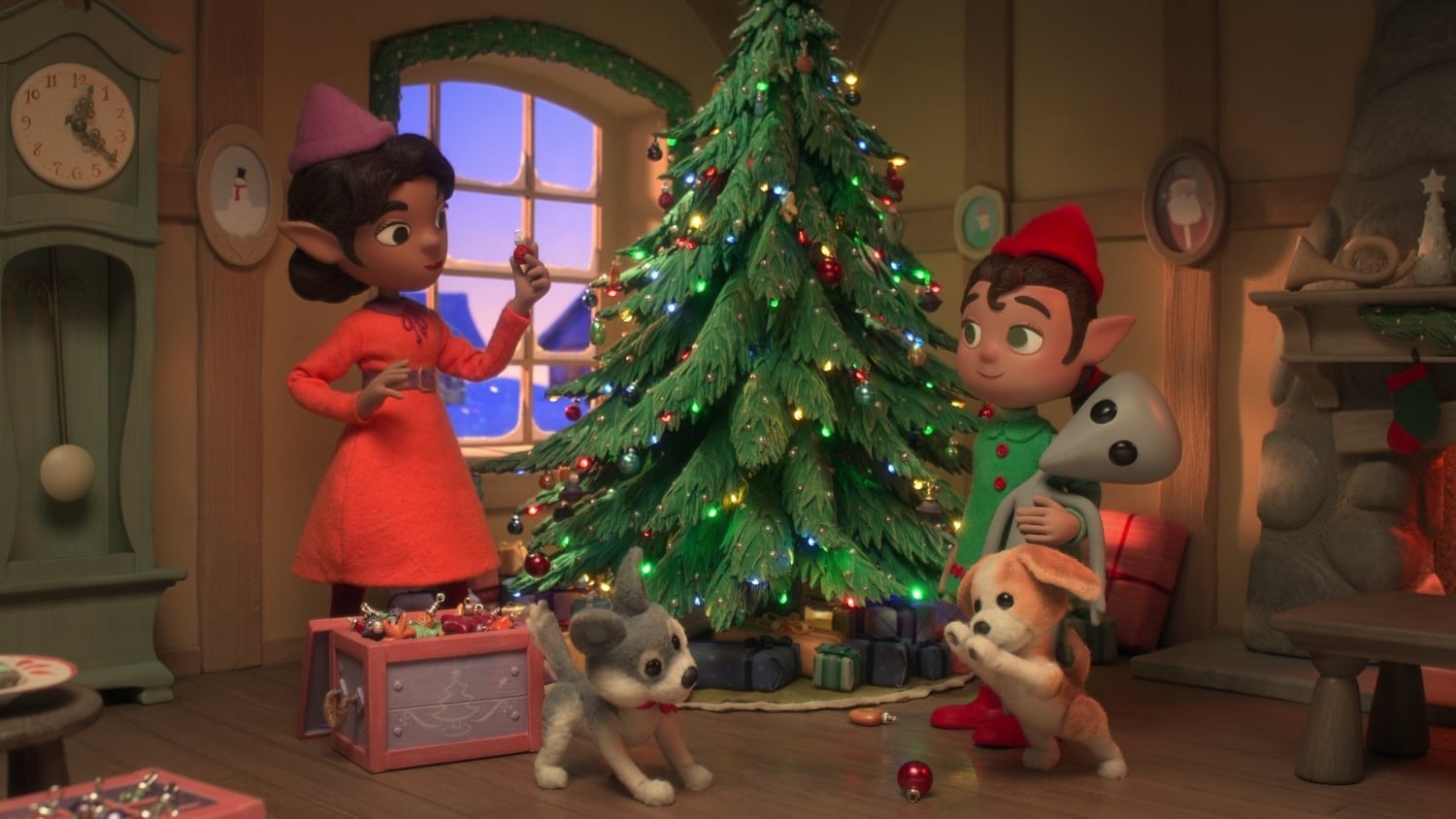
Alien Xmas

Holly (voiced by Kaliayh Rhambo) and her parents are elves in the North Pole. In fact, Holly and her mom are – brace yourselves for this – puppy elves! As far as I knew, elves just hammered wood into bulky toys on an assembly line. Manual labour? No thanks. But puppy elves! It makes sense: plenty of people get new pups for Christmas, and Holly and her mom make sure their fur is all fluffy and cute, and they’ve got bows around their necks, doggie essentials for the holidays. I’m making way too big a deal out of this considering it’s a throwaway detail in the movie, but I can’t believe I’d never thought of it, and that I’ve been wasting my life this whole time.

Anyway, Holly’s dad is an inventor elf and he’s been working overtime on a new sleigh that would cut Christmas Eve delivery time by 90%. Except it is Christmas Eve, or pretty near, and his prototype’s still not working. He can’t be with his family, so to appease his daughter he hands her what he thinks is a doll.

In fact, the doll is actually an alien named X. X comes from a race of dull, kleptomaniac aliens who steal everything – and he’s the first wave in attempt to steal earth’s gravity.

It’s a stop-motion sci-fi holiday offering from the Chiodo brothers and executive producer Jon Favreau. Many of us grew up watching iconic TV movies like Rudolph and Frosty, and this is Netflix’s attempt to bring that kind of nostalgic Christmas viewing into our living rooms once again, with a 21st century twist.

The Klepts are aliens who have no longer have any concept of joy, but they take inspiration from humans – humans on Black Friday, specifically, who rush into stores frantically at 4am to buy cheap TVs they don’t need.

The Chiodos worked on the stop-motion portion of Favreau’s Elf back in 2003 (in fact, you might recognize a couple of “cameos”) and they were eager to collaborate on this tribute to beloved family holiday viewing. Like those golden age episodes, Alien Xmas is a tight 40 minutes, but a fun watch that’ll put you in the giving spirit.

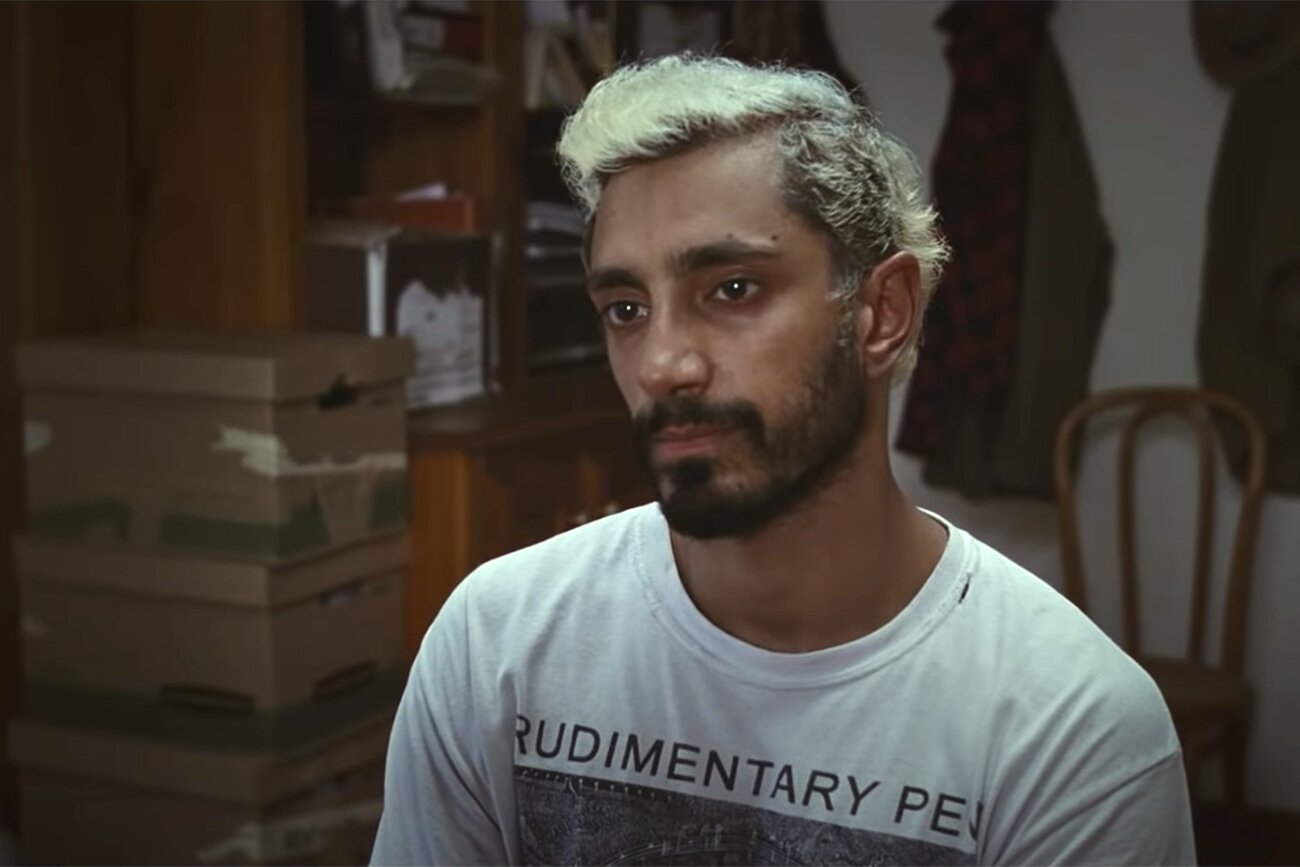
Sound of Metal

Ruben (Riz Ahmed) is a heavy metal drummer. He and girlfriend Lou (Olivia Cooke) are in a two-person band and they just love to bang on shit and make noise. They travel the country in their Airstream; it’s not a glamorous life or a well-remunerated one (yet, there are talks of an album), but they’re happy. Which means the universe is hiding around the corner waiting to deliver a great big wallop.

One day, Ruben wakes up deaf. It has likely been a bit more progressive than this, but this movie doesn’t document it, it just dumps us into his sudden new reality, which clearly takes him by surprise. The verdict: his hearing’s not coming back. A cochlear implant may give him some approximation of hearing (and a bill for $80 grand regardless), but Ruben is deaf, and it’s permanent. As you might imagine, being a transient drummer in a largely unsuccessful band does not come with insurance. Desperate in his new deafness, Ruben is of course fixated on the miraculous-sounding implant, but the reality is that for now, he just has to learn to live with his new situation. He’s still in denial, and he’s depressed, and Lou worries that his sobriety is about to be compromised, but traditional meetings, and even his sponsor, won’t be much help if he can’t hear them. Which is how they wind up reaching out to Joe (Paul Raci), who runs a deaf community and is an addict himself. The community has everything Ruben needs right now: a safe space to learn to be deaf. The only problem is, it needs to be a fully immersive experience, cutting him off from the rest of the world, including Lou. Ruben hasn’t just lost his hearing. He’s lost his love, his home, his music. He is a wayward soul who doesn’t know how to begin to grieve, let alone cope.

Though Ruben isn’t exactly a demonstrative person, we sense how profoundly changed his life is; his reactions feel authentic if unhelpful, and we can’t honestly say we wouldn’t do the same ourselves. Ahmed’s commitment to the role is evident in every frame; he spent 6 months learning to drum, which his character can only do for about 6 minutes of film time. He also learned American Sign Language, a vital skill not only for his character, but for communicating with his deaf colleagues on set. In his directorial debut, Darius Marder, who co-wrote the screenplay with his brother, Abraham, knew the value of seeking out deaf actors for deaf parts.

Ruben is reimagining his entire identity, which can obviously be a scary process. Ahmed allows himself to be vulnerable on screen as he tries to absorb his new realities. Acceptance is key, but its path has such rough terrain. Told from a hearing perspective, or at least a former one, Sound of Metal is an interesting bridge into the deaf community. But it’s also at its just one man’s struggle with self-acceptance. He needs to let go of his past to reimagine his future, but as we all know, that’s easier said than done.

Sound of Metal is in select theatres now and will be available digitally and on demand December 4th.

The Princess Switch: Switched Again

In the first movie, Chicago baker Stacy (Vanessa Hudgens) traveled to the kingdom of Belgravia to participate in a royal baking contest with her friend and sous-chef Kevin (Nick Sagar). While there she runs into Lady Margaret of Montenaro (also Hudgens), fiancee to Belgravia’s prince Edward (Sam Palladio), and they are thunderstruck by how much they resemble each other. Why not take advantage? Lady Margaret has been desperate to experience like as a “normal person” and Stacy is apparently weirdly obliging, so they switch places, Stacy wasting her short European vacation sitting in a castle while Margaret gets to experience the world outside its walls. Of course we all know what happens next: Stacy falls for Edward, who was never right for Margaret, and Margaret falls for Kevin. By the end of the movie Edward and Stacy are married, and Kevin and Margaret seem to be headed that way as well.

In its sequel, Switched Again, prince Edward and princess Stacy are visiting their friend Margaret in Montenaro where she’s going to be crowned queen on Christmas. Sadly, she and Kevin have broken up, their lives just too different and their goals not aligning, but feelings are still there even if Margaret’s chief of staff Tony is sniffing around. Kevin agrees to attend her coronation “as a friend” but with sparks reignited, Stacy and Margaret agree once again to switch, leaving Stacy to do the boring prep work while Margaret is free to spend some quality alone time with Kevin. But there’s a catch! A third lookalike, cousin Fiona (Hudgens again!) shows up in Montenaro, but she’s not exactly there to lend support. Fiona’s burned through her fortune and looking for more. If she can pose as the new queen long enough to transfer some royal funds, she’ll be set for life.

Can Kevin and Margaret’s love endure her royal duties? Will prince Edward ever get laid? (Did I mention that Edward’s sole purpose this entire movie is to roam around the castle horny? He’s SO horny, which is a dangerous condition to be in when there are 3 ladies who all look like your wife.)

This movie knows better than to take itself seriously. It’s the most outlandish soap opera you’ve ever seen, and it’s set at Christmas! The costumes are gorgeous, the set dressing is over the top, and it feels like almost anyone can marry royalty if you mill around on a cobble stone street long enough. It’s exactly the kind of escapism needed in 2020, and if it’s not a good movie (and it’s not a good movie), it knows what it is and it delivers. You’ll want to check it out on Netflix ASAP.

Happiest Season

Someone literally accused it of being the hap-happiest season of all, but that’s not always the case, is it? Edward Pola and George Wyle wrote It’s The Most Wonderful Time of the Year specifically for Andy Williams to have something original to sing on the holiday episodes of his show. The song boasts hosting parties, spontaneous visits from friends, universal social gaiety, spending time with loved ones, sledding for children, and roasting marshmallows as prime causation of holiday happiness, but not only do these things not guarantee joy, rarely does a Christmas song mention the other side of Christmas reality. The dry turkey, the overspending, the cranky kids, the ubiquitous pine needles, the dangerous driving conditions, the kids table, the inevitable disappointment. While the happiest seasons are happy in the way described by Pola and Wyle, the worst seasons are distinctly terrible in their own ways. Happiest Season tells us about Abby’s.

Abby (Kristen Stewart) isn’t that into Christmas, but girlfriend Harper (Mackenzie Davis) is, so Abby makes the effort, pawning off her holiday pet-sitting duties to pal John (Daniel Levy), and spontaneously joining Harper on her trip home for the holidays. Abby’s never met Harper’s family, so this is a pretty big deal. Big enough that Abby plans to propose to Harper over Christmas dinner since the season means so much to her, making it the first of many happy holidays together. Except.

Except it turns out that Harper isn’t out to her family, and she’s been lying to Abby about it. Frantically confessed at the last possible moment, she implores Abby to keep her secret, and to lie about her own sexuality as well, because dad Ted (Victor Garber) is running for mayor in Homophobe, USA, and we wouldn’t want to hurt his campaign. Actually, it seems Harper’s sisters Sloane (Alison Brie) and Jane (Mary Holland) also govern their lives in order to best impress their parents. Ted and Tipper (Mary Steenburgen) make no bones about expecting perfection, playing favourites, and rewarding success with affection. When Harper arrives, mom Tipper literally says “You get more and more beautiful every time I see you. Did you bring concealer?” And Harper’s the favourite! It’s not a great situation to be walking into, but Abby reluctantly agrees with the fateful line “It’s 5 days – how bad can it be?”

You’ll have to tune in to Hulu on November 25, 2020 to find out just how bad it can be – and then be thrilled, surprised and titillated when it gets even worse.

Happiest Season is a comedy but as a rare LGBTQ holiday romance, it also tells a stark reality: that Christmas (and other obligatory family time) can be really hard on queer people whose families aren’t accepting. Kristen Stewart literally gets shoved back into a closet in this movie, which isn’t exactly an uncommon occurrence. Gay members of the family may be forced to suppress foundational facets of themselves, to deny lovers and celebrate separately from partners. And that’s the “lucky” ones who haven’t been outright rejected and ostracized. It isn’t a happy time for everyone, and it gets increasingly unhappy for Abby.

John is the unsung hero of Happiest Season, the friend Abby can call when things get emotionally turbulent, the friend who will always champion her happiness, the friend who will show up for her when things get tough. Daniel Levy, recently named one of People’s Sexiest Men Alive (and how!), is great in this, as he’s great in everything. But truly, this is an ensemble comedy and it succeeds on the backs of many fine performances. Mary Steenburgen plays Icy Snob to utter perfection, Mary Holland is lovably awkward and hopelessly clueless, Aubrey Plaza has a small but sweet part – even your favourite drag queens, Ben DeLaCreme and Jinkx Monsoon have a campy cameo. But most of all: Kristen Stewart. I do believe even Stewart’s harshest critics (and they are harsh) would have to admit she’s natural and lovely and relaxed in this role, but she’s also able to communicate with subtle signals that she’s going through more than she says. As a supportive girlfriend, she understands this is difficult for Harper, but as a woman with self-respect, she’s uncomfortable quashing her authentic self. While Harper and her competitive sisters are clashing in the kitchen, and at the mall, and right into the Christmas tree, Abby’s conflict is internal. And Harper’s dilemma might feel painfully familiar to some – whether to choose Abby, or her family – and the accompanying fear that in trying to have both she might lose both.

Director Clea DuVall wrote the script along with Mary Holland but they aren’t delivering some gay powder puff Hallmark movie. They haven’t shied away from the tough truths of queer Christmas, but they do manage to pull it all together into something that is as entertaining as it is festive.

I Am Woman

I am woman, hear me roar
In numbers too big to ignore
And I know too much to go back and pretend
Cause I’ve heard it all before
And I’ve been down there on the floor
No one’s ever gonna keep me down again

Oh yes, I am wise
But it’s wisdom born of pain
Yes, I’ve paid the price
But look how much I gained
If I have to, I can do anything
I am strong
I am invincible
I am woman

I grew up just knowing the lyrics to Helen Reddy’s I Am Woman, the way I just knew my own name. I grew up in a house of 4 sisters and 1 mother and there was nothing we liked better than putting on some Whitney Houston and singing/dancing along. But there were only two songs my mother ever sang unprompted, unconsciously, without a backing track: Amazing Grace, and I Am Woman (one of the many things she has in common with Barack Obama). At the time I didn’t think much of it. I knew the lyrics but it sure as heck wasn’t playing on MTV. And anyway, weren’t we already a female-led household of strong sisters doing it for ourselves? I didn’t think about why both my mother’s brothers went to university while she, even more intelligent and competent, was a high school drop out who got engaged to a trucker at 16, married at 18, and had me at 20, by which time she’d given up her “career” (hairdressing) to raise children at home – she had 4 of us by 26 and did it all alone, even when she was diagnosed with cancer. During divorce proceedings she gave up spousal support to keep our childhood home; as a single mother with no work experience or credit history of her own, she would have struggled to keep the 5 of us in a 2 bedroom apartment, and she failed to qualify for a loan to replace our rusted out van. Now I have to wonder: was my mother, a stay at home mother and perpetual caregiver, a secret feminist? All evidence points to yes, and not so secretly either. She taught us to “carry our own canoe” (that sounds like a particularly Canadian brand of feminism), to work hard enough to be able to support ourselves, to live with someone before committing to marriage. MY MOM WAS A FEMINIST? I grew up in the 90s, when feminist was a dirty word, but that didn’t mean the struggle for equality was dead, and clearly Helen Reddy’s 1971 song was still an anthem to women raising their own daughters now.

Helen Reddy wrote a feminist anthem in response to the sexism she encountered repeatedly in her life and career. It will not surprise you to know that the (male) record executives didn’t get the song and didn’t want to include it on her album. Or that her (male) husband stole all her money and put it up his nose.

Tilda Cobham-Hervey is absolute perfection as Helen Reddy; she’s the reason to watch. Director Unjoo Moon sticks pretty close to the usual biopic formula, but a magical spark from Cobham-Hervey is all this film needs to ignite not only a strong performance but a stunning musical performance as well.

Helen Reddy was the Katy Perry of her time. She was the first to make us roar. But while Perry’s pregnancy was announced to fanfare and unveiled rather dramatically in a music video, Reddy’s motherhood was considered a liability and proof she could never truly commit to her career. Fighting sexism has turned out to be a very long struggle and sometimes we need to look back in order to appreciate just how far we’ve come.

The Outpost

In northern Afghanistan circa 2006, the Americans had a series of outposts to promote counterinsurgency and “connect with locals”. Camp Keating was nestled in a valley surrounded by Hindu Kush mountains in an attempt to stop the flow of weapons and Taliban fighters from nearby Pakistan.

The camp is an exhausting place to be with near constant firefight. It’s also nearly indefensible, and what personnel survive quickly burn out. But this movie primarily covers the Battle of Kamdesh of October 3, 2009, one of the bloodiest for US forces in the war in Afghanistan. They were assaulted by hundreds of Taliban insurgents who breached the bases’s perimeter defenses in just 48 minutes and lit the outpost on fire. There had been a systematic failure to adequately support the base, but the the troops on the ground repulsed the attack “with conspicuous gallantry, courage and bravery.” Due to a lack of available aircraft and density of terrain, help was slow to reach them – most didn’t arrive until after the 14 hour battle was over. The small contingent of American troops lost 8 soldiers that day, with 27 more wounded; those that survived did so thanks to bombers arriving to coordinate airstrike.

If you like war movies, this one is well-made. If you’re prone to migraines, this one’s constant gunfire makes it a major trigger. Once the battle starts, it’s unrelenting, and it wasn’t exactly easy going before that either. The intensity is real, and the realism is ugly.

The movie thinks that SSG Clint Romesha (Scott Eastwood) is our hero, but he’s just the guy who wrote the book. Caleb Landry Jones, the much much better actor, as SPC Ty Carter, is the guy you can’t take your eyes off of. I dare you to try. Aside from Jones, I won’t say the acting impressed me much. The lesser roles are sprinkled with real-life soldiers, but they aren’t shouldering enough to ruin anything. It’s the Hollywood royalty who’s mucking things up, and I don’t just mean Scott Eastwood, though I definitely do put him first on my list. A smolder is not enough, Scott. A famous dad apparently is, and he clearly shares a tendency toward a certain kind of film as his old man. Milo Gibson is of course Mel’s son. James Jagger belongs to Mick. Will Attenborough is the grandson of Richard. Scott Alda Coffey is grandson to Alan Alda. And of course Orlando Bloom is Mr. Katy Perry. No one need win a role by merit here!

The unit from Combat Outpost Keating became the most decorated, though I doubt that’s much comfort: 27 soldiers were awarded the Purple Heart for wounds sustained in combat, 37 were awarded the Army Commendation Medal with “V” for valor, 3 soldiers were awarded the Bronze Star Medal, and 18 others the Bronze Star Medal with “V” device for valor. Nine soldiers were awarded the Silver Star for valor. Two were later upgraded to a Distinguished Service Cross. The Outpost is a fitting tribute to the kind of hard work and heroism that earn those medals. For me, it was too much. It was non-stop violence while I felt no emotional connection to any of the characters. But I’m confident that fans of the genre will find a lot to like here – a stunning, expertly and respectfully made modern war movie.

A Rose For Christmas

After a series of heart flutters, Big Al is sidelined at his business, so daughter Andy (Rachel Boston) takes over the duties of building a float for this year’s Rose Parade, which jubilantly kicks of the Rose Bowl Game on New Year’s Day. The floats are made entirely of organic material and thousands of roses, so as you can imagine, it mostly comes together in just a few weeks. This year Andy’s building a float for a Chicago law firm trying to grow their global presence, and the big boss sends Cliff (Marc Bendavid) to supervise the build.

Cliff would rather be in the new Asian office, or anywhere else really, but in Andy’s float barn, where he’s attempting a hosile takeover, he’s really just in the way. The two despise each other immediately as they engage in a useless power struggle for supremacy over a team of…oh wait, it’s just the two of them. And that’s a problem. Apparently the solution is to find volunteers, although it’s rather late in the season for that, and Cliff is of course extremely and vocally critical of Andy’s flyer technique, but his corporate recruitment techniques fail miserably, and they’re lucky if a dozen people show up to do the work of…well, apparently many more. And Cliff, still very very firmly holding down the role of Business Prick, insists that only the top 10% are worth keeping. I, meanwhile, am still scratching my head over Andy and Big Al’s business model…they are charging Cliff’s law firm to build this float, yet they have no employees and rely entirely on volunteers who are lucky to be paid in coffee and pizza for literal round the clock work…AT CHRISTMAS. The few volunteers they do manage to snag come with their own set of problems – colour blindness and allergies, to name the most pressing – so there will be lots of opportunity for Andy and Cliff’s managerial styles to clash. And yet somehow also they fall in love.

A Rose For Christmas is a standard Hallmark Christmas movie, but I enjoyed this one nearly 10% more than others of its ilk merely because of its unique setting, allowing me to learn a little about the Tournament of Roses Parade and how it comes together, even if the story isn’t exactly to my liking. When I visited New Orleans I was thrilled to visit the warehouse where Mardi Gras parade floats are made year round (by paid employees), and in Las Vegas I’ve often had the chance to see elaborate floral designs, but the Rose Parade has the distinction of blending the two in a beautiful if provisional display. Everything on the float has to be organic, so in addition to the 20 000 roses (on a single float!), other natural decoration like walnut shells, lima beans, and coconut husks are used as well. Like many things over the past several months, the 2021 Rose Parade is cancelled due to COVID-19 (amazingly, this parade has been marching since 1890 and was only cancelled a few times before, in 1942, 1943 and 1945 for WW2), but you can recapture a bit of the magic with A Rose For Christmas, which uses real parade footage and recreates a float that actually travelled down Colorado Boulevard just a few years ago.

Run

Chloe (Kiera Allen) is a super smart teenager who’s hounding the mail carrier every day for some news of her college acceptances. With many medical challenges including diabetes, a heart condition, and paraplegia, Chloe’s been home schooled all her life by devoted mother Diane (Sarah Paulson), but that’s left her incredibly sheltered, with no friends and no other family, she has very little contact with the outside world.

Which makes it extra difficult when she begins to suspect that her mother might be dosing her with medication she doesn’t need…or medication that’s deliberately making her sick. The more Chloe tries to get to the truth, the more her mother tightens the vise. It’s not until Chloe is trying to escape that she realizes her mother has carefully constructed a prison.

Run is an incredibly effective thriller. Diane is inarguably deranged and psychotic but Sarah Paulson underplays her to such perfection that we never truly know what to expect from her, and the ambiguity makes her feel even more threatening because of it. Allen, a newcomer to the big screen, is surprisingly strong playing her opposite. Director Aneesh Chaganty runs a tight ship; Run’s pacing leaves you breathless, it keeps ramping up the stakes and then exceeding your expectations. Chloe is obviously a vulnerable young woman but Allen plays her with such grit and strength she’s got more staying power than you can possibly imagine.

If the film has a flaw it’s that it suffers from the heavy presence of the Munchausen by Proxy subgenre recently. But while the plot may be a little familiar, the suspense is taut and nerve-jangling, to say nothing of the worst terror of all, the one that speaks to our most base fear: that a mother could turn on her child, and hurt her.

Run is available to stream via Hulu on November 20th.

Big ups to Aneesh Chaganty who prioritized casting a disabled actor and found a very strong one in Kiera Allen. Even bigger props for writing a character, not a disability.