Grief is universal. We lose a close friend, a beloved pet, a family member, and we mourn. We don’t always do it well, or with dignity, or in the same way as someone else, but we allow ourselves to feel and to grieve the absence of that person in our lives. We might grieve the loss of objects as well: a child’s misplaced stuffed bunny, an album of photos lost in a fire, an old car that served us well, a memento lost to time, a memory that eludes us.
In The Magnitude of All Things, director Jennifer Abbott is granting us the space and the opportunity to grieve the loss of nature, of environment, of our healthy planet. We are watching her die; Abbott likens it to losing a loved one to cancer. There are many losses to grieve along the way: perhaps you’ve been moved by the bleaching of coral reefs, or the extinction of a species, or the destruction of the rain forest. But this disease is man-made, and it does have a cure. We’ve just been witholding it.
There is no lack of documentaries about climate change and the environment, but this one carves out a unique niche in exploring the emotional and personal aspects of climate change and what it means to us, not as a species, but individually, as animals that are part of an eco-system that is rapidly disappearing.
This title is available to stream as part of the Planet In Focus film festival – buy tickets here and watch at home.
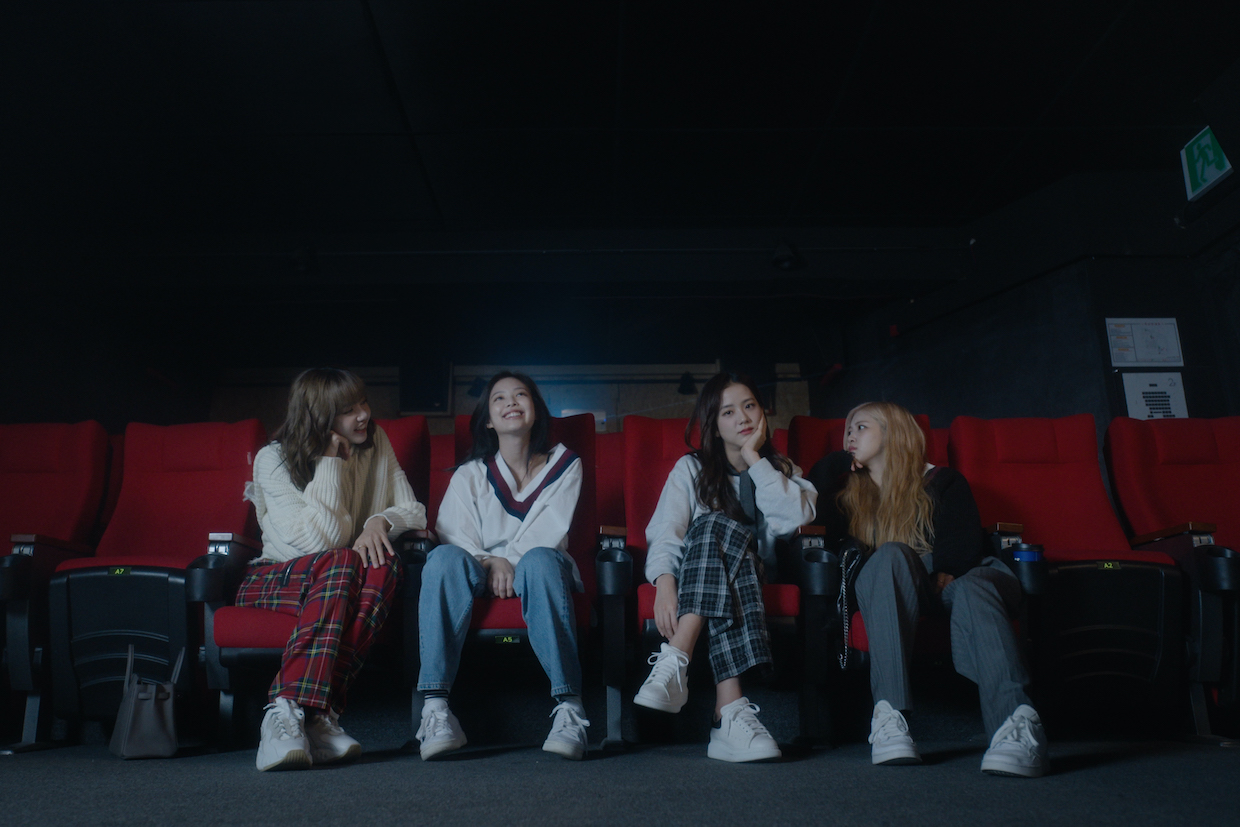
BLACKPINK doesn’t like to be thought of as “just K-pop” and while you can quibble about the “just” part, the “K-pop” is hard to argue.
South Korea’s government rather brilliantly decided to really invest in its arts some years ago, knowing that they could be the nation’s most important exports. With considerable funding and a business approach, today its video games, television series, and movies have global appeal and success; last year Parasite took home the top Oscar, the first time ever for a foreign-language film. However, one could argue that music, namely K-pop, is South Korea’s greatest triumph, and I’m not just talking Gagnam Style. BTS fever has replicated the same fervour as Beatlemania once did. BLACKPINK became the first K-pop group to play Coachella. South Korea has a well-oiled machine churning out pop acts, and Blackpink may be more than K-pop, but they’re certainly also representative of it.
Children as young as 11 may enter this special training academy of song and dance and while most will eventually be asked to leave for failing to make the grade, others may last as long as a decade in the system, honing the skills and the look for eventual distribution into a group. Nothing left to chance, nothing unorchestrated, individuals are evaluated on a weekly basis, and asked to perform as a group in a rotating roster until something gels and a foursome such as Blackpink is plucked from obscurity for pop superstardom.
This documentary weaves in home videos of each of the girls, audition reels, practice footage, and video from their massive world tour to recreate the massive few years they’ve just had. And of course, hearing from Jennie, Lisa, Jisoo, and Rosé, we get to know a little bit about the personalities behind the carefully curated personas. It’s nothing that YG Entertainment (the parent company that recruited, trained, and launched the group, among others) doesn’t want you to know, but if it’s not quite as “all-access” as billed, it’s still plenty informative and loaded with charm.
BLACKPINK: Light Up The Sky will give K-pop novices a look behind the scenes at the grueling selection process of putting together a group, and will please fans with previously unseen footage and personal interviews with each member. You can watch it now on Netflix.
Hungry for more? Check out BLACKPINK review and music on Youtube.
Manhattan is famously unlivable in the summer, and the wealthy have used the Hamptons as their personal playground and easy summertime escape for generations. This cozy town had about 60 000 year-round residents, from diverse social and economic backgrounds. Many live below the poverty line, trying to eke out existence in a place that has skyrocketing cost of living. Their modest population quadruples in the summer months, making it very difficult to serve all people equally.
To the ultra-wealthy, the 1% of the 1%, the Hamptons is a rustic vacation spot offering rural charm and first-class amenities. The Shinnecock Indian Nation has been continually marginalized on their own ancestral land as newcomers change the landscape to suit their own needs, with an emphasis on opulence, consumption, and greed. Not much thought let alone respect is given to the Shinnecock land, its resources used up and artifacts neglected.
White people have edged Native peoples out of their land all over the world. Many years ago, local government “compromised” by leasing the Shinnecock 3000 acres of their own land to them for a contract period of 1000 years. In flagrant opposition to their own proposal, they then stole them back to build a commuter railroad between Manhattan and Montauk, the Shinnecock helpless to fight against the move since, as non-citizens, they weren’t even allowed to sue. That land now holds multi-million dollar homes and several world-renowned golf courses built on sacred burial ground, “borrowing” the Shinnecock name, and using a stereotypical “chief” as a logo.
Meanwhile, the regular citizens of the Hamptons can no longer afford to stay in their houses with monstrous property taxes. The working class who serve as care-takers for the massive estates and the service industry who wait on the ultra wealthy tourists commute in from increasing distances, priced out of living anywhere near where they work.
The Shinnecock Hills Golf Club is about to host of the U.S. Open and members of the Shinnecock Nation stage regular protests, hoping to bring their struggle to national attention. Filmmaker Treva Wurmfeld is in the thick of it, where profit and protest clash, values collide, and ugly inequality is exposed.
This and other terrific titles are available to stream through the Planet In Focus, an international environmental film festival.
Truffles are a delicacy, one we are happy to indulge in when they’re being offered at a nice restaurant, and they’re only offered at a nice restaurant. At home they’re wildly out of our price range, or at least any responsible grocery budget, and we made do with truffle oil, for special occasions.
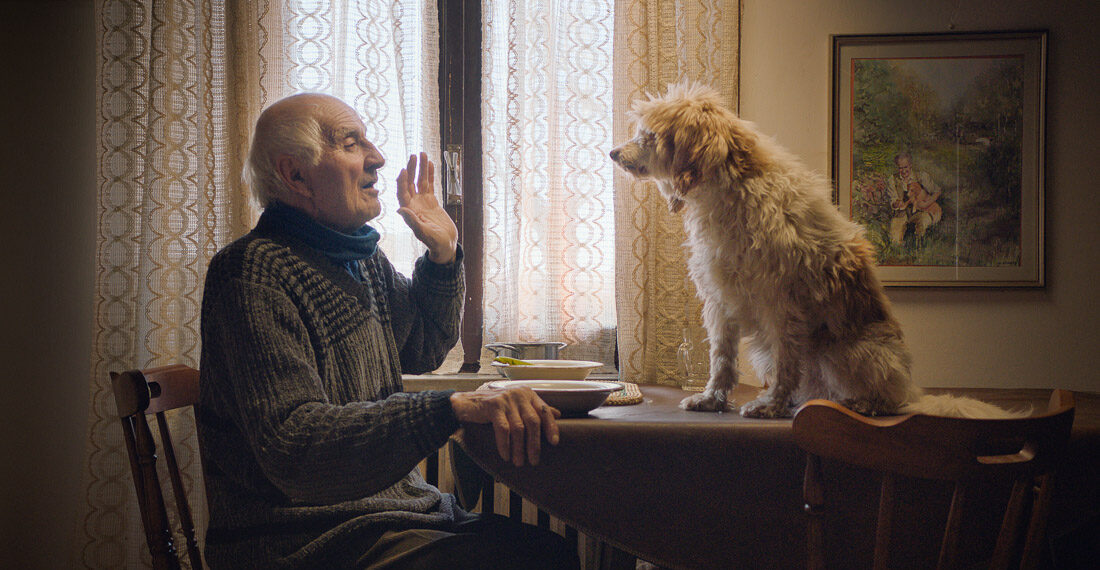
White truffles, trifola d’Alba Madonna (“Truffle of the White Madonna” in Italian) is found mainly in the Langhe and Montferrat areas of the Piedmont region in northern Italy, and most famously, in the countryside around the cities of Alba and Asti. They can go for $4000USD per pound in a good season; in one where truffles are more scarce, like they were a couple of years ago, a set weighing just under 2lbs went for $85,000. Why so expensive? Well, they’re nearly impossible to cultivate. You basically have to find them growing wild in nature, but they grow underground with no above ground marker, nearly impossible to find. Plus, once they’re out of the ground, they start losing mass, so they need to go from underground to on the table in less than 36 hours. Truffle hunters are a rare, and possibly a dying breed. It’s mostly a group of aging men, their particular skill set nearly as elusive as the truffles themselves. They comb the countryside woods with their trusty dogs, looking to find their pot of gold.
This documentary focuses on the eccentric octogenarians who have made this treasure hunt their trade. Directors Michael Dweck and Gregory Kershaw saturate us with romantic notions of nature while the old men charm us as they play for the camera. The camera is an impartial audience who listens to stories attentively and doesn’t roll its eyes like grandkids do.
These old men guard the secrets to their success like precious gems. Tradition is of the utmost importance, but modern challenges like climate change and deforestation are whittling away at the time-honoured art and science of truffle hunting. And as the truffles grow more scarce, and therefore more valuable, the competition stiffens. Competitors are even leaving poison out for the dogs.
And let’s face it: the dogs are the real stars here. Aurelio and his pal Birba steal the show; they are each other’s faithful companions, their relationship touching and sweet. Carlo is a passionate and feisty forager but his wife doesn’t like him hunting at night any more. Titina is always by his side, ever loyal, even in church they both receive a blessing for a bountiful season ahead. Gabby Sergio is lucky enough to have two gifted canine friends, Pepe and Fiona, and crafty enough to go to great lengths to keep adversaries off his scent.
This unique and sometimes curiously comical documentary slyly draws a picture of a wildly diverging socioeconomic class between those who hunt the truffles and those who consume them. But despite the high demand and the vast business machinery driving the market, the real elites are the dwindling number of people who can actually supply those tasty little treasures. Some resources just aren’t renewable.
We saw this at TIFF, but it will also be the closing night film at the Devour! Food Film Fest.
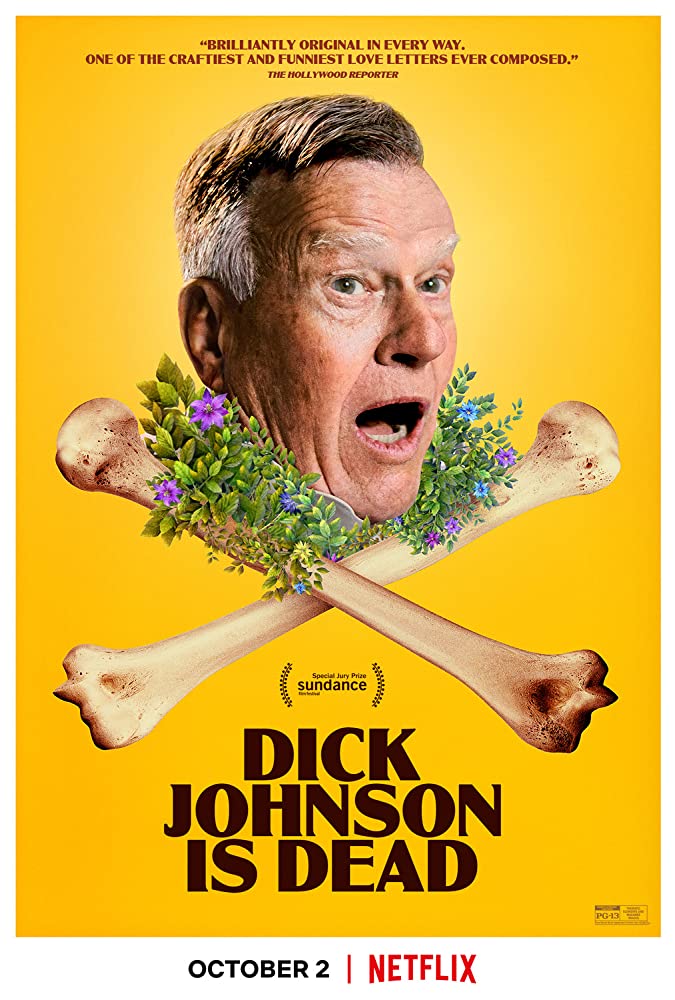
Kirsten Johnson is a documentary film maker who is grappling with her father’s dementia and his mortality. With her mother already gone and her father slipping away piece by piece, she decides to confront his death head-on by filming him in the various ways he might die (a fall down the stairs, an air conditioner falling on his head, etc). Dick, who is visibly declining in health but still relatively sound in body and mind, clearly shares his daughter’s dark sense of humour. Having given up his independence, he lives with her and her children in a New York City apartment where every day a new death is enacted.
Kirsten Johnson finds the thought of her father to be very painful and almost surreal. Perhaps she is training herself toward that eventuality, familiarizing herself with the concept of his death, shocking her system into, if not acceptance, then at least preparedness. Dick Johnson still has some vigour. He is game for this experiment, less for himself and more out of a parent’s attempt to soothe and prepare his child, even if she’s already in her middle age. It’s a balm he can offer even as the balance of their relationship has recently been recalibrated. But during an elaborate staging of his funeral where tearful friends make testimony and tribute to Johnson’s life, it’s clear that he is moved, appreciative if sheepish of all the attention which is not usually lavished upon a man whilst he is still alive.
It took me a while to appreciate this documentary, as it felt so personal and self-indulgent. However, our culture is so afraid of death that we seldom approach it in such an open and honest manner, and it was refreshing to reflect on what mortality, legacy, and memory really mean, and what they’re really worth. Unfortunately, daughter Kirsten will not likely get to direct Dick Johnson’s death when it really does come. If anything, I hope this film is a reminder that death is rarely controlled and goodbyes should never be put off.
Chloe (Denise Gough) and Mickey (Sebastian Stan) are a couple of American ex-pats living in Greece when they meet at a house party on Friday night where Mickey’s DJing and Chloe’s about to lose her purse. Well Mickey’s living in Greece anyway, and Chloe’s on her way out, back to America, back to real life. So one last fling wouldn’t hurt, right? She can pack in the morning.
Except the fling does kind of hurt, mostly because they get arrested for it, and she doesn’t end up packing because they somehow parlay their one night stand into an impromptu, living together, relationship. So fun!
On another Friday night they go dancing, and on another they plot to get visitation with his son, and on another they ruin a friend’s wedding, and on another they host a doomed dinner party. There are a lot of Friday nights in any given relationship, well, anywhere from quite a few to too fucking many. Eventually every couple has a Monday or two. How will Chloe and Mickey weather theirs?
Unfortunately the answer is: who cares? Also: they deserve each other, but I also am deeply invested in them both being cripplingly lonely and unbearably depressed. And maybe a little: maybe they could be impaled on a parade float memorializing all their bad haircuts while their third grade math teachers dressed in creepy clown costumes tossed beads laced with their allergens onto their twitching corpses? Something in that vein.
I mean, they’re not evil or anything – you don’t even see them spoil cookies with raisins. They just both wildly selfish and way too old for that to still be cute, or forgivable. Greece is their Never Never Land. I forget whether that’s the Peter Pan one or the Michael Jackson one, but either way I mean it as an insult.
Sorry, Argyris Papadimitropoulos. I can tell you thought you were making a sexy party film but you created such loathsome characters I wished this was more of a quiet mortuary film. You know, people fall off yachts and are never seen again ALL THE TIME. Well, relatively. In this particular case, not often enough, obviously.
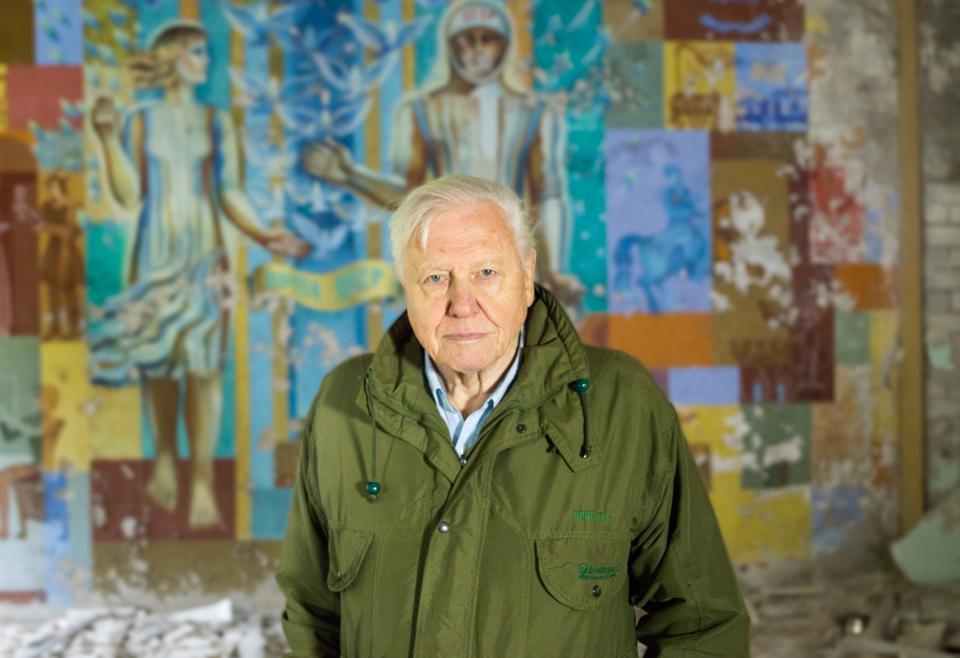
For most of us, David Attenborough is the voice of nature. His soothing narration has taken us across the globe, from the coldest arctic waters to the hottest deserts to the wettest rainforests. The 93 year old Attenborough has spent his whole adult life exploring the world and documenting nature. During that time, he has seen drastic changes, and he has taken it upon himself to try to help us avoid an impending disaster.
Themes of conservation are not new to Attenborough’s documentaries but Netflix’s new A Life on Our Planet has no time for subtlety. Clearly, Attenborough feels he has no time to waste, which is less a function of his age and more an indication that catastrophe is imminent. Wisely, Attenborough’s warnings are interspersed with the beauty of our world, to show what is at stake and what could be saved or lost depending on which path we choose. Even better, Attenborough lays out a plan for saving ourselves, which he presents clearly and sells by pointing out that our planet is going to keep spinning, but our place on it is not guaranteed.
Unfortunately, Attenborough’s pleas will probably be dismissed by those who deny the changes that Attenborough, and all self-respecting climatologists, are documenting. Instead of ignoring the problem, I wish the deniers would be honest in their selfishness, and admit they don’t want to make sacrifices to preserve the future for coming generations. Of course, that would require them to admit they’re bad people, so I’m not holding my breath.
It is up to the rest of us to take action. A Life on Our Planet shows us how to do it, and more importantly, Attenborough reassures us that we can still undo the damage we have caused. A Life on Our Planet manages to be hopeful without minimizing the problems we face. It is a nature film that is about us, and it is a fitting capstone for Attenborough’s life work.
Danny (Alejandro La Rosa) is a bartender and used to be a bit of a party boy. His friends are queer, his best friends are drag queens, and they always stop by to invite him out. For the last year or so, Danny has passed. He’s had some trauma and no longer feels safe going out. However, the community’s epic Brooklyn Annual Enema Party (it’s exactly how it sounds) is just around the corner, and everyone’s trying to pump Danny up for the big day. A new love interest named PuppyPup (José D. Álvarez) makes him want to give the nightlife a second chance. Unfortunately, it becomes an even harder sell when it seems a serial killer is stalking the Brooklyn queer community and making drag queens disappear.
The Killer Unicorn gets his nickname in the least original way ever – he wears a unicorn mask. And not much else besides a pair of sequined booty shorts. The queens must like what’s in those shorts an awful lot because even though there’s a known Killer Unicorn on the loose and murdering their friends, a good many of them still agree to meet in dark, isolated places for a hookup – even when texts contain both unicorn and knife emojis. That’s practically a confession!
Writer José D. Álvarez can’t write. He can’t write dialogue, and none of director Drew Bolton’s cast can deliver it, so at least there’s some equanimity. It makes for a pretty garbage movie, and that’s even before you consider the vicious slander foisted upon the unicorn community. Who would want to desecrate these magical, beauteous creatures? They burp glitter and toot rainbows and yet some cretin has besmirched the good unicorn name. How dare you cast aspersions? HOW DARE YOU?
Apparently the script was written with specific queens in mind; it’s a shame Álvarez has such talentless friends. I don’t want to talk out of turn, but it would seem that RuPaul has turned the NYC drag family upside down and given it a good shake – even Drag Race’s losers go on to have stellar careers, but the leftovers in Brooklyn are clearly the dregs. Still, I don’t wish death upon them, and certainly not the particularly gruesome deaths this sick fuck in a unicorn mask inflicts. But aside from a few inventive kill scenes, there’s not much to recommend this film and plenty to warn you away.
But there a couple of you, just a couple, who are curious enough about the booty shorts and maybe even the enemas, who are going to watch it anyway. I see you. And what the heck, go ahead, enjoy it, you weirdo.
Gloria Steinem is 86 years old; I wonder how she feels about getting the biopic treatment while she’s still alive. She was a leader for the American feminist movement in the 60s and 70s. She is a journalist, activist, and the co-founder of Ms. magazine.
At least four actors portray Steinem in the various stages of her life, including Julianne Moore and Alicia Vikander. Director Julie Taymor clearly wants to impress us with a litany of Steinem’s experiences, influences, and achievements. There are a lot. So many they start to lose their power, they start to feel less real. Which is counter-productive to the goal of celebrating Steinem’s life. Reduced to a mere character, we never get a complete sense of who Gloria is as a person, Taymor gets trapped in an achievement-oriented cycle that feels more like separate segments in a shared universe than a narrative running like a river through a single life.
Individually, a lot of these chunks work. The talent is there, and the story-telling is inventive. Unfortunately, Taymor’s flair as a director doesn’t seem suited to Gloria’s no-nonsense attitude. There is almost certainly an interesting story here, I’m just not sure this script ever had a firm grip on it, despite Taymor’s accumulation of gifted actors and clever staging. It feels more invested in painting a fuller picture of history than it serves Steinem’s particular place within it.
Emma (Mia Maestro) and young daughter Sofia (Giulia Patrignani) are visiting her fiancé’s mother in southern Italy, which sounds like a dream scenario, sun kissed summers with wine and pasta, but it turns out this particular corner of southern Italy is less romantic getaway and more death by curse.
Turns out, Emma’s fiancé Francesco (Riccardo Scarmarcio) hasn’t always been a stand up guy. In his youth he got a girl pregnant and instead of a) doing the right thing or b) breaking up with the woman and sending a monthly cheque or c) becoming a deadbeat dad, he opts for d) use some black magic on her to get rid of the problem.
Obviously her evil spirit has been lingering, waiting for the perfect moment, and its malevolent intentions have targeted young Sofia as its victim. It starts with a tarantula bite and gets oh so much worse. To make matters even worse, it’s unclear to Emma, who isn’t fluent in poultices and incantations, whether her in-laws can be trusted or whether the old women and their evil eye are actually the source of the curse.
Is that the actual plot? Probably not. I was only paying half attention because the movie was so dull and boring. It’s supposed to be a horror movie, but the specifics of the situation are so vague and the relationships between characters so unclear that it’s hard to invest in the story or the consequences. I don’t think Sean was faring much better because his only quibble was with the freshness of the tarantula blood. So….
Maybe something was lost in translation. That seems possible. Maybe. I’m not convinced. In fact, I’m still a little resentful that this movie tried to scare me but didn’t try to entertain me. That’s a terrible equation and I’m not impressed to be involved. If you’re willing to be a variable, you can insert yourself on Netflix. Just don’t blame me if The Binding adds up to a pretty generic horror movie.




 ASSHOLES WATCHING MOVIES