The Kid Detective

He’s no relation to the Holmes clan, but when he was 13, Abe Applebaum solved the case of the missing fundraiser money. He was such a good little sleuth the townspeople celebrated his successes and rewarded him with his own office. He was the toast of the town, beloved by all, his parents impressed by his initiative, the newspaper chronicling his triumphs, but then he got a case he couldn’t solve. A young girl named Grace went missing and Abe couldn’t find her.

It was an unfair burden to put on a 13 year old kid. The townspeople never said as much, not directly, but young Abe knew what they expected, and he felt the weight of their disappointment when he wasn’t able to crack the only case that really mattered.

Now Abe (Adam Brody) is in his 30s, still working out of the same office the town bequeathed him as a kid detective. He’s occasionally contracted to find missing cats or track down secret admirers, but there isn’t much money in it, and his parents are both embarrassed for him and tired of supporting him. He drinks to numb the self-pity but the hangovers leave him even more despondent. At least until a wildly optimistic high school student hires him to find out who brutally murdered her boyfriend.

I had very few expectations for this film so colour me surprised when I actually quite liked it (what IS the colour of surprise?). It was genuinely funny, it poked fun at the genre and at itself, it felt fresh and unexpected. Brody was well-cast and entirely believable as a man-boy who hasn’t left behind his childhood obsessions. The film struggles tonally, swinging between banter-y, smart-alecky comedy and the sobering facts of an actual murder investigation, which Abe is very much unqualified to conduct. But this guy’s had a cloud hanging over him for the past 20 years and if there’s a chance at a silver lining, he’s going whip out the old deerstalker and oversized magnifying glass and work this case like his life depends on it. And maybe it does.

Mr. Jones

Gareth Jones, Foreign Affairs Adviser to the British MP (and former prime minister, I take it), David Lloyd George, makes a room full of stuffy MPs laugh when he tells them they’re already at war. They roll their eyes at him, but he’s not wrong. Mr. Jones (James Norton) has a knack for allowing very little to escape his observation. Out of his government position, Jones returns to freelance journalism and he knows just where to go: the Soviet Union.

It’s the early 1930s and Mr. Jones is very suspicious of the Soviet Union’s boasting over the radio about its spending spree. What is funding all these new improvements? Gareth Jones wants to know. But upon arrival he finds journalists very thoroughly and very strictly quarantined to Moscow. Things are plentiful, the people seem well, but none of the other journalists seem bothered by the carefully curated perspective, and none are digging deeper. Walter Duranty (Peter Sarsgaard), the Pulitzer-prize winning  Moscow bureau chief of The New York Times, is pointedly unperturbed. Mr. Jones isn’t buying it, and with a little help from Duranty’s assistant, Ada Brooks (Vanessa Kirby), he’s able to sneak out of the city. Everywhere he went, he found famine, vast and severe. Man-made famine; in fact, man-made genocide.

Now called the Holodomor, a term which emphasizes the famine’s intentional aspects such as rejection of outside aid, confiscation of household food, and restriction of population movement. Several million Ukrainians died. At the time, Jones was threatened by Soviet authorities to smother his reports. The world, still sympathetic to Bolshevism, wasn’t ready to hear the truth. He broke the news in the western media, and they largely rejected it. The Kremlin denied it, as did their puppet Duranty. And yet Jones pursued that truth at great risk to himself.

Early on in the film, there was a shot of sunlight filtered through a sow’s ear, and I thought “God, this is going to be unbearably beautiful, isn’t it?” Credit to cinematographer Tomasz Naumiuk, of course, but in the end it wasn’t so much unbearable as welcome and necessary. It’s not just the unyielding parade of suffering and starvation, it’s the somewhat disjointed way the story is told. Director Agnieszka Holland preserves human horror better than most, perhaps better than any, but she’s less adept at telling Gareth Jones’s story in a cohesive manner. There may be room for improvement, or at least a tightening of the reins, but like Jones himself, Holland’s work reminds us of how important it is to witness, and to remember.

Simple Passion

Hélène (Laetitia Dosch) is a French woman, a mother, a professor. The movie’s IMDB synopsis describes her lover’s career as “Russian diplomat” but diplomat must be a French euphemism for thug. Alexandre (Sergei Polunin) is, at best, a Russian diplomat’s shady head of security, maybe. And it wasn’t the prison tattoos that gave it away, it was that damn wispy mustache.

We can assume they have nothing in common because they almost never speak. We know little about her, actually, and even less about him. She’s single, he’s married (to a wife back home in Russia, presumably). He’s not young, but a little younger than Hélène. And he’s got all the control in this relationship, because he calls her, when he’s horny and available, and she drops everything, even her son, to be with him for a few hours in bed. Granted, they’re passionate hours, and the camera spends as much as 90% of the movie roaming up and down the contours of their bodies as they fuck in nearly all the positions there are for fucking, and a few I’m pretty sure they threw in just see if I was paying attention. These two make the jerks in 50 Shades of Whatever look like prudes.

So I may not know much about Hélène, but I do know she loves that sweet D. She’s gotta have it. She gets nothing out of this relationship but frustration, heartache, and on the lucky days, a good dicking. But on the other days, she starts coming apart. She starts making more demands on his time, which only makes him pull away further, but she can’t help it, she’s obsessed. She’s addicted. She even tries to quit him, and finds she can’t. She has no resolve when he’s around. It’s rather undignified. Rather pathetic, really, to watch a smart and polished woman lose her shit over a guy with a wispy mustache.

Writer-director Danielle Arbid adapts Annie Ernaux’s novel for the screen, and there’s no doubt she is a fan of the material, and eager to put real flesh on those bones. However, her keen eye and high tolerance for erotica aren’t enough alone to explain Hélène’s intoxication for this man. The pounding of their bodies is enthusiastic but hardly tender. Without sustained conversation, or an emotional connection, this relationship feels cold and transactional. The only way this movie moved me was when I realized these colleagues had been humping each other raw for weeks if not months. It didn’t shock me, it didn’t turn me on, but most egregiously, it didn’t convince me.

Vampires Vs. The Bronx

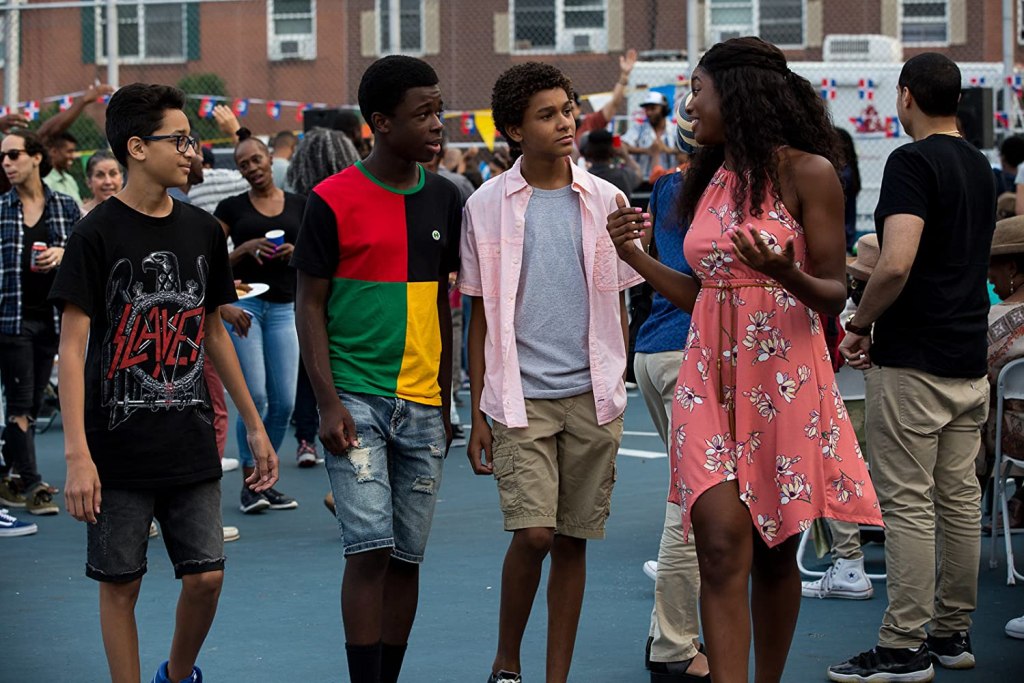
Best friends Miguel (Jaden Michael), Bobby (Gerald Jones III), and Luis (Gregory Diaz IV) are cresting their last wave of childhood growing up in the Bronx. They roam the neighbourhood independently but aren’t yet exempt from the dreaded mother yelling something embarrassing out the window for everyone to hear. Miguel is very plugged in to his neighbourhood; everyone calls him the Little Mayor, and it’s even what his (hand-drawn) business cards say.

Miguel’s current project is saving the neighbourhood bodega – lots of local businesses have been closing up shop, and a mysterious real estate company is swiftly encroaching. White people with canvas bags are merely the first step; gentrification is next. Except these white people are paler than most, and the renovations they have in mind are even more sinister than Lululemons and Starbucks and Blow Out Bars. Having recently watched Blade without parental supervision, Miguel, Luis, and Bobby are convinced the new neighbours are vampires, but who would believe such a thing? The only ally they manage to make is a neighbourhood teenager called Rita (Coco Jones), who has the distinction of not only being the only one to believe them, but also being a bit older, a bit cooler, and a heck of a lot prettier than our original trio.

Not even Rita’s credibility is enough to convince Moms not to open their doors to new neighbours or bodega owners to close shop. How then will they save the Bronx?

Longtime segment director at SNL Osmany “Oz” Rodriguez directs and co-writes the script with Blaise Hemingway, and together they’ve come up with something rather strange and wonderful. The kid cast is charming and exceptional (special mention to Imani Lewis whose character never stops her brilliant live stream), and the adult cast is fun and unexpected.

The allegory may be told through a very, VERY thin veil, but it’s as clever as it is unmissable, putting a new twist on a very old story. It’s rated PG-13 but the violence is far less graphic than what you’ll find in Blade, the movie the kids proficiently use as a vampire bible (and their rules hold up). As a comedy-horror, it’s a little light on both, but it’s an easy and enjoyable watch for everyone, including families with older kids and tweens, who will likely tolerate it with enthusiasm.

Last Moment of Clarity

Sam’s girlfriend Georgia died three years ago and he’s still carrying around the ring he never got the chance to give her. Through his flashbacks we know that she was shot, and her body burned in a terrible apartment fire that took several lives. But Sam (Zach Avery) doesn’t talk about it. He shuffles around Paris all wounded and haunted, but to his friend and boss Gilles (Brian Cox), he rarely opens up. So it probably comes as a bit of a shock when Sam declares that Georgia (Samara Weaving) is still alive – he’s spotted her in a movie, and despite a slightly different look, he’s convinced that actress Lauren Clerk is actually his dead girlfriend Georgia. After going full stalker online, Sam decides to fly his particular brand of creepy obsession over to Los Angeles where there’s a chance he can do it in person. And he does.

Lucky for him he runs into old high school friend Kat (Carly Chaikin), who is just jaded enough not to be put off by his remarkably strong stalker vibes. In fact, she helps him track down Lauren, who does not answer to Georgia and denies knowing the man with whom she once shared an intimate bubble bath (a VERY frequent flashback). As poor Lauren’s privacy gets invaded time and time again, we start to learn a little more about sketchy Sam and how his troubles extend beyond the one dead girlfriend.

Colin Krisel and James Krisel write and direct, though this is a first for both in either discipline. Between them, they fail to generate a single thrill in what is supposed to have been a thriller. Last Moment of Clarity is not thrilling, nor particularly clarifying, but it is competently made and competently acted. If the movie was a dead girlfriend trying to assume a new identity, it would do a much better job than Lauren as it is unremarkable, indistinguishable, and totally forgettable.

TIFF20: Shadow In The Cloud

When Maude Garrett (Chloe Grace Moretz) boards a B-17 Flying Fortress with top secret documents, the rest of the crew is surprised, and suspicious. Captain Reeves (Callan Mulvey) doesn’t know of any female pilots (it’s WW2, though I’m not sure they’re calling it that yet), and the other guys – Beckell (Nick Robinson), Williams (Beulah Koale), Tommy (Benedict Wall), Finch (Joe Witkowski), Taggart (Byron Coll) – are more interested in cat-calling her and making lewd remarks. None of them had anticipated an extra passenger and they’re suspicious of her documents, but she threatens court-marshals all around and they’re pretty anxious to get their wheels up, so off they go.

The movie takes almost entirely place inside of that plane. Maude is relegated to a tiny gun turret on the bottom of the plane that’s barely still attached, separated from her precious top-secret cargo. Of all the crew, only Quaid (Taylor John Smith) ever comes to her defense, but even he goes pretty silent when she starts babbling about some sort of…creature on the wing. They’re getting more resentful and increasingly skeptical, but they have bigger things to worry about, like bad weather, enemy planes, and their own flying fortress falling apart. And that’s before they discover what’s inside Maude’s top secret briefcase.

Roseanne Liang’s film is the Russian nesting doll of cinema: a monster movie within a horror movie within an action movie within a war movie, a daring and absurd mashup that works more than it doesn’t, surprisingly. It boldly confronts sexism and the super natural all in one go. It is, frankly speaking, sometimes altogether ridiculous. Unapologetically so, I believe. The film goes for broke while Moretz acts her ass off in a jumpsuit that doesn’t even showcase it. Director Liang isn’t afraid to crash and burn the whole thing if that’s what it takes. And as this film’s audience, you should be prepared to suspend your disbelief far above the Flying Fortress’ cruising altitude of 25 000 feet. It’s crazy. It’s completely bonkers. It is thrilling and terrifying and often flat-out bananas. You have to be willing to have fun with it, and willing to go along with a movie that refuses to stay within the bounds of any genre’s strict definition. If you’re in the mood for a quirky horror set piece, allow this one to surprise and delight and terrify you.

American Murder: The Family Next Door

If you have an appetite for true crime, this documentary newly released on Netflix will certainly serve as a hearty appetizer.

It’s a story you may already be familiar with: in 2018, 38-year-old Shanann Watts and her two young daughters disappeared in Colorado and since they were a typical suburban (and need I say, white) family, it made nation-wide headlines. You and I are no dummies when it comes to this kind of disappearance; we all know in which direction to look, and neither the cops nor this documentary waste time on any other perpetrator theories. Director Jenny Popplewell pulls together an impressive amount of footage taken at the time of the investigation (and of the investigation itself), and synthesizes it down to a watchable, digestible narrative. The one thing Popplewell can’t do is make sense of it. Technically, we do know the “reason” by the film’s end, but we can never be satisfied by it. It defies logic that anyone would think this was a good idea and it is immensely painful to know how incredibly unnecessary it was.

And yet, to me, the most intriguing part of the entire documentary is its title.

***SPOILERS***

American Murder

This has become such a frequent M.O. that we have now dubbed this the typical American crime.

Chinese checkers

Dutch oven

French kiss

Canadian bacon

Panama hat

American murder

More than half the time an American woman is murdered, it’s by her former or current romantic partner. In a third of those cases, it was right after a big fight. 15% of these women were pregnant.

Shanann’s partner was by all accounts a devoted husband and father. He provided for his family and said all of the right things. But around 2am on August 13 2018, Shanann is dropped off at home by friend Nickole, returning from a business trip they’d taken together. Footage from Shanann’s own doorbell camera is the last time she’s seen alive. Husband Chris claims they fought about his infidelity and the end of their marriage so he strangled her to death in anger. Her family maintains if that were the case, she would have fought back. They suspect he did it in her sleep. In any case, he wrapped her body in a sheet and loaded daughters Bella, aged 4, and Cece, 3, into the back seat of his truck along with their mother’s body and drove off before the sun was up, just a few short hours later. He buried his wife’s body near his job site, and then quickly killed his daughters as well, dumping their little bodies in an oil well. He had recently met a woman and wanted to be unencumbered to start a new life with her. Shanann was a little over 4 months pregnant at the time of her death.

Considering divorce is also very much an American way of life, it’s impossible to understand why Chris went with any other option, let alone one so gruesome.

He will spend his life in prison for the murder of his wife, their 2 daughters, and their unborn child.

Also spending his life in prison: a homeless man who procured two dime bags ($10 each) of marijuana for an undercover police officer who promised him a $5 commission. Five bucks: the price of a cheap meal. Marijuana: a substance that is legal or decriminalized in many states, and is actually sold by the government in Canada and elsewhere.

Two life sentences, one white perp, the other black.

American justice.

Saint-Narcisse

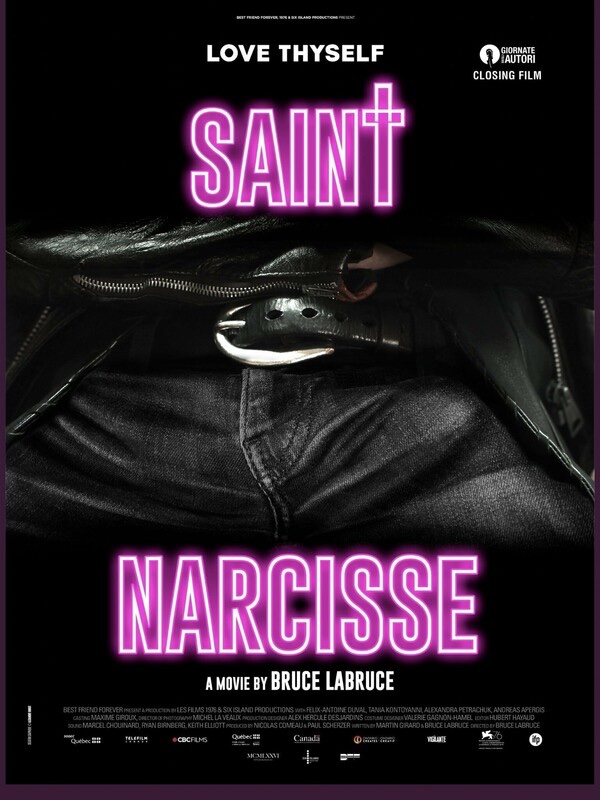
Well, if film festivals didn’t challenge you, it would just be going to the movies. Bruce LaBruce was never going to let that happen though. He’s Canada’s queercore king, the avant-garde and unapologetic gay answer to the punk movement. He famously blends an indie sensibility with gay porn imagery, exploring taboos and limits and putting his audience through an unforgettable adventure, one way or the other.

Dominic (Félix-Antoine Duval) is a young man with an unexpected fetish – himself. His own face and flesh are the only things that turn him on. He masturbates to Polaroids of himself and has never met a reflection he didn’t like. This is one of LaBruce’s signature transgressions against cultural norms, but he pushes that button quick, and moves on to the next. Dominic was raised by his grandmother believing his mother to be dead but new information sets him on a road trip to find her. Turns out she’s a witch, or at least that’s what the locals of Saint-Narcisse call the old woman living in an isolated cabin in the woods, living with a young woman who may or may not ever age.

His arrival finds Beatrice away from her cabin in the woods, but young Irene (Alexandra Petrachuk) is there, brandishing a gun rather than a welcome wagon. Naturally he waits for his mother in the garden, where he gets naked and takes a shower. As you do. But either when the maybe-mother son reunion happens, Dominic’s story still feels incomplete. Beatrice’s (Tania Kontoyanni) story has some pretty big holes in it, but luckily Dominic’s already fixated on someone else – Daniel, a monk in the monastery next door, who Dominic believes is a dead ringer for himself.

Daniel the monk enjoys homoerotic romps in the river with his order of brothers, and to masturbate to flyers of underwear ads while self-flagellating.

If you thought LaBruce was going to let you off easy, you don’t know your LaBruce. He’s going to continue to shock and subvert. But he also rather consciously pushes us to recognize our own role in the voyeurism (It is Not the Pornographer That is Perverse).

The story is a vehicle for naughty and immoral things, for pushing up against explicit boundaries and seeing how far they’ll give. It is not a movie with mass appeal. LaBruce and writing partner Martin Girard have much less interest in story than in shock value. It’s as if they’re daring their audience to look away, and by god they’re going to do everything in their power to win.

The Boys In The Band

Michael (Jim Parsons) is throwing a birthday for his friend Harold. He’s decorated the terrace of his New York City apartment, bought ice for the voluminous quantities of cocktails about to be consumed, and thrown together a guest list he flippantly describes as “all the same tired old queens.” Michael is a screenwriter who spends and drinks more than he should, and both are catching up to him. Michael’s former flame Donald (Matt Bomer) is unexpectedly in town for the event, filled with all the gems he’s been collecting in psychotherapy. Bernard (Michael Benjamin Washington) arrives with knee pads he’s bedazzled and monogrammed himself as a gift, and Emory (Robin de Jesús), a flamboyant decorator serves up what I believe is a lasagna laced with a little something special. Emory’s shared a tense cab ride over with lovers Hank (Tuc Watkins), who’s recently left his wife for Larry (Andrew Rannells), who doesn’t believe in monogamy.

If you’re thinking this birthday party, set in 1968, sounds a little ripe for conflict, you’re not wrong, but you don’t know the half of it. It’s about to be crashed by two unexpected guests: the first is a hooker named Cowboy (Charlie Carver), a big beautiful dummy meant to be Harold’s gift for the night, the second is Alan (Brian Hutchison), Michael’s straight college roommate to whom Michael is not out and asks the others to be discreet as well. Alan isn’t technically invited but shows up anyway, emotional, and well on his way to drunk. And only then does birthday boy Harold (Zachary Quinto) finally show up, chronically late, razor-tongued, cripplingly insecure.

Repressed sexuality and alcohol: a powder keg that’s absolutely, definitely going to blow up, the only question is whether it’ll be before the cake or after.

Joe Mantello directs a rather faithful adaptation of Mart Crowley’s play, allowing it to sit in a period when homosexuality meant so many different things: dangerous curiosity, underground relationships, chosen families, and more. Navigating this landscape is difficult, and each of these characters represents a different perspective, but they’re all just desperate to live life on their own terms. It’s the original cast from the 2018 Broadway revival, so not only is the cast extremely comfortable in the skins they’re temporarily inhabiting, but production can proudly claim that all 9 leads are themselves openly gay men. The ensemble isn’t just talented, but believable as a group with many permutations and entanglements, yet who continue to choose each other and probably always will.

This film is not just a fossil of its source material but a living, breathing thing where pain and expectation are lying in shallow graves, waiting to wound again.