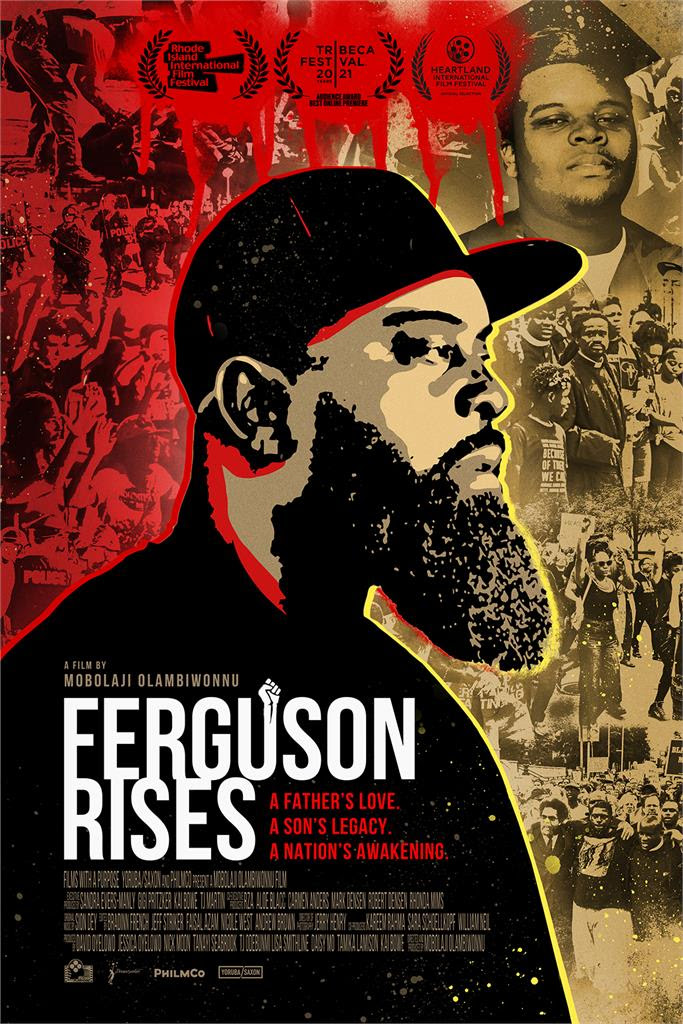
Ferguson Rises

Say his name: Michael Brown.

Michael Brown had graduated high school just 8 days before the police shot him dead. He was planning to study heating and air conditioning repair at a technical college just two days later. Instead, an altercation with officer Darren Wilson, just 90 seconds from start to finish, led to Wilson discharging 12 bullets, 6 of which hit Brown, the last of which resulted in his death. Eye witnesses share conflicting accounts of what happened, but some are certain that Brown took the shots to his front while raising his hands in surrender and saying “Hands up, don’t shoot”. Michael Brown, completely unarmed, lay dead in the street, where his body remained for over four hours.
In the wake of Brown’s murder, protests, both peaceful and violent, continued for more than a week in Ferguson, and the police department’s response was botched, criticized for the tactless insensitivity of their highly militarized response. A grand jury failed to indict Wilson, adding injury to injury and reinforcing a divide in Ferguson based on the shade of one’s skin.

This documentary, by director Mobolaji Olambiwonnu, revisits the residents of Ferguson, a suburb of St. Louis, 7 years later. Michael Brown’s death – the murder of a Black body by a white and racist police officer – was sadly one of many, but his was a rallying point, igniting protests against police racism and brutality in Protests erupted in 170 cities across the U.S., including Seattle, New York City, Los Angeles, and Chicago. But for Ferguson, it was different. It was personal. Missouri was the last state to abolish slavery, and the aftereffects of that oppression are still felt today. While white residents of Ferguson watched protests turn to riots, they expressed disbelief, and disapproval. But Brown’s death and subsequent treatment wasn’t a surprise to Ferguson’s Black community. Darren Wilson wasn’t one bad apple; the entire Ferguson PD was institutionally racist, routinely violating the rights of Black citizens.

Though the Black Lives Matter movement that has sprung up as a result of all these protests does have some white support in Ferguson, there are a number of white people still firmly on the wrong side of right. Brown’s mother and father will tell you what it feels like to live in a community divided over your son’s death. His friends will tell you what it’s like to drive by the spot where he was gunned down. Protesters will tell you what it was like to get on a plane and fly back in time, coming home to a town in Missouri where a white police force was brutalizing Black weeping mothers, shooting tear gas at people filled with righteous anger, using rubber bullets against people trying to express their horror, their abhorrence, their shock, their sorrow.

Many voices contribute to Ferguson Rises, and themes of strength and resilience seem to create a pattern. Black Americans may have suffering and oppression in their DNA, but they’ve got determination in their souls.

I knew this documentary would be an emotional watch, but it feels essential to return to the scene of the crime with a clear head in the pursuit of truth, and perhaps more importantly, real change. We have so little to offer Brown in exchange for his life – this feels like the least we can do.

Dug Dug

Director Ritwik Pareek has a sense of humour about his new film, Dug Dug. “Absurd, bizarre or downright funny,” he calls it, but no matter how weird his film is, “India is far more strange.” Duly noted.

A drunk man weaves his way down the highway, oblivious to his many near-death experiences as his little motorcycle wobbles toward its destination. Finally turning onto a quiet dirt road, it seems as though the drunkard may live, but a voluptuous siren calls his name from a billboard, and the sight of her cleavage is his undoing. The next day his body is scraped off the road and his blue motorcycle with a pink seat is impounded by the police and eventually chained up in their yard. The next morning, the motorcycle is missing – or rather it’s been relocated back to the crash site. And no matter how many times it’s removed, or how well it’s locked up, it always finds its way back there, driverless. It’s a miracle, obviously, so naturally the seeds are sown for a new religion.

Not just religion, but religious fervour, and the commerce/capitalism that so often comes along with it. Pareek expresses this through bright and beautiful montages, a riot of colour and culture, with temples and charities and rituals and offerings and deities springing up out of nowhere like they were inevitable. Pareek’s satire is infectious, often funny, often fun. There’s also just something joyful about his irreverent and inventive style, an exuberance to his colour palette, a fever dream of faith catching like wildfire and spreading even faster. Yet for all this commentary on idolatry and commercialism, the film never feels cynical. Pareek manages to satirize ideology without shaming his characters. It’s a bold and exciting piece of Indian cinema with a wild score that’s almost spiritual itself.

Jagged

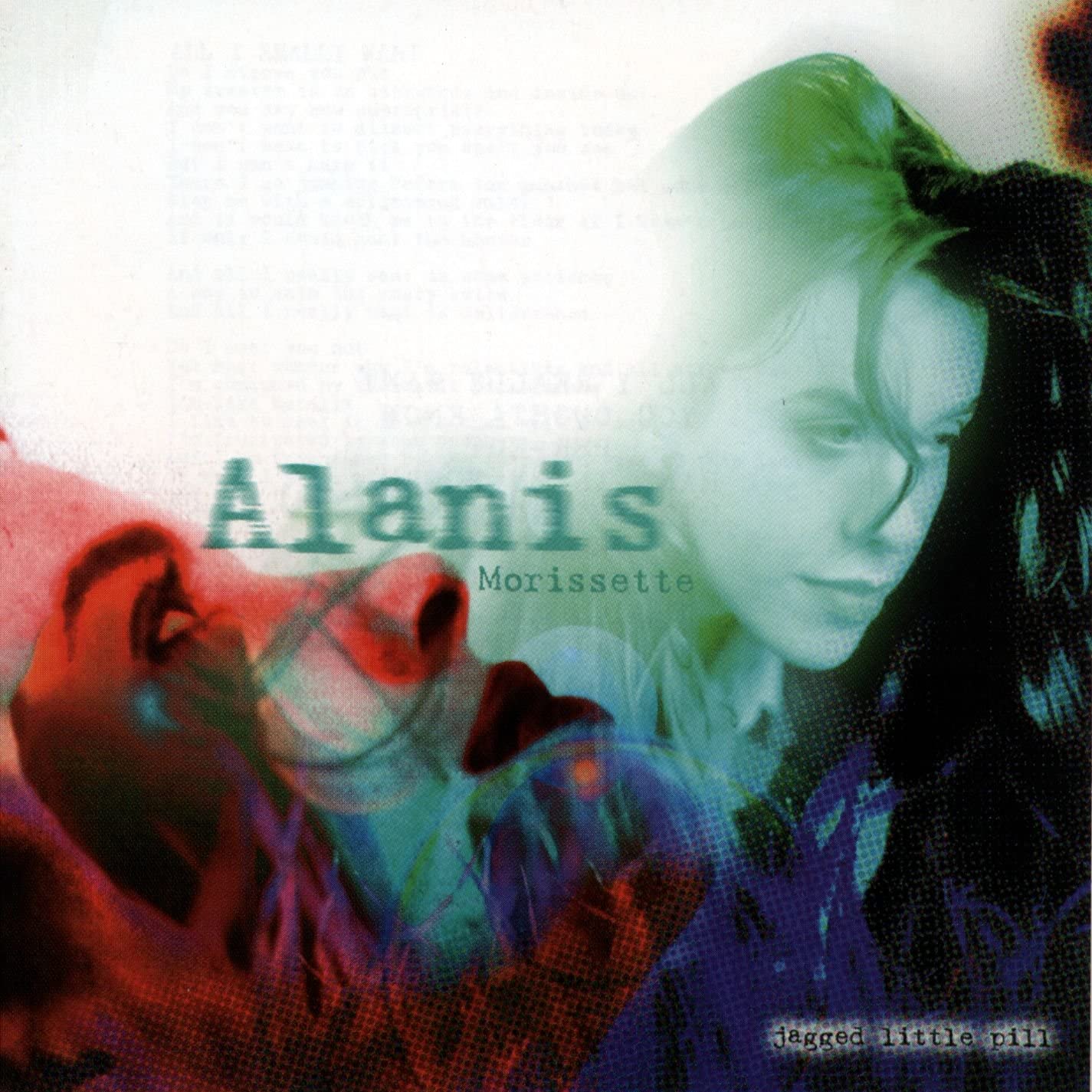
If you were alive in the 90s, you probably had a copy of Alanis Morissette’s Jagged Little Pill. If you didn’t, were you really even living? It won album of the year in 1995, was the third biggest selling album of the 90s, and remains on Rolling Stone’s list of the Greatest Albums of All Time, deservedly. It was a real departure of the time, didn’t fit into what the music industry expected from a young woman. But to the young women listening, it was the vocalization of what we’d all felt. When I first heard You Oughta Know, I related and responded to the aggression and anger in her voice, and sang along even though I was still a kid, had never “been down on” anyone in a theatre or elsewhere, but I knew the sentiment, I understood where she was coming from because I’d either been there myself or was about to be. (Male) critics of the time focused on her anger, baffled that a woman went through more than just tears and ice cream during breakups, but fans listening to the album heard a great diversity of sound and content, almost every song an anthem to someone. (Male) critics balked again when Ironic came out, more concerned with exact definitions than what the song meant, why it was beloved, why it was important enough to become her biggest single on an amazing album.

Director Alison Klayman interviews Alanis extensively, and hears from others in her entourage as well, including Taylor Hawkins, then her touring drummer, presently of Foo Fighters, who admits to using her fame to attract girls, somewhat antithetical to Morissette’s whole vibe. And Glen Ballard, her Jagged Little Pill producer and writing partner, who is still her biggest fan, still enamoured of her talent, of her turn of phrase. Generous, humble, and most surprisingly, non-jealous, here is one man who clearly always respected her as a writer, musician, and star. Shirley Manson, frontwoman of Garbage, talked about how many doors Alanis opened as a successful female singer-songwriter, without taking any credit for herself being a rebellious frontwoman force in the 90s. But mostly we hear from Alanis herself, who tells her origin story, how it felt to find fame and success as a teenager, what her writing process was like, what it was like to tour the world without actually seeing any of it. And finally, she opens up just a little about some of the rumours inspired by those famous lyrics – the bad boyfriends, the sexual abuse, the non-existent childhood.

I enjoyed the documentary because I enjoyed Jagged Little Pill, and revisiting it is to revisit my own childhood in some ways. Klayman told us not to be shy about singing along, not tht I ever would be. I should be ashamed with a voice like mine, yet I usually find an unforgivably high volume at which to shout the words (more or less). I had a sore throat the day this screened for TIFF, which felt like good news for anyone watching with me, but by the time we reached You Oughta Know, I’d already resolved to buy lozenges. Try and stop me!

Well, I’ll tell you what stopped me in the end. It was Alanis herself, who, following the film’s world premiere at TIFF, has said she’s unhappy with the film, called it ‘salacious,’ denied it was the story they’d agreed to, and refused to support it.

“I sit here now experiencing the full impact of having trusted someone who did not warrant being trusted. Not unlike many ‘stories’ and unauthorized biographies out there over the years, this one includes implications and facts that are simply not true. While there is beauty and some elements of accuracy in this/my story to be sure— I ultimately won’t be supporting someone else’s reductive take on a story much too nuanced for them to ever grasp or tell.” – Alanis Morissette

Ultimately, this is her story, and she deserves to have agency over how it is told. I respect her position and I will not be recommending this film.

Jagged is an official selection of the Toronto International Film Festival 2021.

The Other Tom

Elena ( Julia Chávez) is an exhausted single mother, working overtime to provide the necessities, constantly pleading with son Tom for peace and quiet. Tom (Israel Rodríguez Bertorelli) is not a peace and quiet kind of kid, his lack of focus an even bigger problem at school than at home. At first, the ADHD meds seem like a godsend. Tom is more focused, better behaved. But an accident makes Elena aware of some pretty significant side effects, and she ultimately decides to stop the meds.

Elena is surprised to learn that the choice to medicate her son or not may not be hers. Between the disapproving doctor who won’t consider non-medical interventions, and the school who doesn’t want to deal with an unmedicated Tom, social services are called in, and Elena’s custody is threatened.

Inevitably, a movie like this serves as an indictment of our over-prescribed culture, but The Other Tom is also a mother-son story at its heart. Tom is just a little boy struggling to fit in. He doesn’t want to be bad, but he’s restless and angry, lonesome for his estranged father. Elena struggles too, struggles to be a good mother, to be patient, to make good choices, to keep her temper in check, to shield her son from harmful labelling, to juggle the needs of her son with the state’s attempt to pathologize and tranquilize his disruptive behaviour. And if we’re being honest, struggles to bond with a troubled son whose constant disturbances weigh on her heavily.

Behavioural disorders are draining for the whole family. They interrupt the usual intimacy and trust that breeds a healthy relationship. Elena loves her son, but some days it’s hard to like him. In allowing him to be unmedicated, Elena is also confronting her own inadequacies and must learn to cope with Tom’s challenges and to reach out to him on his level. Love means accepting each other’s authentic selves, and no one in this film, or in life, is perfect.

Writer-directors Rodrigo Plá and Laura Santullo realize the importance of the central mother-son relationship, and they nurture it with strong, grounded performances by Chávez and Bertorelli, who remind us of the humanity pulsing around the essence of this issue. Overtaxed teachers, greedy big pharma, overzealous social services…they all fall away when we see Tom’s big eyes go round when another grown up dismisses him. There is no ‘other Tom.’ There’s just a kid who’s scared and confused and wants to fit in. It’s about time the grown-up figure out how to help him.

The Other Tom is an official selection of the 2021 Toronto International Film Festival.

Montana Story

Estranged siblings Cal and Erin return to the ranch where they grew up. Their father is dying; he wasn’t a good man so neither needs a tearful bedside goodbye, they’re more keen to bid farewell to the land they once loved, the horse they used to ride, the housekeeper who’s kept in touch.

Cal (Owen Teague) and Erin (Haley Lu Richardson), once close, no longer speak, their troubled childhoods breeding resentment rather than unification. But this death watch provides the opportunity to finally come to terms with what they’ve lost, and who they’ve blamed. Their father is a footnote, beyond redemption, but the relationship between the siblings, each the other’s only remaining family, could be saved if only they can overcome their regrets, sadness, disappointment, and the space that has grown between them for the past seven years. Joining their vigil are Ace (Gilbert Owuor), a philosophical nurse from Nairobi, and beloved housekeeper Valentina (Kimberly Guerrero), a Native American whose family has worked the land longer than the dying man has owned it. Originally a lawyer, the slimy kind who helps corporations pillage the land, he bought the ranch and subsequently ran it into the ground; the bank only awaits his death to repossess it.

This is a quiet movie done right. Directors Scott McGehee and David Siegel understand intuitively that silence can be meaningful, can express things that too hard to say. Quiet moments can be healing as well, when done subtly, suggesting peace, or comfort. The directors let the dreamy Montana landscape become its own character, letting it fill not just the outdoor scenes, but every window and open door inside as well. Unlike The Power of the Dog, which is also set in Montana, this film actually filmed there, and they use the land to teach us about the characters – who respects it, who’s in awe of it, who’s afraid of it, who will use it up for profit.

Cinematographer Giles Nuttgens captures the natural beauty, but also helps to show that even wide open spaces can feel oppressive. In the end, when the body has been bagged, the nurse moved on to his next patient, the siblings packed up and gone their separate ways, only two things remain: the mountains, and Valentina. She and her family have cared for and protected the land for generations, and will continue to provide it stewardship through the comings and goings of many white families who treat the land as something they can own, and ranching as merely a hobby. American Indians have seven tribal reservations in Montana, home to a dozen tribes, including Blackfeet, Sioux, and Chippewa, on tiny slivers of land mere fractions of the land they once occupied. They are the real Montana story, the enduring one. This white family, with all its history and heartbreak, are but a blip.

Montana Story is an official selection of the Toronto International Film Festival 2021.

The Box (La Caja)

The Box is subtly heartbreaking.

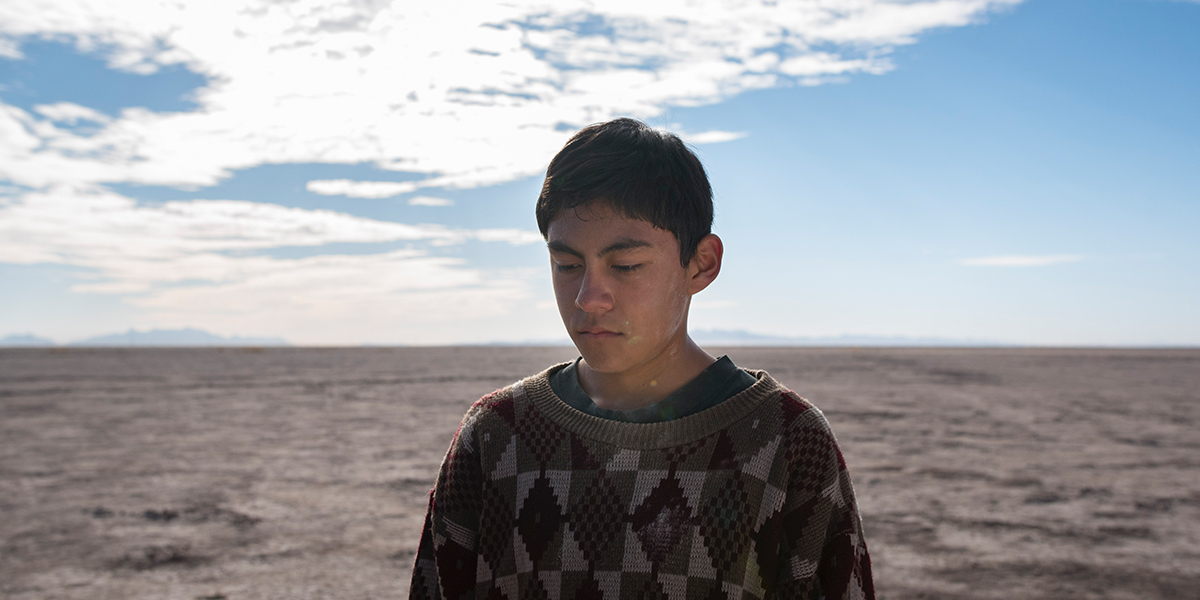
Hatzín (Hatzín Navarrete) rides the bus from his Mexico City home all alone, though he’s still just a young guy; there’s a sick grandma at home, and a dead father’s remains to collect, and unfortunately, Hatzín’s got the job. His father, long estranged, is one of many victims of a mining accident. His remains fit into a small metal box. But before Hatzín can leave town, he sees a man in the street he’s sure is his dad. Mario (Hernán Mendoza) insists that Hatzín is mistaken but Hatzín will not be dissuaded. He shadows Mario until Mario reluctantly relents, taking the young boy under his wing, feeding and sheltering him, and putting him to work.

Hatzín is a very dedicated little acolyte; he clearly hasn’t had a father figure around in a while, maybe ever. But the thing about Mario is that his affable exterior is a front for the shady business he conducts. Mario recruits labour for the region’s factories, and takes kickbacks for providing people too desperate to have carefully read the contracts they sign. Now Hatzín does it too, but an up-close look at an ugly business may upset the bond so easily made.

Although The Box says a lot about the seedy underbelly of Mexico’s manufacturing industry, it does so simply by showing its realities. It does the same for the strange and shaky bond between Hatzín and Mario; of what, exactly, does it consist? And whether Hatzín is blood to Mario or simply adopted kin, what hypocrisy exists in the man to apply one set of ethics to family, and another to the people he condemns to mean kind of servitude. Hatzín is young but Mario thinks nothing of giving him a hard-knock education in the very ugliest corners of his business. Considering Hatzín’s age and need and aloneness in the world, it’s hard to say whether he’s a victim or a perpetrator. But knowing what he’s been through, you root for him. Director Lorenzo Vigas keeps relationships vague but is unflinching when it comes to corruption.

The Box was filmed in a factory in the border town of Ciudad Juárez where many young women in the region have disappeared. As much as we feel for Hatzín, we can’t help our eyes and hearts being pulled toward the nameless many being marched into buildings only the lucky will escape.

La Caja is an official selection of TIFF 2021.

The Starling

Lilly and Jack Maynard are going through hell. Their baby girl died about a year ago, and Jack (Chris O’Dowd) has suffered a break down, attempted suicide, and has been hanging out in a psychiatric hospital ever since, unable to shake his depression. His wife Lilly (Melissa McCarthy) gardens. She works too, and commutes to visit her husband, and takes care of the house, and generally does her best to get on with a life that imploded around her.

The Starling is about finding that little spark, that one reason to keep going when everything feels impossible, even if it means leaving everything else, or someone else, behind.

Melissa McCarthy does wonderful work as a childless mother, an almost widow, a woman who is dangerously untethered but deprived of the usual expressions of grief. With her husband casting himself as primary mourner, Lilly’s left to grasp at the leftovers, never one to ask for much. Yet she, too, is in pain. And that pain always manifests itself one way or another. Nothing stays buried forever. But with the help of an aggressive bird and a sagacious veterinarian (Kevin Kline), Lilly is reminded that all we need is a little hope. Hope is everywhere, it can be so small, tiny even, found sometimes in the strangest and most unexpected of places, but the trick is: you have to be open to it.

Director Theodore Melfi takes on the greatest loss that we know as humans: that of a child. We can intuitively understand that such a loss opens up a sink hole of sadness, but unless we’ve been sucked down ourselves, it’s impossible to truly understand its depths. What’s more, we don’t have any practical advice for pulling someone out. It must be terrifying to be down there, and even scarier when a couple falls down separate holes. But despite this heaviest of topics, The Starling has an uplifting momentum, thanks in part to a wonderful cast, and of course the indominable spirit of woman.

The Starling is an official TIFF 2021 selection.

It is scheduled to be released in a limited theatre run on September 17, 2021, prior to streaming on Netflix on September 24, 2021.

Night Raiders

In the near, dystopian future, a war has waged across North America, leaving destruction in its wake. A military occupation controls the land now, and its citizens. They’re forcibly removing children from their families – it’s literally illegal to have a minor at home – and putting them into State Academies where their education is strictly controlled and could easily be confused for brainwashing and propaganda.

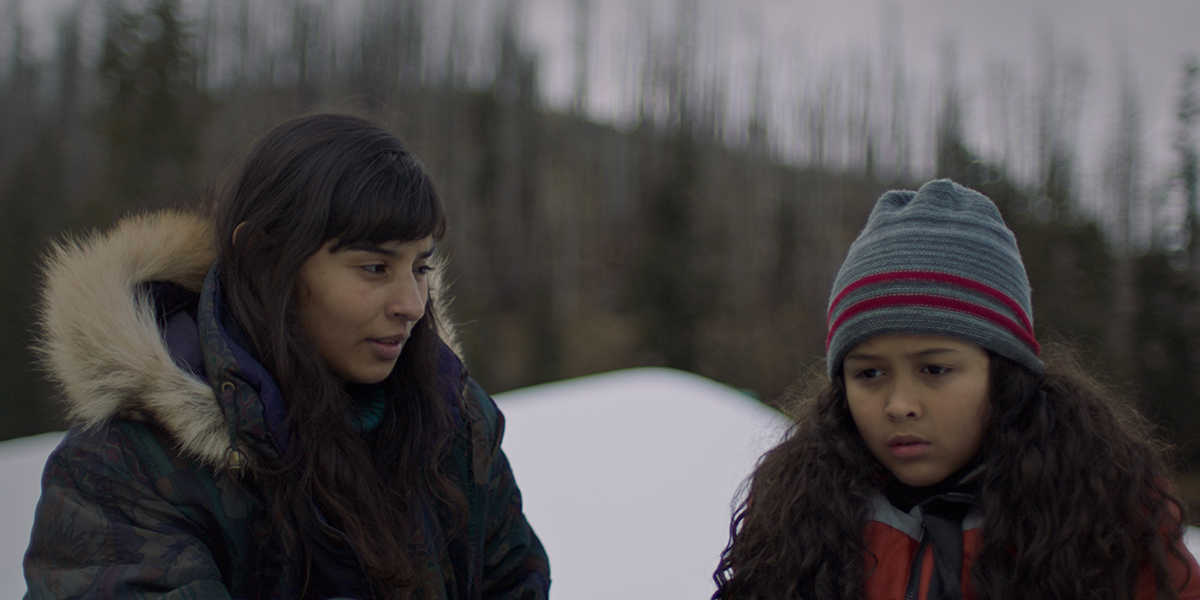
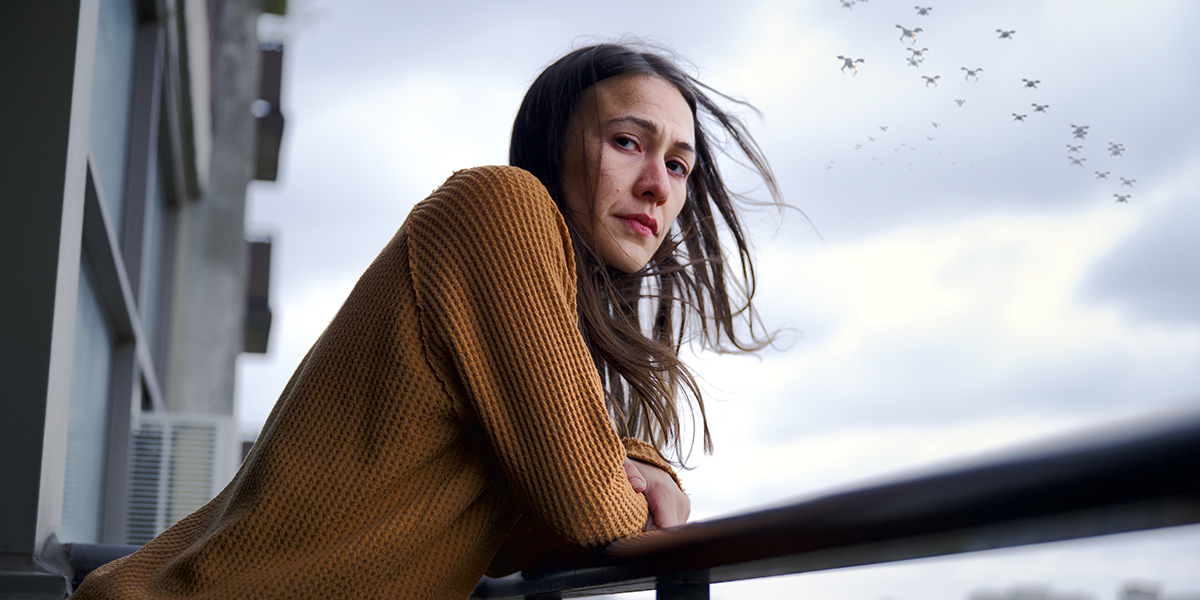
Eleven year old Waseese (Brooklyn Letexier-Hart) has survived out in the bush with her mother, a subsistance, off-grid lifestyle in order to avoid the facial-recognition drones that are always hunting children. Her mother Niska (Elle-Máijá Tailfeathers) is a Cree woman who intuitively understands how important it is to keep her daughter hidden, but an accident forces them to breach the city limits for the first time in years, and eventually to separate, with Waseese falling into the hands of the Academy. Emboldened to fight back, Niska joins a group of Cree vigilantes to get her daughter back.

If you’re Canadian (or American or Australian), you might recognize the roots of this story. They are part of our shameful colonizers’ history. After stealing the land from underneath the First Nations people here, we did then snatch their kids, threatening parents with prison or worse for failure to comply, and pack them into residential schools where actual education was besides the point. Mostly the schools wanted to assimilate the kids, to stamp the ‘Indian’ right out of them, outlawing their languages and denying their cultures. Away from their parents and their communities, the children were taught to internalize racist stereotypes under the guise of ‘christian’ values. Many children were abused. Many children never returned home. Many survivors still suffer the consequences today, as do several generations of their families.

Director Danis Goulet, who is Cree-Métis herself, uses this atrocity to build a world that reflect this ugly reality. While immersed in a violent future, we are reminded of the past, Goulet finding a unique way to make the two blend seamlessly. Night Raiders is a new chapter in Canadian story-telling, one that can help inform and inspire new ways of addressing and remembering painful subjects that apply in so many of the world’s countries, founded in colonialism.

Night Raiders is an official selection of TIFF 2021.

This film contains scenes that may distress some viewers, especially those who have experienced harm, abuse, violence, and/or intergenerational trauma due to colonial practices.

Support is available 24 hours a day for anyone affected by their experience at residential schools and for those who may be triggered by content dealing with residential schools, child abuse, emotional trauma, and racism. The national Indian Residential Schools Crisis Line is available at 1-866-925-4419.

Encounter

Well that was unexpected.

Director Michael Pearce takes a sci-fi action thriller road trip movie and subverts your every expectation, giving us panicky thrills of another kind.

Malik Khan (Riz Ahmed) is a Marine who’s been working back to back top-secret missions, too busy saving the world to see his sons, who live with their mum and her new husband, but miss him dearly, as much as he misses them. Malik shows up unexpectedly, in the night, and coaxes his young songs Jay and Bobby into an old beater, impatient to get away but unwilling to explain the urgency to his kids. Something has happened, something more important than the mission, apparently, or rather: the mission has come home, way too close to home.

Malik’s secret: a comet has brought alien microorganisms to Earth, which use mosquitos as an effective little vector to transplant themselves into humans where they can manipulate their behaviour. Unbeknownst to the kids, though perhaps unconsciously observed, the aliens had already infected their mother, and it was only a matter of time before she turned. So Malik and Jay (Lucian-River Chauhan) and Bobby (Aditya Geddada) are racing toward a base where they will be safe, while, in the meantime, their mother has reported them missing, and Malik is being hunted for kidnapping, not least of all by the only woman he trusts, Hattie (Octavia Spencer).

As much as Malik tries to shield his kids from the truth, they are spooked by his erratic, unexplained behaviour. They trust and love their father, but until someone else speaks publicly about this alien threat, it’s hard to be certain of his motivations, or, indeed, his mental health.

Riz Ahmed is kind of amazing in this, a chameleon who’s already changed before we even realize he’s changing. The kids are good too – Chauhan proving an able foil and partner to a much older and experienced actor, and Geddada providing that essential dose of cute-kidness, moments of levity needed between so bouts of tension and urgency. It’s an interesting way to address PTSD, and an even more interesting way to explore that tenacious bond between child and their parent, the unique ability of a kid to forgive and forget almost anything, to love despite disappointment, despite absence, without condition. There aren’t many people who could shake me awake at night and ask me to follow them without question (and my father is emphatically not one of them); the context may be unusual, but this is undoubtedly a story about love. And aliens.

Encounter is an official selection of the Toronto International Film Festival 2021.

Encounter hits theatres December 3 for a limited release before heading to Amazon Prime on December 10th.

The Guilty

Well damn.

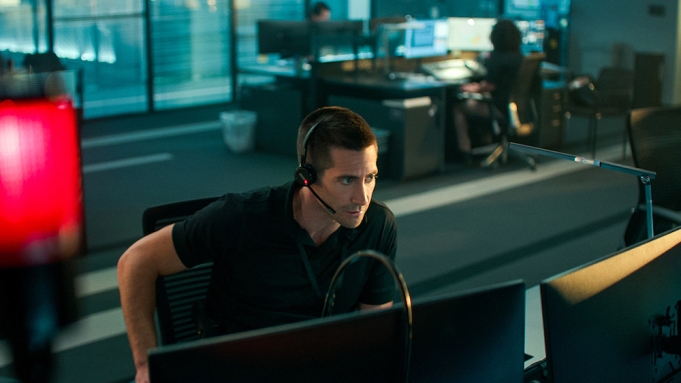
Jake Gyllenhaal plays Joe, a disgraced cop who’s been busted down to dispatch duty, manning the 911 desk until he can clear his name. On his last shift before he’ll get his day in court, he takes a call that will change his life.

On the other end of the phone, Emily whispers platitudes in a wavery voice, as if to a child. Joe nearly hangs up on her before sensing something fishy. Staying on the line with her, he establishes that she’s been abducted and her captor believes she’s on the phone with her daughter. Careful to ask only yes or no questions, Joe teases out her general location (albeit in a moving white van), her status, and a working theory of what’s going on. He notifies California Highway Patrol, but they’re busy handling wildfire calls. Emily is choking with fear, begging to be saved, and some part of Joe responds. He’ll break protocol to go above and beyond for her, risking his job and his hearing tomorrow to bring Emily home safely, where 6 year old daughter Abby and baby Oliver wait – alone.

You might argue about what movie made Tom Hardy a star, but the movie that confirmed his talent as an actor was undoubtedly Locke, a film that only stars him, just a man driving a car alone at night, talking through a crisis on the phone. Jake Gyllenhaal does the same here. It’s just him and his headset, obsessed with solving this case without even working it, perhaps unconsciously looking for redemption, definitely influenced by longing for his own young daughter and estranged wife. Every call that a 911 operator picks up has the potential to be this call. It’s high-stakes, high-stress, high drama. Joe decides to involve himself, to over-involve himself, to save this woman without leaving his desk.

The Guilty is Gyllenhaal’s best role since Nightcrawler, and it has to be in order to work. It’s just him: the sweat on his brow, his nervous fiddling with an inhaler, his increasing frustration with everything and everyone unrelated to this case.

We’re experiencing this call nearly in real time alongside him; the tension is very real, but Joe’s got to handle this with one hand tied behind his back. He’s technically done his shift. He’s definitely out of bounds. He’s calling in favours he can’t afford. And though he maintains an outward calm, his anxiety is manifested in shallow breaths and a refusal to retreat. We stay with him, often right up in his face, chasing bad guys and demons. My heart was in my throat. I don’t think I let out a single breath until the end of this tidy 90 minute movie.

We were about 20 minutes into the film when I suddenly realized that I’d seen it before, an admission that surprised Sean considering we were watching its world premiere. In fact, it’s a remake of a Danish movie also called The Guilty, a movie I quite enjoyed, according to my review. I enjoyed the remake just as much, if not more. Director Antoine Fuqua knows how to how to build tension, how to hold tension, how to release it for just a blink before taking it up again, only harder, longer, more intense. As you can imagine, it doesn’t relent during the film’s entire runtime, and both we the audience, and Joe the weary dispatcher, begin to come undone. Joe, at first overconfident and a little arrogant, begins to fray as this case goes through its twists and turns, confronting him with his own flawed ego.

Sean was less enamored with the film, frustrated by its limitations, by action never seen. Your appreciation of this film will vary according to your tolerance for incredible acting and taut, tense story-telling. Sean would have preferred car chases and explosions. Maybe boobs. Well, definitely boobs. Always boobs. I, however, was totally hypnotized by Gyllenhaal’s performance, dizzied by Fuqua’s directing, which makes clear how personal Joe has come to take this case. Fuqua’s material is normally much more action-oriented, but for The Guilty he keeps it intimate, while still finding the suspense, the edge-of-your-seat stuff that keeps us riveted, sick with anticipation, imaginations fueled by adrenaline. Gyllenhaal’s performance is informed by terrific voicework by Ethan Hawke, Riley Keough, Peter Sarsgaard, Bill Burr, Paul Dano, and little Vivien Lyra Blair, who is formidable. But on set, Gyllenhaal was alone, tethered by his headset, giving essentially an 11-day monologue. On screen it translates to an instant connection, an immediacy fostered by savvy editing, a film that drags you in and won’t spit you out until all the cards are on the table.

The Guilty is an official selection of the Toronto International Film Festival.

It will have a limited theatrical run on September 24, 2021, prior to streaming on Netflix on October 1.