
In 2006-2008, the porn industry suffered a great crash; as the economy tanked, internet piracy soared. The DVD market for porn virtually disappeared and the traditional porn studios became obsolete. Porn consumption, however, has never been higher – 100 BILLION porn videos are viewed every year, 90-95% from free streaming sites. This has meant very bad things for the women making porn – less money (like, 10 times less), and less safety.
Director Ovidie was herself the star of pornographic films for 17 years. Today her videos are  being streamed for free without her consent, meaning they are much more easily accessed by everyone and anyone – including colleagues and relatives. Porn stars like Ovidie don’t really exist anymore. You may remember a time not so long ago when porn stars were worshiped. Today a woman’s name is rarely attached to her videos. Instead, she’s reduced to a series of tags and keywords, usually related to how many cocks are stuffed into her various holes – and yes, that number is going up and up.
Ovidie’s film Pornocracy explores the consequences of this:
- If everything is available for free, who is making any money?
- When everything is so easily accessible on the internet, children are seeing it from younger and younger ages (the average is 11). This is actually changing what boys expect from girls when they’re dating and starting to have sex.
- The porn industry’s reliance on drugs is rampant. Guys inject their penises to stay hard for 5 hours straight. Women are given child birth drugs to dilate muscles so their assholes can accommodate the 3 cocks expected of them. Then they’re flooded with lidocaine so she can’t feel herself being torn to shreds by the act – she will later though, and she will never completely heal.
This is not appetizing food for thought, but this is the world we live in, regardless of whether you yourself are watching porn or not. Everyone else is, apparently. Ovidie, known as the “porn star intellectual,” manages to investigate this phenomenon very thoroughly, uncovering the kingpin behind all these seemingly independent streaming sites. They’re nearly all owned by the same multinational corporation which is so seedy and shadowy with offshore accounts and empty offices. Fabian Thylmann is the guy behind the monopoly, exploiting performers while also boldly, shamelessly stealing from them. Ovidie makes sure he doesn’t get to hide behind his anonymity. This is an important, revealing documentary about the porn industry – but also about how it affects us all.
 out to be largely unstructured: 50 minutes into the film we still haven’t seen any exploding arms, but we’ve seen plenty of Smith’s unironic mini van, his cat, and his Hipster facial hair. The film is dotted with seemingly random Youtube videos that slowly reveal the personal tragedy behind some of Smith’s listlessness.
 us with deliberately soothing music and excellently edited nature sounds. The film makes participants of us, the pace a thing of beauty, very measured, very calm, each image carefully and mindfully chosen. And it doesn’t hurt one ounce that Benedict Cumberbatch narrates.
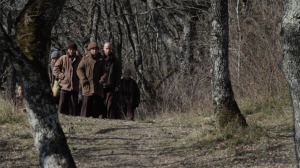 captured, the snippets of life, the tranquility: these all guide us down a path of – and forgive the use of this word – enlightenment.
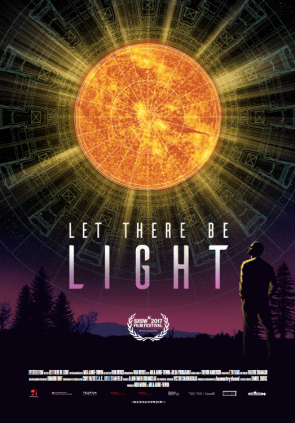 energy from its proponents. Directors Mila Aung-Thwin and Van Royko interview some very charismatic and enthusiastic supporter and collaborators of the project, called ITER (International Thermonuclear Experimental Reactor). It’s pretty much the most complex machine ever designed and the commitment of these people cannot be overstated.
 They want something temporary, first of all, so as not to permanently alter the land. Think of sutures: something that dissolves after the healing is done. To that end, they come to a beautiful and striking solution of tethering helium-filled balloons. However, the fence is not just symbolic of connectedness, but represents an awful lot of actual collaboration between peoples and communities to make this art happen.
 trial aren’t wrong, they’re explored with new understanding, through a lens of his being a black man, sort of, but not really.
 the LAPD be acquitted in he Rodney King beating. Here was a chance to right that wrong and make the system work for a black man for once. Everyone conveniently forgot that OJ had spent his entire adult life distancing himself from the black community and they made him a civil rights hero. His lawyer, Johnnie Cochran, played the race card and he played it hard “dealt it from the bottom of the deck” it’s said. And he got off. But instead of relishing his incredible good luck, OJ’s life continued to derail until he found himself in court once again, this time found guilty and sentenced to some 33 years in prison, whether or not his crimes truly warranted it. This, again, was retaliation rather than justice.
 footage and deliberate storytelling that allows us to consider what documentary can do. It is urgent, imaginative and necessary filmmaking.” Meryl, love ya, but I respectfully disagree.
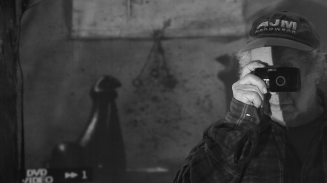 Frank in Don’t Blink, and he’s not entirely comfortable with it. “I don’t want to be pinned by the camera – I do that to people, I don’t want it done to me.” Sure he’s a man of contradictions, but that’s how Israel knows she’s got her camera pointed in the right direction. Not just an artist, Frank sees himself as a hunter, always searching for his perfect photo prey, and all Israel has to do is casually capture his encounters.
 ASSHOLES WATCHING MOVIES