Tag Archives: documentaries

TIFF20: I Am Greta

In August of 2018, Greta Thunberg, a 15-year-old student in Sweden starts a school strike for the environment. The more she learned about climate change, the more frustrated and fixated she became. What seemed to be the biggest challenge her generation would face, not to mention the certain extinction of further generations, went ignored by those who could and should be doing something – ignored, or worse, disputed. With global warming threatening the very planet she lived on, Greta saw no point in attending school, or in imagining any future at all. Instead she took to the street, the quiet girl on the autism spectrum, uncomfortable being the centre of attention, did the one thing she could because no one else would. Within months she was a world famous activist who’d started a global youth movement.

Director Nathan Grossman and his team have been there from almost the very start, capturing a small, shy girl answering questions, gaze averted, from passerby on the street. And then following her as she makes impassioned speeches to world leaders, her anger damning and shaming them.
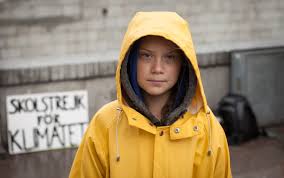
I confess, I originally dismissed Greta Thunberg, assuming her cause was just a means to an end – and the end was probably Instagram fame or going viral or some such thing. I assumed she didn’t like the environment half as much as she liked the spotlight, or its money, and that her (stage) parents probably wrote the scripts. Now I am sad for my cynicism; by tolerating politicians who repeatedly break their promises, I am just as complicit. Perhaps I am, to Greta, the more unbelievable of the two.

Many news outlets, and some politicians, have zeroed in on Greta’s autism, and suggested that her “mental illness” causes her to obsess over topics. They’d like to dismiss her, and climate change, in the same breath. But if Greta’s focus is narrower than most, it doesn’t make climate change any less real, or any less of a threat. It makes her a brave whistleblower, the kind that makes people in power nervous because the truth tends to be inconvenient. Greta is the real deal.

By allowing us to observe truthfully, I Am Greta lets us get to know the girl and not just the crusader. This is not a documentary about climate change. It is a documentary about a young woman who becomes the reluctant voice of her generation. Grossman’s profile shows a young woman from an ordinary family, her parents struggling daily with doing the right thing, finding the right way to support her, balancing her needs with the rest of the family’s, and what’s good for her with what’s good for the world as a whole. Greta’s only motivation is the environment. The director’s motivation, however, is a little more complicated. Greta leads by example, and has inspired lots of young people to come forward and hold the adults in charge accountable. By showing us such ordinary domesticity, Grossman is reminding us that if Greta can do it, why not us?

I Am Greta debuts on Hulu November 13th.

Secrets of the Saqqara Tomb

James Tovell’s documentary Secrets of the Saqqara Tomb takes us to Egypt where archeologists are carefully digging up the Saqqara necropolis, just 20km away from the more well-known Giza necropolis. Saqqara is the world’s first and oldest pyramid though, and it has many secrets yet to be unlocked.

Digging isn’t the only part of archeology, or indeed the bulk of it, but it is by far the most exciting, and Tovell wisely nestles us amongst a crew of Egyptian archeologists who have uncovered a tomb untouched for 4400 years and begin to pick it apart, revealing historical artifacts that will astonish their community, and a tribute to a family unit who celebrated each other in life and grieved each other in life.

News of this discovery has lit a flame around the world of archeology and is already heralded as one of the most significant finds in the past 50 years. The team hope to uncover coffins, mummies, and precious belongings buried with the family during the excavation, but what I find fascinating is what the tomb reveals about the family buried there, the family of Wahtye, a priest who served under King Neferirkare Kakai during the 5th Dynasty of Egypt, that is to say, around the 25th century BC or more than 4000 years ago.

The site team is composed of archaeologists, anthropologists, scientists, and diggers discovering unexplored passageways and shafts in a tomb that is remarkably well-preserved. Mummies are always exciting to find – their bones reveal so much about how the people lived, what they ate, what they did for work, and how old they were when they died. But this particular dig unearths more than just coffins and bodies; it contains possibly the world’s first ever case of malaria, a board game played by the elite millennia ago, and the mummified remains of a lion cub, the first ever of its kind.

I think archeology is immeasurably fascinating and this is the site with maximum bang for your buck. You won’t have to put up with the heat or the dust or the claustrophobia as you stream into Egypt via Netflix.

Totally Under Control

It feels almost mean to be posting this today of all days, when things are particularly “totally under control.”

That’s a direct quote from a certain president, of course, in reference to a certain virus, and you will not believe how many times he can work it into the same sentence. It’s also unbelievable that he can say it with a straight face, that he can so easily, so thoughtlessly lie to the very people he is supposed to protect. Or – so much worse it’s almost inconceivable – does he really believe it himself? He can’t possibly be THAT dumb, can he?

It was a pandemic that swept across the globe in a matter of weeks, with over 48 million now infected and more than a million dead. It was not under control then and it is even less so now, thanks to months of American non-response by its leader. Ignoring it didn’t make it go away. Not testing for it didn’t make it go away. Not reporting the numbers didn’t make it go away. Totally Under Control is an “in-depth look” at how the United States government handled the response to the COVID-19 outbreak, but of course it’s a testament to the lack of appropriate response and will serve as evidence as to how Trump’s actions directly contributed to the deaths of 233 000 Americans and counting.

Film makers  Alex Gibney, Ophelia Harutyunyan, and Suzanne Hillinger are telling a story that’s still unfolding. The camera’s gaze is unflinching, the film devastating and dizzying with the litany of warnings gone unheeded. Viruses can be dangerous. Pandemics can be deadly. But the kind of incompetence and negligence seen in America is a crime. Preventable deaths are a tragedy. This documentary doesn’t bother to point any fingers; it doesn’t have to. Trump’s action speak louder than murder charges.

For more pandemic docs, check us out here.

TIFF20 Fireball: Visitors From Darker Worlds

What would TIFF be without a documentary from Werner Herzog (and in this case, Clive Oppenheimer)? Luckily, the man’s output is such that I may never have to know.

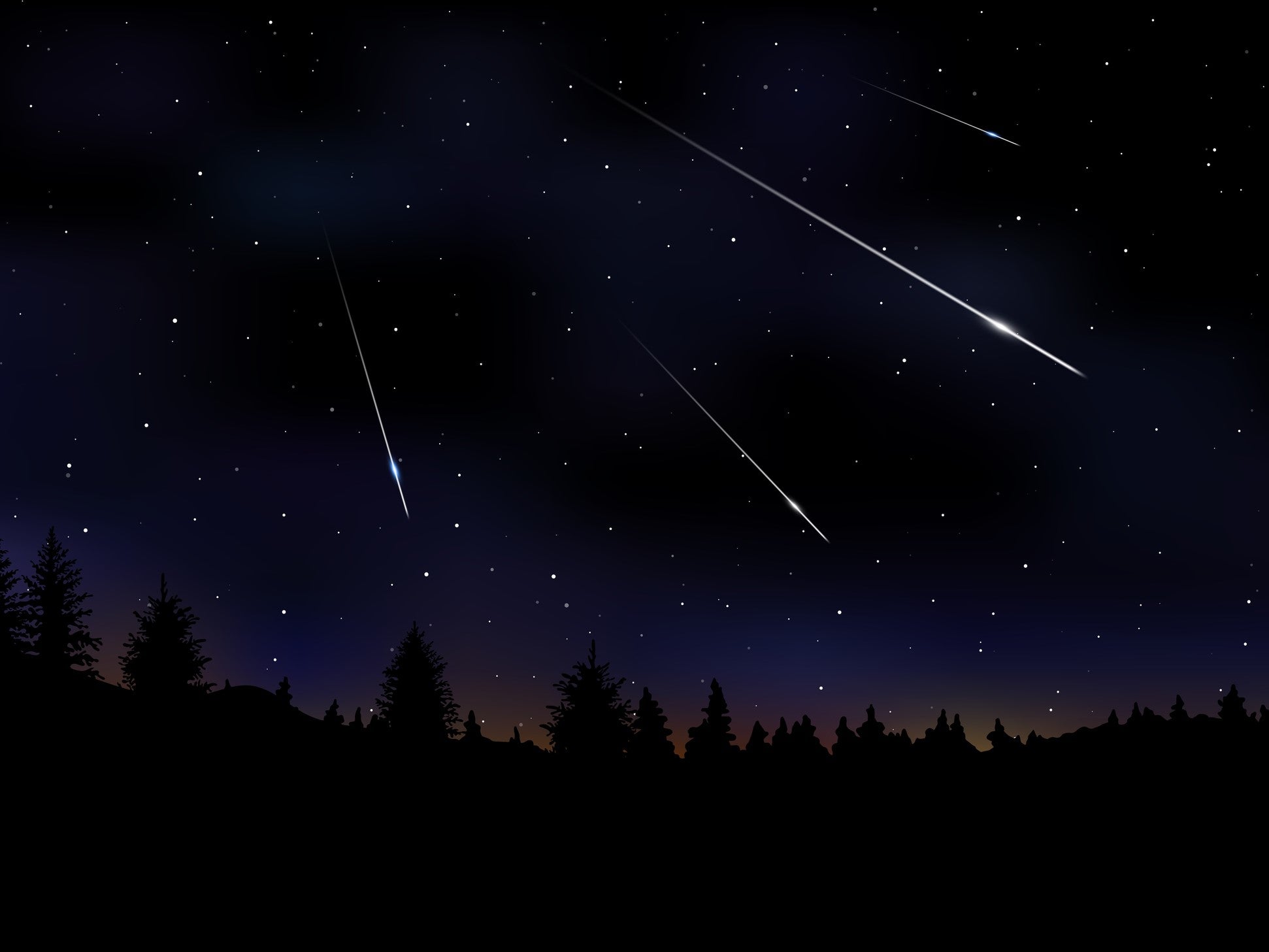
Part of why his documentaries are so compelling is that he seems genuinely passionate and fascinated by his subjects. His films are an indulgence of his curiosities, he’s scratching his own itch, but he generous to take us along with him, unearthing the coolest little-known facts and seeking out experts buried deeply in their fields, often at the ends of the earth. In Fireball: Visitors From Darker Places, Herzog has become obsessed with meteors and comets. Indeed, for as long as humans have been alive, we have observed these wonders and searched for their meaning. They have influenced ancient religions and global landscapes, cultures and philosophies, even the life and death of dominant species.

Comets and meteors are natural beauties, the origin of dreams, and a mostly unseen threat that stalks our skies and could easily wipe us out, defenseless as we are.

Who but Herzog could so poetically refer to dust as the “currency of the cosmos.” If nothing else, his enthusiasm sparks our own imaginations, and space of course is a near infinite supply of awe and mystery and possibility.

While Herzog and Oppenheimer mine plenty of zest in this most recent documentary (their third collaboration, after Into the Inferno and Encounters at the End of the World), they lack in structure and narrative. Their approach is more pinball, racing from one area of interest to another, seemingly as it occurs to them, assembled rather loosely. If you’re looking for a more academic approach perhaps this is not for you, but it will slake your inquisitiveness, arm you with some impressive conversation starters, and be the flint to your fascination.

In Case of Emergency

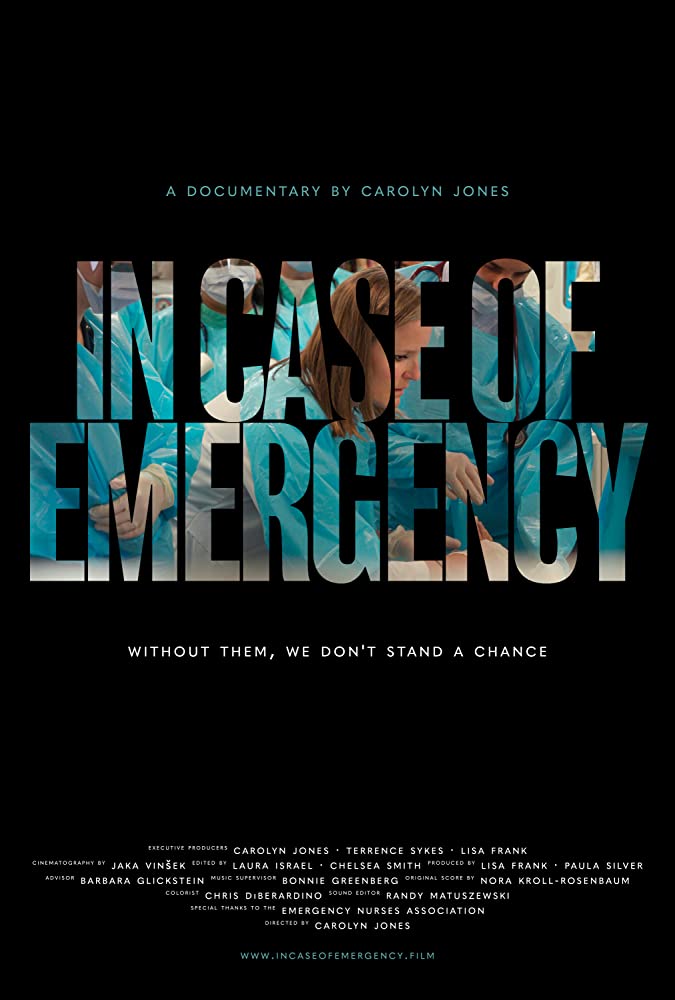
The first rule of ER nursing is: don’t call it an ER. They outgrew mere rooms long ago. They run emergency departments now, and they’re never not busy. They are the front line, meeting the needs of a community when they have nowhere else to turn. America lacks a socialized and humane approach to medicine; if an individual is lacking in insurance, or just can’t afford the co-pay, the emergency department is there as a catch-all, treating dental pain and heart attacks and overdoses and broken bones and colicky babies and psychiatric episodes. The emergency department isn’t necessarily the best place for any of those people, but sometimes they’re the only place.

Director Carolyn Jones also made American Nurse, a documentary I was compelled to check out during lockdown last spring when we were all feeling an even deeper appreciation of nurses and the hard work that they do. Nurses come in all kinds of shapes and sizes: some spend their days drawing blood, others sit and hold hands, some deliver meds and baths and kind words, and some guard the comatose bodies of post-surgical patients, coaxing them back to the land of the living. ED nurses are a different kind of beast. They live for trauma. They don’t wish it on you, but if and when you do go through it, they relish the opportunity to save your life and they will do everything in their power to do it.

Jones hears from nurses in seven different settings, but she gets some bonus content she never could have predicted. COVID-19 starts to overrun emergency departments around the world. Nurses are stretched to their maximum treating a virus that’s as bad as any they’ve ever seen. The toll is still being measured; the pandemic is still being fought.

For more documentaries about our response to COVID-19, join us here.

Smog Town

If you think your job sucks, trying being an environmental protection official in China.

In some industrial centres, the smog is so thick you practically need a knife to cut through it. A spork at least. Serious harm is being done to the environment, not to mention to people’s health, but that’s not the main concern of an environmental protection officer. I mean, I’m sure that’s in the official job description, but unofficially, though very seriously, the officer’s job is to make sure their region’s numbers are not among the worst in the country. Beijing keeps a very careful watch on each city’s pollution levels, pitting each regional environmental protection office against the others, and the price of failure is shame. Which, in China at least, is a pretty steep price.

Director Meng Han hangs out with us in Langfang, one of China’s most polluted cities. The officials are fighting an uphill battle, an upmountain battle really, with both hands tied behind their backs, and no shoes, and walking pneumonia. Because the environmental protection office must somehow reduce their numbers significantly without being allowed to touch any of the biggest polluters. Instead, the officials play cat and mouse with small time operations run out of people’s driveways and carports. Their emissions are negligible compared to large industries pumping out noxious fumes and degrading the land and sulllying the water, but this is the only kind of change the regional offices are actually allowed to pursue.

Meng Han’s documentary is really a Trojan horse; on the outside it looks like it’s about environmental protection, but once you crack its shell, you’ll find it’s really a commentary on the futility of the job, the hypocrisy of bureaucracy, and the sham lip service our governments pay to our faces about concern for the environment while always valuing profit and efficiency over everything else.

Given these restrictions, these laughable micro targets, our fight against climate change is destined to be a losing one.

This and other titles are screening as part of the Planet In Focus Film Festival – check out their lineup and buy your tickets (and watch at home!) here.

The Magnitude of All Things

Grief is universal. We lose a close friend, a beloved pet, a family member, and we mourn. We don’t always do it well, or with dignity, or in the same way as someone else, but we allow ourselves to feel and to grieve the absence of that person in our lives. We might grieve the loss of objects as well: a child’s misplaced stuffed bunny, an album of photos lost in a fire, an old car that served us well, a memento lost to time, a memory that eludes us.

In The Magnitude of All Things, director Jennifer Abbott is granting us the space and the opportunity to grieve the loss of nature, of environment, of our healthy planet. We are watching her die; Abbott likens it to losing a loved one to cancer. There are many losses to grieve along the way: perhaps you’ve been moved by the bleaching of coral reefs, or the extinction of a species, or the destruction of the rain forest. But this disease is man-made, and it does have a cure. We’ve just been witholding it.

There is no lack of documentaries about climate change and the environment, but this one carves out a unique niche in exploring the emotional and personal aspects of climate change and what it means to us, not as a species, but individually, as animals that are part of an eco-system that is rapidly disappearing.

This title is available to stream as part of the Planet In Focus film festival – buy tickets here and watch at home.

BLACKPINK: Light Up The Sky

BLACKPINK doesn’t like to be thought of as “just K-pop” and while you can quibble about the “just” part, the “K-pop” is hard to argue.

South Korea’s government rather brilliantly decided to really invest in its arts some years ago, knowing that they could be the nation’s most important exports. With considerable funding and a business approach, today its video games, television series, and movies have global appeal and success; last year Parasite took home the top Oscar, the first time ever for a foreign-language film. However, one could argue that music, namely K-pop, is South Korea’s greatest triumph, and I’m not just talking Gagnam Style. BTS fever has replicated the same fervour as Beatlemania once did. BLACKPINK became the first K-pop group to play Coachella. South Korea has a well-oiled machine churning out pop acts, and Blackpink may be more than K-pop, but they’re certainly also representative of it.

Children as young as 11 may enter this special training academy of song and dance and while most will eventually be asked to leave for failing to make the grade, others may last as long as a decade in the system, honing the skills and the look for eventual distribution into a group. Nothing left to chance, nothing unorchestrated, individuals are evaluated on a weekly basis, and asked to perform as a group in a rotating roster until something gels and a foursome such as Blackpink is plucked from obscurity for pop superstardom.

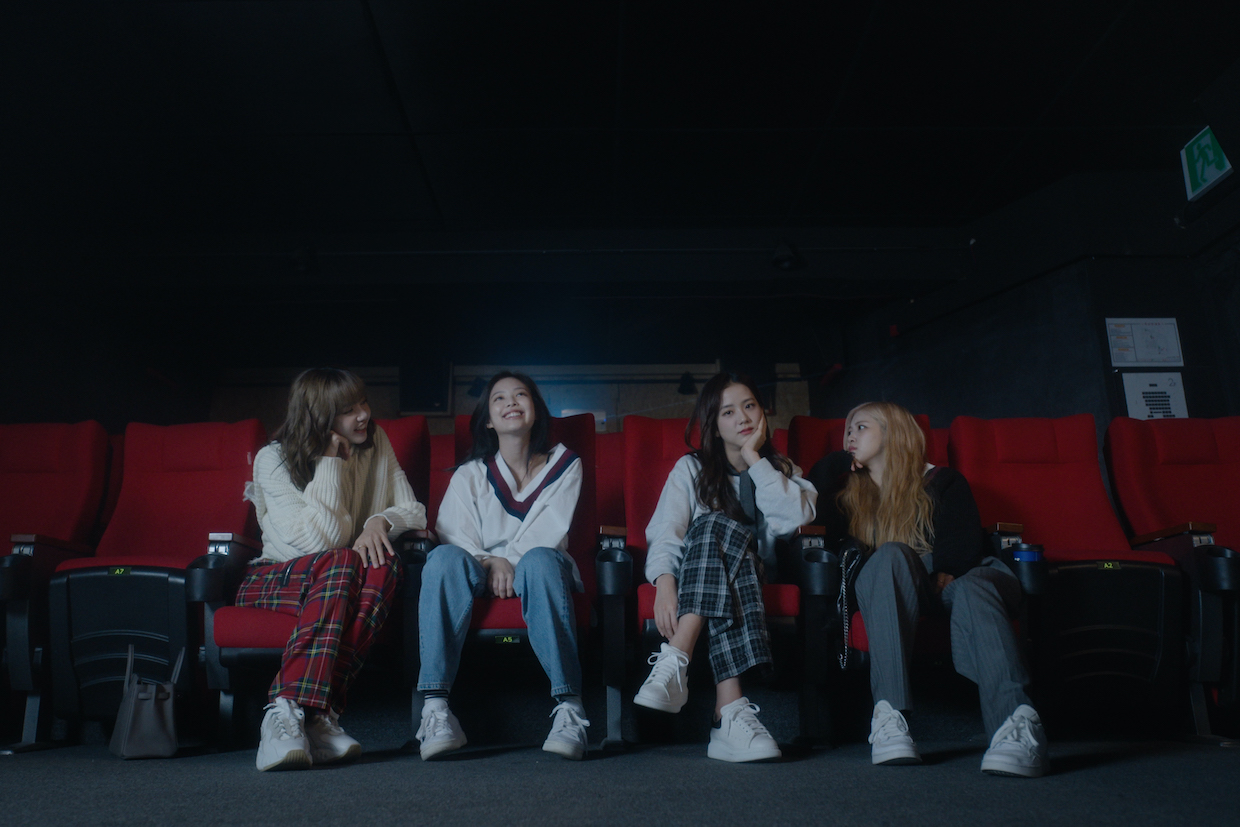
This documentary weaves in home videos of each of the girls, audition reels, practice footage, and video from their massive world tour to recreate the massive few years they’ve just had. And of course, hearing from Jennie, Lisa, Jisoo, and Rosé, we get to know a little bit about the personalities behind the carefully curated personas. It’s nothing that YG Entertainment (the parent company that recruited, trained, and launched the group, among others) doesn’t want you to know, but if it’s not quite as “all-access” as billed, it’s still plenty informative and loaded with charm.

BLACKPINK: Light Up The Sky will give K-pop novices a look behind the scenes at the grueling selection process of putting together a group, and will please fans with previously unseen footage and personal interviews with each member. You can watch it now on Netflix.

Hungry for more? Check out BLACKPINK review and music on Youtube.

Conscience Point

Manhattan is famously unlivable in the summer, and the wealthy have used the Hamptons as their personal playground and easy summertime escape for generations. This cozy town had about 60 000 year-round residents, from diverse social and economic backgrounds. Many live below the poverty line, trying to eke out existence in a place that has skyrocketing cost of living. Their modest population quadruples in the summer months, making it very difficult to serve all people equally.

To the ultra-wealthy, the 1% of the 1%, the Hamptons is a rustic vacation spot offering rural charm and first-class amenities. The Shinnecock Indian Nation has been continually marginalized on their own ancestral land as newcomers change the landscape to suit their own needs, with an emphasis on opulence, consumption, and greed. Not much thought let alone respect is given to the Shinnecock land, its resources used up and artifacts neglected.

White people have edged Native peoples out of their land all over the world. Many years ago, local government “compromised” by leasing the Shinnecock 3000 acres of their own land to them for a contract period of 1000 years. In flagrant opposition to their own proposal, they then stole them back to build a commuter railroad between Manhattan and Montauk, the Shinnecock helpless to fight against the move since, as non-citizens, they weren’t even allowed to sue. That land now holds multi-million dollar homes and several world-renowned golf courses built on sacred burial ground, “borrowing” the Shinnecock name, and using a stereotypical “chief” as a logo.

Meanwhile, the regular citizens of the Hamptons can no longer afford to stay in their houses with monstrous property taxes. The working class who serve as care-takers for the massive estates and the service industry who wait on the ultra wealthy tourists commute in from increasing distances, priced out of living anywhere near where they work.

The Shinnecock Hills Golf Club is about to host of the U.S. Open and members of the Shinnecock Nation stage regular protests, hoping to bring their struggle to national attention. Filmmaker Treva Wurmfeld is in the thick of it, where profit and protest clash, values collide, and ugly inequality is exposed.

This and other terrific titles are available to stream through the Planet In Focus, an international environmental film festival.

TIFF: The Truffle Hunters

Truffles are a delicacy, one we are happy to indulge in when they’re being offered at a nice restaurant, and they’re only offered at a nice restaurant. At home they’re wildly out of our price range, or at least any responsible grocery budget, and we made do with truffle oil, for special occasions.

White truffles, trifola d’Alba Madonna (“Truffle of the White Madonna” in Italian) is found mainly in the Langhe and Montferrat areas of the Piedmont region in northern Italy, and most famously, in the countryside around the cities of Alba and Asti. They can go for $4000USD per pound in a good season; in one where truffles are more scarce, like they were a couple of years ago, a set weighing just under 2lbs went for $85,000. Why so expensive? Well, they’re nearly impossible to cultivate. You basically have to find them growing wild in nature, but they grow underground with no above ground marker, nearly impossible to find. Plus, once they’re out of the ground, they start losing mass, so they need to go from underground to on the table in less than 36 hours. Truffle hunters are a rare, and possibly a dying breed. It’s mostly a group of aging men, their particular skill set nearly as elusive as the truffles themselves. They comb the countryside woods with their trusty dogs, looking to find their pot of gold.

This documentary focuses on the eccentric octogenarians who have made this treasure hunt their trade. Directors Michael Dweck and Gregory Kershaw saturate us with romantic notions of nature while the old men charm us as they play for the camera. The camera is an impartial audience who listens to stories attentively and doesn’t roll its eyes like grandkids do.

These old men guard the secrets to their success like precious gems. Tradition is of the utmost importance, but modern challenges like climate change and deforestation are whittling away at the time-honoured art and science of truffle hunting. And as the truffles grow more scarce, and therefore more valuable, the competition stiffens. Competitors are even leaving poison out for the dogs.

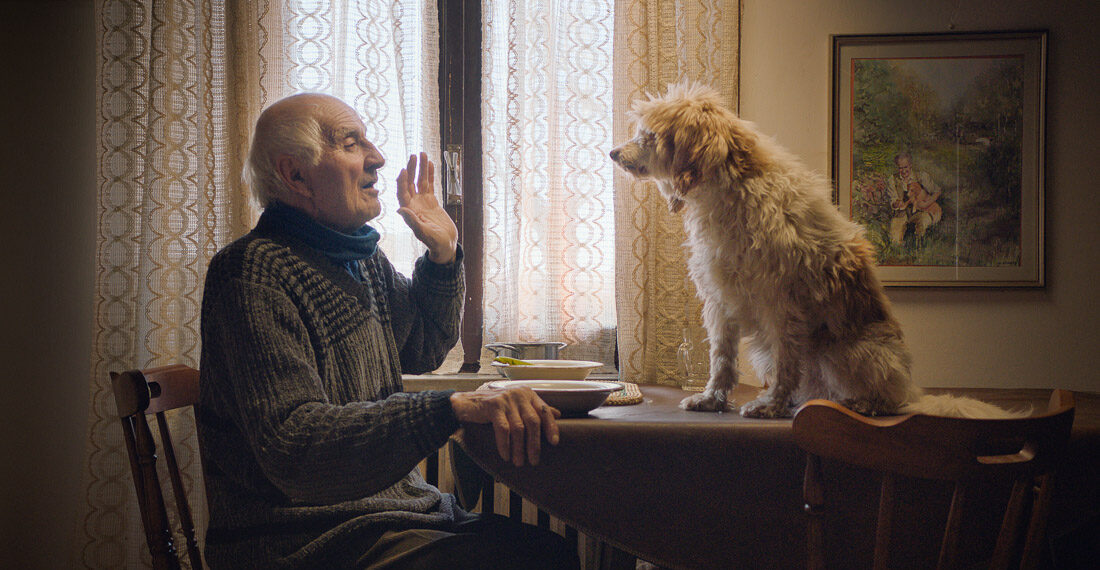
And let’s face it: the dogs are the real stars here. Aurelio and his pal Birba steal the show; they are each other’s faithful companions, their relationship touching and sweet.
Carlo is a passionate and feisty forager but his wife doesn’t like him hunting at night any more. Titina is always by his side, ever loyal, even in church they both receive a blessing for a bountiful season ahead. Gabby Sergio is lucky enough to have two gifted canine friends, Pepe and Fiona, and crafty enough to go to great lengths to keep adversaries off his scent.

This unique and sometimes curiously comical documentary slyly draws a picture of a wildly diverging socioeconomic class between those who hunt the truffles and those who consume them. But despite the high demand and the vast business machinery driving the market, the real elites are the dwindling number of people who can actually supply those tasty little treasures. Some resources just aren’t renewable.

We saw this at TIFF, but it will also be the closing night film at the Devour! Food Film Fest.