Tag Archives: female directors

Moxie

I feel old, I feel embarrassed, and I feel inspired. In that order.

To the young women of today, I’m sorry. I’m sorry we didn’t get the work done. I’m sorry there’s still work for you to do. I’m sorry we didn’t break the patriarchy but got broken by it, bit by bit.
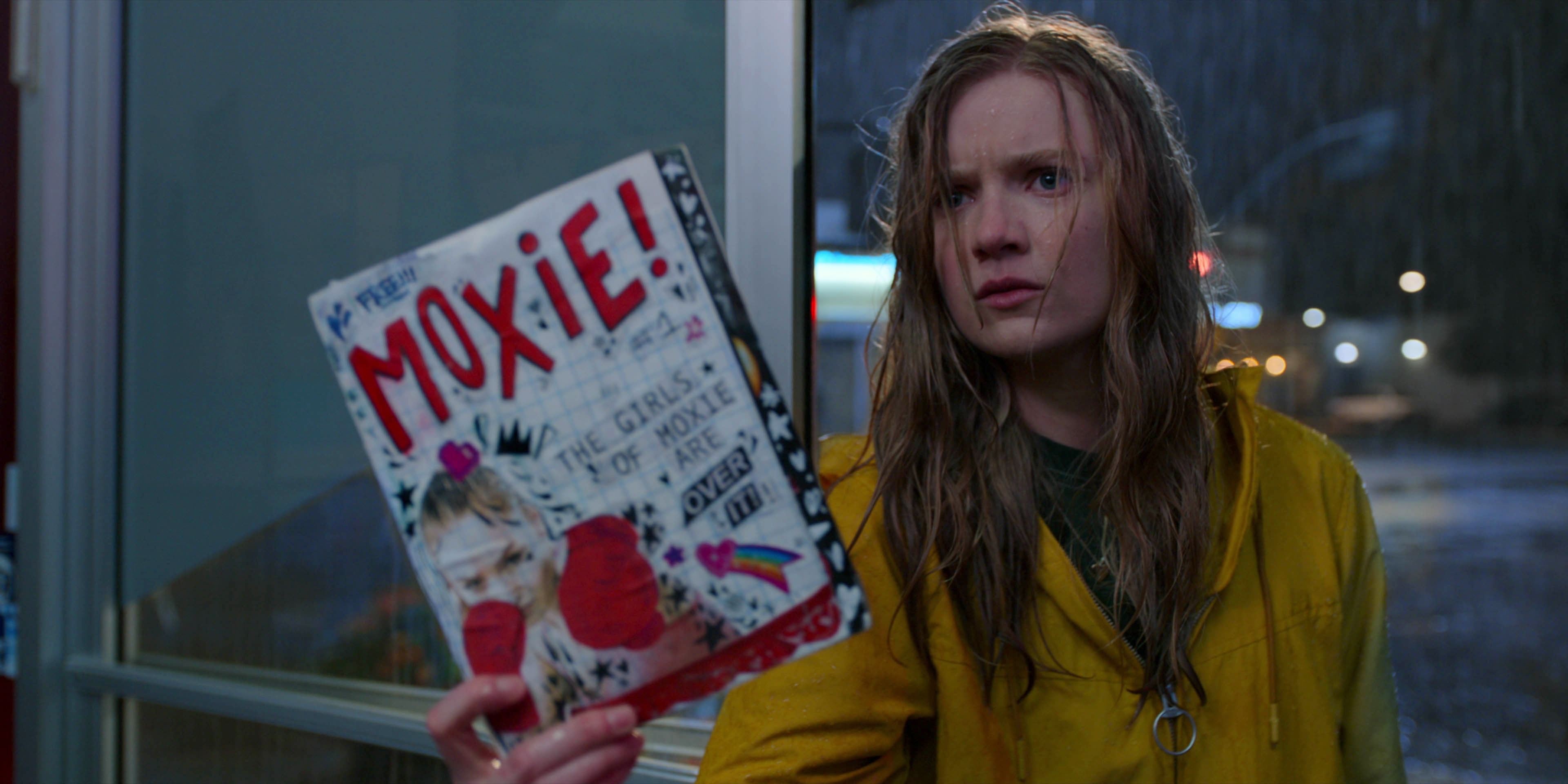
Vivian (Hadley Robinson) and best friend Claudia (Lauren Tsai) are introverts. They’re good students, quiet kids, girls who don’t make waves. But on the first day of school, Vivian is inspired by the new girl in class. Lucy (Alycia Pascual-Peña) challenges English teacher Mr. Davies (Ike Barinholtz) on his syllabus of all white men. Lucy is interrupted by star quarterback Mitchell (Patrick Schwarzenegger), who, being a white male himself, sees nothing wrong with maintaining the status quo, and belittling her simply for having an opinion different from his. Based solely on this, he starts a campaign of harassment against her, because females who speak their minds need to be put in their place. Vivian, who witnesses much of this, is quietly outraged, but it’s not until the football pep rally (when the whole school worships Mitchell jointly, despite the fact that the football team literally never wins), when the boys’ annual ranking of the girls in their class blows up everyone’s phone and suddenly a switch is tripped in Vivian’s brain. Taking a cue from her mother’s (Amy Poehler) old days of piss, vinegar, and protest, Vivian secretly starts up a zine called Moxie that ends up uniting and igniting the girls in their school (and a few of the more worthy boys). They’re mad and they’re not going to take it anymore.

Amy Poehler, fierce comedian, directs Moxie and shows some of her own. There are few people who can be this earnest and this funny at the same time, but she’s one of them. Although this film is about Generation Z discovering feminism on their own terms, it’s also a love letter to Poehler’s generation, and perhaps to all the women who have come before, women who failed to solve sexism but played a part in moving the needle. It’s also a call-out to adults who value obedience over truth and justice; Marcia Gay Harden plays the school principal who would rather look the other way than be responsible to resolving the actual issues presenting in her school. Madeleine Albright (and Taylor Swift) once said “There is a special place in hell for women who don’t help other women” and I think it’s important to remember that today, womanhood and its consequences starts earlier and earlier. The patriarchy isn’t going to smash itself.

This movie is about a movement, but it’s also about friendship. These girls, who have been taught to see each other as rivals, realize they have a cause in common. They’re outgrowing the simplicity of childhood friendship and developing empathy and understanding. Moxie brims with hope and optimism. These young people aren’t waiting to inherit the Earth, they’re not afraid to bring change now.

Amy Poehler’s schtick is something like ‘sincere dork’, and there are plenty of those vibes in Moxie. She’s outfitted the film with a genuinely wonderful cast, including Robinson, Tsai, Pascual-Peña, Nico Hiraga, Sydney Park, Anjelika Washington, Josie Totah, Sabrina Haskett, Josephine Langford, and Emily Hopper, who can carry the film’s uplifting message while still seeming like ordinary high school students. Streaming on Netflix just ahead of International Women’s Day, Moxie is the feel-good film of the month.

Berlinale 2021: Language Lessons

Hello from the Berlin International Film Festival, streaming live from my bedroom for the first time ever. I’ve got a full slate of great movies ahead of me this week, or they better be after the very first one set the bar extremely high.

Adam’s husband Will gifts him with Spanish lessons. Two years worth of Spanish lessons! Hope you like them, Adam, because this is quite a commitment. Adam (Mark Duplass) is still getting used to the lavish lifestyle Will’s success affords them, and the time and freedom to pursue such projects at leisure. Cariño (Natalie Morales) is the Spanish teacher, beaming in from Costa Rica. Over the next two years, they’ll come to know each other very well through the miracle of conversation. Adam’s Spanish grammar may leave something to be desired but when you spend dedicated time in simple conversation with another human being, over time a relationship is cultivated almost as if by magic. Bonding over their own personal tragedies, the two are perhaps a little surprised by the friendship that seems to grow organically between them. They’ve never been in the same country let alone the same room, but their bond feels genuine and strong. Is it real, can it be trusted?

Natalie Morales directs the story she and Duplass wrote for themselves. It’s an interesting exploration of human attachment and what it means to connect authentically. We experience their relationship solely through the split screen of their online connection. I worried this conceit may wear thin over the course of a feature-length film, but these two share such compelling chemistry, and go to such lengths to entertain and stimulate each other, I found myself not minding it at all.

Perhaps most amazingly, this spontaneous friendship is allowed to remain platonic throughout the film. Adam and Cariño have shared pain and grief in their backgrounds, and the fact that they can find a way to reach out despite it is a tenuous little miracle it feels a privilege to witness. Trust is of course one of the most universal human hardships, and it feels elemental to watch it be birthed and nurtured on screen. Adam and Cariño are an endearing but flawed pair; their simple humanity is what’s touching. Language Lessons is disarming in the most delightful way.

Test Pattern

Renesha’s just had a good first day at a new job and is looking forward to having a good second day, so she’s a little hesitant to go out and join her friend at their favourite place for a drink, but she vows to her boyfriend that it’ll just be a quick one, and she’ll be back home at a decent hour. Renesha (Brittany S. Hall) invites Evan (Will Brill) along of course, but drinks with the girls isn’t his thing, so he stays home and she goes out, and doesn’t return home that night at all. When she turns up the next morning, she’s been raped. Plied with free alcohol the night before, a man takes her back to his place, not just against her will, but when she’s so inebriated she no longer has any will at all.

The next day, Renesha and Evan will negotiate the difficult intersection of race and gender at the heart of the justice system and health care. But we’re not just talking institutional injustice and inequality; her private life is also unraveling. Director Shatara Michelle Ford examines this topic from every angle and none of them are flattering. The film doesn’t fall into the easy trap of victimhood, it’s much more complicated, intimate, and heartbreaking than that. Ranesha’s trauma is relived at every turn, and Hall’s performance is so nuanced we can see her being crushed in slow-motion.

You might mistake this for a small film but it packs a hell of a punch. Ford’s observations are as meticulous as they are tragic. Renesha suffers through so much: guilt, shame, embarrassment, resentment, self-recrimination, anger, even doubt, and that’s before uncaring institutions start revictimizing her. Sexual assault is obviously a sensitive topic but also a necessary one. Ford treats it with respect and specificity, but the film’s greatest achievement is also its most devastating: naked realism.

Test Pattern is available through virtual cinemas, including Toronto’s Revue Cinema and Vancouver’s The Cinematheque.

Flora & Ulysses

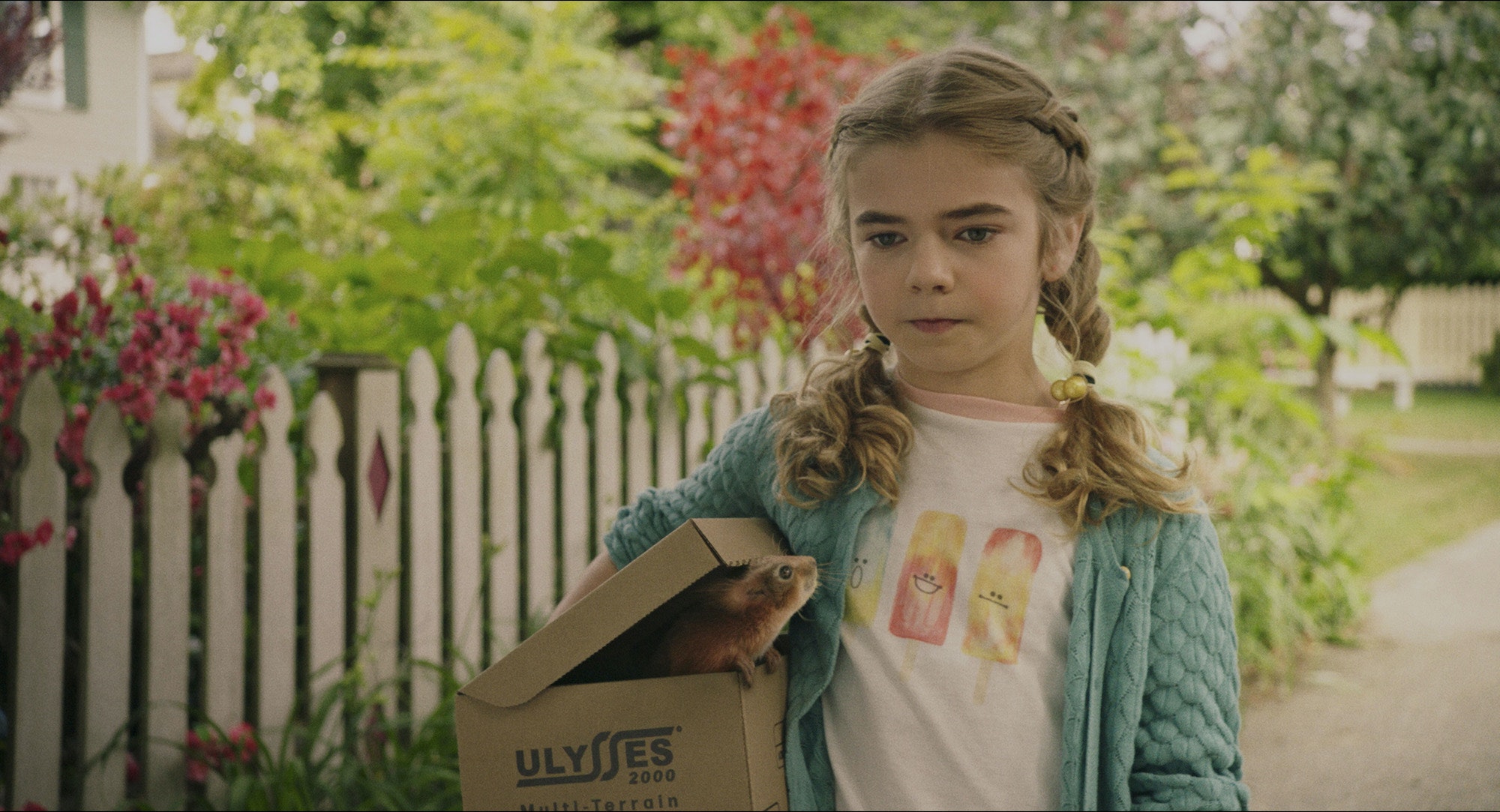
Flora (Matilda Lawler) is a little girl who wants to believe the world is filled with wonder and magic, but experience has taught her to embrace cynicism instead. She may hope for the best but she prepares for the worst, reading disaster preparedness books alongside the comic books written by her father. Incandesto and his super hero friends are so familiar to her she can practically see them but her father George (Ben Schwartz) has had no luck selling them, and has recently left the family, bereft. Mom Phyllis (Alyson Hannigan) isn’t doing so hot either. A romance writer, Phyllis has been in a bit of a slump lately, and her new project isn’t very inspired either.

But don’t worry, folks, this isn’t some sad sack story, this is a super hero origin story, and the super hero is a squirrel named Ulysses. Ulysses gets sucked into a robot vacuum and once resuscitated, he’s got super powers! He’s super strong, and super fast, and super troublesome when Flora brings him into the house. He also writes poetry, but it’s unclear whether that’s actually a super power. Anyway, any squirrel in the house is likely to wreak havoc, but Ulysses is capable of so much destruction! All accidental, of course, but ask mom if she cares. She does not! But in the course of things, mean Miller (Danny Pudi) at animal control gets whiff of a potentially rabid squirrel and he’s on the case, pursuing the Buckman family, the boy next door, William (Benjamin Evan Ainsworth) who is temporarily hysterically blind, and their super squirrel Ulysses, stopping at nothing to euthanize super Ulysses, willing even to tranquilize humans in his quest to cage a furry little super hero.

Matilda Lawler is an insanely cute kid and a very capable actor. Much of the film’s charm emanates directly from her. Ben Schwartz harnesses a lot of his oddity and delivers straight up goofball as the affable, supportive dad. Their family adventure makes for excellent family viewing, and there’s no denying the soft, endearing fuzziness of Ulysses the poetry writing super squirrel. Director Lena Khan does an excellent job of translating the hijinks onto the big screen but keeping it grounded first and foremost in family values. The characters may be offbeat but the message is hopeful, the story is bright, and the squirrel is hard to resist. Flora & Ulysses has the makings of an excellent family movie night.

Visit us on Youtube, and don’t forget to Like & Subscribe!

Bachelorette

You know when you’re on a deep dive into Netflix’s back catalogue and you come across a movie that’s packed full of A-listers that you’ve somehow never heard of before? There’s always a reason.

Bachelorette is a deeply offensive and rarely funny movie that probably meant to be Deep Impact to Bridesmaids’ Armageddon, but wasn’t. It stars Rebel Wilson as bride-to-be Becky and Kirsten Dunst, Lizzy Caplan, and Isla Fisher as her horrible best friends. This trio are quite cruel to Becky, to her face and behind her back. They discuss amongst themselves how impossible it is that their fat friend is the first to be married, and to a good catch at that – rich, handsome, and totally in love with her. They’re jealous, they’re mean, and they’re determined to fuck up her wedding.

On the eve of the wedding, Becky heads to bed while her “friends” get drunk and do coke and fail to find a single ounce of happiness for the bride. In a fit of particular cruelty, Regan (Dunst) and Katie (Fisher) decide to try on Becky’s dress, without permission, and at the same time. The dress does as most would do when taxed with two wearers: it rips down the middle. The rest of the evening is spent in a “hilarious” race to somehow fix the dress before the morning wedding. They’ll get more drunk and do more drugs, and cross paths with the bachelor party on more than one occasion. The dress will be dragged along the sidewalk, get tossed in the trash, and be besmirched by several bodily fluids. And through it all, none of these women ever feels bad or learns a lesson. They’re disgusting human beings but they never face a consequence and they never get called out. I’m half afraid the script doesn’t even realize that they’re pathetic, ugly people.

Bridesmaids was crude and edgy, serving up women behaving badly with style though not always class. It got away with it because underpinning the gross gags and lewd humour was an essential sweetness and an elemental bond that made its hot mess relatable, and grounded. This movie is anarchic but tonally confused, and its characters hideously irredeemable. Even ringing its theme for all it was worth, the film failed to squeeze out even a drop of entertainment. There’s a reason I’d never heard of this movie – I just wish that had stayed the case.

Music

You may already know about this movie even if you haven’t seen it. Sia, the popular singer-songwriter with the oversized wigs, is its director and co-writer, but more importantly, is the woman who made a movie about a young woman on the autism spectrum without casting or seemingly consulting anyone on the spectrum. And when she was called out about it, she got kind of defensive. Understandable, maybe, but not a great look. She has since half-apologized, the very definition of too little, too late.

While I definitely believe that inclusion is good and right, and representation important, I decided to see if I could set the controversy aside and enjoy the movie anyway. The short answer is NO. The long answer is:

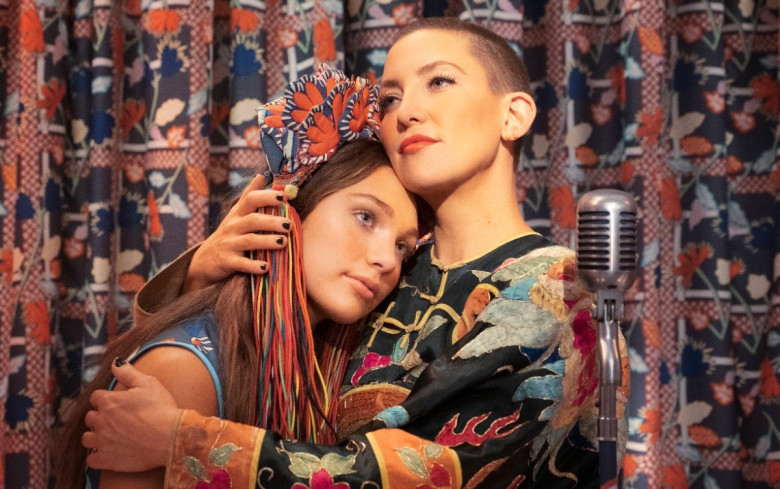
Music is not about a young woman on the spectrum named Music. Music (Maddie Ziegler) lives with grandma Millie (Mary Kay Place), who has carefully constructed a safe space in which Music can exist. Music is barely verbal, but she likes to go for walks and visit the library, and she’s never without her headphones. But then Millie suffers a deadly stroke and Music’s sister Zu (Kate Hudson) has to step up and take custody, which is a real head scratcher since Zu is an addict and a drug dealer recently released from prison and currently on parole. How she gets custody is beyond me. She can barely care for herself, she’s 40 but hardly an adult. Caring for a special needs sister seems wildly beyond her, which is probably why things get so wildly out of control. Anyway, this movie is not about Music, it’s about Zu. Music is merely used as a prop to help Zu achieve her goals. She’s a plot device on Zu’s road to redemption.

While this is hardly Hollywood’s first ‘marginalized person as a plot device’ narrative, it is a particularly offensive portrayal by Maddie Ziegler, who, by her own admission only prepared for the role by watching Youtube videos of kids on the spectrum having meltdowns. Ziegler’s performance is without depth or nuance. It’s one-dimensional, insensitive, and doesn’t begin to describe a person as a whole. But director Sia doesn’t understand this, and the script, co-written by Sia and children’s author Dallas Clayton, isn’t interested in fully-realized characters anyway. Music remains opaque and unknowable, Zu is hardly treated to anything resembling an arc or development, and other characters aren’t just basic but sometimes downright offensively stereotypical. It’s surprising that Sia was able to get the likes of Hector Elizondo, Mary Kay Place, Ben Schwartz, and Leslie Odom Jr. to sign on, but then again, none of them would have seen Ziegler’s patronizing performance until everyone was already on set and the ink on contracts was good and dry. But the whole notion that Zu can achieve some sort of absolution merely by learning to love her “challenging” sister is gross. Music doesn’t exist to make Zu look good. She shouldn’t be used as a way to illustrate someone else’s good vibes and positive intentions. She’s not an instrument or a stop along her big sister’s victory tour; her depiction as such is cruel and irresponsible. Why does a movie named after her fail to see Music as a person?

This patronizing and poorly judged filmed is frequently interrupted by an entire album’s worth of Sia songs – performed by Ziegler, Hudson, and Odom Jr. – and their accompanying music videos, which masquerade as insight into Music’s interior life but are really just an excuse to trade on the director’s only real talent. If only she had merely put out 10 videos instead. The musical interludes are of course pastel pieces of choreography heaven, but they not only have little if anything to do with the film itself, they also get really old really fast. Sia lacks the skill to connect these interjections to the larger story and the videos feel shoe-horned into a film that doesn’t want them. And though Maddie Ziegler’s other Sia collaborations (on her videos for Chandelier, Elastic Heart, and Big Girls Cry) are borderline genius, these are of course tainted by Ziegler’s self-evidently problematic aping of disability.

The film’s ignorant and infantilizing portrayal of autism is disastrous, so it might be a good time to yet again point out that actually involving people on the spectrum in this film’s conception, casting, development, and shooting would have resulted in something more authentic and representative. I know it’s tempting, in today’s cancel-prone culture, to dismiss or boycott this film, but I think that we can still learn valuable lessons from bad art. And Music is very, very bad. It’s so bad that it should serve as a new benchmark for productions going forward. It’ll be harder for mistakes like this to be made in the future. That’s not so much a silver lining as a tin foil lining, paltry perhaps, meager consolation, but it’s important to remember that a movie like this doesn’t just do a disservice to a marginalized community, it sets us all back, our understanding and our empathy and our ability to build a more inclusive society. Music isn’t a disease, it’s a symptom, and the only way we can be part of the cure is to talk about the way forward.

Sundance 2021: Mayday

After a terrible encounter with her boss inspires her to put her head in an oven, Ana finds herself on a mysterious island of girls – but this is no Themyscira.

On this island, Ana (Grace Van Patten) joins Marsha’s (Mia Goth) army of girls where war is constantly being waged against men. Along with Bea (Havana Rose Liu), Gert (Soko), and June (Juliette Lewis), they lure what appear to be WWII-era planes of soldiers with mayday calls of distress. Planes that answer the call and steer toward the island are mysteriously wrecked, and any men who survive and wash ashore are taken out by the girls, who’ve been training as snipers.

If the island is meant to be some sort of limbo for suicides, it’s populated by women who’ve been done wrong by men and are out for revenge. There is strength in numbers and strength in taking one’s power back, but while the island’s unique mission is exhilarating at first, Ana comes to realize she’s not entirely the killer Marsha wants her to be. Leaving won’t be so easy, though. Even if there’s a way to leave, Marsha isn’t keen to lose her newest recruit.

I love the vision and I love the attempt but I didn’t love the movie. The island is a great premise for exploring feminism and suicide but it doesn’t know how to create tension or sufficient reason to keep watching. Director Karen Cinorre is clearly very talented at putting together snappy, stylish visuals and has a knack for emotional dexterity, but Mayday needs a better grounding, better world building, better character development. Without those things, the film lacks dramatic propulsion and a good idea just never really becomes a good movie, but Grace Van Patten makes a strong case for future roles and Cinorre is a director to look out for.

Sundance 2021: The World to Come

Picture it: mid-19th century American East Coast frontier. Life is hard; it’s round the clock, back breaking work just to stay alive. It’s dirty, full of drudgery, isolating, dark, and monotonous.

Dyer (Casey Affleck) is a poor farmer who will toil his whole life away and never have anything to show for it. His wife Abigail (Katherine Waterston) works just as hard at even more menial tasks. Their relationship is predicated on hard work and common sense. Their life is colourless, hard-scrabble, and bereft after the loss of their only child. When another couple appears in the “neighbourhood” (which is to say, another isolated cabin miles and miles away), their dreary lives are cheered just a little bit by the ability to see another face once in a while. Abigail becomes particular friends with the wife, Tallie (Vanessa Kirby), though Tallie’s husband Finney (Christopher Abbott) is a real stick in the mud, another burden to be borne, but worth the price of seeing Tallie.

If Dyer notices that Abigail and Tallie are growing closer by the day, he’s hardly the type to say anything, but Finney is much more jealous, and perhaps this isn’t the first time his wife has wandered over to someone else’s homestead. Abigail and Tallie relieve their loneliness and ignite something in each other’s company. Their relationship turns intimate, and physical, a balm on their otherwise psychologically taxing existence.

The World To Come is based on Jim Shepard’s lyrical story of the same name, which is fine for a piece of literature but translated less well on screen. Katherine Waterston provides a poetic voice-over that grows tiresome very quickly, not to mention suspicious. Dyer, who eats potatoes for every meal of every day of his sad little life, hardly seems the type to have said that “contentment is a friend who rarely visits” although the sentiment, at least, rings true, the biggest excitement in his life provided by a molasses enema when he gets the flu.

Waterston and Kirby are wonderful together, and the setting is absolute perfection. The sense of longing and emptiness are well conveyed, and Waterston does a fine job embodying both Abigail’s stoic reticence and the private, flowery language of her journal. The World to Come has plenty of isolated aspects to admire but they amounted to a boring film and a frigid love story that I didn’t need to see (again: this is hardly the first of its kind). Mona Fastvold is an excellent director who picked a crummy script and failed to breathe enough life into the story to justify it or indeed to hold any emotional heft. This one left me cold.

 The World To Come will be released via video on demand on March 2, 2021.

Sundance 2021: Pleasure

I mentioned in my Sundance review of Violation that I’d watched several R-rated horror movies and yet none until Violation had asked me to confirm my birthdate. The difference? Not blood or guts or skinned animals or severed limbs or gouged eyeballs; the difference was a mere erection. Erect penises are apparently more horrific than mass murder or treating body parts like fire wood. Pleasure, too, has asked me to “prove” I’m legal, and in some respect, the erections here are indeed horrific.

Twenty year old Linnéa Bella Cherry (Sofia Kappel) leaves small town Sweden for Los Angeles with aims to become the world’s next big porn star. This road is indeed paved with many, many erections, and Bella’s over the top, completely fake reactions to them. She knows how to play the game, but the path to superstardom isn’t quite as straight forward as she’d imagined. To get noticed, she agrees to increasingly more toxic situations and ends up getting fucked.

Director Ninja Thyberg has clearly spent a long time immersed in the culture of pornography to present such a grounded and evocative picture of its reality. Deconstructing its inherent misogyny and the ubiquitous privilege of male positions in all aspects of the business, Thyberg tells her story with equal parts humour and humiliation, all of it raw and unfiltered. It’s no surprise to anyone that the porn industry is predatory, yet Thyberg strives to share a perspective that represents sex work in a positive way. The script doesn’t judge Bella for her choices or their consequences, understanding that viewers will bring enough judgment of their own, making the viewing experience dependent on each person’s own prejudices and expectations.

Ninja Thyberg casts actress Sofia Kappel as the beautiful blank slate, allowing us to use her as a human Rorschach test, but she meta-casts the rest of the film with porn insiders. Giving Pleasure a sense of realism are Chris Cock (Thrilla in Vanilla 8, Facesitting Tales 4), Dana DeArmond (Semen Sippers 7, Ass Eaters Unanimous 15), John Strong (Double Stuffed 6, Cum Fart Cocktails 6), Charlotte Cross (Cum Fiesta, Electrosluts), Xander Corvus (Foot Worship, Turbo Sluts 2), Evelyn Claire (My First Interracial 11, Lesbian Strap-on Bosses 4), Kendra Spade (Creampie My Bush!, Giant Dicks in Asian Chicks 3), Axel Braun (Busty Hotwives, Squirt Class 2) and more. So many more. Pleasure doesn’t lack for authenticity.

Arriving at LAX, a customs agent asks Bella whether she’s in the country for business or pleasure – you can guess at the answer she gives with a smirk – but the film itself refuses to see these terms in black or white. Certainly Thyberg makes clear that Pleasure isn’t here for our pleasure, it brilliantly and almost magically avoids sexualizing Kappel even while hauling her through scenes of double anal and rape-adjacent threesomes. In this film, the camera gives Bella a certain power that most porn starlets will never have: agency. It’s actually a story you’ve seen a million times before: a young ingenue climbing her way to the top. If you fail to recognize it, it’s only because you haven’t seen it wearing a strap-on before.  Oscar Wilde once apparently said “Everything in the world is about sex, except sex. Sex is about power.” And in this film, those words have never been more true.

Saint Maud

Saint Maud is one of those films that will confound you and disturb you while you’re watching, and then haunt you before you even have time to get cocky enough to congratulate yourself for surviving. It is not the kind of horror film that’s going to frighten you. There are no cheap jump scares, no triggering gore. It is simply chilling.

Maud (Morfydd Clark) is a fervently if newly pious woman whose belief bleeds into her work as a hospice nurse. New client Amanda (Jessica Ehle) is a former dancer currently dying of cancer. For the most part they get along but visits from Amanda’s lover Carol have Maud fearing for Amanda’s very soul (which is a matter of some urgency, if it’s not too crude to say). Maud has only recently turned devout (some trauma is vaguely hinted at), and is now of the certain belief that humanity is amoral, lustful, and terribly wicked and needs very badly to be saved. And since God has ever so kindly and every so explicitly told her that He has very special plans for her, Maud connects the dots and finds that perhaps she is meant to be its saviour.

What’s the difference between religious fanaticism and mental illness? Maud’s zealotry is depicted as a compulsion, indeed an obsession. She feels it necessary and right, but there is a gulf between what she believes and what others believe – Amanda specifically, though clearly not solely. However, writer-director Rose Glass leaves a little wiggle room for doubt. Is it possible, is it just the slightest bit possible that God really is speaking to Maud?

Part horror, part psychological thriller, part character-driven drama, Saint Maud can be read in a variety of ways and this expert ambiguity is the film’s coup de grace. Glass has the temerity to respect Maud either way; this dignity, this refusal to dismiss her, is bold and singular. Whether miracle or mental breakdown, Maud is entitled to compassion, which makes Glass’s film all the more deliciously vexatious.

Clark gives a stunning, visceral performance. The story is told almost entirely from her perspective, so where one might see delusion or psychosis, Maud sees only signs from her God, and burning bushes. It’s convincing and disorienting yet Glass always plays it both ways, like that picture of the animal that’s either a rabbit or a duck, depending on how you’re looking at it at any given time. While the intention may be shrouded, Saint Maud is still a deeply satisfying not to mention profoundly atmospheric piece of cinema that’s either supernatural or a psychotic break, and I don’t even care which. It is fascinating, carefully crafted, thematically complex, and fantastically unsettling.

Saint Maud will be available digitally and on demand in North America February 12 2021.