

Standing outside Seoul’s central subway station, two young men are having a nice liberal chat. “I think there should be universal welfare,” one says to the other. As if on cue, an old homeless man who is covered in blood comes staggering by. Concerned, one of the two men run to check on him but is quickly recoils from the smell. “I thought he was bleeding but he was just homeless,” he tells his friend.
So begins Seoul station, the first Korean animated zombie movie that I’ve ever seen. Though I was unsure of what to expect at first, it became immediately clear that this hilarious yet disturbing picture would have a lot more to say than the average episode of The Walking Dead. Because acclaimed director Sang-ho Yeon’s version of the zombie apocalypse seems to start with those who rely on the Seoul Station subway tunnels as a place to sleep, no one really seems to care at first and the infection is allowed to spread quickly. Unlike most zombie movies I’ve seen, we see the fall of civilization entirely through the eyes of pimps, prostitutes, and the homeless.
There aren’t many Zombie Kills of the Week in Seoul Station but the animation alone- surreal enough to be unique but realistic enough to keep it grounded when it counts- makes it stand out. As much as it has to say about the struggles of Seoul’s marginalized, this is not a movie without it’s guilty pleasures. There are enough close calls, creatively claustrophobic suspense, and hilariously over-the-top voice acting to work as a fun popcorn movie. It’s only unsettling once you let it sink in.
 As you may remember, I had a great time last weekend watching a
  Which is not to say Assassination Classroom: Graduation is a bad movie. I mean, it’s not really a GOOD movie by any measure, but my post-screening research shows that it adheres quite closely to the source material (incidentally, this is a sequel to last year’s Assassination Classroom with each movie covering about half of the original manga’s story) and was a big box office hit in Japan. But this movie had no intention at any time of embracing the complete ridiculousness of its concept or the yellow squidlike teacher. Instead, Assassination Classroom: Graduation plays it almost completely straight, delivering life lesson after life lesson as the middle school class grows up and learns the ways of the assassin from a big yellow squid. How you can play that concept straight at all, I don’t even know.
 So back to those green tea Kit Kats. Apparently Kit Kats are a huge deal in Japan because the name sounds like “kitto katsu”, which means “you will surely win”. That nice sentiment has given rise to a whole host of ridiculous Kit Kat varieties being eaten up by the Japanese (and also at least two white Canadians), including Shinshu Apple, Edamame Soybean, Purple Sweet Potato, Hot Japanese Chili, and Wasabi, among others.
 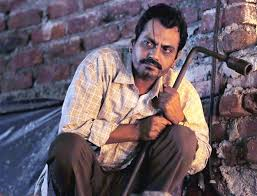 count on one finger the number of Indian films I’ve seen that were about serial killers. Which brings me to the appropriately titled Psycho Raman.
 The symbiotic relationship between cop and killer is nothing new and I feel like I’ve seen every version there is of the “You complete me” speech but Kastyap shows us enough memorable images and packs enough suspense into Psycho Raman’s best scenes that his film is well worth watching. Mumbai is a compelling setting for this familiar story and, as the Fantasia Film Festival website notes, shows a side of India that most of us aren’t used to seeing.
 important character of Raghavan, the cop with a dark side. The film is divided into ten chapters and way too many of them don’t feature Raghavan at all. Not that I’m complaining. Kaushal doesn’t bring anything new to the drug addict or the angry cop and his scenes are often tedious. Still, the battle over this man’s soul is the whole point and Kastyap needed to put in a little more time developing this character.
 There will always be a place in my heart reserved for ridiculous movies. Ones that know they are dumb and just go for it anyway. Terra Formars is one of those movies. It is everything that you’d expect from a Japanese sci-fi battle between giant humanoid cockroaches and criminals with bug powers who are being paid to destroy the roaches so that humans can live on Mars.
 Personal taste aside, Miike would be deserving of the lifetime achievement award based on productivity alone, as he has somehow screened 30 films at Fantasia during the festival’s 20 years of existence!
 strained. There are whiffs of resentment. Luckily Jonathan has his father’s beautiful young nurse (Julia Koschitz) to distract him, but as the film lurches shakily through its middle third, Jonathan realizes that time is running out for his father and if the family secrets are to be unlocked, it’s now or never.
 This movie looks different, feels different, sounds different. Actually, I’d heard it was a silent film, and that’s not quite true. There’s a smattering of dialogue, unsubtitled, but that didn’t bother me. The images and the score are so evocative they’ve already buried under your skin, and you know what’s going on even if you can’t decipher the words. I probably shouldn’t admit this next bit, but upon looking it up, I see that the language is actually just a made up one – backwards Portuguese, apparently – so
  that may reassure you while making me look stupid. Incidentally, I don’t speak Portuguese forwards either.
 his father, only to find many identical men exiting an office building. Has his father become a clone? Has the city stolen his soul? Is there simply no difference between men who don’t make things with their own hands?I’m not sure of the exact sentiment the Brazilian film makers were hoping to convey, but that’s kind of the beauty of the thing. In its quiet, it allows the viewer to be making judgments for herself, and my reading of it was obviously pretty damning.
 images we’ve ever seen” and I think that’s putting it mildly. It’s some of the most innovative work I’ve seen in a while, despite the fact that the main character is basically a stick man, truly thrilling to watch and absorb. There we go, that’s what I’ve been getting to this whole time: it’s a movie that you don’t just watch. You experience it. The visuals feel quite personal and they take you back to your own childhood while thrilling you and keeping you guessing. All the drawings were hand-made
 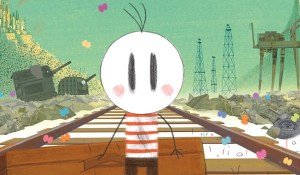 by the Director, Alê Abreu, and I just love how he makes this very basic character come to life against a geometric, swirling, abstract background. It’s moving. This is an image-heavy post, and I think you can tell it’s for good reason. Yes, I could talk about this all day but honestly, this is one you’ll have to see for yourself, if only you feel up to risking the nontraditional style.
 including a suitcase full of drug money and a homicidal elephant, which is still secondary to the other trip he takes, the one down memory lane.
 centenarian, but through many decades of his life thanks to a series of flashbacks.
 ASSHOLES WATCHING MOVIES