
Philip (Sam Claflin), receives distressing news from his cousin and guardian, who adopted him as an orphaned baby. While recovering from an illness in Italy, he met and married a woman and now has regrets. If his strange and hasty missives are to believed, this woman, Rachel (Rachel Weisz), is trying to kill him. Philip rushes off to intervene but his guardian is dead before he arrives. He swears vengeance on the widow but she has conveniently disappeared.
Philip returns home, to the estate he will now inherit once he comes of age – and luckily,  his required 25th birthday is right around the corner. But before it can be celebrated, the ballsy widow shows up for a social call. Draped in black, she looks like a grieving widow, but passionate kiss shared between the two perhaps belie other motives. Of course, this particular widow does not look like the wicked witch of Philip’s dreams, but seeing how she’s played by the enchanting Rachel Weisz, probably looks more like the woman in a different kind of dream altogether.
So the film’s central mystery unfolds: is Rachel trying to seduce young Philip into sharing his inheritance (the will was never changed to reflect her at all), or are there genuine feelings here? Whichever way you lean, this is a dark romance at best. A bad romance (roma, ro-a-a?). Which of course is intoxicating to stupid virginal Philip who will follow his cock just about anywhere it seems.
Gothic and moody, Rachel Weisz is a commanding and alluring black widow. Unfortunately, director Roger Michell has less of a firm grip on this Du Maurier mystery. Did she or didn’t she? Either he doesn’t know, or doesn’t care. So it’s less satisfying than it should be. But ambiguity would have been just fine by me; it’s what allows us to contemplate Rachel’s precarious position and explore the feminist slant – is a woman left penniless and powerless acting in her own self-interest really all that shocking or evil? In any case, Weisz is the reason to watch. Her every moment on screen is magnetic.
 Cambodian population died from malnutrition, forced labour, and mass murder in the time period between 1975-1979. Almost all Cambodian artists, actors, and film makers were killed during this regime, so getting the story out has been a difficulty. Cambodia’s film community had all but expired and is only now starting to recover. With Netflix fronting $24 million for this film, First They Killed My Father is the biggest movie shot entirely in Cambodia, and director Jolie was careful to use as many Cambodian cast and crew as she could (she herself is a Cambodian citizen since 2005). Some of them are genocide survivors themselves (such as producer Rithy Panh), so therapists were on standby on the set to avoid re-traumatizing the people who’d already lived through events depicted in the film. Jolie’s son Maddox worked on the film as well.
 adsorb all that is happening around her, like she herself must have been at that young age. The film also engages our inner protectors: watching this little girl plant land mines and fire guns is just too much to process.
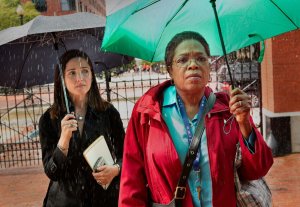 was never asked. Her family didn’t know either. And when they found out, decades later, they were mortified. Without the education to understand what those cells really meant, they wondered if part of their mother was indeed still alive, being kept alive cruelly in labs, being shot into space, or injected with disease. And why had so many profited from the sale of HeLa cells while Henrietta’s family languished in poverty?
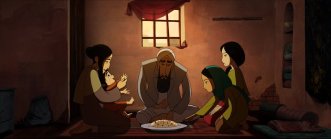 sister and baby brother could literally starve to death waiting for a man to come release them from their own home so Parvana does the only thing she can think of to save them: she cuts off her hair, wears the clothes of her dead brother, and to taliban eyes, becomes a boy.
 loathe that sick expression, but you know who hates it even more? Joan. And you’re about to find out why. I won’t give anything away, but I think the “reveal’ (which is a bad word for what it actually is, but let’s just say there’s information being withheld) comes too late – it would be a way more interesting story if this little tidbit was part of the journey. What we do know is that she literally runs his life: she checks his beard for crumbs and sets his watch for pill time and does nose hair checks because she’s a goddamn boss and he doesn’t deserve her.
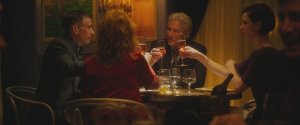 Stan (Richard Gere) is a politician poised to become an even more powerful politician, as evidenced by the aides who can’t quite allow him a moment of peace or privacy during the dinner (not that he objects); his wife, aka, his second wife, Katelyn (Rebecca Hall) raises his kids so that he can govern unencumbered and expects to be rewarded. Their sons have recently been involved in a crime that is making its way around Youtube. They are thus far unidentified but now the parents must decide how to handle things should they found out – or should they remain undiscovered.
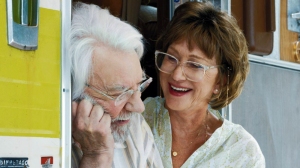 beloved RV, and this road trip is designed to trigger memories of happier times – their young family at play, their former selves in love. It’s obvious that the ‘in love’ part has never really faded for Ella and John, and maybe this is why it’s so hard for her to cope when he can’t remember who she is.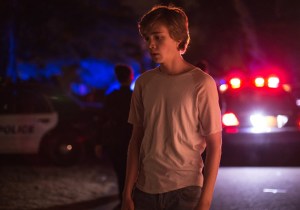
 solitary existences up until Addie gets up the courage to ring Louis’s doorbell and invites herself in for a chat and a little proposal. Why not sleep together, she suggests. No, not sex. Sex doesn’t interest her. But the nights are long. Very long. Couldn’t they come to some arrangement? After thinking on it, he agrees, so off he goes in his best blue plaid shirt, to have a platonic sleepover with a neighbour he’s lived alongside for decades but never really known.
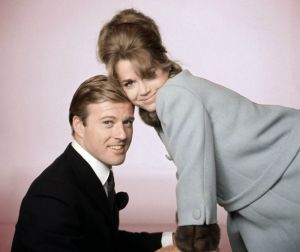 Venice Film Festival, in a ceremony preceding the screening of their new film. They’ve co-starred in movies before: The Chase (1966), Barefoot in the Park (1967), and The Electric Horseman (1979); this is their first in 38 years. To mark the occasion, Fonda said “It was fun to kiss him in my 20s and then to kiss him again in my almost-80s.” I have to say, it was fun for the audience, too. Yes, it’s great to see mature faces getting meaty roles, but you’re also getting a masterclass in acting. These two make it look easy. Their chemistry feels effortless.
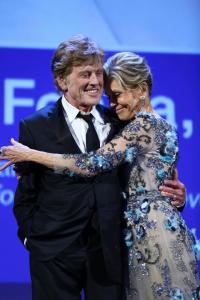 Of course, if you’re looking for classic, cheesy romance, this isn’t it. Louis and Addie are too wise for that. They have responsibilities, baggage, obligations. Kent Haruf, who wrote the novel upon which this film is based, knew a little about that. He wrote his book under a death sentence: he was 71, and he finished it just months before he died of lung cancer. The novel was published posthumously, so Louis and Addie are his legacy. Fonda and Redford would have made him proud.
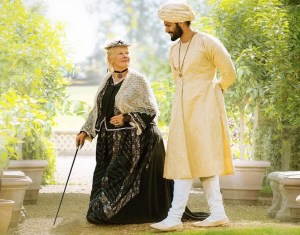 Is there anything more awkward than finding out the guy you recruited as a token Hindu is actually Muslim? There is, actually – it’s far more awkward when the guy you literally shipped from India as a parlour trick starts getting special attention from the Queen, more attention than you and all your fellow white sycophants combined. The worst part? He doesn’t even seem to be trying to play your game, yet he’s still beating all of you at it.
 ASSHOLES WATCHING MOVIES