
A man (Thom Yorke, of Radiohead) is one of many people riding the subway in a dazed state, nodding off, sleep walking through life. Only his sighting of a beautiful woman (Dajana Roncione) sets him on a divergent path, going against the usual drudgery to return a forgotten lunch box to her.
Paul Thomas Anderson directs Thom Yorke in a 15 minute musical short, though Yorke isn’t exactly breaking into song, it’s more like an extended music video, a visual piece accompanied by hypnotic music that to be honest is really working for me.
The choppy, physical choreography has Yorke literally going against the grain, and it’s only when he finally reunites with the woman from the subway that the dance, choreographed by Damien Jalet, becomes playful, fluid, more intimate. The two carve out a private space in a world that is monotonous and homogenous. It’s hard to say if this world is dystopian, or if it’s meant to be interpreted on a more metaphorical basis, but images of competition and subjugation abound.
The piece ends with the two boarding a streetcar. Yorke again nods off, and it’s unclear if the whole that came before it was meant to be a dream, but even if it is, it’s taken him from the underground darkness (or artificially lit at best) of a subway and left him above ground, seated in a beam of sunlight.
You’re darn right it’s weird, unlike anything else you’ll find on Netflix. But that’s what I can easily love about it, and about Netflix. Netflix is a lot of things, and not all of them good, but it’s creating space for experimentation. With the sheer volume of output, it can afford to take risks, and it does, something that is increasingly rare if not already obsolete for movie studios. Not very long ago it would be nearly impossible for most of us to catch a short film, other than the ones that routinely screened before Pixar films (although I can’t be the only one to notice this absence before Toy Story 4). But Netflix now hosts, and in fact is creating, a whole host of out of the box content. How wonderful to let PTA do his thing. And no, Thom Yorke is no actor, but I can’t help but admire someone who will go out on a limb for art. It gets all of our creative juices flowing to see new and boundary-pushing things, which is what Anima is. At worst, all it costs you is 15 minutes, but it’s a literal tunnel out of oppression, an exploration of conformity, and ultimately, an expression and rejoicing of freedom.



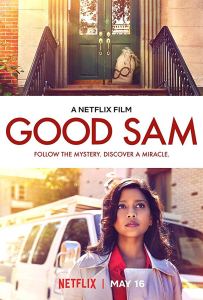 Kate, who started off reluctant to report on something so negligible, now has quite a story on her hands. And it’s not just that it’s something positive making the news for once. It’s the mystery of the thing. Who is this guy, who becomes known in the media as Good Sam, short for good samaritan, and why is he changing lives without taking credit? Kate is obsessed with but skeptical of the notion that someone might be doing good without expecting anything in return – is this naiveté, or wishful thinking, or a new kind of philanthropy set to inspire a whole city?
 implications that are not just beyond their understanding, but beyond ours. Even the tiniest unintentional change can have unpredictable consequences.
 and her marriage is failing. Sara (Blanca Suarez) is an important New York City businesswoman who left behind her true love, Sofia (Amaia Salamanca) is a lesbian with commitment issues, Lucia (Macarena García) is the baby.
 nature to their hooking up. Does any of it even mean anything? And more importantly: do you, the viewer, care? There are perhaps a few too many characters to really keep straight, and some of them are rather odious. But let’s say the main ones are Griffin (K.J. Apa) and Phoebe (Maia Mitchell). She’s too busy to date this summer, working tirelessly on a film that might help pay for NYU. And yet she and Griffin spend an awful lot of time together, eating barbecue and having sex, and they’re on their way to the same city for college, so things look…possible?
 ASSHOLES WATCHING MOVIES