
During Madonna’s 1990 Blonde Ambition tour, she was filmed nearly constantly and the footage was strung together to make this behind the scenes documentary. At the time it was both lauded and condemned for being wild (she exposes her breasts!) and lewd (a gay kiss!). 25 years and a whole lotta Madonna later it almost seems whimsical but it still works as a nostalgia piece.
In fact, watching Truth or Dare, I can’t decide what lights up my nostalgia more – the costumes, or the dance moves. And it definitely makes me wonder how Madonna feels about them looking 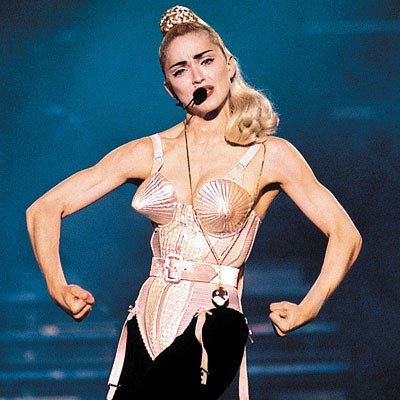 back. If you were a fan of Sex and the City, you may remember a certain episode towards the end where Carrie was tasked with cleaning out her closet. She tries on various costumes that fans recognized instantly from the series, while her friends yayed or nayed them. It was a perfect send-up to the whole era of SATC but should Madonna do the same I think the whole world might implode. Of course we all remember the cone-bras and that’s something that doesn’t really age because it’s iconic. The bustier layered on top of wide-legged trousers, however, feel like a much bigger mistake in retrospect, but one I’m glad to relive (as long as she’s the one caught on camera wearing it!).
There’s also a fair bit of celebrity gossip on hand because Madonna was of course dating (and breaking up with) Warren Beatty at the time. Beatty is definitely not fond of the constant cameras and you’ve got to wonder if they weren’t partially responsible for their parting (although Madonna’s hectic schedule and near-constant touring when health permits can’t have been easy either). Despite it being Warren in the picture, when Madonna is asked who the love of her life has been, she names Sean [Penn]. How much would you wager she’d answer the same today? Madonna herself doesn’t seem to court a lot of celebrity friends and she’s much too busy working to be out partying. A fair number do stop by to watch her concert and bump fists with her afterward, and the best cameo goes to Kevin Costner – no, to Kevin Costner’s mullet – who proves he’s beyond square by calling her show “neat” and acting rather bored.
Instead of partying, she stays in to baby her failing voice, and is often cuddled up with her dancers, decked out in fluffy hotel bathrobes. She and her dancers grow quite close during the tour, and she often talks about an intense mothering instinct that’s brought out in her. She ‘s only 32 or so, not so very much older than the dances, but in experience she’s already ancient.
There are lots of terrific Madonna moments, from being threatened with arrest for “indecency” at her Toronto Skydome concert, to reminding God that “she’s here” should he need her services during a pre-show group prayer.
I watched this as a companion piece to a more recent documentary called Strike A Pose – catching up with the dancers made famous by this documentary and her Blonde Ambition tour. Both are worth checking out, although Truth or Dare is clearly the classic.
 ASSHOLES WATCHING MOVIES