Tag Archives: Streaming on Netflix

The Night Clerk

Bart Bromley is an Aspie; he’ll tell you as much in one of his many long-winded, one-sided “conversations.” Bart (Tye Sheridan) lives with his mother. Well, not so much “with” as very much separately, but in her basement. She (Helen Hunt) leaves his meals on the top stair, and he eats them alone, while watching his filmed-in-secret videos, studying and imitating the people he tapes. Wanting to be like them, or at least pretend more convincingly.

Bart is a hotel night clerk, which, not coincidentally, is a great place to hide a bunch of cameras and really get into voyeurism for real. He doesn’t mean to do anything bad, it’s just that observing people is how he learns to live among them. Inevitably (it seems), one night he checks in a woman who is then murdered in her hotel room. Bart is at home, watching it happen. He sprints back to work and arrives just in time for the detective (John Leguizamo) to find him covered in blood, standing over her body. Not a good look, and Bart’s demeanor doesn’t exactly exude innocence. Transferred to another hotel, he checks in Andrea (Ana de Armas), an even more beguiling guest, one who he can actually talk to. So it kinda sucks when it seems she might end up the next victim.

Sheridan and de Armas are actually quite good in this, which is frustrating because the movie itself is…not. Sheridan’s put in the work, and his performance is convincing, even if I’m not thrilled by how his Asperger’s is portrayed. The real problem is that for a thriller – for a murder mystery! – there are no thrills whatsoever. Not even a frisson. And even though there’s a murderer unaccounted for, we don’t really care. There’s no tension, no real worry. The detective is the most chill, low-key cop you’ve ever met, the mother is strangely hands-off, Bart’s boss is surprisingly accommodating, and Andrea is an understanding and receptive romantic interest. Never has being a murder suspect been so easy breezy!

Writer-director Michael Cristofer doesn’t find anything interesting beyond his basic premise, and he fails to make a significant connection with his audience.


Ne Zha

Bear with me: I am about to attempt to describe the plot of a cartoon, which is deceptively hard work.

A chaos pearl, birthed from primordial essences, manifests as a giant crystal monster, is sucking up energy to feed its seemingly infinite potential for destruction. The Primeval Lord of Heaven, Tianzun, sends two of his disciples, Taiyi and Shen, to subdue it, but it just keeps siphoning energy, growing bigger and stronger, so the Primeval Lord Tianzun has to separate the pearl into two opposite components: a spirit pearl and a demon orb. The spirit pearl is meant to be reincarnated as a son to Li Jing, while Tianzun curses the demon orb; it will be destroyed in 3 years’ time by a powerful lightning strike. Tianzun gives them to the care of Taiyi and promises him a seat at his heavenly table if he performs well. This makes Shen insanely jealous of course, so he steals the spirit pearl, which means that Li Jing’s pregnant wife Lady Yin is possessed by the demon orb instead. Poor Lady Yin has been pregnant for 3 years and now gives birth to a demon child, Ne Zha.

If you’re following even 25% of what I’m saying, you deserve a silver medal (sorry, I’m reserving the gold for Lady Yin’s marathon pregnancy).

Ne Zha is born with unique powers, as you might expect, and he’s known (and feared) in the village as being incredibly destructive, which makes him a lonely outcast. Taiyi brings him to a universe inside a painting to train him and his progress is astounding, even if his discipline is lacking (note: this is an extremely advanced toddler). Meanwhile, Shen takes the stolen spirit pearl down to the Dragon King. The dragons are angry because they’ve been banished underwater as hell’s gatekeepers. The Dragon King believes that a son of his born of the spirit pearl would mean dragons would finally be worthy and could ascend to heaven, so he gives birth to an egg OUT OF HIS MOUTH and names the kid Ao Bing.

Against the odds, Ne Zha and Ao Bing meet and make friends, but as we know, they’re actually enemies, and they’re going to have to meet in battle on their third birthdays.

Written and directed by Yu Yang, the movie starts out with some shaky story-telling, and as you can tell by my synopsis, there’s quite a bit of vital information to parse rather quickly (we had to pause the movie, compare notes, and restart). Once it gets going, the problems get largely ironed out by some pretty compelling animation. The action scenes are of course commendable but I was also rather dazzled by the universe contained within the painting. Yu Yang takes full advantage of the perks of animation, allowing bold action sequences to communicate character, engaging the audience and fueling the film’s momentum. Kids will delight in the low-brow humour (and by low-brow I of course mean disgusting) and everyone can appreciate the visual spectacle of it all.

In China it was released exclusively in IMAX 3-D and I can imagine this would have been an excellent use of the medium. We watched the English dub on Netflix (we also had the subtitles on, which made for a mind-bending exercise as the two NEVER matched); if you do the same, make sure to check out mid- and post-credit scenes which introduce a new character and set up a sequel. The sequel was actually due to be released January 2020 in China but was postponed indefinitely due to COVID-19.

A Belle For Christmas

I learned something new this week and it’s all thanks to a Hallmark holiday romance called Broadcasting Christmas. I am diligently watching crappy Christmas movies just as fast as Netflix can release them, and when I posted a quickie review of one starring Dean Cain, some of you were just as quick to point out that Dean Cain is apparently a republican fart box. Frankly, though I haven’t thought of him in 20 years or so, and I certainly don’t follow him on my socials, I was a little surprised I hadn’t heard of it myself. Guess his C-status just doesn’t rate with so many other numpties making the news. So this time I’ll apologize in advance that we’ve got another Cain starrer on our hands.

This time he’s a widowed (widowered?) lawyer raising his kids in the suburbs and just starting to get back into the dating pool. He’s been on a couple of dates with big-headed barista Dani (Kristy Swanson) and without a living ex-wife to tell him this is wildly inappropriate, he not only introduces her to the kids, he allows her to move in over the holidays so they can all bond. Dani is a Disney villain personified – Lady Tremaine mixed Cruella De Vil, with a zany, borderline crazy streak that’s pretty disturbing, especially since Glenn seems not to notice it. His kids sure do though – they may be small but they know gold digger energy when they see it. Despite the fact that she excludes and gets rid of them at every chance she gets, and that she’s stealing jewelry from their dead mother’s coffers, they MAY have given her a second chance, at least for their dad, had she not stooped so low. But Dani really crosses the line when she brings their new but already beloved puppy Belle to a shelter to get euthanized (pause for gasps). She insists she’s just run away, but the kids suspect the truth. Accusations without evidence don’t go over well with their completely oblivious father, so they take matters into their own hands and along with a couple of helpful neighbour kids, they have themselves a little heist adventure on Christmas Eve.

A Belle for Christmas is a family movie rather than a romantic one. Although you’ll still find it has way too much Dean Cain (and too much Swanson, who is so over-the-top evil she feels like a cartoon character), it’s really about the kids. Belle belongs to Elliot (Jet Jurgensmeyer) officially, but big sister Phoebe (Meyrick Murphy) is just as devoted, and the siblings are close, united in their distrust of Dani and their grief for a mother who, let’s not forget, passed away less than a year ago. Elliot’s cocoa-selling, dog-loving crush Riley (Avary Anderson) is along for the ride, as is next door neighbour/Elliot’s best friend Malcolm (Connor Berry). All of these kids are as cute as they are talented, but director Jason Dallas knows a star when he sees one, and he’s made extra room in the film for Berry to shine.

Otherwise, it’s a bland but safe choice for family viewing, with a sweet dog who’s never in any real danger, except maybe of being hugged to death.

The Lovebirds

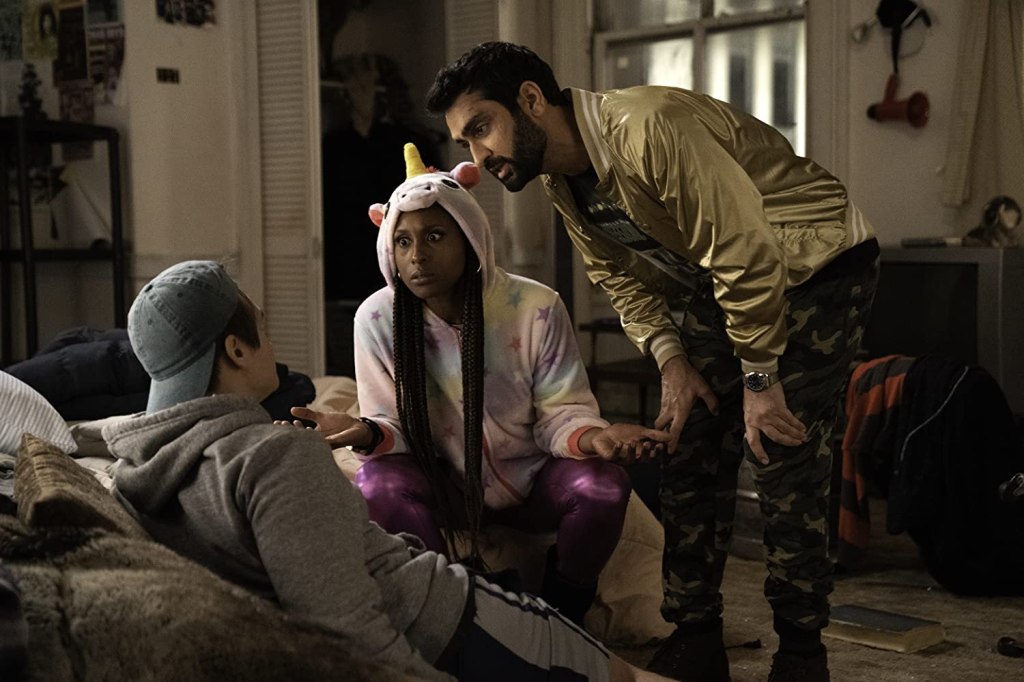
Jibran (Kumail Nanjiani) and Leilani (Issa Rae) are lingering in her doorway as they say goodbye after a one night stand. Neither is ready to part so they go to breakfast, and then the park, and then they don’t even notice where they are because they’re too busy confessing mutual crushes and making ooey gooey eyes at each other and generally just agreeing that this is the best thing that’s ever happened to them. Rae and Nanjiani are charming enough that this fills you with joy rather than loathing.

Cut to: four years later. Leilani and Jibran are together, and having one of those fights that couples have, the little thing that turns into a bigger thing, angry words exchanged as they hurry each other out the door, late to a dinner party. The fight continues in the car, and things unravel to the point of breakup. We’re just starting to feel like this is going to be one mother of an awkward dinner party when WHAM, the cyclist that Jibrani just hit rolls up the hood of their car, smashes his skull into their windshield, and then flops back down to the pavement.

It’s funny how killing someone can really put a crimp in your plans. Now they’ll have to put dinner AND their breakup on hold to run from the cops – at least until they can clear their names. You might guess that this does not go well; The Lovebirds is in fact a comedy. The murder aspect is deadly serious but the escalating circumstances in which they find themselves are pretty funny.

“Things going increasingly badly for good people” is one of the most tired tropes in the comedy genre, and The Lovebirds is pretty much exactly what you expect. Happily, Nanjiani and Rae are talented enough and compatible enough that their chemistry saves this thing from mediocrity. It’s too bad the movie really leans on them to carry this thing, but it’s a relief that they can, and they do. The movie’s uneven, there are funny parts, draggy parts, parts that don’t work, and parts that really do. But on the whole I found it fun and enjoyable – light fare from talented actors who deserve to use this film as a vault to better roles and bigger spotlights. And since you may be cooped up with your own partner for the tenth weekend in a row, it’s not a bad idea to pour yourself some sangria and wonder how YOU’D react under similar circumstances.

Love Is Blind

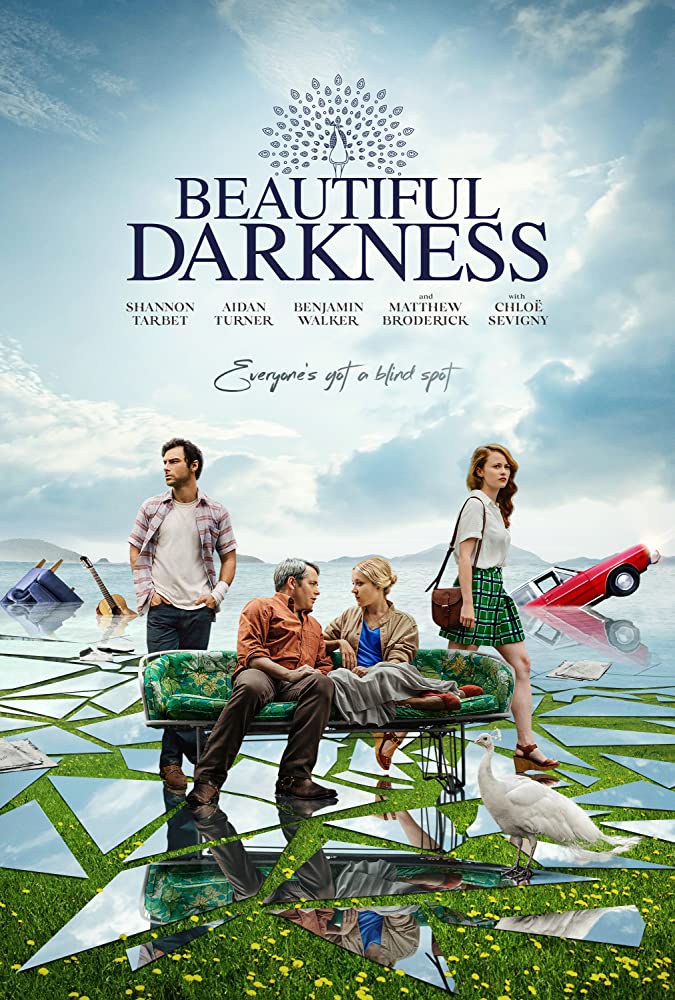
Bess is a strange young woman. She’s studying ocular health, has a white peacock named Argus, sees a bizarre psychotherapist, has a treehouse that looks as though Big Bird built it, and can’t see her mother. Well, either she can’t see her or she’s not there: that point is a little contentious. Bess (Shannon Tarbet) maintains that her mother (Chloe Sevigny) died 10 years ago in a car crash while her father (Matthew Broderick) speaks to her like she’s still there. Either Bess has weirdly selective vision or her dad Murray is demented with grief.

To be fair, Murray might be a bit demented. He has Parkinson’s, which is often linked with dementia. His advancing disease may be partially to blame for Bess’s failure to launch. She’s still at home, not particularly excited about optometry or her boyfriend or the state of her life. The only thing that really holds her attention is her therapist, Farmer (Benjamin Walker), with whom she has worked intensively for the past several years. Is she cured? In fact, she is not even so much as diagnosed. But on his way to another degree, and in the name of research, Farmer attempts therapeutic approach after therapeutic approach, and finally he plays the last card in his deck: group therapy. He pairs Bess with “therapy buddy” Russell (Aidan Turner), a suicidal demolition man. Two problems. Russell is in love with Bess. And Bess can’t see Russell.

Love Is Blind is an experimental kind of film, and a beautiful one, perfectly framed shots, vibrant colour palettes. It has a distinct vibe and simply asks the viewer to go with the flow. It’s a tiny bit opaque in that we don’t know for sure who’s having the mental breakdown so we’re basically just sifting through opposing evidence, but all of the evidence is saturated with an aesthetic that I totally bought into, so instead of totally obscuring things, it’s like watching a movie through the filter of unicorn skin.This movie literally made me say OUT LOUD “I thought that was a metaphor, but it wasn’t.” Don’t tell me you’re not interested! I, for one, was enchanted.

The Weekend

Zadie (Sasheer Zamata) is a shameless third wheel. She’s been moping about her breakup for three years and instead of moving on with her life, she’s spending the weekend at a bed and breakfast with him…and his new girlfriend. And by “new” I mean “not Zadie,” because this couple have already been together for two years and Bradford’s walking around with a diamond ring in his pocket. Zadie is downright hostile to new girlfriend Margo (DeWanda Wise), who is understandably less than thrilled to have her love life constantly monitored by Zadie. And Bradford (Tone Bell) seems infuriatingly oblivious…or does he just like having two women fight for his attention?

So while Zadie is crashing what should be a romantic weekend for two, a man named Aubrey (Y’lan Noel) shows up at the B&B without his plus one, who minused herself out of their equation. Aubrey, who is handsome and charming and available, makes some overtures in Zadie’s direction. God knows why: Zadie is not exactly a catch and she’s pretty busy making a fool out of herself.

I wanted to like this movie but I hated it immediately. Zadie is a stand-up comedian and her whole schtick is a pity party in honour of her breakup which is now several years behind her. She’s an unlikable protagonist and exactly the kind of person I avoid at all costs so it was painful to spend a whole 87 minutes in her grating, self-centered presence. Zadie is so pathetic it’s hard to imagine that anyone would be romantically (or otherwise) interested in her, but only her mother (Kym Whitley) ever calls her on her bullshit so the rest of us are left searching for blunt objects to make the pain go away (strictly speaking, a remote would get the job done with a lot less mess).

The thing is, I love Sasheer Zamata who is in fact a stand-up comedian whom I have enjoyed on many occasions. I hated to see her good name debased with such a wretched and plaintive set. The whole cast had much to recommend it, and with better material this could easily be a group to watch. Likewise, writer-director Stella Meghie is an immense talent who would be better served by characters worthy of her attention. The Weekend is not her best work but I hope it at least exorcised some ghosts.

Cracked Up

Darrell Hammond will go down in history as one of the greatest SNL cast members of all time – and he was the longest-tenured until Keenan Thompson unseated him recently. Both are alike in that they were never the show’s breakout stars, but their supportive performances aren’t just crucial, they are in fact the glue that makes it possible for the cast to coagulate at all. Darrell Hammond is a master impressionist and holds the record for doing the most on SNL – 105 – among them, rather famously,  Dick Cheney, Al Gore, Bill Clinton, Chris Matthews, Sean Connery, and Regis Philbin.

But while Hammond was making America giggle, in private he was battling debilitating flashbacks of childhood trauma; addiction and self-injury served as coping mechanisms until it all inevitably came crumbling down. It took 50 years for a doctor to diagnose his pain correctly, unleashing the painful memories his mind couldn’t bear to address.

He wrote about this in his autobiography and he shares further in director Michelle Esrick’s documentary, which can be found on Netflix. I hope he has some appreciation for how profoundly talking so openly about these things can impact not just an audience but indeed a culture. There is power in owning your story and understanding that any associated shame is not yours: is not the victim’s, but the perpetrator’s.

Childhood trauma is a far-reaching poison. Hammond, of course, has had the privilege and the resources to pay it the kind of attention necessary for taming it. Healing may be a lifelong journey, but it’s clear Hammond has found a healthier head space and a new appreciation for and ability to celebrate the good things in his life.

John Henry

John Henry is an African American folk hero. He is said to have worked as a “steel-driving man”—a man tasked with hammering a steel drill into rock to make holes for explosives to blast the rock in constructing a railroad tunnel. According to legend, John Henry’s prowess was measured in a race against a steam-powered rock drilling machine, a race that he won only to die in victory with hammer in hand as his heart gave out from stress. 

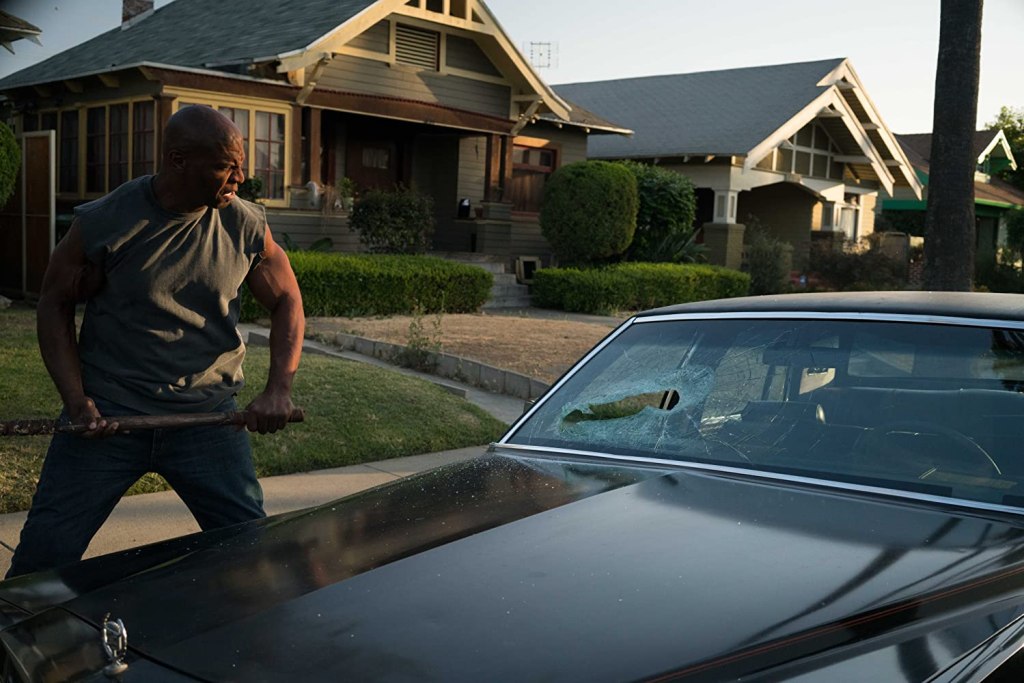
The new film recently released on Netflix stars Terry Crews as Henry, and drags this legend into the 21st century. This John Henry lives a quiet and peaceable life after an accident with a gun convinces him to retire from gang life and loaded weapons forever. Now it’s just him, his sweet dog, and his disabled dad (Ken Foree). Until two immigrant kids on the run from his former South Los Angeles gang leader stumble into his life, that is. That kind of puts a bit of a crimp in the old laying low lifestyle. Plus his honour code pretty much forces him to jump back into the fray on their behalf but because of his no gun policy, he’ll have to face off against an entire gang armed only with his big hammer. Yeesh.

I very much enjoyed watching Terry Crews flex his acting muscles for a change but the actors are pretty much the only thing that works in this movie. Director Will Forbes relies too heavily on violence to cover up his uncertainty. His shifts in tone are pretty wild and disorienting, and the editing makes it feel like large chunks of the movie were left on the cutting room floor. This movie is about as subtle as the sledgehammer John Henry carries.

In 2018, Netflix announced that Dwayne Johnson would portray the character in a film intended to be the first installment in a shared universe that centers around heroes of legend and folklore, from various ethnic groups and cultures. This is NOT that movie: it’s a different script and a different director. But that one, titled John Henry and the Statesmen, even had a teaser trailer. In 2018 they claimed it was “coming soon” but no word since on where it’s ended up (to be fair, Johnson and director Jake Kasdan have been making a lot of Jumanjis), but whether or not their Avengers-style folk legend shared universe takes off, it’s probably safe to say that Will Forbes’ is dead in the water.

The Stand At Paxton County

Imagine Erin Brockovich if she was more brash, less sexy, and instead of being pro health and corporate responsibility, she was anti animal rights. Sound like your cup of tea?

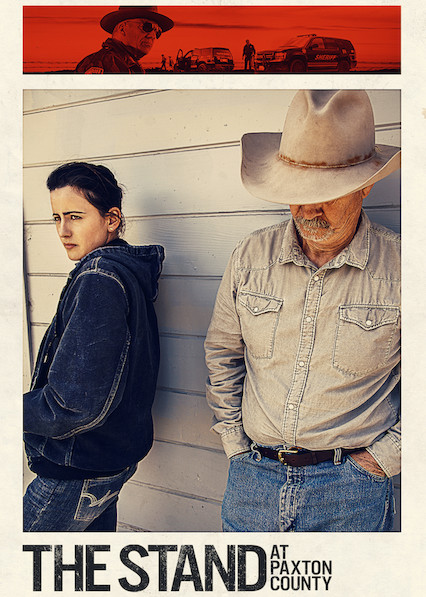
I don’t even drink tea and this still wasn’t my cuppa. But not because of how I’ve misleadingly described it. Janna Connelly (Jacqueline Toboni) is a military medic who’d rather be at war in Iraq (don’t quote me on that – it could have been any other recent skirmish) than at home on the ranch with her dad, Dell (Michael O’Neill). Even his heart attack isn’t much of an incentive but she reluctantly gives up being elbows-deep in the chest wounds of young men who didn’t sign up for this, and finds the family ranch in sad neglect. She and ranch hand Hudson (Tyler Jacob Moore) commit to fixing the place up but before they can make any changes, the town sheriff (Christopher McDonald) comes sniffing around with some vaguely qualified officials, based on an anonymous complaint about animal abuse.

Here’s the rub: some shady company has convinced the state senate to pass a bill (I’ve very likely gotten that process wrong, so just fill in the appropriate blanks or focus on the meat rather than the potatoes) that can confiscate a rancher’s entire herd on the word of a single vet’s assessment after an anonymous complaint. When that vet, that sheriff, and that company are in cahoots, it means a very cheap and easy way to come into many herds of cattle and strings of horses, which are quite lucrative on the resale. This company is not above manufacturing or planting evidence because they can hide behind the bill while the ranchers have little recourse, and the animals are gone by the time they can object in any case. It’s a tidy little scam that looks superficially legal and ruins a lot of innocent ranchers.

The movie is based on a real practice that does affect all kinds of American ranchers. Politicians are persuaded or duped into voting for a bill that sounds like a good thing – preventing animal abuse, but was always intended to provide legal cover for basically stealing someone’s valuable assets.

Unfortunately, director Brett Hedlund is no Steven Soderbergh. He struggles to make any of that sound interesting, making for a pretty slow and dry film, except for the parts where the script has overcompensated with cringy, unnecessary violence.

I suppose none of the actors are especially egregious but nor are they much good. The movie’s pretty bland and feels of a made-for-TV quality, and no, I don’t mean HBO. I mean Lifetime. But it does have the dubious honour of having premiered at the Black Hills Stock Show and been reviewed by Beef Monthly, for whatever that’s worth.

To learn more about this movie and others like it, find us here.

Lady Driver

Okay, let’s just get this out of the way at the top: the title. It’s a god-awful title that has no business being attached to a movie released in 2020. It sounds like the kind of thing a racist grandma would whisper to you, rolling her eyes, “Lady doctor” she’d say, as if that put her whole cancer diagnosis into question, like maybe that lady doctor was just on her period or something. Lady driver? As if she could barely handle the steering wheel with those delicate hands of hers, as if her stilettos would make for awkward working of the pedals, as if her manicure might chip from too much shifting. As if she doesn’t even have space in her undersized brain for anything other than making babies and making sandwiches. Lady Driver? Lady Driver? The only way this makes any sense at all is as an attempt to recall the excellent film Baby Driver, which only means that I’m further inflamed, as a woman and as a movie lover. In fact, you are encouraged to call female doctors ‘doctors’ and female firefighters ‘firefighters’ and female drivers ‘drivers’.

On to the movie. Which is about a girl, Ellie (Grace Van Dien), who learns to drive. As you do when you’re 16. And then she proceeds to steal the shop class car and run away from home, to “Uncle Tim,” her dead dad’s brother, long since estranged from the family. Ellie and her mom are having some pretty major conflicts so it’s agreed that she’ll stay with Tim (Sean Patrick Flanery) for the summer, working in his mechanic auto-shop. Except under a dusty tarp in the shop is a race car, and Ellie is drawn to it like her bra is lined with magnets. Sure she just got her driver’s license yesterday and she’s never seen a stick shift before – is that a reason she can’t race? Nope! She’s a lady driver after all. She just has to keep it secret from her wet blanket mother who’s a little touchy on the subject since “it’s dangerous” and “you’re a child” and “that’s how your father died” and similar lame mom excuses.

Anyway, if you’re willing to accept in your heart that driving is genetic and that girls can do it too, this movie is probably still not for you. It’s just not very good. But if you like dirt tracks and low expectations, this movie is “free” (with paid subscription) on Netflix so your risk is low. Perhaps not low enough, and that’s a totally understandable position to take, particularly if your worldview is already wide enough that you already think of lady drivers as just “drivers” in your head.