Tag Archives: Sundance 2021

Sundance 2021: Human Factors

It starts with a home invasion. Jan (Mark Waschke) and Nina (Sabine Timoteo) have taken their family to their vacation home in a coastal town where the trouble awaits. Jan is outside on the phone when he hears a scream. When no second scream is forthcoming, he resumes his call, unaware that his wife has just encountered people in the house, who flee before anyone else spots them. Rattled, Jan and Nina share their bed with their two children that night, a young son named Max (Wanja Valentin Kube) and teenage daughter Emma (Jule Hermann), their restful weekend getaway already shattered.
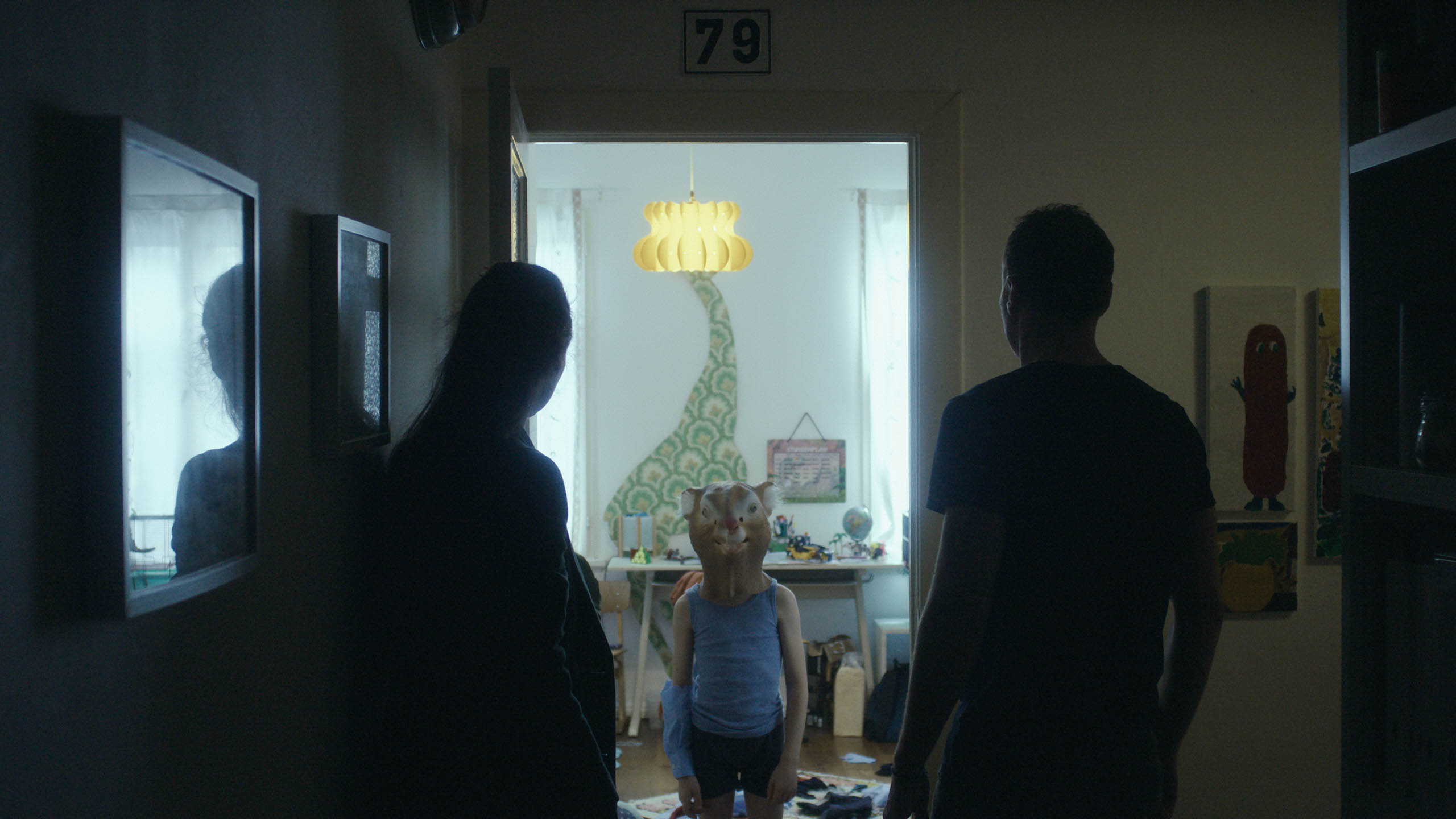
Forging on with the weekend in an attempt to put the incident behind them, it would seem their shaky nerves aren’t the only thing troubling this suburban family. Everything is off-balance. Jan hates that Nina has called her brother, who swoops in to the rescue. Nina hates that Jan has made a huge decision at their mutually owned and run business by himself. Jan suspects the break-in is a product of Nina’s nervous imagination, since she’s the only witness. And son Max accuses his father of “hiding” during the incident. Seeds of doubt and mistrust have been sown this weekend, and soon these weeds are growing out of control through the cracks of their family’s core. This has been a triggering event that challenges our notion of truth and of perspective. There is no one narrative, only shifting lenses that reveal the fragility of familial bonds.

Though I admire writer-director Ronny Trocker’s film thematically, I found the viewing experience to be less than ideal. Not because it’s brutally tense, though it is. And not because the characters aren’t particularly likeable, though that’s true too. The incident in question, whether or not it happened, was fairly trivial, and of no real consequences. Yet this relatively small stone thrown into the family puddle creates unexpected ripples whose effects are long-lasting. It’s really just a trigger point to expose already-existing fault lines, and then we sit back and watch this family quake. My problem with the film is that it was simply a boring watch. I wasn’t compelled by this characters, and didn’t much care about the aftershocks or the outcome for this family. Human Factors means well but asks for too much patience in exchange for too little pay out.
Sundance 2021: How It Ends

Do you want to know how it ends? A meteor. That’s how we go. For the people of Earth, that day is today. It’s the last day of Earth, and Liza (Zoe Lister-Jones) has been invited to a party. The meteor is the least interesting thing about How It Ends, and its only certainty.

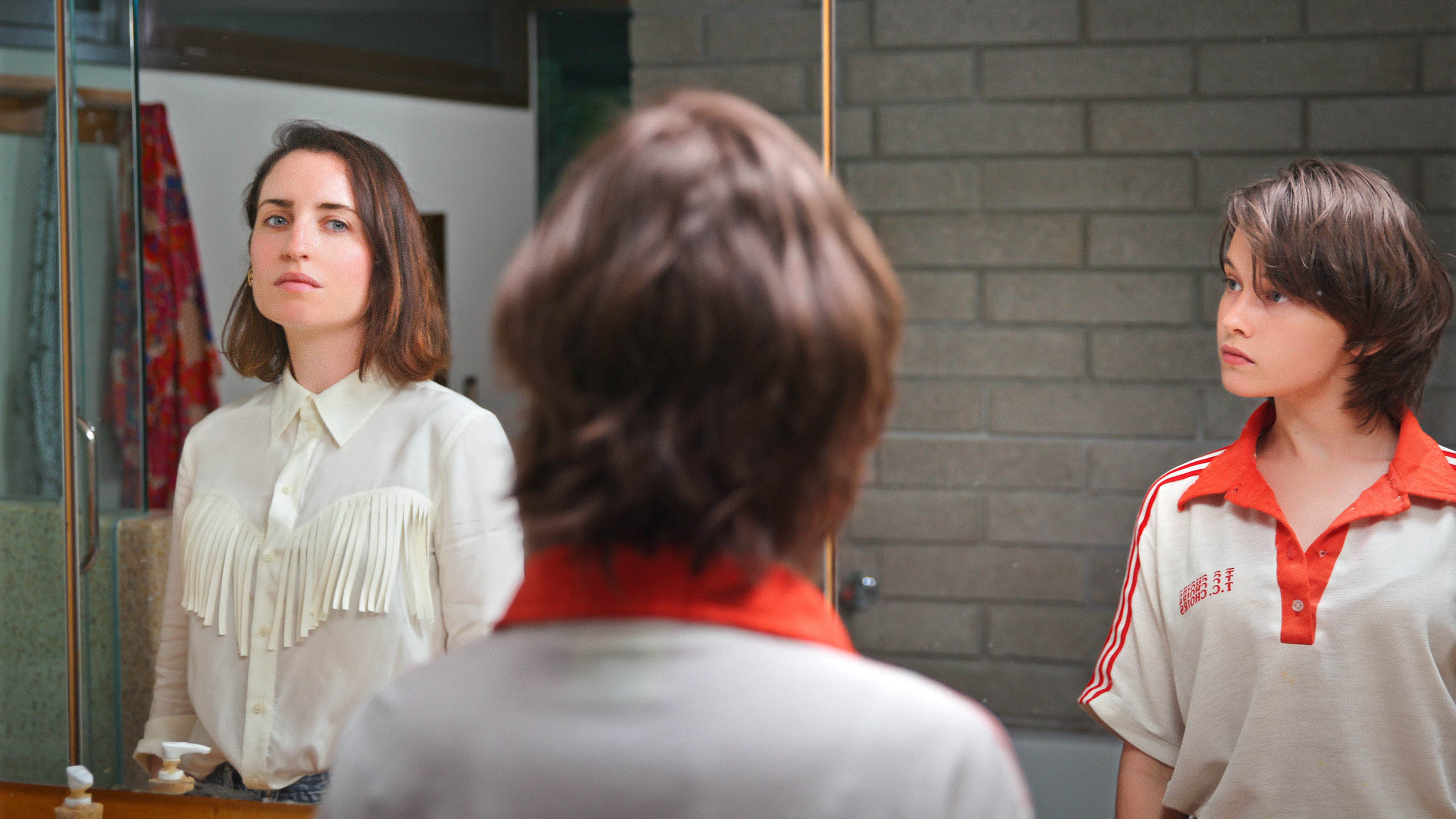
Liza’s initial inclination is to spend her last day alone, getting high and eating cookies. It’s a pretty solid plan, but unfortunately her Younger Self (also named Liza of course) (Cailee Spaeny) vetoes. Plan B involves checking off items on a list of regrets en route to the pre-apocalypse party. On Liza’s list of regrets: exes, former friends, estranged parents. Truth is the theme for the day, and if that doesn’t keep her honest, her Younger Self sure will. Liza and Young Liza hoof it across Los Angeles, encountering a pretty eclectic cast of characters, but most of all bonding with and taking care of each other.

How It Ends is oddly playful for the pre-apocalypse, but as both co-writer-director and its star, Zoe Lister-Jones certainly has the right sort of presence to pull it off. She’s got excellent chemistry with Spaeny, which you’d really sort of have to, or the whole thing would be an utter failure. It’s a fascinating philosophical experiment, to have two versions of the same person interacting with each other so naturally. I loved the relationship between the two, and felt a little jealous of it. I enjoyed laughing with them, eavesdropping on their most intimate conversations, and indulging in a double dose of Lister-Jones’ unique brand of charm.

Frequent collaborators Lister-Jones and Daryl Wein manage to take a quirky premise and ground it with self-aware performances. As the meteor draws ever nearer, we dread it not because of the impending doom of humanity, because it means the movie itself will end, and we’ve been having too much fun to want to say goodbye.

Sundance 2021: One For The Road

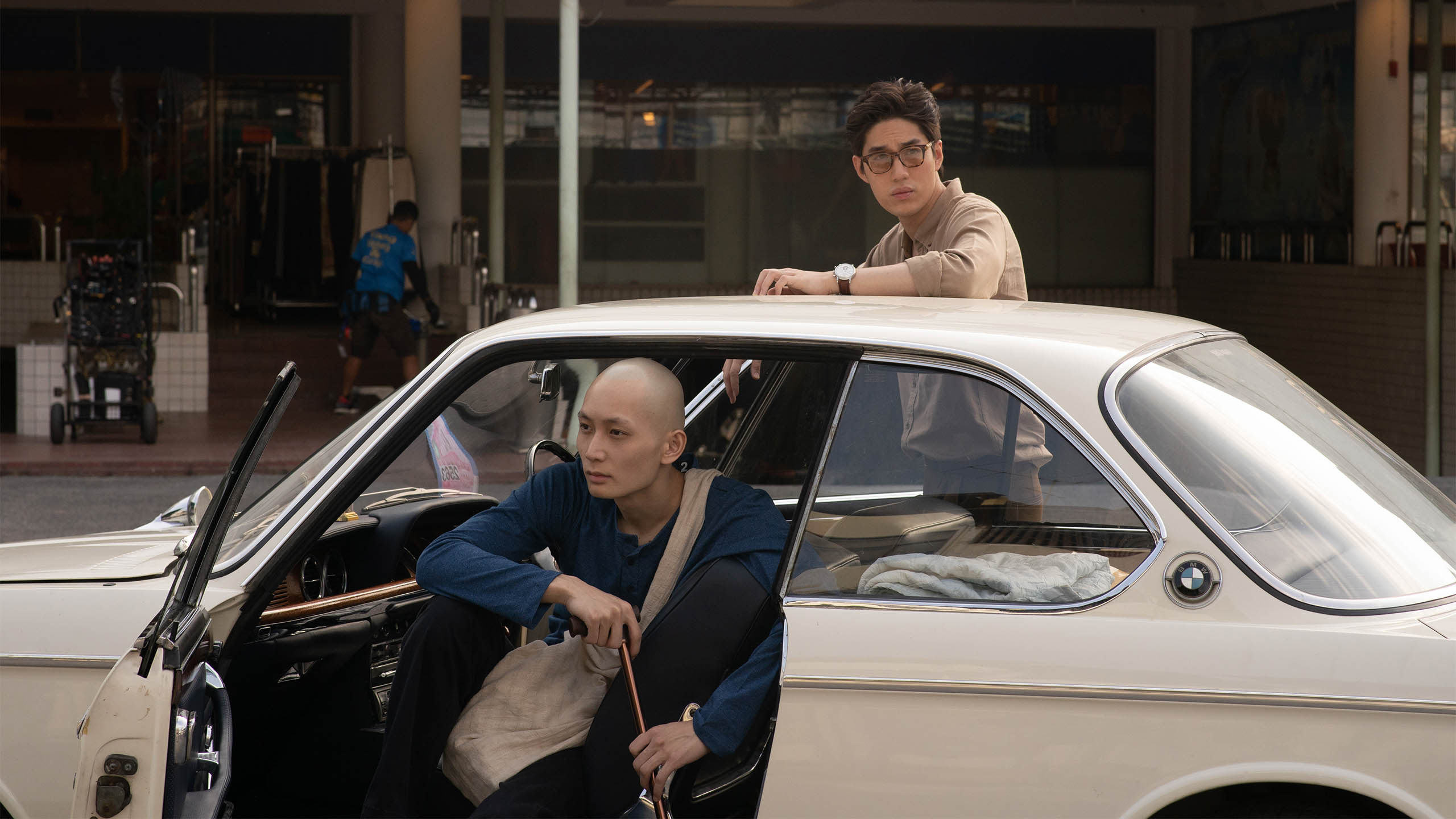
Aood (Ice Natara) finds out he’s dying of cancer and knows just who to call: everyone! Working his way through his contact list, he calls every friend and acquaintance to thank them for whatever it was that they’d shared. At the end he’s got only a select few remaining, close friends that he must say goodbye to in person.

His first call is to estranged best friend Boss (Tor Thanapob), a club owner in New York City, who agrees to return to Thailand to help his friend with a last request. Aood has a couple of ex-girlfriends to return mementos of their past relationship to, though closure is what he’s really after, on their behalf more than his own, being quite familiar with the dull ache of being the one left behind. One girlfriend is happier to see him than another, but either way, names are getting ticked off the list, dwindling contacts deleted from his phone. You might start to wonder, as I did, with half the movie still to go, is Aood’s cancer linger just a little too long? Alas, there is one relationship left to repair: predictably, that of Aood and Boss, and an ex they more or less have in common.

At this point the film jogs backwards, illuminating their shared history, but derailing the narrative of the first film quite drastically. Surprisingly, it eventually finds its way back, but I’m not convinced this was the best path to telling the story. More than just a story, though, One For The Road is a toast to male friendship and complicated bonds between young men.

Although the film didn’t blow me away, it did have some truly stand-out moments, and even if a bit derivative, it’s clear director Baz Poonpiriya has a voice and style he’s just beginning to own. If One For the Road is manipulative, at least it’s skillfully manipulative, and delivered via some fine performances. Poonpiriya shows promise, with some room for improvement.

Sundance 2021: Flee

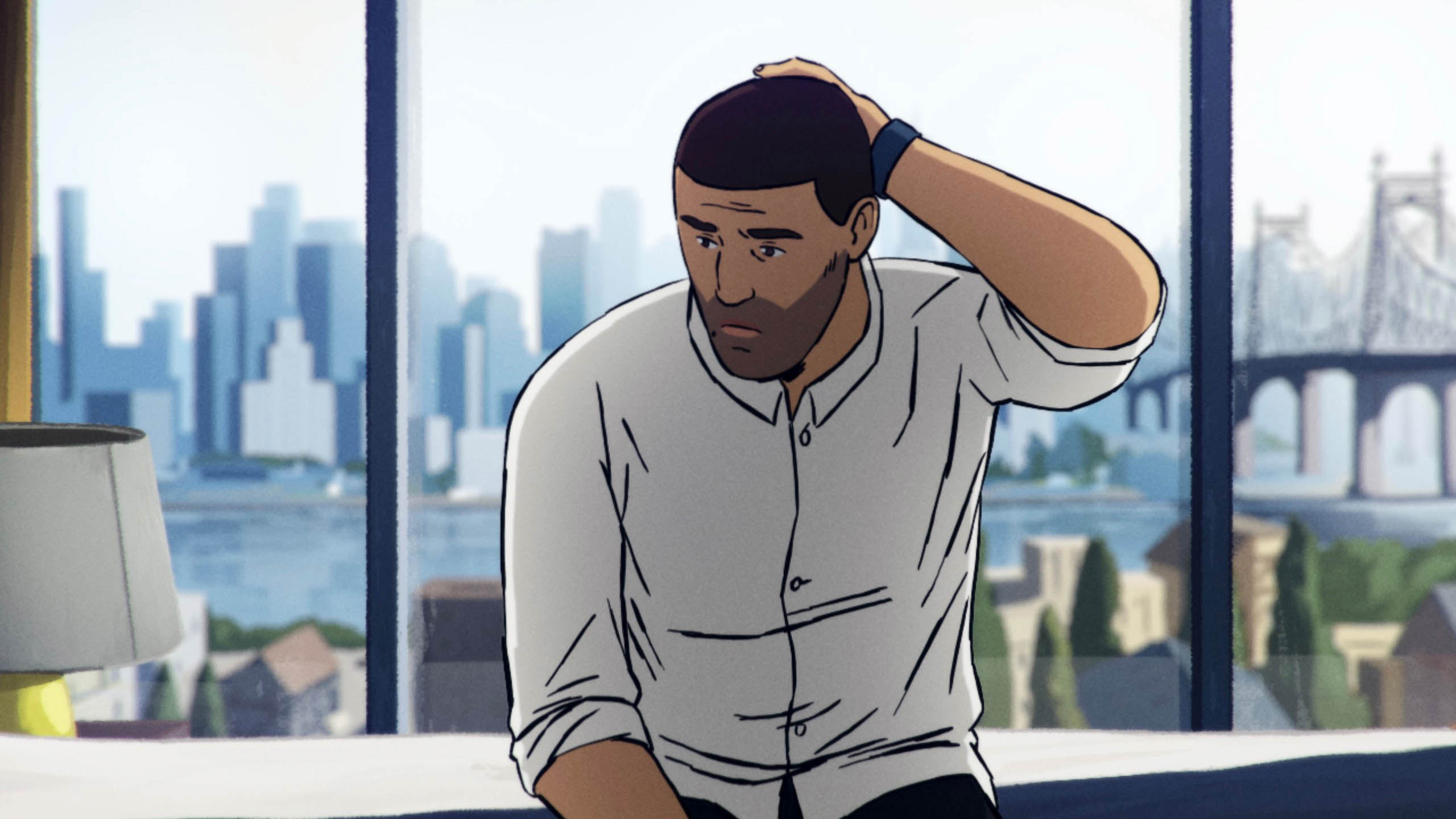
Amin is a successful academic on the verge of doing the whole house and marriage thing, but he’s been hiding a secret for more than 20 years, and a secret with roots that deep can threaten even the most stable life. So for the first time, Amin sits down to share his story with an old friend.

Amin and writer-director Jonas Poher Rasmussen have known each other since high school, when Amin arrived in Denmark from Afghanistan as an unaccompanied minor alone in the world, having fled the country of his birth by himself. His back story was shadowy and thus often the subject of gossip, but Amin kept his story to himself, and only now, in this animated documentary, is he choosing to unravel it for the first time, an attempt to reconcile himself with the past, perhaps, and an act of hope toward his future.

A powerful testament to the refugee experience, this animated documentary is unbound from the usual confines of story-telling and benefits from a multi-layered approach to truth and identity. Amin’s story is complicated, and it is sometimes contradictory. He’s had to hide the truth for fear of persecution, for fear of discovery, but he’s also hidden it from himself, a common coping mechanism. Thus his story is not just one man’s account of fleeing the Taliban, but an exploration of trauma and its far-reaching ramifications. And for dessert, an accidental treatise on unreliable narrators, truth distorted by perception and time. Even the animation itself serves as a filter, obscuring us further from a subject whom we never properly meet.

Shame and guilt are the salt and pepper to Amin’s narrative, seasoning wounds that are already festering quite nicely without help. We can only hope that the process has been cathartic for Amin, and grateful for the intimacy and trust implicit in this act of sharing. Rasmussen’s familiarity and friendship with his subject is a gift and a curse. Certainly his gentle coaxing elicits a fuller story that we might otherwise have heard, but Rasmussen sometimes forgets we don’t know Amin as well as he does. We might have enjoyed an introduction. And Rasmussen’s wish to grant his friend a happy ending is admirable, but as a film maker, it’s a little easy, a little pat. And yet, over the course of our 83 minutes together, we want the best for him too. Amin doesn’t owe us his story. His sharing is a gift, and if Rasmussen is tempted to wrap it up in a bow, who can blame him?

Executive produced by Riz Ahmed and Nikolaj Coster-Waldau, Flee premiered on opening night at the Sundance Film Festival and was so well-received that NEON snapped it up, the first acquisition of Sundance 2021, before I could even post this review.