
Two Americans in Tokyo. Charlotte (Scarlett Johansson) is there for work – her husband’s work. Neglected, she spends er time gazing down upon the city from the cloisters of her hotel room. Elsewhere in said hotel, Bob (Bill Murray) is suffering the indignity of doing foreign commercials ow that his movie work has dried up. It’s a nice pay day but a blow to his ego. His wife nags him long-distance, via middle of the night faxes.
When Charlotte and Bob meet, they are immediate kindred spirits. Lonely and  American, they form a bond that mimics intimacy. In their glowy little bubble, they experience the quirks and sights of Japan; its foreign-ness feels less daunting and more adventurous when they’re together. When they’re apart, it emphasizes their aloneness. But they always revert to the comfort and familiarity of their luxurious but non-descript hotel. In he hotel, they could be anywhere. They develop such a strong sense of we vs. them that even other Americans seem wrong to them, are laughable. Of course, their friendship is a little dangerous: it won’t be good for either of their marriages.
Bill Murray is good – Oscar-nominated good. His improvisations are so good you can literally see extras cracking up in some scenes. Scarlett Johansson was only 17 when this was filmed, so she’s more of a blank slate, having not yet picked up a lot of the acting crutches and mannerisms upon which she’s come to rely. Actually, in 2018, Lost in Translation is 15 years old, which is almost as old as she was when she made it. That’s something to think about, isn’t it?
Writer-director Sofia Coppola probably made her biggest splash with this film. It pulses with life because she threw so much of herself, her own insecurities and worries, into it. Both of these characters travel to an alien land to truly realize how isolated they’ve become. They are disconnected from their spouses, and communication back home is sporadic and brief. There’s a longing for connection that’s an evident, live thread woven into the tapestry of this film. So many small details add up as proof of their passionate friendship, which is far more effective in this context than a sexual relationship would have been.
The film’s sparsity of dialogue speaks volumes to language not being the greatest barrier between people. Communication happens on all levels, and Coppola signals this in her final scene, with that elusive yet beautiful ending in which Murray whispers something unintelligible to Johansson, and they share a tender kiss. What did he say to her? We may never know the words, but ew unddertand the meaning.
 he’s got the most misogynistic piece of programming he can muster, and he shares it like wildfire. It attracts the attention of a couple of conceited, ambitious BMOCs – The Winklevoss twins (Armie Hammer), who have an idea of their own for an exclusive social network.
 But visually – well, even now, 20 years on, it’s unlike anything you’ve seen. While the heaven-scapes are vivid and sometimes downright magical, it may be the visions of hell that haunt you. Robin Williams tiptoes through a carpet of faces – anguished people buried up to their necks, barely more than the holes necessary for breathing left exposed. The faces are pale and full of yearning. It’s awful – and it’s really awful when there’s nowhere for him to walk but over them.


 starting up yet another business (landscape design) and Nic is barely tolerating the effort. But Paul’s arrival is completely destabilizing. Not only is their daughter moving away, they also feel like they’re losing their kids to a new, cool parent who has never had to discipline them or hurt their feelings. When Jules goes to work for Paul, it’s kind of the last straw. No wait: when Jules sleeps with Paul, that’s the very last straw.
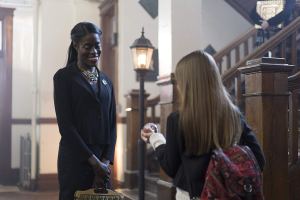 them – the 642nd annual Witches’ Ball, on Halloween night. She’ll graduate alongside her mother, who, being a non-witch, has just converted, and the bitchy witch who’s been bullying her at school for not being “pure blooded” enough or some such bullshit. Anyway, as class valedictorian, Beatrix receives her crystal ball ahead of the ceremony, for inspiration. And she immediately breaks it. Well, bitchy, witchy Jasmine does, but it amounts to Beatrix being in big trouble – possibly barred from witchery forever. So she enlists the help of a talking pumpkin (voiced by Weird Al) and her enchanted pet rat (voiced by NSYNC’s Joey Fatone) to solve an excessively lame set of riddles that will somehow mend her broken ball.
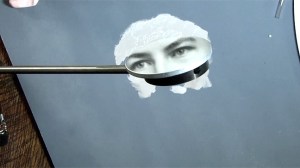 available to him at the time. What’s that, you ask? And I’m glad you did. It’s astonishingly simple: a mirror. A fucking mirror. It becomes possible to project a living image directly onto a canvas and to match colour and light exactly. Exactly! It’s astonishing to see Jenison whip up an oil painting using this technique. So Jenison, who has a whole lot of money, decides to reconstruct one of Vermeer’s most-used rooms to see if you can reproduce one of his paintings. And Penn Jillette (of Penn & Teller), a personal friend of his, becomes his documentarian.
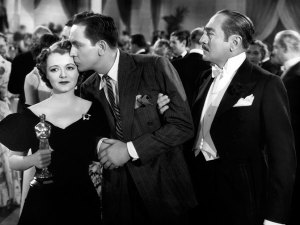 to be financing thousands of ingenues, and Hollywood is crawling with unemployed actresses. Esther is nearly down to her last dollar when she meets Norman Maine, a famous film star who eyes her both romantically and professionally. But as they fall in love and he helps her with her career, his own takes hit after hit. An unreliable alcoholic, Norman seems to have used up all the public’s good will.
 ASSHOLES WATCHING MOVIES