
The Lion King live action remake got one thing right: it remembered that it is primarily an African story. To be fair, it was likely the Broadway show that did this for them, but Jon Favreau had the presence of mind to follow their lead and cast actual black actors in the important speaking parts. The Disney cartoon from 1994 wasn’t motivated by authenticity and we as a culture failed to keep them honest. So when Favreau chose only one returning voice actor to serve as a link between the two films, James Earl Jones was both the obvious and the best choice. His is the voice of wisdom that runs throughout both films, but the 2019 version backs that shit up with a stellar cast that is as talented as they are representative: Chiwetel Ejiofor, John Kani, Alfre Woodard, Keegan-Michael Key, JD McCrary, Chance the Rapper, Shahadi Wright Joseph, Florence Kasumba, Eric André. But none were chosen more carefully or more brilliantly than our Simba and Nala, Donald Glover and Beyoncé; they aren’t just black actors but recent symbols of owning one’s blackness. If the The Lion King remake justifies itself at all, it’s by putting those two front and centre, sending a powerful message of just who should be King and Queen.
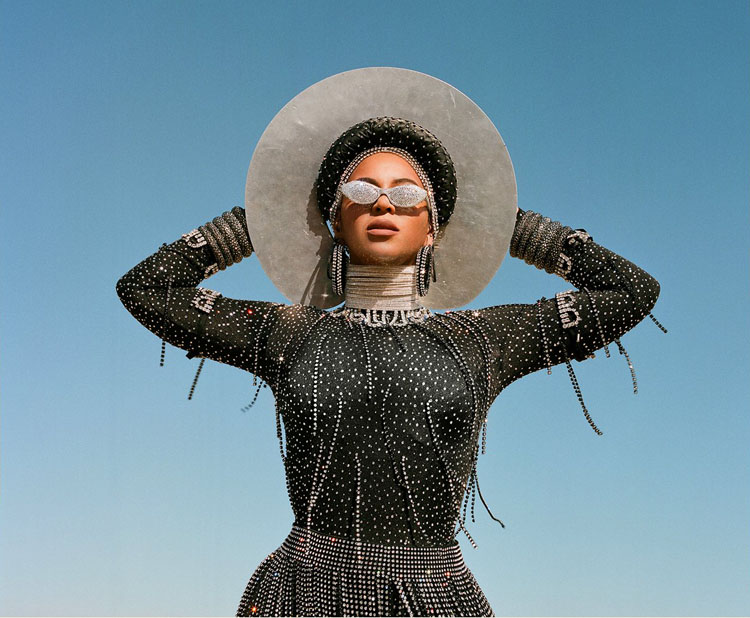
Black Is King is a visual album from genius multi-hyphenate Beyoncé. It reimagines the lessons of The Lion King for today’s young kings and queens in search of their own crowns. It is a love letter to her African roots while celebrating Black families.
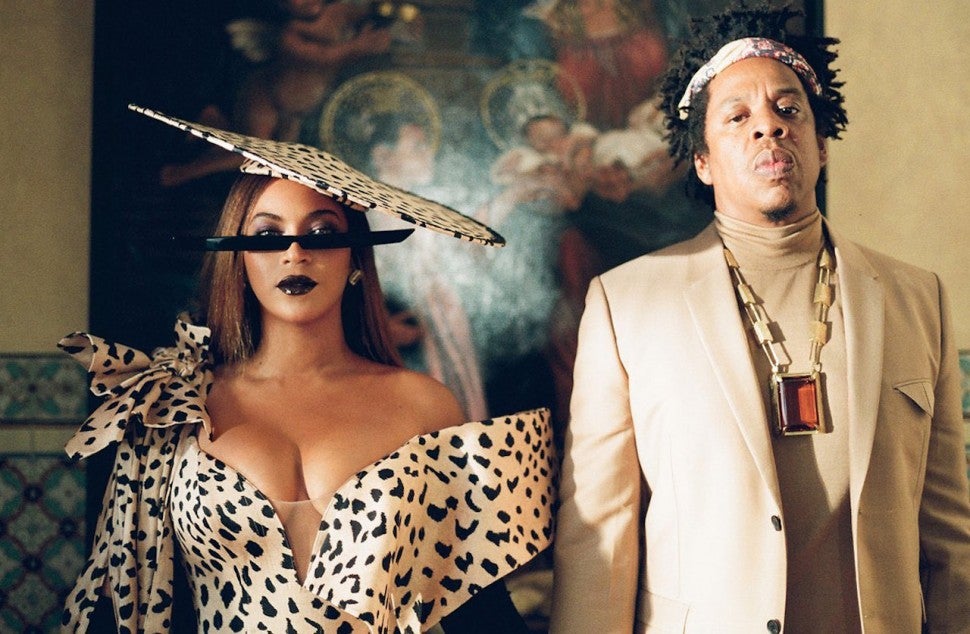
Beyoncé is the undisputed Queen of Pop. Her ascension must have come with a lot of racism, overt and covert, attached – she would have been accused of exploiting her culture while also being asked to suppress it – problems the likes of Pink and Madonna and Lady Gaga never considered let alone experienced. This system seems to have caused or at least contributed to the internalized hatred of his race in her counterpart, King of Pop, Michael Jackson. And yet Beyoncé has not just transcended the challenges to her skin tone and hair texture, she has come out on the other side a powerful and vocal advocate for anti-racism. For many of us, the change in her was undeniable at the 2016 Super Bowl, a performance dubbed “unapologetically black,” incorporating dancers in Black Panther berets performing black power salutes, arranging themselves into the letter “X” for Malcolm, a homemade sign demanding “Justice for Mario Woods”, and Beyoncé’s own costume, said to be a tribute to Michael Jackson. The performance reflected the modern civil rights movement Black Lives Matter and handed us her rallying cry in the song Formation, which references slogans such as “Stop shooting us”, riot police, the shamefully neglectful official response to Hurricane Katrina which demonstrated that poor, predominantly black lives were clearly deemed not to matter. “I like my baby hair and afros. I like my Negro nose with Jackson 5 nostrils, ” she sang, offering an education in the Black American experience.

Beyoncé has always been a proud African-American woman and artist. She pursued movie roles in Dream Girls and Cadillac Records. Her wondrously thick thighs became politicized in her Crazy In Love video. There were criticisms with racial undertones when she headlined Glastonbury in 2011. She sang At Last to the Obamas for their inauguration dance. She and fellow Destiny’s Child Kelly Rowland started a charity to help Katrina survivors. Husband Jay-Z has been critical of the injustice of the profitable bail bond industry, with over 400,000 people who have not been convicted of a crime incarcerated simply because they can’t afford bail, often set at less than 5K. Beyoncé didn’t suddenly discover her blackness in 2016. Whether the political climate pushed her over the edge, or becoming a mother to her own Black daughter did it, or she realized that her success and popularity gave her immunity, Beyoncé started using her voice and her platform quite blatantly, and quite brilliantly. There are few people in the world with her kind of power, and she’s been able to snatch back the Black narrative from the fringes and help spotlight it centre stage. But it was also a risk to have her name synonymously linked with black rights, but as she states rather directly in this film, “Let black be synonymous with glory.” If 2016’s Super Bowl half time show was her coming out party, her 2018 Coachella performance cemented her mythic, iconic status. As the first black woman to headline the festival, her show was explicitly black, triumphantly black. Look no further than her documentary Homecoming to see how deliberately, lovingly, boldly she created every element in her show to be marinated in cultural meaning. She didn’t just pay homage to those who came before her, she used her two hour set to unpack a lesson in black music history. She literally used her platform to honour and recognize black art; the performance was a revelation to the predominantly privileged white audience of Coachella, but it created a real moment in time that reached into the hearts and souls of those who could fully appreciated it. Having already achieved pop royalty status, Beyonce is free to make the strong personal and political statements that have defined her career ever since. Her success is no longer measured by mere radio plays; freed from having to abide by what makes her white audience comfortable, she and Jay-Z are reigning from a throne of their own making. She no longer has to shrink or contain her blackness and it’s clearly been a boon to her creativity and craft. Black Is King follows in the footsteps of Lemonade, defiantly blazing her own path, and returning to the African desert that clearly still calls her name.

This visual album is of course an occular and audible delight. It jumps off from The Lion King, swapping lions for Black men and women. It highlights the extremely varied beauty of the African landscape, and of its people. There are set pieces in here where you can readily imagine the ka-ching of literally millions of dollars spent per second of film.
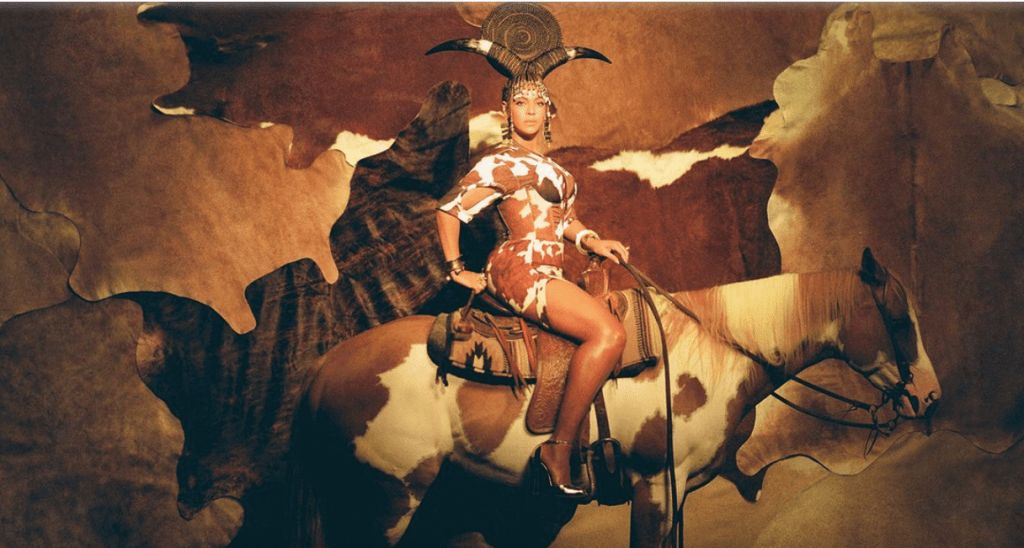
The Gift, Beyoncé’s Lion King-inspired album, takes us beyond Disney’s version of Hollywood’s Africa. Her original contribution to the film’s soundtrack, Spirit, is a gospel-charged anthem, but she didn’t stop there. She found up-and-coming African artists, songwriters, and producers to join her on the album, creating an international vibe with a strong and undeniable heartbeat.
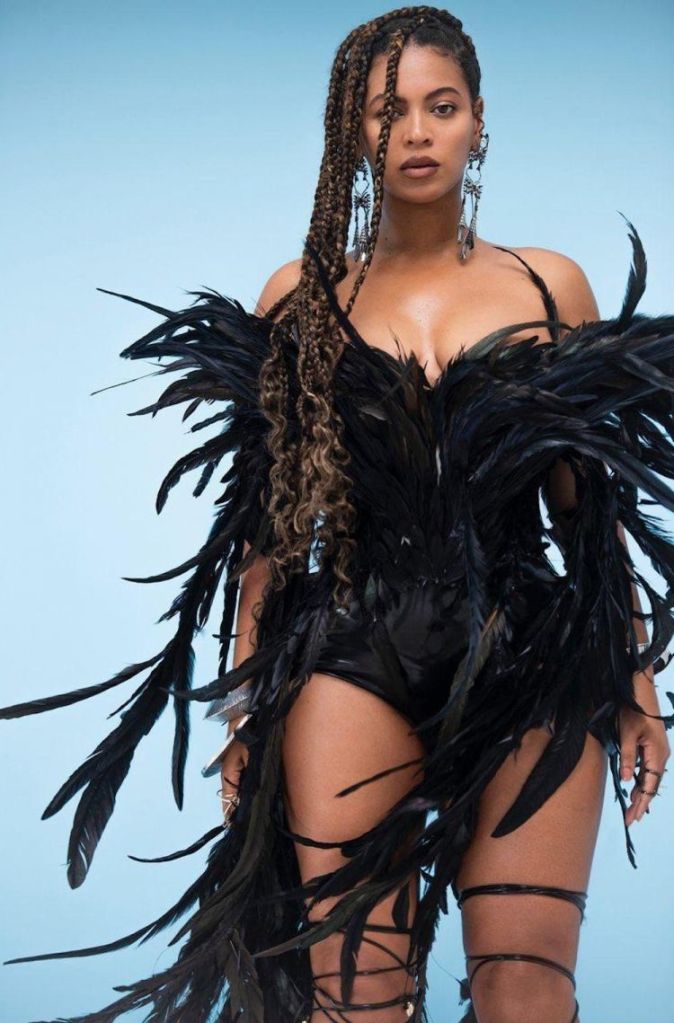
The accompanying film is stuffed with imagery, implication, poetry and practice that feels like such an intimate declaration of love and admiration that I watched on the verge of a constant blush. Even Kelly Rowland felt it, being the recipient of Beyoncé’s sincere serenade, breaking the beaming eye contact with an overwhelmed giggle.
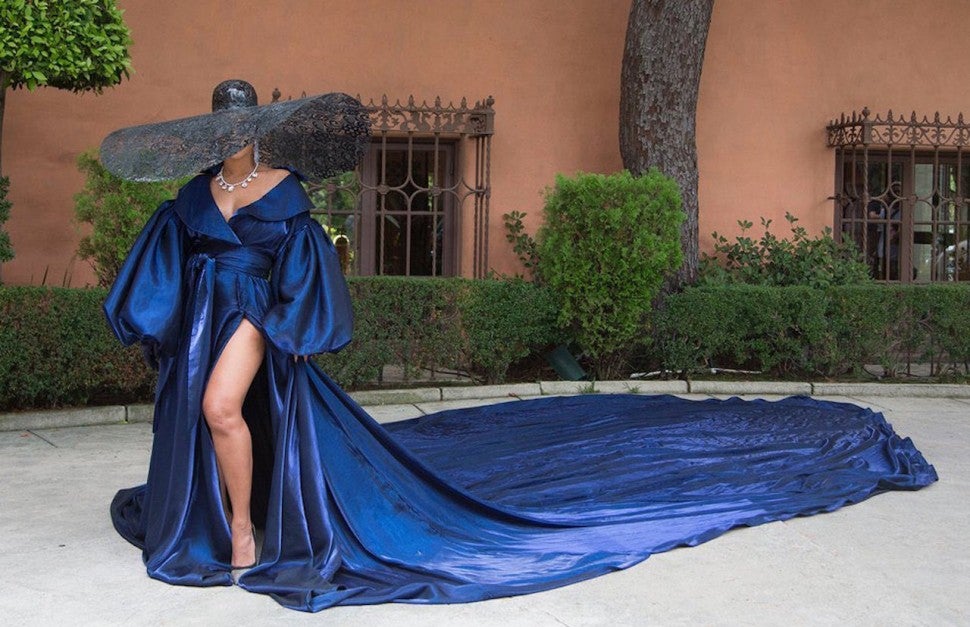
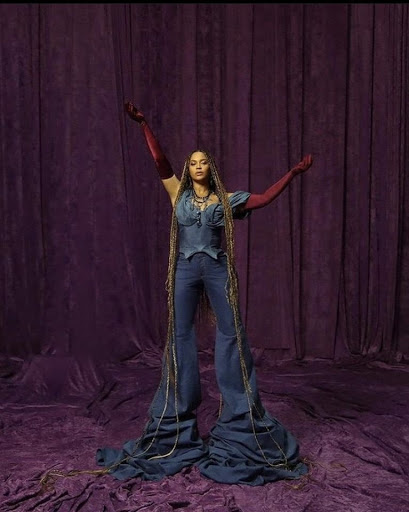
The visual album exists to toast beauty, observe beauty, create beauty, memorialize it. But a visual album from Beyoncé is to define and redefine it, to find beauty in new or forgotten spaces it, to celebrate a spectrum of beauty, to infuse it with ideas of culture and identity, to own it, to actually physically own it. And for that reason, I almost wish I could watch it at half speed. There are so many lavish tableaus set with precision and abundance but only glimpsed for a second or two; I want so badly to just live in that moment, to possess and savour it a minute longer.
And like a true Queen, she steps aside and allows herself to be upstaged by African collaborators, like Busiswa from South Africa, Salatiel from Cameroon and Yemi Alade and Mr Eazi from Nigeria. This album is a show of solidarity, an act of unity. She places herself among them, among the ancient beats and contemporary sound.

A thousand words in, dare I only broach the subject of fashion now? The sheer quantity of couture from Queen B is nearly numbing, except each look is so bold and unique you do your best to keep up to the dazzling, nonstop parade: Valentino, Burberry, Thierry Mugler, Erdem. But also a barage of Black designers from around the world, curated diligently and I’d guess rather exhaustively by Beyonce’s longtime stylist, Zerina Akers: D.Bleu.Dazzled, Loza Maléombho, Lace by Tanaya, Déviant La Vie, Jerome Lamaar, Duckie Confetti, Melissa Simon-Hartman, Adama Amanda Ndiaye…you get the picture. It’s MAJOR, every one of them re-imagining a wardrobe fit for an African Queen, their number so plentiful that no one garment or gown overpowers the beauty of their canvas: brown skin.

Beyoncé surrounds herself with Black beauties, including Naomi Campbell, Adut Akech, and Lupita Nyong’o, but also her own mother, Tina Knowles Lawson, and daughter Blue Ivy. Her family is often presented as a symbol of her strength, young twins Rumi and Sir making appearances as well, equating “kingship” with engaged fatherhood.

There is so much to unpack in this film, from the frenzied and joyous dancing of black bodies, to their posing as sculpture on pedestals, to the recreation of moments from her own storied career, there is more here than I can enumerate let alone appreciate. Like the star herself, Beyoncé’s concept of blackness is a hybrid of her ancestral lands and the country of her birth. It’s an amalgamation of black art and black history and a vision of black power, of ethnic and cultural splendor. And what a time to have dropped it, in a world where white people are just now opening their eyes to the racial injustice and inequality that has yoked people of colour for centuries, where black bodies are being discriminated against at best, black minds suppressed, black art appropriated, black experiences denied. And here is a woman who could easily coast on her laurels but instead is serving her people by framing the Black experience not only in a positive light, but a powerful and empowering one. Black Is King is not a cure for racism, not even a vaccine, but it may just be the booster shot of pride we all need right now.

 ASSHOLES WATCHING MOVIES