Author Archives: Jay

Sundance 2021: Pleasure

I mentioned in my Sundance review of Violation that I’d watched several R-rated horror movies and yet none until Violation had asked me to confirm my birthdate. The difference? Not blood or guts or skinned animals or severed limbs or gouged eyeballs; the difference was a mere erection. Erect penises are apparently more horrific than mass murder or treating body parts like fire wood. Pleasure, too, has asked me to “prove” I’m legal, and in some respect, the erections here are indeed horrific.

Twenty year old Linnéa Bella Cherry (Sofia Kappel) leaves small town Sweden for Los Angeles with aims to become the world’s next big porn star. This road is indeed paved with many, many erections, and Bella’s over the top, completely fake reactions to them. She knows how to play the game, but the path to superstardom isn’t quite as straight forward as she’d imagined. To get noticed, she agrees to increasingly more toxic situations and ends up getting fucked.

Director Ninja Thyberg has clearly spent a long time immersed in the culture of pornography to present such a grounded and evocative picture of its reality. Deconstructing its inherent misogyny and the ubiquitous privilege of male positions in all aspects of the business, Thyberg tells her story with equal parts humour and humiliation, all of it raw and unfiltered. It’s no surprise to anyone that the porn industry is predatory, yet Thyberg strives to share a perspective that represents sex work in a positive way. The script doesn’t judge Bella for her choices or their consequences, understanding that viewers will bring enough judgment of their own, making the viewing experience dependent on each person’s own prejudices and expectations.

Ninja Thyberg casts actress Sofia Kappel as the beautiful blank slate, allowing us to use her as a human Rorschach test, but she meta-casts the rest of the film with porn insiders. Giving Pleasure a sense of realism are Chris Cock (Thrilla in Vanilla 8, Facesitting Tales 4), Dana DeArmond (Semen Sippers 7, Ass Eaters Unanimous 15), John Strong (Double Stuffed 6, Cum Fart Cocktails 6), Charlotte Cross (Cum Fiesta, Electrosluts), Xander Corvus (Foot Worship, Turbo Sluts 2), Evelyn Claire (My First Interracial 11, Lesbian Strap-on Bosses 4), Kendra Spade (Creampie My Bush!, Giant Dicks in Asian Chicks 3), Axel Braun (Busty Hotwives, Squirt Class 2) and more. So many more. Pleasure doesn’t lack for authenticity.

Arriving at LAX, a customs agent asks Bella whether she’s in the country for business or pleasure – you can guess at the answer she gives with a smirk – but the film itself refuses to see these terms in black or white. Certainly Thyberg makes clear that Pleasure isn’t here for our pleasure, it brilliantly and almost magically avoids sexualizing Kappel even while hauling her through scenes of double anal and rape-adjacent threesomes. In this film, the camera gives Bella a certain power that most porn starlets will never have: agency. It’s actually a story you’ve seen a million times before: a young ingenue climbing her way to the top. If you fail to recognize it, it’s only because you haven’t seen it wearing a strap-on before.  Oscar Wilde once apparently said “Everything in the world is about sex, except sex. Sex is about power.” And in this film, those words have never been more true.

Black Beach

Carlos (Raúl Arévalo) thinks his life is on the verge of perfection: after putting in some serious hard work with his firm in Brussels, he’s about to get promoted to New York, which is where he and wife, eight months pregnant Susan (Melina Matthews), want to live and raise their baby. Carlos is wrong. His life is actually about to go to shit.

His promotion at the American oil company is used as incentive blackmail to get him to go to a remote African island country to negotiate for one of their engineers, who’s been kidnapped. Carlos lived there briefly years ago, which his boss claims will come in handy, but it actually only complicates matters, because the kidnapper is actually Carlos’ old friend, Calixto (Jimmy Castro). So now Carlos has to tread these murky waters carefully, working the friend angle in order to placate both his company and the island nation’s “democratic” government, all the while rescuing this stupid engineer. He ropes old colleague Alejandra (Candela Peña) and her girlfriend Eva (Fenda Drame) into helping him, who accidentally reveal that Calixto is now married to Carlos’ old flame Ada, and that their son Calixto Jr. is actually Carlos’ son, whom he believed to have been aborted nine years ago. Can someone say soap opera? Things get further tangled when the whole kidnapping plot turns out to be tied to secret documents implicating the oil company in a genocide complicit with none other than the country’s “democratically elected” president. Just try to get out of this alive now, Carlos!

And don’t even try to catch your breath because just when you think the movie’s ended, it’s only about half way through, embarking on a weirdly long and extremely anticlimactic denouement that would have been better left on the cutting room floor. This movie starts to feel like a chore pretty early on; it’s a slog of details and loose ends that often lead to switchbacks and roundabouts and frustrating dead ends. There are at least three different movies vying for attention in Black Beach, which plays like a movie with split personalities, and they don’t exactly play nicely together or make a cohesive whole. Director Esteban Crespo has made a movie about white privilege, a theme that probably needs to be seen but requires a better movie to serve as its vehicle. Carlos is every white colonizer. He’s untouchable, but every Black person near him winds up dead. He sleeps in a palace and drives a Ferrari to the slums; he’s there to rescue another white guy and leave again, no matter what death and destruction may lay in his wake. If this film was better, we’d leave with a sense of just how many hands are dirtied when first world capitalism meets third world need. Unfortunately, Crespo’s film is so convoluted, it’s hard to take away much more than a head scratch and blown expectations.

Sundance 2021: Cusp

Isabel Bethencourt and Parker Hill debuted their brilliant documentary, Cusp, at the 2021 Sundance Film Festival.

In a Texas military town, three teenage girls go about their summer break as if no one’s watching. Drinks, drugs, guns, and toxic masculinity – a terrible combination mostly shrugged off by the girls who don’t know any better way to be. Autumn, Brittney, and Aaloni are so cavalier about their perceived helplessness that it’ll make you sick to your stomach. And yet these girls are representative of so many more that it’s both illuminating and deeply disturbing to hear their thoughts on freedom, consent, and ubiquitous sexual violence.

With a vérité approach, Bethencourt and Hill chronicle the lives of 15 year old girls with sensitivity and truth. Mimicking their lazy, unstructured lives, the camera is merely a witness to the intimate moments within their family homes and their social circles. In some ways Autumn, Brittney, and Aalani are dealing with more adult problems than I encountered in my own youth, yet they seem so much less mature, less equipped to survive these formative years on the cusp of adulthood.

Bethencourt and Hill manage to observe unobtrusively while eliciting organic, surprisingly nonchalant confessions from their subjects. It’s an eye-opening documentary that all parents should see, and take away at least one valuable lesson: to teach your daughters to say no, and your sons to hear and respect it.

The Little Things

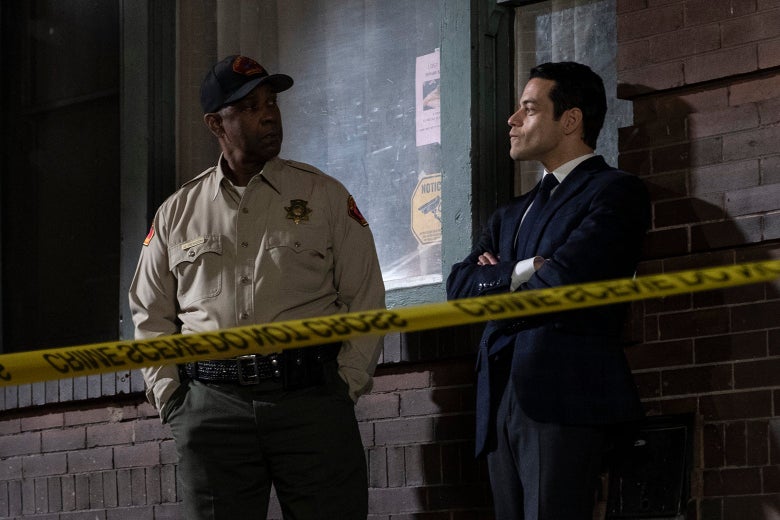
Deke (Denzel Washington) is in L.A. from up north on some menial task, evidence transport or some such. He used to be on the force here, but no longer; his former colleagues don’t have great things to say about him, and they’re not shy about filling in the new guy, Baxter (Rami Malek) on all the ways Deke was found wanting. Mainly that he worked a case too hard, was so obsessed that he jeopardized his career, failed his marriage, and risked his health. Baxter, however, has some sympathy for Deke. He doesn’t know it yet, but he’s a lot like him. He’s about to get a case that will haunt him in a very familiar way, and as Deke says – these are the ones that stay with you.

Deke has the opportunity to say this to Baxter because for some reason Deke sticks around to work the case with him. Totally unsanctioned of course – the dude has to sneakily take vacation from his real job to pursue this one totally against the rules. And Baxter lets him. Together they pursue an elusive serial killer, which leads them straight to Jared Leto. I mean, to Sparma, played by Jared Leto. And Jared Leto’s long greasy hair, distinguished gut, and totally unnecessary hitch in his giddyup – he literally walks around like he just got off an 8 hour horse ride over very rough terrain, only this is L.A. and even creeps like Sparma have a car. Anyway, Deke and Baxter agree that this guy is a Super Creep and that he’s guilty by virtue of just being so obviously a Super Creep. And honestly, Jared Leto so devotedly gives this guy every serial killer accessory he can think of that we openly despise him too, and don’t care much whether or not he’s actually guilty.

Anyway, as Deke likes to say, it’s the little things that add up, which is ironic because director John Lee Hancock, who also wrote those words, can’t even get the big things right. Hancock started writing this movie 30 years ago and it feels like any number of movies that have come out since, many of them much better, and all of them more original by default. But even if it wasn’t overly familiar, it would still lack suspense, or indeed any momentum. It’s a lot of moping around. You’ve perhaps come to see a trio of ostensibly talented Oscar-winning actors doing their thing but what you get is a solid performance by Denzel trapped in a shitty movie that has one of the most disappointing, anticlimactic third acts in cinematic history. The Little Things is available to stream, but why would you? This movie fails to satisfy in any way. You’ve got no places to go, no people to see, but you still have your dignity, and even during lockdown, time is precious.

Saint Maud

Saint Maud is one of those films that will confound you and disturb you while you’re watching, and then haunt you before you even have time to get cocky enough to congratulate yourself for surviving. It is not the kind of horror film that’s going to frighten you. There are no cheap jump scares, no triggering gore. It is simply chilling.

Maud (Morfydd Clark) is a fervently if newly pious woman whose belief bleeds into her work as a hospice nurse. New client Amanda (Jessica Ehle) is a former dancer currently dying of cancer. For the most part they get along but visits from Amanda’s lover Carol have Maud fearing for Amanda’s very soul (which is a matter of some urgency, if it’s not too crude to say). Maud has only recently turned devout (some trauma is vaguely hinted at), and is now of the certain belief that humanity is amoral, lustful, and terribly wicked and needs very badly to be saved. And since God has ever so kindly and every so explicitly told her that He has very special plans for her, Maud connects the dots and finds that perhaps she is meant to be its saviour.

What’s the difference between religious fanaticism and mental illness? Maud’s zealotry is depicted as a compulsion, indeed an obsession. She feels it necessary and right, but there is a gulf between what she believes and what others believe – Amanda specifically, though clearly not solely. However, writer-director Rose Glass leaves a little wiggle room for doubt. Is it possible, is it just the slightest bit possible that God really is speaking to Maud?

Part horror, part psychological thriller, part character-driven drama, Saint Maud can be read in a variety of ways and this expert ambiguity is the film’s coup de grace. Glass has the temerity to respect Maud either way; this dignity, this refusal to dismiss her, is bold and singular. Whether miracle or mental breakdown, Maud is entitled to compassion, which makes Glass’s film all the more deliciously vexatious.

Clark gives a stunning, visceral performance. The story is told almost entirely from her perspective, so where one might see delusion or psychosis, Maud sees only signs from her God, and burning bushes. It’s convincing and disorienting yet Glass always plays it both ways, like that picture of the animal that’s either a rabbit or a duck, depending on how you’re looking at it at any given time. While the intention may be shrouded, Saint Maud is still a deeply satisfying not to mention profoundly atmospheric piece of cinema that’s either supernatural or a psychotic break, and I don’t even care which. It is fascinating, carefully crafted, thematically complex, and fantastically unsettling.

Saint Maud will be available digitally and on demand in North America February 12 2021.

Wander Darkly

Well this was unexpected.

Adrienne (Sienna Miller) and Matteo (Diego Luna) are new parents on their first night out post baby, half giddy, half drunk on the mere thought of that first drink, half on edge because things have been tense, half fighting before they even reach the party. Mathematically that’s too (two) many halves, so let’s just say it’s not the fun and fancy free night out they’d envisioned, and that’s before they get in that brutal car wreck that half kills them both.

I’m only half being cheeky. The thing is, Adrienne wakes up dead, or believes herself to be dead, despite assurances from others that she isn’t, which leaves the couple in a rather, erm, surreal situation. Together they revisit the highlights and lowlights of their troubled relationship, trying to piece together a version of their life where it all makes sense, is all worth while. Whether your soul is actually in limbo or you’re simply experiencing a psychotic break due to trauma, taking such a stark account of one’s life is always a harrowing and naked experience. Interestingly, we get to see the major milestones of their relationship from both sides. There is no impartial witness in a relationship, no official accounting of who is right and who is wrong. But in tallying up their love and their losses, the grief and the guilt, the score actually seems besides the point.

I often have a low tolerance for movies (and stories generally) that go out of their way to be obtuse but this one managed to keep my interest, and harder still, my positive regard. Wander Darkly is effective and enticing, drawing us in to a mystery but always keeping enough momentum that we’re never bogged down in the not-knowing. The film is introspective, ruminative, poetic, experimental. Its sliding timelines isn’t always easy to keep track of, but magnetic performances from Miller and Luna smooth the ugly transitions. Miller mines for emotional gold and finds lots of gems along the way. Luna, meanwhile, runs the whole spectrum from good guy to bad and back again.

A romance crossed with a supernatural thriller, Wander Darkly is unpredictable and uneven, but writer-director Tara Miele has something to add about the complexity of relationships, and even this startling story line has plenty to relate to.

Sundance 2021: Strawberry Mansion

Some movies exist to be viewed at a film festival and worn like a badge of honour: I watched a purposely obtuse film from the “eccentric” section and only complained a little! It’s a film festival rite of passage.

Strawberry Mansion’s premise is ripe with promise. In a future where the government records dreams in order to tax them, dream auditor James Preble (Kentucker Audley) gets caught up in the tangled dreams of an aging eccentric woman named Arabella (Penny Fuller). Arabella wears a special helmet to sleep at night – to prevent dream commercials, she tells Preble, which sounds a lot like the other nonsense generated by an old lady’s dementia. But once Preble begins reviewing her dream tapes, he finds that certain products are strangely censored. These, she claims, are the advertised products the dream helmet filters out. She’s frankly surprised he hasn’t figured it out himself yet. Imagine what the ability to advertise to people personally and subconsciously through their dreams would do to the industry. Suddenly Preble’s cravings for fried chicken are suspect. Suddenly everything is suspect. Even accepting that anyone has the right to view your dreams, or tax them, who has the right to infiltrate them with targeted content? Love, love, love this premise.

Did not love the execution. It possibly goes without saying that Strawberry Mansion is low-budget, bordering, I think, on no budget. Still, there were plenty of cheap things that look great on camera, like the egg cartons and juice containers painted an array of aesthetically pleasing colours that fill an entire room. So when others, like Preble’s auditing helmet, look comparatively bad (ie, looks exactly like what it is: a cardboard box and a couple of plastic cups), I can only surmise that this is a stylistic choice to deliberately antagonize us.

Plenty of movies, however, have excelled despite and sometimes because of low-budgets. Where Strawberry Mansion lost me is in its frequent, and frequently obfuscating, dream sequences. It takes a flight of fancy and runs it straight into the ground, burning through its grace period very quickly. I’m usually more tolerant and more forgiving of movies that dare to exist outside the box, but this one seems to value wackiness over story in a way that makes it hard to relate to and harder still to like.

I loved this movie’s imaginative premise and its outsized ambitions, and I think it was trying to say something sincere about human connection and our collective existential dread, but despite a few pleasing, fleeting images, Strawberry Mansion just felt inaccessible to me. I want story-tellers to dream big, but to reach an audience, you must also dream smart.

Sundance 2021: Judas and the Black Messiah

This is the true story of Fred Hampton, young Chairman of the Illinois Black Panther Party, and his ultimate betrayal by FBI informant William O’Neal.

William, or Bill (LaKeith Stanfield), is a low-level hustler and car thief who gets caught by the wrong guy at the wrong time. FBI agent Roy Mitchell (Jesse Plemmons) is looking for a way to impress his boss, J. Edgar Hoover (Martin Sheen), and Bill is just the kind of guy he could use. Dangling his crimes and the threat of life in prison, Roy will be able to manipulate Bill into doing just about anything, and the thing at the top of everyone’s list these days is increasingly noisy Fred Hampton and his Black Panther Party in Chicago. Fred (Daniel Kaluuya) is agitating for things like equality and education, which of course infuriates the institution. How dare he? Worse still, Fred is so charismatic and galvanizing that he’s actually uniting not just his own party, but members of different and sometimes adversary groups that share, at their core, some common ground. Roy will have Bill infiltrate the Black Panther Party to get close to Fred.

As FBI informant, Bill will eventually betray Fred, ultimately leading to his assassination, but Shaka King’s brilliant film tells the tale of not one but two lives ruined by the FBI and its machinations. Bill is a victim too, and the film finds empathy for a man even its title suggests is a villain.

Daniel Kaluuya and LaKeith Stanfield both had break out performances in Jordan Peele’s Get Out and both have chosen extremely well and wisely since, their careers pointed ever upward. How lovely to see them reunited here, and to such splendid effect. Kaluuya gives off such a strong, committed, and lyrical vibe that I must constantly remind myself that Hampton was but 21 years old when he died. Stanfield suffers quietly, his internal conflict not verbally expressed but no less apparent for it.

It can be difficult for an historic thriller to capture an authentic sense of excitement, but Shaka King’s perspective brings new urgency to the story, making for a compelling, electrifying watch, ready to pounce.

Space Sweepers

In 2092, forests have vanished and deserts spread over the land. Fading sun and acidic soil mean plants have disappeared and home has become unlivable. Fleeing the dying Earth, UTS Corporation builds a new orbiting home for humanity, but only a chosen few can ascend, and the head of the Corporation (Richard Armitage) has plans to unveil a new habitat on Mars, leaving those on Earth to their fate.

Meanwhile, a ship of non-UTS citizens search for valuable scraps. Captain Jang (Kim Tae-ri), Tiger Park (Seon-kyu Jin), Tae-ho (Song Joong-ki), plus a robot named Bubs are a bunch of misfits and outcasts who do dirty work because they’re broke, collectively and individually, and badly in need of cash. And then a little girl puts a wrench in their plans.

Dorothy is no ordinary kid, she’s actually a highly weaponized android that merely looks like a 7 year old girl. A bomb, basically, in the busy little body of a child. Not only is a bomb an obvious threat to their ship, but Dorothy is pursued by a few different factions, and any one of them is ready to sacrifice the whole crew of a space sweeper ship to get their hands on her. Our resourceful sweepers resolve to sell her to the highest bidder in order to turn a tidy profit, but along the way they grow pretty attached to the munchkin, even though she’s not quite what she seemed.

Space Sweepers isn’t a great movie, but it’s perfectly serviceable if you like space robot sci-fi action dramas about the inevitable end of the world and the humans who continue to destroy it even beyond its breaking point. It’s effects heavy, action heavy, explosion heavy, fun heavy. The story is secondary, and arguably sometimes gets in the way. We’re here to see robots in space and little girls explode and apocalyptic terrorism, let’s not get up in our feelings. If dumb fun is in your future, this little adventure can be found on Netflix.

Sundance 2021: Jockey

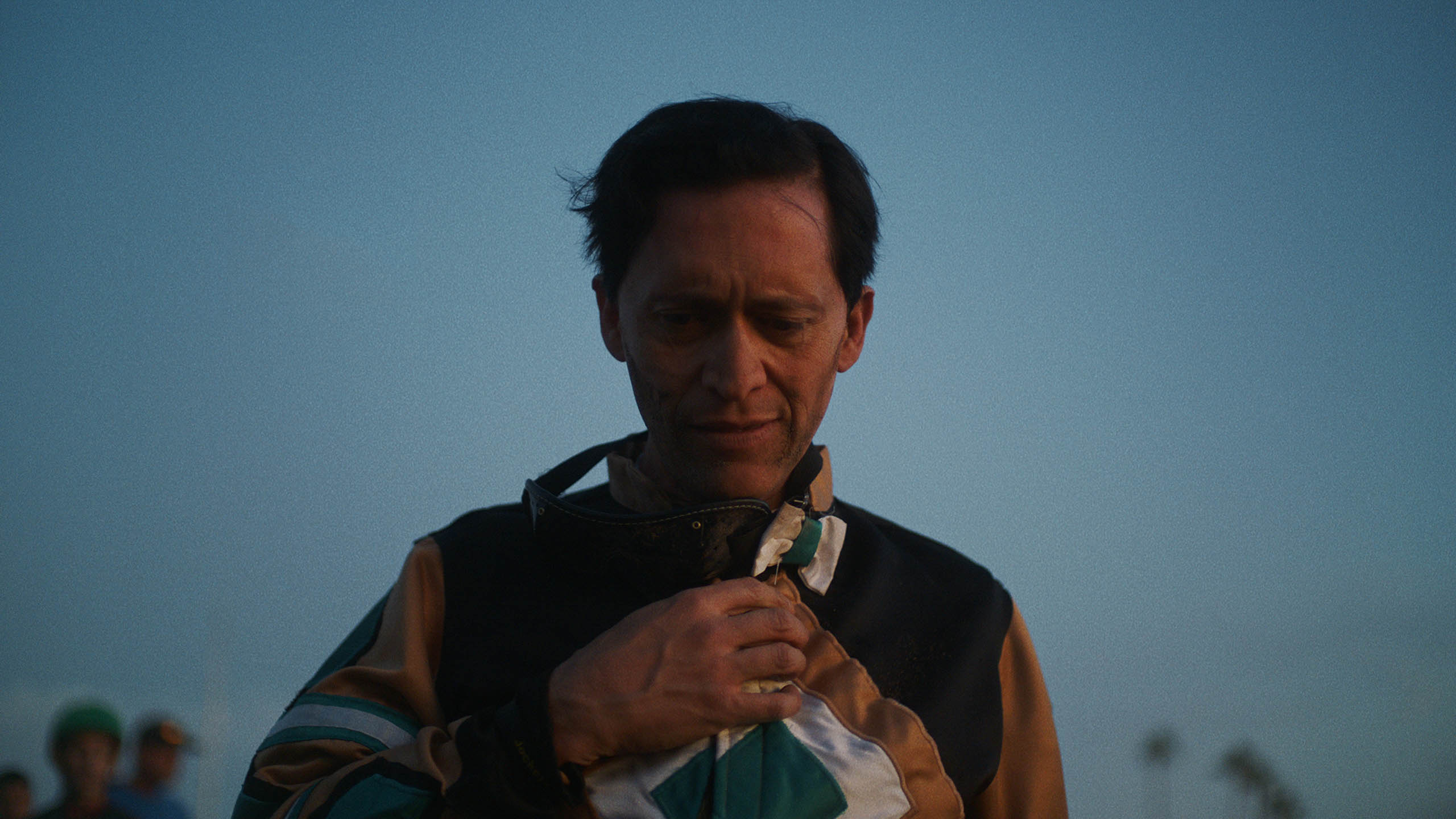
Jackson Silva (Clifton Collins Jr.) is an aging jockey who wants to win one last time before his body breaks down completely. It’s against the advice of his doctor, of course, and he’s already past his prime, but he doesn’t know when to quit, or what he’d do after, so he just keeps doing the one thing he’s good at.

Gabriel (Moises Arias) is a young jockey with his whole career in front of him, and a lot of promise. He’s come to be Jackson’s protégé but also claims to be his son – a son Jackson didn’t know he had.

Have you ever seen a one trick pony in the field so happy and free? You don’t really have to answer that, it’s a lyric from a Bruce Springsteen song from the movie The Wrestler. The Wrestler is about an aging wrestler whose body is past its prime but he doesn’t know when to quit or what he’d do after so he just keeps doing the one thing he’s good at.

Jockey is actually a perfectly good movie. Clifton Collins Jr. is never better as a man coming to terms with his own expiration date. It’s an intimate, low-key character study with a weighty impact. But I’ve seen this movie. I’ve seen it dozens of times and probably you have too. Director Clint Bentley shows a real mastery but I just can’t forgive it for being The Wrester, with horses. If you love horses then maybe Jockey will be your The Wrester – though I believe The Wrestler is the much superior film, and the one you should watch if you’re going to watch any. And anyway, this movie isn’t called The Horse. It’s about the small people who ride atop them, most of whom didn’t go to college first to get a “fallback career” as their mothers likely counselled them. Jackson is forced to contemplate his exit, and to consider his legacy, and his life beyond. Mickey Rourke did the same in The Wrester, and found there wasn’t much for him outside the ring. Its subtle heartbreak still haunts me more than a decade later. Jockey, while well made and beautifully acted, I’m already on my way to forgetting.