Category Archives: Jay

Vengeance Is Mine, All Others Pay Cash

Every year, every film festival, there’s a certain number of films that we preface with the reminder: film festivals are a time to take chances. I do truly believe that. Of course everyone wants to see the blockbuster (Dune), and the Oscar front-runner (The Power of the Dog), and whatever Olivia Colman’s up to (Mothering Sunday), but you can’t – or at least you shouldn’t – attend a film festival and not see something that’s a little different, a little experimental, a little out of your comfort zone.

For the title alone, I was willing to take a risk; for a movie described as an offbeat martial-arts romance, I couldn’t resist.
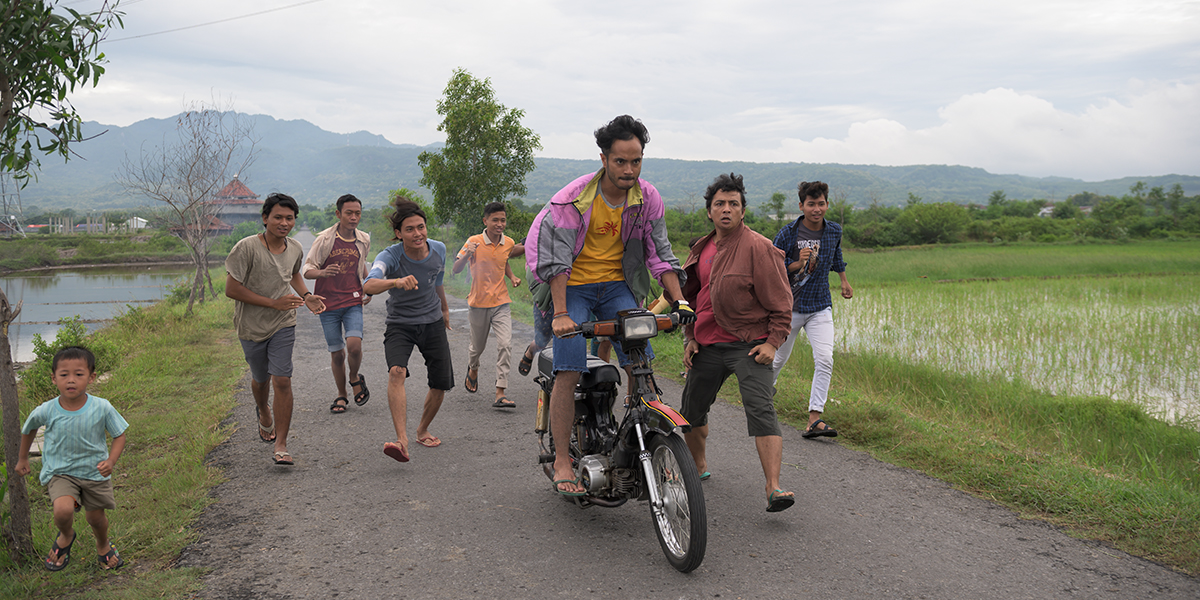
There are two things you’ll need to know about Ajo Kawir (Marthino Lio). The first is that he’s impotent. You may as well hear it from me. Everybody knows. The whole village knows! They’ve also got their theories as to how it happened, and what rituals and superstitions might cure it. So far, no luck. Secondly, Ajo is a brawler, a fighter for hire. One day while on a job, he encounters the bodyguard of his current target. Iteung (Ladya Cheryl) is more beautiful and more female than his usual opponents – and more formidable. Their no-frills but nevertheless robust fight ends, inevitably, in love.
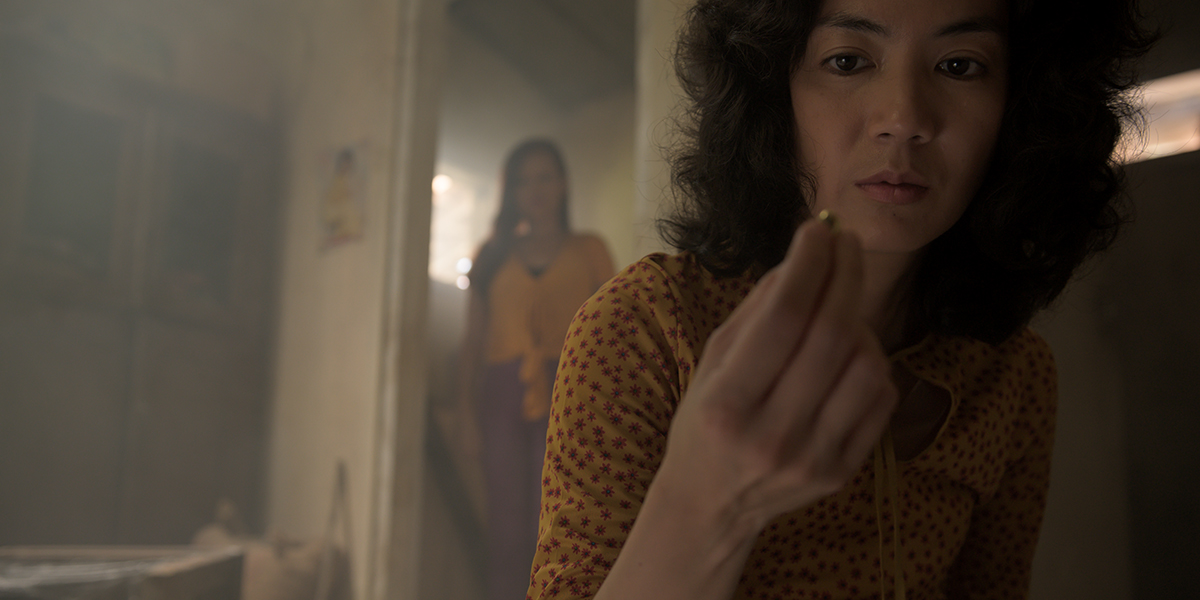
Most love stories between a street fighter and a mafia bodyguard would go straight to happily ever after, but not this one. There’s the problem of Ajo’s impotence, naturally. Ajo is well-versed in alternative routes to satisfaction, but apparently that only goes so far, and pretty soon both Iteung’s lust and Ajo’s shame are going to suffer a terrible collision. If that’s not enough, Ajo unadvisedly drags his feet in assassinating a gangster, and you better believe that’s going to come back to bite him in the ass. Then there’s some other stuff about someone stalking Iteung, and a ghost keeps popping up – well, that’s where I lost the plot, to be honest. But even completely stymied by the story, I was committed to its ridiculousness, to its weirdly sweet romance, to its retro vibe and ode to exploitation. It’s a grab bag of genres that don’t make much sense together, nor do they try very hard to. Director Edwin is comfortable making his audience uncomfortable, but what he makes is so ballsy and weird and entertaining, you can’t help but give the guy a pass.
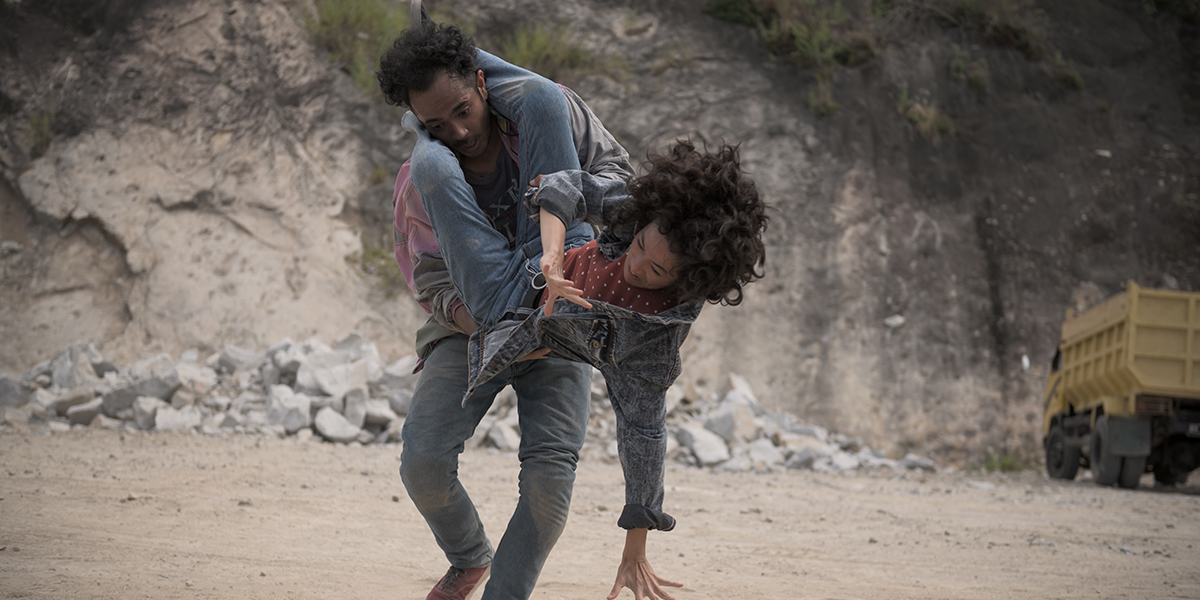
Vengeance is Mine, All Others Pay Cash (Seperti Dendam, Rindu Harus Dibayar Tuntas) is an official selection of the 2021 Toronto International Film Festival.
Aloners

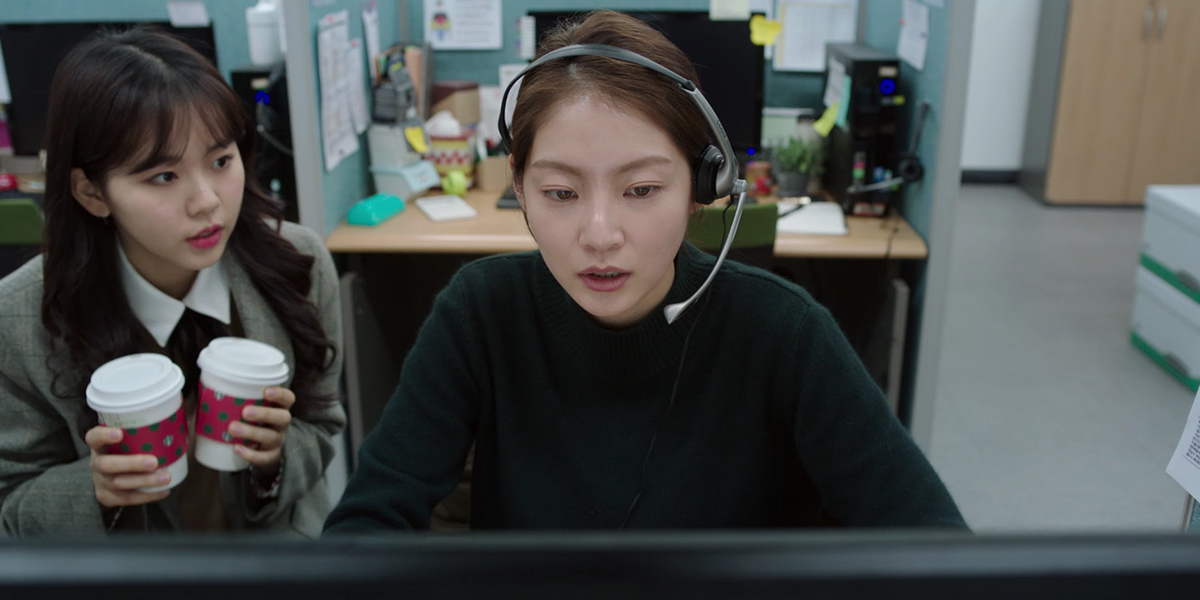
Jina (Gong Seung-yeon) is a solitary 20-something creature. She’s the top employee at a call centre where everyone is insulated by a cubicle and a set of headphones, but even when the headphones are off, Jina eats alone. Earbuds in, she walks home in her little bubble, never glancing up from her phone. She doesn’t notice or respond to anyone – not the next door neighbour, nor her father, nor the thump from a nearby apartment.

One day, Jina’s treasured solitude is pierced thoughtlessly by her boss, demanding that she train a new employee, a responsibility not normally in Jina’s purview. Once her impenetrable forcefield has been breached, it’s quickly followed by a second, more troubling violation. Her neighbour is found dead, alone in his apartment. Does this worry her? Scare her? Certainly it makes her meditate on her own death, whether she’ll be alone in the end, whether that’s the end she’d want. Does Jina truly enjoy her aloneness, or is it actually motivated by a fear of rejection, or perversely, a fear of being alone?

For her debut feature, director Hong Sung-eun tackles the concept of holojok, a Korean phenomenon encompassing the growing number of people who prefer to live alone (already a third of homes in Seoul!). Whether this is a true preference or if people have just succumbed to their antisocial tendencies and fear of alienation is more or less what Aloners tries to address.

The film is subtle, tender, and rather intimate. Jina is never judged, and she’s clearly not alone in experiencing this strange dissonance. Gong strikes the perfect balance as a woman forced out of the comfort of her shell, negotiating a world she normally avoids. There’s not much in the way of plot let alone drama or tension, but Hong holds our interest by building layers of mood, complexity of thought, and a changing atmosphere that make Jina’s world feel full, even when there’s an absence of people.

Aloners is an official selection of TIFF21.

Nightbooks

Nightbooks is a horror movie for kids – not young kids, mind you, but older, braver ones not prone to nightmares.

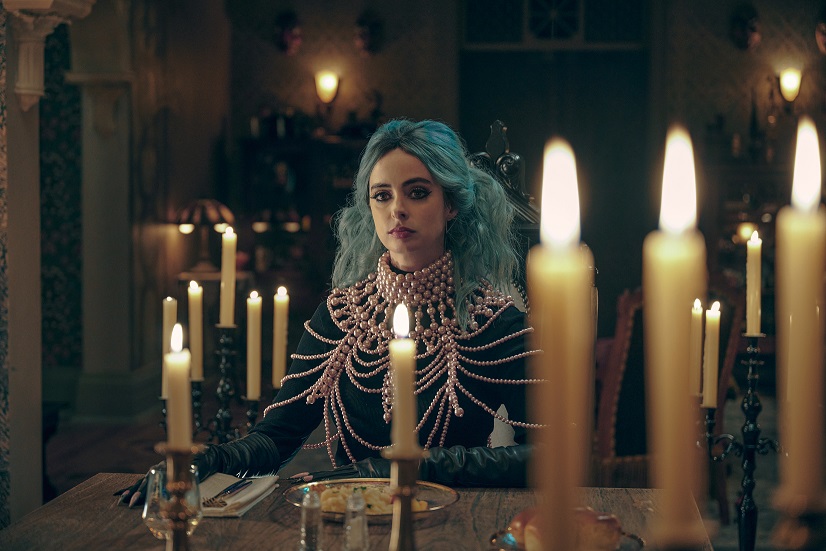
Young Alex (Winslow Fegley) is a prolific writer of scary stories, only some recent bullying has him vowing to give it up. On Halloween night he wanders into a strange apartment which turns out to be a witch’s lair, and a prison for the children she holds captured within. Yasmin (Lidya Jewett) is also being held prisoner there, by a witch named Natacha (Krysten Ritter), who collects kids. In order to survive, Natacha forces Alex to read her a different scary story every night, a new one that he writes. Natacha is very fussy about her stories; she actually knows ghosts and vampires and the demons, and the details have to be right. An even stricter rule: no happy endings. Alex will spend the rest of his life trying to write stories that please Natacha, and being threatened with death (or worse!) when he doesn’t!

The movie felt a little familiar to me, but I could definitely see kids, who have fewer references than I do, enjoy this as a gateway into horror. Horror-lite. Magic potions, toothy creatures, frozen children, a hairless cat, sleeping witches, poison candy: this movie has pretty much everything a kid’s nightmares are made of. But director David Yarovesky isn’t trying to scare the stuffing out of your kids, just sort of creep them out a bit, things looming in the shadows, light playing tricks on you, that sort of thing, horror’s oldest tricks, still classics, all of them.

NIGHTBOOKS. KRYSTEN RITTER as NATACHA in NIGHTBOOKS. Cr. CHRISTOS KALOHORIDIS/NETFLIX © 2021

Nightbooks won’t be any adult’s favourite film but it’ll likely be a popular benchmark for kids, possibly a hit among the sleepover set. Fegley and Jewett are sweet kids and perfectly able to carry this film upon small, slimy shoulders. Ritter lends a little something new to the wicked witch trope, with fabulous costumes and beautiful, unwitchy hair. Most of all it’s nice to see aspiring writers and young creative minds being lauded. What a wonderful thing.

Julia

Julia Child is part of the American holy trinity of beloved personalities, right up there with Bob Ross and Mr. Rogers.

When she and her husband moved to France for (his) work, she fell in love with the country, and especially with its food (and who could blame her?). Inspired, she resolved to learn to cook it properly, attending the famous Cordon Bleu culinary school, the only female in the class – and likely the oldest, not to mention the largest. She loved French cooking so much she wanted to make it accessible back home, to American housewives who were, at the time, swept up by food of convenience, presenting TV dinners to their families as the height of technology and efficiency. Her cookbooks, however, made delicious French food seem possible. Even more impressively, she pretty much invented the modern cooking show along the way. They didn’t have a lot of editing tools, so early shows were long single takes of her cooking a recipe all the way through. But people didn’t just watch for her recipes, they watched for her. Even non-cooks watched, enjoying her stream-of-consciousness patter, her love of butter, her appetite, her willingness to embrace mistakes and use them as teaching opportunities.

She came into this surprising and successful career late in life. Her loving husband supported her. She learned to be a businesswoman, not just a chef, learned who to trust, who to leave behind, and how to hold a grudge. Her enthusiasm for food was contagious, creating future foodies all across the country. Her legacy has influenced
American cuisine, and every cookbook author/TV chef today owes a debt to her.

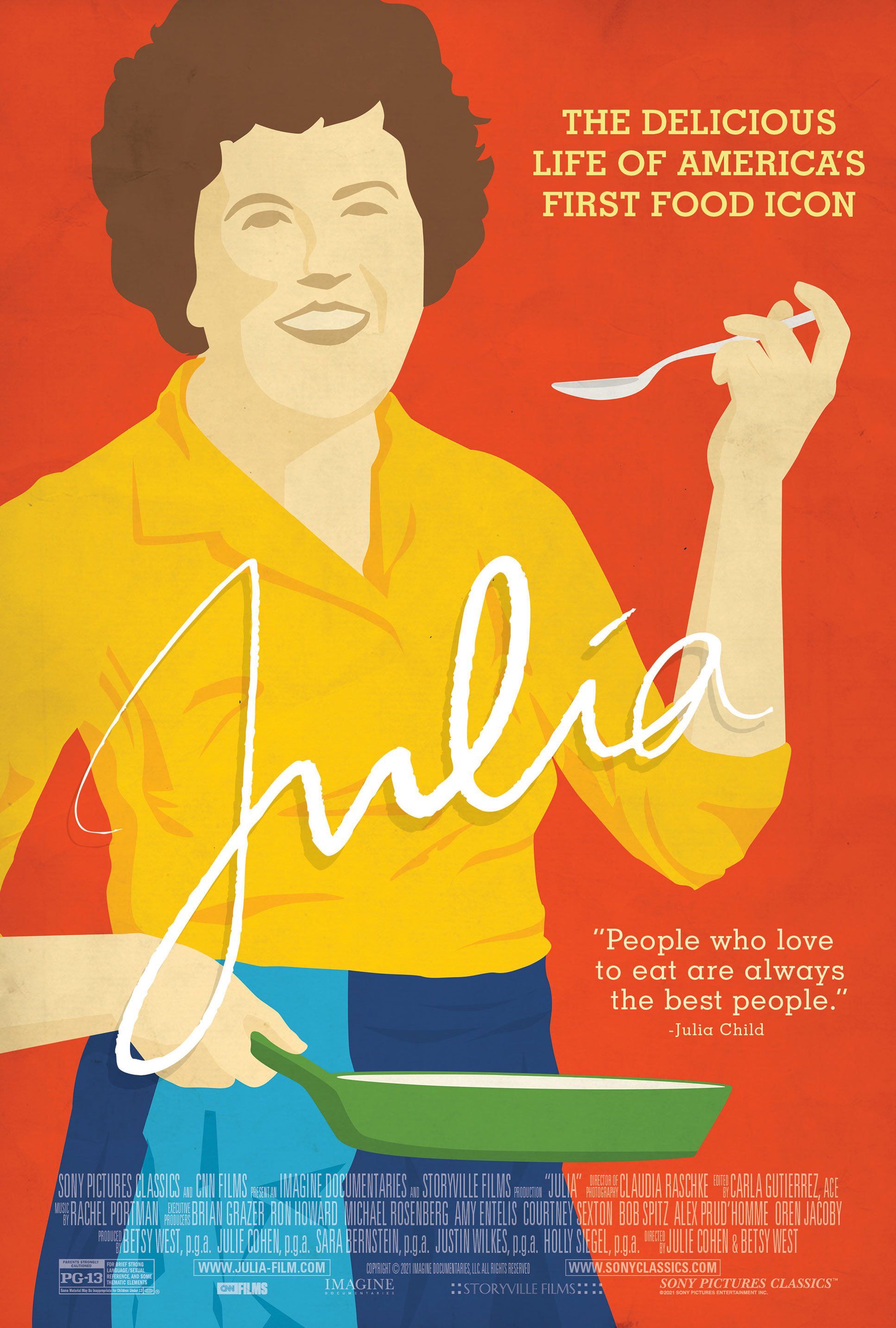
You already know Julia Child is an interesting woman; let directors Julie Cohen and Betsy West remind you why she deserves to be remembered. Their documentary Julia is a tribute to her, clearly made with love and admiration. We hear from cooking greats like Ina Garten and José Andrés, but most wonderfully, we hear a lot from Julia herself, via vintage footage the directors have shrewdly crafted together to tell her story from her own point of view. As a legend and an icon, there’s no one better to tell her story, and I think she more than most would appreciate having the last word.

Julia is an official selection of the 2021 Toronto International Film Festival.
It is scheduled to be released on November 5, 2021.

Benediction

Benediction is the story of English poet, writer and soldier Siegfried Sassoon. He was decorated for bravery on the Western Front, and went on to become one of the leading poets of the First World War. His poetry vividly described the horrors of the trenches while satirizing the patriotic pretensions that Sassoon believed were responsible for a fueling the war. His was a dissenting voice, protesting against the continuation of the war with his Soldier’s Declaration of 1917, which got him committed to the psychiatric ward of a military hospital. He married because he craved a child (and had one), but also had a string of same-sex affairs. He befriended a priest, converted to catholicism, and joined the Ghost Club, a paranormal investigation organization for ghosts and hauntings. I guess what I’m trying to say is: he was an interesting fellow. But you’d never know it from Benediction.

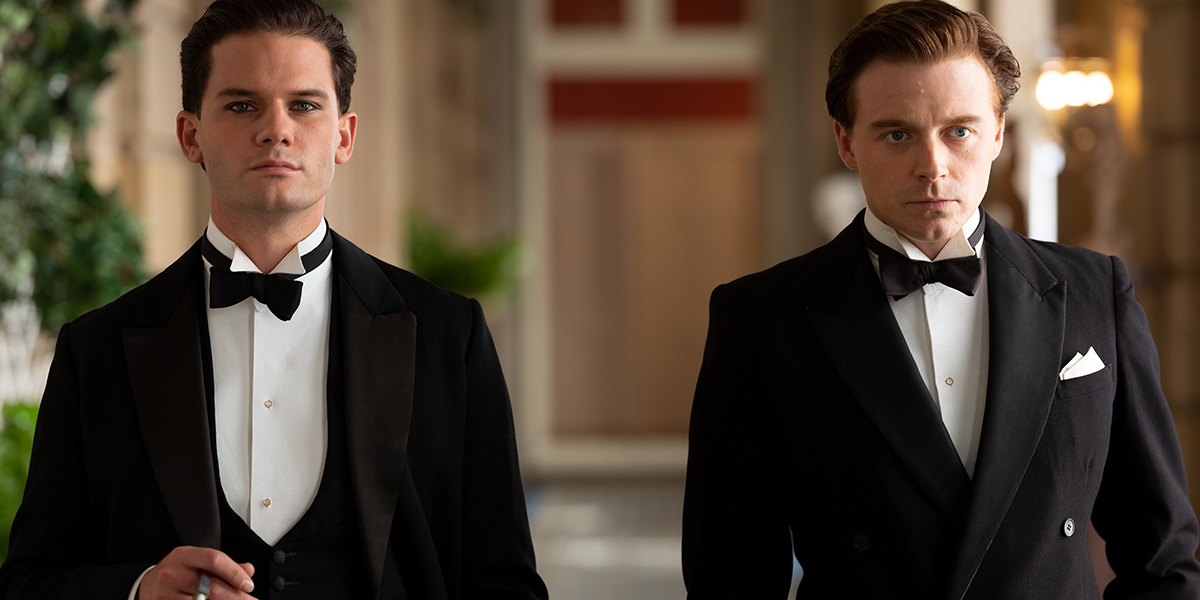
Peter Capaldi and Jack Lowden portray Sassoon at different stages of his life, both with skill. But director Terence Davies’ fondness for too-long shots of wind rustling leaves as opera plays is trying, and tiring, and no substitution for actual mood or atmosphere. It feels like filler.

Interspersed with real vintage war footage for context, Sassoon’s poems are narrated and layered on top of representative images. It’s cheesy, and reads more like a teenage girl’s diary. Terrible effects and amateurish green screen work add to the unprofessional feel of the film, which is hard to forgive, and harder still to sit through. The story isn’t particularly complex, but it’s still hard to keep everyone straight when all these underfed pasty types all look the same.

It’s a sad film, somber almost to a fault, but I could live with that. Davies seems to have something interesting to say about about time, using with parallels narratives, but some of his artistic choices were like taking a hose’s spray to the face. Thrown unceremoniously more than once from the bubble of the film, I found it difficult to get back in, not because it was impenetrable, but because I wasn’t sufficiently motivated. Failure is the theme to which the film often returned, but for me it wasn’t just part of the story, it was inherent in the execution as well.

Benediction is, nevertheless, an official selection of the 2021 TIFF.

Earwig

What a strange and unusual film.

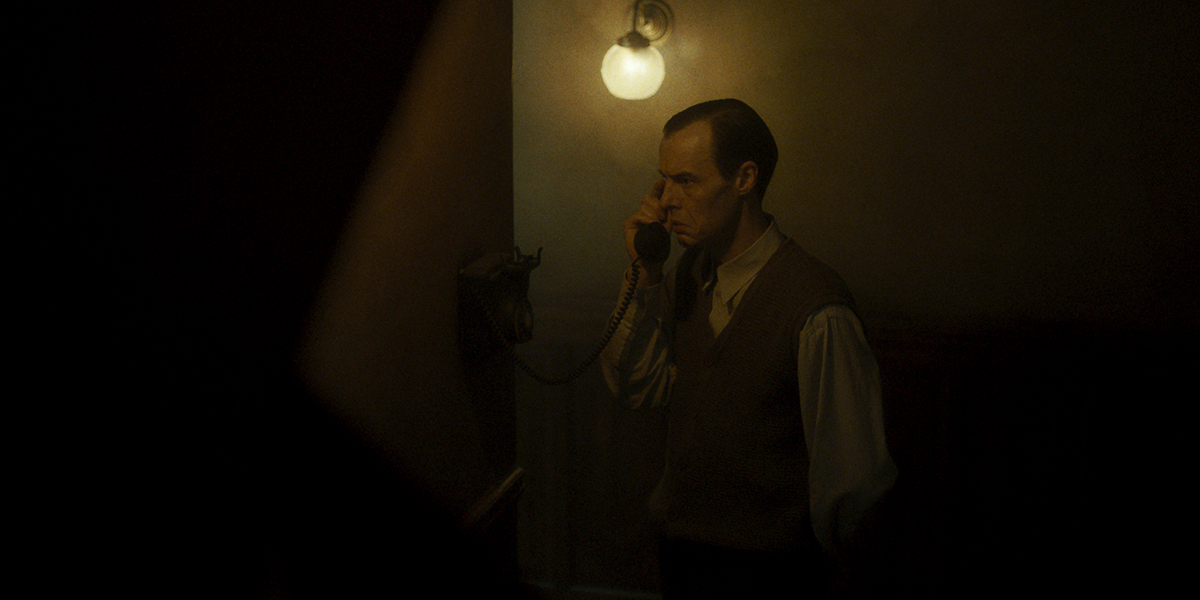
Somewhere vaguely in Europe, mid-20th century, Albert is employed to look after Mia. Mia, just a ten year old girl, us forcibly shut-in, even the apartment’s shutters stay closed, casting a gloomy, and often creepy, atmosphere over the apartment’s two solitary dwellers. Despite the isolation, the two are not close, and no affection passes between them. Mia’s teeth are made of ice cubes, and Albert’s main responsibility is to care for them, changing them several times a day, and tending to the metal appliance fixed to her face, presumably to keep her teeth from melting (?). Don’t ask me any follow-up questions because the film isn’t prepared to answer them. This just is what it is, and isn’t it weird? The phone rings, and an unseen master enquires after Mia’s wellbeing. Every day repeats in this way until one day the master tells Albert this will be his last payment; Mia is to be prepared to go outside for the first time, and ultimately to leave. This is big news, and a convenient excuse for the movie to get even stranger.

Earwig is unsettling. It sends creepers up your spine. Even when nothing major is happening, the atmosphere is so dark and foreboding, it always carries the possibility of trouble. Director Lucile Hadžihalilović is a master of suspense; she bathes us in it whether there’s reason or not, which means we’re spending the entire film trying to puzzle out the movie’s mysteries, and trying to anticipate the horrible thing that surely must be coming. She uses all of horror’s familiar visual language, but she never gives the relief that comes immediately after a jump scare. It’s never-ending dread with no catharsis.

Hadžihalilović is clearly unafraid of slow cinema. Her films, and perhaps this one in particular, are so somber and bleak and deliberate that I start to wonder if perhaps I’m having a nightmare. I understand very little of the plot but I’m haunted by her specific imagery, sometimes held so long that I have to break eye contact just in case there’s a spell being cast, or some sort of hypnotism. It really is that disturbing, discomfiting.

Hadžihalilović builds such a complete world, almost acetic except for a fixation on glass, and establishes an almost ritualized routine that it’s of course jarring when she then disturbs it.

Paul Hilton, as Albert, is full of melancholy, anguish, and anxiety. His dentistry looks like medieval torture, but if it feels half as bad as it looks, little Mia (Romane Hemelaers) doesn’t show it. She may be stoic, but I am not. This film was bad for my skin. I spend a lot of money on creams and serums and peels to keep it relatively unlined, and then a movie like this has me making my perturbed face for nearly two hours straight, sure to leave an ugly furrow between my brows. I never understood the movie, not once, not even a little, and I’m not entirely convinced I was meant to. ‘Story’ seems besides the point when it comes to a movie like Earwig, which wants to provoke, disrupt, disturb, yes, but not exactly entertain. Hadžihalilović holds power over us, and enjoys it. We are helpless in her hands.

Ferguson Rises

Say his name: Michael Brown.

Michael Brown had graduated high school just 8 days before the police shot him dead. He was planning to study heating and air conditioning repair at a technical college just two days later. Instead, an altercation with officer Darren Wilson, just 90 seconds from start to finish, led to Wilson discharging 12 bullets, 6 of which hit Brown, the last of which resulted in his death. Eye witnesses share conflicting accounts of what happened, but some are certain that Brown took the shots to his front while raising his hands in surrender and saying “Hands up, don’t shoot”. Michael Brown, completely unarmed, lay dead in the street, where his body remained for over four hours.

In the wake of Brown’s murder, protests, both peaceful and violent, continued for more than a week in Ferguson, and the police department’s response was botched, criticized for the tactless insensitivity of their highly militarized response. A grand jury failed to indict Wilson, adding injury to injury and reinforcing a divide in Ferguson based on the shade of one’s skin.

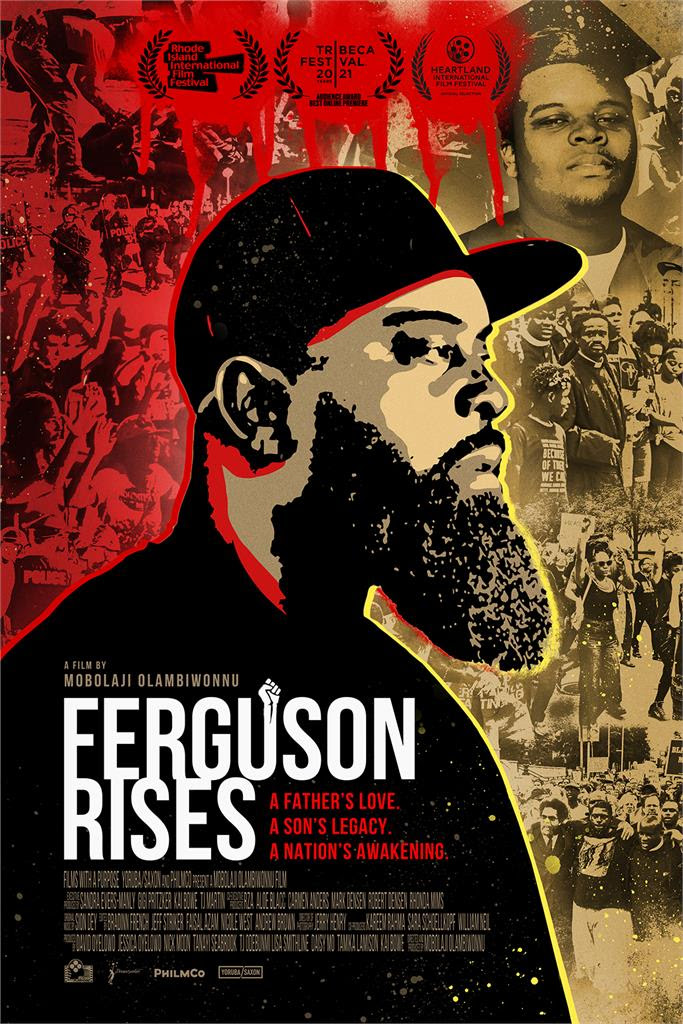
This documentary, by director Mobolaji Olambiwonnu, revisits the residents of Ferguson, a suburb of St. Louis, 7 years later. Michael Brown’s death – the murder of a Black body by a white and racist police officer – was sadly one of many, but his was a rallying point, igniting protests against police racism and brutality in Protests erupted in 170 cities across the U.S., including Seattle, New York City, Los Angeles, and Chicago. But for Ferguson, it was different. It was personal. Missouri was the last state to abolish slavery, and the aftereffects of that oppression are still felt today. While white residents of Ferguson watched protests turn to riots, they expressed disbelief, and disapproval. But Brown’s death and subsequent treatment wasn’t a surprise to Ferguson’s Black community. Darren Wilson wasn’t one bad apple; the entire Ferguson PD was institutionally racist, routinely violating the rights of Black citizens.

Though the Black Lives Matter movement that has sprung up as a result of all these protests does have some white support in Ferguson, there are a number of white people still firmly on the wrong side of right. Brown’s mother and father will tell you what it feels like to live in a community divided over your son’s death. His friends will tell you what it’s like to drive by the spot where he was gunned down. Protesters will tell you what it was like to get on a plane and fly back in time, coming home to a town in Missouri where a white police force was brutalizing Black weeping mothers, shooting tear gas at people filled with righteous anger, using rubber bullets against people trying to express their horror, their abhorrence, their shock, their sorrow.

Many voices contribute to Ferguson Rises, and themes of strength and resilience seem to create a pattern. Black Americans may have suffering and oppression in their DNA, but they’ve got determination in their souls.

I knew this documentary would be an emotional watch, but it feels essential to return to the scene of the crime with a clear head in the pursuit of truth, and perhaps more importantly, real change. We have so little to offer Brown in exchange for his life – this feels like the least we can do.

Dug Dug

Director Ritwik Pareek has a sense of humour about his new film, Dug Dug. “Absurd, bizarre or downright funny,” he calls it, but no matter how weird his film is, “India is far more strange.” Duly noted.

A drunk man weaves his way down the highway, oblivious to his many near-death experiences as his little motorcycle wobbles toward its destination. Finally turning onto a quiet dirt road, it seems as though the drunkard may live, but a voluptuous siren calls his name from a billboard, and the sight of her cleavage is his undoing. The next day his body is scraped off the road and his blue motorcycle with a pink seat is impounded by the police and eventually chained up in their yard. The next morning, the motorcycle is missing – or rather it’s been relocated back to the crash site. And no matter how many times it’s removed, or how well it’s locked up, it always finds its way back there, driverless. It’s a miracle, obviously, so naturally the seeds are sown for a new religion.

Not just religion, but religious fervour, and the commerce/capitalism that so often comes along with it. Pareek expresses this through bright and beautiful montages, a riot of colour and culture, with temples and charities and rituals and offerings and deities springing up out of nowhere like they were inevitable. Pareek’s satire is infectious, often funny, often fun. There’s also just something joyful about his irreverent and inventive style, an exuberance to his colour palette, a fever dream of faith catching like wildfire and spreading even faster. Yet for all this commentary on idolatry and commercialism, the film never feels cynical. Pareek manages to satirize ideology without shaming his characters. It’s a bold and exciting piece of Indian cinema with a wild score that’s almost spiritual itself.

Jagged

If you were alive in the 90s, you probably had a copy of Alanis Morissette’s Jagged Little Pill. If you didn’t, were you really even living? It won album of the year in 1995, was the third biggest selling album of the 90s, and remains on Rolling Stone’s list of the Greatest Albums of All Time, deservedly. It was a real departure of the time, didn’t fit into what the music industry expected from a young woman. But to the young women listening, it was the vocalization of what we’d all felt. When I first heard You Oughta Know, I related and responded to the aggression and anger in her voice, and sang along even though I was still a kid, had never “been down on” anyone in a theatre or elsewhere, but I knew the sentiment, I understood where she was coming from because I’d either been there myself or was about to be. (Male) critics of the time focused on her anger, baffled that a woman went through more than just tears and ice cream during breakups, but fans listening to the album heard a great diversity of sound and content, almost every song an anthem to someone. (Male) critics balked again when Ironic came out, more concerned with exact definitions than what the song meant, why it was beloved, why it was important enough to become her biggest single on an amazing album.

Director Alison Klayman interviews Alanis extensively, and hears from others in her entourage as well, including Taylor Hawkins, then her touring drummer, presently of Foo Fighters, who admits to using her fame to attract girls, somewhat antithetical to Morissette’s whole vibe. And Glen Ballard, her Jagged Little Pill producer and writing partner, who is still her biggest fan, still enamoured of her talent, of her turn of phrase. Generous, humble, and most surprisingly, non-jealous, here is one man who clearly always respected her as a writer, musician, and star. Shirley Manson, frontwoman of Garbage, talked about how many doors Alanis opened as a successful female singer-songwriter, without taking any credit for herself being a rebellious frontwoman force in the 90s. But mostly we hear from Alanis herself, who tells her origin story, how it felt to find fame and success as a teenager, what her writing process was like, what it was like to tour the world without actually seeing any of it. And finally, she opens up just a little about some of the rumours inspired by those famous lyrics – the bad boyfriends, the sexual abuse, the non-existent childhood.

I enjoyed the documentary because I enjoyed Jagged Little Pill, and revisiting it is to revisit my own childhood in some ways. Klayman told us not to be shy about singing along, not tht I ever would be. I should be ashamed with a voice like mine, yet I usually find an unforgivably high volume at which to shout the words (more or less). I had a sore throat the day this screened for TIFF, which felt like good news for anyone watching with me, but by the time we reached You Oughta Know, I’d already resolved to buy lozenges. Try and stop me!

Well, I’ll tell you what stopped me in the end. It was Alanis herself, who, following the film’s world premiere at TIFF, has said she’s unhappy with the film, called it ‘salacious,’ denied it was the story they’d agreed to, and refused to support it.

“I sit here now experiencing the full impact of having trusted someone who did not warrant being trusted. Not unlike many ‘stories’ and unauthorized biographies out there over the years, this one includes implications and facts that are simply not true. While there is beauty and some elements of accuracy in this/my story to be sure— I ultimately won’t be supporting someone else’s reductive take on a story much too nuanced for them to ever grasp or tell.” – Alanis Morissette

Ultimately, this is her story, and she deserves to have agency over how it is told. I respect her position and I will not be recommending this film.

Jagged is an official selection of the Toronto International Film Festival 2021.

The Other Tom

Elena ( Julia Chávez) is an exhausted single mother, working overtime to provide the necessities, constantly pleading with son Tom for peace and quiet. Tom (Israel Rodríguez Bertorelli) is not a peace and quiet kind of kid, his lack of focus an even bigger problem at school than at home. At first, the ADHD meds seem like a godsend. Tom is more focused, better behaved. But an accident makes Elena aware of some pretty significant side effects, and she ultimately decides to stop the meds.

Elena is surprised to learn that the choice to medicate her son or not may not be hers. Between the disapproving doctor who won’t consider non-medical interventions, and the school who doesn’t want to deal with an unmedicated Tom, social services are called in, and Elena’s custody is threatened.

Inevitably, a movie like this serves as an indictment of our over-prescribed culture, but The Other Tom is also a mother-son story at its heart. Tom is just a little boy struggling to fit in. He doesn’t want to be bad, but he’s restless and angry, lonesome for his estranged father. Elena struggles too, struggles to be a good mother, to be patient, to make good choices, to keep her temper in check, to shield her son from harmful labelling, to juggle the needs of her son with the state’s attempt to pathologize and tranquilize his disruptive behaviour. And if we’re being honest, struggles to bond with a troubled son whose constant disturbances weigh on her heavily.

Behavioural disorders are draining for the whole family. They interrupt the usual intimacy and trust that breeds a healthy relationship. Elena loves her son, but some days it’s hard to like him. In allowing him to be unmedicated, Elena is also confronting her own inadequacies and must learn to cope with Tom’s challenges and to reach out to him on his level. Love means accepting each other’s authentic selves, and no one in this film, or in life, is perfect.

Writer-directors Rodrigo Plá and Laura Santullo realize the importance of the central mother-son relationship, and they nurture it with strong, grounded performances by Chávez and Bertorelli, who remind us of the humanity pulsing around the essence of this issue. Overtaxed teachers, greedy big pharma, overzealous social services…they all fall away when we see Tom’s big eyes go round when another grown up dismisses him. There is no ‘other Tom.’ There’s just a kid who’s scared and confused and wants to fit in. It’s about time the grown-up figure out how to help him.

The Other Tom is an official selection of the 2021 Toronto International Film Festival.