Category Archives: Kick-ass!

The highest honour we can bestow on a film. Anyrhing in this category is a must-see.

Sundance 2021: Marvelous and the Black Hole

Sammy’s been misbehaving at school and copping an attitude at home. You might be tempted to give her a pass considering she’s a teenager who has recently lost her mother, but Sammy’s dad is not. He’s had it up to here with her, and believe me, I’m indicating a pretty high marker over here. He’s threatening the equivalent of military school, but she’ll get one last chance that involves acing a college business course he’s forcing her to take. It’s lame and she’s not happy, especially since they’re supposed to choose a local business person to interview. To do the absolute minimum required, Sammy (Miya Cech) interrogates a nosy woman she meets in a public washroom.
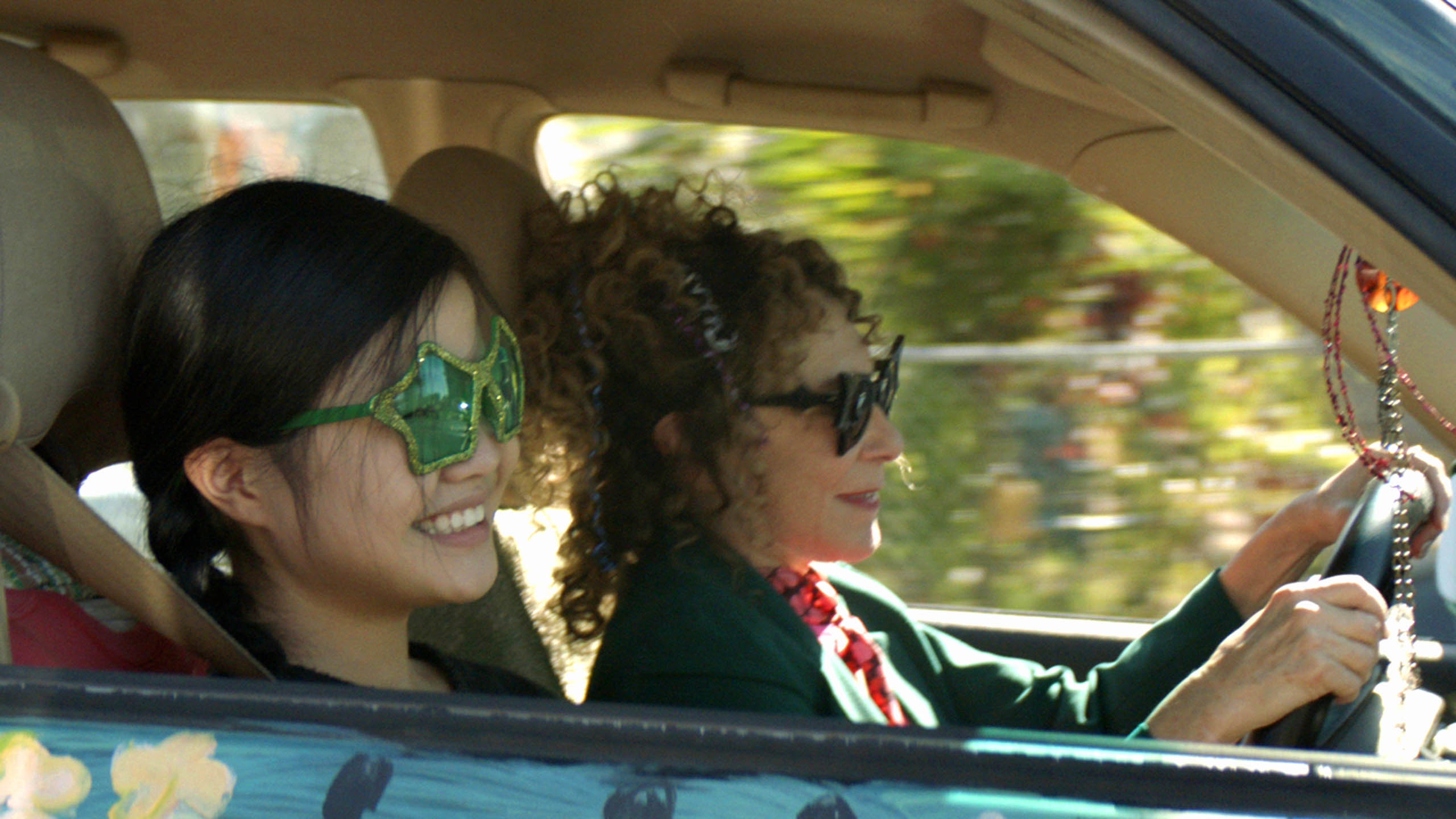
“Magician” is not on the approved list of business people, but Margot the Marvelous (Rhea Perlman) is hard to deny. Certainly the kindergarteners for whom she performs are mesmerized by her work. Even surly, sulky Sammy is drawn in, practicing magic in secret, longing to be invited to one of Margot’s “salons.” Of course, this also means she’s skipping class to pursue a very much dad-unsanctioned pastime with a woman he doesn’t even know exists. Sammy isn’t really worried about pleasing her father right now because he’s just announced his engagement to a new woman, who, you know, isn’t Sammy’s dead mom. Which means DRAMA.

Marvelous and the Black Hole exists to to add sweetness and light to your cinematic experience this year. Resilience and perspective are at the heart of this unlikely, oddball little intergenerational friendship founded in common pain. Miya Cech gives a believable performance as a bad girl, all brooding and sass, who’s not actually that bad, just hurting and lost. Meanwhile, Perlman’s special brand of snark is a quirky treat. Together they have a kismet that just kind of works.

We’ve seen a million coming of age tales and this one may be conventional but it’s still worthy of a watch. Director Kate Tsang’s imagination lends itself to some flashy sequences that help distinguish it from the pack. Marvelous and the Black Hole falls short of movie magic but it is cute and it is kind and it is relentlessly warm-hearted.

Sundance 2021: R#J

I think every generation deserves their own version of Romeo & Juliet, and this film is definitely targeted at today’s kids, while maintaining the soul of Shakespeare. Told exclusively through online content like Instagram posts and stories and lives, and through text messages written entirely in 2021’s unique gif-heavy jargon, R#J is set in modern day but is still identifiably Shakespeare’s most infamous romantic tragedy, told in his unforgettable language.

The beef between the Montagues and the Capulets has bathed the streets of Verona in blood from both sides. Romeo (Camaron Engels) knows better than to attend a party at the house of Capulet, but Benvolio and Merc entice him out, where he instantly starts crushing on a new girl with an arty IG account. After lots of back and forth flirting, Romeo and Juliet (Francesca Noel) find out they are mortal enemies, and it’s crushing. But they’re determined to lead with love, hoping their relationship will blaze a new path toward forgiveness. Of course, we all know how it goes; their families aren’t ready yet to let bygones be bygones.

Adding this new filter of social media lets us explore this age-old saga in new light. Online bullying, the viral destruction of someone’s reputation, the loss of control of one’s story; director Carey Williams has the privilege of a bold and savvy script, and together they manage to make these new aspects seem like they’ve always been part of Shakespeare’s intention. I don’t think classics are necessarily untouchable, but this is Shakespeare, so if you’re going to be ballsy enough to to make changes, the changes had better justify themselves unequivocally. I am astonished that after centuries of retellings, Williams still finds new ground here, fertile ground, new facets of the story worth expressing. He gathers an ensemble of young actors as talented as they are beautiful, including Maria Gabriela de Faria, Siddiq Saunderson, and Diego Tinoco, most of them born after Baz Luhrmann’s Romeo + Juliet was released, who help reinvigorate a play they probably studied four days ago in high school.

I know the mobile media aspect has been done to death, but so has Shakespeare, but we always make time for the stories that move us. I’m excited that a new generation will discover Romeo and Juliet with this smart and sexy film, and I’m pleased that even an old biddy like me can still find value in a story about impetuous teenage lust.

Sundance 2021: Passing

This film is based on the electrifying 1920s novel by Nella Larsen depicting two former friends who run into each other randomly in New York City. Irene (Tessa Thompson) and Clare (Ruth Negga) were friends in high school but haven’t seen each other since. Both women are biracial; Irene lives in Harlem with her husband and sons while Clare lives in Chicago with her own husband and child. The major difference being that while Irene lives authentically, Clare is passing for white. Even Clare’s husband John (Alexander Skarsgard) believes her to be white. In fact, needs her to be white, since, as he tells us, the only person who hates Black people more than he does is Clare herself. He’s even given her a “cute” racially-charged nickname that he loves to boast about. Clare lives deep, deep under cover. Irene sees the danger in the situation and resolves to stay away from her, unwilling to keep denying her own race to hide Clare’s.

However, when Clare and John move to New York City themselves, the two women reignite their friendship, despite Irene’s reluctance. Clare has been desperate for the unique comfort of being among her own people, but Irene is terrified of John, and of what might happen should he find out. But a mutual obsession grows the more time Clare spends in Harlem; they seem almost unable to untangle from each other even as their friendship threatens their carefully curated Truths.

Passing isn’t just about race. It takes on gender, sexuality, and importantly, class. Clare’s constructed identity revolves around her passing as white, but Irene’s identity is more wrapped up in her status. As the wife as a doctor, she strictly maintains her middle class boundaries, going as far as to isolate herself in order not to be mistaken for someone of a lower class, while Clare is much more comfortable straddling the lines and treating class as more fluid. Writer-director Rebecca Hall paints a beautiful portrait in which these two women exist, and develop, and she allows Negga and Thompson the space to explore who their characters are and why. Through lenses of happiness, jealousy, security, fear, and desire, we come to know these women and what guides them in their choices.

This is a fertile character study where psychology and motivation are layered in richness and depth. With its deliciously ambiguous ending, Rebecca Hall honours the masterful source material while also creating something impactful of her own.

Sundance 2021: Mass

I’ve seen a unicorn rip a man’s guts out, an axe chop a man’s toes off, and an eyeball skewered on a sharp metal tent peg. It’s Sundance, and I’ve seen some shit. And yet nothing prepared me to watch Mass, a movie about four middle aged adults sitting around a folding table in a church rental space.

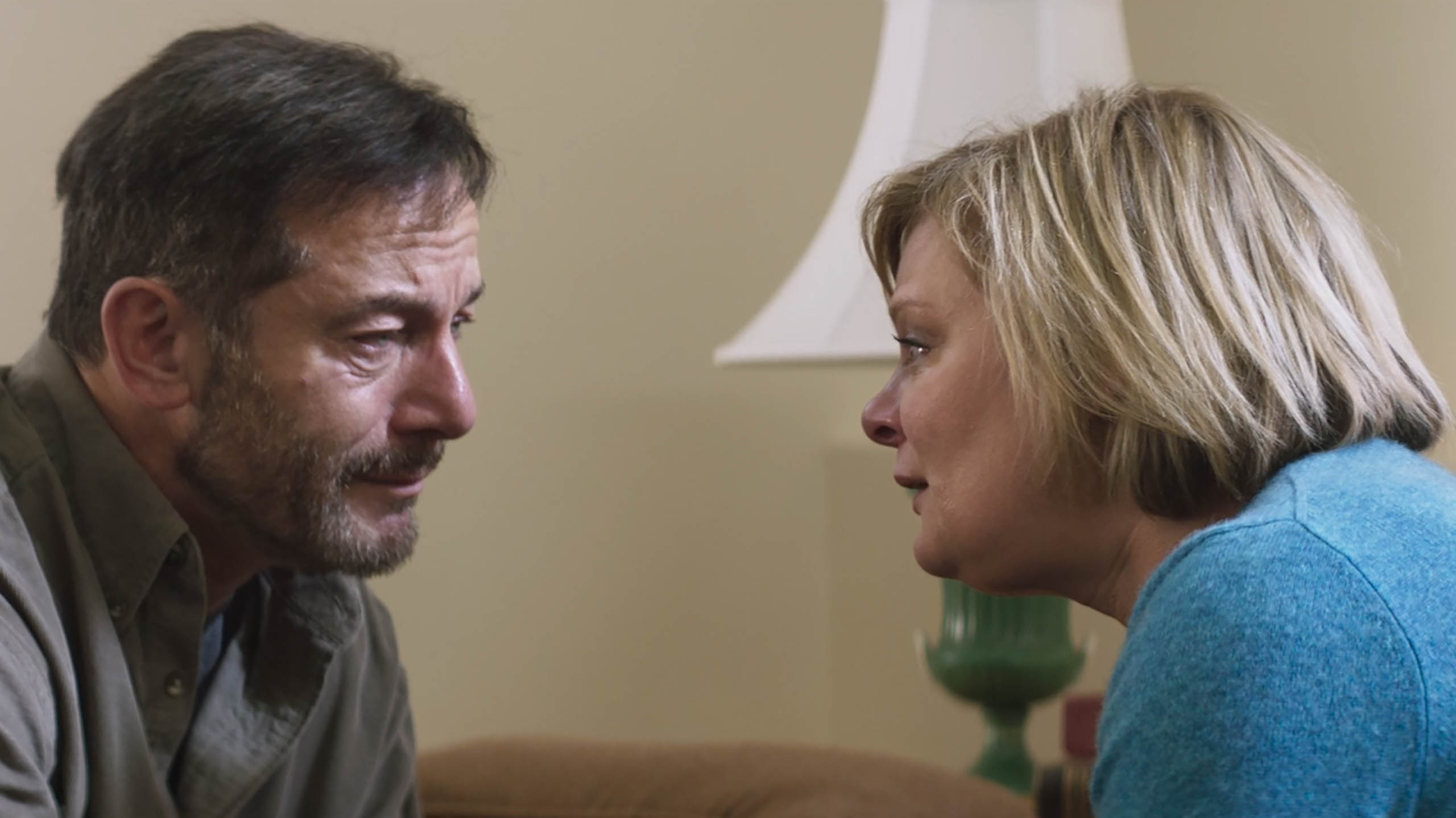
It’s hard to say who’s more reluctant to be there – Richard (Reed Birney) and Linda (Ann Dowd), or Jay (Jason Isaacs) and Gail (Martha Plimpton). Richard and Linda’s son killed Jay and Gail’s in a school shooter incident years ago, and this is an attempt for healing, or closure, or something other than the smothering pain they’ve been living in.

One room, 4 people, 110 minutes of emotionally exhausting confrontation, conversation, and contemplative silence. A movie like this either succeeds or it doesn’t based on two things: the script, and the performances.

The script, by director Fran Kranz, is restrained, nimble, as revealing as it is concealing. It’s almost voyeuristic to sit in on such an intimate and fraught conversation, but while we think we know where the lines will be drawn, Kranz shows the grief, victimhood, and aftermath of a mass school shooting is as complex as the event itself. It is natural to want to identify causes and assign blame, but here, in this room, guilt and innocence overlap.

Kranz is himself an actor with an intuitive sense of how dialogue can rise and fall, and how grief can express itself in more than just words. In this claustrophobic space, all four performances are committed; there is trauma and sorrow on both sides of the table. Each has lost a son. But Jay and Gail persist. They want, nay, they need to know: did Richard and Linda see this coming? Is there something they could and should have done? There isn’t going to be an easy answer here, just pain across four faces. Recrimination, bitterness, anger, empathy, and loss. There are heavy burdens in this room and perhaps Kranz is a little inclined to tidy them up by the end, but grief isn’t something you fix or get over. It’s something you learn to live with – the question is, will this conversation help them do so, and if not, can anything?

Sundance 2021 Street Gang: How We Got To Sesame Street

Street Gang: How We Got To Sesame Street is an easy documentary to love. Not many among us grew up without Sesame Street. The thought is inconceivable. Sesame Street IS childhood. It was a mainstay in our home thanks to my mother’s exuberant rate of reproduction; there was always a toddler falling in love with it for the first time. Although I haven’t seen an episode in years (decades more likely), I could still recognize not just characters but recurring sketches, animations, and songs. This stuff really soaked into my brain, and that’s exactly what it was born to do.

Aimed at preschoolers, specifically those from underprivileged and inner city backgrounds, it was an educational program built with a curriculum to teach to, guided by princes of early childhood development. The people behind the show realized that kids were spending up to 8 hours a day in front of the television set, and wanted to seize the opportunity to give them a leg up when it came to the fundamentals, like abcs and 123s.

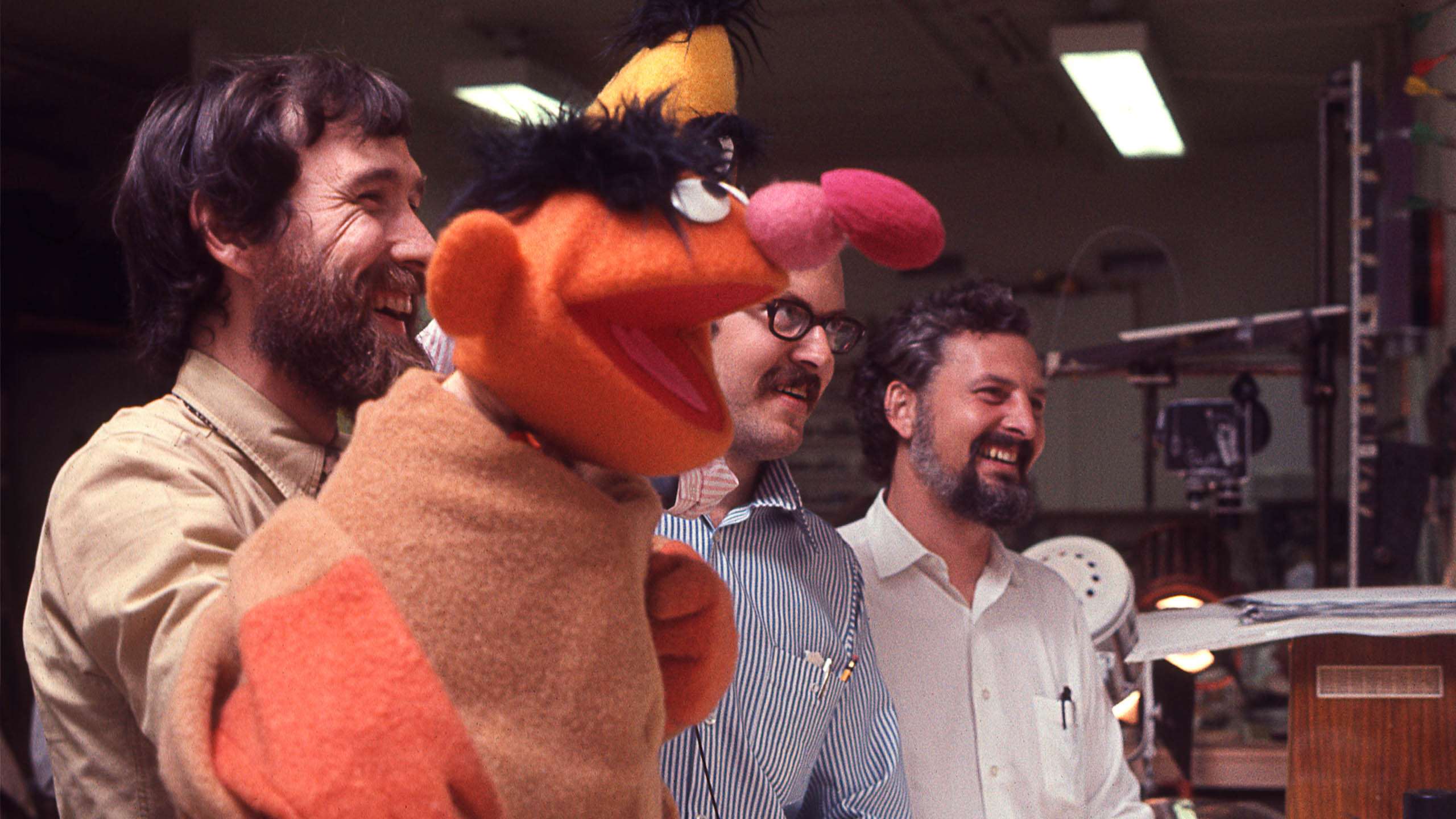
Director Marilyn Agrelo interviews from an impressive breadth of sources, including camera operators, actors, puppeteers, writers, songwriters, and more. Jim Henson and director Jon Stone are consulted repeatedly through archival footage, and it’s a pleasure to hear from them both. It’s also quite fascinating to see the joy and the intention with which this show was conceived and created. Of course, the best part is, unsurprisingly, the Muppets themselves. It’s exciting to revisit childhood friends, but it’s also a delight to see Big Bird’s first design, to hear Bert and Ernie address the nature of their very special relationship, to learn how Count got his name, to discover why Oscar was always so very hard to please, and why Kermit felt it was so difficult being green. The show fearlessly took on Big Topics like race, death, and inequality, but they did it with such joy in their hearts and with the very best interests of children in mind that Sesame Street transcended mere television. It has an intangible quality that this documentary does its best to describe.

Palmer

Fresh out of prison after serving only 12 years of his sentence, Palmer (Justin Timberlake) rolls up at his grandma’s house with nowhere else to go. Grandma Vivian (June Squibb) is the one who raised him after his mom split and his dad died and she’s there for him again when he needs her.

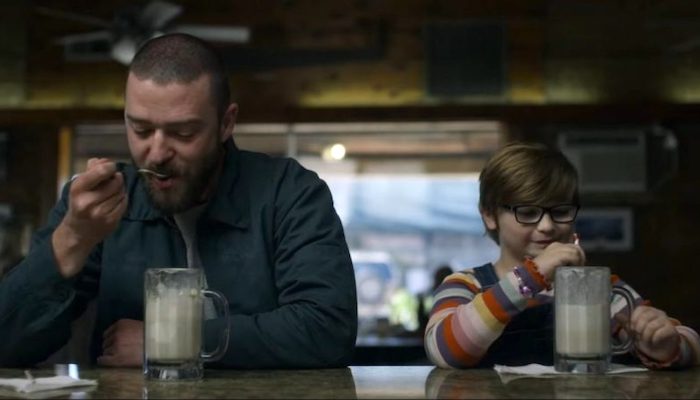
He’s not the only one she pinch-hits for. Shelly (Juno Temple) next door is often… indisposed. By drugs and an abusive boyfriend. Which is already a pity, but Shelly’s also got a young son named Sam, who comes to stay with Vivian whenever his mother disappears, which is often. Life at Vivian’s is the only real stability Sam (Ryder Allen) has ever known. He eats regularly and sleeps in a real bed and gets to class on time. And now Palmer is a bonus father figure, something Sam has been craving.

Palmer is a convicted felon who’s lucky to find work as a janitor and Sam is a little boy who likes to play princesses. You wouldn’t have guessed that they were each exactly what the other needed but they do form a friendship, one that empowers Sam and gives Palmer’s life meaning.

Is Palmer cute and kind of sentimental? Yes it is. You’ll feel you’ve seen this kind of thing before because you have. Such is the redemption drama. And yet admittedly the performances are compelling, and the kid is charming as hell. Justin Timberlake shows some surprising range leading a strong ensemble cast. Palmer sees himself in this young abandoned boy, and his charity toward him is an opportunity to absolve some of his past sins. Together they are building a life, and yes it’s trite but it’s also very watchable.

Sundance 2021: How It Ends

Do you want to know how it ends? A meteor. That’s how we go. For the people of Earth, that day is today. It’s the last day of Earth, and Liza (Zoe Lister-Jones) has been invited to a party. The meteor is the least interesting thing about How It Ends, and its only certainty.

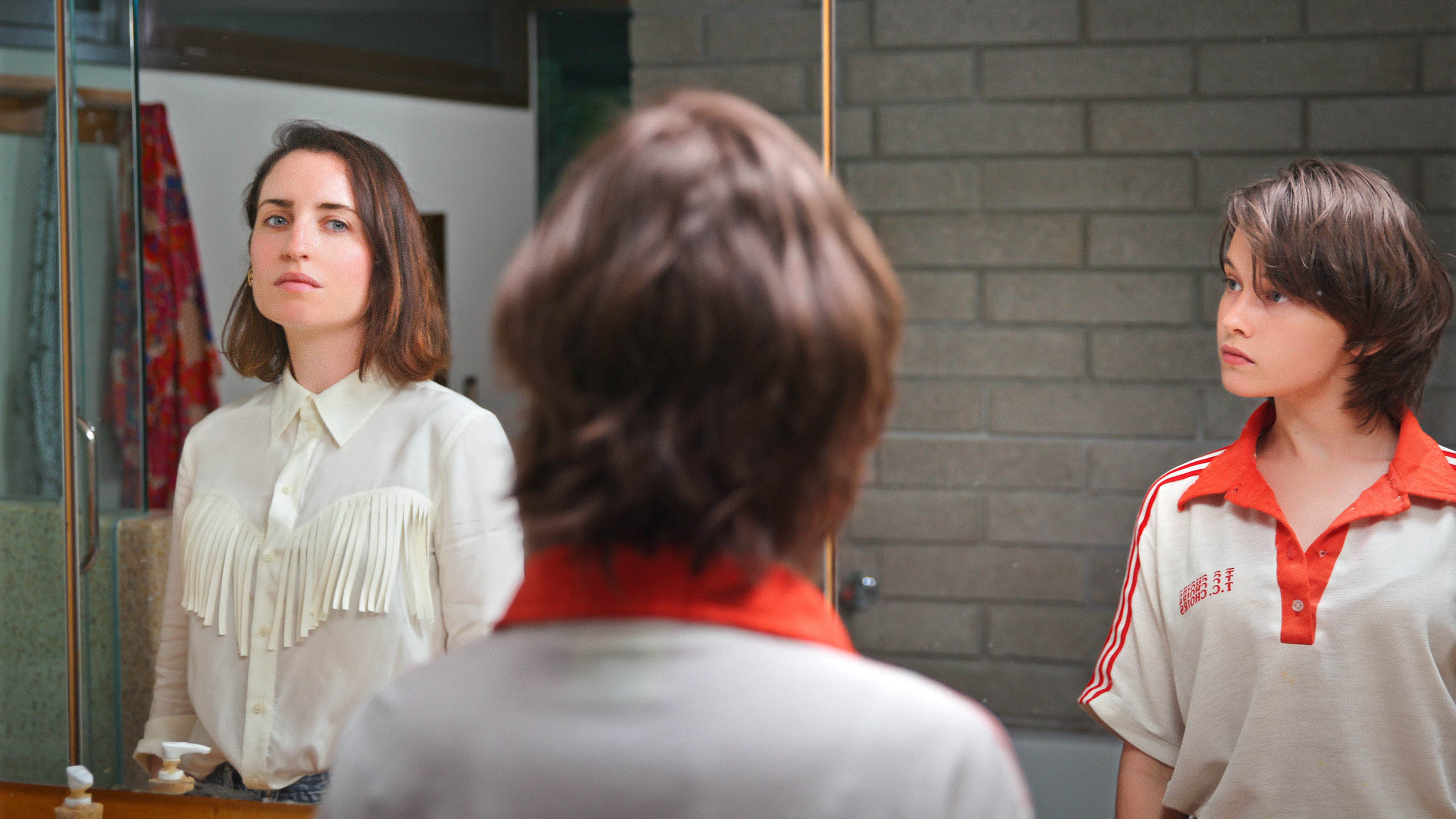
Liza’s initial inclination is to spend her last day alone, getting high and eating cookies. It’s a pretty solid plan, but unfortunately her Younger Self (also named Liza of course) (Cailee Spaeny) vetoes. Plan B involves checking off items on a list of regrets en route to the pre-apocalypse party. On Liza’s list of regrets: exes, former friends, estranged parents. Truth is the theme for the day, and if that doesn’t keep her honest, her Younger Self sure will. Liza and Young Liza hoof it across Los Angeles, encountering a pretty eclectic cast of characters, but most of all bonding with and taking care of each other.

How It Ends is oddly playful for the pre-apocalypse, but as both co-writer-director and its star, Zoe Lister-Jones certainly has the right sort of presence to pull it off. She’s got excellent chemistry with Spaeny, which you’d really sort of have to, or the whole thing would be an utter failure. It’s a fascinating philosophical experiment, to have two versions of the same person interacting with each other so naturally. I loved the relationship between the two, and felt a little jealous of it. I enjoyed laughing with them, eavesdropping on their most intimate conversations, and indulging in a double dose of Lister-Jones’ unique brand of charm.

Frequent collaborators Lister-Jones and Daryl Wein manage to take a quirky premise and ground it with self-aware performances. As the meteor draws ever nearer, we dread it not because of the impending doom of humanity, because it means the movie itself will end, and we’ve been having too much fun to want to say goodbye.

Sundance 2021: Flee

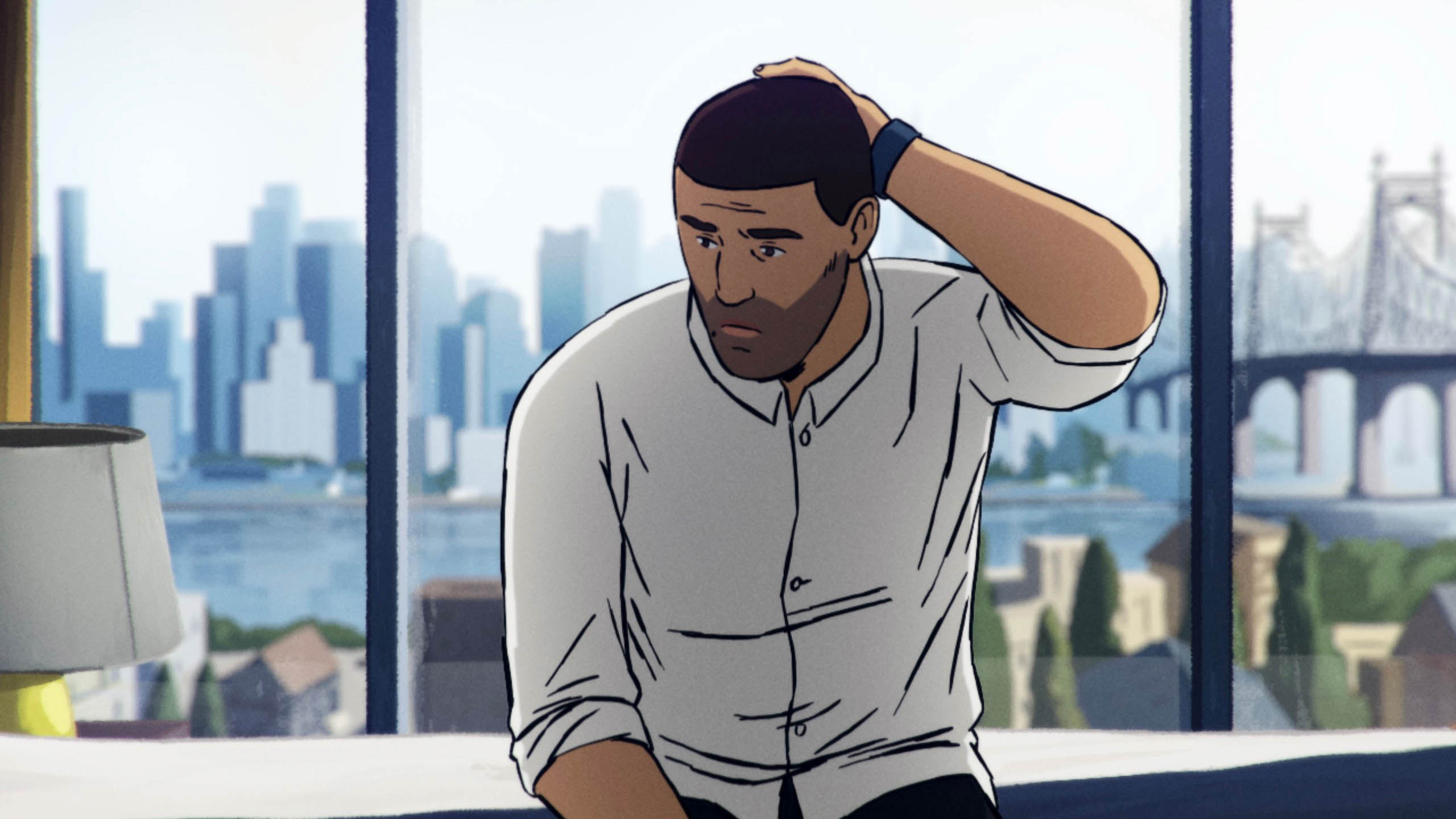
Amin is a successful academic on the verge of doing the whole house and marriage thing, but he’s been hiding a secret for more than 20 years, and a secret with roots that deep can threaten even the most stable life. So for the first time, Amin sits down to share his story with an old friend.

Amin and writer-director Jonas Poher Rasmussen have known each other since high school, when Amin arrived in Denmark from Afghanistan as an unaccompanied minor alone in the world, having fled the country of his birth by himself. His back story was shadowy and thus often the subject of gossip, but Amin kept his story to himself, and only now, in this animated documentary, is he choosing to unravel it for the first time, an attempt to reconcile himself with the past, perhaps, and an act of hope toward his future.

A powerful testament to the refugee experience, this animated documentary is unbound from the usual confines of story-telling and benefits from a multi-layered approach to truth and identity. Amin’s story is complicated, and it is sometimes contradictory. He’s had to hide the truth for fear of persecution, for fear of discovery, but he’s also hidden it from himself, a common coping mechanism. Thus his story is not just one man’s account of fleeing the Taliban, but an exploration of trauma and its far-reaching ramifications. And for dessert, an accidental treatise on unreliable narrators, truth distorted by perception and time. Even the animation itself serves as a filter, obscuring us further from a subject whom we never properly meet.

Shame and guilt are the salt and pepper to Amin’s narrative, seasoning wounds that are already festering quite nicely without help. We can only hope that the process has been cathartic for Amin, and grateful for the intimacy and trust implicit in this act of sharing. Rasmussen’s familiarity and friendship with his subject is a gift and a curse. Certainly his gentle coaxing elicits a fuller story that we might otherwise have heard, but Rasmussen sometimes forgets we don’t know Amin as well as he does. We might have enjoyed an introduction. And Rasmussen’s wish to grant his friend a happy ending is admirable, but as a film maker, it’s a little easy, a little pat. And yet, over the course of our 83 minutes together, we want the best for him too. Amin doesn’t owe us his story. His sharing is a gift, and if Rasmussen is tempted to wrap it up in a bow, who can blame him?

Executive produced by Riz Ahmed and Nikolaj Coster-Waldau, Flee premiered on opening night at the Sundance Film Festival and was so well-received that NEON snapped it up, the first acquisition of Sundance 2021, before I could even post this review.

Wandavision

Episode 9: The Series Finale

Episode 8: Previously On

Episode 7: Breaking the Fourth Wall

Episode 6: All New Halloween Spectacular

Episode 5: On A Very Special Episode

Episode 4: We Interrupt This Program

Episode 3 Now In Color

Episode 1 Filmed Before A Live Studio Audience &

Episode 2 Don’t Touch That Dial

Finding ‘Ohana

Pili (Kea Peahu) is Hawaiian born but Brooklyn raised, a competitive pre-teen geo-cacher who chases treasure all over New York City with her best friend. They’re so good they win a trip to a geo-cache summer camp in the Catskills, which makes Pili the only person in the history of the world to be mad about going to Hawaii on summer break. But her grandfather’s had a heart attack and mom insists.

Mom Leilani (Kelly Hu) left Hawaii when her husband died, but with her father Kimo (Branscombe Richmond) struggling physically and financially, she’s beginning to wonder if a move back to the family land is in order. Her kids Pili and Ioane (Alex Aiono) aren’t super excited by this news, as you can imagine, but Hawaii grows on Pili exponentially when she finds a journal detailing long-lost pirate booty. It’s like real-life geo-caching, with centuries-old Spanish gold as the prize! If they can find it, that is. Pirates are pretty shrewd when it comes to this stuff. Luckily Pili’s got a treasure map and a new friend named Casper (Owen Vaccaro) to help her navigate it. We get some stunning Hawaiian views and a genuine adventure not unlike The Goonies. Pili and Casper are joined by Ioane and new friend Hana (Lindsay Watson), and the foursome will encounter peril and mystery as they negotiate unknown and possibly haunted cave systems. Pirates are pretty serious about protecting the treasure they bury. Soon even the kids realize they’re in danger, but the only way out is forward, no matter how many dead bodies warn them away.

Finding ‘Ohana is a delightful family film and a throwback to epic action-adventures fit for kids. With grown-up stakes and real-life threats, the kids search for treasure but instead (or also?) find a connection to the land and to their heritage. Director Jude Weng knows the true treasure is friendship, and these bonds will only be strengthened throughout the film – perhaps even belabouring the fact, if we’re being honest. The film doesn’t really need to be two hours long. But it’s charming and well-made, with set pieces to impress and entertain, and stunning visuals you won’t get tired of admiring. The young actors are surprisingly excellent and the story is character-driven. It’s a fun film your family will surely enjoy this weekend, and on repeated viewings in the future.