MCU Phase 4: Activated
22 Replies

I didn’t like the book and I didn’t like the movie.
I am so, so tempted to leave this review at just that one sentence but I know that would be a bit disingenuous since I am very much in the minority on this. So I’ll give you a slightly fuller picture and you will be your own judge. If you’d like to watch this movie, you have my blessing, and you’ll find it on Netflix.

Balram (Adarsh Gourav) is a servant in India; his caste is his destiny. He works for people he admires – Ashok (Rajkummar Rao) and Pinky (Priyanka Chopra) – which doesn’t mean they’re nice, only that they’re wealthy, and upwardly mobile . Balram would like to be those things one day too, but for him there is no opportunity and no path toward a better life. Society itself is built around oppressing his kind and making sure they never, ever get their own ideas. So he must beat down his own path, with whatever meagre tools and talents he has. It’s going to be brutal, and it’s going to be bloody, but for Balram, entrepreneurship is the ultimate goal and the holy grail in one. It is worth any price.
The movie kept my attention better than the book, which I found tedious; the film benefits from brisk editing and a Jay-Z remix. I still didn’t enjoy it though, and I’m realizing it’s partially because the protagonist is so dislikable. Balram is hardly the first anti-hero though, and somehow I usually manage to cope. I suppose it’s that when I encounter other characters I dislike – Batman, for example – there’s usually something else I can root for, like good vs. evil. The White Tiger doesn’t give you that; it’s bad vs. worse and you can never be sure which of these slippery sides our protagonist is leaning toward. I guess I needed something to hold onto, and Balram’s underdog status just wasn’t cutting it. Balram’s story is given to us via a letter he’s writing to some successful Chinese businessman, who ultimately brushes him off, unimpressed by the story and the man, and I suppose I, too, was left cold by Balram’s plight. Perhaps you will feel more sympathetic.
The “Rapture,” if you believe in such things, is an end-time fairy tale made up by evangelicals that basically says God is going to pull a Thanos, do a snap, and with that, all the good little boys and girls (and men and women) will vanish from earth, having ascended to heaven, and the rest of us will be left behind, shrugging at each other like “Ooops!”

The rapture has happened and young lovers Lindsey (Anna Kendrick) and Ben (John Francis Daley) have indeed been left behind. The rapture is followed by several plagues, like locusts and blood rain, and the anti-christ’s reign. The anti-christ, who prefers to be called The Beast (Craig Robinson), nukes Chicago and Orlando and threatens to do more, and worse. Whatever he asks, you say yes. That’s just how it is now. Unemployment is high and what little you have can be taken at any moment by the flaming rocks falling from the sky, so to get by you’d better do as you’re asked. And just in case Jesus gets any big ideas about coming back to save humanity (again), The Beast has a really big laser for that.
Anyway, when Lindsey and Ben’s dreams of owning a sandwich cart are crushed, literally, by one of those big flaming rocks, so they have to go to work with Ben’s dad (Rob Corddry), who works for The Beast. Which is how The Beast lays eyes on Lindsey, and decides to take her for himself. This situation suits neither Lindsey nor Ben, so they hatch a plan to rid the Earth of The Beast. One little catch: you can’t kill The Beast, or he comes back as Satan. So the plan involves trapping him, subduing him, and caging him…for one thousand years. It’s a great plan. What could go wrong?
Is this a good movie? It is not. If you like any of the talent involved, you might eke out a few laughs, but you won’t be proud of yourself for it. You have to be smart to pull of satire, and this movie is very, very dumb. It’s crass where it should be incisive, crass where it should be biting, crass where it should be crafty. You get the idea. It’s stoner r-rated raunch and I’m pretty sure the world could live without it.
Picture it: 1950s Harlem. A young man is walking by a record store. Through the window he spots a beautiful young woman behind the cash register, visibly enjoying an episode of I Love Lucy. Something urges him inside – he grabs the Help Wanted sign out of the window just to have something to say. The young woman, Sylvie (Tessa Thompson), attempts a quick dismissal, but her father (Lance Reddick) stops the young man, and engages him on the spot. I’m not sure Robert (Nnamdi Asomugha) meant to find employment on this day, but it’s a great excuse to see Sylvie again, so he’s not about to turn it down.

In fact, Robert is a jazz musician, he plays the sax, and he’s very impressed by Sylvie’s deep love and knowledge of music. They spend a lot of time together in the record store, exchanging stories, and barbs, and heated looks. You might even say they were falling in love, except for one little hiccup: Sylvie was engaged to be married. Her fiancé Lacy is away for the summer, but they’ve been very much betrothed ever since her mother caught them making out. This little speedbump keeps the flames on low for a little while, but they’re young, they’re attractive, they actually like each other – soon those flames ignite because passion cannot be denied. But then summer’s over and Robert’s jazz quartet is taking him away, to Paris. He invites his love Sylvie of course, but at the last moment she demurs, she stays and he leaves. Sylvie is pregnant of course, but Robert must never know; she believes in his talent and won’t get in the way of his dreams. They part.
Five years later, Sylvie is married to fiancé Lacy (Alano Miller), who married her knowing she was pregnant with another man’s child. He provides for Sylvie and Michelle but it’s instantly clear that theirs is no love match, and we can’t help but compare it unfavourably to that of Sylvie and Robert, and suspect that she must as well. Like any good love story, Sylvie and Robert’s isn’t over yet. They will cross paths again, and try again. Great romances aren’t about the destination, they’re about the journey. It’s the story that matters, the obstacles overcome, destiny pulling them together.
Writer-director Eugene Ashe gives us a lush period romance with Black leads, which the genre has heretofore tended to ignore. But he also grants us a full picture of Sylvie’s life, which doesn’t just revolve around this one crush, but is populated with family, ambition, dreams, and obligation. Because she’s an actual person, her love story isn’t straight-forward. Real life seeps in, threatens to wipe the shine off new love. The triumph is in honouring love despite its challenges. It’s in making the compromises and acknowledging one’s surroundings and still pursuing the heart’s desire. Sylvie’s Love is one for the ages.
I like to call it vacation mode; sticking your toes into the hot sand of some exotic beach just sort of does something to you. You sleep late, drink early, fuck lazily, then murder your wife a little and toss her body in a shallow grave.
Last week I was saying that if you missed travel, why not escape to Iceland through the movies? This week let me tell you, if you miss travel, this movie right here will cure you of that notion right quick.
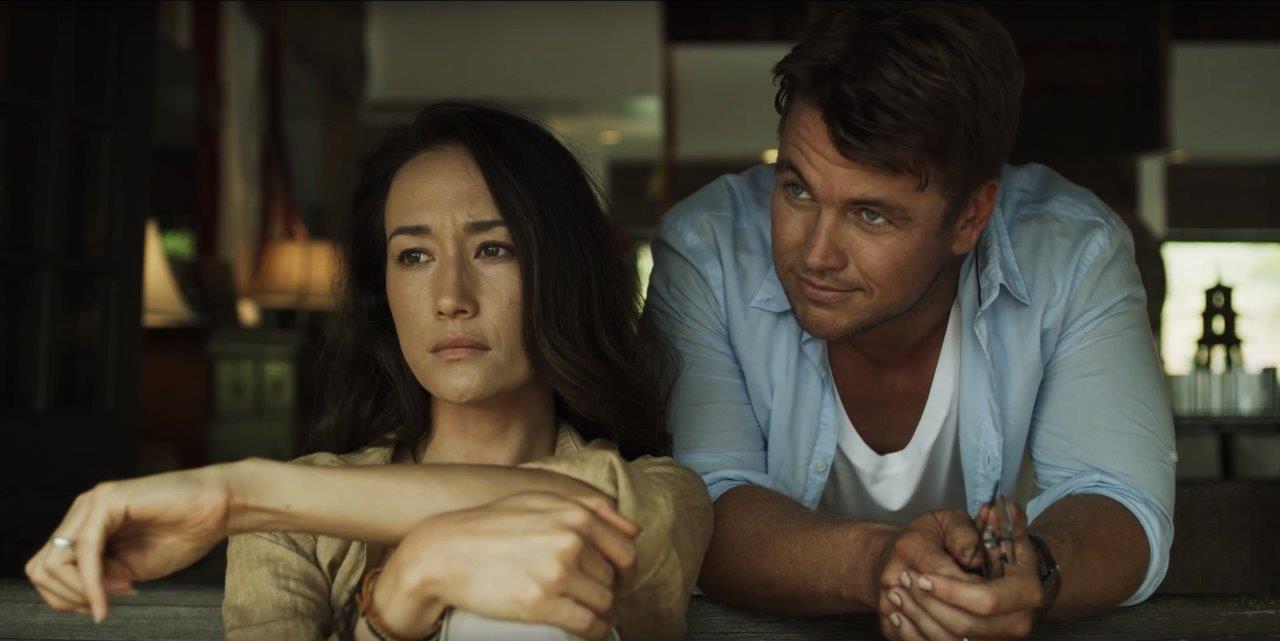
Christine (Maggie Q) and Neil (Luke Hemsworth) wake up on the morning of their last day in Thailand hungover, dirty, and confused. With no clear memory of how they came to be this way, they flip through photos on Neil’s camera and are surprised to find a two hour video detailing events neither has any memory of, ending in some pretty rough sex, and what appears to be strangulation. And not, like, a little light strangulation, but it appears that Neil kills his wife, digs a shallow grave, and dumps her body into it quite unceremoniously. Of course, that can’t be what happened, because Neil and Christine are both right here, watching the movie together, although with increasing dread and panic, in slightly unequal amounts. Come to think of it, Neil’s got dirt under his fingernails and Christine’s got a ring of bruises around her neck. When she starts vomiting earth, well, what the hell?
Attempting to reconstruct the night’s events uncovers deeper and darker secrets. They get sucked into the island’s veil of mystery, black magic, and murder; the next 24 hours before a ferry can be boarded are going to be extra, extra long, and pretty darn arduous. Paradise turns into a nightmare, but while this movie believes itself to be a horror, it’s a little lacking in execution, spoiling a promising premise. There are a few decent jump scares but clichés just don’t have the same power to scare you, and this movie relies on them pretty heavily – they’re the meat AND the potatoes. You’ll spend so much time trying to figure out what the heck is going on, you’ll not have time to be entertained by the film, let alone delightfully horrified by it. It’s a bit of a missed opportunity, but it’s rare for a murdered woman to be investigating her own murder while being pursued by murderers, so perhaps that’s reason enough for you to watch.
Well that was a hot mess.
Paul (Thomas Jane) and Wendy (Anne Heche) take their ten year old daughter Taylor on a camping trip over the Thanksgiving weekend, But Taylor doesn’t make it to the holiday. She disappears on the very first day, while mom is away and dad is flirting with the hottie next door.

Over the next week, as the cops try and fail to find their daughter, Paul and Wendy unravel. Almost anyone would, in their shoes. It’s a terrible thing to lose your child, and to sit helplessly by while search and rescue continues to turn up nothing. But it’s also terrible to disregard official police “advice” and take things in hand themselves. People under incredible emotional duress don’t make the best decisions. Wendy and Paul make particularly bad decisions, but it turns out they’re not the most stable people.
Peter Facinelli writes, directs, and appears as one of the inept cops, and should be deeply ashamed of all three. This movie is so out of this world improbable that, at times, it feels like the writer meant it as a comedy but the director wildly misinterpreted everything, except that Facinelli is of course both the writer and the director and very very bad at both. The entire movie is built around a terrible twist ending that takes a page from the very worst of M. Night Shyamalan and actively seeks to one-up him in a competition of awfulness. Even Anne Heche and Thomas Jane, neither of whom was ever mistaken for a good actor, do their best worst acting in this.
My very best advice: try your damnedest to avoid this one on Netflix.
In 2020 I was living in a narrow, dark little world, ignorant that Hallmark had its own shared universes and extended stories. But late last year I came into the light and there’s no looking back now.
Just a week ago I was telling you about One Winter Weekend, in which a couple of gals rented a ski chalet that turned out to be shared with a couple of guys, unbeknownst to all four. They were all mildly attractive and wildly single, so by the end of just one (winter) weekend, they’d coupled up, strangely along race lines. Happily ever after is assumed when you close with a Hallmark kiss, but this particular movie has since reached franchise status with a sequel that gives us a glimpse of what’s been happening in the year since.

In fact, it’s been a very good year for Cara (Taylor Cole), who is now publishing that mystery novel she was working on when we first met her, and boyfriend Ben (Jack Turner) who has indeed founded a new snowboarding company that makes a helmet with a ponytail slot. They’re spending a romantic weekend together at the same chalet that started it all, and Cara suspects an engagement might be imminent. Ben is less sure – Cara is impossible to surprise, plus the weekend’s turning out to be less about romance and more about business as he’s meeting a possible investor there. Oh, and there’s the fact that Megan (Rukiya Bernard) is tagging along, for work. And Sean (Dewshane Williams), well, he gave up his Seattle surgeon gig to be a ski resort doctor full time, so the whole gang’s back together. Not together together – Megan and Sean never made it was a couple – so it’s either going to get super awkward, or shit’s about to get rekindled.
Will Ben’s company get funded? Will Cara get a ring? Will Megan and Sean bump uglies? The possibilities are endless, and each more juicy than the last. Hit them up on Hallmark.
Shirley Jackson was a wonderfully spooky and wildly talented writer and she undoubtedly deserves a biopic that lives beyond the borders of ordinary. This is exactly that movie.
Shirley (Elisabeth Moss) is a reclusive horror writer known for her gloomy temperament and spiky sensibility. Husband Stanley (Michael Stuhlbarg), a literary critic and professor at the nearby college, calls her “sickly” and “unwell” as he philanders all over campus. He and Shirley take in a young newlywed couple, Fred (Logan Lerman) and Rose (Odessa Young); Fred is to be Stanley’s protégé, and though Rose was not long ago a promising young student herself, Stanley now expects that she’ll cook and clean and care for his oft-bedridden wife.
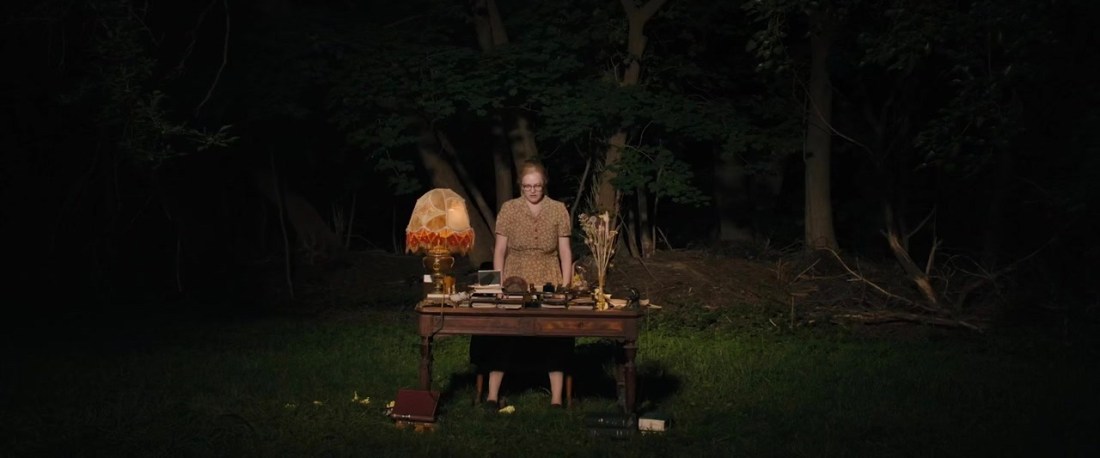
Shirley is writing yet another masterpiece and while her creative process is at first disrupted by the new arrivals, she soon finds Rose to be open and trusting and ripe for manipulation. Rose is curious, and fascinated by the brilliant author, and though Shirley seems, at times, grateful for a friend, her only true allegiance is to her work. And she is, of course, filled with neuroses and wildly unpredictable, so the house becomes volatile as loyalties shift too quickly to be counted upon. Meanwhile, Stanley is jealous of his would-be protégé and inappropriate with Rose, which means no one’s motivations are pure and home has become quite hostile. The more hostile things become, the more the film itself blurs the lines between fiction and reality.
Josephine Decker’s film is provocative and challenging much like the author herself – which, to be honest, means that I didn’t enjoy the film so much as admired it. Certainly I admired the committed, prickly performances, the dedication to some pretty unsavoury characters, and an ambiguous, haunting story-telling style that was nearly a performance in itself. It was an uncomfortable watch though, not what I would consider satisfying, too off-putting for me to truly recommend it. Although I appreciate the boldness it takes to make deliberately ugly art, I always end up wondering what the point is, exactly, if no one wants to watch it.
Cassie (Carey Mulligan) was once a promising young woman, a fact her parents take the opportunity to remind her of every morning at breakfast. Now 30, friendless, living at home despite heavy parental hinting that it may be time to move one, an unambitious med school dropout turned barista, Cassie’s parents (Jennifer Coolidge, Clancy Brown) aren’t sure what it will take to jumpstart her life. To most it would seem that Cassie’s life derailed when her best friend Nina took her own life, but to Cassie, her life has simply taken a different direction. Her life now revolves more or less around avenging Nina’s death.
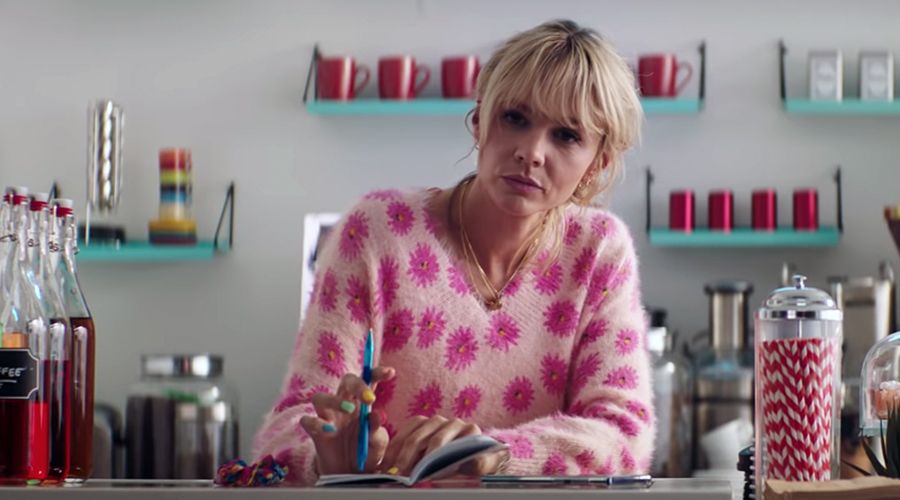
Nina was also a promising young woman, also a student in medical school when one night she was gang raped. She was a party, too drunk to defend herself, but ostensibly among friends and fellow students, many of whom either participated or stood around watching while it happened. While so-called friends gossiped behind her back, the school administration merely swept it under the same rug where they keep all the other similar complaints, and the court case stalled when the defense turned the table on the victim. Unable to deal with the aftermath, Nina died by suicide. But Cassie, filled with anger and outrage, is not content to let justice remain unserved. She’s become a vigilante of sorts, going out at night, posing as a woman who’s had too much to drink, and if you’re a woman yourself, you’ll be unsurprised by just how many men take the bait. She looks like easy prey, at least until they get her home and try to have sex with a woman they believe is too intoxicated to properly fight them off (despite her clear and repeated NO), then suddenly she snaps to alertness and serves them a warning they won’t soon forget. This is the double life that Cassie’s been living unbeknownst to others – unbeknownst even to new boyfriend Ryan (Bo Burnham), an old classmate and the first man she’s actually trusted since what happened to Nina.
Promising Young Woman is a dark comedy, in fact, a Vantablack comedy, if you’ll permit me trotting out a subcategory I invented of the Ryan Reynolds dark comedy, The Voices. Longtime readers with impressive memories (read: no one, even I had to look it up) may remember that Vantablack is a colour that is blacker than black, absorbing all but 0.035% of light; a black so black our human minds can’t actually perceive it. I would like to unroll this categorization once again, because compared to Promising Young Woman, everything else is pink.

Emerald Fennell, first time director (and also this movie’s writer), has done the improbable and completely made this genre her bitch. It is uniquely difficult to master the tone of such a film, mixing a very heavy topic with moments of genuine laughter and charm. This is truly one of the most provocative, unexpected, daring movies of this year or last. It must be seen.
Carey Mulligan is absolutely breathtaking. Cassie has half a dozen secret lives going at once yet Mulligan not only keeps them straight, she makes them easily identifiable to us, hiding stories and motivations behind her eyes, astonishing us with a raw and layered performance. Bo Burnham has a tall order playing the Last Good Man, bolstering a stellar ensemble. Clearly Fennell impressed half of Hollywood with her audacious script; Alfred Molina, Adam Brody, Alison Brie, Laverne Cox, Connie Britton, Molly Shannon, Max Greenfield, and Chris Lowell fill small but impactful roles, many of them names on Cassie’s shit list.
Regret, retribution, guilt, forgiveness, culpability, corruption, consequences. No one’s life is going to be the same. No one’s getting left off the hook. Cassie’s been living off righteous rage for far too long, and if she can’t have justice, she will have closure, by any means necessary.
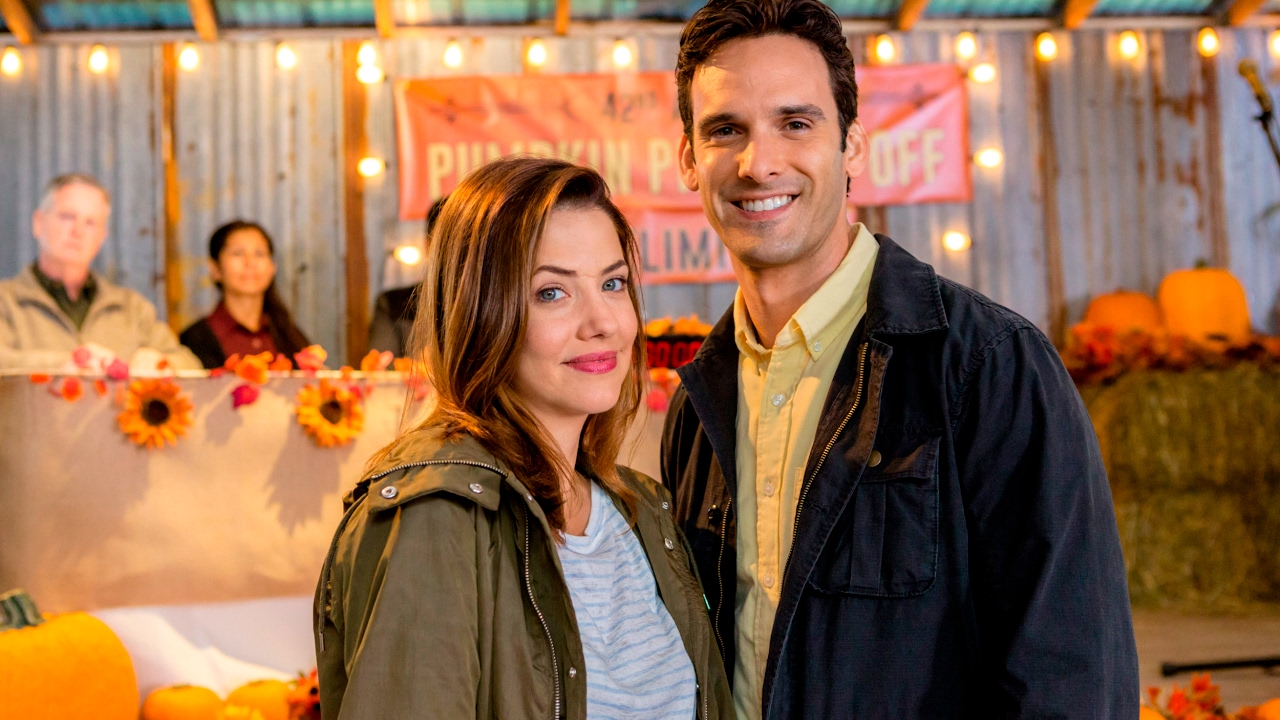
Ten years ago, Faye McArthy (Michele Scarabelli) and Lydia Harper (Jennifer-Juniper Angeli) were best friends, until a pumpkin pie contest was their undoing. Competing against each other with rival pie recipes, their friendship unraveled in front of a live audience as Faye accused Lydia of betraying her, of seizing an opportunity to open “their” bakery alone. Ten years later, the McArthys and the Harpers are sworn enemies with rival bakeries across town from each other. Faye is really hoping to win this year’s pie bake-off to bring much-needed business back into the bakery as times have been tough, but an accident leaves her with an injury that forces her off her feet and out of the kitchen. Daughter Casey (Julie Gonzalo) has heretofore been solely on the business end of the bakery, but now she’ll have to win the contest – and, um, learn to bake first, of course. Meanwhile, over in the Harper bakery, Lydia thinks it’ll be good for business to stoke the family rivalry by sending her own son Sam (Rico Aragon) to compete in her place – 2nd generation feud and so on. Small towns! Rico is a very talented chef who’d love to expand his mother’s business to include more than just pastry, but Lydia is risk-adverse and keeps pushing him off.
Wouldn’t you know it, Sam and Casey have no vested interest in carrying on their family’s feud and in fact agree to help each other out: Casey will help Sam create a viable business plan to present to his mother, and Sam will teach Casey how to bake. Like any good Hallmark movie (or indeed, any bad Hallmark movie), Sam and Casey fall in love, because that’s what happens when you spend time with someone. But wait! They both actually really need to win this competition for their moms! Can their relationship possibly survive the rivalry? Or will their feelings allow them to find a common goal? One can only hope…
 ASSHOLES WATCHING MOVIES