Category Archives: Movie Reviews

Our reviews and thoughts on the latest releases, classics, and nostalgic favourites. Things we loved, things we hated, and worst of all, things we were ambivalent about.

Compartment Number 6

Laura is a Finnish grad student who bids a reluctant goodbye to her Russian lover and boards a train headed for Murmansk in the remote Arctic circle to see the petroglyphs, a fitting farewell to her time spent studying in Russia. For the duration of the long ride, she’s been assigned to share a tiny sleeping compartment with Vadim, a rough and roguish man on his way to work in the mines. He makes a bad impression immediately and though Laura pleads to be reassigned, there are no other spaces available, and it’s Vadim or nothing. She wisely chooses nothing for as long as she can, but returns to compartment no. 6 when she can no longer fight sleep.

Juho Kuosmanen’s film is shot authentically on a series of Russian trains. You feel the claustrophobia, the inability to escape, the blurry landscape rushing by impassively outside the compartment’s window. Eventually loneliness and isolation win out, and Laura (Seidi Haarla) feeds her hunger for human connection by letting Vadim (Yuriy Borisov) in, little by little. They are not well matched, separated by class, nationality, and even language, but Vadim continues to surprise Laura, who stands in for the audience as she revises her assumptions and first impressions. Still, we fear for Laura, who seems vulnerable in her naivete, in travelling by herself such a long distance, so far from home.
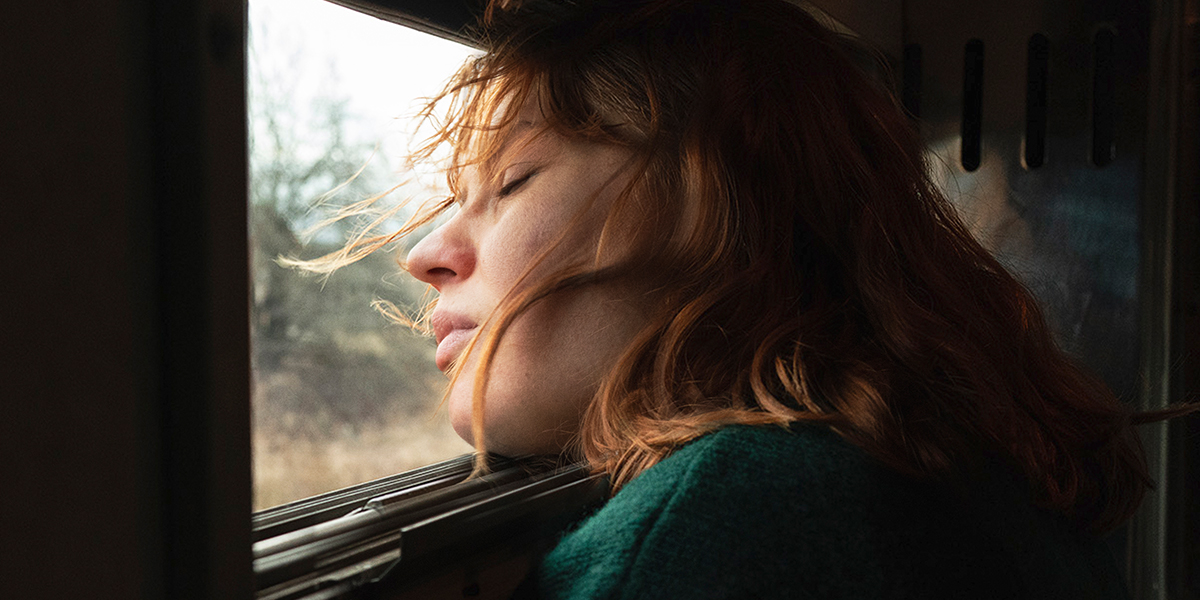
I’ve heard this film compared to Richard Linklater’s Before Sunrise, but I wouldn’t put them in the same category myself. I struggled with Compartment No. 6 because the introduction does such a good job of painting Vadim as an undesirable that I was totally convinced, and not nearly as ready to forgive as Laura. This is a general problem for me lately, my reluctance to accept vindication for a man I’m not sure deserves it. I feel Kuosmanen pushing us to challenge our implicit presumptions, but I don’t believe Vadim has truly earned redemption. His character starts out too abhorrent for me to believe in his transformation in just one train journey, no matter how endless it felt.

Of course, the beauty in film is that you may feel otherwise yourself (many do). Their time together being limited, perhaps you’ll be moved by their connection, impressive considering the limitations of the ride. Their inherent expiry date will either fill you with a sense of warmth and urgency, or leave you feeling that it’s all a bunch of nothing. And you wouldn’t be wrong either way. We are merely silent observers in this, and we’ll either find compassion for these two and their choices, or we’ll be left out in the cold wind of the Arctic circle.

Compartment Number 6 is an official selection of TIFF 2021.
Bob Spit: We Do Not Like People

Welcome to the Ottawa International Animation Film Festival, a festival which always includes an eclectic lineup of fantastic animated movies, movies that will likely challenge your notion of what an animated movie can be. Most are not kid-friendly. There are no Disney princesses here (though we have seen the folks from Pixar attend, give great talks about their creative process, and host a hiring booth at the career fair). You’re more likely to see something about the war, or Alzheimer’s, or an esoteric exploration of the meaninglessness of life. Although not always dark, these movies are likely to leave you with something meaningful to chew on. So what better way for us to start this year’s festival than with Bob Spit: We Do Not Like People, a meta, self-referential claymation about a popular comic book, and its creator.

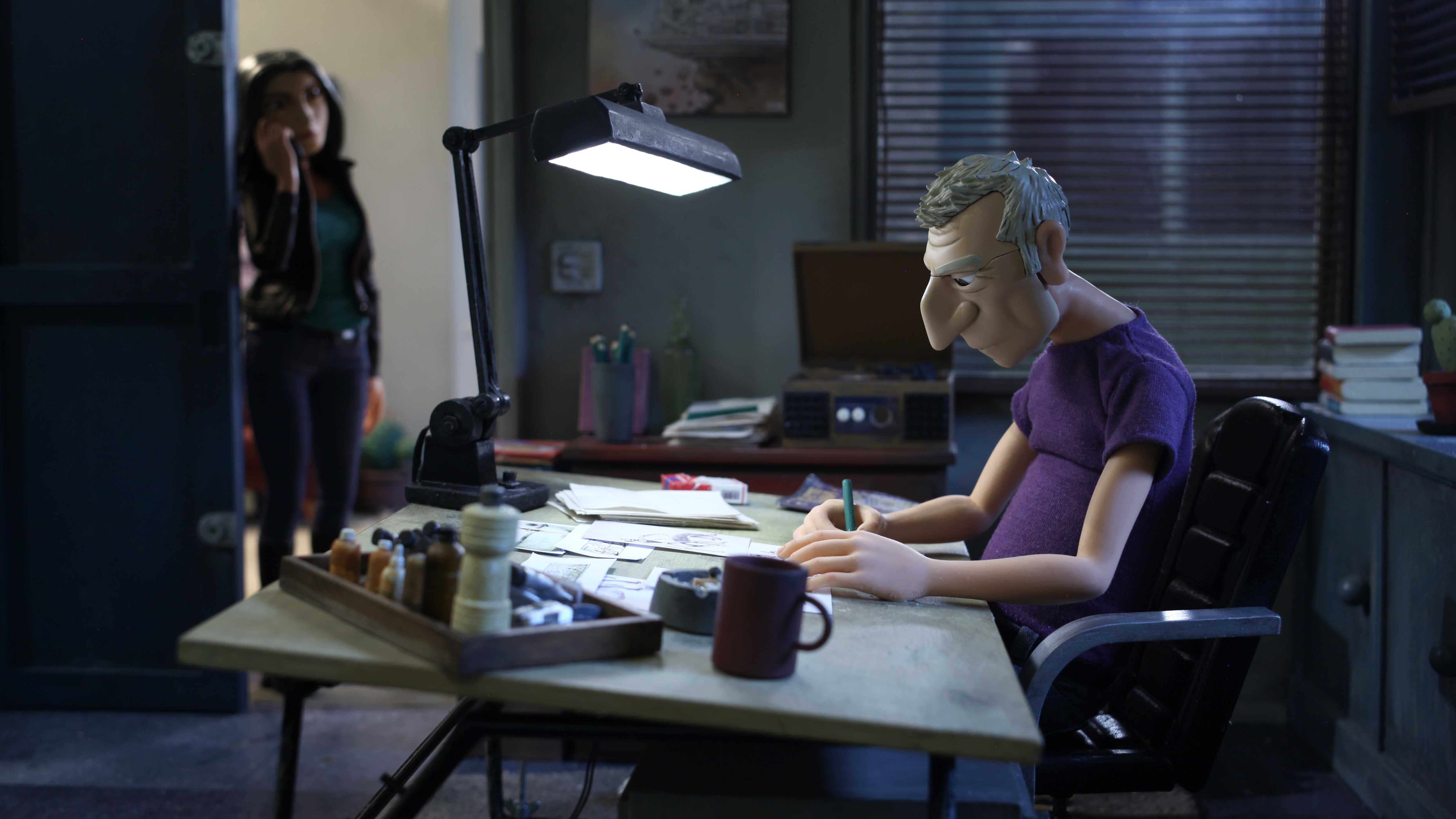
Director Cesar Cabral interviews popular Brazilian cartoonist Angeli, who bemoans his current writer’s block, and his evolving style, feeling like he’s no longer the artist he once was, or that others would recognize. The interview is of courses stop-motion animated, there’s nothing live action to see here. Angeli decides to overcome his block by killing his most famous character, Bob Spit, an aging, angry, misanthropic punk.

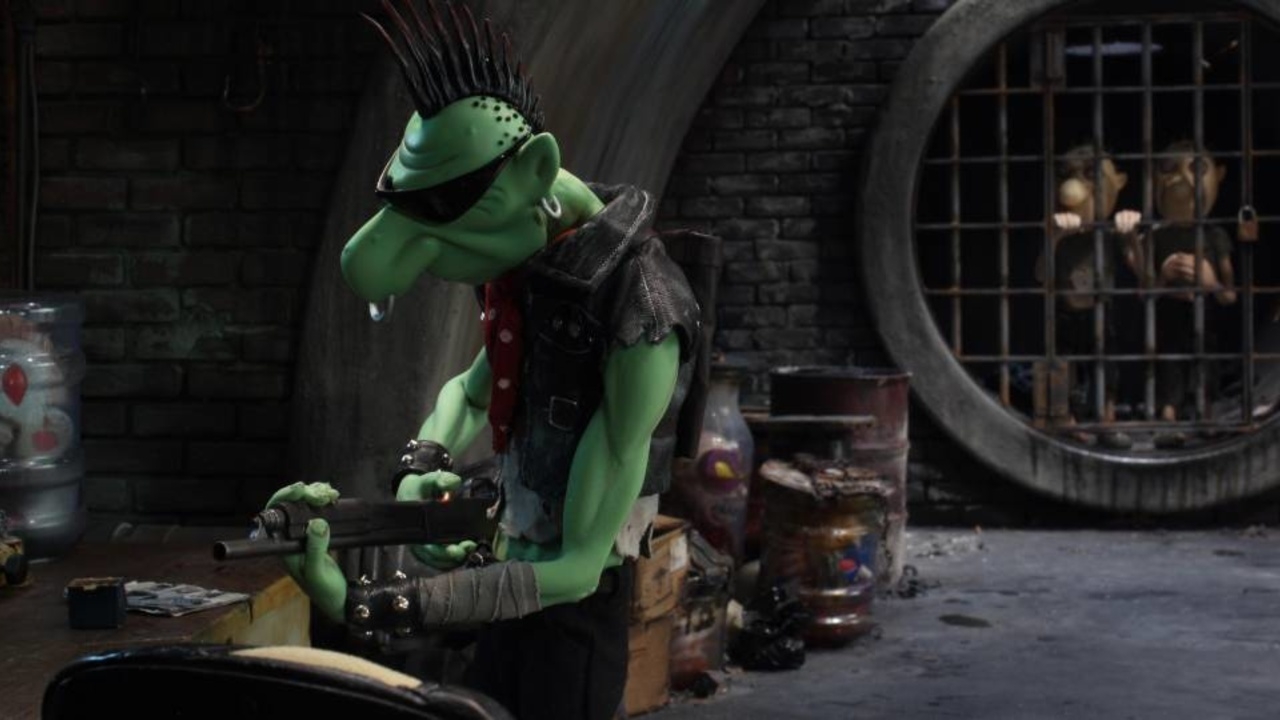
We deep-dive into Angeli’s head, where character Bob Spit lives in a post-apocalyptic desert with mutant cutesie pop stars who want him dead. A couple of his old followers help him confront his creator (Angeli himself) to make a plea before it’s too late.

Part documentary and part comic book adaptation, where both get equal treatment in clay, Cabral makes an interesting connection between the artist and the art he creates. The relationship is clear; the delineation is not. Bob Spit is Angeli’s most autobiographical character, a character Angeli is now determined to kill off.

This film defies expectation, defies label, defies genre, defies logic. It is, however, eminently watchable. Bob Spit, caught off guard on the toilet by a bunch of homicidal pop stars, picks them off one by one with his trusty shotgun. His pants around his ankles (full-frontal claymation!), the popstars burst with a riot of glitter in place of blood. The Bob Spit universe inside Angeli’s head is a marvel. Angeli himself is a mystery, but it sure is fun to live in his world for a bit. This film needs to be seen to be believed and lucky for you, it’s screening online at the festival right now.

Bob Spit: We Do Not Like People is an official selection of the Ottawa International Animation Festival.

7 Prisoners

Mateus is one of 7 boys recruited by a familiar face in the country villages outside São Paulo. This man selects only the best, and competition is fierce; there are no jobs in the countryside, and 18 year old Mateus is keen to earn money for his family. His family celebrates his luck with a special dinner and goodbye gifts that they can scarce afford. Mateus is proud to go.

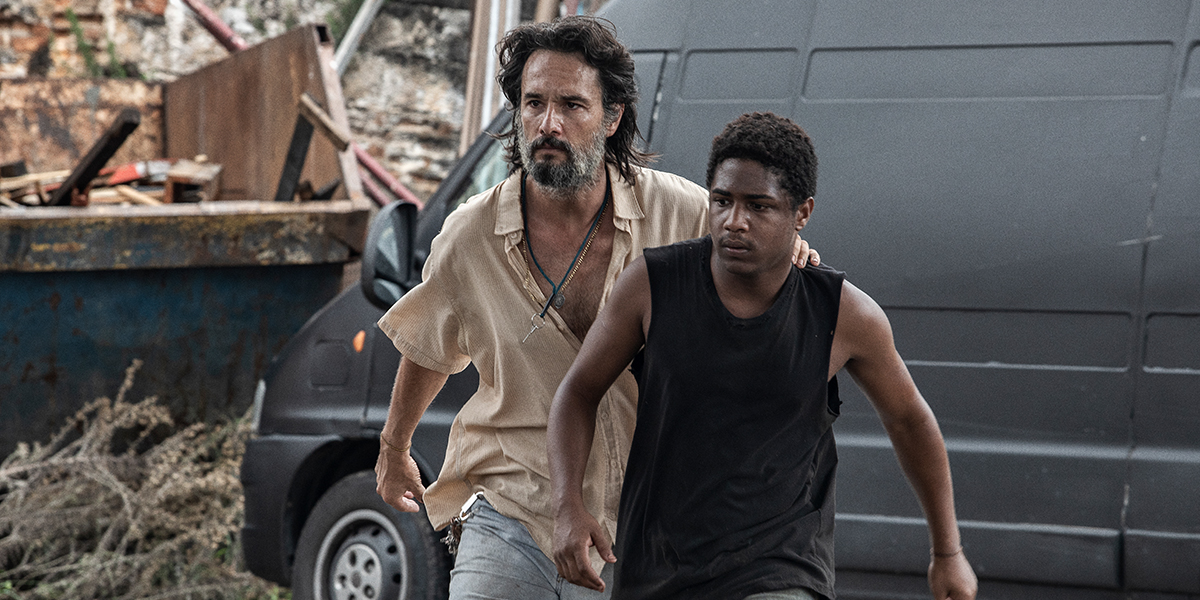
Until he and the others are thrown inside a cage, locked up, that is. 7 Prisoners isn’t the only movie at TIFF this year to tackle modern slavery, but the circumstances here are different. The junk yard boss Luca (Rodrigo Santoro) knows what he’s doing. He presents his prisoners with an invoice for every cost incurred, which will conveniently take them a lifetime of forced labour at slave wages to repay. Some of the boys talk of rebellion, of overthrowing Luca in order to escape, but others can think only of their relatives back home living in poverty. Mateus (Christian Malheiros) has an even more complicated choice to make when Luca chooses him to be his middle man, the one who will be directly in charge of the other prisoners. Mateus gets better food, a better bed, a life outside the bars. He also gets a gun to point at his friends, and the job of hunting them down should he escape. The other prisoners have now fixed their hatred on him for turning on them so quickly, for being part of the system that traffics in humans. He’s on the wrong side.

Malheiros shows us Mateus’ agony, but also his determination, and his #1 priority, the family back home. In the few phone calls he’s been allowed, his mother is astounded by the money Luca has sent back on his behalf. She can labour less, save her bad back. For Mateus, this is worth it, but he’s in an interminably awkward position of being both the bad guy and a victim but unappreciated by either side. He has to make extreme personal and ethical compromises to survive, not the prisoners see it this way.

Director Alexandre Moratto transcends simple good vs. bad and presents a more complicated and evolving sense of right and wrong, the steady compromising of values necessarily to survive systemic oppression and corruption. No matter which side of the bars they sleep on, all seven prisoners are being exploited; there is no winning in the game of human smuggling, only injustice, cruelty, and a hopelessness that seeps in quick.

7 Prisoners is an official selection of TIFF 2021.
The Wheel

Albee and Walker met as children growing up in foster care. They married at age 16 to escape a terrible situation, and now, 7 years later, they’re on the verge of divorce. Albee (Amber Midthunder) has all but checked out, but agreed to spend one last weekend away to work through a marriage workbook and see what can be salvaged. Walker (Taylor Gray) hopes their relationship can be saved, but Albee isn’t even sure they ever loved each other so much as needed each other to build more stable lives. They’re committed to brutal honesty this weekend, but neither is really prepared to hear it.

Meanwhile, the couple who run the B&B where Albee and Walker are staying are having problems by osmosis. Planning to wed in just a couple of weeks, Ben (Nelson Lee) and Carly (Bethany Anne Lind) are tip-toeing around the their unstable guests, trying to avoid the awkwardness of witnessing a marriage disintegrate in their guest house. But as Albee and Walker tackle the issues suggested in the book, it begins to reveal cracks in Ben and Carly’s relationship as well. This weekend is going to be very hard on love.

Midthunder plays cruel and bitchy exceedingly well, her only displays of affection reserved for her phone. Gray is adorable like a kitten; it’s inconceivable that anyone should abandon him. It makes for an uncomfortable balance. Lind adds an interesting extra dimension to some already complicated dynamics. Love is hard. Love is very hard. Are any of these couples willing to do the work?

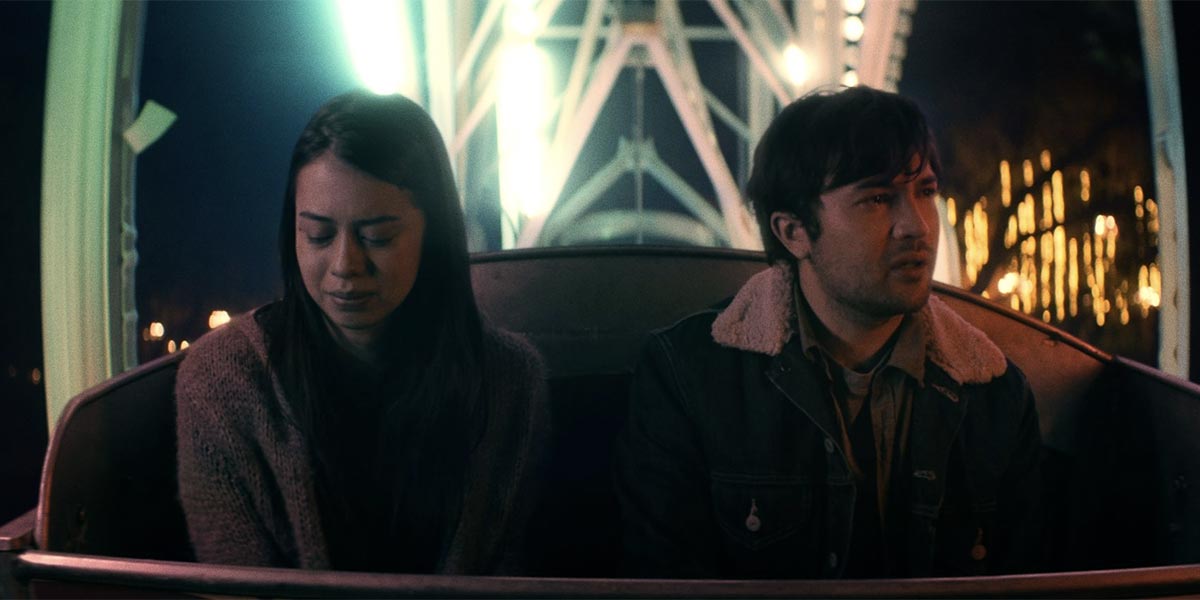
The Wheel is a wonderful little indie that I found quite charming, exceeding my expectations in the best possible way.

The Wheel is an official selection of TIFF 2021.
Intrusion

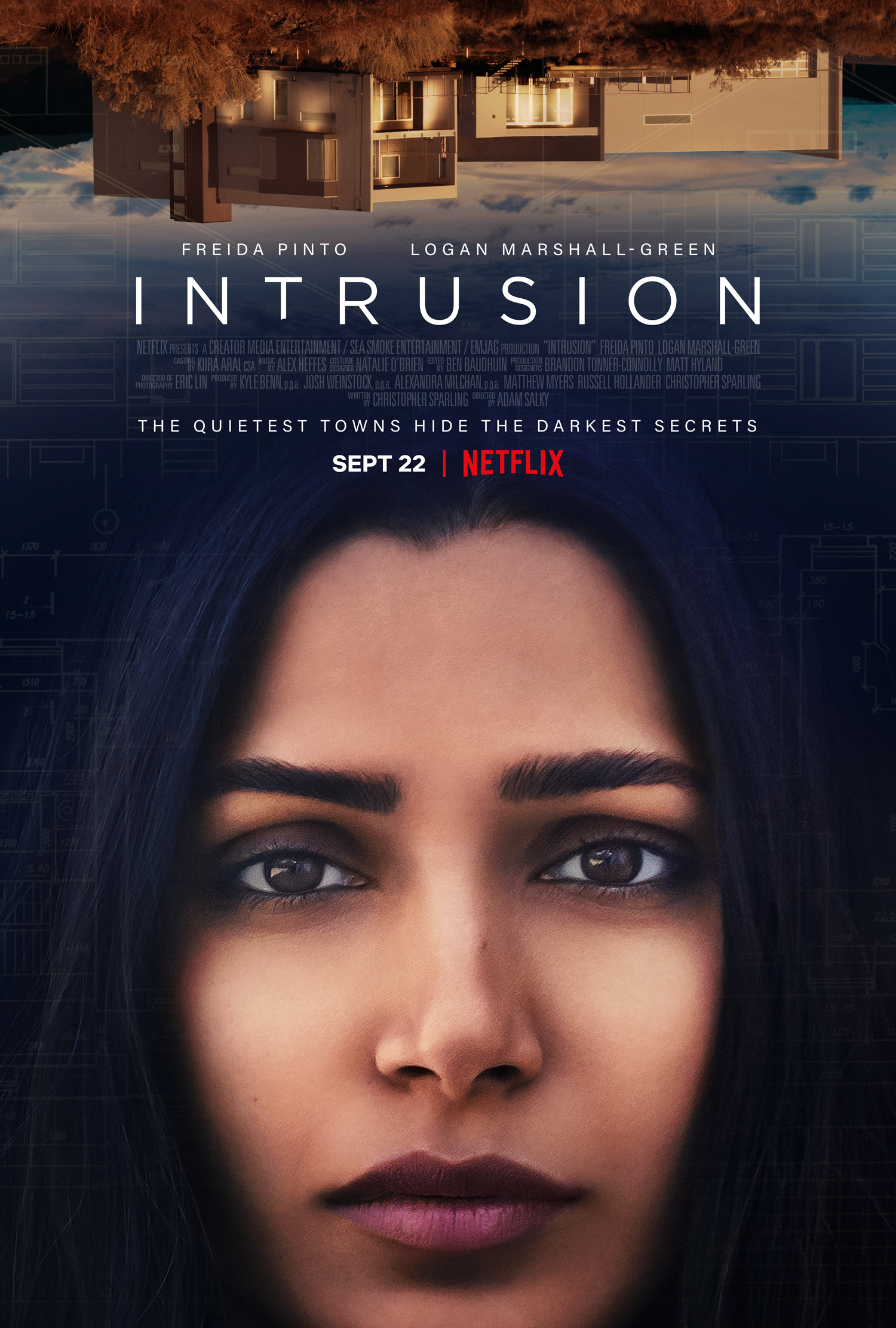
Meera and Henry have left the rat race of Boston for a small town and their dream home, which Henry, an architect, builds for them. But paradise is about to be, well, intruded upon. A break in rattles the couple, and Meera (Freida Pinto) starts to feel uneasy in her luxurious but secluded home. What’s more, it turns out those responsible for the break in were also suspects in a case of a local missing woman. Meera and Henry (Logan Marshall-Green) might have accidentally built their home in the middle of something complicated and violent.

I think most of us would be frightened by a break-in. It’s very invasive, isn’t it? To feel like someone’s been in the place where you normally feel safe. Meera’s uneasiness grows when it seems that she and Henry are healing along different paths; Henry is ready, in fact insistent, that they move on quickly, while Meera doesn’t feel so confident. She’s a therapist, perhaps more in tune with her feelings, and recently in remission from cancer, so she feels lucky just to be here. Henry was by her side through every treatment and every bad day, so it feels strange to suddenly not be united in this, and issues only worsen as their case gets more complicated.

This thriller by Adam Salky is new on Netflix. It’s a home invasion movie like many before, and many afterward too, I’m sure. They’re effective because they literally hit us right where we live. Intrusion isn’t any great addition to the genre, but it’s fairly benign, and Pinto is lovely to watch. Character in these types of films, especially female ones, tend to be one-note, shrill and terrified, whereas Meera is a little more determined, more pro-active; not merely a victim, but an agent in her own fate. Give it a go if you feel like sleeping a little less soundly tonight.

Quickening

Sheila (Arooj Azeem) is a performing arts major at university, and is finding her dance class to be a particular challenge. She won’t admit this to her (over)protective mother, Aliya (Bushra Ashir Azeem), who thinks the North American university “lifestyle” will ruin Sheila’s chances for a reputable life, compromise her Pakistani values, and basically give her the opportunity to be negatively influenced by her peers, none of whom pass Aliya’s muster. The tension between mother and daughter is somewhat soothed by Sheila’s first love. But when her juggling act between parents, school, and boyfriend ultimately fails, Sheila’s breakdown is of a peculiar sort.

Pseudocyesis: a psychosomatic state that occurs without conception and is marked by some of the physical symptoms and changes in hormonal balance of pregnancy.

Sheila believes she is pregnant. She’s not, but she’s convinced she is, and she’s certainly going to stress out like she is. How will this affect parents, school, and boyfriend? Yeah, that’s exactly what Sheila’s worried about! Poor dear.

Azeem is quite lovely as Sheila, and this coming of age story is particularly complex. Sure you might feel lulled into a sense of security by the admirable cinematography, and the gently hypnotic score, eliciting a dream-like state much like the haze of first love. But make no mistake: inside, Sheila is roiling with conflict and self-doubt. The cultural expectation of pleasing one’s parents runs deep, but Sheila also years no break free and pursue her own ambitions, even if they’re outside the traditional life her parents have envisioned for her. Azeem is able to live in the skin of a second generation immigrant, with all the pressures and expectations bottling up inside, overwhelming her in part because she can’t really express them.

Writer-director Haya Waseem makes a bold choice assembling Azeem’s real-life family to play her on-screen one, but the risk pays off with an authentic-feeling bond that transcends culture. Quickening is a wonderful film about a universal stage in a young woman’s life, layered with cultural specificity for a cathartic journey about growing up, leaving home, and always being there for family.

Quickening is an official selection of TIFF 2021.
The Mad Women’s Ball

You have to hand it to the patriarchy: they set up an entire society designed to oppress women, to deprive them of any meaning or purpose in their lives, and then they act all surprised when it drives them crazy.

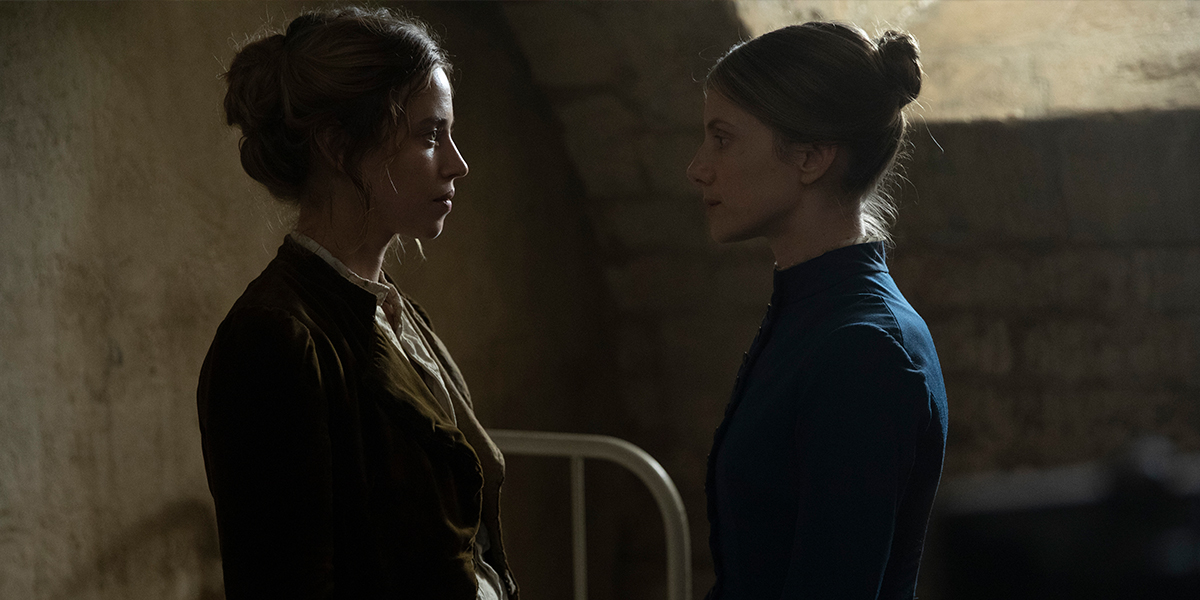
Of course, Eugénie (Lou de Laâge) isn’t actually crazy, but she does speak to the dead. But even just nonconformity is reason enough to lock her up, and in the not-so-long-ago (1885), all you needed was one male relative to want to get rid of you, and a woman could be imprisoned in an insane asylum for life. Eugénie is in Salpêtrière, a Parisian asylum, where she befriends wins over a skeptical nurse, Geneviève (Mélanie Laurent). This nurse no-nonsense and scientifically inclined, but when her dead sister starts sending messages through Eugénie, even she must admit that this woman doesn’t belong here. Together, they plan Eugénie’s escape under the cover of Le bal des folles, the mad women’s ball.

Unfortunately, though not surprisingly, this film is based on real events. Salpêtrière was a real asylum that locked up women and threw away the key based on some very flimsy excuses – and any who were actually crazy were mostly driven that way by the very men who committed them. The women were subjected to barbaric experiments, abused by staff, and the film (and the book upon which it is based) exposes the misogyny inherent in medicine at the time (not all of which has been eliminated today).

Thomas Jefferson once said “The measure of society is how it treats the weakest members,” a scathing indictment of himself, a slave owner, and every psychiatric hospital ever. The Mad Woman’s Ball was indeed a real event hosted ever year, inviting Paris’ high society to come and gawk at the mentally ill, all dressed up in cast-offs and costumes.

Mélanie Laurent writes and directs a story she makes seriously cinematic and strikes a timeless chord, showing the universality of society’s most interesting women being silenced, in board meetings or at the stake, but always one way or another. At the time, women were diagnosed “hysterical” for having an opinion; today she’s called “shrill” or “feminazi” or “sjw.” Bottom line: yes, there’s a message, a grimly timely one, but it’s also just a beautiful film that’s well-acted by an asylum’s worth of talented actresses, with a story to remember.

The Mad Women’s Ball (Le bal des folles) is an official 2021 selection of TIFF.

Look for it on Amazon Prime!

Dashcam

This movie is is polarizing, and the following sentences are going to weed a lot of you out of its potential audience. And you know what? I can only believe that that’s how director Rob Savage wants it.

Annie Hardy plays Annie Hardy, apparently only a slight exaggeration of her already outsized personality. In real life, she’s a talking head on Twitter, prone to those distasteful opinions that we all say are ‘ruining Twitter’ when actually it’s those kind of tweets that make Twitter, stirring up controversy and muck. In the film, she raps them. The character Annie Hardy live streams a Youtube show called BandCar, the internet’s #1 live improvised music show broadcast from a moving vehicle (according to Annie Hardy). Pro-Trump and anti-vax, she sing/raps the most heinous stuff, and her character was so offensive and unpleasant I nearly tuned out before we got to any actual horror. Well, to be fair, since it takes place during the pandemic, the horror was already there. And anti-vaxxers during a pandemic are already pretty villainous. At any rate: MAGA-hat wearing, lockdown-breaking Annie Hardy leaves Los Angeles for London, where she shows up unannounced at her bandmate’s (Amar Chadha-Patel) home where she sows tension between him and his partner, and then steals his car.

Steals his car and attempts to fuck up his Uber Eats side gig at the same time, collecting orders only to eat them herself. Along the way she somehow also collects an old woman named Angela (Angela Enahoro) that needs some delivering, and therein starts the secondary horror. Angela is not just the elderly, inebriated passenger she first appears to be.

Dashcam is about an aggressively annoying woman who refuses to stop vlogging even whilst the world appears to be ending and a demon has it out for her in a big, bad way. Annie is such a repulsive character you’ll root against her, not hoping she’ll survive, but hoping she’ll meet a suitably gruesome end. She may spit some unpalatable crap, but she’s clearly quick, and talented, I’ll give her that. Savage leans on the schtick a little heavily, and throws her GoPro around too heartily; paring down either of those things, and preferably both, heavily, would have made a more watchable movie. Because Savage is really on to something here. There was something terrifyingly random about not being able to pin Angela down, not to even be sure whether she’s victim or perpetrator here. It’s thrilling and chilling and kept me gasping.

However, with zero empathy and even fewer redeeming qualities, Annie is simply too dislikeable, even for a movie that’s less than 80 minutes. Usually she’d be set up in order to die first, but Savage insists on making the film revolve around her, letting the very worst person live the longest, which is a pretty mean-spirited message to put out into the universe. The best part about this film is never having to see it again.

Dashcam was a 2021 TIFF official selection in its infamous Midnight Madness section.

The Killing of Kenneth Chamberlain

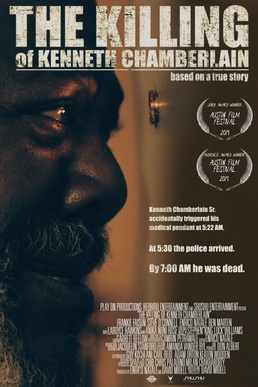
The Killing of Kenneth Chamberlain should truthfully be titled The MURDER of Kenneth Chamberlain, and I’m pretty sure everyone involved in this film hears the correct word shouted over the one that’s used every time it’s pronounced. The film does the shouting for them, of course, leaving little (no) doubt in anyone’s mind who watches it. Kenneth Chamberlain, a Black man, was murdered by the police. It is such a familiar refrain by now that it may seem redundant to make yet another film – but that’s exactly the point. These stories need to be told, heard, and shared until actual changed is effected. Kenneth Chamberlain was an old man in his bed when the police came knocking on his door. This is his story.

On a November night in 2011, Kenneth Chamberlain rolled over in his sleep and accidentally triggered his life alert button. The police showed up to his apartment in White Plains NY’s public housing do a wellness check around 5:30am. Rousing him from his bed, Kenneth was confused as he fumbled for his hearing aids. He was a retired Marine struggling with bipolar disorder; he was listed as ’emotionally disturbed’ by the police dispatch but in fact he wore the life alert for a heart condition. He refused to let the cops in but verbally assured them that he was fine and the button was pressed accidentally. The cops would not leave. Having assessed his neighbourhood as predominantly poor and Black, they were furious to not be let in, and wanting to teach him a lesson, they mused he might be hiding a meth lab, or a dead prostitute. Kenneth held his ground, growing increasingly agitated by the insistent banging and attempts to push their way in. Keeping the door firmly locked, Kenneth placed panicked calls to the life alert agency, pleading for his safety. Overhearing the police intrusion, the woman on the other end does everything in her power to call off the cops, but no matter what she or Kenneth, or Kenneth’s family do, the cops will not back down.

How do things go from a wellness check to gunning an old man down in just 90 minutes? Frankie Faison as Kenneth paints the troubling picture of yet another innocent Black man murdered by the police. The lengths the police will go to in order to murder him are astounding. While not a documentary, it almost watches like one, determined not to stray from the truth, which was recorded in its entirety by Kenneth’s staying on an open line with his life alert company. For some this will be old news, and for others eye-opening, but either way, this is must-watch viewing.

Silent Night

Is TIFF the most wonderful time of the year? For a movie reviewer, it’s pretty close. Every year when the schedule gets locked down, I peruse the titles, research each film, and work up a short list of films I’d optimistically like to watch, if time was unlimited and schedules never conflicted and sleep was optional. In my trusty notebook, I write down titles, directors, actors, and a small blurb to job my memory as to what on earth I might be watching. I had “girl with ice cubes for teeth” and “quirky martial arts romance” and “Afro-sonic sci-fi musical”; for this one, I’d merely written “Keira Knightley Christmas movie.” I don’t normally love watching Christmas movies outside of December, but the chronology of film festivals is mystifying and not to be questioned.

What did I actually get?

A lovely Christmas party, actually, in which hostess Nell (Knightley) greets her friends and family for a fantastic meal, friendly reminiscence, merry making, followed by mass suicide.

It’s the end of the world, you see. That thing we keep predicting but doing nothing about. The environment collapses, sending a cloud of poison, more or less, into the world, where it is spreading death, horrible, horrible death, wherever it goes. Blood leaking out all your orifices kind of death. Not a great death. So the UK, generous to a fault, have provided their citizens with a suicide pill. Everyone’s enjoying one last Christmas with their families, and as the cloud approaches, the pill will ensure a peaceful death in the arms of loved ones instead of painful and bloody convulsions.

The movie broke my damn heart. The adults did their best to act jolly, or stoic when jolly couldn’t be produced, but the kids were confused and vulnerable. Nell and Simon (Matthew Goode) have three kids; the oldest, Art (Roman Griffin Davis) is old enough to be angry at what’s happening to him. He’s angry the adults neglected the environment until it came to this. He’s angry that his parents plan to murder him. He’s angry that he’s so helpless. I was angry too.

But mostly I was sad. Sad that we’d failed these kids, yes, but also sad that any parents had to make this choice, no choice at all really. Sad that there’s so little comfort to be had at the end of the world.

And I was a little impressed, impressed that writer-director Camille Griffin could use Christmas apocalypse to talk about privilege. Nell has the perfect old house to host her closest friends, their kids, and even semi-unwelcome plus ones (that would be Sophie, played by Lily-Rose Depp). But she’s also a citizen of a prosperous nation with efficient (enough) infrastructure. They’ve delivered a peaceful way out to its citizens – but not to everyone living within its borders. If you aren’t there legally, you’re not worth the pill that will save you needless agony. Even kids understand this inherent inequity, and if you think you can look a kid in the eye and attempt to justify it, you’ve got another thing coming. Come armed with kleenex; Silent Night sounds harmless but beneath its shiny gift wrap is scathing indictment and a death sentence for all.