Mogul Mowgli

Zed is finally achieving some of the things he’s always dreamed of as a British Pakistani rapper. Having found an audience and his sound, he’s just booked in as the opening act on a major world tour, destined to launch his career. Except everything is derailed when he’s struck down by a degenerative muscle condition.

Zed (Riz Ahmed) grows weaker at an alarming rate, unable to stand on his own within a few days, not exactly in touring condition. In fact, the only option available to him seems to be an experimental stem cell infusion that would leave him sick and depleted during its course.
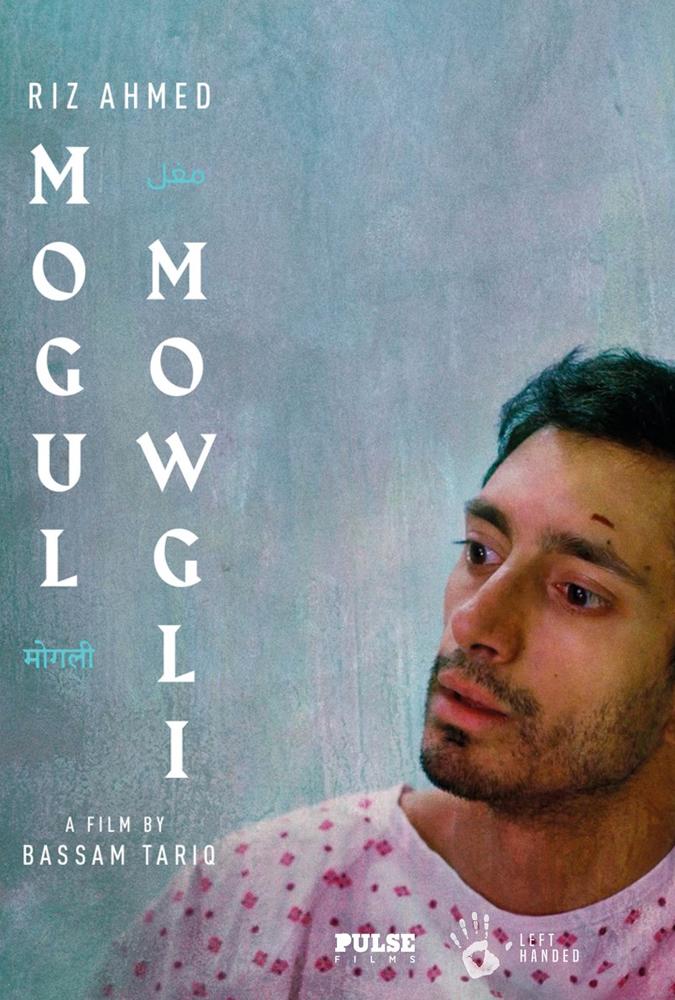
Mogul Mowgli is about much more than a man in the prime of his life fighting a chronic and debilitating illness. Zaheer is second generation immigrant. He has pursued this career against his parents’ wishes, or even understanding. He’s fought culture and tradition and especially parental expectations to get to where he is, and now he’s about to lose it all, have it all be for nothing. And now he’s depending on his parents more than ever, subject to their own thoughts about his treatment, and western medicine, and about what makes life living.

Riz Ahmed is phenomenal; he co-wrote the film with director Bassam Tariq, and clearly this is a personal examination of faith and identity, making for an authentic and interesting film, something you can really chew on. Interspersed with the traditional narrative are stream of consciousness thoughts and memories centered around culture and religion. For many children of immigrants, there’s a complex navigation that happens between new and old culture, forging a path forward that will look different for each and every person. We witness and experience some of Zed’s conflict and course plotting through symbolism, imagery, and flashbacks. This might have meant a difficult watch were it not for Ahmed’s grounding performance. Through his vulnerability we make a close and intimate examination of a man’s selfhood, his idea and concept of self, and how it may or may not rearrange itself when one’s health, normally taken for granted, means a restructuring of whole identity. Riz Ahmed delivers another strong and informed performance in Mogul Mowgli.


Kate

For a hot minute, Mary Elizabeth Winstead was everyone’s indie crush, appearing in quirky movies where she flexed her acting chops. But she’s always had this other side to her, the ability to flex muscle as well as chops, appearing in the Die Hard franchise among other movies consisting mainly of running and shooting, up to and including her most recent credit in Birds of Prey as The Huntress. Perhaps this duality is inevitable; reigning indie queen Florence Pugh has recently made the leap into the MCU as Yelena in Black Widow (and I’m guessing beyond). Winstead isn’t the first to trend this way, but she’s certainly an excellent example, believably tough and resilient, yet adding dimension to her characters with a humanity and vulnerability that many action movies don’t make time for.

In Kate, she plays an assassin who has 24 hours to find and punish her murderer. Yes you read that right. Someone wanted her to suffer; she knows she’s going to die, and it becomes increasingly and wincingly apparent throughout the film. But as she methodically machetes her way through Tokyo, she finds herself bonding with and pairing with the daughter of one of her previous victims, Ani (Miku Patricia Martineau). It’s a uniquely interesting relationship that allows Kate the time to atone for some of her sins, but also to come to terms with the cost of her life’s choices. She’s leaving chaos and violence in her wake, and she’s determined to make a little more before she goes.

Kate’s heart bleeds vengeance. Her eyes bleed blood. She drags her broken body through the garish neon lights of Tokyo fueled by her thirst for revenge and motivated by the only sort of legacy she can leave. Winstead plays Kate with a lot of grit; she is ruthless yet compassionate. She is a woman forced to reckon with her transgressions in the hours before her death, even as she adds to them. Winstead makes sure that Kate is a surprisingly complex character as she crawls toward her doom, destruction in her wake, and possibly her own soul, determined to finish one last job for her handler (Woody Harrelson), the only family she’s ever known.

Kate more than earns its R-rating in bloody violence; fight scenes are tautly directed by
Cedric Nicolas-Troyan (The Ring), and even though there’s a strong narrative component, the action is so relentless there’s hardly room to breathe. Kate drops on Netflix this Friday, September 10th, and I think you’ll find it unusually hard to be disappointed.

Death Drop Gorgeous

RuPaul’s Drag Race Season 6 All-Stars has wrapped up, and our sincere condragulations to Miz Kylie Sonique Love for her win (and a shout-out to Ginger Minj, whom we also adore). Gaps are rare between seasons of Drag Race; RuPaul is both prolific and tireless. Luckily, the second season of Canada’s spinoff is just around the corner, with an anniversary episode of season 1 streaming on Crave right now to fill the void. But if that’s not enough for you (and truly, is there ever enough drag?), you might takea look at Death Drop Gorgeous, a horror-comedy about drag queens! Can you even resist?

Note: in Drag Race, a dance move where the dancer suddenly and dramatically throws themselves backwards onto the ground, one leg extended, is referred to as a Death Drop (and sometimes a shablam); in fact, it’s actually called a dip, and is one of the essential moves in voguing, but for the purposes of popular culture, and this film, this is a death drop, courtesy of Laganja Estranja.

Death Drop Gorgeous, written and directed by Michael J. Ahern, Christopher Dalpe, and Brandon Perras, weaves together camp, gore, and enough gay references that it’s sure to hilt queer cult classic status.

A serial killer is on the loose in Providence, targeting gay men and draining their bodies of blood before leaving their beautiful, slaughtered corpses to be found by an increasingly panicked community. Dwayne (Wayne Gonsalves), cute but disgruntled, watches from behind the bar at the Aut Haus. His own roommate Brian, frequent patron and audience member, and a host of drag queens including Fitness Janet, Gloria Hole, Tragedi, Audrey Heartburn, and Lindsay Fuckingham, are either targets or suspects, and a fun drinking game can be had trying to guess which is which.

As we know from Drag Race acting challenges, though drag queens are no doubt talented performers, they are not necessarily natural or easy actors. It’s a mixed bag here, though Gonsalves and Matthew Pidge are particular stand-outs, maybe even good enough to appear in movies that aren’t incredibly niche, self-made, and crowd-sourced.

If you have fondness in your heart for drag, I’m sure it will extend to this film, where the fun is not just in guessing who’s draining the blood, but why.

Adventures of a Mathematician

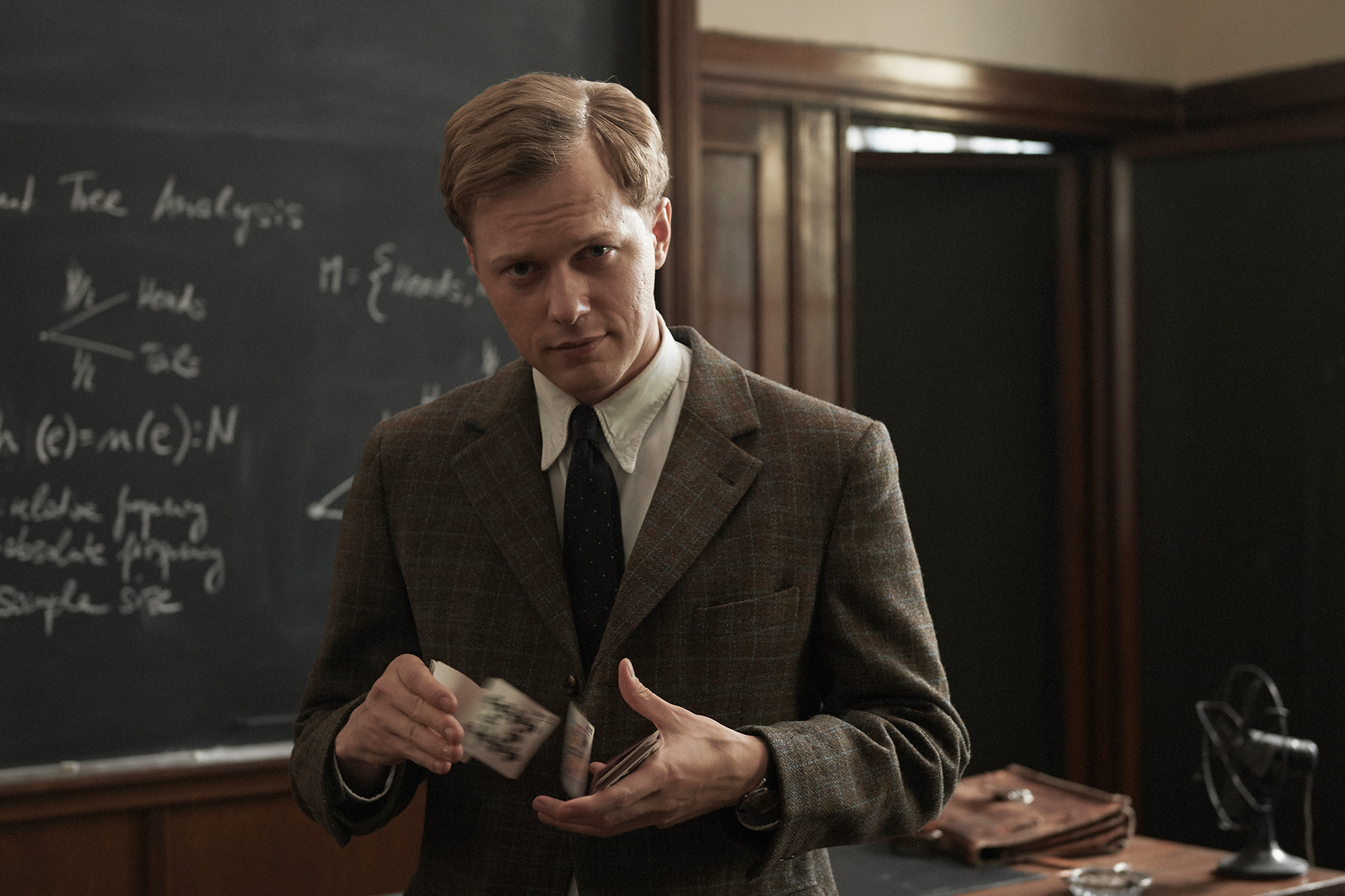
Stan(islaw) Ulam was a brilliant mathematician and nuclear physicist who was teaching at Harvard when Hitler invaded his home country of Poland. In order to make a contribution to the war, he joined the Manhattan Project to work on the hydrogen bomb, moving to New Mexico’s secret Los Alamos lab with Francoise, a French exchange student whom he marries to save her returning to a dangerous, war-torn country (maybe the strangest euphemism for “I want to bone you” I’ve ever heard).

But these equations aren’t just hypothetical anymore. Solving them may mean the end of war, but also the loss of life, sometimes even civilian life. To what extent do Ulam and his fellow scientists owe their work to a cause that isn’t pure? And while both Stan and Francoise are losing friends and family to the Holocaust, the human cost weighs heavily on them.

Make no mistake, Ulam may be Polish born, but Adventures of a Mathematician is an English-language film and a uniquely American story, one of immigration and sacrifice, success and ambition, exceptionalism and confidence. The Manhattan Project united some of the world’s greatest minds of the time, kind of like the Avengers, but less punchy. With great power, of course, comes great responsibility, and perhaps the most important calculations Ulam ever made were in weighing these risks.

Don’t worry, there won’t be any pop quizzes. In fact, Adventures of a Mathematician is more an exploration of ethical quandaries than scientific ones, asking of our protagonist and his colleagues just how far they’re prepared to go, and under what conditions. War is complicated. Humans are complicated. Morality is flexible. Those are some pretty big thoughts to broach in any one movie, and writer-director doesn’t get the chance to treat them equally or adequately, but his attempt to bring this little-known story to the screen is admirable, and while it may not have proved a big draw in theatres, it’ll be a worthwhile watch when it hits VOD October 1st.

Body Brokers

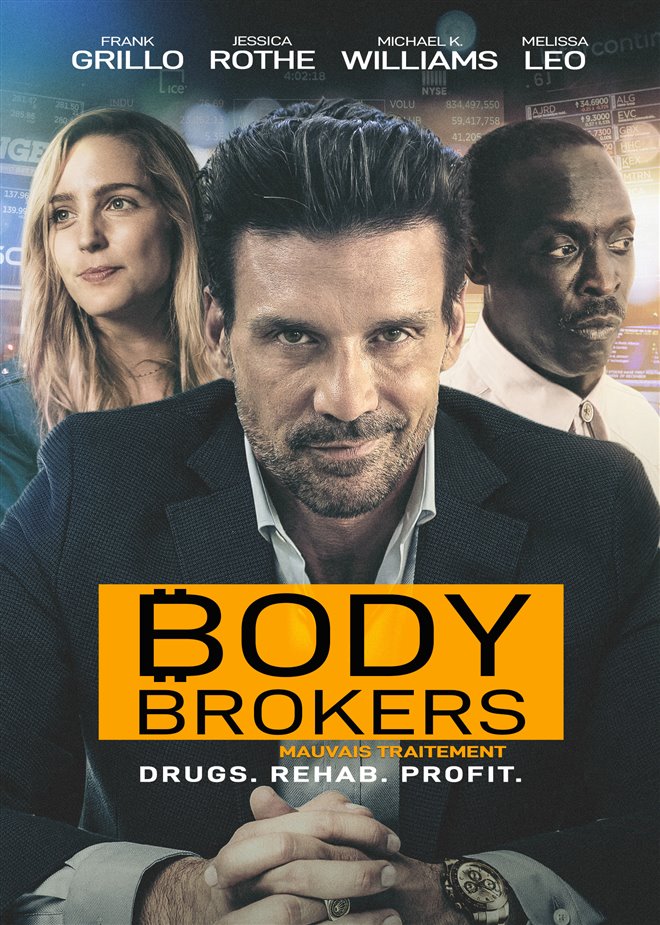
Having done absolutely no research on this myself and relying solely on what this movie has told me: the Affordable Care Act classified addictions as a must-treat disease, creating the opportunity for an economic boom in the health care industry. There are thousands of beds to be filled; the trick is in finding the bodies.

The Premise: Utah (Jack Kilmer) goes to treatment after a decade of crack and heroin.

The Verdict: This isn’t a story about an addict in recovery. This is the story of corruption in the treatment industry. The movie feels, and it’s probably fair to say that writer-director John Swab feels, that treatment centers are a scam. An actual multi-billion dollar fraud that relies on repeat customers so isn’t exactly invested in full recoveries, uses its few success stories to recruit other addicts into empty beds to keep the cash flowing in, and profits from relapse. It’s a scathingly cynical view of the world, but that doesn’t mean it’s wrong. It reminds me of I Care A Lot – which dealt with corruption in nursing homes – in content if not delivery. Body Brokers lacks a certain gloss, a certain finesse, but if you’re in the mood to rage against the machine, this will get it done, and a grounded performance by Michael Kenneth Williams makes it go down that much easier.

R.I.P. Michael Kenneth Williams.

Worth

How much is a human life worth?

As a philosophical question, it’s emotionally fraught and almost unbearable to contemplate. Can you put a dollar amount on a life? You can, actually. Uncomfortably. And people have. They do it all the time. You may even know how much yours is worth in the event of your death. Will you have an insurance payout? How do insurers decide how much you’re worth? What if you have an accident? What would a court of law determine to be your worth? Lawyers wrangle over this number all the time, but I doubt anyone’s every been satisfied with their answers.

When al-Qaeda hijacked four airplanes and carried out deadly suicide attacks 9/11, the loss was astronomical and the country mourned. But as weeks and months passed, that loss began to be quantified, and it fell to someone to develop a formula that would establish a financial settlement for each of the victims. Under the formula, the families of deceased CEOs would receive more than the families of deceased janitors. It wasn’t fair, but maybe fair wasn’t the point. Maybe it wasn’t possible.

Congress hand-picked Kenneth Feinberg (Michael Keaton) to lead the September 11th Victim Compensation Fund. Armed with a calculator, he and partner Camille Biros (Amy Ryan) had the unenviable task of calculating something incalculable while looking the victims’ families in the eye and hearing their devastating stories of heartbreak and loss.

One claimant in particular (Stanley Tucci) challenges Feinberg to confront the humanity of his job, maybe for the first time in his impressive career. Worth is a story about compassion. Given its content and context, it would be easy to turn maudlin and dramatic, but Keaton keeps the whole thing in check with a restrained, stoic performance – not unemotional, but an excellent counterpoint to Tucci, who eschews melodrama in favour of simple human connection. It’s a nice movie about a tragic event. Check it out on Netflix.

Afterlife of the Party

Cassie (Victoria Justice) and Lisa (Midori Francis) have been best friends since childhood, but during the week of Cassie’s 25th birthday (an annual tradition of weeklong partying fondly dubbed “Cassie-Palooza”), the fact that they’ve recently been growing apart becomes glaringly obvious. After a tearful disagreement, Cassie suffers a sudden accident, and dies.

In the afterlife, an angel (Robyn Scott) breaks the news to Cassie that she has not yet ascended to heaven as she still has unfinished business down below. It’s been a year since her death and her loved ones still haven’t moved on. Cassie -the-Ghostly-Apparition will have 5 days to fix things with her mother, her father, and of course with dear Lisa.

To be honest, I really didn’t care to watch this movie. From the Netflix thumbnail alone it looked like the kind of low-budget schmaltz-fest that I have little room in my life for. However, the need to review is strong in this one, so after spending a whole day refusing to make eye contact with it, I eventually acquiesced in a moment of weakness around 1:30am.

Most shitty movies, as you may be aware, have a music montage in them. Some good movies have them too, but all shitty movies have at least one, often more, the signature move of a director who’s out of ideas but not time, padding for an inadequate script. This particular shitty movie actually starts with a music montage, which is kind of like wearing a MAGA hat in public: a fair warning to all that the contents herein are definitively shitty. Steer clear for your own good. Nevertheless, she persisted.

Is Afterlife of the Party a good movie? It is not. It’s not even a good title! Don’t butter my butt and call me a biscuit, Netflix. Netflix Originals are hit and miss. Or hit and miss and miss and miss, more like. Often they’ll give writers a rest and let their algorithm make the movie for them. What do people want? Music, romance, foreign accents, fairy godmothers, second chances, and once in a while, a croissant. So Netflix stitched these seemingly random items together and they called it Afterlife of the Party. Will people click on it and watch? Likely yes. Possibly in droves. Not Bridgerton droves, not Tiger King droves, not Extraction droves, but still, millions of people, especially young women, who like movies that are easily digestible, 30% fashion show, and an opportunity to have a little cry. And it’s actually not that bad. The cast seems no-name to me, but it’s decent, and the costumes and sets aren’t as low-budget as I’d feared. But it’s brainless and predictable and not super high quality. The rest of us should rewatch Beasts of No Nation. Or Mank. Or The Irishman. Or To All The Boys I’ve Loved Before, by thunderation, which is still many miles ahead of this one.

Cinderella

Did the world really need another remake of a classic, oft-told fairy tale? Apparently we did. I didn’t know it until I saw it, but I did. This one offers up convincing reasons for its existence, fitting itself into a uniquely shaped niche we didn’t know how desperately we wanted filled.

What is it: Live action but not Disney.

Who’s in it? Camila Cabello stars as Cinderella, but the entire cast is stacked: Idina Menzel as the wicked step mother; Pierce Brosnan as the King and Minnie Driver as his Queen; James Corden as the voice of one of Ella’s mouse friends; the venerable Billy Porter as the extra fabulous fairy godmother; and then there’s the lesser known but equally talented Nicholas Galitzine as the Prince. Well done all round.

What does it look like? While the exact time period is hard to pin down, costumer Ellen Mirojnick embraces the sumptuous silhouettes of the roughly Victoria era using rich fabrics and a bejeweled colour palette but she isn’t boxed in by them. Short hemlines and asymmetrical necklines are clearly anachronistic but who cares, everyone looks great, the mood is magical, the gowns sparkle, the choreography is light but on point. What’s not to love?

What does it sound like? Divine. Of course there’s the obligatory radio bop, an original song for the Cinderella soundtrack called Million To One, which we revisit if not repeatedly, then at least frequently. And there’s a couple of songs sung by the town crier that have to be written for the movie as they’re far too specific, referencing not just movie plot points but also random crowd activities. But many of the songs you’ll not only know, but I’m quite certain you’ll sing along to: the Eurythmics’ Sweet Dreams, Janet Jackson’s Rhythm Nation, and perhaps the greatest needle drop in a decade, Salt-n-Pepa’s Whatta Man. Practically perfect in every way.

Who had the balls to make this thing? Kay Cannon of course, as both writer and director. This is only her second film (after Blockers), but she does have some bona fides producing the Pitch Perfect movies. She’s got an eye for style, a keen ear for talent, and she writes a script that actually makes Cinderella relevant again. This Cinderella is going to be content being a wife and princess. She wants more. She wants a career. She wants fulfillment. She wants more comfortable shoes.

Should you watch it? Absolutely, without reservations. This isn’t a major piece of cinema or a must-see blockbuster. It’s just a well-executed musical that’ll put a little lightness in your heart. And who doesn’t need that?

Dreams on Fire

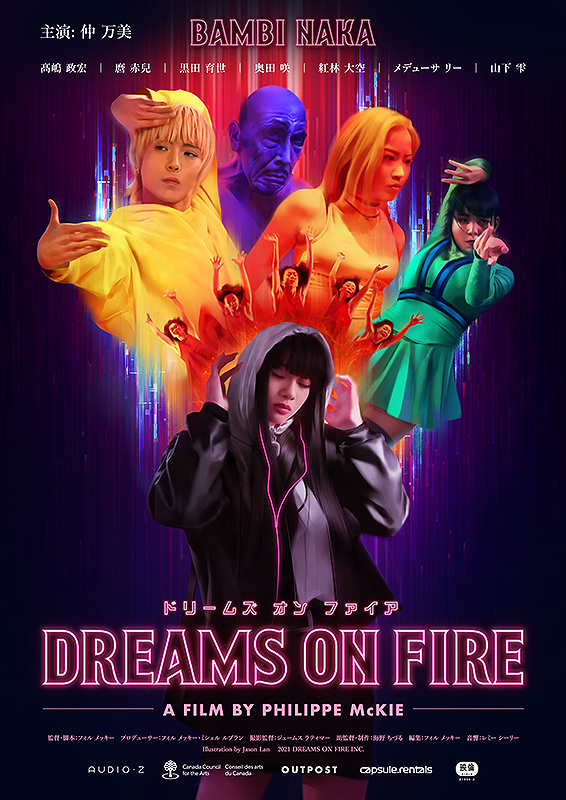
Writer-director Philippe McKie is Canadian by way of Montreal but has lived in Japan for over a decade. A multidisciplinary artist, he has worked in the fashion industry and as a DJ in Tokyo clubs, both of which inform Dreams on Fire, which had its North American debut at the Fantasia Film Festival.

The Premise: Yume moves to big city Tokyo in order to pursue her dream of becoming a dancer. Success is not exactly immediate, so we see her flit between street dance competitions, hip hop classes, anything likely to get her closer to her dreams. But her more imminent need for survival has her chasing cash into clubs where the girls aren’t necessarily dancing. It may not ultimately go on her resume, but Yume is certainly going to learn a lot about herself.

The Verdict: Rhythmic editing really draws us into Tokyo’s underworld, full of unrealized dreams and seedy potential, its lurid lights and colours casting an ominous glow on our protagonist and her compatriots. Bambi Naka is lovely as Yume, clearly a talented dancer in her own right, but willing to stretch and pour herself into the character. Director McKie is perhaps a bit style over substance, but the aesthetic is faultless and the film is never boring.

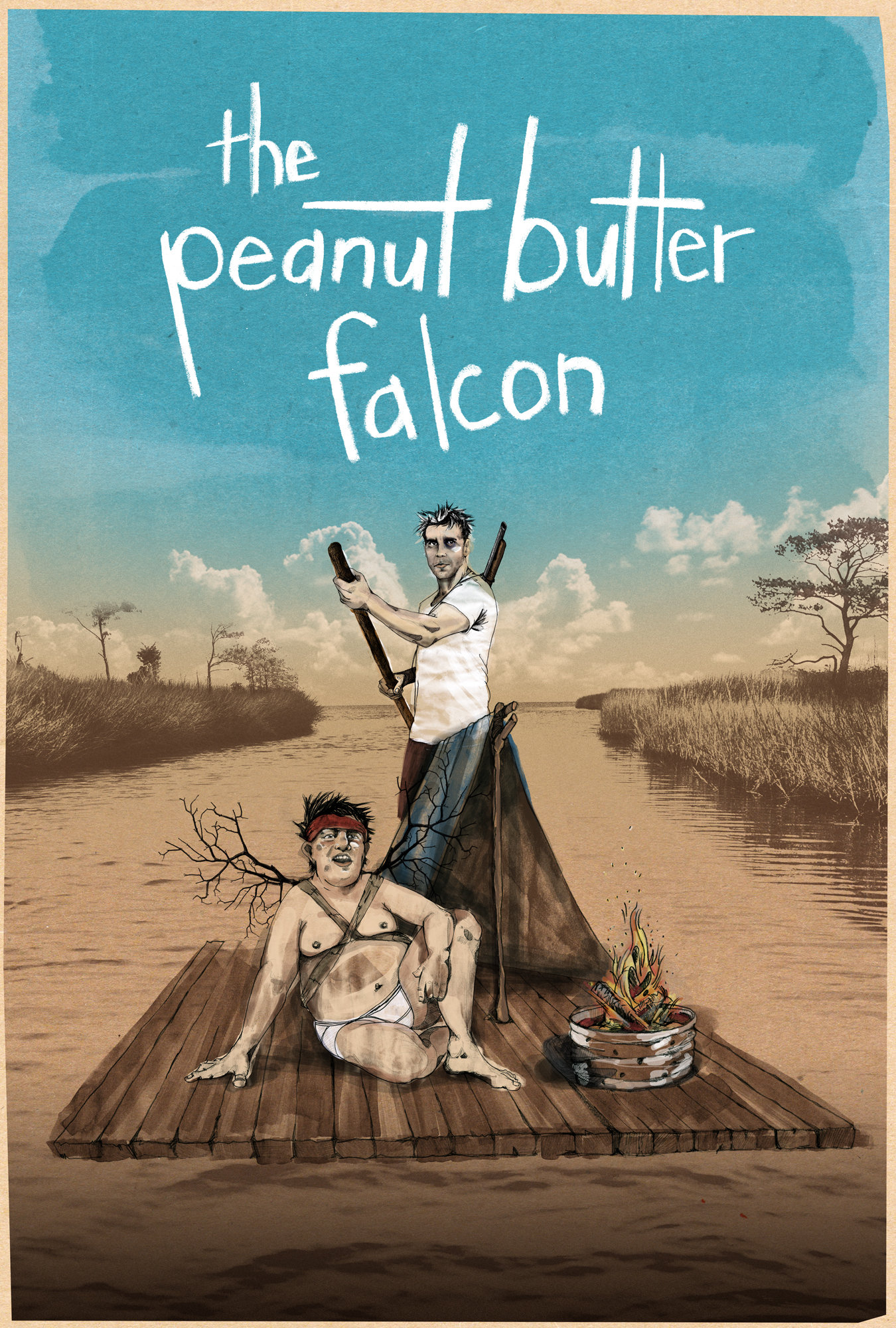
`The Peanut Butter Falcon

 Zack Gottsagen is an exceptional young man who happens to have Down Syndrome. At a camp for both disabled and non-disabled people, his exuberant energy was attention grabbing. He told people he intended to be a movie star. Two other campers, Tyler Nilson and Michael Schwartz, decided to write him a starring vehicle for their new friend, so they did. Directed it too. Called it The Peanut Butter Falcon.

In it, Zack plays a guy named Zak. Zak has no family, so he lives in a nursing home where he is well cared for but surrounded by old folks, as you can imagine. He runs away not because he’s unhappy or mistreated, but because he dreams of being a wrestler, and meeting his idol, Salt Water Redneck. Zak’s not helpless but there’s a reason he lives in a care home, and without a carer, things go badly for him. Eleanor (Dakota Johnson), a social worker from the home who’s quite close to Zak, sets out to find him. But first, Zak finds Tyler (Shia LaBeouf), a pretty wayward guy used to being alone and rootless in the world, not exactly the prime suspect for becoming a vagabond caregiver, yet here we are.

The Peanut Butter Falcon is often described as a modern day Adventures of Huckleberry Finn – I suppose the raft alone makes this comparison inevitable. This, however, is a different animal. Sweet and heart-warming, it reminds us that we all need goals and human connection to thrive. We need to matter. Wrestling may be the destination, but friendship is the journey.