Sundance 2021: Censor

Her name is Enid, and she’s a film censor, the person who negotiates the bad language, graphic violence, drug use, and nudity of a film, deciding just how much can be kept in and retain an R rating, and which films will either need to be edited, or bumped up to NC-17 and so on. “I’ve salvaged the tug of war with the intestines. Kept in most of the screwdriver stuff. And I’ve only trimmed the tiniest bit off the end of the genitals, but some things should be left to the imagination.” I love her already.

Enid’s (Niamh Algar) profession is under scrutiny at the moment as a salacious murder is dominating headlines, apparently inspired by a face-eating scene in a movie that she and her partner signed off on. Censor is set in the early 80s, but our culture still hasn’t grown tired of blaming violent movies, music, and video games for all that ails us, and the uproar doesn’t feel dated at all.

One day, while screening yet another nasty from an unending pile, a scene feels eerily familiar. Enid’s little sister disappeared years ago, and as the only witness, Enid’s never been able to provide much detail. But this – ? This scene rings a distant bell, unearthing disturbing memories that haunt Enid well past the film’s end credits. It seems incredible, and her parents’ skepticism is dismissive, but Enid becomes obsessed with linking her sister’s fate to this old film. When she learns the director is filming a sequel, she stalks production, hoping to be reunited with her abducted sister. But the closer she gets, the more we blur the lines between fact and fiction.

Director Prano Bailey-Bond dissolves reality with such subtlety that we hardly notice the point of no return. When, exactly, did Enid cross the line, and is there any going back? This is a send-up to vintage horror that fans of the genre will recognize and appreciate. Algar gives a fulsome performances, worthy of not just a final girl but an actual, flesh and bones character with guilt and grief, guts and glory. Censor is bold and stylish, and once it goes meta, it gains a confidence that is hard to deny.
Sundance 2021: Human Factors

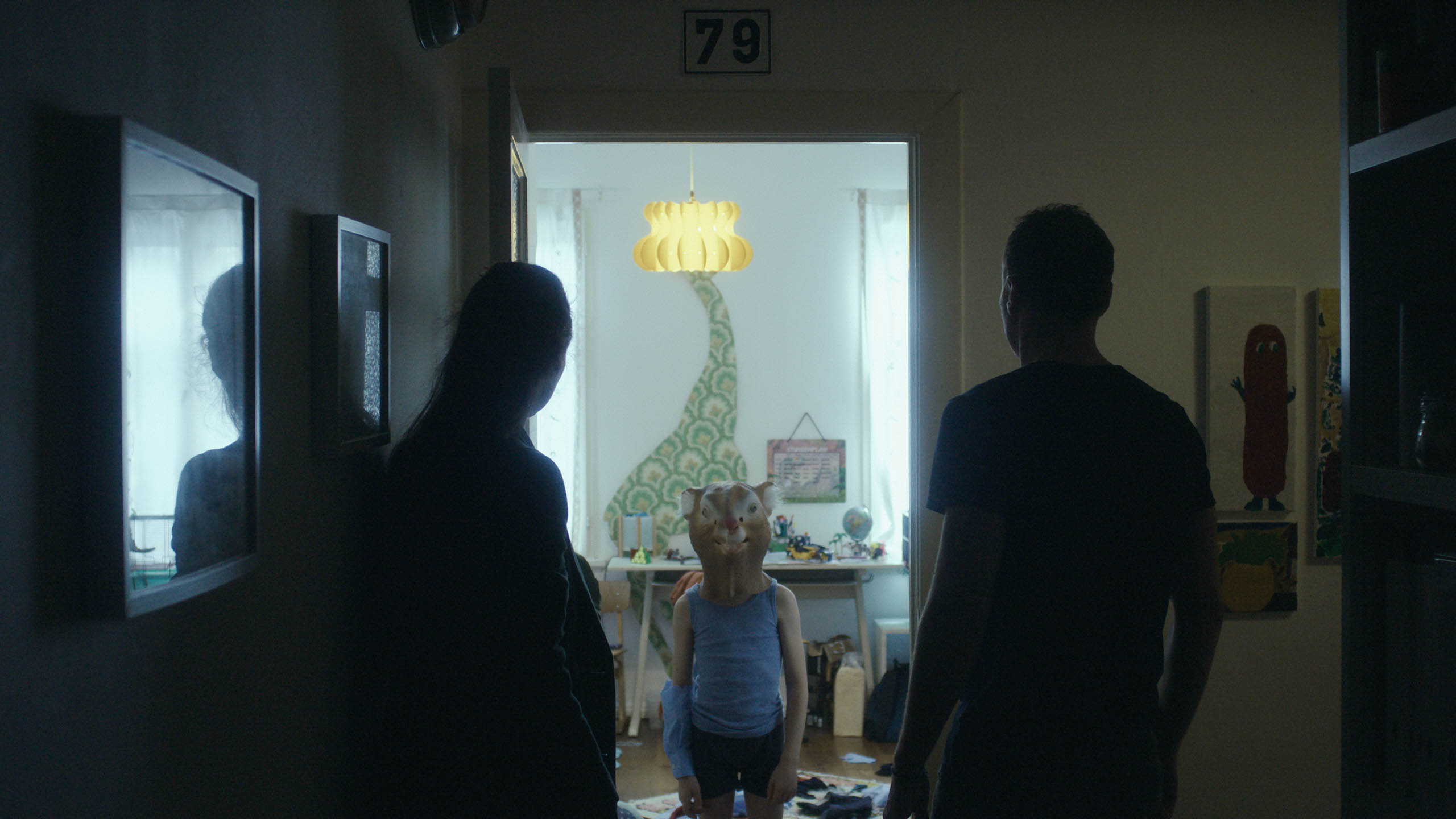
It starts with a home invasion. Jan (Mark Waschke) and Nina (Sabine Timoteo) have taken their family to their vacation home in a coastal town where the trouble awaits. Jan is outside on the phone when he hears a scream. When no second scream is forthcoming, he resumes his call, unaware that his wife has just encountered people in the house, who flee before anyone else spots them. Rattled, Jan and Nina share their bed with their two children that night, a young son named Max (Wanja Valentin Kube) and teenage daughter Emma (Jule Hermann), their restful weekend getaway already shattered.

Forging on with the weekend in an attempt to put the incident behind them, it would seem their shaky nerves aren’t the only thing troubling this suburban family. Everything is off-balance. Jan hates that Nina has called her brother, who swoops in to the rescue. Nina hates that Jan has made a huge decision at their mutually owned and run business by himself. Jan suspects the break-in is a product of Nina’s nervous imagination, since she’s the only witness. And son Max accuses his father of “hiding” during the incident. Seeds of doubt and mistrust have been sown this weekend, and soon these weeds are growing out of control through the cracks of their family’s core. This has been a triggering event that challenges our notion of truth and of perspective. There is no one narrative, only shifting lenses that reveal the fragility of familial bonds.

Though I admire writer-director Ronny Trocker’s film thematically, I found the viewing experience to be less than ideal. Not because it’s brutally tense, though it is. And not because the characters aren’t particularly likeable, though that’s true too. The incident in question, whether or not it happened, was fairly trivial, and of no real consequences. Yet this relatively small stone thrown into the family puddle creates unexpected ripples whose effects are long-lasting. It’s really just a trigger point to expose already-existing fault lines, and then we sit back and watch this family quake. My problem with the film is that it was simply a boring watch. I wasn’t compelled by this characters, and didn’t much care about the aftershocks or the outcome for this family. Human Factors means well but asks for too much patience in exchange for too little pay out.

Palmer

Fresh out of prison after serving only 12 years of his sentence, Palmer (Justin Timberlake) rolls up at his grandma’s house with nowhere else to go. Grandma Vivian (June Squibb) is the one who raised him after his mom split and his dad died and she’s there for him again when he needs her.

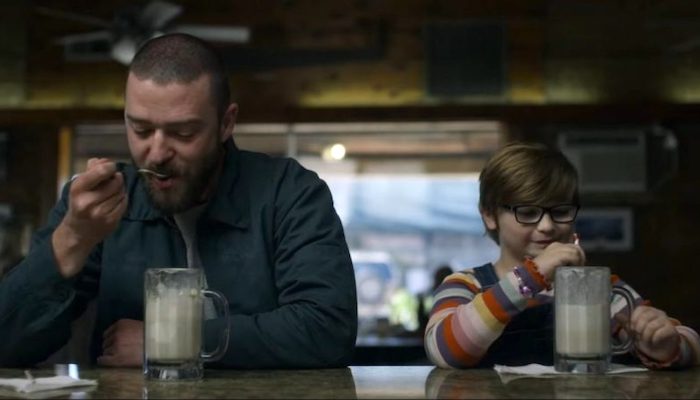
He’s not the only one she pinch-hits for. Shelly (Juno Temple) next door is often… indisposed. By drugs and an abusive boyfriend. Which is already a pity, but Shelly’s also got a young son named Sam, who comes to stay with Vivian whenever his mother disappears, which is often. Life at Vivian’s is the only real stability Sam (Ryder Allen) has ever known. He eats regularly and sleeps in a real bed and gets to class on time. And now Palmer is a bonus father figure, something Sam has been craving.

Palmer is a convicted felon who’s lucky to find work as a janitor and Sam is a little boy who likes to play princesses. You wouldn’t have guessed that they were each exactly what the other needed but they do form a friendship, one that empowers Sam and gives Palmer’s life meaning.

Is Palmer cute and kind of sentimental? Yes it is. You’ll feel you’ve seen this kind of thing before because you have. Such is the redemption drama. And yet admittedly the performances are compelling, and the kid is charming as hell. Justin Timberlake shows some surprising range leading a strong ensemble cast. Palmer sees himself in this young abandoned boy, and his charity toward him is an opportunity to absolve some of his past sins. Together they are building a life, and yes it’s trite but it’s also very watchable.

Sundance 2021: How It Ends

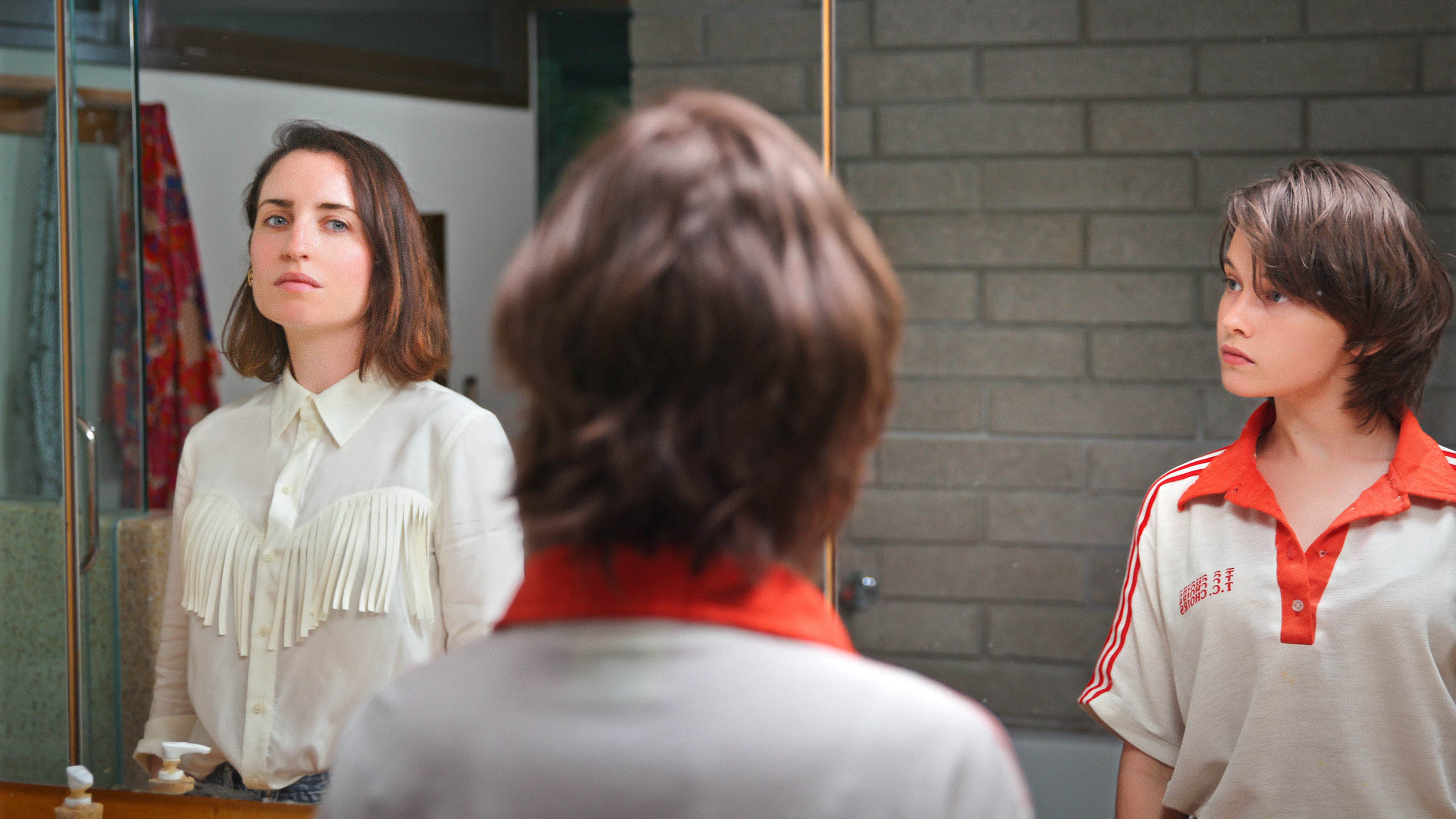
Do you want to know how it ends? A meteor. That’s how we go. For the people of Earth, that day is today. It’s the last day of Earth, and Liza (Zoe Lister-Jones) has been invited to a party. The meteor is the least interesting thing about How It Ends, and its only certainty.

Liza’s initial inclination is to spend her last day alone, getting high and eating cookies. It’s a pretty solid plan, but unfortunately her Younger Self (also named Liza of course) (Cailee Spaeny) vetoes. Plan B involves checking off items on a list of regrets en route to the pre-apocalypse party. On Liza’s list of regrets: exes, former friends, estranged parents. Truth is the theme for the day, and if that doesn’t keep her honest, her Younger Self sure will. Liza and Young Liza hoof it across Los Angeles, encountering a pretty eclectic cast of characters, but most of all bonding with and taking care of each other.

How It Ends is oddly playful for the pre-apocalypse, but as both co-writer-director and its star, Zoe Lister-Jones certainly has the right sort of presence to pull it off. She’s got excellent chemistry with Spaeny, which you’d really sort of have to, or the whole thing would be an utter failure. It’s a fascinating philosophical experiment, to have two versions of the same person interacting with each other so naturally. I loved the relationship between the two, and felt a little jealous of it. I enjoyed laughing with them, eavesdropping on their most intimate conversations, and indulging in a double dose of Lister-Jones’ unique brand of charm.

Frequent collaborators Lister-Jones and Daryl Wein manage to take a quirky premise and ground it with self-aware performances. As the meteor draws ever nearer, we dread it not because of the impending doom of humanity, because it means the movie itself will end, and we’ve been having too much fun to want to say goodbye.

Sundance 2021: One For The Road

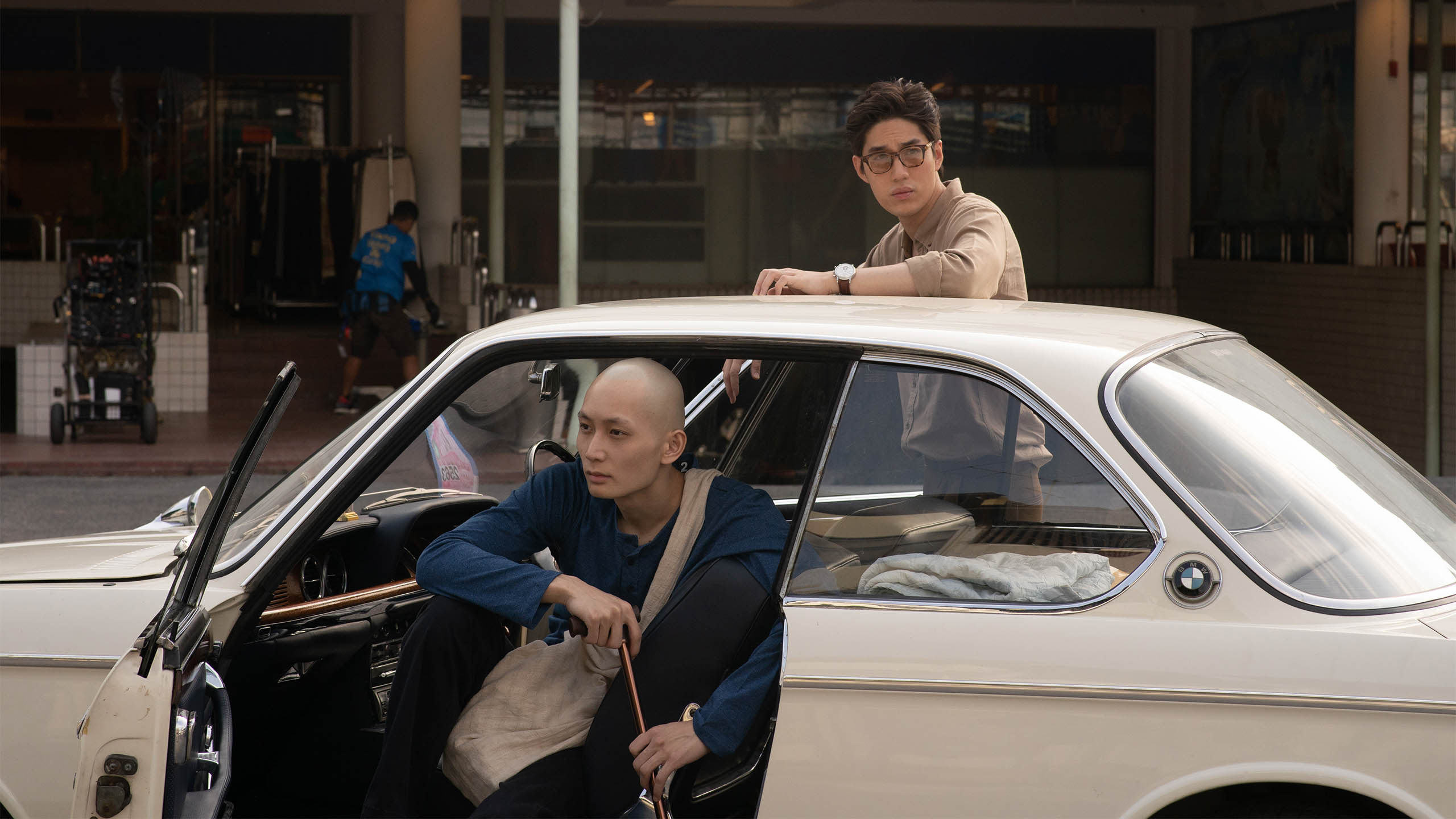
Aood (Ice Natara) finds out he’s dying of cancer and knows just who to call: everyone! Working his way through his contact list, he calls every friend and acquaintance to thank them for whatever it was that they’d shared. At the end he’s got only a select few remaining, close friends that he must say goodbye to in person.

His first call is to estranged best friend Boss (Tor Thanapob), a club owner in New York City, who agrees to return to Thailand to help his friend with a last request. Aood has a couple of ex-girlfriends to return mementos of their past relationship to, though closure is what he’s really after, on their behalf more than his own, being quite familiar with the dull ache of being the one left behind. One girlfriend is happier to see him than another, but either way, names are getting ticked off the list, dwindling contacts deleted from his phone. You might start to wonder, as I did, with half the movie still to go, is Aood’s cancer linger just a little too long? Alas, there is one relationship left to repair: predictably, that of Aood and Boss, and an ex they more or less have in common.

At this point the film jogs backwards, illuminating their shared history, but derailing the narrative of the first film quite drastically. Surprisingly, it eventually finds its way back, but I’m not convinced this was the best path to telling the story. More than just a story, though, One For The Road is a toast to male friendship and complicated bonds between young men.

Although the film didn’t blow me away, it did have some truly stand-out moments, and even if a bit derivative, it’s clear director Baz Poonpiriya has a voice and style he’s just beginning to own. If One For the Road is manipulative, at least it’s skillfully manipulative, and delivered via some fine performances. Poonpiriya shows promise, with some room for improvement.

Sundance 2021: Flee

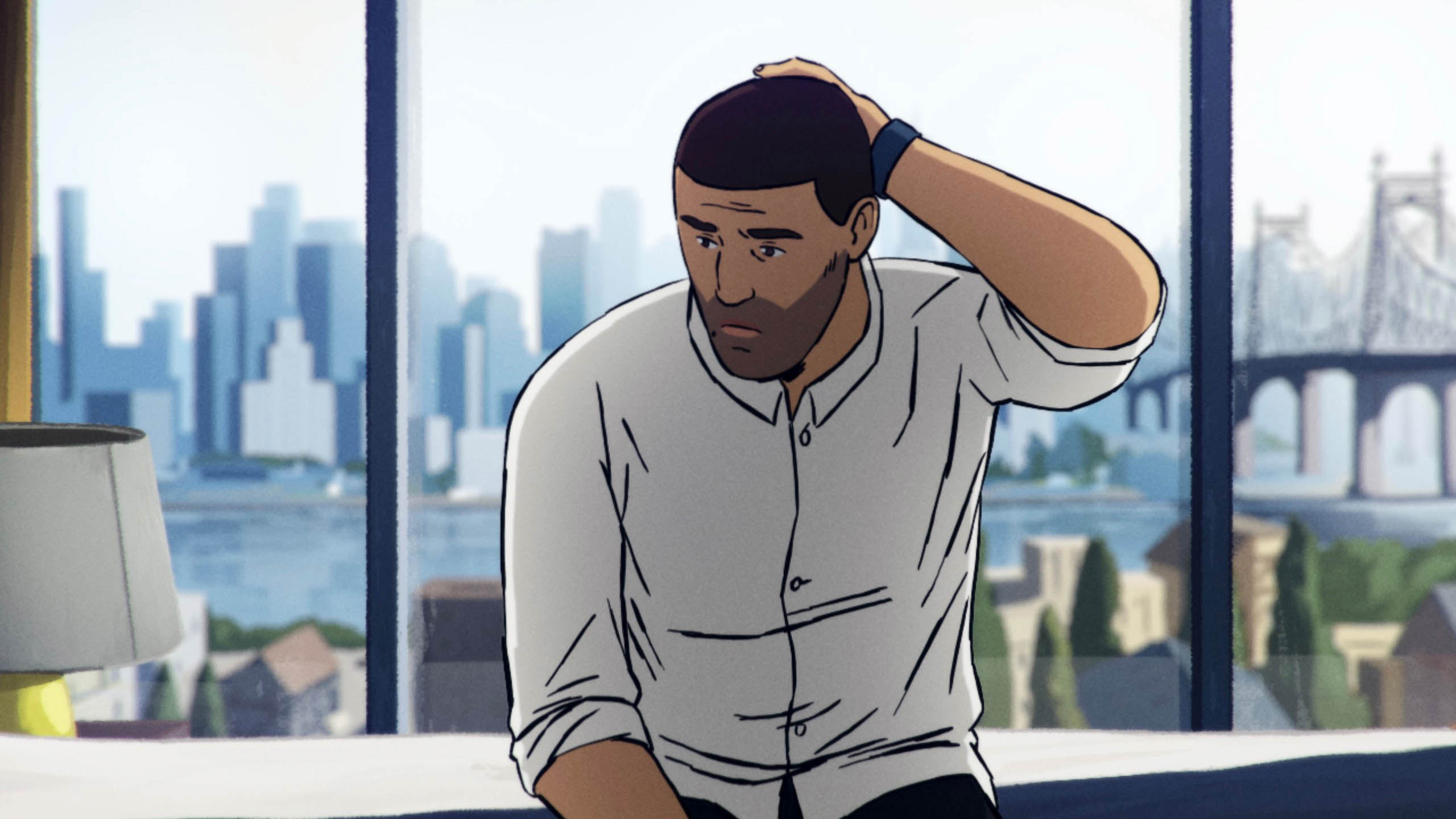
Amin is a successful academic on the verge of doing the whole house and marriage thing, but he’s been hiding a secret for more than 20 years, and a secret with roots that deep can threaten even the most stable life. So for the first time, Amin sits down to share his story with an old friend.

Amin and writer-director Jonas Poher Rasmussen have known each other since high school, when Amin arrived in Denmark from Afghanistan as an unaccompanied minor alone in the world, having fled the country of his birth by himself. His back story was shadowy and thus often the subject of gossip, but Amin kept his story to himself, and only now, in this animated documentary, is he choosing to unravel it for the first time, an attempt to reconcile himself with the past, perhaps, and an act of hope toward his future.

A powerful testament to the refugee experience, this animated documentary is unbound from the usual confines of story-telling and benefits from a multi-layered approach to truth and identity. Amin’s story is complicated, and it is sometimes contradictory. He’s had to hide the truth for fear of persecution, for fear of discovery, but he’s also hidden it from himself, a common coping mechanism. Thus his story is not just one man’s account of fleeing the Taliban, but an exploration of trauma and its far-reaching ramifications. And for dessert, an accidental treatise on unreliable narrators, truth distorted by perception and time. Even the animation itself serves as a filter, obscuring us further from a subject whom we never properly meet.

Shame and guilt are the salt and pepper to Amin’s narrative, seasoning wounds that are already festering quite nicely without help. We can only hope that the process has been cathartic for Amin, and grateful for the intimacy and trust implicit in this act of sharing. Rasmussen’s familiarity and friendship with his subject is a gift and a curse. Certainly his gentle coaxing elicits a fuller story that we might otherwise have heard, but Rasmussen sometimes forgets we don’t know Amin as well as he does. We might have enjoyed an introduction. And Rasmussen’s wish to grant his friend a happy ending is admirable, but as a film maker, it’s a little easy, a little pat. And yet, over the course of our 83 minutes together, we want the best for him too. Amin doesn’t owe us his story. His sharing is a gift, and if Rasmussen is tempted to wrap it up in a bow, who can blame him?

Executive produced by Riz Ahmed and Nikolaj Coster-Waldau, Flee premiered on opening night at the Sundance Film Festival and was so well-received that NEON snapped it up, the first acquisition of Sundance 2021, before I could even post this review.

The Dig

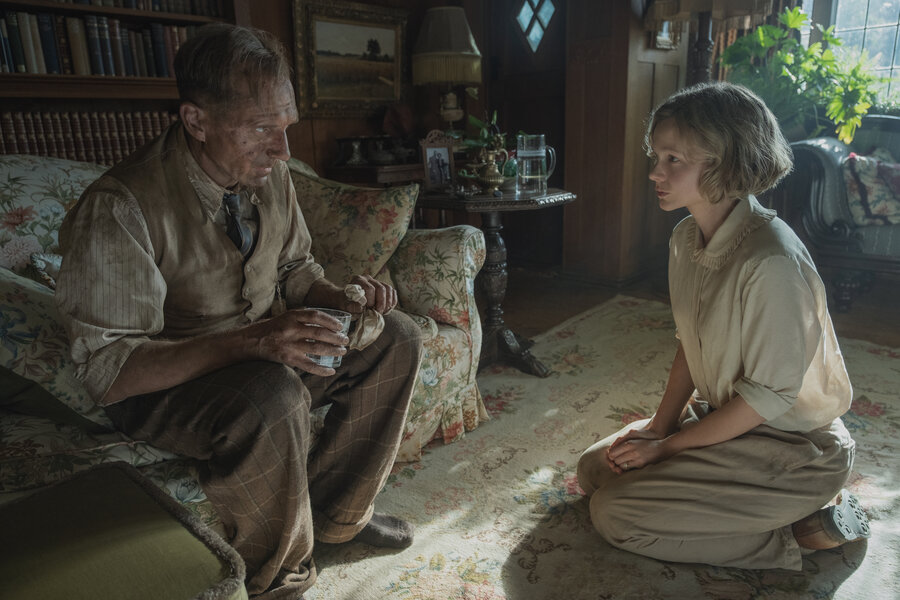
Edith Pretty has always supposed there may be gold in them there hills. Or artifacts, anyway, something of historical value. And so widowed Mrs. Pretty (Carey Mulligan) engages a disgruntled excavator away from a museum that undervalues him and underpays him. Basil Brown (Ralph Fiennes) digs right in, but what he finds is of far more significance than anyone had dared imagine.

Vexingly, the minute the dig turns up anything of real value, the British Museum and “the man” come sniffing, looking to take credit and ownership. They also take over the dig although no one wanted anything to do with it when it was just a housewife with a hilly backyard; Edith has up until now been self-financing the work.

The 1938 excavation of Sutton Hoo was of course historically significant and netted many revelatory precious artifacts. But for the real people involved, it was a time of personal significance as well. A war is looming. A young boy is without a father. A young woman learns she is not in love with her husband. An old man bonds with a child who isn’t his. A mother learns she will leave her son an orphan. And everyone fights to protect “their” treasure = from the air raids, and the thieves, and the damn greedy bastards. Though history won’t recognize them, Netflix will, assembling a first-rate cast with stand-out performances from Mulligan, Fiennes, and Lily James.

Director Simon Stone’s pacing is exquisite, unfurling a film that is languorous and poetic, unhurried and revealing, with just a tinge of melancholy lingering about the beautiful English countryside. The Dig made me think a lot about legacy – how the people who buried this ship and its treasures left a remarkable historical record for us to find, and in finding it, Edith Pretty et. al became a part of that record too. In some ways, even this film becomes part of this record, dating all the way back to the 6th Century. Of course, our own culture is so materialistic we’d never leave buried anything of great value. If the future isn’t digital, we won’t have left much of an impression, just piles of Chinese plastic. This is why we have such a fascination with archeology; we want to understand our ancestors, to know from whence we come. We’re less adept at telling who we are, and we collectively lack the ability to understand that we, too, might someday be reduced to a few artifacts in a museum. Hubris. It’s a condition of humanity, I suppose, and a film like this, though pretty and competently made, is hardly an adequate defense. In fact, while I found plenty to like about The Dig, it fell short of love, never quite stirring sentiment in the way it clearly expected it would.

Sundance 2021: CODA

Greetings from the Sundance Film Festival! Okay, to be honest, I’m not in Utah; Sundance has come to me – and possibly to you, if you go online and buy a ticket (good news! you’re already online! halfway there!).

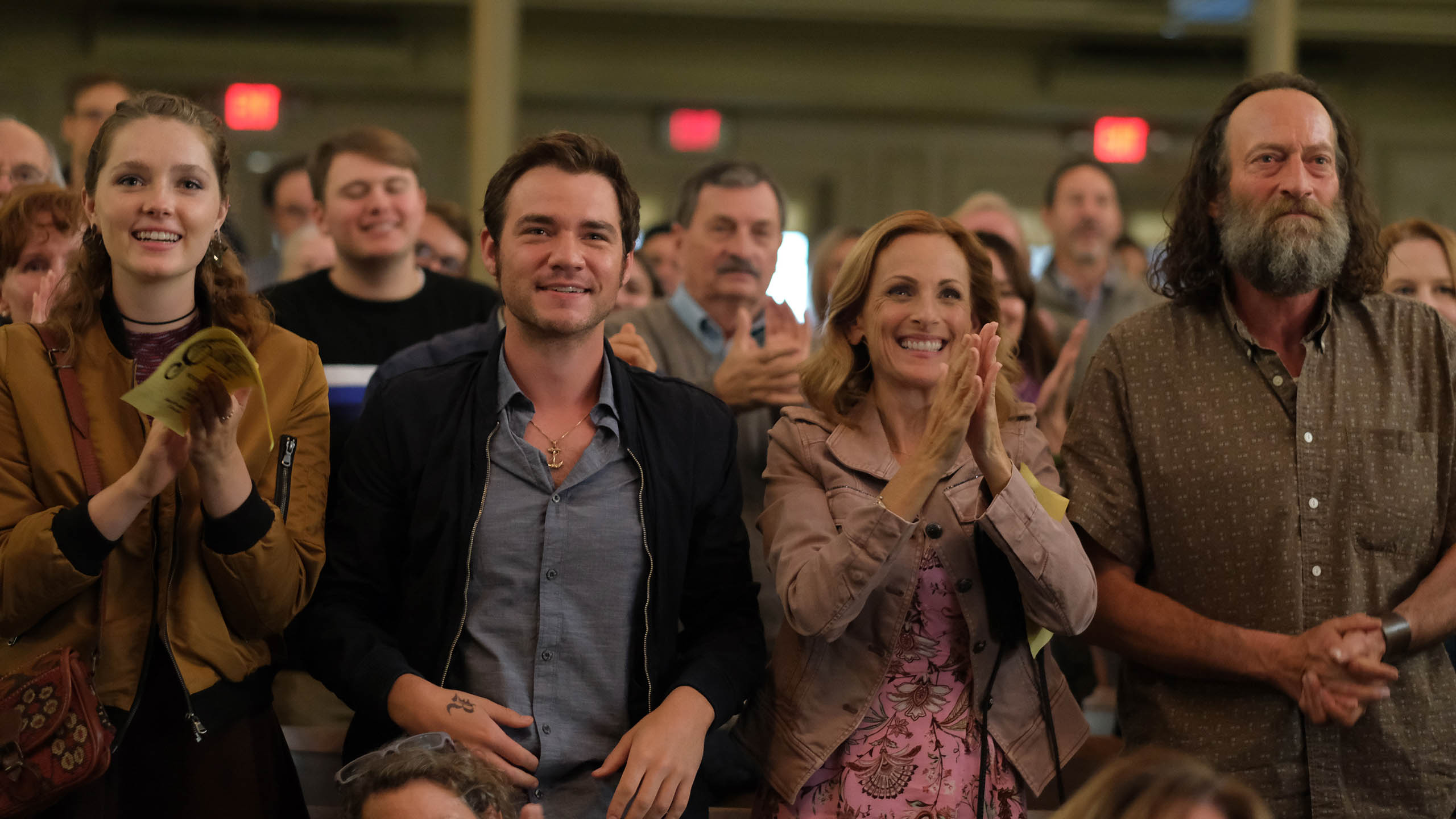
Ruby Rossi (Emilia Jones) is a CODA – a child of deaf adults. Her older brother Leo’s deaf too. She’s the only hearing member of her family. She’s still in high school but she gets up every day at 3am to hit the fishing boat with Leo (Daniel Durant) and their dad Frank (Troy Kotsur). Times are tough. Fish merchants are putting the squeeze on those in the boats, and while Ruby’s extra pair of hands on the boat are necessary, it’s her ears that are most pivotal. She is their link to the hearing world, to the people who set prices and regulate their industry and affect their future.

As a senior in high school, it is natural that Ruby would be wanting to peel away from her family. Literally finding her voice and pursuing her passion for singing is the only thing she does just for herself, but it takes time away from a family who are quite reliant on her. Ruby is the constant conduit between her family and the world. She never had the childhood that others do. While Ruby sometimes feels othered in her family, being the only hearing member, she is indeed a member of the deaf community in her own way. American Sign Language (ASL) was her first language, and is still her default.

Director Siân Heder treats ASL almost as if it is a character in the film. She captures the movement and the expression, giving us a de facto crash course in the language as Ruby translates helpfully from the side. Frank is particularly, erm, unfiltered, prone to salty assertions and crude but colourful insults which embarrass his daughter even when she chooses not to translate them.

Emilia Jones stretches wide to play this supremely mature teenage girl who longs for freedom while fearing for her family. She is a joy to watch and it’s easy to get lost in her story as she feels authentic on fishing boats and on stages alike. But what makes a movie like this, which is surprisingly conventional in its beats, is the fullness of character achieved by the entire family. Kotsur, as salty dog Frank, rough and tumble, coarse in a self-satisfied way, shows us a man struggling to provide for his family and support his growing daughter. Durant as Leo is a heartthrob big brother with his own ambitions who chafes at having his independence undermined by the help of his little sister. And last but not least is Marlee Matlin as mom Jackie, feisty former beauty queen and fierce mama bear. Theirs is a close knit family that is going through some growing pains as all families do. They may have their unique challenges, but at the end of the day, the Rossis aren’t so different. Heder’s tendency to lean into the tropes of the genre only highlights the fact that this family experiences all the same ups and downs as any other. But Heder’s tenderness and authenticity mark this film as one to watch, and with such strong and vibrant performances, it’s also one you won’t forget.

Wandavision

Episode 9: The Series Finale

Episode 8: Previously On

Episode 7: Breaking the Fourth Wall

Episode 6: All New Halloween Spectacular

Episode 5: On A Very Special Episode

Episode 4: We Interrupt This Program

Episode 3 Now In Color

Episode 1 Filmed Before A Live Studio Audience &

Episode 2 Don’t Touch That Dial

Finding ‘Ohana

Pili (Kea Peahu) is Hawaiian born but Brooklyn raised, a competitive pre-teen geo-cacher who chases treasure all over New York City with her best friend. They’re so good they win a trip to a geo-cache summer camp in the Catskills, which makes Pili the only person in the history of the world to be mad about going to Hawaii on summer break. But her grandfather’s had a heart attack and mom insists.

Mom Leilani (Kelly Hu) left Hawaii when her husband died, but with her father Kimo (Branscombe Richmond) struggling physically and financially, she’s beginning to wonder if a move back to the family land is in order. Her kids Pili and Ioane (Alex Aiono) aren’t super excited by this news, as you can imagine, but Hawaii grows on Pili exponentially when she finds a journal detailing long-lost pirate booty. It’s like real-life geo-caching, with centuries-old Spanish gold as the prize! If they can find it, that is. Pirates are pretty shrewd when it comes to this stuff. Luckily Pili’s got a treasure map and a new friend named Casper (Owen Vaccaro) to help her navigate it. We get some stunning Hawaiian views and a genuine adventure not unlike The Goonies. Pili and Casper are joined by Ioane and new friend Hana (Lindsay Watson), and the foursome will encounter peril and mystery as they negotiate unknown and possibly haunted cave systems. Pirates are pretty serious about protecting the treasure they bury. Soon even the kids realize they’re in danger, but the only way out is forward, no matter how many dead bodies warn them away.

Finding ‘Ohana is a delightful family film and a throwback to epic action-adventures fit for kids. With grown-up stakes and real-life threats, the kids search for treasure but instead (or also?) find a connection to the land and to their heritage. Director Jude Weng knows the true treasure is friendship, and these bonds will only be strengthened throughout the film – perhaps even belabouring the fact, if we’re being honest. The film doesn’t really need to be two hours long. But it’s charming and well-made, with set pieces to impress and entertain, and stunning visuals you won’t get tired of admiring. The young actors are surprisingly excellent and the story is character-driven. It’s a fun film your family will surely enjoy this weekend, and on repeated viewings in the future.