Christmas in Vienna

Do you know how many times I’ve fallen into a man’s arms in my life? None. Nunzo. I’ve fallen plenty. In fact, I just fell on Saturday night. Got punched in the face, took a split second to realize I was badly hurt and pretty stunned, then just started stumbling backward until I ended up on my ass. I fell away from Sean’s arms. Away. As he rather unromantically uttered “Holy shit!” But that’s how falling goes in real life. It’s rarely cute or dainty or half-graceful or utterly feminine or charmingly endearing like it is in the movies. It’s mostly just a failure of limbs and a surplus of embarrassment.

That’s not the only thing Christmas in Vienna gets wrong. It also goes out of the way to shame the leading man about his gift-giving disability: socks and gift certificates??? But also on Saturday night: Sean was gifted both socks and gift certificates by my mother. And you know what? Both were extremely well-received. The socks were an easy sell; they came attractively packaged like they were a pizza, and if there’s anything Sean likes better than warm toes, it’s pizza. So much so that he’ll probably sacrifice the warm toes (or, you know, wear some of his previously owned socks) just to keep the socks looking like pizza. Because he really, really thinks it’s fun. The gift certificate, however, is definitely going to get used. It isn’t just a “get yourself something nice” gift certificate (although that might be perfectly acceptable, particularly for teenagers and young adults who need and want nothing like they need and want cash), it’s for a specific, COVID-safe, Christmas-themed event that we’ll attend with pleasure. It’s thoughtful. Gift certificate and socks. Not quite the punchline Christmas in Vienna makes it out to be.
And yet, and this WILL shock you, so please sit down: Christmas in Vienna may be my favourite Hallmark Christmas movie of 2020 so far. Okay, so yes, there are a few trademark Hallmark clichés. Hallmark probably wouldn’t buy a script that didn’t have them, and the writer (Joie Botkin) has some experience in what Hallmark is buying. But she’s also snuck in a Gremlins reference, a Sound of Music homage, some actually-funny jokes (so rare in a Hallmark movie that you can count them all here, in this one single movie), and perhaps best of all, her script has inspired production to actually film in Vienna. Most Hallmark Christmas movies are filmed in Vancouver or Salt Lake City (though none are actually set there), so an actual European destination is a welcome change, and Vienna is one of the Christmasiest cities in the world. It sparkles with festive spirit, a real boon at the end of a year where no one’s been allowed to travel.

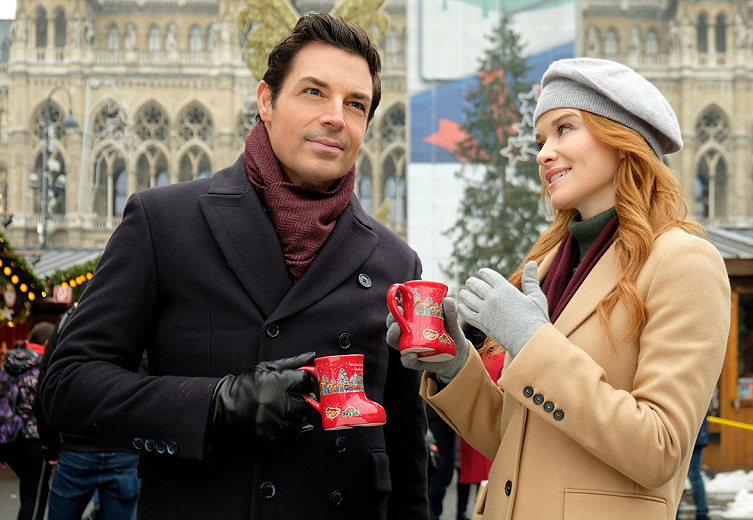
Concert violinist Jess (Sarah Drew) is in Vienna to perform her last professional show. She’s at the top of her game but has lost her passion for music and is ready to retire. While in town, she contentedly soaks up the sights and reconnects with her college roommate Tori (Alina Fritsch) who lives there, and helps her widowed cousin Mark (Brennan Elliott) care for his three kids. He’s a diplomat, and the moving around a lot that comes with the job has helped him stay one step ahead of his heartbreak, but his kids are wary and looking for roots. Is Jess the one to thaw his heart? And what if she stays in Vienna only to have Mark transfer again? Second loves are complicated.

Hallmark movies will always be a niche market and while I definitely don’t want anyone to feel an ounce of shame for their Hallmark game, I also don’t blame anyone who’d really rather not. But if you’re at all in the market, Christmas in Vienna is a notch above the rest.

The Beast

We all have bad days at work. A client pushes your buttons or a colleague isn’t pulling their weight or a vital piece of equipment is on the fritz again, wasting your time and feeding your work monster. The Beast is about a bad day at work. Some guy wakes up, probably with a positive attitude and a spring in his step, but when he gets to work, things all fall apart. He thought kidnapping a little girl would be easy, and it was at first, but boy did he kidnap the wrong dude’s daughter. And no, her dad is not Liam Neeson.

Teresa’s (Giada Gagliardi) dad is The Beast. You can call him Riva (Fabrizio Gifuni), for now. Riva is a lone wolf veteran, estranged from his family ever since he returned from Afghanistan as only a shadow where a man used to be. Haunted by his combat experience, only little Teresa still loves him whole-heartedly. So when his growly teenage son reports her missing, Riva goes BEAST MODE to find her and bring her home. The cops whose actual job it is to find Teresa aren’t too happy about his rogue status and neither is Riva’s PTSD, which is being triggered rather wildly, incapacitating him with flashbacks to his time BEING TORTURED AS A PRISONER OF WAR. So there’s that.

Riva is not exactly a man with a very particular set of skills; I mean, I’m sure he’s no slouch what with his special forces training, but he’s not super-human either, merely a dedicated man with only one goal in his mind. The fights are not slick, over-choreographed affairs, they’re messy and savage and desperate, just a dad trying to survive long enough to get to the next door, behind which he may find and save his daughter. Or not. It’s a big city with a lot of doors, and a lot of bad guys standing menacingly in front of them.

Apparently this is not an Italian remake of Taken, or at least that’s what their legal team assures us, but it sure feels like it. Gifuni is a convincing anti-hero, always stalking the next dose of his meds, never sure which is the greater threat – the guy with the knife in front of him, or the guy with the knife in his memories. Probably not quite sure which is which either. He takes a lot of punishment, but when your daughter is Taken taken, the math goes wonky, the damage inflicted to damage sustained ratio ever malleable.

I didn’t dislike this movie, it’s well set-up even if it’s a premise we’ve definitely 100% seen before in a movie called Taken. The pacing of the third act is pretty screwy, the climax anti-climactic as it comes about 30 minutes too early in the movie. Or the movie goes on 30 minutes too long afterward (and it’s only 97 minutes). Still, if you’re looking for some gritty action, that’s exactly what you’ll get, and The Beast (La Belva) is streaming right now on Netflix.

Christmas with the Darlings

Jessica Lew (Katrina Law) is just about the best executive assistant the Darlington corporation has ever seen, though she’ll soon be one of their best lawyers instead. However, before she makes her career switch official, she resolves to do one last task for boss Charles, and it’s a big one. His orphaned nieces and nephew are coming to live with him, but he’ll be in Europe over the Christmas holidays. Rather than sending them off to boarding school, she decides to take them in herself. It’s a pretty selfless act, but no one’s all that surprised – Jess is a giver, she’s always liked helping people. The big surprise, though, is that Charles’ little brother Max (Carlo Marks) returns home to help out. His life is mostly one long ski vacation, and he’s rarely seen at home or at the family business.

Turns out, uncle Max contains multitudes, or, you know, the 3 basic facets of any Hallmark Christmas movie man: generosity, warmth, and consideration. Sure he was an après-ski playboy last night; today, he’s family-oriented, charming, and kind. Plus, his back story is tinged with just enough tragedy to firmly erase the scuffs and stains of his past.

I love this Hallmark concept that every “most eligible bachelor” is just waiting to step into a ready-made family if one should present itself. Turns out, he was secretly intelligent and ambitious all along, he was just saving his best self so that when the perfect woman crossed his path, he’d be able to surprise her with his top secret suitability. Seven days or less: that’s all it takes for a Hallmark couple to fall in love, and when I say fall in love, I mean, marry, adopt children, drastically alter their personal lives, and commit to spending their eternal lives together, starting with this one deeply meaningful Christmas ornament they picked up at this little greeting card store in the mall.

Also, not for nothing, but god I’d love to walk through the Hallmark wardrobe department. It must house dozens, probably hundreds, of perfect pea coats in the most Christmassy shades of red. In Hallmark movies, everyone is always dressed like they’re about to pose for a Christmas card photo, but the leading lady does it best, and always has an elegant red coat, with perfect, cute but not too cute accessories, everything coordinated and merry, and likely pulled together with a Christmas-themed broach. Hallmark ladies love Christmas so much they start dressing like Mrs. Claus in their 20s, and their handsome, rich suitors always find it eerily fetching. There is a power to those red coats, it cannot be understated.

Notes For My Son

When my dog Gertie started throwing clots in her lungs, we knew it was time to say goodbye. We held her in our arms, whispered in her ears about the lake at the cottage to inspire her dreams, and a shot given by her doctor send her off to a better place. We do for our dogs what many modern, advanced, and “civilized” countries still won’t do for its citizens.

Marie (Valeria Bertuccelli) is dying. Cancer sucks. There’s nothing the doctors can do, including giving her the compassionate end she and her husband have decided on. Or, they could give it to her, but they’re hesitating. It’s much easier to waffle when you’re not the one writhing in mind-altering pain. Of course, Marie’s got a reason to hang on as long as she can: her 3 year old son, Tomy. Whatever time she may have left, she’ll use it to write a journal so that her son may know her even when she’s gone. In it, she’s funny and witty, imparting bits of wisdom, tenderness, and personality, and a few wishes for what his life might be. Meanwhile, on Twitter, she’s nearly the opposite – sarcastic and bold, attracting a keen audience who appreciate her honesty during an impossible time.

Bertuccelli has a tall order to deliver from a hospital bed. With a son, a husband, a bouquet of friends, and a social media following, she’s the hub for grief and the receptacle of medical disappointments. This is her end of life, yet she’s still trying to be so many things to so many people. The book for her son gives her last days meaning and purpose, the perfect metaphor for the importance of time and using it well. The film isn’t sugarcoating death, nor is it dramatizing it. It’s ugly, messy, sometimes joyous, sometimes desperate. It’s not glamourous but it’s also not an excruciating sob-fest. Loosely based on a true story, Carlos Sorin’s film is about treasuring what you have while you have it.

Black Beauty (2020)

Black Beauty has been adapted many times, but in Ashley Avis’ movie, Black Beauty is female, and so is the little girl who loves her.

When we meet Black Beauty (voiced by Kate Winslet), she is a young Mustang running wild and free, just starting to be wary of new animals encroaching upon the land. Not wary enough, as it turns out; Black Beauty is captured and sent to live in a stable so she can be broken and sold. John (Iain Glen) who runs the stables and trains the horses isn’t a bad man, and he’s soon joined by his orphaned niece Jo (Mackenzie Foy). Jo is not your classic Horse Girl; in fact, she’s never ridden. But she must see a bit of herself in Black Beauty, who is also adjusting to new surroundings having just lost her parents and her home. Their bond is immediate and undeniable. Jo insists not on breaking Beauty, but on “partnering” her, based on friendship , respect, and gentleness. But the stables are a business, and Beauty is leased out to a wealthy family whose daughter is training to be competitive in dressage. Georgina (Fern Deacon) isn’t a natural horsewoman but makes up for what she lacks with spurs and whips. She is not kind to Beauty (nor to Jo), but sadly nor is she the worst owner that Black Beauty will encounter in her life.

Told from Black Beauty’s unique perspective (don’t worry, she’s not a talking horse, we merely hear her thoughts voiced by Winslet), we follow her as she’s transferred from home to home, owner to owner, many more pitiful or abusive than the last. Anna Sewell’s wildly popular novel from many moons ago opened people’s eyes to the mistreatment of horses, but it’s clear from Avis’ adaptation that things have not changed nearly enough for horses in nearly 150 years. Set in various modern American environments, Black beauty knows pain, overwork, and perhaps worse still, loneliness. The bond she shared with Jo endures and holding her memory in her heart is the only reason Beauty has the strength to go on.

I didn’t expect to like Black Beauty as much as I did. It doesn’t feel emotionally manipulative – Black Beauty is a horse, and though we inevitably anthropomorphize her, she isn’t asking to be pitied. But her indominable spirit is enviable and some pretty cinematography, we feel a sort of empathy, a sort of kinship with animals of all kinds, and an emotional attachment to Beauty herself, whose loyalty and resilience remind us of the four-legged family members in our own homes. Not without its flaws, Black Beauty is still a worthy version for 2020 audiences and a nice little treat on Disney+.

Ghosts of War

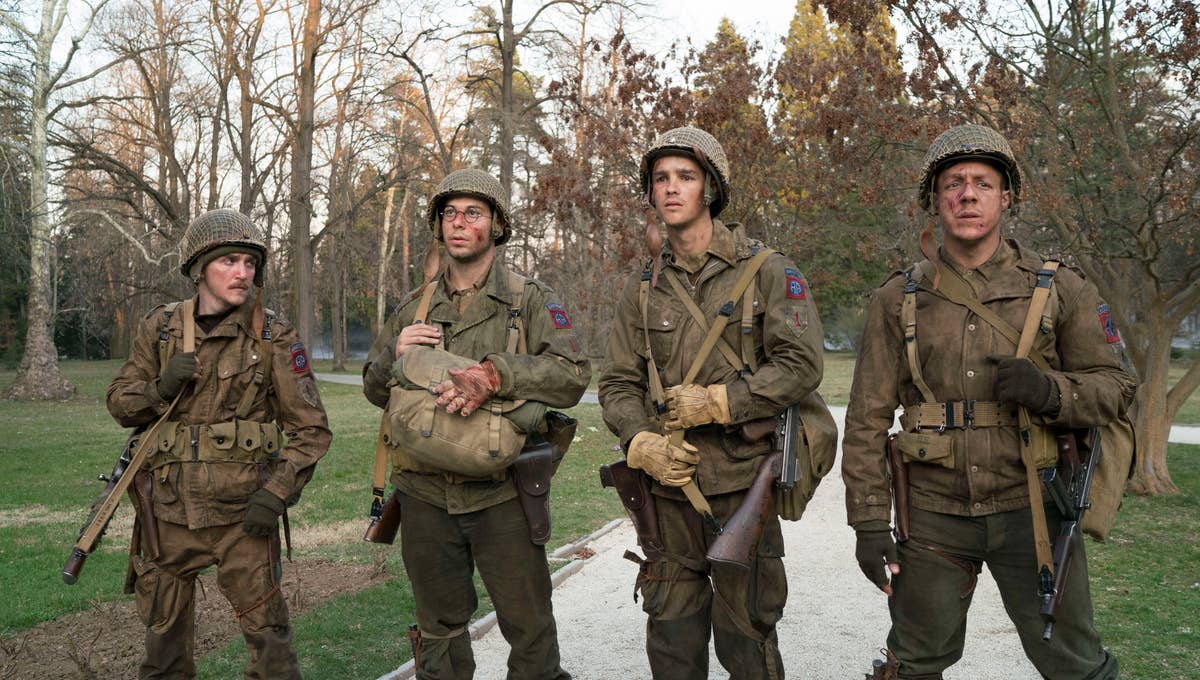
In 1944, a team of five allied soldiers are assigned to protect a French mansion that the Nazis recently vacated. They are late arriving to relieve the current watch, who are suspiciously eager to leave. Almost immediately after they do, weird things begin happening to each of the five as they split up and check out the mansion. Clearly, this house is haunted, and it’s no surprise since the Nazis seem to have ritual-killed the family who once lived there (the pentagram in the attic is not just decorative, it’s fully operational).

From the moment Billy Zane appears on screen, it is clear that Ghosts of War is not going to be a good movie, and is not even trying to be one. Its goal appears to be to make you jump in terror, with it settling for mild twitches of surprise. Which kind of works, in its way. The house is mysterious enough to keep your attention, and the weird things happening within are clearly not random. These patterns hint that there is a solution to be found somewhere in the house, and our five soldiers are focused on figuring it out.

But then, things go sideways in a hurry, and that is because Ghosts of War has one other secret goal, ripped directly from M. Night Shyamalan’s playbook. Namely, to blow your mind when the truth behind these strange events is revealed. And as in most Shyamalan films, Ghosts of War’s twist feels like a cheap gimmick. Not only does his particular twist make no sense, the movie would have been better if it had just been left out.

That ill-conceived twist turns this uniquely-set haunted house movie into something we have seen done many times before, and seen done better just as many times. Especially because Ghosts of War’s ending seems to have been misplaced, or else it disappeared into thin air. Where did it go? Perhaps Billy Zane can track it down, but until he does, what’s left is a movie that is both a half hour too long and 20 minutes too short.

Stardust

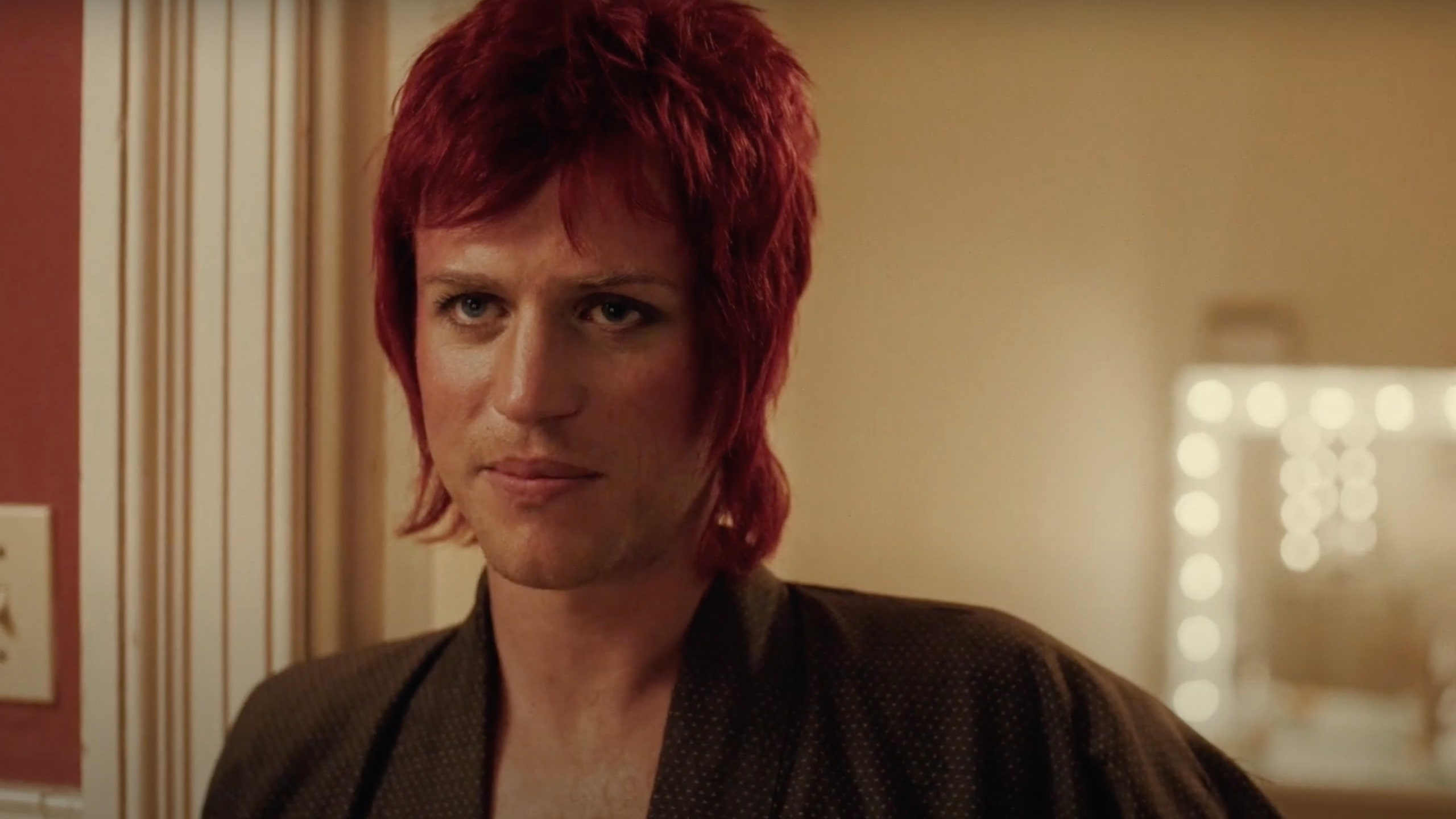
Ziggy Stardust is David Bowie’s alter ego for his 1972 album of the same name and subsequent tour, a fictional androgynous bisexual rock star alien sent to Earth as a saviour of sorts before an impending apocalyptic disaster. Singing about politics, sex, drugs, and the superficiality of rock and roll, Ziggy easily seduced everyone he met, and by the end of the album, had died a victim of his own fame. The Ziggy Stardust album, classified as glam rock and proto-punk, a loose concept album I suppose, maybe even teetering on rock opera, though not easily classified period, is now considered to be one of the greatest albums of all time, important and influential to the glam rock genre. But where on Earth did a character like Ziggy Stardust come from?

Stardust provides both the long and the short answer. Succinctly: America. More generally, Stardust tags along on David Bowie’s first trip to the U.S. in 1971, a promotional tour that failed pretty spectacularly (can you even imagine anyone not recognizing Bowie’s star power?) but did hook him up with Ron Oberman (Marc Maron) who would prove to be instrumental in introducing him to some key American influences. In 1971, Oberman was seemingly the only American with any confidence in Bowie, but without a budget, and the biggest date on their tour being a vacuum sales conferences, it wasn’t a lot to work with. Bowie didn’t make it big on that trip, but he did see the people and the places that would inspire him to create Ziggy Stardust, and to treat music as merely the mask while he himself was the message. Bowie wasn’t just ahead of his time but beyond time itself.

It would obviously be very difficult to capture the lightning but that was David Bowie and expect him to shine as bright while confined to a bottle. However, the extent to which director Gabriel Range and company have failed here is pretty extravagant. Johnny Flynn is a fine actor and perhaps not the worst of casting options, but he’s no Bowie, and I could never see him as such, not for even one fleeting moment. Reduced to a few eccentric and deeply affected mannerisms, they’ve turned David Bowie from visionary into mimic. It’s disastrous. Of course, it was never going to work, not without a single Bowie song, having pissed off the family and been refused to license his actual work. Range thinks he can get around it by setting the film on a tour during which Bowie wasn’t allowed to play music after failing to obtain a proper work visa. But as I stated above, that tour was a total failure, and so too is this movie. I wouldn’t even wish it on a conference room full of vacuum salespeople rowdy on a modest open bar.

Stardust, if you’re a diehard Bowie completist, is in theaters and digital and on-demand platforms on November 27.

The Christmas Chronicles 2

In the first The Christmas Chronicles, Kate and brother Teddy had recently lost their father. With their mom covering an overnight shift at the hospital, the kids are alone on Christmas Eve, and devise a trap to catch Santa on tape once and for all. But their trap works a little too well and they soon find themselves on his sleigh and on a pretty epic adventure.

Two years later, Kate (Darby Camp) and Teddy (Judah Lewis) find themselves on the beaches of Mexico for Christmas, courtesy of mom’s (Kimberly Williams-Paisley) new boyfriend Bob. Kate isn’t thrilled to about a tropical Christmas but she’s even less enthused about her mom tarnishing dead dad’s memory with a new guy. That’s why she resolves to run away, which unfortunately plays right into the plans of disgraced elf Belsnickel (Julian Dennison), who uses Kate (and Bob’s son Jack) as bait to distract Santa while he makes off with the star that powers all of Santa’s Christmas magic. Big disaster. Huge. Now Santa (Kurt Russell) and Kate will be off on a sleigh-riding, time-traveling adventure while Jack (Jahzir Bruno) and Mrs. Claus (Goldie Hawn) defend Santa’s village from an onslaught of evil elves.

This movie is basically a nerf gun aimed right into the hearts of children and when it hits, it delivers a dose of holiday cheer and joy that’s undeniable. In sequel mode, this one has a little more razzle dazzle and a little less natural charm and sparkle than the first, but it’s still a good, clean, fun time for the whole family. Kurt Russell is a hot Santa who injects more than a little Elvis into the jolly old guy, donning sunglasses and swiveling his hips to belt out another show-stopping tune once again. And rather happily we see much more of Goldie Hawn, who brings her own twinkle to the mix, sweet but pro-active, not exactly the passive knitter in a rocking chair Mrs. Claus is often made out to be.

The Christmas Chronicles 2 is wonderfully, effortlessly cheerful. It has great acting and its attention to detail surpasses even the first, for a glossy look that feels, well, merry and bright. And if it is perhaps pandering and slightly disjointed, well, at least it knows its audience. The exploding gingerbread cookies, gravity gloves, dance breaks, flying jackotes ( jackal-coyote hybrids that look more like giant, extra-inbred pugs), and crossbow battles will all be very well-received by young audiences tuning in to get a second look at this Santa guy who’s so much cooler than the one at the mall. And who can blame them? He is pretty great and I count myself rather unashamedly among his fans.

Hillbilly Elegy

J.D. Vance has a story to tell – his own. Many would call it a rags to riches story, or perhaps a successful escape from an impoverished childhood; director Ron Howard and the movie studio went with “inspiring true story” but all of these seem slightly condescending. Vance himself went with “elegy,” a tribute to the place he came from and perhaps a lament to its end.

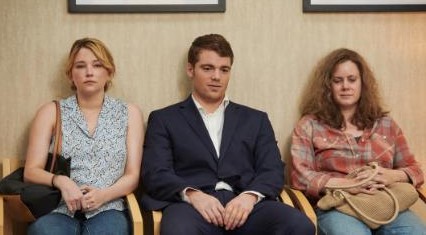
Older J.D. (Gabriel Basso) has overcome some rather humble beginnings to attend law school at Yale. It’s interview week, especially crucial to him because even with financial aid and 3 jobs he can’t afford next semester’s tuition without a summer internship. Meeting prospective employers over dinner, he’s overwhelmed by the trappings of etiquette and fine dining that seem to come so easily to others. It’s clear he doesn’t feel he belongs, and a phone call from back home only cements it. It’s his sister, Lindsay (Haley Bennett), calling to say that mom Bev (Amy Adams) is in the hospital. Again. A heroin overdose. His help is needed, urgently.

Over the next 24 hours of trying to install Bev in yet another rehab manage a facility despite Bev having let her insurance lapse, J.D. is flooded with difficult memories from his challenging childhood.

Critics have been plenty harsh about Hillbilly Elegy, and I can appreciate their concerns. It delivers heavily on the Oscar bait melodrama, and instead of inspiring important conversations about cultural and economic gaps, it’s got some pretty soft platitudes instead of real insight. Not that a Netflix movie was going to solve the wage gap or cure the generational impacts of trauma.

No one can deny that Glenn Close and Amy Adams give everything to their roles. Close manages a bark that bites, with just a nibble of vulnerability, a terrific performance that just doesn’t have anywhere to go, there’s no arc, it’s mostly just an act of observation. Amy Adams’ character, on the other hand, is more like a series of attacks. She gnarls and gnashes her teeth and we get small glimpses or what triggers her explosions, but it’s not enough to piece together something truly satisfying. The characters lack insight and we can only guess that this cycle will be very hard to break.

Dolly Parton’s Christmas on the Square

A holiday musical you say? I’m still riding high on Jingle Jangle, so sign me right up. Dolly Parton is my spirit animal, she’s magical unicorns shaking her pretty mane and making the world a brighter place.

Christmas on the Square is about a bitter woman named Regina (Christine Baranski) determined to sell an entire town that she’s apparently inherited from her estranged father. She serves eviction notices to every single person who lives and works there, including her former beau, and when they dare to protest, she moves up the date to Christmas Eve. What a Grinch! No, wait, Baranski was in that, wasn’t she? What a Scrooge! Is that safe? Man this woman is prolific.

As you might guess, Dolly Parton is herself hidden amongst the townspeople, masquerading as the town’s only homeless person but actually an angel in disguise. An angel come to stage an intervention!

Now, on paper this musical has everything I need in order to activate my merriment and good cheer, but on Netflix, it just wasn’t working for me. It’s a very traditional kind of musical, old-fashioned and janky, with campy over-acting and random singing, and set pieces that don’t trouble themselves to feel like anything other than the studio backlot affair they are. I understand it’s been adapted from an actual stage play, but I do expect at least a half-hearted attempt to make it feel more cinematic, and less claustrophobic. But everything feels corny, like a Hallmark movie crossed with your kid’s school Christmas pageant, and deeply phony. I couldn’t get into it, and that’s despite the very welcome invitation from Parton’s glowing songs, and even some pretty nifty choreography.

It wasn’t bad enough to turn it off – or perhaps I just didn’t want the trouble of finding something else – but I sort of wish I’d never turned it on. There’s LOTS of Dolly on Netflix these days, and literally anything else is a heck of a lot better.