TIFF20: Good Joe Bell

I don’t know who gave Good Joe Bell his nickname, but they were about as accurate as they were inventive. According to the movie’s log lines, Joe Bell (Mark Wahlberg) is a father from Oregon who sets out on a walk across America in honour of his son, Jadin (Reid Miller). Which is bullshit. I don’t dispute the Oregon part. Or the walking part either. He definitely does some walking, pushing a cart containing whatever camping gear hasn’t been stolen yet today. It’s the whole in honour of his son part that rankles. Joe may believe, or choose to believe, or fool himself that he’s walking for his son, but he’s really walking for himself. He’s walking for absolution. He’s trying to out-walk his guilt.

When his son came out to him, Joe didn’t exactly win any father of the year awards. He thought it was enough to not kick him out. Despite his wife’s pleas (Connie Britton), he didn’t work too hard at acceptance or even tolerance. He hid his disapproval behind thin veils and assumed his son would and should do most of the work to make his father comfortable, presuming this wasn’t some sort of phase, which Joe was of course hoping it would be, right up until Jadin took his own life.

So now Joe is walking across America, neglecting his wife and remaining children, stopping at schools to preach his an anti-bullying message, and at any community even that will have him to warn parents not to reject their gay kids. None of his missives is particularly effective, but blaming bullying is easier than dealing with his own complicity in his son’s suicide. Joe “talks” to his dead son on his walk but never seems to truly understand him – neither does Mark Wahlberg, for that matter, and director Reinaldo Marcus Green seems indifferent. With such a shallow approach, this feels like a movie from 25 or even 35 years ago, so heavy-handed and so proud of itself for so little. I’m sure it’s well-intentioned, but that’s hardly enough, for a message or a movie.

The only thing this movie does well is casting Mark Wahlberg, who is a little too believable as a homophobe and a failure at fatherhood. The rest is a mess. Its broad perspective renders it obsolete, it lacks self-awareness, and I don’t believe anyone involved has truly considered what or who this is actually for and about.
Evil Eye

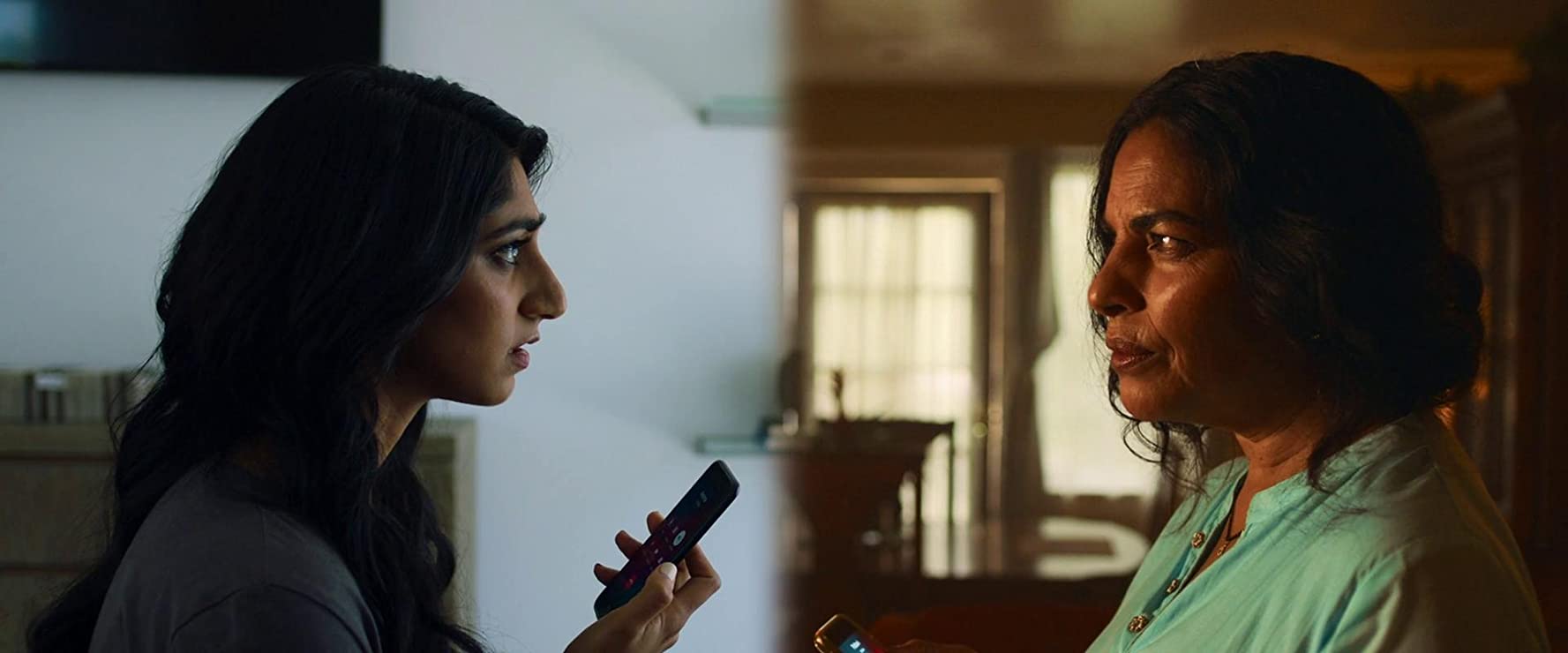
Pallavi’s mother is a little overbearing. Or a lot overbearing, depending on your perspective. As far as Indian parents go, Pallavi’s aren’t so bad, maybe. They love her a lot. Mom Usha (Sarita Choudhury) calls every day, with good intentions and motherly concern. Pallavi (Sunita Mani) is nearly 29 and still single, a matter of daily discussion. There’s an ocean between them but no shortage of meddling, even if, as Usha points out, there aren’t a lot of Indian men in New Orleans. Pallavi is unconcerned with her marital status but she’s a smart woman and quickly judges that it’s easier to agree to yet another of her mother’s fix-ups than to argue uselessly. Fortunately or unfortunately, Pallavi’s date stands her up, but she ends up meeting someone else that day, and Sandeep (Omar Maskati) is everything both Pallavi and her mother have been looking for in a man.

I know what you’re thinking: Pallavi’s going to fuck things up. But not if Usha beats her to it! Yes, it IS ironic that the very mother who has preached marriage and family above all, stability over romantic love, partnership rather than independence, that same Usha who made her daughter feel like as long as she’s single, she’s a disappointment, that very Usha – well, now she’s trying to hit the brakes all the way from India. Usha’s astrologer assures her it’s a very auspicious match, and her husband Krishnan (Bernard White) does his best to soothe her, but Usha cannot be dissuaded. Her reasoning, unfortunately, is unconvincing: she’s pretty sure that Sandeep is the reincarnation of her abusive boyfriend come back to finish the job. Whether or not Usha’s tendency toward superstition is playing a part, or her PTSD is being triggered, Usha’s panic is as real as her desperation.

This is not your typical “horror” movie even if it is a Welcome To The Blumhouse member. It’s a mother-daughter drama with some seriously sinister supernatural overtones to it. Also, the fact that it’s set in both America and India gives it a unique structure. As much as Usha fears for her daughter, you bet Pallavi is also afraid her mother’s mental health is crumbling, and the distance only makes them both all the more distraught.

Choudhury and Mani both give compelling performances but directors Elan and Rajeev Dassani are less confident, and less inspired. Evil Eye doesn’t quite reach its true potential, but its strong sense of identity goes a long way in making this worthwhile.

In Case of Emergency

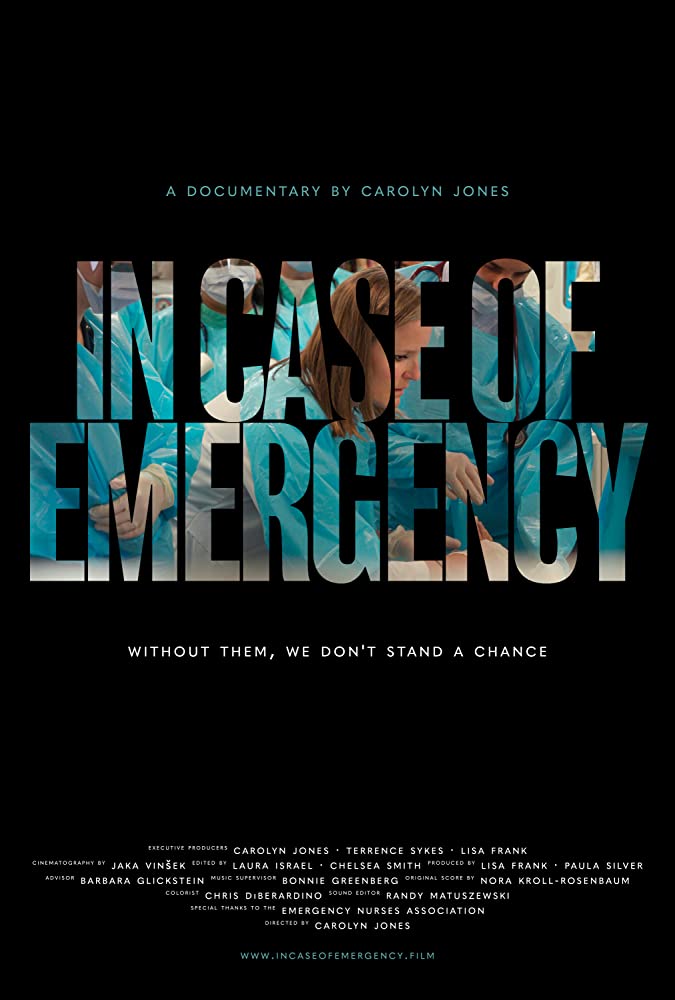
The first rule of ER nursing is: don’t call it an ER. They outgrew mere rooms long ago. They run emergency departments now, and they’re never not busy. They are the front line, meeting the needs of a community when they have nowhere else to turn. America lacks a socialized and humane approach to medicine; if an individual is lacking in insurance, or just can’t afford the co-pay, the emergency department is there as a catch-all, treating dental pain and heart attacks and overdoses and broken bones and colicky babies and psychiatric episodes. The emergency department isn’t necessarily the best place for any of those people, but sometimes they’re the only place.

Director Carolyn Jones also made American Nurse, a documentary I was compelled to check out during lockdown last spring when we were all feeling an even deeper appreciation of nurses and the hard work that they do. Nurses come in all kinds of shapes and sizes: some spend their days drawing blood, others sit and hold hands, some deliver meds and baths and kind words, and some guard the comatose bodies of post-surgical patients, coaxing them back to the land of the living. ED nurses are a different kind of beast. They live for trauma. They don’t wish it on you, but if and when you do go through it, they relish the opportunity to save your life and they will do everything in their power to do it.

Jones hears from nurses in seven different settings, but she gets some bonus content she never could have predicted. COVID-19 starts to overrun emergency departments around the world. Nurses are stretched to their maximum treating a virus that’s as bad as any they’ve ever seen. The toll is still being measured; the pandemic is still being fought.

For more documentaries about our response to COVID-19, join us here.

The Lie

I watched this movie several years ago, when it was called We Monsters, and starred German people. Then some American saw it and thought: I bet we can make this worse! And they were right. They always can.

Which is not a total write-off of The Lie. It’s got pretty middling reviews from other critics and I should say right upfront that I disagree with its ‘horror’ classification though it is 1 of 4 ‘Welcome To The Blumhouse’ supposed horror films released as a block to Amazon Prime for your Spooktober viewing pleasure. It’s a thriller. The horror is not so much in what happens but that it COULD happen – perhaps to you.

Pop quiz for parents: what wouldn’t you do to protect your child? If your kid, no longer a child but not yet an adult, made a mistake, a very bad mistake, would you urge them to confess? Force them to confess? What if the very bad mistake could ruin their lives? Would you turn them in? Or help them hide it? Would you lie to save your son or daughter prison?

Kayla (Joey King) did a very bad thing. She argued with her best friend and shoved her, out of anger. Intentionally or not, the friend fell to her death. As Kayla shakily confesses to dad Jay (Peter Sarsgaard), he drops his search and rescue attempt, he does not summon help. He immediately, without qualm or question, starts to cover up her crime. The first lie is told. When they bring Kayla’s mother Rebecca (Mireille Enos) into the fold, the cover up expands, the lies multiply. You tell lies to prop up the first lie, to divert attention, to plug up holes in the story, to improve plausibility, to create alibis, to misdirect, to suggest alternate theories, to feign innocence, to smooth out wrinkles, to put out fires, to gaslight cynics, to reframe the narrative, to deny knowledge – it’s an unending cesspool where one lie only and always begets another and another. And then even if you think better of the first lie, it’s too late, because you’ve already told so many more, and lots of those are illegal too.

This complicated spiral of causation has popularly been referred to as a web of lies, which in this case, almost sounds like a euphemism. This is an avalanche of lies. Cataclysmic. The parents have now implicated themselves, and yet neither hesitates. It’s for their daughter, so of course. Director Veena Sud does an excellent job of seeing this through to its ugliest conclusion. It is meant to make you feel uncomfortable, even if you don’t disagree with Jay and Rebecca’s actions. If the question is one of ethics, there is a right answer, and then there is the way you’d actually handle it, and the discrepancy between those two disparate answers creates a pit of dread inside your stomach that only grows as the film pushes forward.

The Lie is far from perfect, but I do think it’s worth a watch. We could all use an exercise in theoretical morals and their practical applications once in a while. To keep us sharp. Because you’ll never know when a sticky situation may be just around the corner, or one frustrated shove away. This movie exists for one reason, really: to ask “What would you do?” and then to leave you to sit with your answer, which may in fact be your first lie, and let the horror seep in.

Join our discussion on Youtube.

The Trial of the Chicago 7

The trial (little t = not the movie, the trial itself) of the Chicago 7 was a clusterfuck from the start. From before the start. From before the trial, from before the election, from before the protest, from before the war…injustice is as American as apple pie and is baked right into the constitution. To say it wasn’t a fair trial assumes it was ever even a trial. By its very definition, a trial is an examination of evidence in order to determine guilt. Although the trial of the Chicago 7 was by jury, the judge on the case made it clear the evidence didn’t matter and wouldn’t be heard because their guilt was presumptive and anyone who disagreed was an idiot. Of course, not only was the trial of the Chicago 7 not a trial, there weren’t technically 7 of them either. We start with 8 and end up with 5, but more on that later.

A quick pre-trial bit history: it’s 1968. American is gearing up for a tough election amid a lot of unrest. MLK has been assassinated, and civil rights has become more dominated by the Black Panthers than by peaceful protest. The Vietnam war is increasingly unpopular but still racking up a disturbing daily body count. And so a bunch of different protest groups are descending upon Chicago, which is hosting the Democratic National Convention. Though there are many different organizations with different goals and methods of exacting them, they all pretty much agree that change starts with electing the right kind of leader. But the convention becomes secondary news to the riots and bloodshed that surrounds it. When the dust clears, “seven” men have been arrested for conspiring to start a riot. They did no such thing – some had never even met before being indicted for the crime, but like I said earlier, this was never about justice or truth. It was about politics.

The five men who wind up on trial are Tom Hayden (Eddie Redmayne), Rennie Davis (Alex Sharp), Abbie Hoffman (Sacha Baron Cohen), Jerry Rubin (Jeremy Strong), and David Dellinger (John Carroll Lynch). The bonus 8th is Black Panther Bobby Seale (Yahya Abdul-Mateen II) who was only passing through Chicago at the time but got lumped in because a group that includes an angry black man looks 90% guiltier to any jury of “their: peers. As you can see, this is already a fantastic cast and I haven’t even told you about Mark Rylance, who plays a defense attorney, and Joseph Gordon-Levitt who plays the lead prosecutor. But the man who steals the show (and this is indeed an undeniable sausage fest) is Frank Langella as Judge Julius Hoffman, a man so inept at his job, so obviously biased and painstakingly obstructive in his own courtroom that he appears to be mentally incompetent. The trial is a circus, the truth is irrelevant, the law has no part to play, and the whole thing gets so wildly out of control you simply won’t believe what is allowed to happen in a court of law. And yet it did, it’s all true.

Writer-director Aaron Sorkin is absurdly good at sifting through months worth of testimony to find the perfect exchanges to illustrate this absurd miscarriage of justice and a mind-boggling waste of resources. He’s also deft enough (un oeuf) to point us toward the inevitable conclusion; this was train wreck of a trial but an excellent diversion that dominated the news cycle, elbowing things like an unpopular war and an unpopular president off the newspaper’s front page. Sorkin’s direction keeps things simple. History has provided some outsized personalities and a court transcript so outlandish you couldn’t make it up. It’s not a flashy film but it is a memorable one.

Memories of Murder

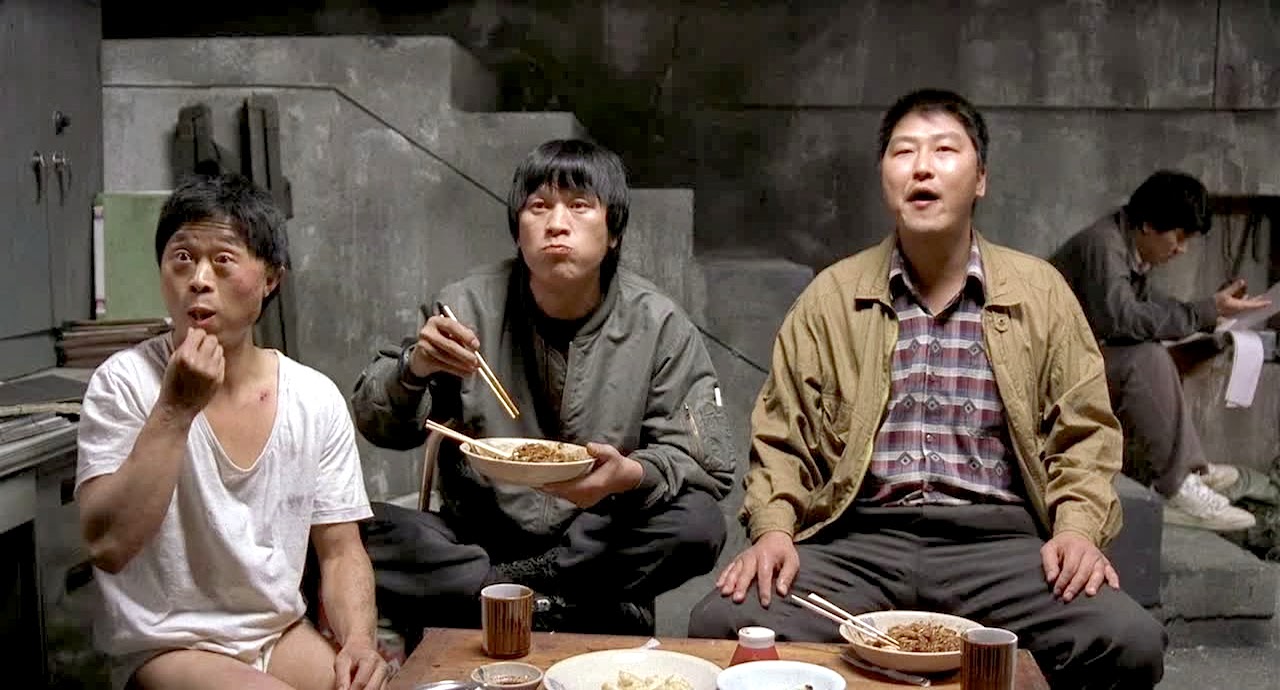
Memories of Murder is a 2003 film by recent Oscar darling Bong Joon Ho. A remastered version is coming out this month, a perfect excuse to revisit this remarkable classic.

In 1986, Park (Song Kang-ho) and Cho (Kim Roi-ha) are two humble detectives assigned to a double murder investigation in their small South Korean province, already an unusual occurrence. But when the murderer strikes several more times with the same pattern, the inexperienced detectives realize that they are chasing the country’s first documented serial killer. Their skills and gear are rudimentary, so it’s good old fashioned detecting for these two, piecing together the clues in an attempt to solve this important case.

Bong Joon Ho has a unique and inimitable cinematic voice. The film starts out almost bumbling, with a tendency toward slapstick. His signature satire is ever-present, nuanced and cleverly hidden in plain sight underneath broad comedy. Genres blend and tone veers wildly from the expected course, but neither undermines what is ultimately a serious theme. Bong Joon Ho is slowly building to some very real thrills not to mention one hell of a climax.

The detectives’ increasing desperation is well played by a talented cast, including BJH’s frequent collaborator, Song Kang Ho, reflecting tragedy, futility, and humanity. It’s a complex and gripping story about the people tortured by a case well after the victims’ suffering has ended, with consequences that leak beyond professional borders.

Bong Joon Ho takes the time to find beauty, even amid such a brutal emotional and political landscape. The way he juxtaposes images can be as startling as it is brilliant, the effect culminating in a truly unusual film that transcends genre and communicates a fragile and subtle sympathy.

Memories of Murder is a modern masterpiece; look for the remastered release in select theatres beginning this weekend.

Nocturne

Juliet and Vivian are twin sisters studying at an elite academy of the arts. They both study piano, they both hope to be classical musicians, and they both want to go to Julliard. It is widely thought that Vivian (Madison Iseman) is the more talented twin, and Juliet (Sydney Sweeney) the less successful. It is tough having such fierce competition and such a direct comparison; Vivian isn’t just the better musician, but the better student, the better daughter, the better friend, the better girlfriend. Oh, and she just got in to Julliard. Juliet did not.

It would seem Juliet it is in for a lifetime of second place, but a suicide at her school opens her up to the possibility of a Faustian bargain – is she desperate enough to sell out her own sister, or, just maybe, is getting to sell out her sister the whole point? Nocturne unravels sibling rivalry on a whole new level, and in a way that keeps you guessing as to how much this “deal with the devil” is a literal event, and how much is perhaps just the very idea of it empowering Juliet to come out of her sister’s shadown and challenge her for supremacy. Oh boy.

Director Zu Quirke sidesteps easy chills and obvious gore in favour of something that is more subtle, and far more unsettling. With teenage protagonists you expect something flashy and slashy, blow out parties and surrendered virginities, but this horror is of a more creeping variety, eerie and unknown.

The cast is uniformly solid, but Iseman and Sweeney deliver spell-binding performances that make the tragic relationship between sisters so difficult to crack but so interesting to watch and interpret. Your sympathies may switch teams several times before the last act, which is predictable, yes, but dizzying and vital. The horror bits are actually Quirke’s most conventional beats; her strength is in story-telling. The academic setting is both cutthroat and ripe for predation and exploitation. The interesting is figuring out who, or what, is behind it all.

Nocturne is one of four “Welcome to the Blumhouse” horror offered in a bundle on Amazon Prime. Stay tuned for more reviews, and be sure to let us know if you’ve taken the plunge.

Smog Town

If you think your job sucks, trying being an environmental protection official in China.

In some industrial centres, the smog is so thick you practically need a knife to cut through it. A spork at least. Serious harm is being done to the environment, not to mention to people’s health, but that’s not the main concern of an environmental protection officer. I mean, I’m sure that’s in the official job description, but unofficially, though very seriously, the officer’s job is to make sure their region’s numbers are not among the worst in the country. Beijing keeps a very careful watch on each city’s pollution levels, pitting each regional environmental protection office against the others, and the price of failure is shame. Which, in China at least, is a pretty steep price.

Director Meng Han hangs out with us in Langfang, one of China’s most polluted cities. The officials are fighting an uphill battle, an upmountain battle really, with both hands tied behind their backs, and no shoes, and walking pneumonia. Because the environmental protection office must somehow reduce their numbers significantly without being allowed to touch any of the biggest polluters. Instead, the officials play cat and mouse with small time operations run out of people’s driveways and carports. Their emissions are negligible compared to large industries pumping out noxious fumes and degrading the land and sulllying the water, but this is the only kind of change the regional offices are actually allowed to pursue.

Meng Han’s documentary is really a Trojan horse; on the outside it looks like it’s about environmental protection, but once you crack its shell, you’ll find it’s really a commentary on the futility of the job, the hypocrisy of bureaucracy, and the sham lip service our governments pay to our faces about concern for the environment while always valuing profit and efficiency over everything else.

Given these restrictions, these laughable micro targets, our fight against climate change is destined to be a losing one.

This and other titles are screening as part of the Planet In Focus Film Festival – check out their lineup and buy your tickets (and watch at home!) here.

A Babysitter’s Guide to Monster Hunting

Kelly (Tamara Smart) opts out of the class-wide Halloween party but isn’t exactly thrilled when her mother books her a babysitting gig instead. Five year old Jacob (Ian Ho) is a bit high maintenance, with his 3-hour bedtime routine, but Kelly would likely have preferred a 5 hour routine, even a 10 hour one, compared to what she got. Which was a visit from the Boogey Man himself, the actual Boogey Man, and his trollies, who’ve come to kidnap Jacob, who has the ability to make nightmares come true.

Thankfully Liz (Oona Laurence) shows up, chapter vice president of the Order of Babysitters, charged with protecting special dreamers like Jacob against the Boogey Man (aka Guignol, played by Tom Felton), and his little monsters. The Order of Babysitters is James Bond lite – all the cool tech, fun gadgets, and special ops, but none of the booze or women. In fact, now that I’m hearing myself say it, scratch that, the Order of Babysitters is like James Bond 2.0: all the spy stuff without the misogeny.

The film looks slick and is packed with action-adventure, although when a battle of sorts is taking place at a children’s indoor playground, the worst part is just imagining the gallons of COVID-19 that probably lurks in your average ball pit. Ew. What I’m saying is, the peril is never too overwhelming, and the monsters are, with a few exceptions, actually pretty cute, endearing enough you have to struggle to remember they’re bad guys. Kelly is a great protagonist and well portrayed by leading lady Tamara Smart. Liz is a little more mysterious, having just been dropped into the action from literally out of nowhere. The Order of Babysitters headquarters is production design eye candy, and introduces us to some fun supporting characters, as every secret service needs an M and a Q, and whatever other alphabet R&D people are necessary to keep their organization running smoothly.

The Grand Guignol’s lair is where the real work goes down. Guignol is trying to extract something from Jacob’s dreams, but I guess someone didn’t hear about that infamous 3 hour bedtime ritual. I don’t know much about Tom Felton, and I’d wager he’s all but unrecognizable in this, but he is clearly enjoying the eccentricities of the role, he’s playing and flexing and savouring being larger than life. He’s generous enough as an actor no to steal the scene from our teenage protagonists but he is a true source of animation and energy.

A Babysitter’s Guide to Monster Hunting is half Babysitter’s Club and half Artemis Fowl, the best of both, an entertaining watch fit for the whole family.

TIFF20: Concrete Cowboy

Fifteen year old Cole (Caleb McLaughlin) isn’t exactly happy to be suddenly living with his estranged father Harp (Idris Elba) in North Philadelphia. He’s even less pleased to be sleeping on the couch. Harp isn’t much of a traditional parent or even a provider of many necessities, but he does have one card in his back pocket, and it’s a pretty good one.

As a father-son drama, it leans pretty heavily on some overly familiar tropes. There is nothing about this relationship or its journey that will surprise you. It’s a tolerable watch because the acting is strong but it’s corny in all the expected places, with some sentimental stuff thrown in for good measure. But I’m still going to tell you to watch it; there’s that ace in the back pocket, and in this case, it’s called setting. The father-son stuff is just an excuse for writers Ricky Staub and Dan Walser to tell us about Philadelphia’s strange but true subculture: Black urban cowboys.

Inspired by the real-life Fletcher Street Stables, Harp is part of a century-long tradition of Black horsemanship. Poverty and violence may surround their neighbourhoods, but the stables are a safe haven for the community youth, where kids can learn to care for and ride horses, and no one has to leave the city to do it.

Cinema has the power to show you places and lifestyles and choices that are different from your own, but these Black-owned stables aren’t halfway around the world, they’re in a city much like my own, not too far from my own, a city I’ve actually visited, and yet I’ve never heard of or even dreamed of such a thing. In 2016, Antoine Fuqua showed me my first Black cowboy: Denzel Washington in The Magnificent Seven. It was the opening night film at TIFF that year and there was lots of talk about the casual color blind casting. Four years later, I’m back at TIFF and learning that Black cowboys really do exist, not just some starry-eyed invention of Fuqua’s, but a real, lived experience that proves the breadth of Black stories is as diverse as it is vast.

Concrete Cowboy is at its best when it’s saddled up and ready to ride, not because audiences love horses almost as much as they love puppies, though they do, but because this was always the real story here – the craft, the pride, the honour, the sense of community, the skills and wisdom passed down through generations. There is a deep vein of authenticity here, and a story that deserves to shine bright like a diamond.