Enola Holmes

Enola (Millie Bobby Brown) has had a strange but delightful childhood, raised and educated by her mother Eudoria (Helena Bonham Carter) in a manner perhaps inappropriate for a fine young lady of her time, but according to Eudoria’s own standards. Eudoria valued intellect and wit of course, but also independence (hence Enola’s name, alone spelled backwards) and a free spirit. They were happy together, not even lonely though Enola’s father had passed and her brothers left home years ago. But waking on her 16th birthday Enola finds that her mother has disappeared and left her no choice but to summon her older brothers.

Brother Sherlock (Henry Cavill) is a bit of a famous detective – maybe you’ve heard of him? And Mycroft (Sam Claflin) is the persnickety one who finds his sister’s lack of social graces to be untenable. He lines up a finishing school to send her away to, so of course she absconds, not unlike her mother has. Enola has gone to London of course, not just to find out where her mother is, but who her mother is, or was. To do it, she’ll have to stay one step ahead of brother Sherl, who is a a bit of a sleuth himself, and not easy to outwit.

The part suits Millie Bobby Brown to perfection – plucky, canny, charming and engaging, she adds a new dimension to the already beloved and fully realized Holmes universe, not only proving her worth but making room for herself and room for change. Sherlock has always lived very much inside himself, apart from and above the rest of the world, of whom he takes little notice unless they’re part of the case. Enola, however, is very much a product of and a force of change in England, which is already in flux when we meet her in 1884. Though she spent her early years in near isolation with her mother, her future is very much her own to make of it what she will.

TIFF20: 76 Days

An unidentified and unidentifiable young man is crying, begging to see his father one last time. The mourner is indistinguishable from his comforters as they all wear the same fully encapsulated protective garments. His father is already being wheeled toward a temporary morgue, his corpse zipped up in a special HAZMAT body bag, his remains a possibly infectious hazard that will be cremated unceremoniously in the nearest facility. There will be no last embrace.

We are in a hospital in Wuhan, China, the capital of Hubei Province and home to 11 million people. This is where COVID-19, first known simply as the coronavirus, or severe acute respiratory syndrome coronavirus 2 (SARS-CoV-2), was first identified as a cluster of viral pneumonia in late December 2019. Wuhan entered lockdown on January 23 2020, with WHO declaring it a public health emergency of international concern a week later, and a pandemic by March. Wuhan’s lockdown was an unprecedented bit of grace that would allow the rest of the world to prepare; it would be followed by lockdowns in many other countries the world over.

Wuhan stayed in lockdown for 76 days, and many hospitals, including this one, were simply overwhelmed by 50 000 cases of a disease they didn’t yet know how to treat. The need quickly outstrips the capacity. Doctors and nurses in thrown-together, inadequate PPE are shouting at panicked crowds of sick people, trying to get them to come in only a few at a time, hardly equipped to handle both the people and their ailments. A special ward for COVID patients was quickly separated from the rest, where fear bubbled, and impatience, loneliness, sorrow – not just the patients, but the doctors and nurses who are also locked down, isolated from their families, risking their lives to treat an unknown, highly infectious disease with a higher than average rate of death.

Directors Weixi Chen and Hao Wu try their best to tease out a few narratives from the chaos, but the film is actually at its best when the scenes are random, the pace urgent, its subjects on edge. Loud speakers throughout the city announce lockdown rules to empty streets; “Don’t create or spread rumours,” they say, with no one there to hear them. A bin full of cell phones belonging to the dead sits on a nurse’s desk, some of them still ringing.

It’s incredible that the film makers were able to piece something together so quickly, something that may one day serve as a primary document of this historical event, and even though we are still very much fighting this war and don’t yet know how or if it will end, I was on the edge of my seat watching it unfold at ground zero, where it all began. It is raw, emotional, desperate. It is a human and humane portrait of these troubling times.

For more documentaries about our response to COVID-19, please join us here.

The Postcard Killings

Jacob’s (Jeffrey Dean Morgan) daughter is newly married and on her honeymoon in Europe when he gets an awful call. She and her new husband have been murdered in London, their mutilated bodies posed with chilling exactitude and drained of blood. Jacob flies over to identify the bodies but he doesn’t stop there; he’s a brash New York detective and can’t help but step into the case. Interfering is what London authorities call it, but it turns out they’ve got a serial killer on the loose, a serial killer who’s targeting young newlyweds and posing them like famous art pieces.

The murders are sprinkled throughout Europe and heralded by a postcard sent to a journalist, which means Jacob’s got a trail of clues to follow and a new police force to pester every time. Along the way he meets a German detective (Joachim Król) and a Swedish journalist (Cush Jumbo) who are willing to bend the rules to help him out as the killer continues to evade authorities. The murders are gruesome, each fresh kill linked to the last by a dismembered body part. Jacob’s daughter’s hands still haven’t been found.

Director Danis Tanovic gives us a paint-by-numbers “thriller,” and Tanovic is no Bob Ross – there are no happy accidents here – just another uninspired entry into the serial killer mystery genre. And not much of a mystery either, since the story is told from the point of view of both the killer and the grieving father/detective. It’s based on a James Patterson novel, which just about explains it: pure pablum, an easy airport read that basically repackages the same story over and over, only changing the names of characters and swapping out, say, a knife for an ice pick, Munich for Stockholm, that kind of thing. It’s a thrill-less thriller but the crimes are extra brutal to make up for it. If you don’t expect much, you won’t be disappointed.

TIFF20: The Way I See It

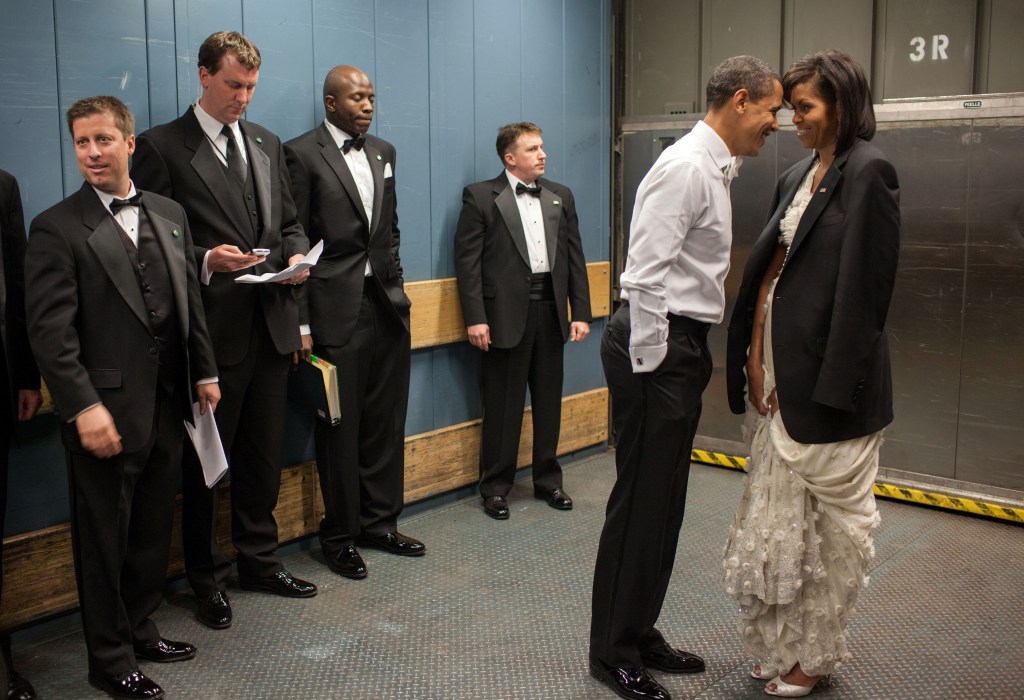
As the chief White House photographer for all 8 years of Obama’s presidency, taking intimate candid portraits of the president at work (and very, very occasionally at rest), Pete Souza has developed (photography pun!) some very solid ideas for how a president should behave.

Having also taken pictures of Reagan back in the day, Souza felt himself to be largely apolitical. He didn’t always agree with the decisions his subjects were making, but his job was to document their days, not comment on what he saw. And he never did. Top secret clearance and all that jazz.

As you can imagine, over the course of 8 years, with unprecedented access to the First Family, Souza has a bank of memories from his time with Barrack Obama, and he’s also got thousands upon thousands of photos. The two formed a friendship as close colleagues often will. Souza respected him as a man and admired him as a president.

But it wasn’t until Obama left office and you-know-who moved in that he truly started to consider how a president should behave. What a president should be seen doing. How the president’s image was a reflection of the country as a whole, and what damage it did not just to citizen morale but on the world stage as well, when a president continually insulted the very office they were elected to represent.

Pete Souza is not a politician. He’s not a public speaker or a talking head. He makes pictures, and those pictures quietly became his method of protest. Every time Trump would tweet something inane, and you know he’s spent nearly 4 years outdoing himself in the verbal diarrhea department, Souza would reply with a photograph of Obama looking dignified, personable, intelligent, presidential. He didn’t need to be any more pointed than that. The comparison was disheartening. And so over time, he has found a voice through his pictures, and a platform through Instagram. His followers call him the King of Shade, and after someone explained to him what throwing shade meant, he embraced the title and took the work even more seriously.

Dawn Porter’s documentary is a fun watch because of all the touching behind the scenes moments Souza shares with us. Obama’s absence has left a vacuum where gravitas and grace once belonged. Souza is filling that hole just a little bit. But more than that, his photos are a constant reminder of how a president can and should act.

Tove

It’s been quite fashionable lately to make a movie about someone who was a secret lesbian. I’m pretty sure I’ve seen one at every single TIFF I’ve ever attended, and I’m happy to say that despite the enormous hurdles of 2020, this year was no exception. But not all closet lesbians are created equal. Stories can be shared, truth can be told, but not all of them are worth of the screen, nor are they necessarily compelling once they’re there.

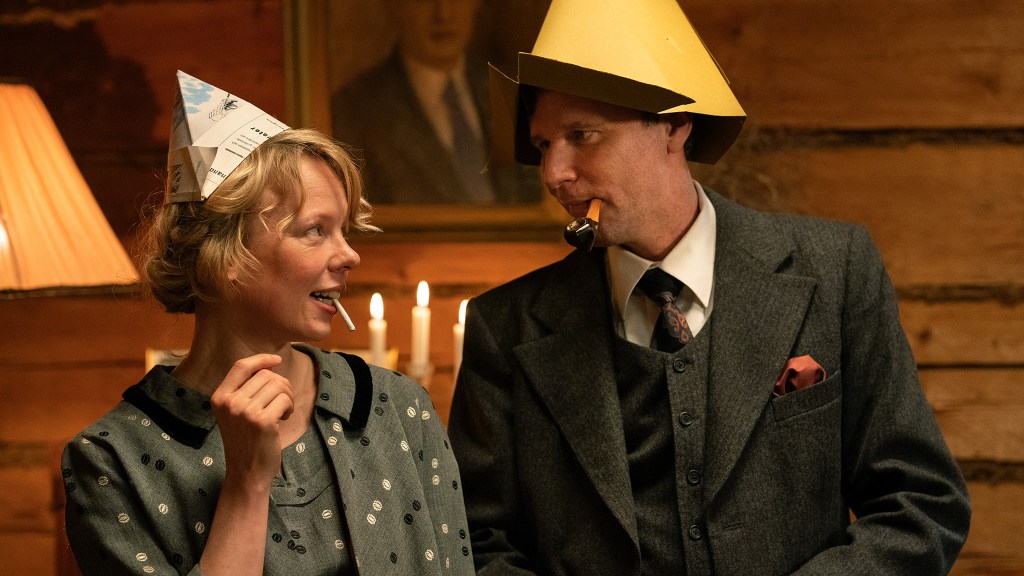
You know what I’m about to say. It’s 1944 in Helsinki. The end of the war means an injection of creative and perhaps even personal freedom for painter Tove Jansson (Alma Pöysti), who at this time still introduces herself as the pale shadow of her famous father’s talent. She’s painting a lot but paintings don’t pay the rent (and believe me, she’s tried).

At the same lunch where she confesses to her lover Atos (Shanti Roney) that she’s just slept with a woman, he convinces her to illustrate a comic strip for his unprofitable socialist newspaper. It would be worth a bit of coin, and as a bonus, would annoy her father. She doesn’t need much more convincing than that. Atos is surprisingly complacent about the other bit of news, and he’s not about to chuck out their friendship over it, even as the relationship between Tove and Vivica (Krista Kosonen) deepens. Vivica is a bit of a wondering soul though, and perhaps not courageous enough to return Tove’s love, so she leaves for Paris, and she leaves Tove to her art.

You may or may not know that Tove Jonsson’s little cartoons, based on some intimate moments between herself and Vivica, as well as the stories she told to soothe scared children in the bomb shelters, were turned into the beloved Moomin books. What was meant as a bit of side work to support her serious art eventually meant financial freedom and acclaim. Which are hardly consolation prizes for unrequited love.

Despite what may sound like a life worth commemorating, I found Tove to be painfully dull. The story did not compel me, and amounted to little more than plucky little lesbians dancing. The only reason I kept watching at all was Alma Pöysti’s beguiling screen presence. Unfortunately, though Tove may have led a remarkable life, director Zaida Bergroth seems to have drained it of its vital life force. Long before Instagram, Tove struggled with the discrepancy between reality and expectation. She made compromises personally and professionally; she had regrets and broken hearts. She disappointed some, and delighted others. Sometimes the ordinary feels extraordinary in the right director’s hands. Tove is still looking for hers.

Antebellum

Janelle Monáe plays two roles in this film; as Eden, she is a slave working on a cotton plantation with barely enough fight in her left to plot or risk another escape, and as Vanessa she is a modern day author and speaker encouraging African Americans to shed their coping personas in favour of true healing and strength.

In fact, many of the actors are playing dual roles, appearing in both universes, a subtle and direct way to measure the progress that’s been made, and the ways in which it’s stagnated. The thing is, though, it begins to appear that these two universes are in some way connected.

This is a horror film that draws its horror from reality rather than from blood and guts and gore. It’s a bit of an allegory, like Jordan Peele’s Get Out. There’s very little you can say about this movie that’s not spoilery, so I’ll stick with this:

Did I like it? Yes I did. I liked the concept. I liked the execution. I liked Janelle Monáe’s performance very much. I like the slow unfurling of truth. I liked the terrible connection to our own present day. I liked the dawning of horror and the unsettling ending.

It didn’t impress all critics the way it did me. Some felt it heavy handed, which is true. It lacks the finesse of a script by Peele. Others felt the brutal images didn’t add up to nearly enough, but I say give me a movie that bites off more than it can chew any day over a film that doesn’t dare to bite at all.

The Paramedic (El Practicante)

Angel (Mario Casas) is an ambulance paramedic who gives off major creep vibes as he snatches souvenirs from the accident scenes he works. He himself becomes the patient after an accident leaves him paralyzed, and angry. His accident has guilted girlfriend Vane (Déborah François) into staying longer than she’d like, caring for him even as he spirals out of control, suspicion raging, spyware engaged, but unsurprisingly his insane jealousy does not endear him to her and she leaves. Angel was an angry guy before the accident and he’s angrier now. Angrier still to discover that Vane has taken up with his old paramedic partner Rodrigo (Guillermo Pfening) and they are expecting a baby together. Rodrigo, who was driving at the time of their accident, has stolen his life.

The beautiful thing about this movie is that it’s basically peak diversity. Not only is the main character disabled, the script offers equal opportunity serial killing. Anyone can murder if you make it accessible enough. He can’t enjoy sex anymore but he can stab syringes into basically anyone, which disables them enough to be handled. It’s genius, really, to turn the tables this way.

The Paramedic is dark and menacing well before Angel transforms into a murderous stalker. His injury doesn’t make him this way, it merely gives him the opportunity to indulge his most sinister thoughts.

It’s a slow burn, a thriller of a certain type, one you’ll no doubt recognize because we’ve seen shades of it many times before. It’s competent and well-acted but doesn’t distinguish itself from peers. Even if the quality’s variable, the character is chilling enough to give it a chance, and the final act just about justifies the whole watch. If you’re in the mood for a thriller, this is a viable option from Netflix.

Pets United

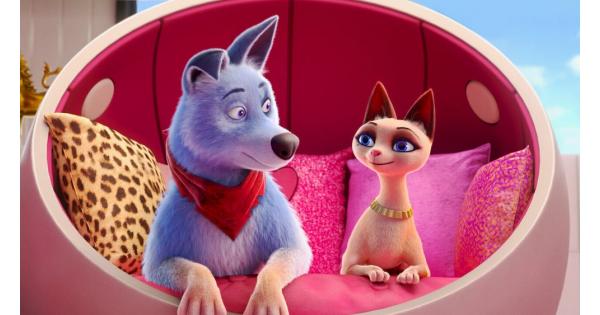
Like many cities, Robo City grew and grew and did that ugly sprawl thing, pushing nature and wild animals away so that humans and their pets could have all the space they wanted in the city. Roger is neither a human nor a pet; he is the thief of Robo City, a stray dog serving as the un-elected, unofficial leader of the mutts in his alley. And you may have guessed by the title that many robots also populate the city as humans inevitably grew too lazy to do much for themselves. Roger isn’t fond of the “tin cans” (which sounds oddly like a racial slur) but his real hatred’s reserved for cats, of course.

Roger has an especially contentious relationship with Belle the pampered cat, who’s lucky enough to have a beloved owner. Roger’s insistent that he enjoys his freedom, but he’s also pretty happy to make a friend in Bob, a jolly little robot who looks a lot like Baymax, and who’s about to come in VERY handy. Because guess what? They’re about to have a caper! In fact, the big robot AI thingie that’s driving the whole city has started its own revolution, creating chaos and sending people fleeing for their safety. Belle was enjoying a day of pampering at a pet spa when heck broke loose, so she’s stuck there owner-less with a ragtag group of small indulged beasts, including Ronaldo the big-talking poodle, Walter the insecure pug, and Sophie who identifies as a dog, and we’ll leave it at that.

This is a UK – Chinese – German production that steals from at least that many sources – Robin Hood, Secret Life of Pets, Toy Story 3, Madagascar – and yet even with their combined power this movie still can’t find a spark let alone light up a whole Pixar lamp.

The story is generic. The characters are generic. The music budget was apparently non-existent. Some zoo characters do a little rap that gave me major secondhand embarrassment and reminded me of grade school in the 90s when teachers would make you do raps for presentations as if our tiny catholic school wasn’t 100% white and also, apparently, 100% without rhythm and 100% without irony.

Since it has cute dogs and cute robots, young kids will probably give this is a pass, but if you get stuck watching with them, don’t expect funny jokes or quality animation or recognizable voice actors or any of the high standards we’ve come to expect from today’s animation. These guys didn’t care, and neither should you.

The Social Dilemma

Should you delete all of your social medias right now? That’s the only relevant question here and YES is the only answer. For many people, though, that’s easier said than done, and most won’t even try, despite this film’s very credible, very convincing reasons. Namely that social media is having a measurably dangerous impact on our culture. It’s spying on you, it’s invading your privacy, it’s selling your soul to the highest bidder, and it’s turning the whole world into a machine meant to change your behaviours – obviously so that you spend money on products being pitched to you, but ultimately you yourself are the product, and the ability to change your real world behaviour (without even triggering your awareness, mind!) is being sold to whomever will pay – dirty politicians and their Russian counterparts, say. And fake news proliferates on a site like Facebook, and spreads 6x faster than the true stuff. Because truth is relatively boring, and lies are exciting, and can lead you down a rabbit hole, sucking more and more of your attention. So while you might give a true headline 3 seconds of your time as you scroll on by, fake news can mean you follow one link to another to another, which means that compared to 3 seconds, fake news just got 3 hours of your attention, which convinces the AI that you like this type of thing better, maybe even believe it, so it will recommend even more of them to you.

Cutting the cable isn’t so easy, though, when the software’s been designed specifically to addict you so that their algorithm can mine and extract your attention.

This film is teaching us to think critically about the apps we use and the content they contain. Capitalism is the real pandemic of our age, and if you’re not paying cash for the apps you’re using, you’re paying in some currency you don’t know about, without your consent. Social media sites use powerful AI to suggest the exact right material to you at the exact right time, presented in the way that’s most likely to catch your eye, keep your attention, and ultimately convert you. They’re implanting thoughts that will affect how you vote, what you support, how you interact with people. This is really scary stuff and the strongest vaccine is information, and a good dose of it can be found right now on Netflix.

The Nest

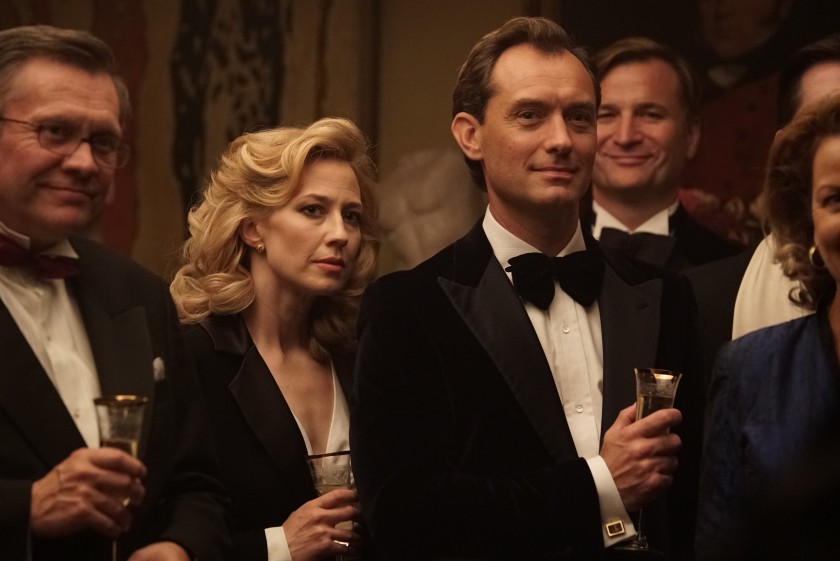
“There’s an opportunity,” Rory tells his American wife, “in London.” “Go fuck yourself,” she replies, leaving little doubt as to Allison’s stance on the matter. But this is the 1980s, when women still vow to obey their husbands during the marriage ceremony, and some of them even do. And like a good wife, Allison (Carrie Coon) packs up her home, her two children, Samantha (Oona Roche) and Ben (Charlie Shotwell), and even her horse, and off they go…not so much to London, that’s where the work is done, the man’s domain, but to a sprawling English country manor that Rory (Jude Law) has rented for them.

It is unclear whether Rory is indeed chasing new opportunity or fleeing old problems, but he’s commuting to his London office every day, filled with vigor and optimism working for an old boss with new prospects in his back pocket. Rory is your classic 80s businessman – a snake charmer, basically. Projecting a lifestyle well beyond his means, bluffing his way to the top, making bigger and bigger promises to plug the holes immediately behind him, never looking for enough forward, always certain of the coming boom. He over-promises and under-delivers and it’s soon clear that he lies in his personal life as much as in business. What isn’t clear is if the bad things that keep befalling his family are simply the result of karma or perhaps bad luck, or if the home they’ve moved into is casting some sort of sinister spell.

Writer-director Sean Durkin is a master of mood, and from the first strains of ominous music causing Sean to creepy-whisper the film’s title in my ear, he dresses the set to complement and exacerbate the tension within the family. The old house is dimly lit, the shadows encroaching upon the family, ready, almost, to envelope them. I reassure myself that IMDB has indeed called this a drama and not a horror, but I suppose a haunted house IS quite dramatic, and why haven’t we ruled this out yet? Actually, if the house is haunted, it’s not by ghosts but by lies – the ones we tell ourselves, the ones we tell others, the ones we’ve told by omission. Rory’s family have just moved to a new country but it’s not simply geography keeping them isolated.

The cast is good and the performances strong, with Carrie Coon the stand-out as a woman navigating the choppy waters between the freedom of independence and the comfort of reliance. Allison doesn’t know because she doesn’t want to know. She wears the fur but hides money around the house. When she is finally confronted with reality, the cracks begin to appear, and I don’t just mean in the foundation of their ridiculously large rental.

The Nest is a good film, not a great one. Rory is too despicable to like but too uninteresting to root against. We want to empathize with Allison but she feels cold, unknowable. There’s no real path to connection. Rory is a sleazy businessman, a snake charmer, but he’s ultimately failed to charm us, robbing us of what might have been an even better movie.