Becoming

Michelle Obama’s post-White House memoir Becoming explored her roots and the path she followed to become the formidable woman we know and respect today. Her new documentary on Netflix, also titled Becoming, shadows her on her massively successful book tour, and focuses more on the role and the identity she’s forging for herself as a former First Lady who still has a lot to give.
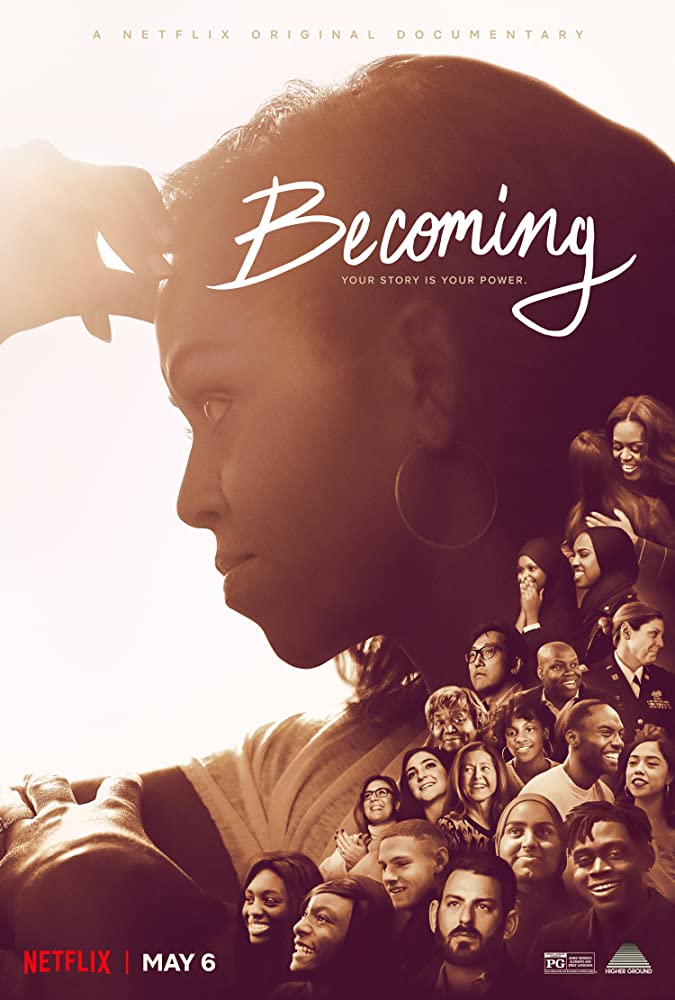
Director Nadia Hallgren crafts the sort of documentary that will have you asking why this incredible woman won’t just run for President herself – but if you’re paying attention, Michelle Obama answers that question in every word and sigh. It’s clear that her eight year sentence in the White House has taken its toll. For America’s first black First Family, the presidential spotlight meant constant scrutiny and a constant need for carefully modulated perfection. The First Families that preceded and succeeded them have been allowed far less criticism for far greater blemishes. The Obamas knew that theirs would be treated differently and they played the part. But while Michelle Obama’s poise seemed effortless, Becoming shows the emotional impact, even the trauma, incurred for an accomplished and intelligent woman to mute her voice. And while she was a beloved First Lady for her husband’s entire term in office, it’s clear that she has now stepped confidently out of his shadow, and that the country, and even the world, has a thirst and a fervor for this new, less filtered, more authentic Michelle Obama.

While the documentary isn’t revealing any deep dark secrets, it does allow Michelle Obama to let down her hair – sometimes literally, into luscious curls, and to step out of the First Lady’s shoes – carefully curated by a stylist who understood her White House role as a costumer projecting class and elegance and respectability – and into gold, glittery, thigh-high boots, if that’s what she wants. The White House has changed her but it hasn’t silenced her. It hasn’t convinced her mother to stop favouring her brother, or her staff to stop teasing her, or her daughters to stop needing her. Seeing her nestled amongst any and all of these people gives us a clearer sense of who she is. And while those of us on the outside can’t help but respect and admire her, we see how much that holds true, and in fact truer, for those who know her more intimately.

The American Nurse

It shouldn’t take a global pandemic to appreciate the nurses who have been working fairly tirelessly and devotedly all along and yet we all too often take them for granted.

Today, May 6th, is National Nurses Day in the U.S. while internationally it is celebrated May 12, Florence Nightingale’s birthday. The interim between the two is usually called Nurses Week and if ever there was a time to make it a week-long act of gratitude and commemoration, it’s now. The International Council of Nurses picks a theme each year and for 2020 it’s ‘Nursing the World to Health.’

Florence Nightingale is largely credited with founding what we think of as ‘modern nursing.’ Her emphasis on proper hand washing alone saved countless lives (literally countless – think about that), beginning on the battlefields of the Crimean war. It is remarkable that in 2020, we are fighting an epic battle against a virus wherein hand washing again is the most important weapon.

The American Nurse is a 2014 documentary by Carolyn Jones who explores aging, war, and poverty through the work and lives of 5 working nurses. The camera follows them through a typical day’s work while we consider what it truly means to care: to care with our hands, with our hearts, with experience and knowledge, with commitment and dedication.

And now nurses are again at the forefront of the meanest and most threatening bug we’ve faced in a lifetime and we’ve been unable to provide them even the most basic personal protective equipment necessary for providing the care we’re demanding. Not only are healthcare workers more at risk for contracting the virus due to repeated exposure, they’re also more likely to have life-threatening symptoms (perhaps because they’re exposed to a much higher dose, or to multiple strains, but science has yet to confirm the reason). I know a nurse who works in mental health who spent the early days of lockdown seeing patients with no PPE at all as they’d all been locked away for when they were “really needed.” Now she gets 1 per day, which means she’s eliminated coffee, water, and food before and during shifts because going to the washroom would contaminate them. And at any time she faces redeployment to the E.R. even though she hasn’t practiced that kind of nursing in a decade. She has young kids at home, which means after a long shift she can’t hug or kiss them until after she’s stripped and scrubbed. And then the fun of homeschooling begins. She was telling me about a local grocery store that allows healthcare workers to skip the line. She would never accept, of course, because she’d feel like a jerk – lots of people are pulling double duty these days, and everyone would rather not be there. But also because standing in line 6 feet apart at the supermarket is the quietest and easiest part of her day.

COVID or not, The American Nurse is a well-made, interesting documentary which you can watch here for free. It gives us a little insight into what it takes to heap the world’s healing upon your shoulders, to run towards the crisis instead of away from it, to feel compassion for others when you could use some yourself.

Thank you, nurses.

The Stand At Paxton County

Imagine Erin Brockovich if she was more brash, less sexy, and instead of being pro health and corporate responsibility, she was anti animal rights. Sound like your cup of tea?

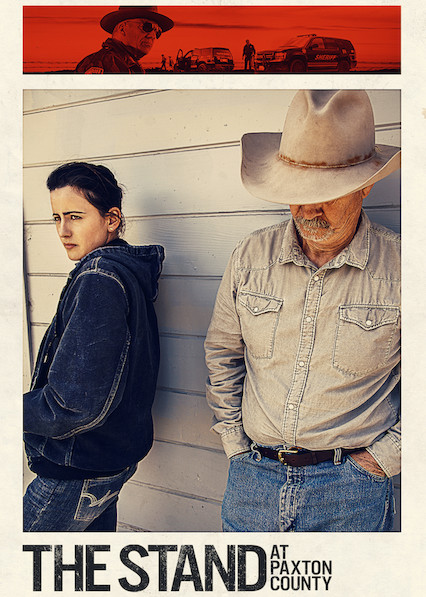
I don’t even drink tea and this still wasn’t my cuppa. But not because of how I’ve misleadingly described it. Janna Connelly (Jacqueline Toboni) is a military medic who’d rather be at war in Iraq (don’t quote me on that – it could have been any other recent skirmish) than at home on the ranch with her dad, Dell (Michael O’Neill). Even his heart attack isn’t much of an incentive but she reluctantly gives up being elbows-deep in the chest wounds of young men who didn’t sign up for this, and finds the family ranch in sad neglect. She and ranch hand Hudson (Tyler Jacob Moore) commit to fixing the place up but before they can make any changes, the town sheriff (Christopher McDonald) comes sniffing around with some vaguely qualified officials, based on an anonymous complaint about animal abuse.

Here’s the rub: some shady company has convinced the state senate to pass a bill (I’ve very likely gotten that process wrong, so just fill in the appropriate blanks or focus on the meat rather than the potatoes) that can confiscate a rancher’s entire herd on the word of a single vet’s assessment after an anonymous complaint. When that vet, that sheriff, and that company are in cahoots, it means a very cheap and easy way to come into many herds of cattle and strings of horses, which are quite lucrative on the resale. This company is not above manufacturing or planting evidence because they can hide behind the bill while the ranchers have little recourse, and the animals are gone by the time they can object in any case. It’s a tidy little scam that looks superficially legal and ruins a lot of innocent ranchers.

The movie is based on a real practice that does affect all kinds of American ranchers. Politicians are persuaded or duped into voting for a bill that sounds like a good thing – preventing animal abuse, but was always intended to provide legal cover for basically stealing someone’s valuable assets.

Unfortunately, director Brett Hedlund is no Steven Soderbergh. He struggles to make any of that sound interesting, making for a pretty slow and dry film, except for the parts where the script has overcompensated with cringy, unnecessary violence.

I suppose none of the actors are especially egregious but nor are they much good. The movie’s pretty bland and feels of a made-for-TV quality, and no, I don’t mean HBO. I mean Lifetime. But it does have the dubious honour of having premiered at the Black Hills Stock Show and been reviewed by Beef Monthly, for whatever that’s worth.

To learn more about this movie and others like it, find us here.

Like A Boss

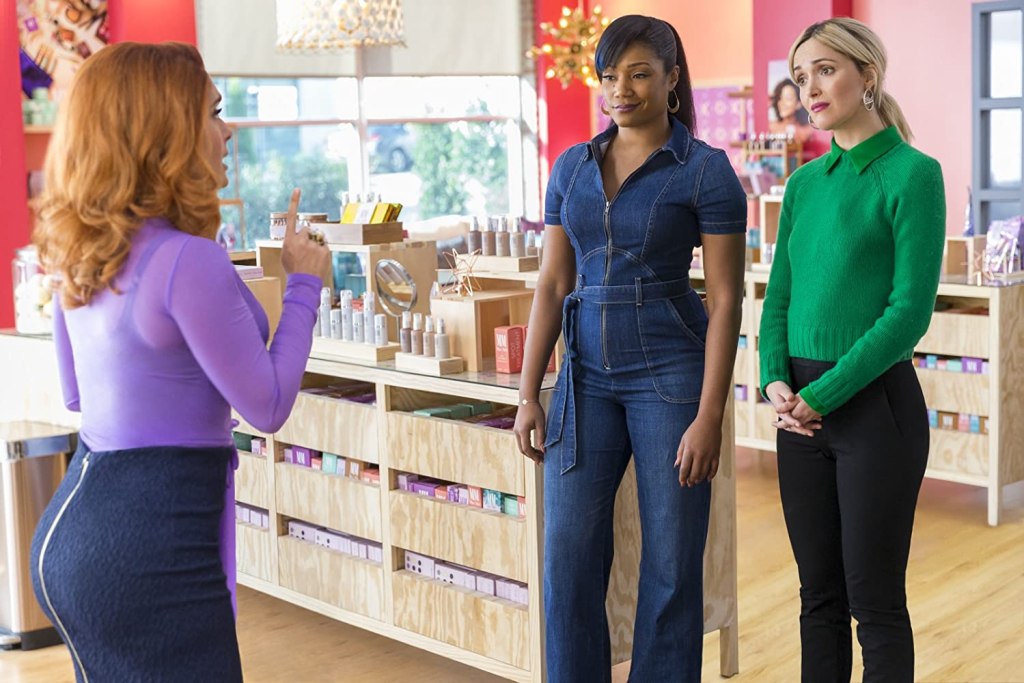
Mia (Tiffany Haddish) and Mel (Rose Byrne) are best friends since middle school. They started a beauty company together in a garage and grew it into a beautiful storefront location. Mia is the creative one, hands-on with customers and bursting with ideas, but there’s no structure to her process and it can’t be rushed or quantified. Mel takes care of the books and the logistics. She makes sure things run smoothly so that Mia can continue to create. But they’ve yet to recoup their costs from the storefront opening and they’re running quite a deficit. Mel doesn’t like to be the bearer of bad news and Mia doesn’t like to hear it, so Mel’s been carrying that burden alone and is relieved to hear that beauty giant Claire Luna is considering investing in their company. It sounds like the lifeline they’ll need to survive.

But while Mel is relieved and excited by the offer, Mia disdains it. They started their own company so they’d never have to work for anyone else again, and Claire Luna (Salma Hayek) has been pretty clear that her influx of cash comes with plenty of strings. In fact, when Mia and Mel reluctantly accept having not much of a choice, we the audience know something they don’t: Claire intends to sow discord among them to ultimately break them up so she’ll have controlling share. She’s pretty ruthless.

She’s also the only thing worth watching in this hot mess, although not necessarily in a good way. Hayek’s character is so baffling she’s hard to look away from, her complete lack of grounding or humanity make her unpredictable but also uninteresting. Which is still better than Haddish, who is too much, and Byrne, who is far, far too little. I have confirmed that this was in fact intended as a comedy, possibly because there is no genre for “just a group of people doing stuff of no particular value to no discernible effect.” There are better movies about business partners. There are better movies about friendship. Heck, there are better movies about eating something way too spicy.

Like A Boss cannot live up to its own title. It’s a bottom of the barrel comedy and director Miguel Arteta couldn’t find a joke if his mummy put it in a brown paper back with his name on it.

All Day And A Night

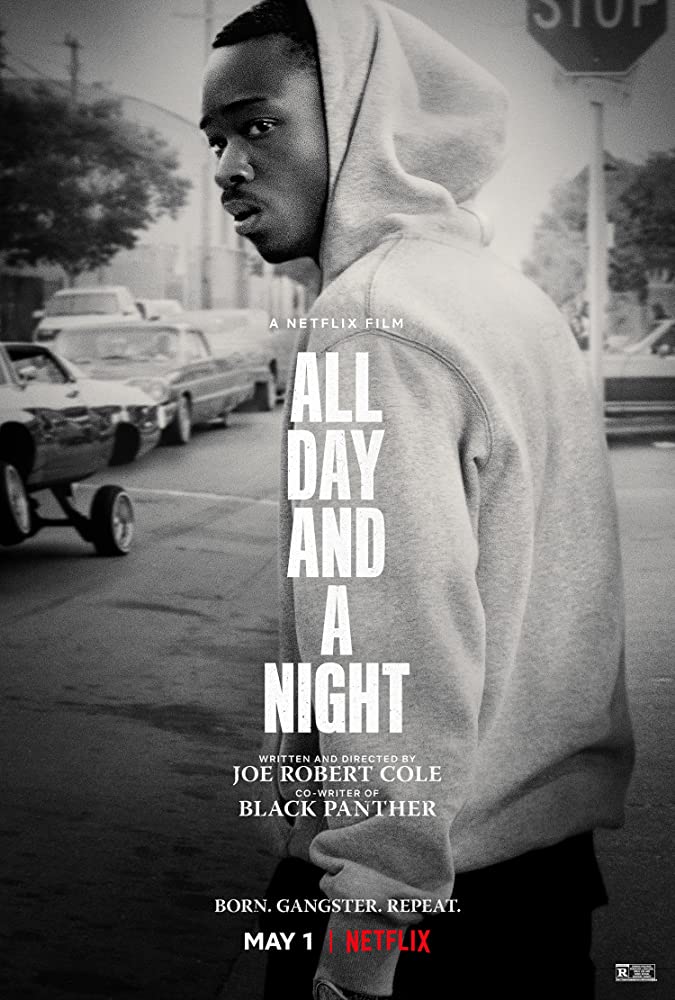
Soft-spoken Jahkor Lincoln (Ashton Sanders) struggles to keep his dream of rapping alive amidst a gang war in Oakland. It’s hard to have dreams in his neighbourhood. It’s hard to see outside the box you’re born into, to believe there are options for you, to believe your life isn’t fated by the colour of your skin. But no matter how hard he tries, his responsibilities seem to push him further and further across a line he never wanted to cross.

Jakhor lands in prison beside his father J.D. (Jeffrey Wright), the man he spent his whole life never wanting to become. But prison gives him lots of time to reflect, to explore the ties that bound them inextricably, and to dream of ways to beak the cycle for his own newborn set, whom he’s never met.

All Day and A Night is a title I still haven’t figured out and a film that’s a bit of a mixed bag. It slides backwards and forwards through time, which can get a bit sloppy. And it recycles a lot of material about young black lives that we’ve seen before. But it gets a few things really right – the sense of foreboding, for one, almost of inevitability that is heavy and depressing, and I’m just watching a film, not trying to live my life. Writer-director Joe Robert Cole clearly has a lot to say on the subject but I almost feel it was several movies’ worth, making this one a little disjointed. For example, there’s a very powerful scene in which Jakhor is visiting a friend in the hospital, a friend who will never walk again after a stint in the army. Jakhor is wearing a jersey, the NFL logo visible just below his pained face, reminding us of not one but two institutions that eat up and spit out the bodies of young black men.

I’ts not a perfect film but it has a voice and it has intention and if it’s not a string of hits, at least it’s a string of meaningful swings, and that’s a lot more than the other new releases on Netflix this week. All Day And A Night co-stars Isaiah John, Kelly Jenrette, Shakira Ja’Nai Paye, Regina Taylor, Christopher Meyer and Yahya Abdul-Mateen II.

Lady Driver

Okay, let’s just get this out of the way at the top: the title. It’s a god-awful title that has no business being attached to a movie released in 2020. It sounds like the kind of thing a racist grandma would whisper to you, rolling her eyes, “Lady doctor” she’d say, as if that put her whole cancer diagnosis into question, like maybe that lady doctor was just on her period or something. Lady driver? As if she could barely handle the steering wheel with those delicate hands of hers, as if her stilettos would make for awkward working of the pedals, as if her manicure might chip from too much shifting. As if she doesn’t even have space in her undersized brain for anything other than making babies and making sandwiches. Lady Driver? Lady Driver? The only way this makes any sense at all is as an attempt to recall the excellent film Baby Driver, which only means that I’m further inflamed, as a woman and as a movie lover. In fact, you are encouraged to call female doctors ‘doctors’ and female firefighters ‘firefighters’ and female drivers ‘drivers’.

On to the movie. Which is about a girl, Ellie (Grace Van Dien), who learns to drive. As you do when you’re 16. And then she proceeds to steal the shop class car and run away from home, to “Uncle Tim,” her dead dad’s brother, long since estranged from the family. Ellie and her mom are having some pretty major conflicts so it’s agreed that she’ll stay with Tim (Sean Patrick Flanery) for the summer, working in his mechanic auto-shop. Except under a dusty tarp in the shop is a race car, and Ellie is drawn to it like her bra is lined with magnets. Sure she just got her driver’s license yesterday and she’s never seen a stick shift before – is that a reason she can’t race? Nope! She’s a lady driver after all. She just has to keep it secret from her wet blanket mother who’s a little touchy on the subject since “it’s dangerous” and “you’re a child” and “that’s how your father died” and similar lame mom excuses.

Anyway, if you’re willing to accept in your heart that driving is genetic and that girls can do it too, this movie is probably still not for you. It’s just not very good. But if you like dirt tracks and low expectations, this movie is “free” (with paid subscription) on Netflix so your risk is low. Perhaps not low enough, and that’s a totally understandable position to take, particularly if your worldview is already wide enough that you already think of lady drivers as just “drivers” in your head.

The Half Of It

The Half Of It is not the kind of teenage romance we’re used to. Ellie Chu (Leah Lewis) is a small town high school outcast but for the fact that she writes term papers for hire and nearly all of the student body has bought an essay or two from her. She is the most well-rounded teenager you’ll ever meet; she works hard, studies hard, writes eloquently, plays several instruments and composes music, she knows old movies and French philosophers and somehow manages to keep her household running. In service of this last item, she breaks her own rule and accepts a different kind of paid writing assignment – a love letter from shy jock Paul (Daniel Diemer) to the school’s prettiest girl, a pastor’s daughter, Aster (Alexxis Lemire), who is already dating the school’s most popular jerk-off. Normally Ellie would refuse on moral grounds, but the electric company’s put the squeeze on so she accepts, unable to anticipate the complicated web she’s just started spinning.

Basically: Ellie’s letters are a little too convincing. A few are exchanged back and forth, and both parties, Aster and Ellie-as-Paul, are literary junkies and deep thinkers, and there are plenty of sparks on the page. But when Aster agrees to meet Paul in person, he comes off as a bit of a dud. He’s a nice guy, but he’s got nothing but blank stares rather than banter. The chemistry from their letters seems to dissipate in person. But Ellie keeps saving things with witty texts and thoughtful letters, so Aster’s falling for the Paul on the page, who is actually Ellie, while Paul is starting to feel like maybe he likes Ellie rather than Aster, and Ellie is starting to wonder if maybe she likes Aster. Like, like likes Aster.

Which is why I say this isn’t the kind of teen romance we grew up on. It isn’t light hearted fun, or sexy cat and mouse. It’s a rather mature meeting of minds, a slow-burn wooing. And Ellie is a new kind of 21st century protagonist who never needs to take off her glasses and let down her hair to be appreciated. She can be our hero just as she is, in overalls and chapped lips. She doesn’t have to play dumb or be oversexualized.

Sean felt the movie was slow to get going and a bit of a drag but I really felt refreshed by this story line, by the credit writer-director Alice Wu gives to her characters. And by turning the film into a tribute to all kinds of love, including platonic, she brings an emotional complexity to the concept of soulmates is are rarely if ever witnessed in a teen rom-com. The future isn’t just female: it’s queer, it’s intellectual, it’s responsible, it’s proud to be different. And isn’t that inspiring?

A Secret Love

If you’ve ever seen A League of Their Own, then you already know a bit about Terry’s youth. She was a Canadian ball player who went to America to try out for the American Baseball League, an all-female league that played in the 1940s while all the men were at war. She made the roster and played for them all four years, the ladies proving quite adept at baseball and the league gaining surprising popularity, a worthy distraction during difficult times. But when the war was over, so was baseball, at least for women.

Instead of returning home to a farm in rural Saskatchewan, Terry and her cousin, hockey player Pat, bravely decided to move to Chicago together, safety in numbers. Further bucking social norms, both ladies went to work and had careers. Though they each had their share of beaus, they stuck together, building a home in Chicago and to the shock of their families, they lived there contently for decades. But now, in (nearly) present day, Terry and Pat are both elderly ladies, and Terry in particular is suffering declining health. Her beloved niece is begging them to come home to Canada, to move into a nursing home near family where they can be cared for. But after a life of independence, Pat in particular is loathe to give it up. When they are finally persuaded, they decide to move into a retirement home together, and for the first time in their almost 70 years together, to live openly as a lesbian couple.

This film is really an attempt to document their love story, a beautiful story that they kept secret for longer than most of us have been alive. Some family members are shocked, some are not, and some feel an ounce or two of betrayal. But within their own community, Terry and Pat have a robust social life, a second family of their choosing, and it’s very sad to see them leave it. Even sadder is the packing up of their home together, mostly because of the shreds of mementos the packing uncovers, touching love letters saved but also anonymized, the signatures torn off just in case it should be seen by the wrong eyes.

Terry and Pat were rebels. They chose happiness, and they created it together, on their own terms. There’s no doubt you’ll fall in love with them yourself, Terry the sweet one, Pat just a little saltier, but so devoted to and solicitous of her longtime love. Director Chris Bolan offers contextual evidence that reminds us why the lies were necessary, but the joy of finally living their truth is right there on their faces. This is a love story for the ages.

Dangerous Lies (Windfall)

Katie (Camila Mendes) is supposed to be in grad school but her young marriage to Adam (Jessie T. Usher) has meant some financial hardships so instead she’s working as a care-giver to Leonard (Elliott Gould). Though Katie and Leonard have only known each other a few months, they’ve become fast friends, thanks in part to his isolation and lack of friends and family. He’d love to help her out with some money but she refuses, so instead Leonard hires Adam to do some yard work for him. It might have been a lovely arrangement had Leonard not wound up dead. Though not in particular ill health, he was an old man and it’s not a particularly suspicious death – until a lawyer shows up with a will awarding Leonard’s large home to Katie.

Katie and Adam move in eagerly, happy to put their struggles behind them, but the house is a gift that just keeps on giving: cash and other valuables are slowly uncovered, and Katie and Adam nervously keep them secret. But their windfall is enough to raise an alarm; Katie’s boss is hounding them, and so is a detective, and even a particularly aggressive real estate agent. But Katie and Adam haven’t technically done anything wrong, have they?

Well, they do make some extremely dumb decisions. It IS life changing money we’re talking about. And it’s not exactly stealing if there isn’t exactly a victim. Right?

Dangerous Lies (terrible title) is one of those movies that will be instantly forgettable but it’s technically competent and the performances are fairly good (poor Gould is not at his best, reciting lines rather than acting). But if you’re looking for mindless escapism, this is just good enough. It’s nicely paced, and even if the twists aren’t quite surprising, at least they’re fairly frequent. It feels like writer David Golden watched Knives Out and thought “I could do that” but it turned out that no, he couldn’t. It’s a mediocre offering at best, but it’s new content available on Netflix, and sometimes that’s just good enough.

My Spy

My Spy is about as good a movie as JJ is a spy. Which is to say: not at all. In fact, when JJ (Dave Bautista) is assigned to surveil a mother and daughter with techie Bobbi (Kristen Schaal), they are almost immediately made by Sophie (Chloe Coleman), their 9 year old target. Not just made, but caught on tape contemplating her murder. And instead of admitting the mission has been compromised, JJ then proceeds to allow himself to be blackmailed by said little girl into teaching her spycraft, dating mom Kate (Parisa Fitz-Henley), and generally posing as the daddy figure she so craves. But he’s understandably loathe to admit defeat because already this assignment was more of a punishment than a true mission. He’s a terrible spy, a lousy dresser, and an awful dancer.

Dave Bautista has no business being a leading man. I can’t help but think the director and/or producers agree since the script often sounds like it was written with Dwayne Johnson in mind, but The Rock is a legit movie star and can spot stinkers more easily that the Bautistas and the John Cenas, who are, frankly, lucky to get any work at all. Well, maybe I’m being a little hard on them. I think Bautista is actually very well cast in the Guardians movies. [Insert silence here, where I’m not saying anything at all since I truly do not have a single nice word to say about Cena]. But even Johnson started off doing things like The Tooth Fairy as he proved to Hollywood that he had what it takes. But he does. He knows his limits, he’s not trying to elbow his way into a Shakespeare adaptation. He chooses roles where his smile and his eyebrow arch are assets, where his muscles are a plot point, where he can ooze charisma and strength in equal measure and coast off the fumes.

Dave Bautista has no charisma, no discernible personality, but I think both he and Cena are trying to coast of Johnson’s fumes. The Rock has proved himself such a Hollywood hit machine that it of course would love to replicate his success, and it eyeballed the heck out of the WWE to see if anyone else would fit the bill. But Dwayne Johnson is a genetic and a talent anomaly. You can’t simply replace him with a similarly oversized man and hope for the best. Bautista is simply a large and lumbering plus-sized blow up doll, and director Peter Segal is too timid to maneuver him into position. A mannequin with its lines taped to its chest would have more character than Bautista does.

John Cena recently tried leading man status on for size in Playing with Fire, which was so bad it made me furious. My Spy isn’t good. Everyone involved recognized this; it was delayed 3 times even before anyone had ever heard of coronavirus. But with the pandemic as a convenient excuse, they’ve quietly released it directly to Amazon Prime, which means if you’re a member, you can watch it for free. And free is the only way this math works out at all. Free means you can give it a try. Free means you can shut it off after 10 minutes without feeling guilty. And, in these trying times of isolation boredom and our desperate need for content, this might do, especially since it is a rare family-friendly, non-animated film. This won’t be anyone’s favourite film, but you can only play so many rounds of go-fish.