Tag Archives: documentaries

I Am Paul Walker

Can you believe it’s been 5 years already since Paul Walker died? This documentary is an homage to the man that was, and it may not be who you thought it was.

Described variously as “the 4th Paul Walker, in a line of badasses” and a “cute kid who stayed pretty his whole life,” Paul got into acting as a child because his mother encouraged him. The work came easily. It may not have been the career he dreamed of – he thought a lot about pursuing marine biology in college – but both the work and the money were hard to resist.

He grew up Mormon and maintained family values his whole life. He was always close to his 3 siblings, and was thrilled when his daughter, who he had young, came to live with paulwalkerhim full time. She made him conscious of time, and he wanted more of it with her. He contemplated quitting acting to have more family time. Notice I said quit acting and not quit Hollywood. He was never in Hollywood, never cared for the lifestyle. If he wasn’t working on a movie, he wasn’t in Hollywood, he was probably out on the water, out dare-deviling, living life to the fullest.
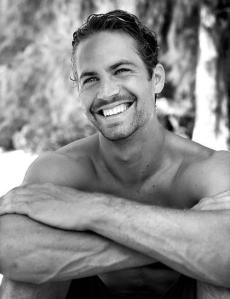
Childhood friends, family members, people he volunteered with, costars – I Am Paul Walker interviews everyone to get to the truth of a man who kept his private life private and his head out of the clouds. And by all accounts, it sounds like Walker was everyone’s best friend, a guy who had “real relationships with everybody.”

Tyrese Gibson, who turns out to have some pretty profound stuff to say about his friend and Fast and Furious costar, says “We’re actors in Paul Walker’s movie.” The directors who admired him and wrote roles for him remember him fondly, his mother aches over his loss, his little brother can’t help but tear up when he talks about the man he idolized.

It always sucks to lose someone so young, but the people who pay tribute to him here leave the impression of a man unlike any other. I wonder sometimes, how much documentaries like this eulogize and in fact lionize the dead, and I suppose it’s only natural that we do that to some extent. What would my documentary sound like? Not nearly as glowing, I’d wager. And yours?
Pick of the Litter

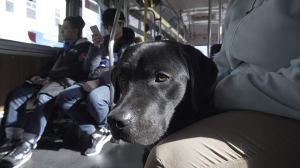
This documentary follows five puppies from birth as they train to become guide dogs to the blind. We literally do get to see Potomac, Patriot, Primrose, Poppet, and…Phil be born, all shiny and new and a little slimy to the world, and by the age of two months they’re already being placed in homes where raisers will abide by strict rules to bring up ideal candidates for the guide dog training program. As Pick of the Litter constantly reminds us, not everyone will make it. In fact, of 800 puppies born to the centre every year, only about 300 turn out to be suitable. The standards are exacting because the job is important. Matched with a visually impaired companion, these dogs will be the seeing eyes for their loved one, keeping them safe, but also giving them a sense of freedom that a cane just can’t mimic. Still, I find it a little heartless to keep throwing the “only the best of the best” tag line in our faces, like it’s a dog’s fault for not being the “ideal candidate.” Not all humans are cut out to be dog trainers, but the rest of us aren’t pieces of shit, we just have other things we’re good at. Can’t we maybe think the same for dogs?

The film is far-reaching, documenting and interviewing everyone involved in the process – the vets, the families, the future recipients. When a dog is deemed unsuitable for the program, there are a lot of broken hearts. “Career changed” is the euphemism employed, though I’m not sure the dogs care or notice as much as we may think. There are many MV5BN2EyMDA1NGMtZmMxNC00YTZjLTkyZDktYTBlMTVmYjkwODlhXkEyXkFqcGdeQXVyMTEzNjYxMjQ@._V1_SX1777_CR0,0,1777,999_AL_dedicated volunteers who invest a lot of time into these dogs, and getting cut from the program can seem like a failure; indeed, there are far more applicants for guide dogs than can be handled in any given year. But these are all smart dogs who work hard and do their best. I have four dogs at home: at least 3 of them are geniuses, but none of them would be guide dog material, not even if they’d been bred and trained for the job since birth. They’re hyper and they love to interact. We really do ask a lot of guide dogs, but I know that some dogs really love having a job to do, it makes them feel fulfilled, and I can’t think of a more important job or a more beautiful connection between dog and owner.
It is a testament to the filmmakers (to directors Don Hardy Jr. and Dana Nachman) that I myself felt rather emotionally invested in the process. A lot of love and effort is poured into these dogs before they ever meet their partners. It’s interesting to see the ins and outs of the process, particularly as many of us have noticed little dogs in training vests out and about with their handlers during training. This documentary lets us into the family – right into the dog’s crate, in fact, over a period of two years. It’s uplifting, it’s adorable, it’s sometimes bittersweet. It’s got everything but the wet nose.

Valentine Road

Larry King (not that Larry King) had a pretty rough life. His adoptive parents had 22 complaints about abuse against them. Larry wore jackets at school to hide the bruises. But no one came to save him. When he was finally removed from the home, it was because he had “stolen” food from his adoptive parents’ refrigerator. How hungry was Larry? How sore? He went to a shelter for abused and neglected children where he struggled to identify his orientation. Small for his age, biracial, he experimented with makeup, crocheted scarves, and wore heeled boots to school. Everyone knew him as the gay kid, though he was possibly more accurately transgender, and it didn’t sit well with everyone.

On February 12, 2008, Larry King was shot and killed by a fellow 8th grade classmate – the classmate he’d chosen as his Valentine. A classmate who was so provoked by Larry’s sexuality that he brought a gun to school and shot him in the head, a hate crime that “shocked the nation” (except not really, as Americans have decided that adopting school shootings into their culture is just easier).

The documentary interviews not just students who discriminated against Larry, but teachers as well – one who is religious piece of shit and believes that Larry’s “actions” had “consequences” and a special ed teacher obsessed with weapons. The one teacher who supported him was summarily fired, and now works as a barista. The school has done nothing for grieving students and is tried its best to bury the execution that took place on school grounds.

Yeah, this shit is really difficult to watch. There are too many failures, too many shitty grownups doing nothing. Not just excusing homophobia, but espousing it. It made me sick. But this documentary does something unexpected. It has two victims, not one.

The boy who shot Larry was a white supremacist. But he was also occasionally homeless, with an abusive father and a drug-addicted mother. At the time of the shooting, he was living with his grandfather, who had a lot of weapons lying around. Is he just as much a victim as Larry?

The documentary looks behind the headlines but how much compassion can we really afford to expend here? This shit is unbelievable, and I think we all need to confront what goes on in it, because this film from 2013 was a better predictor of the 2016 election than any of the polls.

This movie made me mad, as it should. It upset me, as it should. It shocked me, as it should. But stories like these continue to fail to galvanize the dirty half of America who breed hatred and value guns over human life.

The Cleaners

Content moderators are the world’s defacto censors.

Facebook, Twitter, Youtube, and Instagram have bigger populations than any country or state. Their editorial rules and standards moderate how the world communicates.

But who scrubs the Internet of all the dirt that shouldn’t be there?

The answer lies mostly in the Philippines, where tens of thousands of content moderators flip through 25k images per shift,deciding which to allow, and which to delete. Algorithms can’t scan a picture for what’s appropriate; that’s still a human judgement call. They stop child exploitation, cyber bullying, and terrorism. And, depending on the platform, they may stop a breastfeeding mother from sharing a picture of her son eating or an artist from sharing her painting of Donald Trump and his teeny tiny penis. Though this big business employs many, the content operators must do their work anonymously, for fear of corruption and reprisals. This work goes unseen, unrecognized, and for many of us, unconsidered. When you post an image, do you picture the person tasked with sorting through them? Someone on the other side of the world, unfamiliar with our politics and context – unfamiliar, until their training, with butt plugs and ISIS.

This documentary was fascinating to me because though it directly affects me, and how I navigate and experience the internet, I’ve never spared more than a thought toward these hard working people. It inspired me to imagine what kinds of images and videos they’re forced to watch: none of the flagged images are good, but which are acceptable and which are not, which are morally wrong, which are illegal, which will scar you for life? Because these people have SEEN SOME SHIT. 25 thousand images per day. Think about that. Think about how many beheading videos they’ve witnessed, how many torture videos. Or how much child pornography. For lots of us, even one image is too many. What does it do to your brain – your soul – to see image after image, and to be in charge of keeping the rest of them safe from them?

This documentary asks so little of us – only that we acknowledge that these people exist, and they’ve made our lives easier. But perhaps a thought or two should be spared for these new giants of social media who are deciding our values and attitudes for us; not merely hosting what we share, but shaping it and curating it. It’s dangerous work.

Letter From Masanjia

A woman is rooting through her garage, looking for Halloween decor she can repurpose for her daughter’s 5th birthday, which falls around the holiday. She retrieves a styrofoam grave marker that says RIP, purchased at Kmart 2 years prior but not yet used. Out of the box falls a note, a plea really, begging the recipient to turn it in to a human rights organization. The note details the abuses suffered by the man who made the decorative headstone; it is signed by a prisoner from China’s most notorious forced labour camp – Masanjia.

The woman is understandable freaked out but she complies with the note’s directive – she contacts Human Rights Watch but they are unresponsive. She goes to Kmart with it but they ballsily deny using labour camps, which are illegal. So she goes to her state newspaper, The Oregonian, and it publishes an investigative piece, and basically the story blows up from there – even reaching so far as China, where the people have to bypass a firewall in order to read western news. a man named Sun Yi is surprised to read the story and recognize his note.

Sun Yi had been released from the camp 2 years earlier, but is still haunted by the torture he suffered there. This documentary explores Sun Yi’s experience, the common labour camp experience. Director Leon Lee interviews prison guards, civil rights lawyers, and Sun Yi’s wife. Sun Yi suffered corporeally while in the prison, but his wife and their family faced raids, discrimination, and harassment on the outside.

Sun Yi is not a criminal. He’s a practitioner of falun gong, those slow exercise paired with moral philosophy that espouses tenants of truthfulness, compassion, and tolerance – the mind body improved together. China’s communist party felt threatened by the sheer number of falun gong followers, and began persecuting them systematically. Since 1999, Sun Yi had been arrested, detained, or abducted 12 times. Pressure increased around the time of the Olympics (circa 2008) and Sun Yi was ultimately sentenced to two and a half years for being in the possession of printer paper, suggesting he’d printed materials about his beliefs.

To really understand the torture and the suffering of this labour camp, you simply must watch. Sun Yi is a wonderful subject but his stories are tough. His experiences are horrific. But this isn’t just about one man’s harrowing time. It’s about the effectiveness/ineffectiveness of news stories going viral; about paying attention to where and how things are made; about the China’s long arm and continued human rights abuses. Letter From Masanjia is the best kind of eye-opener, unsettling to its core.

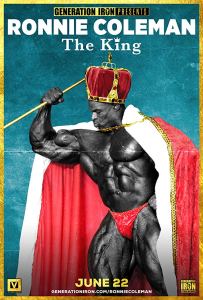
Ronnie Coleman: The King

Ronnie Coleman ripped the bodybuilding world in two in 1999 when he appeared on the already crowded scene. A former cop and powerlifter, he ties the record for most Mr. Olympia wins with 8, count em – 8, victories. That’s how you get a nickname like The King.

But since his retirement, he’s been plagued with injury as a result. He’s had numerous back surgeries, and both hips replaced. He needs crutches just to walk. The documentary catches up with him on the eve of his 8th (count em – 8) surgery, and he’s crippled with pain. It’s awful to watch him walk.

His accomplishments are enormous (bodybuilding pun!) and veiny, but told through the MV5BN2M0YmFmM2MtNGIyZS00NjY4LTk1MjgtNGRmNjdjMjE1MDk5XkEyXkFqcGdeQXVyNDMxNTQ3MTk@._V1_SY1000_SX675_AL_prism of his disability, they’re not exactly dimmed, but the context is clearly costly. Too costly, some, in fact most, would say. But as Ronnie pulls up to the supplement store, he parks in the handicap accessibility parking – and even then he barely makes it in. But what is he even doing there? Well, despite the fact that he’s popping the max dosage in pain pills, Ronnie is still drinking his protein shakes because Ronnie is still training. It’s killing him, but he can’t stop.
It’s really interesting to watch someone attain the absolute top in his field, and it’s interesting in a different, guilt-laced way to watch him fall. But Ronnie Coleman with a broken body proves there are different kinds of strength. It’s a mental fortitude he’ll need to cope with his loss. His smile and positive attitude go a long way.

This documentary has everything – the highs and lows, tragedy and comedy. Well, this documentary has almost everything. You don’t achieve 300lbs of lean muscle, go down in history as the greatest bodybuilder of all time, without a little help. But director Vlad Yudin does not so much as whisper the word steroids. So no, there is not complete transparency here, perhaps an effort not to tarnish the king’s image. The picture is incomplete but on the whole it’s still an enjoyable, heartbreaking, uplifting (bodybuilder pun!) watch.


The Joneses

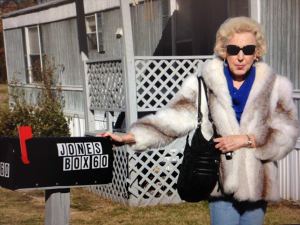
Jerry Jones left his wife and 4 sons to begin his transition to Jheri – this being in the 80s long, long before the average Joe knew very much about transgendered people and what it all meant. Forget average Joes, Jehri couldn’t find a doctor in all of Mississippi who was willing to talk about her particular concerns. Jheri was in her late 30s when she left to build her new life, and though surgery was always a goal, her financial obligations were first and foremost to her kids so it wasn’t until age 60 that she was able to scrape together enough to go to Brussels and finally have the surgery she dreamed of.

Now 74, Jheri lives in a trailer park with two of her grown sons, Brad and Trevor, after MV5BMTUzNDk1OTQ0NV5BMl5BanBnXkFtZTgwODUyMDE2MDI@._V1_SY1000_CR0,0,1333,1000_AL_years of estrangement (her ex-wife didn’t feel Jheri should have any contact with the kids). Jheri helps another son, Wade, run his business, and is grandmother to his two kids, who don’t know Jheri is transgender. After hiding her true identity for so long, this lying in reverse doesn’t sit well with Jheri either, though she wants to spare her grandkids any pain or bullying.

With grown children dependent on her, some of  them disabled, Jheri struggles more than most 74 year olds, but not only does she still pray before every meal (like a good old gal in the Bible Belt), she also sings and dances and struts her stuff in her kitchen when a good song comes on. Her joie de vivre is infectious, admirable. Suppressing her true self for so many years means Jheri loves her hair and makeup and high heels, and she’s living her best life now.

Life is complicated. Families are complicated. Jheri is a remarkable woman, a remarkable matriarch, and so is the documentary that tells her story. It’s not always nice or neat, and I admire the candor, and the courage it takes to be so revealing. Director Moby Longinotto pulls together something truly unique – above all, sending the message that it’s okay to still be figuring things out, it’s okay to not have all the answers. Love solves a lot, and I truly believe that sharing like this will go a long way in destigmatizing which is still a difficult concept for some – but on screen, Jheri is a woman, mother, and grandmother like any other, filled with hopes, dreams, and perhaps some regrets. She is inspiring and real and relatable. These are some Joneses worth keeping up with

The First Patient

I am not very sentimental when it comes to bodies, even my own. A dead body is just an empty vessel for me, easy to disregard before it’s even cool. Because I have a disease, it is unlikely that my organs would be very useful to anyone after my death, and because of that, I’m open to donating my body to science instead, if Sean felt comfortable with that. It’s not for everyone and that’s okay. But I’m curious about this stuff, and not overly squeamish, so one of my favourite books (on the topic, and just generally in the world) is Stiff: The Curious Lives Of Human Cadavers, by Mary Roach. Roach is as fascinated by this stuff as I am, and she’s got a wicked streak of dark humour that’s particularly evident in her footnotes.

The First Patient is a thorough documentary about medical students in their anatomy MV5BZDY0ZjQ0N2ItZGQyNS00NzZiLWI3MzctODFhYzkxNTJjNzU5XkEyXkFqcGdeQXVyMTU0NjUzNw@@._V1_SY1000_CR0,0,666,1000_AL_class, wherein they dissect a human cadaver for the first time. We get to know a handful of students – who they are, how they got here, what inspired them. We get appreciate their differing cultural and religious backgrounds, and how that influences how they view science, medicine, human remains, life beyond death. Curiouser still, we get to know the cadavers in some way. Their human identities remain anonymous but their bodies become a tree of learning, a gift to the thousands of patients each of these future doctors will one day encounter.
Human dissection is no picnic, and years ago there was this sense, a coping mechanism perhaps, that medical students treated their cadavers cavalierly – adorning them with silly costumes, or leaving body parts behind in someone’s locker, as a prank. Today there is a better understanding of the emotional toll that this endeavour will take, even on students training to be doctors. There is dignity, bordering on reverence, for those who have made a donation of their bodies. There is a thoughtfulness that will move you, and gratitude that may influence you to consider your own donation.

For those of us with strong stomachs, The First Patient gives us a front-row seat to the dissection, without the smell. The Mayo Clinic School of Medicine opened its lab’s doors to filmmaker Chip Duncan, and he found the soul of medicine in the budding hearts and minds of first year students.

I don’t believe in heaven or hell but I do believe that this is life after death.

When Lambs Become Lions

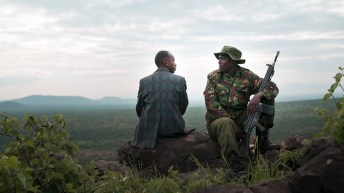
Northern Kenya is a very dangerous place for elephants.  Hell, maybe there’s no safe place on Earth for an animal whose front teeth are worth more on the black market than my whole body, but Northern Kenya is particularly deadly ground.  Every day, the elephants are stalked by poachers, who in turn are pursued by park rangers.  But it’s hardly a fair fight when the park rangers haven’t been paid by the government for months, while the poachers stand to make more from one elephant than the rangers have made in the past year.When+Lambs+Become+Lions

When Lambs Become Lions documents the ongoing battle between poachers and rangers from a very interesting perspective: it follows two family members on opposite sides of the fight and shoots the heart of the action, as poachers pursue elephants and as rangers pursue poachers.   Because of its dual focus, When Lambs Become Lions manages not to take sides or judge these relatives as they try to provide for their families.  That is a useful perspective because really, the poachers aren’t the true reason for elephants’ status as an endangered species.  The poachers are the tool of the ivory dealers, and both exist because many of the world’s rich people want to pay lots of money for tusks.  Those people are the villains here.  The poachers are simply trying to get ahead rather than living day-by-day doing whatever odd jobs can be found.

As a result of the film’s judgment-free, up-close approach, When Lambs Become Lions feels more like a narrative feature than you’d expect.  I was curious to see how the story would end and enjoyed the twists and turns along the way.  As it turns out, poachers and rangers are not like oil and water.   They mix, they intermingle, and they can at time seven switch from one side to the other.  Even though rangers are authorized (and expected) to shoot poachers on sight, there’s a respect for their opponents’ circumstances and humanity that feels so very foreign, quaint, and refreshing in contrast to the western ultra-partisan, hyper-adversarial approach to conflict.

What’s the cause of those differing attitudes to one’s ideological opponents? Is it that we’ve had it too good for too long to remember what it’s like to make hard choices to survive?  Are we afraid to engage with those who have different opinions than ours?  Why can’t we see past those differences that are so minor in comparison to the divide between than these two relatives, one of whom is expected to feed the other to crocodiles when both are on duty?  I’m not sure but it’s something for us to figure out because, like rangers say about poachers, that story is unlikely to have a happy ending.


Planet in Focus: Genesis 2.0

“After what happened in Jurassic Park, is it good science to play God with the dead?” This is the question posed by the Planet in Focus page for Genesis 2.0. For a documentary to pose such a question feels surreal. Well, we’re living in a surreal world and, after watching this new documentary from directors Christian Frei and Maxim Arbugaevit, you may very well find yourself praying that we’ve learnt the lesson s of a 25 year-old science fiction movie.

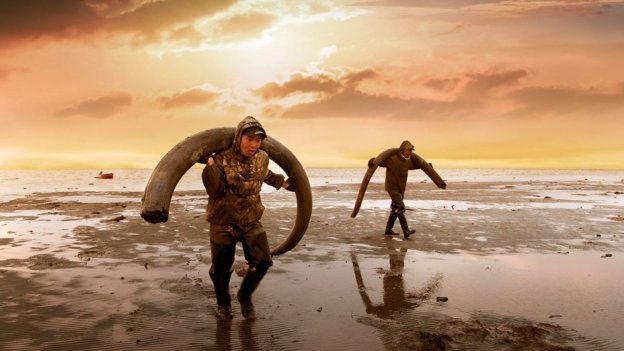
Genesis 2.0 address some ethical dilemmas in the field of molecular engineering using the ambitious quest to bring back the woolly mammoth. It’s an idea that’s so crazy that I honestly don’t know how I feel about it. I find it both exciting and scary. If the geneticists at Harvard and an elite lab in China share my apprehension, they are doing an excellent job of hiding it. Even the less privileged Siberians who take the treacherous trip to the Siberian arctic every summer in search of  mammoth tusks don’t seem too worried.

The film divides its time pretty equally between scientists and tusk hunters. The stuff in the arctic is gorgeously shot and Frei, who spent a summer up there, clearly bonded with the Siberian hunters. Their job is dangerous and offers no guarantees. Every year 1 or 2 people don’t make it back and many will not find enough “white gold” to make the trip worth the time and risk.

The scientists in the US, China, and South Korea (where they’re cloning dogs for grieving pet owners) that we follow live in a completely different world. They work with state of the art technology and don’t risk their lives the way the arctic hunters do. The filmmakers respect the geneticists just as they do the hunters, watching them work and letting them make their case for the importance of their work. Only one question on the ethics of molecular engineering is asked of them throughout the entire movie and it’s answered only with an awkward silence.

Genesis 2.0 mostly saves it’s editorializing for the final minutes of the film and when it comes it feels a little awkward and out of place. All in all though, it’s a fantastic documentary. It’s thought-provoking and beautiful to watch and has an interesting point of view that seems to tie the whole thing together. The future of genetic research is like the treacherous Siberian arctic. It’s not easy and is full of risk. But pushing forward into the unknown and taking great risks is just human nature. Will the future look olike the first act of Jurassic Park? Or will it look like the scary part after all the dinosaurs get loose? Only time will tell.