Tag Archives: documentaries

Feminists: What Were They Thinking?

In the mid-70s, photographer Cynthia MacAdams collected pictures of women, determined that feminism made them look different, distinct. Could the difference be observed on film? Her book of photographs immortalized an awakening, a second wave of feminism wherein women were shaking off their cultural expectations, shedding the shackles of their pasts, and stepping forward with new purpose.

MV5BODljMzYzOTQtZGQyYi00ZjhkLTk5NDktY2RlNTdjOTljYjgwXkEyXkFqcGdeQXVyNjcyMzE1MA@@._V1_SY1000_CR0,0,674,1000_AL_40 years later, as MacAdams’ work is being exhibited, film maker Johanna Demetrakas tracks down many of the women featured in the work, including Jane Fonda, Funmilola Fagbamila, Gloria Steinem, Lily Tomlin, Margaret Prescod, Phyllis Chesler, and Judy Chicago and asks them about our continued need for change. Personally, seeing all these knowing eyes staring out at me, I feel galvanized.

Together they discuss employment, motherhood, abortion, choice, and the state of feminism today.

Jane Fonda says “I’ve only known for 10 years that ‘no’ is a complete sentence. That gave me pause. Don’t you love it when a book or movie reaches out, past the page or screen, and just touches you? This film is ripe for that, although it’s crazy that this brand new, just-released film already feels a little dated – in this #metoo, Trumped up era, feminism’s fourth wave is moving necessarily quicker than ever.

One thing I felt just a teensy bit gratified about is that this film devotes a small amount of time to address intersectional feminism and the ways in which historic feminism failed to include women of colour and other minorities. ‘Feminism’ has mostly meant white feminism, and white feminists have asked women of colour to somehow divorce themselves from their other concerns, as if they ever could. Race and gender must go together for WOC, and and we can’t properly call for advancement or equality of women without bringing all women along – queer women, trans women, women of every class and colour. This documentary acknowledges the deficits but doesn’t begin to delve into them – we’ll need many more documentaries to cover the complexities of black feminism.

Most of all, I am struck by so many notable women trying to reclaim the feistiness of their youth – not the righteous anger of their 20s or the organized action of their 30s, but the freedom of being a little girl, before any gender expectations have fully settled. Many seemed to hope age would help them reclaim that feistiness, but I wondered what it might be like if we never lost it to begin with.

RBG

It’s kind of funny and kind of wonderful that such a tiny old lady has become a symbol of hope and power for a young generation of voters, but Ruth Bader Ginsburg is just the icon the world was needing recently. Though she has been working tirelessly for decades, it’s only recently that Millennials have given her their highest praise and greatest stature, turning her into a meme.  Perhaps it is the recent turn in American politics that has created a void that RBG is uniquely qualified to fill. Her thoughtful words and stirring arguments have lifted us up in our time of need. And though her career as a Supreme Court Justice may have started out more moderate, the Court’s present makeup has forced her to become more outspoken, a more liberal voice, a voice of dissent.

No woman is born a legend. Ruth Bader Ginsburg was a baby once, and then a quiet,4a17e33b54fbe1dc4a705486e373860c serious child, and then a teenager with no patience for small talk. She learned some valuable lessons from her mother before losing her at a tender age. She went to Harvard Law, where she had to justify taking a seat away from a man. She met her husband, Marty, who admired her intelligence during a time when men were meant to dominate their spouses. She finished law school as a mother and a caretaker to her husband, who was stricken with cancer. Long before she was known to her country, she was known to friends and family as dedicated, hard-working, and tough.
As a young lawyer she herself faced gender discrimination before taking up the cases that would help change those laws. She saw herself as a kindergarten teacher in front of many judges, trying to get them to see what life was like for the females in the room. A brilliant legal mind, she made a name for herself with historic wins for gender equality, but it wasn’t until 1993 that Bill Clinton saw fit to appoint her to the Supreme Court. Since then she was been a hero for us all.

Directors Betsy West and Julie Cohen make an excellent biography for an important woman. They demystify her with glimpses into her collar closet (where she adorns her robes with various lace), her surprising friendship with Scalia, her chuckles over Kate McKinnon’s portrayal of her on SNL. Without a boastful bone in her body, RBG is nonetheless tickled by all the attention she’s been receiving. At 85 years old, she’s quite a ways past what most of us would consider retirement age. Luckily the documentary supplies us with perhaps the most hopeful images we could have asked for: the Notorious RBG working out in a gym. Strong in mind and body, she is determined not to abandon us anytime soon.


Rodents of Unusual Size

Nutria sounds like a sweetener but is actually a disgusting rodent…of unusual size. It looks like a rat but it’s the size of a beaver. The orange-toothed critter is native to South America but was unfortunately introduced to Louisiana by fur by fur trappers. People made good money hunting them for pelts until the fur trade collapsed in the 80s and nobody wanted to wear rat anymore.

desktop_small_fwah_ROUSpostcard_FRONTv2_3In North America, the nutria’s only predators were humans. Without hunting, the nutria have multiplied terribly. Now this invasive species has overrun the land, its destructive eating and burrowing habits eroding coastline and eating up swamp land valuable for its protection against hurricanes.
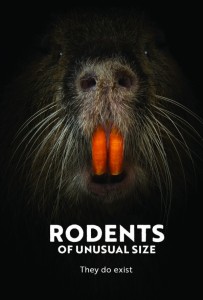
Rodents of Unusual Size is about the good people of Louisiana and their initiative to save their land and their livelihoods from the dreaded nutria. The government has put a $5 on their heads – er – their tails, actually. It’s a popular and effective measure, though the buckets of monstrous rat tails left me a little squeamish. Directors Quinn Costello, Chris Metzler, and Jeff Springer assemble a curious cast of characters to tell their story, including off-season shrimpers, students paying their college tuition, and gruff women who do it better. But it’s fisherman Thomas who will win your heart. He’s been battered by all the elements his land could throw at him, and he’s determined to survive this one as well. Man vs. beast: it’s a classic match-up, and it’s playing as part of the Planet In Focus Film Festival.

This is a surprisingly endearing documentary, as easily digested as a nutria kabob. I highly suggest you check it out – for the slice of life, the bit of trivia, the satisfaction of a well-turned documentary.


Generation Wealth

In 1971, the American government untied itself from the gold standard. Every dollar printed used to have an equivalent in gold hiding somewhere in the vaults. No longer. The U.S. was printing money without abandon, and with the gold standard went fiscal discipline – right out the window. The government was spending way beyond its means and soon, especially under Reagan’s guidance, so were the American people. The 80s were about wealth building. A nation of production became a nation of consumption. You may  not have had the cash for it, but conspicuous consumption was being a good citizen. When American no longer made products domestically, it stimulated the economy by buying things, lots of things, buying, buying, buying. The American Dream has always been about money.

Director Lauren Greenfield has been one of my favourite documentarians for a long time – especially The Queen of Versailles, another treatise on excess and silly spending. Generation Wealth, however, is less of a story, and more of a scrapbook. In putting together images for a new book, she realizes that much of her work has centered on wealth and the various ways we accrue power – money, fame, sex, youth, beauty.

Greenfield revisits many of her old subjects to see how their lifestyles have treated them: the offspring of famous musicians, porn stars made famous by Charlie Sheen, bankers wanted for wire fraud, Kate Hudson’s classmates. She even examines her own family – her parents, her children in terms of their ambition and legacy.

Generation Wealth is a treasure trove of stirring, thought-provoking images and scenes, but it’s not big on in-depth analysis. The images are perhaps meant to stir you to your own internal inventory. And they’re rather sympathetic, in the end. Greenfield’s lens tends not to judge its subjects, but it’s impossible not to start drawing some unflattering conclusions about the way we live. We used to aspire to keep up with the Joneses, our neighbours, who had just a bit more than we did. Now we don’t even know our neighbours. Most Americans can name more Kardashians than they can the people living to the right, left, or even above them. And TV shows oblige. They’ve literally given us the unsubtle Keeping up with the Kardashians, a family famous for being famous, a mother so power-hungry she was willing to trade her daughter’s bodies for cash since that’s the only commodity they had. But images on TV are quite a bit more posh than your next door neighbour’s slightly less dated patio set. Now we’ve got goals way beyond our means.

But have any of our acquisitions bought us happiness? Is it ever enough? And what happens to our economy, our way of life, if we stopped buying in?

Generation Wealth is a career retrospective for Greenfield. Lacking in contextualization, she shows instead of telling, and it’s up to us to draw our own conclusions, which can hardly be anything but bleak.


Marks of Mana

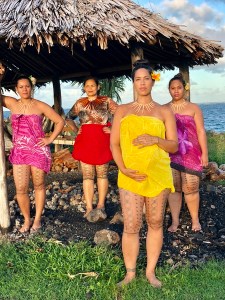
According to Samoan legend, two goddesses intended to give tattoos, traditionally called “tatau”, to the Samoan women, but on their long swim to Samoa from Fiji the goddesses got confused and gave tattoos to men instead.  Marks of Mana offers a look at a number of women who are now reclaiming the art of tatau for themselves as well as for the memories of their ancestors, and reporting these tattooing ceremonies as being a life-changing experience.marks of mana

This documentary begins in Samoa, naturally, as we meet a female chief and her family of seven (grown) children.  One of her five daughters is about to get her malu, which is a thigh tattoo only for women that is both a coming-of-age moment and a ceremonial recognition and affirmation of a woman’s connection to her ancestry.  Meeting this family emphasizes the historical standing of women to Samoa’s indigenous people, as equals and leaders rather than as less than men.  Similar longstanding “progressive” attitudes are on display at other South Pacific locations as well, such as Papua New Guinea, as it’s a consistent theme that women’s tattoos signify their knowledge and power within their societies.

Of course, the power that women traditionally possessed in those societies was suppressed, stymied and rejected by the island’s colonizers, who saw no problem with imposing their backwards, misogynistic cultures on the Samoans.  The absurdity of that transaction and the colonizers’ arrogance in forcing their values on the Samoans and others is subtly displayed by this film in each of its segments, and nicely displaces the false narrative that colonizers were welcomed by the colonized because they improved the colonized societies with their intrusion.

The version of Marks of Mana shown to me was unfinished (the main omissions were subtitles and one segment out of five).  Having seen the work in progress, I am eager to see the finished product because what has been created so far is a valuable, enlightening and uplifting look at the ceremonial aspect of Polynesian tattoos and the healing power of reclaiming one’s cultural traditions.

Marks of Mana is screening as part of Toronto’s ImagineNATIVE Film & Media Arts Festival on October 19, 2018 at 11 a.m. at the TIFF Bell Lightbox.

After The Apology

The stolen generations. That’s what they call the many, many Aboriginal children who were taken out of their homes and put into care outside their families and community. Ten years ago, the government issued an apology for its past transgressions and Aboriginal peoples were gratified for the acknowledgement of their pain and suffering but it didn’t take long to recognize the apology as a hollow one. ‘Sorry’ means you don’t do it again.  But they did. In fact, in the following years, the number of Aboriginal kids apprehended by the system nearly doubled. And even though their own policies in the care and protection act supposedly prevent this, Aboriginal children are 10 times more like than non-Aboriginals to be taken away from their parents, and 70% are removed entirely from their communities.

When I read the movie’s synopsis, I assumed this film was Canadian. It is not. It is Australian. But their story is our story. We have these issues here too.

MV5BM2YyY2EwNTgtNjg2YS00NDk1LWFhZDctYmQ5MWVlMTg0MzVhXkEyXkFqcGdeQXVyMTAxNTY0MjI@._V1_SY1000_CR0,0,1509,1000_AL_Aboriginal people have been through a lot, historically, and still. Snatching children from out of their homes is among the most destructive of them. It breaks down their culture, their language, their family ties. It robs them of identity.

In most cases of family and children services, children are removed because of domestic violence, mental illness, and drug/alcohol abuse. It’s hard to argue against those judgments, though individual situations vary. In the case of Aboriginal children, the reason most often cited is ‘neglect’ and that’s a harder one to address. Often this label of neglect is assessed by middle-class white ladies who don’t understand the culture or can’t see beyond the poverty. The cupboards aren’t well stocked but the children are not hungry. There may not be a crib in the house, but the baby is loved and cared for according to the family’s values. The system  is racist. Plain and simple. Its many inadequacies are illustrated (sometimes literally) by the stories in this documentary.

Director Larissa Behrendt focuses on four grandmothers in particular who are taking on the system on behalf of their communities. It’s a brilliant approach that personalizes the cause and leaves us with a bit of hope. It’s a look toward the future, but one informed by the mistakes of the past, which we cannot afford to ignore. This documentary insures we do not.


Transformer

Janae Marie Kroczaleski was just going about her business in 2015 when she was publicly outed by a Youtuber without her consent. Her parents disowned her, her sponsors dropped her: overnight her life had been decided for her. Born Matt Kroczaleski, she had known for a long time that her true identity was female. Matt joined the Marines to help “push down the feminine stuff.” He married and had 3 children. But Matt never felt right in his skin. If he had to live as a male, he had to be the biggest, strongest guy he could be, and he was. A power-lifter known to his fans simply as ‘Kroc,’ Matt became the strongest man in the world for his size.

Still, he thought constantly about living as a woman, and didn’t feel authentic in his body. Over a period of 10 years, he began transitioning many times. He didn’t quit VWrtDx-gbecause it was difficult, or because he was unsure. He’d quit because he couldn’t reconcile the two halves of himself: the need to be strong AND be a woman. In his male skin, he needed to be the biggest, the most muscular, but as a woman he wanted to be petite. When he cut weight, dieted and stopped lifting, he deprived himself of his friends, his support system, the world he knew and the lifestyle he loved. Muscles were a security blanket of sorts. It’s hard to let those go.
Director Michael Del Monte makes a fascinating documentary because he’s chosen a subject who is open and accessible. Janae is courageous and enlightening. It may not have been her idea to go public, but she embraces it bravely. I loved her willingness to speak candidly about failed transitions. I adored scenes with her family – her sons are terrific people who are not only supportive but engaged in her transition, asking intelligent questions while treating her in the same loving way they’ve always treated their father – they know this is the same person, only happier and more honest. These young men have a lot to teach adults twice their age.

The documentary bracingly follows Janae as she makes this transition her last. She’s going to learn that all women are strong, by necessity, no matter what they look like on the outside. Matt Kroczaleski went through a lot in his life, but Janae understands that her path will be hardest to follow. In this documentary, she loses her job, encounters protesters, has “elective” surgery that for her is life-saving, life-embracing, is a supportive and knowledgeable judge at transfitcon, and evaluates her ass in a pair of skinny jeans. The world is complex. Janae is realistic. Transformer doesn’t speak for all transgendered people, but it speaks wonderfully to one woman’s experience. It’s personal, it’s intimate, and it’s a beautiful portrait of a life in transition and a woman coming in to her own.


Living Proof

When I was a little girl, my school had an annual “read-a-thon” to raise money for MS. Finally, a “thon” that little unathletic Jay could win! And boy did I: hundreds of books read, and hundreds of dollars raised.

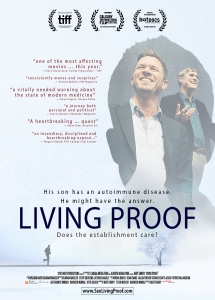
Film maker Matt Embry was diagnosed with multiple sclerosis when he was only 19 years old. A debilitating, incurable disease, both Matt and his family were devastated by it. His father, Ashton Embry, was frustrated at the paltry support offered by their doctors and with the lack of long-term results offered by any of the medication available. So he did his own research, and thanks in part to Judy Graham’s book about living with MS MV5BMjZhYmVmNTctNTlhZC00YmQ5LWJkZTUtM2ExN2RiMTc3ZWEyXkEyXkFqcGdeQXVyMzc4MTI1OTQ@._V1_naturally, he developed a diet for his son to follow. Matt eats unprocessed food – no gluten, no dairy – mostly fruit, veg, and lean meats. And since MS occurs more often in northern countries, like Canada, he takes a big ole dose of Vitamin D, like sunshine in a bottle. Yes, it’s a strict diet and requires constant preparation and vigilance. But if you’ve known someone cut down by MS, their bodies just literally abandoning them, you’d probably find such a possibility to be suitably motivating. And thanks to this lifestyle, Matt is still symptom-free, TWENTY YEARS after diagnosis. He has never taken any medication, but he has had a procedure called CCSVI – many people with MS have significant blockages in their jugular vein, which means not enough blood flows through to the brain.

Staving off MS without expensive drugs is reason enough for a documentary. Though it’s likely not the answer for everyone, it seems harmless enough to try, so Matt and his family have been devoted to disseminating the information, free of charge. But MS patients must happen upon it themselves, because none of the official avenues will so much as suggest it as an alternative. People my age are confined to wheel chairs and nursing homes because big pharma is only interested in medical alternatives that will make life-long paying customers out of patients. Diet and exercise are not profitable.

But you and I expect no less of the pharmaceutical industry. It’s unconscionable.  What really got my goat was the complicity of the MS Society of Canada, and its many chapters around the world. They raise millions of dollars, give a fraction to research, and literally suppress invaluable information from the people who suffer from MS and depend on them for resources. They accept donations from pharmaceutical companies, they endorse their drugs, and they funnel the money back toward research for medicine that will not cure MS. I am enraged to know that I ever gave\raised money for the MS Society. I was even more enraged to see them using the donations of well-meaning, hard-working people to sue the likes of Matt Embry. No wonder there have never been any significant advancements in MS research. It’s enough to make you sick.

Three Identical Strangers

This might be the only time I steer you away from the page, but if you haven’t seen Three Identical Strangers, it’s best to go in cold. May I suggest you read instead about Damien Chazelle’s Oscar-front-runner First Man or Lynne Ramsay’s disturbing 2011 movie, We Need To Talk About Kevin?

If you have seen the movie, however, I’m sure you’re half-mad with wanting to talk MV5BMTc0NWM3ZGItMzlmZC00NDRmLWJlZmUtMjkzZjNlYmNhYTc1XkEyXkFqcGdeQXVyNzgxMzYzNjA@._V1_SY1000_SX675_AL_about it. It’s a documentary about two guys who discover, quite by accident, that they are twins, separated at birth. They were both adopted and had no idea they had a look-alike brother until mutual friends confused them when they both wound up at the same college, which is amazing enough. Their story goes national: it’s the feel-good story of the year, two 19 year old boys jubilantly reunited. And of the millions who catch sight of their front-page story is a third identical stranger. They are not twins, but triplets.
That feels like more than enough to have an engaging story, but in fact their story is only getting started, and it isn’t all as happy as their initial heady days together suggest.

This documentary is so well put-together that the intrigue stays with the film way beyond its first reveal. But this is not a piece of fiction. They’re real people who not only have their lives disrupted but find out they’ve been living with a painful absence. And then they find out worse things still. It drove me so crazy I was literally yelling at my TV (Three Identical Strangers has recently become available for rent).

I wrote recently about the above-mentioned We Need To Talk About Kevin, in which Lynne Ramsay gives us an awful lot to think about nature and nurture. Three Identical Strangers does it too in a way that’s utterly heart breaking. There are so many questions raised and injustices singled out and ethics breached that it’s aching, hard to catch your breath. But it’s must-watch material.


McQueen

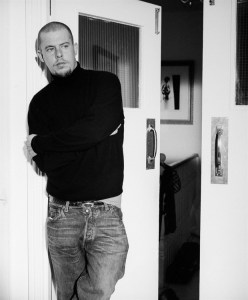
Lee Alexander McQueen was an unlikely fellow in the world of high fashion. His family was blue-collar, his life quite humble. But for some reason he couldn’t stop drawing dresses, and he started making those drawings into actual pieces of clothing, he found he was quite good. Unexpectedly, criminally good.

MV5BZjcwNzQxMGQtMzJkMy00M2QyLWE0Y2QtZTI0YWY3ZDhiMjFhXkEyXkFqcGdeQXVyNTc5OTMwOTQ@._V1_Lee’s flair for the dramatic meant he put on a damn good fashion show. Between his theatrical catwalks and his astonishing creations, he made a name for himself very quickly, very young. London loved to call him their own fashion bad boy, but he was nearly rejected by couture’s real epicentre, Paris, for being of the wrong cut. He was crass, he was lower class. He didn’t look the part or dress the part. Luckily fashion icon Isabella Blow discovered him, and through her, so did the world.

This documentary is extremely well done, each chapter reflects a new “season” or collection of clothing, which he centered around dark, brooding, often violent themes. And as the documentary shows, those themes often reflected his own frame of mind. He was troubled by what he’d experienced in life, and the way he used fashion to work out his mental health was revolutionary but not always appreciated.

The movie gives us a front-row seat to a brilliant but tormented soul who achieved everything he ever wanted but never got to be happy about it. The directors ( Ian Bonhôte and Peter Ettedgui) come at their subject from all angles and withsawqs2 impeccable sources to give us a full portrait of a man we previously only knew from headlines. This is more biography than fashion retrospective, but it’s as beautiful as it is well-crafted. Intimate, startling. The title cards alone would make McQueen proud.