Tag Archives: documentaries

Howard

You probably can’t even imagine a world in which Howard Ashman had never existed, and yet you probably don’t even know his name. He’s been dead nearly 30 years but you’re still singing his songs. Along with frequent collaborator Alan Menken, he wrote some of your favourite songs from The Little Mermaid, Beauty and the Beast, Aladdin – and those are just his Disney creds.

The night they won the Oscar for their work on The Little Mermaid, Howard whispered in Menken’s ear that they should sit down and talk once they were back in New York. He revealed that he’d been diagnosed with HIV a couple of years earlier, when they were deep into production on The Little Mermaid. His health was failing. He’d be dead just a year later. But he spent that year putting whatever energy and time he had left into making Beauty and the Beast into one of if not the most memorable and beloved Disney fairytales of all time. The studio flew Disney animators out to his home in upstate New York to suit his schedule but his illness was largely kept secret – many in the crew assumed they were dealing the diva temperament of someone with an Oscar-shaped hunk of gold on the mantle. They put up with it because he was a genius, because the team of Ashman & Menken were basically unbeatable.
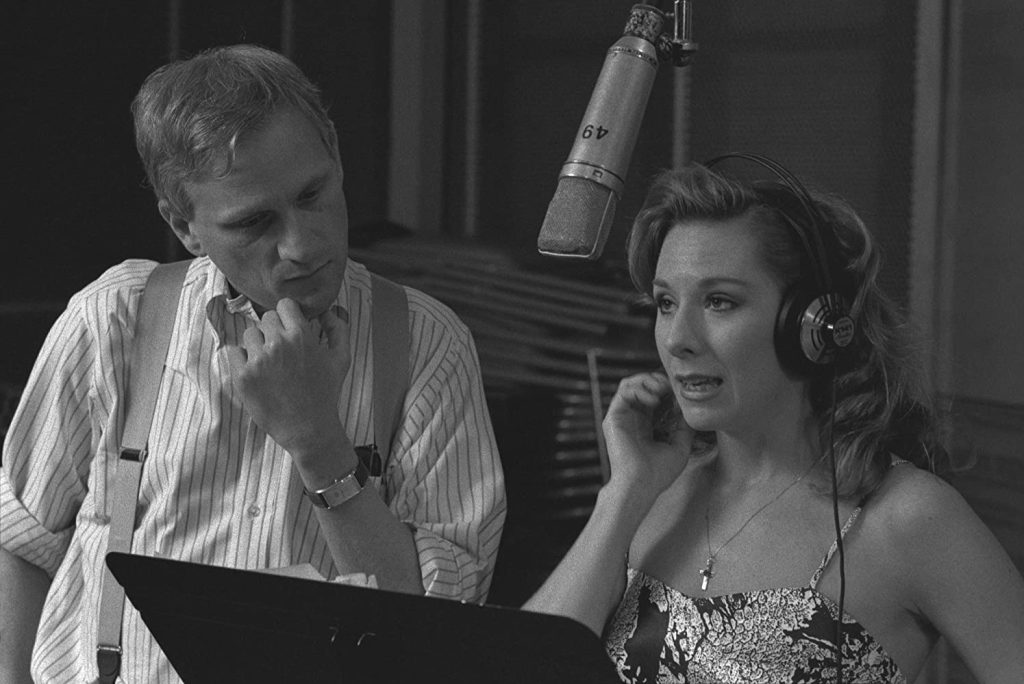
In this documentary, lots of his close friends and colleagues reminisce about how easily story-telling came to him, especially in song form. Lyrics spilled out of him, getting the story to where it needed to be. We also see him in archival footage, at the Beauty & The Beast recording session, for an example, where an orchestra played along to Angela Lansbury and Jerry Orbach laying down the track to that most famous of songs. Meanwhile, a separate team of animators already hard at work on Aladdin were picking his brain. He died before Belle ever set foot in a theatre, let alone Jasmine, but producer Don Hahn visited him in hospital after a particularly glowing test screening. Menken was down to 80lbs, was blind, and could hardly speak. This the man whose voice first sang the songs that princesses would later make famous. He died 4 days later. When Beauty & The Beast hit theatres later that year, it was dedicated to “our dear friend Howard, who gave a mermaid her voice and a beast his soul, we will be forever grateful.” Posthumously he would earn another four Academy Award nominations and rack up another win, but his legacy is much more than mere accolades. He was the voice of a generation, and his contributions are so timeless that they are rediscovered by each subsequent generation.

Howard’s friend, colleague, and Beauty & the Beast producer Don Hahn directs this documentary to say thanks to a man who is gone but clearly not forgotten.

Bob Lazar: Area 51 & Flying Saucers

In 1989, a man named Dennis, his identity shrouded in shadows, his voice distorted, gave an explosive interview claiming he worked on UFOs in a government lab called s-4.

We have since come to know his true identity, Bob Lazar, and to refer to that particular place in northern Las Vegas as Area 51. Bob claims his work there involved the reverse-engineering an alien propulsion system, technology that even 30 years later still cannot be replicated by humans.

Do you believe Bob Lazar? Lazar doesn’t care. He came forward because he felt his fellow Americans deserved to know what the government was hiding from them, but he never wanted to be in the spotlight and he certainly didn’t expect to be the face of UFOlogy for the next three decades. His testimony is both the most controversial and also the most important contribution to the UFO narrative of all time. But life hasn’t exactly rewarded him for his whistleblowing, if you consider what he did to be whistleblowing. He’s either an American hero or a traitor or a nutbar.

The UFO that he claims to have seen supposedly ran on an antimatter reactor fueled by element 115, which generated a gravity wave which allowed for movement but also camouflage by bending light around it. At the time element 115 had not yet been artificially created (it was in 2003 and officially named moscovium, but no stable isotopes of moscovium have ever been synthesized, all of them radioactive and decaying in fractions of a second). Lazar claimed to have seen documents referring to little green aliens as having contacted humans on Earth for the past ten thousand years.

Is Lazar a total kook or just a lousy secret keeper? That’s what this documentary seems intent on establishing: not whether UFOs exist and have visited this planet, but whether Lazar is a nice, honest man. Very little new information is offered and Lazar basically gets the stage to himself. This film by Jeremy Kenyon Lockyer Corbell is unlikely to sway people’s opinion one way or another, but Corbell’s stance is pretty clear since he glosses over Lazar’s 1990 arrest for aiding and abetting a prostitution ring. This was reduced to felony pandering (the procuring of a person to be used for prostitution, including inducing, encouraging, or forcing someone to engage in prostitution), to which he pleaded guilty. He was also charged in 2006 for shipping restricted chemicals across state lines, pleading guilty to three criminal counts of aiding and abetting the introduction into interstate commerce banned hazardous substances. Possibly these charges are a result of the government keeping tabs on his whereabouts, and possibly Lazar’s just not as nice as he likes to pretend. Either way, even Lazar himself admits he has no way of proving that what he says is true. So it all comes down to you.

Do you believe in aliens?

In UFOs?

That the American government is hiding aliens or UFOs or both in Area 51?

That Bob Lazar was only helping hookers move?

Mucho Mucho Amor: The Legend of Walter Mercado

Why watch a documentary about a man you’ve never heard of? Do you really need to learn “more” when you know nothing?

To be fair: millions of people DO know his name. He was the world’s #1 astrologer for decades, but because he broadcasted mostly in Spanish, he never made it into my home or into my cultural lexicon (and to be super fair, I can’t name a single English or French speaking one either; astrology just isn’t my thing).

Whether you know his name or not, you should probably check out this documentary. He is indeed a curious character. Lin-Manuel Miranda describes him as dramatic and fabulous, and in Mercado’s case, those are vast understatements.

Androgynous? Asexual? Those are not words people used in Puerto Rico in 1969, when he got his start, nor are they words Walter Mercado uses even today. Labels? He’s not above them – he’s beyond them. Today Mercado resembles a cross between Julie Andrews, Joan Rivers, and Sean’s recently deceased Granny. His wardrobe isn’t so much a cross between Liberace and Elvis as a one-upmanship of both, with a touch of Siegfried & Roy, and a cape collection that would make Lando Calrissian cry. He admits to “a little arrangement” when it comes to plastic surgery, and some botox “like Nicole Kidman.”

Mercado has an origin story to rival a super hero’s, a primo sidekick in faithful assistant Willy (who warns us not to get too bitchy with him), a legendary catch phrase, and a super power. Unfortunately, he’s also got a nemesis because every story worth telling has a villain. And if Walter has a kryptonite, it would be trust.

Trusting his business manager Bill Bakula was his downfall. They battled in court rather than in Gotham, but there were hits, there were injuries, there was damage. Neither had a mother named Martha.

At times known as a miracle-worker, a magician, a psychic, and a sorcerer, most remember him simply as a source of inspiration. Mercado knew there was power in positivity and his horoscopes gave people a reason to believe in themselves. His fandom has keenly felt his absence and many in the community would champion a reboot of the Mercado franchise but not all super heroes are meant to rise again (especially not when their jewel-encrusted capes weigh more than 30lbs).

This is a fascinating documentary, well told, and well worth the time. Mercado is quite a character, and if he is a Hispanic hero, this movie is his legacy.

Kiss The Ground

I don’t know if you’ve heard of this little thing called global warming? It’s scheduled to kill your grandkids in about 60 years or so.

There are LOTS of documentaries about global warming, lots of documentaries that are very good at clanging the old pots and pans together, sounding the alarm and bannering the place with THIS IS NOT A DRILL. But many of these films leave us feeling despondent and hopeless because while they may excel at pointing out the causes, symptoms, and side effects, they haven’t been very effective in suggesting a cure.

Kiss The Ground not only offers a possible course of treatment, it also offers a spoonful of sugar to help the medicine go down.

It’s called drawdown. The gist:

  1. Global warming’s biggest villain is a build up of carbon dioxide in our atmosphere.
  2. We actually have a pretty terrific carbon storage system but we’re not using it. It’s called soil.
  3. Unfortunately, over-tilling the soil has led to the desertification of the Earth. Too much exposed soil led to the Dust Bowl, an event that ushered in famine, but permanent damage to once fertile land.
  4. Modern agriculture is causing soil erosion, among other evils. But a relatively simple switch to regenerative agriculture would not only cut down emissions but actually draw down carbon already in our atmosphere and sequester it in soil.
  5. Regenerative agriculture = no more tilling, planting diverse cover crops, managing farms to grow topsoil, reducing use of toxic pesticides and synthetic chemicals – even cattle, a significant source of methane, can be part of holistic farming with planned land grazing.

Allow the experts in the documentary to illustrate these principles far more capably than I ever could. Directors Joshua Tickell and Rebecca Harrell Tickell assemble a terrific network of activists, scientists, farmers, and politicians who keep this plan simple and accessible. We’re not all ranchers with vast tracts of land, but we can all help recapture the carbon through small acts of agroforestry: plant a tree. Create a food forest. Make it diverse.

Global warming should not be a political concept, nor a subject for debate. It’s not just a problem but a threat, and it needs our attention NOW/50 years ago. If you won’t take it from me, take it from Woody Harrelson, who narrates the heck out of this doc on Netflix.

My Octopus Teacher

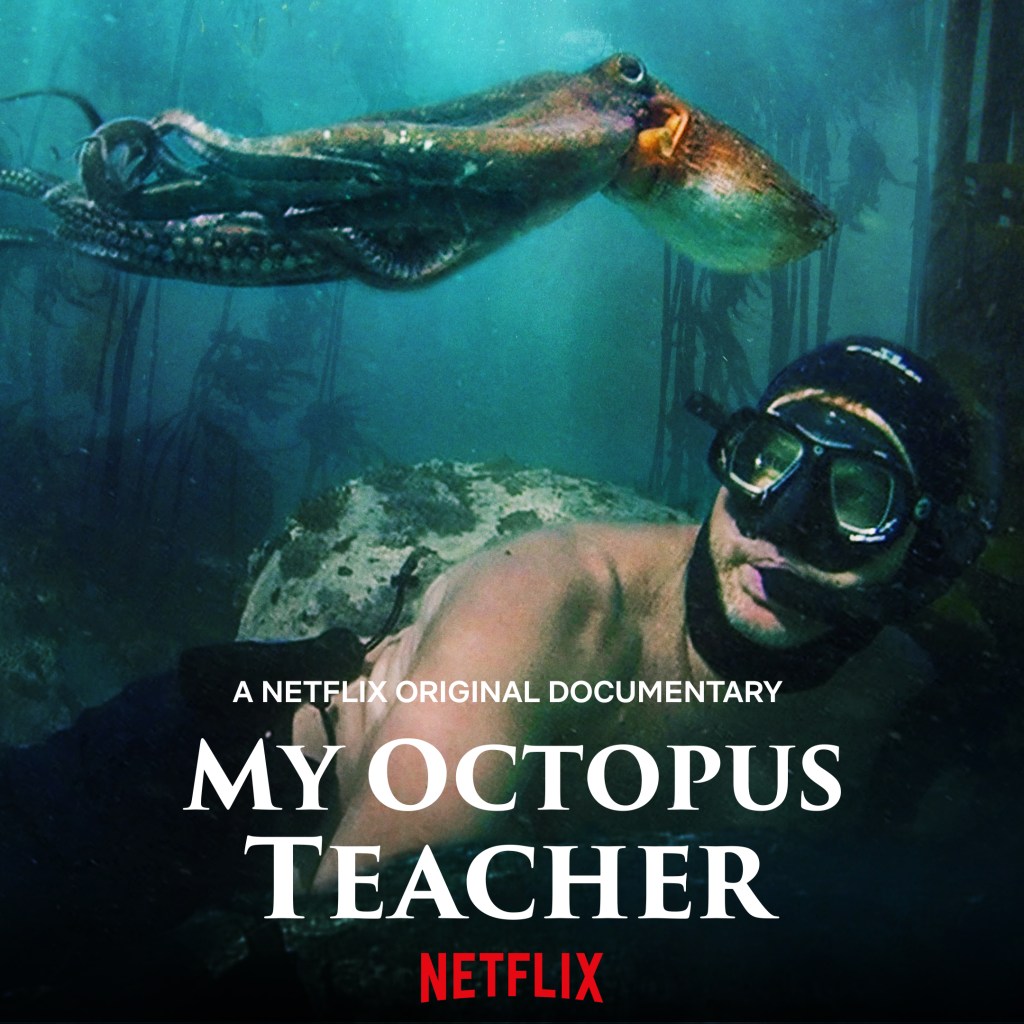
Craig Foster is a burned out documentary film maker who becomes the subject of someone else’s documentary when he replenishes himself by diving in a South African kelp forest.

Free diving without even a wet suit, Foster cultivates a sense of belonging below the water, feels connected to it in some primal way that only deepens when he happens upon a little octopus, Octopus vulgaris to be specific, living in a small den. Foster is struck by his intimate proximity to her every day life, and begins to visit her regularly, for months. Slowly he gains her trust, and is able to capture extraordinary footage of her hunting, being hunted, playing with fish, checking out his camera, constructing camouflage and more.

Yes, Foster is perhaps guilty of anthropomorphizing his subject, but there’s a long and impressive history of film makers and wild animals getting cozy while making a movie, and at least the octopus isn’t going to eat him. And in some circles, Foster may even get bonus points for standing by and letting his dear friend’s arm get severed. Plus, technically this isn’t Foster’s film – Pippa Ehrlich and James Reed have come on board to write and direct.

Quibbles and qualms aside, what we’ve got here is a stunningly beautiful little film of a creature we might all like to make friends. My Octopus Teacher is a terrible title but I do get its meaning: the ocean has much to teach us. The natural world has much to teach us. So often we rush right by these incredible things that are happening all around us and the miracle here is not the octopus’s ability to completely regenerate a new arm, but Foster’s ability to slow down enough to see it happen.

We’ve got the much easier task of simply selecting it for our next Netflix movie night. It’s a heck of a lot easer than trying to wrestle on a damp swimsuit every day for months, and juggle different lenses for underwater photography while pyjama sharks (those nasty bottom-dwelling predators with a deceptively cute name) threaten your friends.

You can learn about Octopus vulgaris in any book or website about marine biology: how it manages to chomp through shellfish, how it changes colour to blend in with its surroundings, how it uses sea shells to shield itself from enemies, how they only reproduce once, laying tens of thousands of eggs, and by the time they hatch, she dies. You can read about all of these interesting facts but you’ll never understand them with the depth you will gain from having watched this wonderful documentary, a tailor-made lesson plan on an amazing, ink-squirting cephalopod.

Father Soldier Son

Let’s be real: this documentary is a super duper emotional watch.

We’re going to get to know the Eisch family over the next decade of their lives, but when we meet them, dad Brian is deployed to Afghanistan while sons Isaac, 12, and Joey, 7, live with uncle Shawn since their mother is out of the picture. The kids are proud of their dad, they think of him as a super hero, but they not only miss him, they worry about him. They’re young but they understand the consequences of his job.

In fact, Brian does return injured. He nearly lost his leg, so the dad they get back is not the same one that left them. He can’t do the camping and fishing and outdoorsy stuff that they used to enjoy together, but he’s also struggling just to be a loving and attentive father. War sucks.

Brian is lucky; besides having some very helpful relatives, he finds love again, a saintly and patient woman who’s willing to abide his mood swings and care for his children as she cares for her own. Brian’s pain is such that he finally agrees to an amputation, but healing post-surgery isn’t as swift as he’d hoped and his prosthetic the answer to all his problems. As depression sets in, a war video game becomes his sole focus. Brian is grappling with his new limitations and his sons are adapting to a family constantly reacting to the aftershocks of war.

Directors Catrin Einhorn and Lesley Davis capture some truly stunning and intimate family moments. Brian of course goes through some major transformations mentally and physically, but I found the young sons to be much more compelling. And remember: we’re with them for an entire decade. We literally watch them grow up, something they perhaps do a little too quickly. Juvenile ideals of patriotism and valour melt into questioning the real cost of war and whether it’s really worth it. As hard as it is to hear a 7 year old say “You shot my dad, I kill you,” it’s even harder to watch him learn the true meaning of sacrifice.

The Eisch home matches their wardrobe completely: plaid and American flags adorn both. Brian coaches his sons to “be tough” and to hold back their tears. Meanwhile, he’s wrestling with his own sense of masculinity, purpose, and self-determination. He’s a third generation soldier who’s no longer mission ready. Is the fourth generation destined to walk in his boots, or has this family paid enough?

This family portrait is painted with generational tragedy but it’s not asking for sympathy. It’s serving real, raw moments of joy and sorrow and we are their solemn witness.

Capital in the Twenty-First Century

We’re fucked.

We’re fucked we’re fucked we’re fucked.

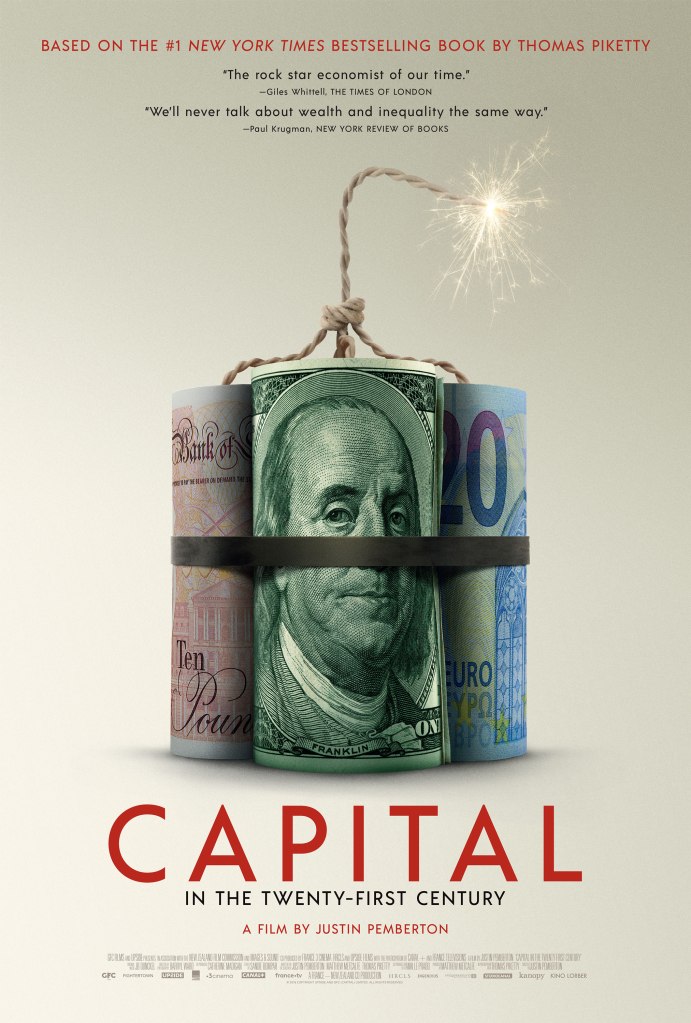
Capitalism is a no good very bad thing and we’ve rather negligently allowed a very few elites to accumulate all of capital. And land and resources and everything! We’re fucked. We’re fucked we’re fucked we’re fucked.

We are rapidly heading toward the old 1% aristocracy vs. your unwashed masses in a very real and alarming way, and may I remind you that the unwashed masses were dying of dysentery in the streets. We are fucked.

The middle class is disappearing. Or has perhaps already disappeared and we’re not willing to admit it yet. Upward mobility is nearly impossible. Parents can no longer guarantee a better life for their children.

Meanwhile, the very rich amass fortunes that are so vast they’re meaningless. They avoid paying taxes, which means countries have fewer resources to provide safety nets for the rest of us. And then that wealth is inherited by the next generation, keeping it out of the economy and out of the hands of those who actually worked to earn it. Every year, owners take a bigger and bigger slice of the profits while the labourers receive less and less. There is no way to get ahead. Debt is rampant, home ownership declining; we only just started to climb out of the 2008 recession and now thanks to a pandemic, we’re likely to face another. Minimum wage frontline workers risk their lives to keep society functioning while corporations race to monetize a cure.

We’re fucked. If you want to better understand just how fucked we are and who exactly to blame, watch Capital in the Twenty-First Century on Netflix.

.

The Crimson Wing

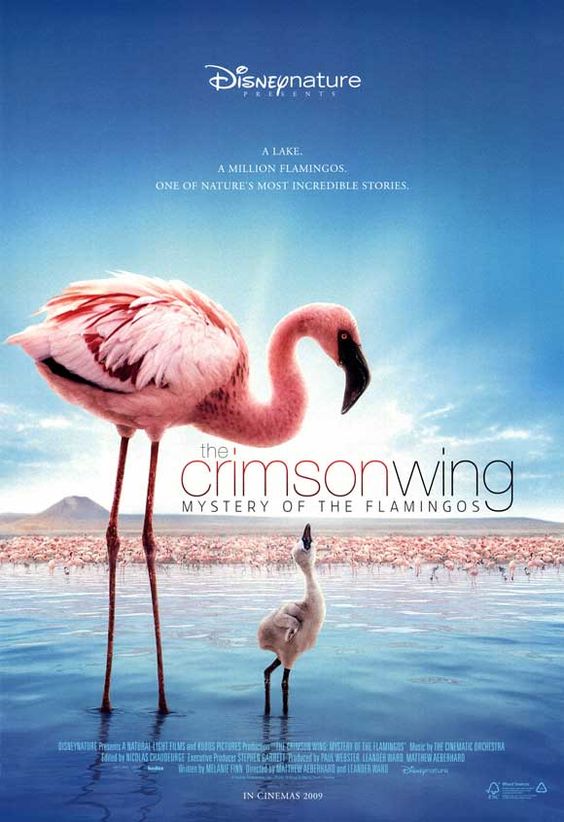
The Crimson Wing: Mystery of the Flamingos sounds like it might be a classy film noir detective story from the 1940s where everyone smokes and matchbooks are almost always a clue. It’s not. It’s an early (2008) Disneynature documentary, before they developed the simple titling system that created such gems as “Bears” and “Penguins.” Today’s Disneynature docs are slick affairs, incredible photography paired with an anthropomorphic narrative that makes it fun to follow, and the big-name celebrity lending their voice sure doesn’t hurt.

But while The Crimson Wing is still working out this recipe for success, it’s still a pretty good watch.

Lake Natron in northern Tanzania is quite unique. Its water can often reach the same alkaline levels of pure ammonia. Thanks to a nearby volcano, a sodium crust forms on its surface. This is where a million crimson-winged flamingos are born (or lesser flamingos, if you will), live, and die, and have done so for nearly 20 million years. It’s a dramatic and unforgiving landscape. The salt builds up around little baby ankles, like shackles, that perilously slow them down, or shuts them down altogether (yeah, dead baby birds, it’s rough).

But the drive to stay alive and thrive is innate in all of us, and these flamingos aren’t chicken. They’ve kept the species going this long, hardship is in their blood, and the presence of a few cameras isn’t going stop them from living life. This is a rarely-photographed slice of Africa, a vast area of little besides drying salt that often gets left off even maps. But Disney gives us a bird’s eye view (ew, pun), and if you’re willing to tolerate the agonizing stamping out of the fuzziest, downiest life you’ve ever seen, young, hopeful little creatures who keep persevering long after being left behind, defying the odds, the predators, the searing heat – all just to succumb to salt accumulation around their dainty little ankles. If nature is the mob, then salt is the cement shoes, and soon their fluffy little bodies become just another bump in the road.

All right, enough moaning. I understand that death is part of life (sound like bullshit to anyone else?) and blah blah blah, why be upset about this one headstrong, floofy little chick when heavy rains literally washed out every egg in the nesting grounds so that the crew had to sit around on their own butts waiting for the flamingos to breed again.

People who live out in these crazy conditions for years at a time just to get one perfect shot of an innocent baby’s last breath must be a special kind of nut. We call them documentary film makers, but that’s definitely a euphemism for nut. And it’s not just because they used both snowshoes and hovercrafts to get around (although: nutty), it’s more that when the nearby volcano erupted during filming, they described it as “fortunate” when literally everyone else on the planet would have gone the other way on that one.

Anyway, the flamingos remain dignified even while being scrutinized by nuts, proving that whoever called them lesser got it wrong.

Athlete A

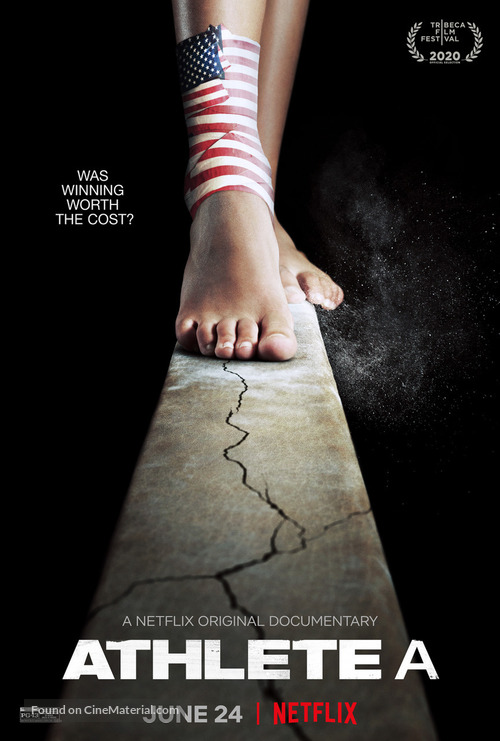
USA Gymnastics knew that Dr. Larry Nassar was routinely and repeatedly sexually assaulting the many young girls in his care. They knew and they did nothing. They knew and the covered it up. They knew and they kept him in the position, kept sending child gymnasts to him, kept inviting him into their midst. They had a duty to protect their young charges. They had a duty, morally and legally, not only to remove him, but to report him to the police. Rather than doing so, they continued to feed victims into the hands of a known pedophile.

In Jon Stewart’s recent political satire Irresistible, he talks a bit about about the pundit economy, how the news has largely been replaced by talking head opinion. These aren’t journalists, not by a long shot, but they sit behind anchor desks as if they are, injecting issues with their own agendas. It’s a dangerous trend, especially when you consider it took reporters from the Indianapolis Star to expose these crimes and trigger a police investigation. Once the newspaper made the allegations public, women started coming forward. In droves. Hundreds. Newspapers are nearly extinct, but can we afford to lose the last few people dedicated digging for truth and informing the people?

Because USA Gymnastics was never going to do the right thing. In fact, they’d fostered a culture of abuse with coaches like Bela Karolyi who believed dominating and terrorizing young gymnasts was the key to success. USA Gymnastics wasn’t just looking the other way, it was enabling abusers and suppressing evidence because that’s how they kept the sponsorship dollars rolling in.

This is a difficult film to watch, obviously. But directors Bonni Cohen and Jon Shenk deliver on a sense of hope, too. And hope? She’s female. Called Athlete A in the documents, in court, woman after woman stood up, identified themselves, and spoke to the man who’d abused them, and to the judge who would sentence him. And also to all of us. They showed us there is power and dignity in being able to name the crime, and the perpetrator. It takes real courage to do that, but it made me want that same thing for every woman. Many, many, many sexual assault victims don’t get justice. They don’t speak up because they don’t feel they can. Or they are not believed. It took years for these gymnasts to see their day in court, but isn’t justice the very least we can do for these victims?

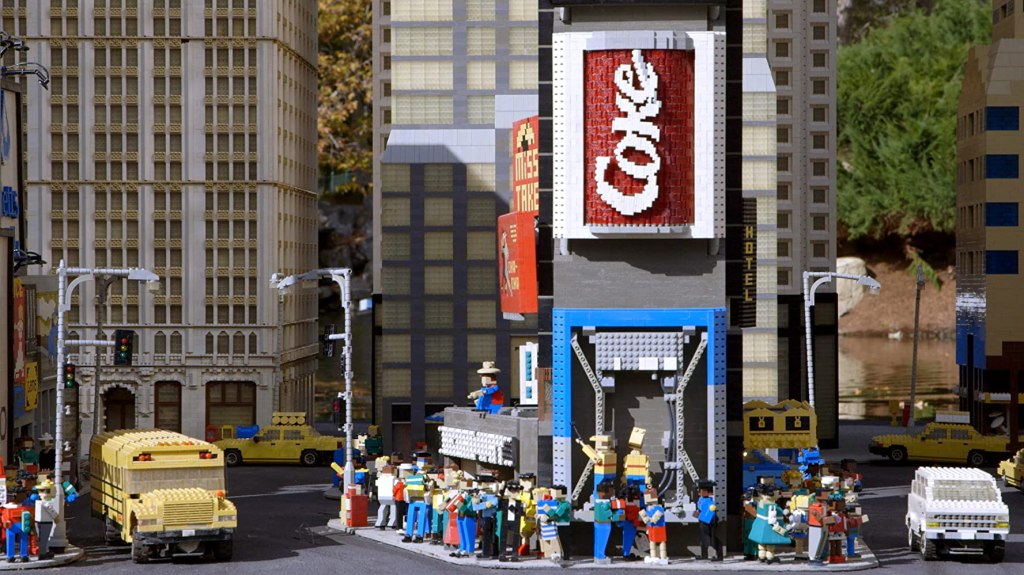
A Lego Brickumentary

Jason Bateman gets the mini fig treatment, and as the documentary’s narrator, he helps us discover aspects of the Lego culture we’ve perhaps not before considered.

I mean, someone has. Definitely not me. But someone. I grew up in a house of women; we were four sisters, close enough in age to swap clothes, braid each other’s hair, and influence each other’s tastes in movies and music and books. Eventually we got it into our pony-tailed heads to put Legos on our Christmas lists, not much caring who received the list as our entire basement was a communal playroom. But instead we got more Barbies. We had, literally, hundreds of Barbies. We had so many Barbies that we’d often get repeats of the same ones – we’d call them “the twins” or “the triplets” and carry on as usual. We loved Barbies. But we never got any Legos.

I didn’t really discover Legos until my oldest nephew was old enough to play with them. And by old enough, I mean old enough to last about four seconds before wandering away, leaving his dad to complete the project, who was the one who really wanted them in the first place. Sean would linger for an hour in the Lego aisle, sizing up each kit, weighing the options. I remembered Legos as a massive pile of plastic bricks to dump over your living room floor, from which to build the blueprints in your mind. But the Lego aisle of the past decade tells a different story: boxes with exactly the parts necessary to build the project illustrated on the cover, many of them heavily licensed to appeal to children. And many of them not. Lego has discovered a second crucial customer base: adults! My nephew’s dad, and Sean – they’re not outliers. Adults make up such a large portion of Lego’s customers they even have their own acronym: AFOL, adult fan of Lego. These are the people splashing out serious cash: $350 for 3898 pieces of Manchester United’s Old Trafford stadium; $400 for an authentic replica on a 1:8 scale of a Bugatti Chiron; $900 for a massive 7541 piece Millennium Falcon. People love the zen aspect of following precise instructions, but lots of AFOLs are building outside the box too, exhibiting their impressive creations at Lego conventions or submitting them to Lego to win the chance to see their design reproduced and sold in stores.

Whether you played with them as a kid or as an adult, or merely browsed them endlessly as an aunt who cares, Lego has maintained their hold as a top toy for decades. But they’ve transcended toy stores, they’ve been used in art and architecture, we’ve seen them in movies and museums. And now we can celebrate them in this Amazon Prime documentary too.

Tell us about your own Lego projects: do you like Technic, Creator sets, or licensed stuff? Have you built the Death Star, the Taj Mahal, the Simpsons living room?