Tag Archives: documentaries

The Show Must Go On: The Queen + Adam Lambert Story

By the early 1980s, Queen was one of the biggest stadium rock bands in the world. Their set at the 1985 Live Aid concert is basically the most significant live performance of all time. Queen meaning Roger Taylor on drums, Brian May on guitar, John Deacon on bass, and Freddie Mercury on piano and vocals. Mercury was a flamboyant showman on the stage, an inimitable presence with an incredible voice. When he died in 1991, the band more or less died with him; his bandmates were his friends, and they needed to mourn him away from the music.

I can’t remember when I was first aware of Queen because I was born into a world already obsessed with them. I remember being in my mom’s van and hearing the telltale bassline of Under Pressure and being mad, SO mad, when it turned out to be “that old song” by Queen, and not Ice Ice Baby by Vanilla Ice, a flash in the pan hip-hop monstrosity that sampled from Queen/David Bowie without crediting them. Imagine being disappointed by Under Pressure. Imagine. I have been atoning for that musical folly ever since.

I have probably never been to a hockey game that didn’t play We Will Rock You at least 5 times. As a kid I probably thought it was specifically written for hockey. But in 1992 the band got an even bigger boost from a different Canadian export, Mike Myers. Wayne’s World was released just a few months after Mercury’s (AIDS-related) death, and the studio begged Myers to go with a Guns N Roses instead, but Myers was insistent. The film propelled Bohemian Rhapsody to #2 on the charts 17 years after its first release. Mercury saw the head banging scene before his death, found it hilarious, and approved the song for the film’s use. It was a nice way for new fans and old fans to appreciate Queen once again. Just two months later, in April 1992, the remaining Queen members put on a benefit, The Freddie Mercury Tribute Concert, to which 1.2 billion viewers tuned in (they made the Guinness Book of Records!). Performers including Robert Plant, Elton John, Annie Lennox, George Michael, and David Bowie performed alongside the original members, and they raised over £20M for AIDS charities.

This would prove a wise and prophetic move: Queen never tried to replace the irreplaceable Freddie Mercury. When they were ready to perform again, they performed as Queen + ________. John Deacon retired in 1997, but a new Greatest Hits (III) album was released in 1999, Queen + Wyclef Jean on Another One Bites the Dust, George Michael on Somebody to Love, and Elton John on The Show Must Go On (among others). And beginning in 2005, they toured + Paul Rodgers. Fans could enjoy the music they loved without feeling their Mercury had been replaced. May and Taylor could play again, in tribute to their friend of course, but also because this was their music too, their passion.

In 2011, Queen began playing with American Idol loser, Adam Lambert (that year’s winner, Kris Allen, has long since been forgotten – the show has a pretty crummy record: out of 17 seasons, only 2 early winners ever had any lasting success, Kelly Clarkson and Carrie Underwood). But Queen knew a winner when it saw one.

This documentary covers a lot of ground. A LOT. But it’s Queen, so let’s gobble it up. And it’s kind of cool that this iconic band, now consisting of two aging rock stars, can see in Lambert a little bit of their old friend. Adam Lambert is himself a flamboyant showman, but he doesn’t invite comparison to Mercury, which is what makes this union work. He is a confident performer in his own right, and May and Taylor seem re-energized in rediscovering their old hits with him, old hits that, like me, Lambert has grown up just knowing. And though he’s also passionate about his solo work, Lambert knows what a huge opportunity this is, how lucky he is to perform to arenas filled with people. But most of all, it’s just cool to see how things have changed, from Freddie Mercury’s deathbed confession of AIDS, to Lambert being able to perform as an openly gay man. Many great bands continue to tour long past their prime, eventually becoming a sort of cover band of themselves. Queen, however, has lasted because it’s been open to change, it has evolved. They never wallpapered over their past. They knew they had a once in a lifetime thing with Freddie, but they also admit they’ve somehow found it again with Lambert.

Can’t get enough? Join the conversation on Youtube!
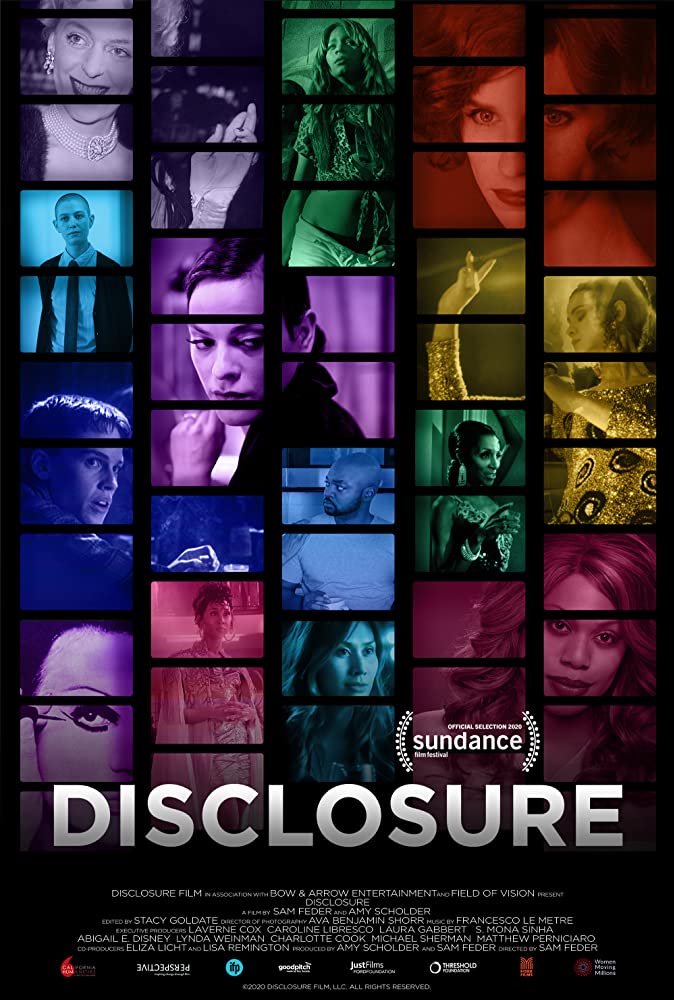


Disclosure: Trans Lives On Screen

Disclosure gives us an in-depth look at Hollywood’s depiction of transgender people and the impact those stories have had not just on a transgender lives but on American culture as a whole.

Director Sam Feder puts together a documentary of enormous value, not just because of the breadth and depth of its interview subjects (actors certainly, but also historians, researchers, activists and more) but because this film acts as a valuable resource for cis-gendered people to learn and reflect more on the topic without burdening the trans community. Often we lean on minority communities to teach us how to value and respect them when we should be doing the work ourselves. Feder has generously accounted for our laziness and apathy and has made this easily-digested anthology on trans representation widely available through Netflix. No excuses: just watch it.

Let trans people tell you how it’s felt to grow up watching what few transgendered roles there are be of trans people being trafficked, raped, beaten, and murdered. And yet still they were grateful just to know that somewhere out there, someone else felt like them. Or what it’s like to see cis-gendered people playing trans-gendered characters, perpetuating the notion that some sort of trick is being played, or that gender is a kind of performance. And how important it is just to have any kind of representation at all, since the vast majority of us either don’t know someone who is transgendered, or don’t know that we do – and this includes most young people growing up who are trans themselves. Movie and television characters, however, come into our homes and our consciousness, so we need to get them right.

This documentary could easily shame me for not asking the right questions, not saying the right things, not knowing the right people. Instead, it just allows us to be a part of the conversation, to start thinking in the right direction, to start noticing the gaps, and to meet some people outside of our normal circles. They have every right to be angry and yet Feder and company flood us with hope and optimism. They show us the path forward with respect and dignity, and the very least we can do is take that first step.

Join us on Youtube for further discussion.

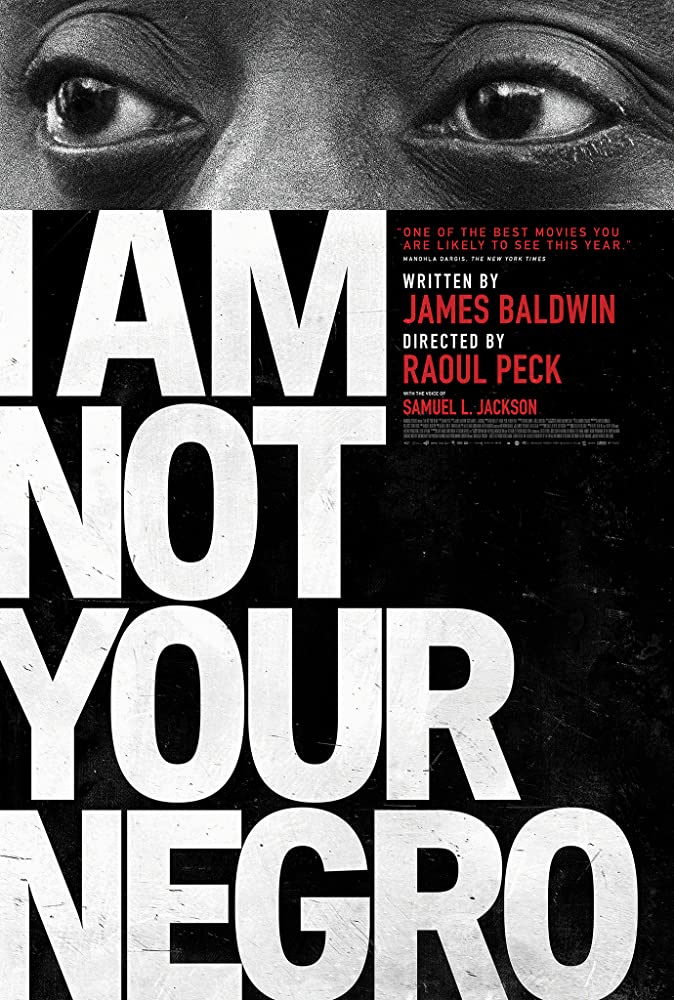
I Am Not Your Negro

In 1979, James Baldwin wrote a letter to his agent describing his next book, “Remember This House.” It was to be a revolutionary, personal account of the lives and assassinations of three of his close friends: Medgar Evers, Malcolm X and Martin Luther King, Jr. But when Baldwin died, he’d only managed about 30 completed pages of this manuscript. Filmmaker Raoul Peck delivers a stirring documentary as an ode to the book James Baldwin never finished, a work that enmeshes the civil rights work not only of these 3 great men, but that of Baldwin himself.

Samuel L. Jackson narrates some of the strongest and most poetic words – which will not surprise you if you’ve read Baldwin before. He had his finger on the pulse of America, his America, the oft-forgotten America, and he reported on his people with undeniable lyricism, beauty, and confidence.

The documentary expands on his thoughts with archival footage, which is used most effectively when bridging words he wrote 40 or 50 years ago to images of modern conditions and protest, which still apply. I Am Not Your Negro is about civil rights, but it’s also an expression of identity, of unrest, of passion, of hope. He wrote about his people because he saw beauty there, even in the struggle. He was buoyed by it, as much as they were by him. They shored each other up, and as these same issues continue to be fought for even today, it is no wonder we still turn to his words of wisdom and of utter poetry.

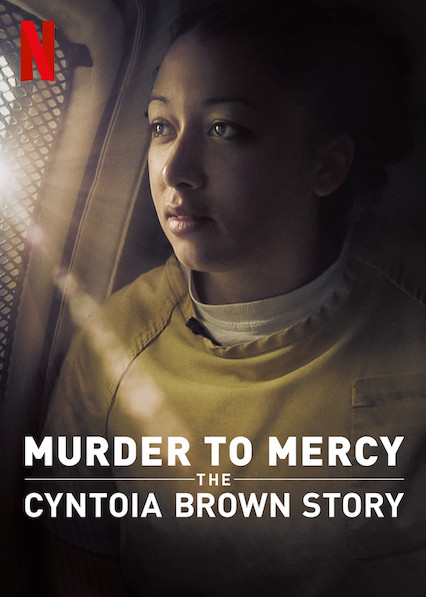
Murder To Mercy: The Cyntoia Brown Story

Netflix is crowded with documentaries just like this one: someone, often a person of colour, has been completely failed by the so-called justice system. And for every documentary made, there are hundreds? thousands? of unnamed prisoners going through the same thing. It’s hard not to burn out on these stories, and we feel so helpless to do anything about it.

Cyntoia Brown was failed many times before the justice system ever had its chance. Her mother Gina was just 16 when Cyntoia was born, already addicted to alcohol and crack. She struggled to raise her for a couple of years, but Gina was herself the victim of childhood molestation and rape, as was her mother before her. When Cyntoia was 2, she was given up for adoption, but she struggled to fit in, and her undiagnosed fetal alcohol poisoning made it impossible for her to thrive in settings that were hostile to her. By the time Cyntoia was 16, she was being pimped frequently by her “boyfriend” and one night, during an encounter that had her feeling particularly vulnerable, she shot the man who had picked her up, fearing and believing that he was about to do the same to her.

The justice system spent very little time deciding her fate: first, to be treated as an adult in court, despite her young age, and second, to sentence her to life in prison for a crime she committed as a scared child in an impossible situation. In 2004, when she was arrested and charged, the court called her a prostitute. Today, it would call her a child sex slave, the victim of human trafficking. But that does her very little good when she’s already been behind bars for 14 years.

But you know what? Some of director Daniel H. Birman’s footage went viral, prompting social media users to retweet #FreeCyntoiaBrown until someone finally paid attention. Her cause went up for review, and Brown pled for a second chance though most of us can see that she never really got her first. Her sentence was commuted and after 15 years in prison, she finally walked free. Now she spends her time advocating for prisoners in similar circumstances, but I think her story is particularly powerful in that it proves that actually we can make a difference. Hearing these stories and sharing these stories is how we begin to mend a broken system.

The Trip To Greece

This is their fourth trip actually; it was Spain before this, and Italy before that, and just a plain old Trip way back in 2010, during which Steve Coogan toured Britain’s best restaurants with best friend (and prime needler) Rob Brydon in tow. These two squabble like an old married couple but they also egg each other on to the greatest heights of comedy, throwing rockets of caustic remarks back and forth, stinging each other with brilliant insults, one-upping each other with first rate impressions.

Since 2010’s The Trip, the subsequent trips have largely followed the restaurant template, but for no good reason. The first one’s aim may have been to savour and review, but what followed was really just an excuse to throw together the same basic ingredients hoping to recapture their recipe for success. And the thing is, with very little effort, they do manage to replicate success. The films may defy traditional categorization but the Brydon-Coogan team is a winning bet, with the added bonus that Coogan continues to churn out content you’re likely familiar with, and Brydon continues to churn out new and exciting to lambaste it. Brydon gleefully pokes at Coogan’s apparent inability to recall an extra from his movie Greed. And he mocks Coogan’s BAFTA nomination for his work in Stan & Ollie – no, not his work, not his acting, his “copying,” his “impersonation,” two meaty jobs right to Coogan’s rib cage all while cajoling him into an impromptu Stan Laurel so that Brydon may offer his Hardy. Tom Hardy.

There’s something eminently watchable about these two. They hardly need the pretense of travel or fine dining; it is a pleasure to watch them under any circumstance. The Trip to Greece is available to rent via VOD, and each of the previous films is just as worthy.

Cracked Up

Darrell Hammond will go down in history as one of the greatest SNL cast members of all time – and he was the longest-tenured until Keenan Thompson unseated him recently. Both are alike in that they were never the show’s breakout stars, but their supportive performances aren’t just crucial, they are in fact the glue that makes it possible for the cast to coagulate at all. Darrell Hammond is a master impressionist and holds the record for doing the most on SNL – 105 – among them, rather famously,  Dick Cheney, Al Gore, Bill Clinton, Chris Matthews, Sean Connery, and Regis Philbin.

But while Hammond was making America giggle, in private he was battling debilitating flashbacks of childhood trauma; addiction and self-injury served as coping mechanisms until it all inevitably came crumbling down. It took 50 years for a doctor to diagnose his pain correctly, unleashing the painful memories his mind couldn’t bear to address.

He wrote about this in his autobiography and he shares further in director Michelle Esrick’s documentary, which can be found on Netflix. I hope he has some appreciation for how profoundly talking so openly about these things can impact not just an audience but indeed a culture. There is power in owning your story and understanding that any associated shame is not yours: is not the victim’s, but the perpetrator’s.

Childhood trauma is a far-reaching poison. Hammond, of course, has had the privilege and the resources to pay it the kind of attention necessary for taming it. Healing may be a lifelong journey, but it’s clear Hammond has found a healthier head space and a new appreciation for and ability to celebrate the good things in his life.

Have A Good Trip: Adventures in Psychedelics

IMDB would have you believe that mixing comedy with a thorough investigation of psychedelics, ‘Have a Good Trip’ explores the pros, cons, science, history, future, pop cultural impact, and cosmic possibilities of hallucinogens. But that’s a bold-faced lie. You want to know how little science there is? The scientist is played by Nick Offerman, that’s how. Have A Good Trip is a terrible way to learn about psychedelics academically, but a pretty entertaining way to learn about psychedelics anecdotally.

Several first-rate story-tellers, mostly comedians (as theirs is the only career path that couldn’t be negatively impacted by admitting this on tape), offer up fun tidbits from past trips. Lewis Black, Sarah Silverman, Nick Kroll, Rob Corddry, David Cross, Will Forte, Paul Scheer, Marc Maron…this list goes on for quite some time, so perhaps I’ll let you be delighted with the surprise of so many familiar faces (and just fyi, a couple of recently departed ones – Carrie Fisher and Anthony Bourdain).

Acid trips are like dreams (as I write this I realize this is true in more ways than one): nobody wants to hear about yours. And even from the mouths of our favourite funny people, sometimes accompanied by clever little animations, or less clever reenactments, most of these takes still land in the awkward category of “you had to be there.” Acid trips are not movies. They do not have plots or characters or crucially, a point. Of course, neither does this movie, which again, IMDB has generously categorized as a “documentary” but actually feels more like someone’s answering machine after they spent a weekend at work while all their buddies went to the desert to munch through a bag of mushrooms.

If you’re predisposed to liking the comedians involved, it’s not such much “worth your time” as “a semi-entertaining time waster” – bonus points if you’re 35-45, because the drug references are pretty dated.

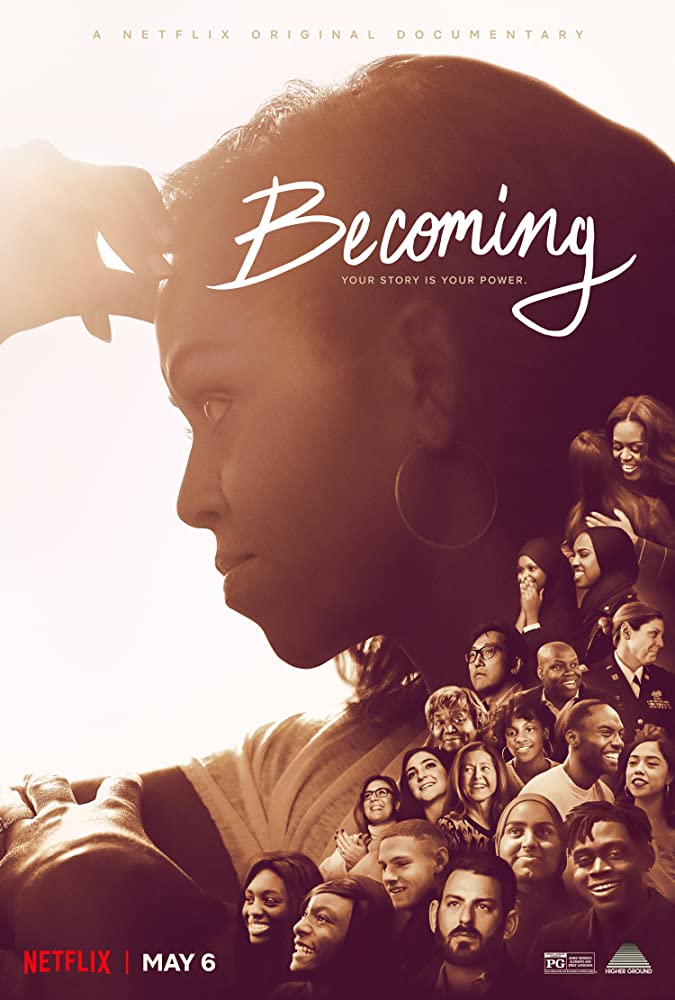
Becoming

Michelle Obama’s post-White House memoir Becoming explored her roots and the path she followed to become the formidable woman we know and respect today. Her new documentary on Netflix, also titled Becoming, shadows her on her massively successful book tour, and focuses more on the role and the identity she’s forging for herself as a former First Lady who still has a lot to give.

Director Nadia Hallgren crafts the sort of documentary that will have you asking why this incredible woman won’t just run for President herself – but if you’re paying attention, Michelle Obama answers that question in every word and sigh. It’s clear that her eight year sentence in the White House has taken its toll. For America’s first black First Family, the presidential spotlight meant constant scrutiny and a constant need for carefully modulated perfection. The First Families that preceded and succeeded them have been allowed far less criticism for far greater blemishes. The Obamas knew that theirs would be treated differently and they played the part. But while Michelle Obama’s poise seemed effortless, Becoming shows the emotional impact, even the trauma, incurred for an accomplished and intelligent woman to mute her voice. And while she was a beloved First Lady for her husband’s entire term in office, it’s clear that she has now stepped confidently out of his shadow, and that the country, and even the world, has a thirst and a fervor for this new, less filtered, more authentic Michelle Obama.

While the documentary isn’t revealing any deep dark secrets, it does allow Michelle Obama to let down her hair – sometimes literally, into luscious curls, and to step out of the First Lady’s shoes – carefully curated by a stylist who understood her White House role as a costumer projecting class and elegance and respectability – and into gold, glittery, thigh-high boots, if that’s what she wants. The White House has changed her but it hasn’t silenced her. It hasn’t convinced her mother to stop favouring her brother, or her staff to stop teasing her, or her daughters to stop needing her. Seeing her nestled amongst any and all of these people gives us a clearer sense of who she is. And while those of us on the outside can’t help but respect and admire her, we see how much that holds true, and in fact truer, for those who know her more intimately.

The American Nurse

It shouldn’t take a global pandemic to appreciate the nurses who have been working fairly tirelessly and devotedly all along and yet we all too often take them for granted.

Today, May 6th, is National Nurses Day in the U.S. while internationally it is celebrated May 12, Florence Nightingale’s birthday. The interim between the two is usually called Nurses Week and if ever there was a time to make it a week-long act of gratitude and commemoration, it’s now. The International Council of Nurses picks a theme each year and for 2020 it’s ‘Nursing the World to Health.’

Florence Nightingale is largely credited with founding what we think of as ‘modern nursing.’ Her emphasis on proper hand washing alone saved countless lives (literally countless – think about that), beginning on the battlefields of the Crimean war. It is remarkable that in 2020, we are fighting an epic battle against a virus wherein hand washing again is the most important weapon.

The American Nurse is a 2014 documentary by Carolyn Jones who explores aging, war, and poverty through the work and lives of 5 working nurses. The camera follows them through a typical day’s work while we consider what it truly means to care: to care with our hands, with our hearts, with experience and knowledge, with commitment and dedication.

And now nurses are again at the forefront of the meanest and most threatening bug we’ve faced in a lifetime and we’ve been unable to provide them even the most basic personal protective equipment necessary for providing the care we’re demanding. Not only are healthcare workers more at risk for contracting the virus due to repeated exposure, they’re also more likely to have life-threatening symptoms (perhaps because they’re exposed to a much higher dose, or to multiple strains, but science has yet to confirm the reason). I know a nurse who works in mental health who spent the early days of lockdown seeing patients with no PPE at all as they’d all been locked away for when they were “really needed.” Now she gets 1 per day, which means she’s eliminated coffee, water, and food before and during shifts because going to the washroom would contaminate them. And at any time she faces redeployment to the E.R. even though she hasn’t practiced that kind of nursing in a decade. She has young kids at home, which means after a long shift she can’t hug or kiss them until after she’s stripped and scrubbed. And then the fun of homeschooling begins. She was telling me about a local grocery store that allows healthcare workers to skip the line. She would never accept, of course, because she’d feel like a jerk – lots of people are pulling double duty these days, and everyone would rather not be there. But also because standing in line 6 feet apart at the supermarket is the quietest and easiest part of her day.

COVID or not, The American Nurse is a well-made, interesting documentary which you can watch here for free. It gives us a little insight into what it takes to heap the world’s healing upon your shoulders, to run towards the crisis instead of away from it, to feel compassion for others when you could use some yourself.

Thank you, nurses.

A Secret Love

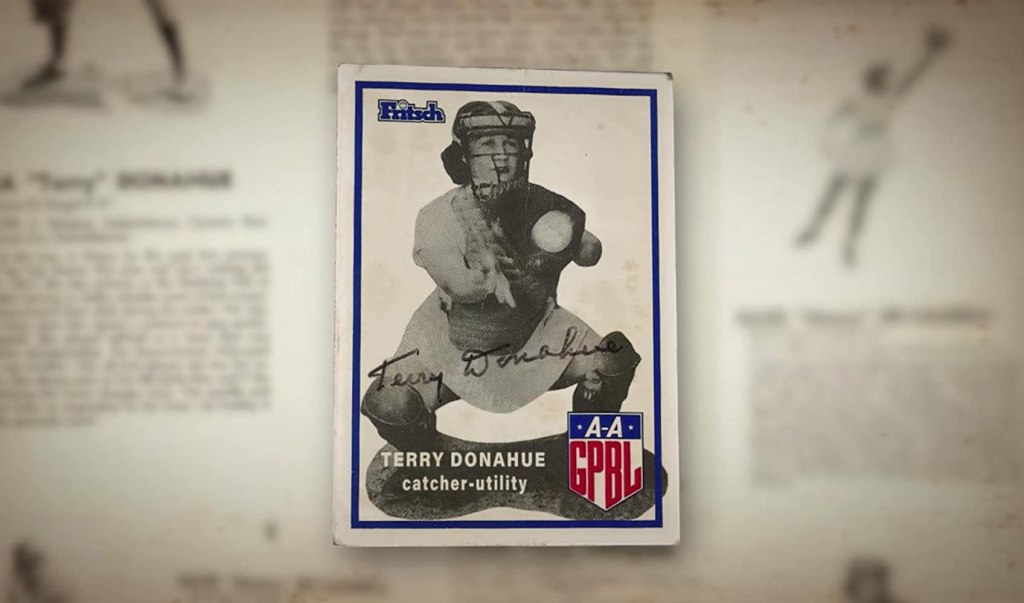
If you’ve ever seen A League of Their Own, then you already know a bit about Terry’s youth. She was a Canadian ball player who went to America to try out for the American Baseball League, an all-female league that played in the 1940s while all the men were at war. She made the roster and played for them all four years, the ladies proving quite adept at baseball and the league gaining surprising popularity, a worthy distraction during difficult times. But when the war was over, so was baseball, at least for women.

Instead of returning home to a farm in rural Saskatchewan, Terry and her cousin, hockey player Pat, bravely decided to move to Chicago together, safety in numbers. Further bucking social norms, both ladies went to work and had careers. Though they each had their share of beaus, they stuck together, building a home in Chicago and to the shock of their families, they lived there contently for decades. But now, in (nearly) present day, Terry and Pat are both elderly ladies, and Terry in particular is suffering declining health. Her beloved niece is begging them to come home to Canada, to move into a nursing home near family where they can be cared for. But after a life of independence, Pat in particular is loathe to give it up. When they are finally persuaded, they decide to move into a retirement home together, and for the first time in their almost 70 years together, to live openly as a lesbian couple.

This film is really an attempt to document their love story, a beautiful story that they kept secret for longer than most of us have been alive. Some family members are shocked, some are not, and some feel an ounce or two of betrayal. But within their own community, Terry and Pat have a robust social life, a second family of their choosing, and it’s very sad to see them leave it. Even sadder is the packing up of their home together, mostly because of the shreds of mementos the packing uncovers, touching love letters saved but also anonymized, the signatures torn off just in case it should be seen by the wrong eyes.

Terry and Pat were rebels. They chose happiness, and they created it together, on their own terms. There’s no doubt you’ll fall in love with them yourself, Terry the sweet one, Pat just a little saltier, but so devoted to and solicitous of her longtime love. Director Chris Bolan offers contextual evidence that reminds us why the lies were necessary, but the joy of finally living their truth is right there on their faces. This is a love story for the ages.