Norman is a seemingly normal 11-year-old boy living in small town  Massachusetts, isolated from his parents and peers because of one small detail: he sees and talks to the dead. No one believes him of course, except for a deranged uncle (John Goodman) who saddles him with a hefty spiritual responsibility to appease a witch who’s been haunting the town for decades.
Prevented by doing so by the same bullies who torment him by day, the witch raises zombies from the dead to chase the townspeople, who fight back viciously.
This movie turns out to be a parable about fearing what is different, and about not judging others. This lesson has to be harshly delivered, because nothing ever comes easily in the movies, and is all the more powerful when the message is delivered from the kids to the adults. But in its heart, it’s still a ghost story, a horror suitable for children, and it benefits a lot from its New Englan d roots.
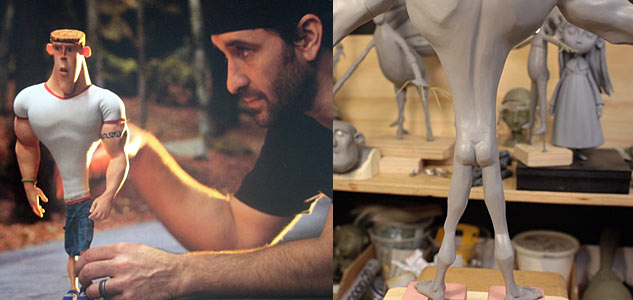
ParaNorman is stop-motion from the same animation team who brought us Coraline, capitalizing on the pioneering techniques from that film, and reaching new heights with full-colour 3D printing. It also happens to be the first mainstream animated film to feature a gay character, and was the first-ever PG-rated movie nominated for a GLAAD Media Award.
I have an enduring love for stop-motion because the building of real puppets and sets, and using actual cameras to film them gives the  animation a detailed glossiness that I never get enough of. In one scene, I noticed that the sunlight was almost making Norman’s ears translucent, they glowed with the light behind them, and I was struck by how real it looked.
I also love smart scripts, and this one’s endlessly quotable. It’s a family movie, but you don’t have to be a kid, or have kids, to enjoy it. The visual jokes and wit add another layer of appreciation onto what’s already a solid movie with not a small amount of magic to it.
The filming, however, can be quite technical. First the animators record videos of themselves giving the performances, in order to  use as reference. The directors give them notes on these tapes. The animators then animate a “rehearsal”, which is a very rough version of the scene shot with only half the frames. The directors then look at the rehearsal and give notes before the scene is shot for real. Animators usually turn in 5-8 seconds per week, depending on how many characters are in their scene. That’s gruelling work! To create the ghost effects, they did twice the work, filming each frame once with the ghost puppet and once without, layering them on top of each other to give it an ethereal look.
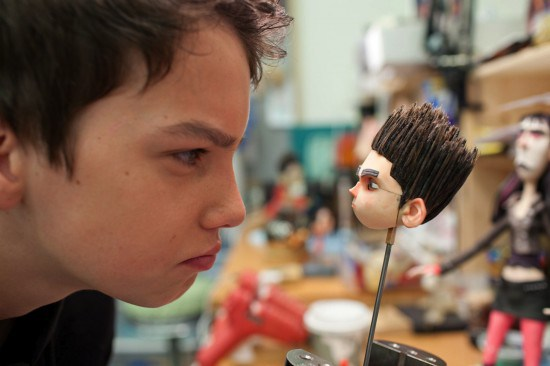
ParaNorman used 178 puppets in total, and over 31,000 individual face parts were printed for the production. Thanks to the face replacement technology created by the 3D Color Printer, Norman has over 8,800 faces with a range of individual pieces of brows and mouths allowing him to have approximately 1.5 million possible facial expressions. That’s already a huge leap over their work on Coraline, and the Laika studio has taken it even further with their more recent work, The Boxtrolls. Sean, Matt and I saw several of these sets and puppets when we visited Universal stud ios this summer. I love seeing all the craftsmanship that goes into these movies!
I definitely like the spirit of ParaNorman. It has respect for its young audience – but I have the feeling it might also be a gateway drug of sorts to lots more horror down the road.

 The only thing anyone needs to be special is to believe that you can be. I know that sounds like a cat poster, but it’s true. -Vitruvius

 Beethoven is the only one who believes him. Is the matter helped by Henry’s ability to understand dog? Or by Beethoven being voiced by Tom Arnold? For some reason, Mason thinks Henry is crazy when he claims to be Santa’s elf, but when he’s Santa’s elf AND can communicate with dogs, well he takes that as two incontrovertible pieces of evidence rather than corroboration that he is indeed nuts.
 accused of that more than once, and that’s the theory behind Shark Tale conveniently riding on Finding Nemo’s coat tails. Both are animated movies dealing with outcast sharks befriending fish. Doesn’t that seem like quite the coincidence?
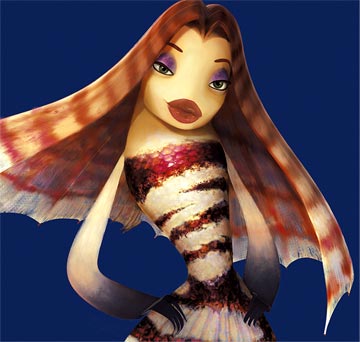 my favourites were Martin Scorsese and Robert DeNiro, who recorded their lines together, and if you look carefully at their characters, you’ll see some tell-tale eyebrows and a distinguishing mole.
 that Lenny the Shark was a bad example to kids because his VEGETARIANISM was an allegory for HOMOSEXUALITY. Um, no comment.
 Turns out the chimp’s a bit of a ball player, and pretty soon he’s fielding third base and actually setting glove ablaze with his fast ball. The story is embarrassing, probably particularly for second-tier bit part Jim Caviezel, who maybe styled himself a more serious actor than, say, TV’s Matt LeBlanc, or, frankly, the monkey in a baseball cap.
 But then: hunters. Bear-hunting hunters, of course. A scene of them skinning animals around a campfire hammers how their imminent threat.Good thing lil’ orphan bear cub (B.C.) makes a reluctant friend in a bigger (adult) bear (B.B.). They’re going to need each other.
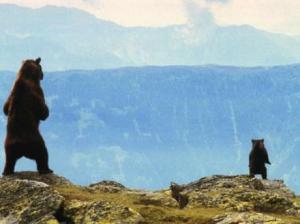 no known hasty bear funerals on the set.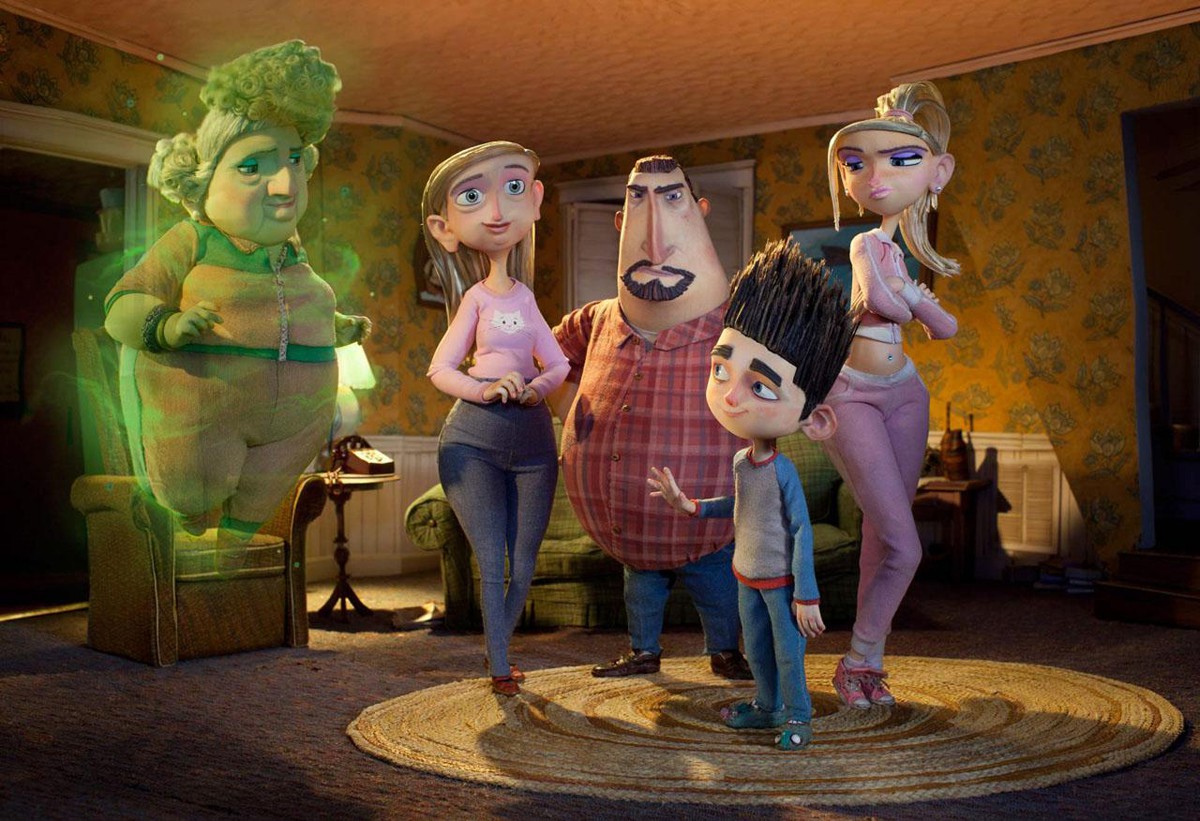


 ASSHOLES WATCHING MOVIES