Tag Archives: female directors

One Child Nation

China instituted its one-child policy in 1979. By 1982, it was locked into its constitution. The Chinese population had ballooned to a billion and officials knew that in order for the country to truly prosper, it would need to control its growing numbers. Western countries worried about China’s population for different reasons. Over here, population growth had slowly withered as our countries grew stronger economically. As families move away from agriculture, large families become less necessary. As health care improves, more children make it into adulthood, so having ‘spares’ feels less urgent. And in order to give children every economic advantage in this new world – each their own bedroom, perhaps, a swimming pool in the backyard, a ski vacation every winter, a college fund for everyone – families grew smaller. Here in Canada we rely on immigration to keep our population from shrinking. Sean and I both come from 4 kid families, big even in the 80s. But in each of our families, only half of the siblings chose to have children at all. Of the 4 siblings who do have kids, 3 families have 2 kids each and 1 family has 3. We aren’t even replacing ourselves. But there’s a big difference between choosing what feels right for your family considering all the pros and cons; it’s much different when your government had made a law about your uterus and what can be inside.

In 1982, ultrasounds were not sophisticated enough to discern gender but following centuries of tradition, most Chinese families still wanted and valued a son. It fell to village officials to enforce this impossible policy, taking possessions and destroying homes of people who refused to follow it, and forcing sterilization on women after their first child, sometimes even forcing abortion.

One village midwife has lost track of how many babies she’s birthed but knows she performed 40-50 000 sterilizations and abortions over 20 years. Women would be abducted from their homes by the government, tied up like pigs, and dragged onto her operating table. Now she’ll only treat infertility “to atone for my sins” she says, though it’s clear she was not exactly a willing participant, just one of many doing their jobs. And so many of them had suffered from starvation, had spent lives just struggling to survive, that this promise of a better life for their child had lots of appeal. But if anything, the one-child policy strengthened the Chinese preference for sons. Baby girls were abandoned in droves.

After leaving China for the U.S. and becoming a mother herself, Nanfu Wang wonders if her thoughts are truly her own, or the result of propaganda so finely ingrained in culture and daily life they were hardly noticed. It’s impossible to know how China would have fared without the policy and most citizens don’t want to broach the question honestly. They have sacrificed so much, but the values and ideas so deeply embedded they are impossible to separate. Nanfu Wang can’t help but ask herself why she has traded one country who seeks to legislate women’s wombs for another.

The one-child policy was finally repealed in 2015 (they can now have 2), China assuring us that the nation was stronger, the people more prosperous, and the world more peaceful. And that may be true. But there is a trail of heart break, human trafficking, and a heavy toll paid by broken families and exiled children.
For Sama

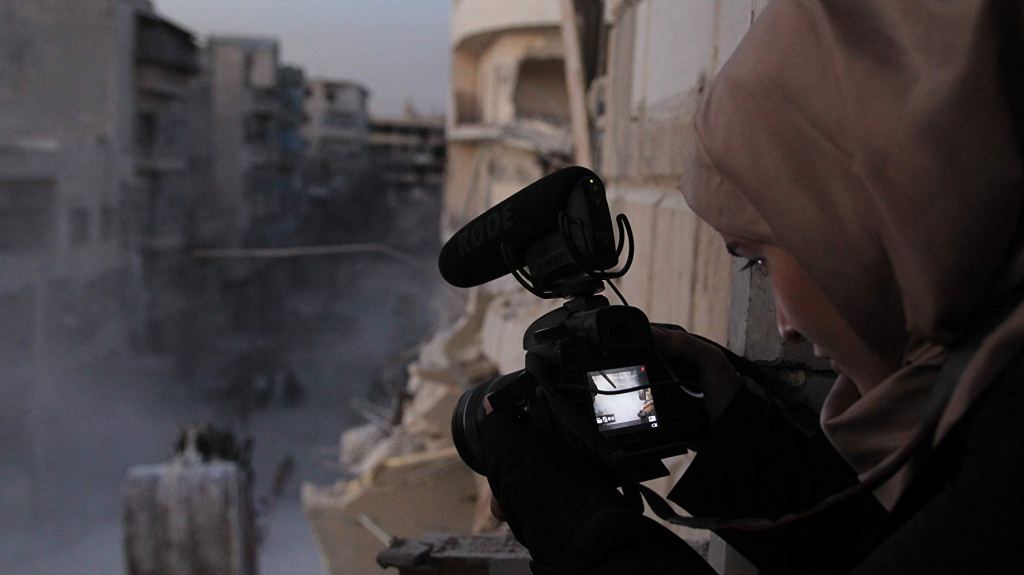
In so many ways, Waad al-Kateab is a young woman just like you and I. She went to school, left home, fell in love, got married, had a daughter. But al-Kateab’s milestones are happening amidst the backdrop of the Syrian war. For five years she has had her camera trained on the uprising in Aleppo and she crafts this documentary as a love letter to her young daughter so she may know just what her parents were fighting for.

This is an intimate, female portrait of war, a side of the story rarely reported. In many ways, Jojo Rabbit is the film that got me thinking down this path; war stories are so often told from the point of view of the soldier (1917 is a good one), but for the women and children left behind, life goes on. Life: complicated and confusing, but there is no pause button. Children grow out of shoes, and tape idols on their bedroom walls. Mothers cobble together meals, and try to create some semblance of a happy home. For Sama is a story that is ongoing, and real. Waad al-Kateab is a real wife and mother telling her story from war-torn streets. Bombs are dropping around her but she slow-danced at her wedding just like you, peed on a stick just like you, felt her belly swell not just with baby but with hope and happiness, but tinged with a filament of fear always burning from within. She plays peek-a-boo with her baby just like you, but flees from a barrel bomb dropped on her by her own government with her baby clutched to her breast. But she loves her country just like you, believes it is worth saving. Her husband, a doctor, tends every day to the wounded. There are always new wounded. Sometimes the body bags are so small. It is endless work. So is the balancing of parenthood and principle, the urge to flee the city to protect their daughter’s life, and the conviction to stay and fight for what so many have already sacrificed so much.

It feels so alien to face such choices, and yet one image stops me cold: sock feet in a pile of bodies. Sock feet that could easily belong to anyone. Must I (we?) relate to those who suffer before we feel compassion? It’s so easy to dismiss this conflict as “their” problem but the boundary between us and them is illusory at best. We are all brothers and sisters, and if this documentary helps us walk a mile in someone else’s socks, it has done its job.

Sama is a toddler with big, gorgeous eyes. She was born during war. She knows nothing else. A loud bang erupts as another bomb explodes nearby. Her mother flinches, crouches reflexively, but Sama doesn’t react at all: a baby who doesn’t cry at a loud noise? Sama doesn’t know this is wrong, this is scary. She thinks this is life. Who will be left to tell her otherwise?

Oscar-nominated shorts 2020

Hair Love: nominated for short film (animated), directed by Matthew Cherry, Everett Downing Jr. & Bruce Smith

A father does his daughter’s hair. Normally I’d be extremely dismissive – these types of videos go viral all the time, the world falls over itself to applaud dads for attempting the things mothers are expected to do on a daily basis. HOWEVER. Hair Love is not really about a father patting himself on the back, it’s about a little black girl named Zuri who wakes up wanting to look extra nice on this special day. She follows an online tutorial from her absent mother’s hair blog, but wrangling her hair is challenging and things don’t go well for Zuri or her dad. A black woman’s hair is a special thing indeed, tied up in her identity and her culture, a symbol of her status, perhaps fraught with difficulty. But Zuri just wants to honour her mother; she already knows that hair does not make the woman. Inspirational and sweetly animated.

Kitbull: nominated for short film (animated), directed by Rosana Sullivan

A scrappy young street cat (well, kitten) and a pit bull trained to be vicious form an unlikely bond and experience friendship together for the first time. It brought a tear to my eye. Though it’s by Pixar (SparkShorts), the 8 minute film is 2D, every frame hand-drawn and hand-painted. Available now on Disney+.

Brotherhood: nominated for short film (live action), directed by Meryam Joobeur

Mohamed, a shepherd, is deeply shaken and a little suspicious when his estranged eldest son Malek returns home from Syria to rural Tunisia with a mysterious young wife in tow. The black sheep of the family returns on the same day as an actual sheep is found slaughtered. Families are tough things to navigate and Mohamed’s is no different. He is mistrustful of this new woman, covered head to toe in a niqab, and even of his son, one of 3 red-headed brothers played by real-life red-headed brothers, a jarring sight out in this hard-scrabbled land. He doesn’t approve of Malek’s decision to fight in Syria but it’s clear their relationship has always been fraught. Brotherhood has stunning cinematography and a meaty script but neither will soften the blow when Mohamed learns how costly assumptions can be.

Walk Run Cha-Cha: nominated for documentary (short subject), directed by Laura Nix

Paul and Millie recall their youth in Vietnam, where ‘foreign music’ was so romantic and sexy, and dance parties at home were illegal. They fell in love but were separated when Paul’s family fled the communists. They lost their youth and their young love to the aftermath of the Vietnam war, but 40 years later they have reunited in California and are rekindling their romance on the dance floor. Through one couple’s love story, Laura Nix teaches us about the immigration process and what it takes to relearn the language of love and make up for lost time. In their golden years, Paul and Millie finally have the time, energy, safety and security to learn what it means to enjoy life.

Nefta Football Club: nominated for short film (live action), directed by Yves Piat

In the south of Tunisia (again with Tunisia!), two young brothers and ardent football fan brothers bump into a donkey just chilling out in the middle of the desert on the border of Algeria. Oddly, the donkey is wearing red headphones (and yes, listening to music). The donkey is carrying bags of white powder (flour, they wonder? laundry detergent?) – they ditch the donkey and bring the powder back to their village, where their friends are playing football.

The Neighbors’ Window: nominated for short film (live action), directed by Marshall Curry

Exhausted, frazzled, middle-aged parents Alli and Jacob are mesmerized by their curtainless neighbours in the next building. While they breastfeed and wipe up poop and serve up meals that don’t get eaten, the two pine for their youth by spying on their young, horny neighbours across the street. This film is about envy more than voyeurism, well-acted and slick as hell, two people who are so busy that they’ve forgotten the grass isn’t always greener on the other side. This is Curry’s third nomination so it seems unwise to discount him.

Life Overtakes Me: nominated for documentary (short subject), directed by John Haptas and Kristine Samuelson

Over the last 15 years, hundreds of traumatized refugee children in Sweden have become afflicted with Resignation Syndrome. Life is so hard they withdraw into a coma-like state, unresponsive, sometimes for years. It’s like their little bodies can only take so much. Children need security, not uncertainty, to recover after a trauma, but for refugees, security is a long time coming. Watching these kids waste away is tragic. What is happening here? And the scariest part is that their families are still facing deportation. Imagine caring for a comatose child as a refugee? Those kids are frankly not likely to survive. But with anti-immigration sentiment growing in Sweden, and asylum laws getting stricter, the outlook isn’t positive. This documentary had me asking questions I’d never even thought of before, and combing the internet for answers. Stirring and urgent, Life Overtakes Me is available on Netflix.

Some of these are available to watch on Youtube, legally and for free – check out my Oscar-nominated films playlist.

Breakthrough

Contrary to popular opinion, I do not see every single movie in the world, but usually I do at least know about them. Not much sneaks by me. So when this particular movie managed to snag an Oscar nomination (for original song), I was like: huh? Sean thought it might be “one of those religion ones” but it wasn’t until I saw the poster that I remembered it at all, indeed a religion one, starring Chrissy Metz from This Is Us (Randolph & Beth forever!). I’m glad to see her branching out but it wasn’t for that pesky Oscar nom, this one would 110% have passed me by,

Chrissy Metz stars as Joyce, a Christian mother who offers up the kind of teasing prayers during dinner that make husband Brian (Josh Lucas) smirk. But her son John (Marcel Ruiz) is a teenager, determined not to crack a smile. He’s in an eye-rolling phase. An avid basket ball player at school, John is also struggling with his origin story, having been adopted from Guatemala while Joyce and Brian were there on a church mission. Meanwhile, Joyce is at odds with the new “cool” young pastor at her church, Jason (Topher Grace). Jason has a spiky haircut and references The Bachelor during sermons and says things like “Dope!” He wears the same kind of headset microphone that Britney Spears wears and has rock bands with auto-tuned rappers sing “hymns.” Oh he’s shaking things up.

Meanwhile, the movie is determined to establish itself as not just a Christian movie, shelling out for pop songs by Bruno Mars and Macklemore; John is a kid like any other, saving a pristine pair of Jordans for an occasion so special that only he will know it when he sees it.

I happened to notice a Stephen Curry listed as a producer and wondered if it could be THAT Curry. I wondered even more when the all-star was mentioned by name – the Warriors would be in town to face Kevin Durant and the Thunder. This places the film for me immediately, in the season just before Durant joined Curry on Golden State, the very same season when Sean and I traveled to OKC to see Durant face Lebron, then playing for Cleveland, and then we drove down to Dallas to see them play the Warriors. We were traveling in December, for Sean’s birthday, and a snowstorm here in Ottawa meant we almost didn’t make it, touching down in Oklahoma with just minutes to spare. I remember the valet at our hotel apologizing for their unseasonably cool weather but of course it felt downright tropical to us. But in St Louis, MI, it was cold enough for a lake to have frozen, but warm enough that a trio of teenage boys were out playing on it when the ice gave way and John went down.

After an hour with no breath and no pulse, the doctors draw the logical conclusion; they’ve only worked this long to keep him decent for his mother to arrive and say goodbye. Her frantic prayer is heard, or else this movie wouldn’t be much of a movie, and a pulse reappears from nowhere. But his brain was starved of oxygen for far too long. In an induced-coma, his parents are prepped for his inevitable vegetative state. But you know that Joyce isn’t about to let that happen. She badgers his doctors just as much as she badgers the lord.

He recovers of course. That’s a foregone conclusion in a Christian film. Religion isn’t my thing and neither is an entirely predictable plot. But I will begrudgingly admit that Breakthrough has a whole mess of admirable performances. And interestingly for a movie that attributes John’s recover to god’s miracle, it dares to ask why god saves some and not others, which is one of religion’s great quandaries. Of course Breakthrough doesn’t have an answer, but I give it credit for even voicing the question.

And push come to shove, it’s now an Oscar-nominated film, for a song called I’m Standing With You, performed by the esteemed Chrissy Metz and written by Diane Warren. And Diane Warren is not to be messed with. She’s got 11 nominations under her belt, including for chart-busting songs like Because You Loved me, from Up Close and Personal, performed by Celine Dion, and How Do I Live from Con Air performed by Trisha Yearwood and I Don’t Want To Miss A Thing from Armageddon and performed of course by Aerosmith. The woman is a songwriting powerhouse. Will this be her year? Check it out:

Undeniably beautiful, but her competition is fierce:

Stand Up, written by Joshuah Brian Campbell & Cynthia Erivo, performed by Erivo for the movie Harriet

From Toy Story 4, I Can’t Let You Throw Yourself Away, written and performed Randy Newman, a man with 20 Oscar nominations and 2 wins under his belt (Toy Story 3‘s “We Belong Together” and “If I Didn’t Have You” from Monsters, Inc.)

Also from Disney, Into the Unknown, performed by Idina Menzel and AURORA, written by Kristen Anderson-Lopez and Robert Lopez who have two previous Oscar wins for “Let It Go” from Frozen and “Remember Me” from Coco.

And of course (I’m Gonna) Love Me Again from the Elton John biopic Rocketman. Written by John (who has a previous win for The Lion King’s Can You Feel the Love Tonight) and Bernie Taupin, performed by both Elton and Taron Egerton. It took the Globe – will it take the Oscar as well?

Who do you think will win??

The Edge of Democracy

Brazilian film-maker Petra Costa is in her 30s, and just a little older than democracy itself in her country. Her parents were activists and briefly jailed for their convictions when military regimes still governed the country. This film blends political documentary with personal memoir as she recounts her family’s political and social entanglements while studying the dramatic collision between two Brazilian presidencies.

Costa voted for Lula da Silva but watches in dismay as scandal and corruption engulf his presidency and he scrambles to compromise and resort to alliances with the oligarchy that he’d always railed against. And yet Brazil prospers: the economy thrives, the poor are lifted up. When he leaves office two terms later, his approval rate is at an all-time high. He anoints a predecessor, Dilma Rousseff, and she is elected thanks to an even stronger alliance with PMDB, who appoints her vice president. She starts her presidency strong but the socio-political climate of Brazil is changing, as it is in many of the world’s democracies. The people are waking up, and Rousseff scrambles to regain credibility by initiating a sweeping investigation into corruption.

As one president is impeached and another imprisoned, the country is further destabilized. It is clear as Costa narrates this film in the first-person that she is watching her country descend into turmoil and worries that democracy itself is crumbling. When you witness some of the illogical but fervent rhetoric being flung around in its media, it reminds us rather alarmingly of Trump’s disregard for the rules of democracy and the parameters of the presidency.

Brazil is on the edge of democracy, perhaps teetering back toward dictatorship. Costa narrates an angry and intimate portrait of this tumultuous time; it is one-sided to be sure, personal and impassioned. And yet the country’s split into two seemingly irreconcilable factions feels all-too familiar and if nothing else, The Edge of Democracy should be viewed by Americans as a warning shot against the increasing polarization of their own country. This documentary is a portrait of democracy’s demise, but Brazil isn’t the only country in danger of rolling down this hill.

The Edge of Democracy is nominated for an Oscar in the documentary (feature) category, alongside American Factory, The Cave, For Sama, and Honeyland. Which do you think will win?

Troop Zero

A little girl named Christmas (Mckenna Grace) is fixated on the stars, in part because her mother died and now belongs up there, among the comets and the black holes. When she learns that the winners of the upcoming Jamboree will have the opportunity to record a special message to be sent into space, she’s determined to win. But first she has to assemble her very own Birdie Scout troop to compete.

Recruit #1 is her best friend Joseph, who will choreograph the winning dance. But with her short list of friends thus exhausted, she has to choose among the bullies to round out the numbers. Her father (Jim Gaffigan) is a mostly unpaid lawyer and busy dog owner and single father, so he appoints his long-suffering assistant Miss Rayleen (Viola Davis) as their den mother. She prefers criminals and murderers to little girls, but she’s getting paid, allegedly, so Troop Zero is born.

I could watch this for Davis alone. I’d watch a spin-off show of her character reacting to courtroom dramas all day long. Or her going head to head with Allison Janney playing rival troop mother, Miss Massey. But you know what was a nice surprise? Because Davis and Janney excelling is on-brand and totally expected. But the kids in this are actually interesting little characters. It’s an underdog-outsider story, as many tales about childhood are, but screenwriter Lucy Alibar has some tricks up her sleeve and directors Bert & Bertie know how to make a mark.

Christmas longs to break away from what’s expected of her, but the lessons learned here are more like pride and dignity. Owning who you are and realizing we all contain multitudes. And of course there’s always value in shelling out for a well-placed Bowie tune. Charmed the pants right off me. In fact, by the end of this little film, it gathers enough steam to laugh a sneak attack on my emotions. There’s a cosmic feel-goodness to it that’s hard to resist.

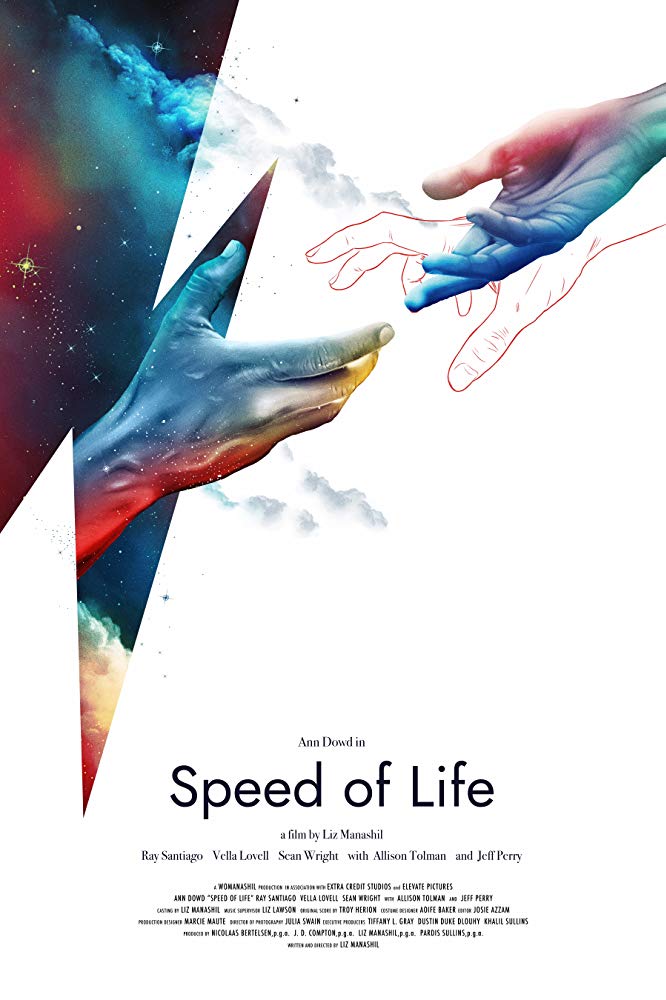
Speed of Life

June (Ann Dowd) is nearly 60 but hasn’t yet filled out the obligatory paperwork for relocation after 60. So says her house. Not in a weird way. The year is 2040 and her house is wired with a bunch of monitors and an Alexa-like voice tells her when her bills are due or the pH in her urine is less than desirable. June rips out all the monitors and buries them in her garden but you can’t really keep Big Brother out.

June has a good reason for not wanting to leave her home. Well, depends who you ask. A good reason to June sounds perfectly crazy to everyone else. You see, back in 2016 she and her boyfriend were having a fight. She’d just found out that David Bowie was dead and Edward, as usual, wanted to crack jokes. His inability to take anything seriously was a pretty big sore point in their relationship and they were on the verge of a blow-out fight about it when Edward disappeared. Like, a rip in the universe opened up and he went through it and was gone. Gone forever. Gone for the past 24 years.

But guess what? One night, Edward (Ray Santiago) reappears. He hasn’t aged a day. He doesn’t know that he was missing, presumed dead, mourned. Doesn’t recognize this older woman as his girlfriend June.

Speed of Life, written and directed by Liz Manashil, is interesting on a few levels:

a) The wormhole: where did he go, where has he been?

b) The relationship: is everything still there 24 years later, when June has changed so much and Edward not at all?

c) What happens in a few days when June turns 60 and “The Program” takes over?

The Program is a very interesting aspect; seniors 60 and over are given mandatory government housing where they no longer go outside, or socialize with other age groups. They are medicated, zombie-like. It’s a little funny because the old people in 2040 are Millennials. Old Millennials. It’ll happen to all of us. And I realize that Baby Boomers are sort of ruining everything just by reaching retirement age in such voluminous numbers. It’s crushing to the generations underneath them. So I get why you would want to deal with the problem. And yet Baby Boomers are also proving that 60 is hardly old at all. It used to be. Now it’s practically the same as 40. I know lots of Baby Boomers who are fit and busy and contributing in many ways, even outside employment (in fact: perhaps particularly outside employment). They are redefining old age even as they seem to reach it. They are living longer, yes, but also, I think, better. There are many more healthy years after retirement than ever before. So think of June (again: Ann Dowd) as somehow so old that she is now irrelevant to society…it’s jarring. It feels very Atwood. God I love sci-fi/ speculative fiction when it’s written by women.

Sword of Trust

Cynthia’s a little disappointed to learn that she won’t inherit her dead grandfather’s house. In fact, the only inheritance Cynthia (Jillian Bell) and her wife Mary (Michaela Watkins) will receive is an old civil war-era sword that they can’t wait to dump at a pawn shop.

Mel (Marc Maron) owns just such a pawn shop. He isn’t overly impressed with the sword, or with Cynthia’s story about her GrandPappy, but when he learns that this sword may be of value to a certain kind of collector, his assistant Nathaniel (Jon Bass) puts him in touch with a man crazy enough to shell out big bucks. So now these four people are going to partner up and travel down to the deep south where a “proofer item,” ie, a sword that purports to prove that the south won the civil war, is high in demand.

You can imagine what kind of idiocy you invite into your life when you start hanging out with someone who vehemently believes in a southern victory. What other conspiracy theories are you likely to wind up in?

Sword of Trust is slow in the good way – it takes its time getting to know folks, and really probing the dirty corners of people’s wildest speculations. This is the kind of movie where the players just get in a room and hang out. Even when they’re locked in the back of a U-Haul they’re pithy and quippy and full of spunk.

We got to see Marc Maron at Just For Laughs this summer, and while I expected to be entertained, I wasn’t prepared to see a truly energizing and exciting set. This film gives him the space to act and react. Writer-director Lynn Shelton crafts the perfect opportunity for him, and then casts people around him with similar improvisational aplomb, especially Jillian Bell who has really blossomed in her last few roles. By the time Dan Bakkedahl makes his appearance, we’re already sold, and the rest is just icing on a confederate cake.

Girl Most Likely

When you meet her mother, you’ll understand why Imogene Duncan would rather fake a suicide than go home when her boyfriend dumps her unceremoniously. Zelda isn’t the most nurturing of mothers given she spends more time in casinos than at home. A chronic gambler and hence constantly broke, Zelda (Annette Bening) isn’t much better now than she was then. Her boyfriend claims to be a time-traveling samurai (Matt Dillon), she’s renting Imogene’s (Kristen Wiig) bedroom to some stranger (Darren Criss), oh, and, her dead dad? Isn’t dead (Bob Balaban).

So displacing her disappointment in her failed relationship with her boyfriend to her father, she goes to New York in search for him but gets ejected from the city AGAIN. Poor Imogene. New Jersey is her worst nightmare but she just keeps winding up there no matter what she does. And spoiler alert: finding her absent father is not the key to her happiness. In fact, it’s very possible that Imogene doesn’t need to be saved by any man, not her dad, not her spoiled boyfriend, not even the samurai-CIA agent sleeping in her mother’s bed. If Imogene can just grow a tougher outer shell, she can take care of herself, face the truth, and fulfill her potential.

Girl Most Likely is a good reminder to fill your life with the right kind of people. And it’s a good reminder to me to fill my film appetite with a little more June Diane Raphael. Even playing the bitch best friend she was a scene-stealer and I almost hoped she’d reappear to fuck up Imogene’s life just a little more. Because she does it with such pizzazz! I love pizzazz. Although what an odd word to have just written twice. Amiright?

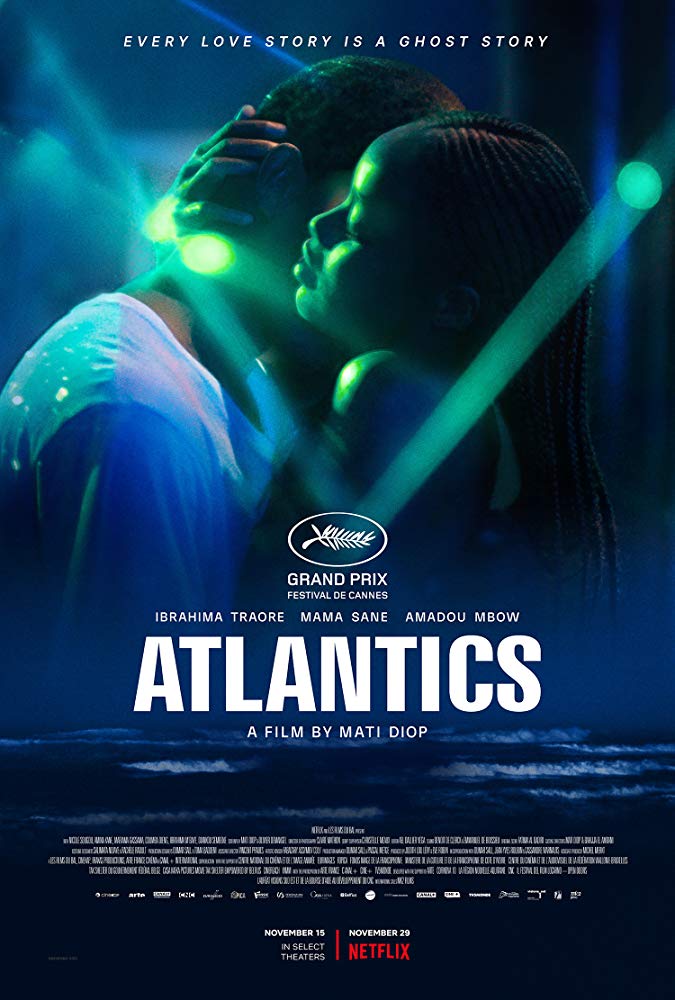
Atlantics

In a suburb of Dakar, workers on a construction site go without pay for months. They decide to leave the country by boat for a better future in Spain. Among them is Souleiman (Ibrahima Traoré), Ada’s lover. But the men never reach Spain. They are presumed dead, lost at sea. Poor Ada (Mama Sane) cannot afford to spend time pining or mourning for her lost love because she’s betrothed, by arranged marriage, to someone else. Omar is wealthy and handsome. The only problem is that Ada’s still thinking of, and worried about, someone else. Oh her wedding day, Ada is withdrawn, depressed, but her friend Fanta (Amina Kane) is seduced by Omar’s beautiful home and its furnishings – particularly what is to the marital bedroom, outfitted in new, luxurious furniture. The wedding is interrupted by a fire, thought to be an act of arson: Omar’s beautiful bed burns.

The next day Issa (Amadou Mbow), a young detective, arrives to investigate. Ada soon finds herself under suspicion, subject to invasive interrogations and even a virginity test. But as Fanta, Issa, and others fall sick, certain people wonder whether this mysterious illness is actually the spirits of the lost men possessing their bodies to exact revenge.

Mati Diop’s film addresses economic disparity and gender inequality but first and foremost it remains a love story, beautiful and ethereal. Claire Mathon’s cinematography gives the film a distinctive feel. Mixing social commentary with the supernatural, Diop may be Senegal’s Jordan Peele, crafting a film that is unexpected and unpredictable, like nothing you’ve seen before.