Tag Archives: feminism in film

2016: Year of the Fabulous Ladies

Goodness me, this year is flying by, and looking back at some of my favourite films, I’m seeing a trend. A trend toward women of a certain age. Over 50, let’s say; the women who have often been ignored by Hollywood (more than half of all female characters are well under 40, which is not true of men). And yet here they are, fierce and fabulous. I’m resisting calling them “older women” (perhaps it’s time for a new word?) because they are so much more than merely older. These are terrific women giving voice to characters that are rarely seen, and heard even less (women are given less and less dialogue as they age whereas middle-aged men get more).

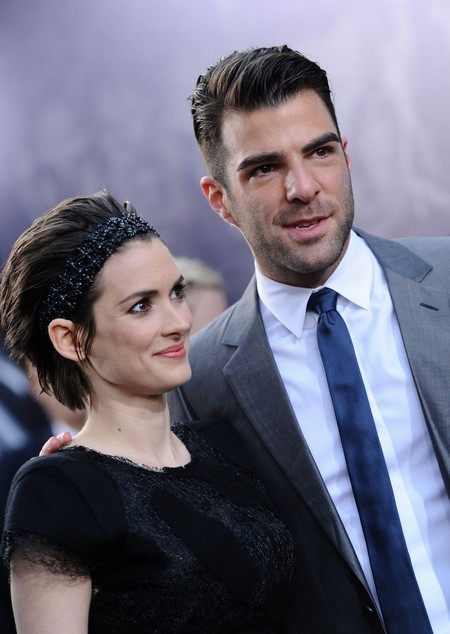
Aging is a sin in Hollywood. You go from playing the ingénue to someone’s mom, and then you drop off the face of the earth unless you’re Betty White. Which you’re not. Hollywood casts young women into older roles – Angelina Jolie once played Colin Farrell’s mother. She is one year older than he is. Amy Poehler played Rachel McAdams’ mother in Mean Girls despite only a 7 year age difference. Sally Field played Tom Hanks’ mother with just a decade between them – and having previously played his love interest! Toni Collette, aged 33, played Paul Dano’s mother when he was 22 (in Little Miss Sunshine). Laura Dern is just 9 years senior to her “daughter” Reese Witherspoon in Wild. Winona Ryder is just 5 years older than her Star Trek on-screen son, Zachary Quinto. That would be like Jonah Hill playing Miles Teller’s dad instead of his high school classmate. WTF?
All too many once-great actresses were abandoned by Hollywood when they hit 40. Where is Angela Bassett? Geena Davis? Joan Allen? Janet McTeer? We can’t save them all, but we vote with our dollars, by making sure that films like these find their audience:

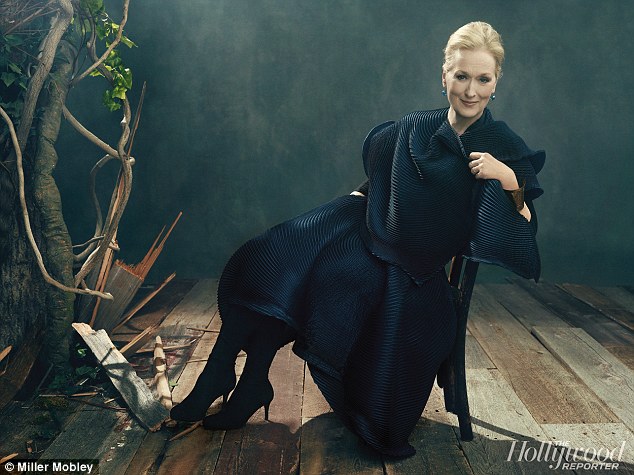
Florence Foster Jenkins – Meryl Streep turns in an endearingly cringe-worthy performance. When she turned 40, she was offered THREE witch parts in the same year. THREE! She turned them all down.  “I just had a political sort of reaction against the concept of old women being 23F3E33000000578-2869426-image-a-28_1418262921292demonized and age being this horrifying, scary thing. I just didn’t like that. I didn’t like it when I was a little girl, I don’t like it now.”
Grandma – Lily Tomlin proves Grandmas come in all sorts of salty sizes. She’s as edgy and witty as ever. “I’ve been offered lots of [roles as] people’s grandmothers that are just the butt of a joke. Doddering with a track suit on. The object of humor, just as women or gay people were the object of humor through ridicule in earlier movies. That was an accepted target, use of someone of that age or that lifestyle.”

Eye in the Sky – Helen Mirren shows nerves of steel as the powerful head of a military operation. Mirren has called Hollywood’s ageist double standard “fucking outrageous.” “Even Shakespeare did that to us. As you get older, even the Shakespeare roles become [less substantial for older women] — that’s why we have to start stealing the men’s roles — doing like I did in “The Tempest,” [by changing the role of Prospero to] Prospera. And it’s great that a lot of women are doing Hamlet, doing “Henry V,” and I’m sure there will be a female Othello soon. And I love that. I think it’s absolutely great because, you know, why not?”

Youth – Jane Fonda has a small but scene-stealing role in this movie about finding meaning in your later years. “Ageism is alive and well. It is okay for men to get older, because men become more desirable by being powerful. With women, it’s all about how we look. Men are very visual, they want young women. So, for us, it’s all about trying to stay young. I need to work, so I had some plastic surgery. It’s not like it’s too much, it’s not like you can’t see my wrinkles, right? But I think it probably bought me a decade of work.”
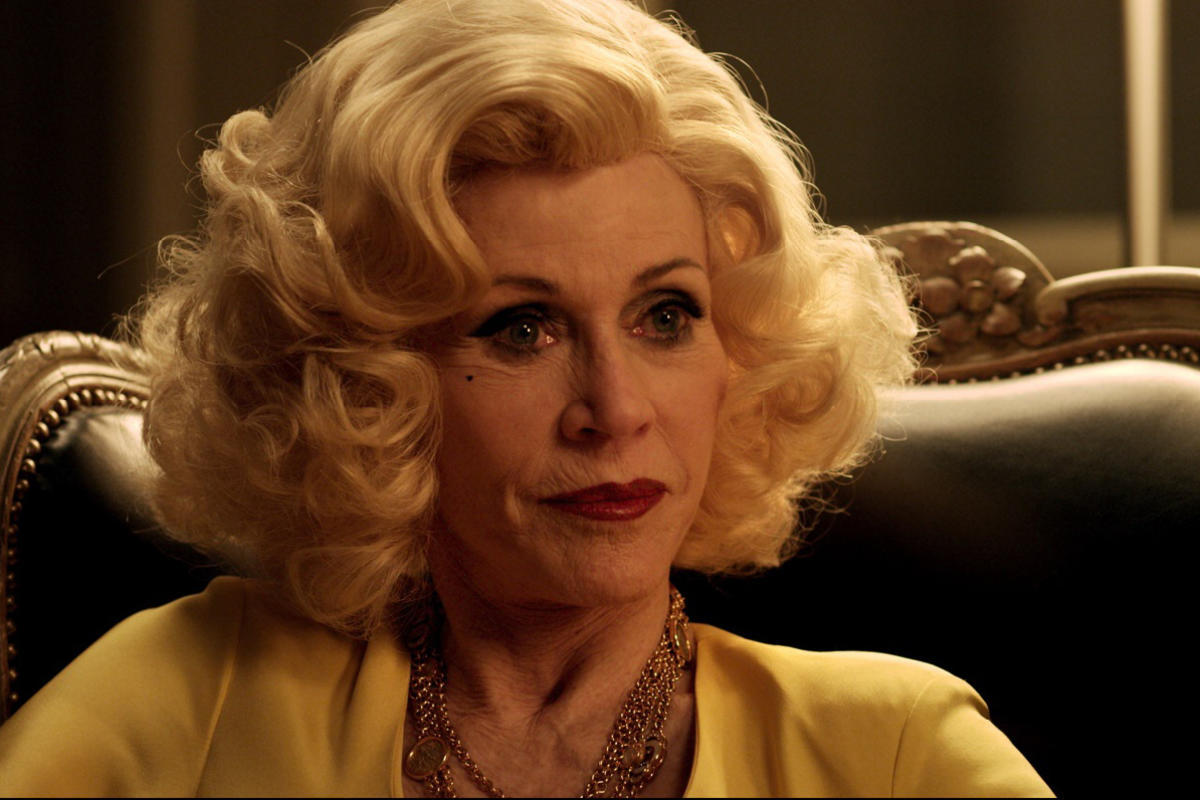
Lady in the Van – Maggie Smith gives life and dignity to a mysterious woman living in her van. “I’m always older than God in these parts now.” She played Wendy’s 92 year old grandmother in Steven Spielberg’s Hook and “I’ve been that ever since. They don’t need to make me up any more, I’m afraid. I’ve caught up with myself.”

I’ll See You In My Dreams – Blythe Danner tackles widowhood, retirement, and loneliness. “I remember Leslie Caron years ago saying she left Hollywood when she was 30 or 35 because that’s when roles disappear. That’s not the case anymore, there are better, three-dimensional roles for women of all ages. I’m 71 and I’ve been working more now and getting better roles than I did when I was younger.”
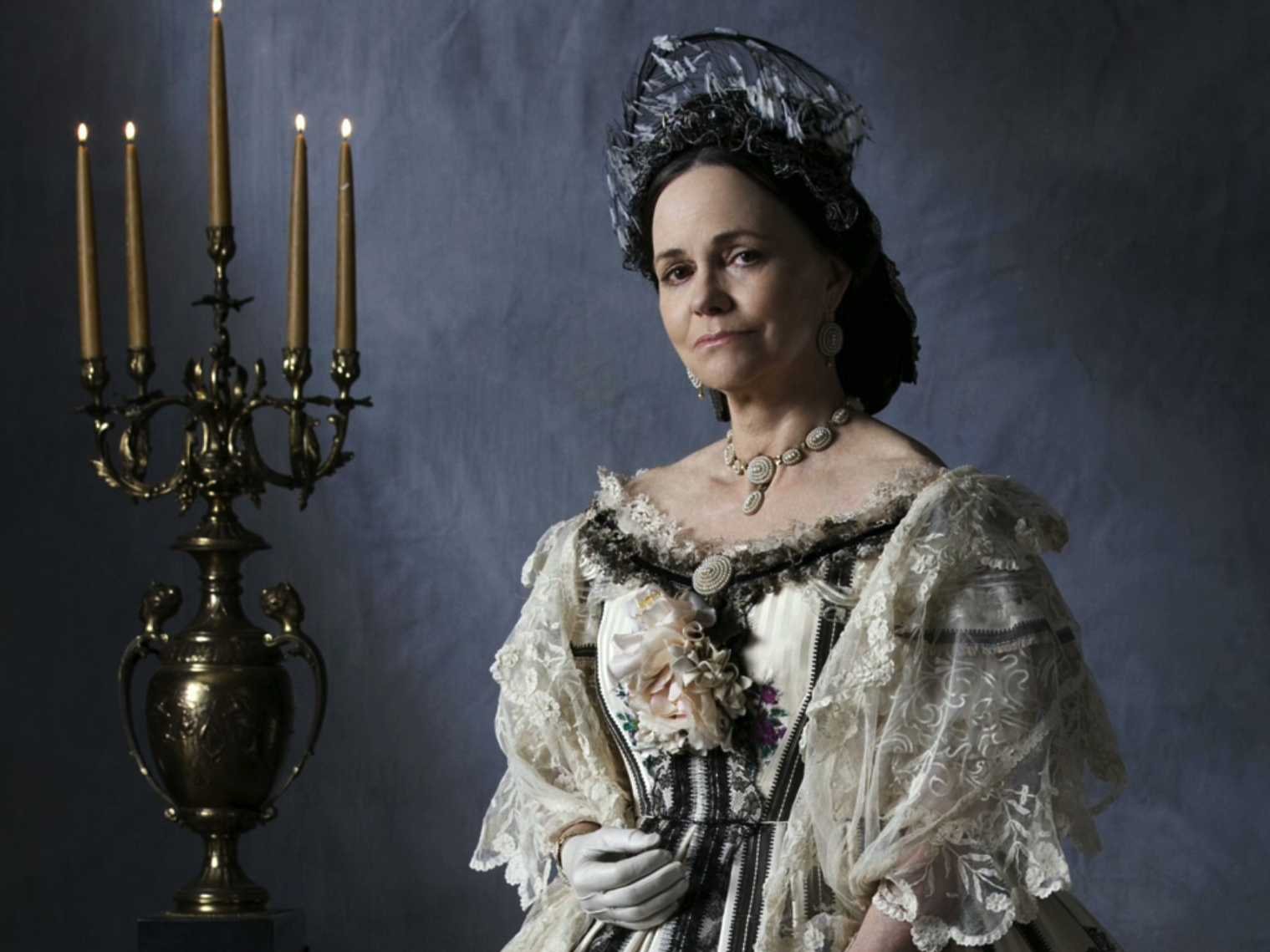
mary-todd-sally-field-lincolnHello My Name Is Doris – a riotous movie starring Sally Field, her first starring role in nearly 20 years. “They don’t write roles for women… and they certainly don’t write roles for women of age and women of color,” said Field. “Since the industry is run by men, men have a tendency to want to make stories about themselves and things they identify with. Then it becomes a self-fulfilling prophecy.”
The Boss

Melissa McCarthy was given the coveted Comedic Genius popcorn statue at the MTV movie awards this weekend, the first female to ever take home the honour. Of her historic status, she said “I am certainly, certainly not the first one to deserve it.”

gettyimages-520353144%20(1)McCarthy is, in fact, a tour de force, and “not afraid to be the butt of the joke” according to her speech (invaluable advice from her mother). She’s a frickin national treasure who keeps making very mediocre movies. What gives?
Paul Feig knows how to handle McCarthy – he directed her to breakout success in Bridesmaids, replicated it with The Heat, and wrote for her beautifully in Spy. But McCarthy keeps sneaking in movies between those triumphs, movies she ostensibly has a hand in writing herself, along with husband Ben Falcone, and those ones tend to crash and burn with big fat flames. That said, Melissa McCarthy has never had a flop. Of her worst-reviewed films, Tammy made $85M, and Identity Thief took in $135M. The Boss will likely nestle among them critically, but it was McCarthy who finally unseated Batman v Superman at the box office this weekend. Someone’s buying tickets.

I am buying tickets. I love her. I’ve loved her since her stint on Gilmore Girls boss(and am thrilled that she’ll return for the reboot). But falling in love with her on Gilmore Girls means I like her at her bubbly, beautiful best, not as the slob who falls down stairs. And I tend to think that Paul Feig, and most of the film going public, agree with me. The gags and the prat falls are beneath her. We’re tired of such juvenile physical comedy. She’s already proven that she’s better than it, and capable of so much more.
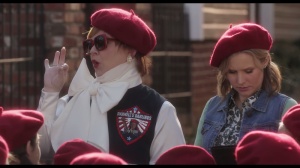
the_boss_melissa_mccarthy_afprelaxI can’t tell you that The Boss is a great movie, because it’s not. It’s totally uneven. But the thing about “uneven” is that it’s not universally bad either. In fact, it gave me the giggles (Her opening number? A delight. She had me at T-Pain). But then she’d get launched across the room again, her face splat against some unforgiving surface, and I’d be shaking my head again.
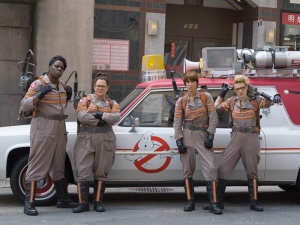
Melissa McCarthy is charming and lovable. She’s got great timing and she recruits some very talented co-stars (Kathy Bates being a particular favourite of mine). She’s not a buffoon, and any movie that attempts to make her into one isn’t going to cut it for me. I needed a little taste of McCarthy to get me through this godforsaken, unending winter (I know it’s spring, but try telling that to my home underneath 3 feet of snow) andghostbusters-1-800 I got it. The Boss is unsatisfying, leaving me doubly impatient for this summer’s Ghostbusters reboot – luckily, with Paul Feig at the helm. I have every confidence that she’s going to deliver exactly what I’m hoping for, and here’s why. The big, brash McCarthy character? It’s being played by Leslie Jones. Melissa taking on a straighter character, and I bet that will suit me just fine.

Adam & Drew

Adam Sandler is not everyone’s cup of tea. His movies tend toward the juvenile and so lots of people give him a wide berth at the box office. But to know Adam Sandler is to love him; in actors’ circles, he’s known as the nicest guy in Hollywood.

A little shy, Sandler does as little press as he can get away with, almost no print, and only very occasional talk show appearances, which he usually does in character. As the head of his production company, Happy Madison, things are a little different. He’s the affable and humble centre of an awful lot of industry, loyally employing friends and family on projects skewered by critics but beloved by audiences. Sandler’s movies haven’t been box office juggernauts in years, but they are consistent earners, and his name has continually if quietly stayed among the top earners of Hollywood for the past two decades.

Sandler’s early success meant he could start doing things his way, and he’s surrounded himself with the same cast of characters, working with the directors and writers he trusts, to say nothing of the famous faces appearing in his movies. Always grateful to Saturday Night Live as his diving board to fame (he was discovered by Dennis Miller), he employs not just the SNL alums he worked with (David Spade, Rob Schneider, Chris Rock, Norm MacDonald) but many besides (Will Forte, Andy Samberg, Dan Aykroyd, Kevin Nealon, Rachel Dratch). He attracts big names to his movies (Jack Nicholson, Harvey Keitel), but always finds room for old friends (Allen Covert, Peter Dante), Sandler mainstays (Henry Winkler, Kevin James, Steve Buscemi), and his own wife and daughters.

drew sandlerOne such person who can never get enough is Drew Barrymore. In her 2015 memoir Wildflower, Barrymore describes begging for a chance to meet him after her good friend Tamra Davis (director of Billy Madison) raved about him. Barrymore was certain of his “goodness” and felt they should pair up despite them being complete opposites in their early 20s, “like a preppy and a punk set up on a bad blind date.” Her pitch worked: pretty soon he came calling with a little movie called drew-barrymore-and-adam-sandler_2The Wedding Singer in his pocket. Written by Sandler groupie Tim Herlihy, it was given an uncredited polish by Sandler’s friend and former roommate, Judd Apatow (another guy famous for working with a loyal crew, including Sandler himself of course, most notably on Funny People) and Carrie Fisher, to give equal weight to the feminine side. The movie was a hit, with Drew certifiably falling in love with the Sandler crew, calling them “real, no-bullshit friends” which I take is a high compliment in Hollywood.
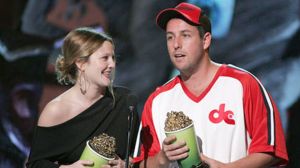
People loved The Wedding Singer for many reasons – the 80s nostalgia, the cheesy music, but above all, the incredible chemistry between Adam and Drew (she refers to him as her “cinematic soulmate”).

Always intending to work with Sandler again, Barrymore knew they couldn’t settle for anything less than the greatness they’d already achieved. But life drewadammoved on. Drew worked intensely on a Penny Marshall movie called Riding in Cars with Boys, and it was around that time that she came across a romantic script that she thought was a great fit for her production company, Flower Films. Unfortunately that script was a hot commodity, and it kept changing hands, with big directors and stars attached, never becoming available to her, despite numerous attempts. Until one day she heard that it had landed at Adam’s studio, Happy Madison. By this time they each had an office just a few hundred feet apart on the Sony lot (she was doing Charlie’s Angels), so he was easy to hound. Sandler was already turningdrewbarrymore it into a comedy but welcomed Drew on board not only as a co-star but also as co-producer, and she’s responsible for keeping the important elements of the love story, the parts that turned us all to mush.

Adam and Drew took the Seattle drama and laid it out in Hawaii instead, each bringing their production families to paradise and basically turning the island into a happy party (so happy that her Angels co-star Cameron Diaz came to visit and never left). 50 First Dates opened on Valentine’s day, and I was there, butt in the seat, and actually watched it twice (the projector broke down half way through, and we had to star the thing over from the beginning). They CinemaCon 2014 - The CinemaCon Big Screen Achievement Awards Brought To You By The Coca-Cola Companybroke records that opening weekend; I’m not the only one who finds these two irresistible.

It would be another decade before they reunited on-screen again, with The Wedding Singer director Frank Coraci back at the helm for a movie about modern families called Blended. This movie would be proof of how far they each had come, personally and professionally, since first meeting as successful, hard-partying kids in the 90s. Sandler, once a “bad boy of SNL” now has a reputation for being a family man. He has always been quick to attribute credit to his parents (his highest-grossing comedy album named for them, Stan & Judy’s kid, and even one of Chris Rock’s albums a tribute to Sandler’s late father). By this time Adam and Drew had 3 daughters between them and the whole crew headed to Africa, families in tow. Barrymore has downshifted on her acting career since becoming a mother, finding it hard to strike the balance, but an Adam Sandler film “celebrates Drew-Barrymore-Adam-Sandler-reunited-promote-new-filmwives and kids” and she was able to make a family adventure out of it, even discovering on her last day of shooting that she was pregnant with a second daughter.

Still the best of friends, Adam and Drew now attend each other’s kids’ birthday parties (2 daughters apiece – Sadie and Sunnie for him, Olive and Frankie for her) and talk about their next project, whatever that may be, joking that they’ll still be making romantic comedies when they’re old and gray. (In fact, during press for the movie Blended, Adam made a very pregnant Drew cry when he sang the precious The Wedding Singer song to her “I Want to Grow Old With You”).

No matter what it is, I know I’ll be in line to see it. These two are cute as can be when they’re together, and Drew knows why: “I once knew a boy named Adam. And I hoped that we could be a team, but what I found was a true partner. I now know a man named Adam, and trust me when I say, he is as great as you want him to be.”

Sisters

Sisters-Tina-Fey-Amy-PoehlerThis is not technically a movie that needs to be reviewed. You’ve seen the trailers? You’ve seen the movie. Two people who look nothing alike with their wildly different heights and eye colours still manage to play sisters convincingly. Why? Because Tina Fey and Amy Poehler are real-life sistahs.

The movie’s okay. There are laughs to be had. The script is not what you would call original, and what starts out as a story about two grown women who regress when their parents decide to sell the old family home quickly degenerates into just another party movie (although this one populated by people old enough to know better).

What saves the movie is the remarkable chemistry between its two leads, Tina Fey and Amy feypoehlerPoehler. These women have worked together far longer than we’ve been watching them, harkening back to Chicago’s Second City in the early to mid 90s where they were the only two women in the troupe. A former member of Second City named Adam McKay (who you may remember as the writer\director of MANY of Will Ferrell’s ridiculousest movies) was the head writer of Saturday Night Live in 1997 when he first encouraged Tina to submit scripts. Of course she was hired, and the very sketch she wrote for the show (that made it on air) was a Chris Farley satire of Sally Jessy Raphael – genius, of course. When McKay left in 1999, Lorne Michaels made Tina Fey SNL’s first female head writer.

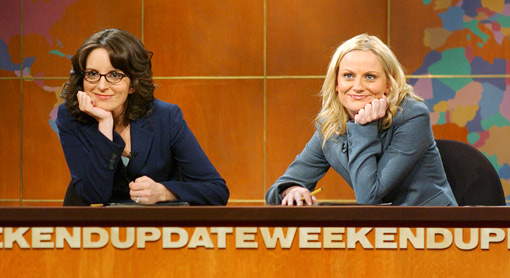
Fey soon appeared on-camera and became co-anchor of Weekend Update in 2000. Amy Poehler would join her on the sweekend-update-tina-feyhow just a year later, Poehler’s first episode being the first one produced after 9\11. Amy was promoted from featured player to full cast member during her inaugural season, making her only the third person to earn that distinction (joining Harry Shearer and Eddie Murphy).

Fey and Poehler became co-anchors on the Weekend Update desk in 2004, marking the first time that two women held the position. Fey left the next year as her new show 30 Rock began to take off though her tenure would hardly be forgotten; she’s been ranked as the third most important SNL cast member ever, just behind comedy gods John Belushi and Eddie Murphy. This left Poehler in a position to earn an Emmy nomination for Outstanding Supporting Actress in a Comedy Series – the first SNL cast member to ever be recognized in the category. Then she reg_600_GGlobes_Amy_Tina_mh_010213too left SNL to star in her own show, Parks and Recreation. Both women met with tonnes of success, 30 Rock garnering a staggering 112 Emmy nominations over its run, and Parks and Rec giving Amy the opportunity to write and direct as well. Both women won Golden Globes for Best Actress in a television series, musical or comedy, and then went on to host the awards ceremony itself together for 3 of the roastiest, juiciest years running.

They’ve both also written books about their experiences as wives, mothers, and being the funniest people on the planet. Amy Poehler also helped launch Smart Girls at the Party with a couple of her friends, a show that  “aims to help girls find confidence in their own aspirations and talents.” In each episode, Poehler interviews a girl with a “unique talent, community interest or point of view” and if you haven’t checked it out yet, you probably should.

These awesome, barrier-breaking ladies have a long history together, and even if they’re not tumblr_mgjv3h7q6e1qz9qooo2_1280blood, they call each other “chosen sisters” and that’s good enough for me. Screenwriter Paula Pell wrote Sisters with these two in mind, though she may have been imagining them cast in the opposite roles – which is what I liked about Sisters, actually. For once we get to see Tina Fey be all crazy. There’s a heaping helping of vulgarity too, but man does it almost sound sweet coming from the likes of Fey and Poehler. Paula Pell has a process for coming up with altnerative jokes, which the director would pass to the actors on post-it notes so nobody else would know what’s coming. Fey, Poehler, and the rest of the cast, including SNL alums Maya Rudolph, Bobby Moynehan, and Rachel Dratch, are all masters of improv, and that spontenaety was well-used. Paula Pell, mind you, was also an SNL writer, and has appeared on – you guessed it – both 30 Rock AND Parks and Recreation. Smart ladies stick together, and funny ladies keep us coming back.

Suffragette

Just a few weeks ago, Canadians voted for “change” and for “sunny ways.” We elected a young Prime Minister with a famous last name and idealism still twinkling in his eyes. He was sworn in last week and presented us a cabinet that among other things, had gender parrity.

jt

That’s right. Half men, half women. So of course the very first question journalists needed answered about this tall list of accomplished people was why “he went with gender equality” in his cabinet. Why? Why did he “go” with “gender equality.” Is that really a question you can still ask this day in age? Okay, you know what – it is. Because sadly, this is the first cabinet to achieve this status. But Trudeau seemed to agree in spirit, answering simply “Because it’s 2015” – a mic-drop response that was heard around the world.

But the fact remains that if a Prime Minister chooses a cabinet that has a representative amount of women in it, he’ll have to answer as to why.

Isn’t that incredible? And incredibly sad?

As you know, the boys were dragging me off to see Spectre this weekend, and James Bond is probably the human embodiment of the antithesis of gender equality. To correct the imbalance, Sean agreed to hit up Suffragette with me first, because he’s a 2015 kind of gentleman, even if his movie idols aren’t.

Suffragette focuses on some of the lesser known but pivotal “foot soldiers” of the early feminist movement in Britain. After 50 years of peaceful protest, the women have amped up their right-to-vote rhetoric and are ready to engage in civil disobedience for the cause.

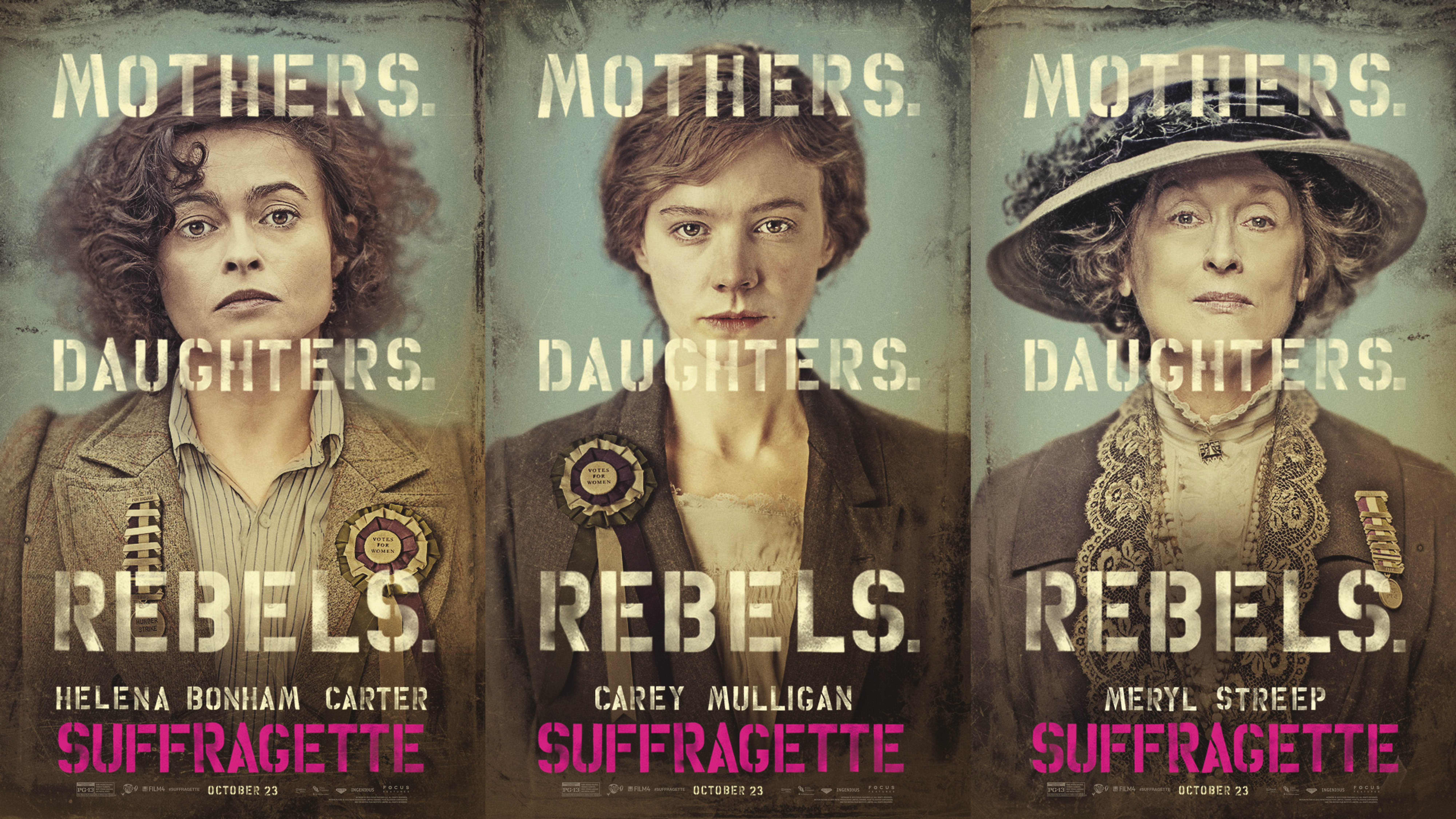
suffCarey Mulligan plays a young woman who was born in a laundry facility and has worked there all her life, working herself raw and having her boss force himself on her just to earn a third what the men take home. And then it goes directly into the pocket of her husband to do with as he sees fit. Not a naturally political woman, she gets dragged into the movement almost unwillingly but once she’s there, you can bet that neither her boss nor her husband are pleased. But it’s the vitriol from her fellow women that’s most upsetting. She doesn’t know her place, and this upsets everyone.

And it’s also enough to have her freedom taken away, and her child too if she’s not careful, so AAantithese are pretty high stakes. The laws are against her – but that’s the point. She is subject to laws she’s not allowed to influence let alone make. Women were property or commodities and laws existed to keep them that way.

Helena Bonham Carter plays a semi-educated pharmacist who is not only a pillar of her community, but an agitator and grass-roots activist. She’s recruiting and planning things when it’s time to start smashing windows and bombing letter boxes. HBC played her part well, suffragetteinjecting a little back bone into the character while still ultimately being subject to her husband’s whims. Helena Bonham Carter is the real-life great-granddaughter of H.H. Asquith, who served as the Prime Minister of the United Kingdom from 1908 to 1916, during the height of the suffrage movement. He was of course a staunch opponent of votes for women.

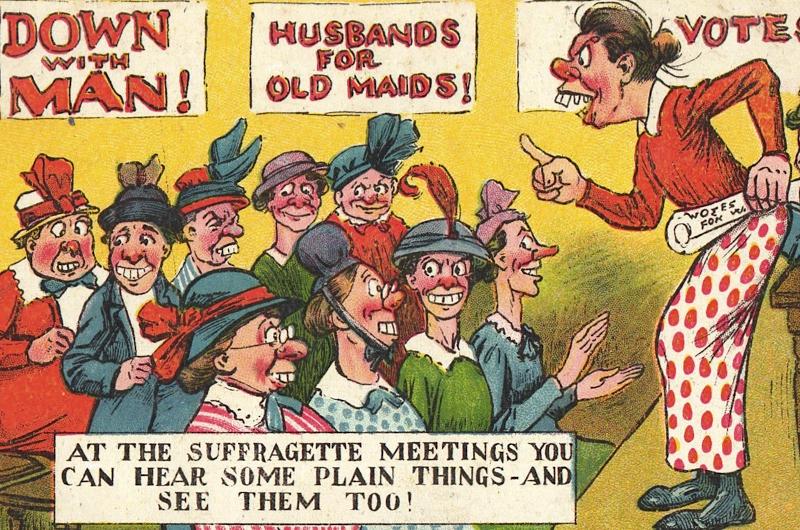
Mulligan is the perfect choice for a young mother who goes through quite the character arc, from wife and labourer to militant feminist – of course, you might find that the first two under such terrible conditions would inspire desperate reactions from anyone. Brendan Gleeson and Meryl Streep also having juicy roles, though Streep’s there in little more than a cameo, she’s nevertheless the perfect choice for theimg095 down with man movement’s heroine, Mrs. Pankhurst (this is the little detail that got to me – that all of these brave, notable women were known only by their husband’s names, ie, Mrs. Pankhurst. It killed me). Streep is strong and steady as ever. All of this capable acting smooths over some of the flaws in film making. It’s not a perfect piece of art, but it is an important one, and it’s hard not to be stirred by it.

Women in Canada got the vote in 1916, for the most part. It was not granted in the province I layout.inddlive in until 1940. American women got the vote in 1920. Some women in the UK were granted the vote by 1918 but it wasn’t unconditionally granted until 1928. That’s less than 100 years ago: way too close for comfort. Is there a woman alive today who hasn’t wondered what it would have been like to live through that? To still be all that we are and yet to be so diminished in the eyes of the law – and society? It’s boggling. And yet, in 2015, when a Prime Minister hires women to work in his government at an equal rate that he hires men, he is still asked why.


The Homesman

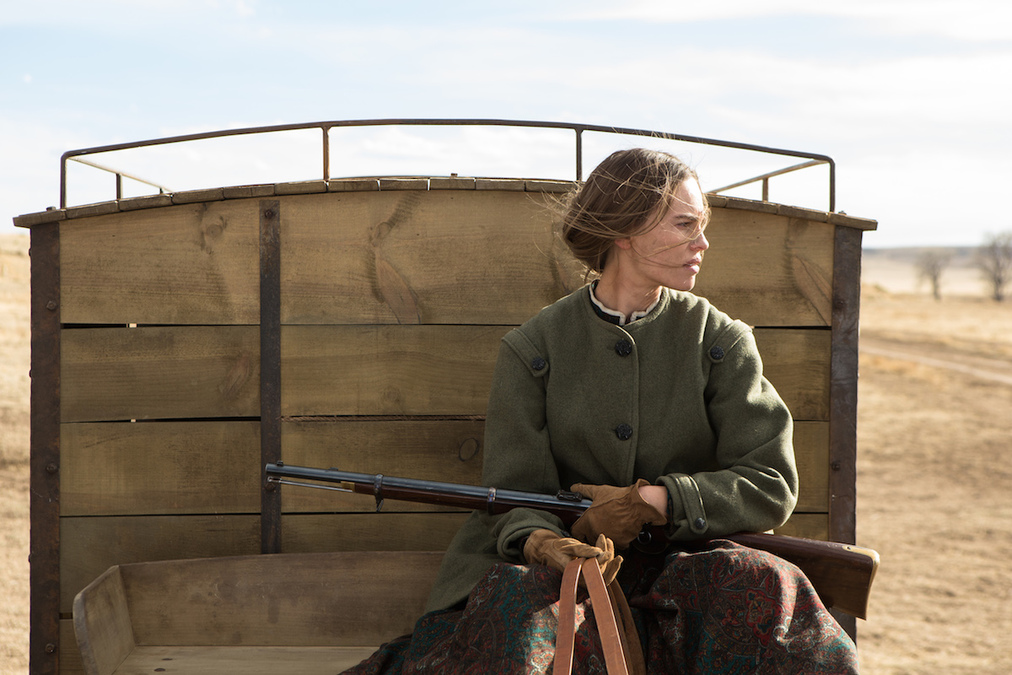
A homesman is the man in charge of taking immigrants back home. And after a really harsh winter filled with loss, three women in a small midwestern community lose their minds and somebody’s got to bring them all the way to a church caring for the mentally ill in Iowa. None of their husbands is up to the task, so Hilary Swank, spinster extraordinaire, steps up to the plate.

The-HomesmanShe’s a former New York school teacher who now farms her plot as well as any man – better, I’d say, because she seems to be the most prosperous person in this small village. This, of course, has made her seem “bossy”, and none of the hasty marriage proposals she inflicts on any breathing man within a 50 mile radius are accepted. She’s a lonely, desperate woman.

Which is the only explanation for her taking on Tommy Lee Jones, who she saves from being hanged when he’s discovered using someone else’s land. Yup, these are super harsh conditions out in the west. She suggests that he join her on her months-long journey, and he agrees reluctantly when money is offered.

The journey is awful enough to make someone return to dead kids and repeated rape, if only those poor women were still verbal or lucid enough to choose. But they press on, determined to reunite Meryl Streep with her daughter (Meryl plays the minister’s wife at the church; her daughter plays one of the afflicted women).

This movie is really successful at showing us just how fucking cruel life was for women on the western front. They could be taken far from home, submitted to anything at the will of their husbands, who could then abandon them if and when they chose. Even Hilary Swank, who seems like an accomplished, secure catch, is constantly rejected because who needs a hard-The-Homesman-36827_3working woman with an independent spirit when you can just go carry off an immigrant woman who can’t even say no in your language? I’m not sure if this is supposed to be a feminist western, but it sure does show the depressingly bleak terms for women of the time. They were damned either way.

Tommy Lee directs and he paints a brutal picture – opening scenes of the women suffering loss after loss interspersed with Swank’s back-breaking work convince us that there is nothing appealing about this life. Tommy Lee is initially a comic figure, and I was glad that we saw a little character growth because I couldn’t have tolerated his snivelling for an entire movie. The contrast between his character and Swank’s – the sinner and the saint – is what makes this watchable. Jones is wise enough to sit back a little and let her shine. He keeps things looking tidy but the cinematography at times is pretty striking. The land can be barren, but they play around with different perspectives that gives the vast emptiness different meanings.

This movie is a little off-kilter, a little conventional. The ending didn’t provide anything near the resolution I felt I deserved after sitting through such persistent abasement, but I was still satisfied on the whole, and a little surprised at that, having feared and assumed much worse.

Women in Hollywood

Russell Crowe is an ass. Everyone knows this. So when he recently went on a rant about how there are plenty of parts for women in movies so they should just shut their yaps and “act their age” no one was surprised by the medium or the message. As long as there’s been movies, there’s been sexism  and by god, where sexism goes so does ageism.

Looking at this year’s Oscar nominations it was pretty clear to me that meatier roles go to men, but I’m not going to sit here and lament the missed opportunities when instead I could be celebrating the success.ghostbusters

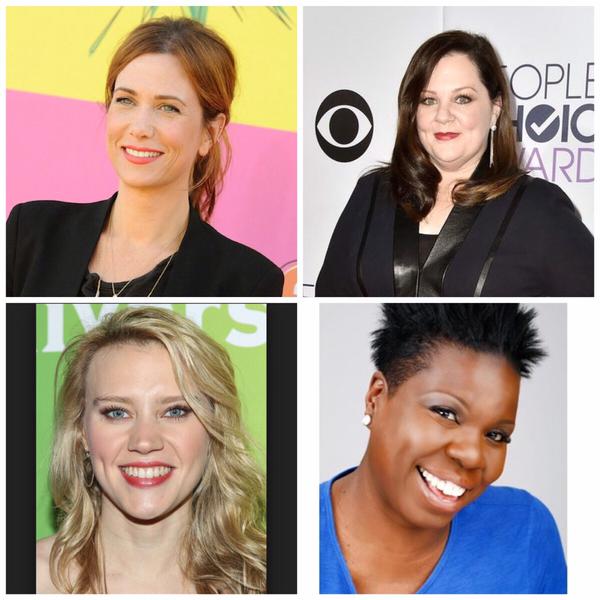
Earlier today, Paul Feig posted an untitled photo to Twitter featuring Kristen Wiig, Melissa McCarthy, Kate McKinnon, and Leslie Jones. Feig provided absolutely  no comment but fans were quick to speculate that this was the cast of his much-discussed reboot of The Ghostbusters franchise. McKinnon and Jones are both current members of SNL while Wiig and McCarthy are already Feig collaborators, having co-starred in Bridesmaids, the highest grossing domestic R-rated female comedy of all time, edging out Sex and the City (2008).

Meanwhile, at Sundance,  Emily Nussbaum, award-winning critic for the New Yorker, moderated a panel of “Serious Ladies” featuring the uber-talented Wiig, Jenji Kohan (who wrote for Sex and mindy-kaling-cover-ftrthe City and Gilmore Girls before creating Orange Is the New Black and Weeds), Lena Dunham (creator and star of Girls) and Mindy Kaling (writer\producer\star of The Mindy Project). Although they’re all at the top of their game, they all shared stories about how tough it was to break in. Kohan recalled male-dominated writers’ rooms where one cave-dweller told her  “If God had meant women to be in a writer’s room he wouldn’t have made breasts so distracting.” Kaling discussed the pressure to be a role-model versus the artist’s craving to push the envelope and maybe even offend. Sometimes feminism means creating a female character that isn’t necessarily “likeable.”

Dunham, who recently released a memoir, spoke about the difficulty women face in being dunham-lena-podcast-sl-hollywoodmistaken for the characters they play (and wondered why Woody Allen and Larry David don’t get pigeonholed in quite the same way). She hopes to one day see women outnumber men in their profession – “That would be my favourite, if guys some day were to say, ‘It’s impossible to get into Hollywood! It’s a women’s club!’ ”

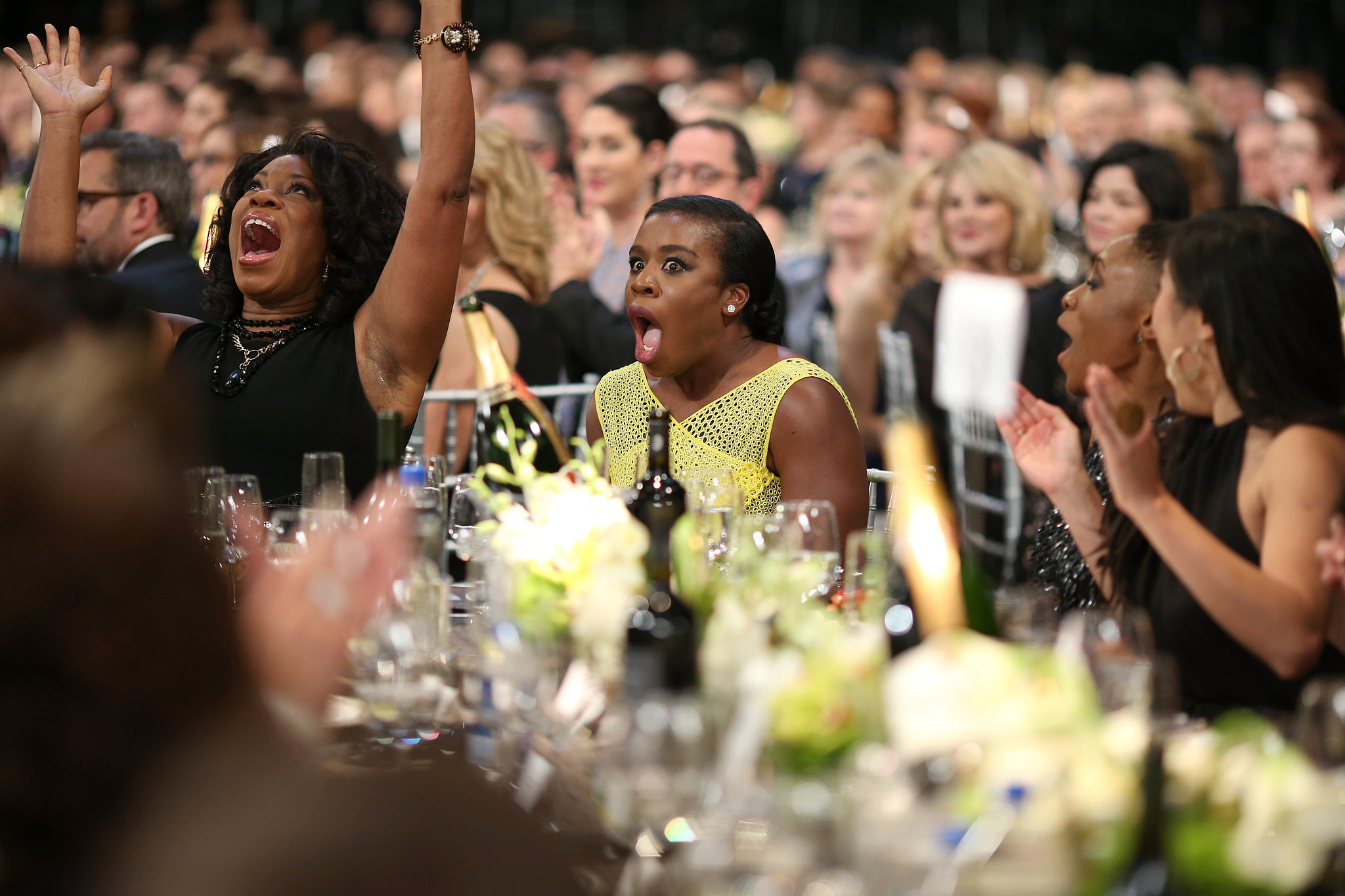
Jenji Kohan pointed out that she was still expected to write material about weddings and uzomotherhood, a notion she challenges with the huge success of her show, Orange Is The New Black. That series, a Netflix original, won big at the Screen Actors Guild awards on Sunday. Uzo Aduba took home Outstanding Performance by a Female Actor in a Comedy Series that night (she plays “Crazy Eyes), and gave a heartfelt speech. But the best part was the love and support coming from the OITNBUZO ADUBA OF THE NETFLIX SERIES "ORANGE IS THE NEW BLACK" ACCEPTS THE AWARD FOR OUTSTANDING PERFORMANCE BY AN ENSEMBLE IN A COMEDY SERIES ALONG WITH HER FELLOW CAST MEMBERS AT THE 21ST ANNUAL SCREEN ACTORS GUILD AWARDS IN LOS ANGELES table – it’s always heartening to see women cheering each other on. Aduba was back on stage before long – the show also won Outstanding Performance by an Ensemble in a Comedy Series, wrestling away the honour from Modern Family. What a great sight to see so many strong and talented ladies on the stage at once.

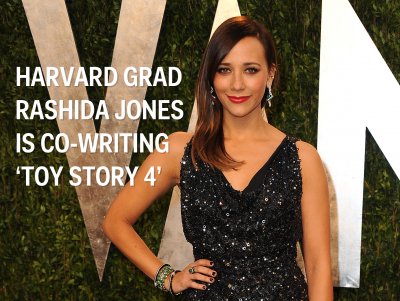
There are still mountains to climb for women in Hollywood, but if you look around (or follow our Twitter feed – @assholemovies ) you’ll find rashidajonestoystorybrave mountaineers everywhere. Just today it was announced that Toy Story 4 would be making its way to theatres in 2017 and that Rashida Jones and her writing partner Will McCormack would be tapped for the screenplay. Although they only have one previous credit to their names (Celeste and Jesse Forever), John Lasseter insists he “wanted to get a strong female voice in the writing of this.” This is a nice change from Pixar’s usually male-dominated animated lineup (Buzz, Woody, Nemo, Mike, Sully, Wall-E, etc) and a step in the right direction for us all.

Big Eyes

This movie failed me on many levels. I want to tell you that it’s still a movie worth watching, it’s not horrendous, and it’s a fascinating story. I want to tell you that, and I suppose I have, but I also can’t help but tell you the rest.big_eyes_movie_poster_2

First: Christoph Waltz. So miscast. He runs through the movie like a bull in a china shop. It’s like he decided to approach this role as a Jim-Carrey-in-The-Mask impersonation, with a peekaboo German accent, and maybe whiffs of Jack Nicholson in The Shining, just for kicks. When he was on screen, and he almost always was, I could barely suppress my urge to yell “Cut!” Where was director Tim Burton in all of this? Has Burton spent too long in kooky, make believe worlds that he can’t even tell what’s real anymore? It certainly felt to me like he was out of his depth. Waltz’s portrayal of Walter Keane was artless and unrestrained. Yes, he plays a schmoozy con man who takes credit for his wife’s art for years, but this was also a real man and Waltz does not convey for one second that he has a single genuine, authentic bone in his entire body.

Amy Adams as the quashed artist Margaret Keane didn’t quite satisfy either. I kept hearing in the script Margaret fighting back a little with bitterness and sarcasm, but Adams couldn’t carry them off. She’s too mousey and breathy.

My biggest problem, though, is this. The movie is about a woman who is passively (and then maybe not so passively) abused for years. Her husband steals from her, takes away the thing of which she is most proud, and intimidates her into silence, forcing her to live in secret, isolation, and near-sweatshop conditions. And the era in which she lives doesn’t provide a whole lot of viable alternatives. But the movie itself is another act of subjugation. She’s not really the star of her own story. It’s Christoph Waltz who dominates the screen. He’s allowed to steal the scenes. Amy Adams can never inject her character with enough backbone to compete. He walks all over her. This turns out to not be the story of her stolen art, but about his swindle.  You  need only look at the movie poster for proof.

So that’s how you ruin a mediocre movie. You take a powerful story and you tell it from the entirely wrong perspective. It’s as if the movie itself hasn’t learned its own lesson, and in 2015, that’s a heartbreak.

Bend It Like Beckham

Jesminder, aka Jess, a good Indian-English girl and Sikh, defies her traditional parents and secretly joins a girls’ football team. There she meets her new BFF Jules and together they chase their common dream of moving to America to lay professional soccer.

Jules’ (Keira Knightley) mother is not too pleased to have a tomboy for a daughter, and she’s horrified to think Jules may be one of those lesbians (“All I’m saying is, there’s a reason why Sporty Spice is the only one without a fella!”) but it’s Jess who suffers the most from her parents’ expectations. She gets cultural, religious, and filial guilt and shame heaped upon her – her soccer skills even threaten her sister’s marriage, somehow.

tumblr_oisvumHTWr1u495o7o1_500

In 2002, this was a fun movie about female friendship and gender stereotypes. ‘A 2018 re-watch is not particularly kind to it. It feels dated. Very dated. Which is great, obviously. Even as we burn in our collective dumpster fire, at least we can look back to the cultural touchstone that is Bend It Like Beckham with just a touch of smugness that we no longer say things like “Mother, just because I wear trakkies and play sport does not make me a lesbian!” and (white man to Indian woman who was just called a Paki) “Jess, I’m Irish. Of course I understand what that feels like.” If you wondered what those sounds were the other night, that was me, winning the world cup in groaning.

I still don’t know what it means to “bend it” like Beckham but I’ve been imagining that he has a crooked penis. This was the movie that introduced American audiences to Keira Knightley, and I didn’t find her completely awful yet. Parminda Nagra was the real stand-out, as was the man who played her father, Anupam Kher, an illustrious and dashing Indian film star. Jonathan Rhys Meyers is even creepier than I remembered. Like, unmanageably, unforgivably, career-killingly (you’d think) creepy. I don’t want him in the same movie as anyone’s juicy, juicy mangoes. He’s nearly as terrible as the 00’s club wear these ladies are sporting. It’s like a fashion show of my biggest regrets.

Laters!