Tag Archives: foreign films

Just Another Christmas

It’s like Groundhog Day, but for masochists.

Jorge (Leandro Hassum) hates Christmas. Officially it’s because he shares his birthday with the baby Jesus, and he’s a pretty bad sport about it. Even though he’s a fully grown man now. But he also seems to hate everything else about the holiday too: the food, the gifts, the family. THE FAMILY. Fair to say it’s pretty irksome when he develops some sort of Groundhog Day disorder – or at least that’s the movie they’d love to be compared to. In fact, Jorge is not doomed to repeat the same day over and over; he’s merely only living on Christmas now. That sounds weird, and it is, but the Jorge we know wakes up and it Christmas morning. He’s technically lived a full year between each Christmas, but he never remembers it. He’s aged a year, and so have his wife and kids. It’s a weird amnesia and the Jorge who “wakes” up each Christmas doesn’t approve of the Jorge who makes decisions all year long. That Jorge doesn’t seem to share his same values and priorities, and “living” only one day a year seems to have really put things into perspective for him.

Jorge is not exactly a likeable guy so it’s hard to root for, or know what we’re rooting for. Plus, Brazilian comedy seems to be a little…obnoxious. Leandro Hassum is like Gerard Depardieux at his worst, and even his best is pretty intolerable.

Since Jorge only “wakes up” on (or remembers) Christmas, it’s not exactly a great time to get vital information as to his condition. His wife and kids are busy with preparations, and hosting parties, so we never the full picture. We just wake up as disoriented as he is, and try to piece together what’s happened over the last year based on how things have subtly changed since last Christmas.

It’s an interesting-ish premise but I didn’t enjoy its execution. Hassum is one of those people who confuses yelling with acting. It’s hard to pick up any emotional nuance when everything is shouted. And this particular conceit isn’t exactly condusive to personal growth. Even if he does manage to learn a lesson during this 16 hours of Christmassing, his other self won’t remember it come Boxing Day and will spend the whole year undoing any progress that’s been made. It’s a pointless exercise and it’s not even entertaining to watch. Verdict: sleep through it.

It’s like Groundhog Day, but for masochists.

Jorge (Leandro Hassum) hates Christmas. Officially it’s because he shares his birthday with the baby Jesus, and he’s a pretty bad sport about it. Even though he’s a fully grown man now. But he also seems to hate everything else about the holiday too: the food, the gifts, the family. THE FAMILY. Fair to say it’s pretty irksome when he develops some sort of Groundhog Day disorder wherein the Jorge we know wakes up


The Beast

We all have bad days at work. A client pushes your buttons or a colleague isn’t pulling their weight or a vital piece of equipment is on the fritz again, wasting your time and feeding your work monster. The Beast is about a bad day at work. Some guy wakes up, probably with a positive attitude and a spring in his step, but when he gets to work, things all fall apart. He thought kidnapping a little girl would be easy, and it was at first, but boy did he kidnap the wrong dude’s daughter. And no, her dad is not Liam Neeson.

Teresa’s (Giada Gagliardi) dad is The Beast. You can call him Riva (Fabrizio Gifuni), for now. Riva is a lone wolf veteran, estranged from his family ever since he returned from Afghanistan as only a shadow where a man used to be. Haunted by his combat experience, only little Teresa still loves him whole-heartedly. So when his growly teenage son reports her missing, Riva goes BEAST MODE to find her and bring her home. The cops whose actual job it is to find Teresa aren’t too happy about his rogue status and neither is Riva’s PTSD, which is being triggered rather wildly, incapacitating him with flashbacks to his time BEING TORTURED AS A PRISONER OF WAR. So there’s that.

Riva is not exactly a man with a very particular set of skills; I mean, I’m sure he’s no slouch what with his special forces training, but he’s not super-human either, merely a dedicated man with only one goal in his mind. The fights are not slick, over-choreographed affairs, they’re messy and savage and desperate, just a dad trying to survive long enough to get to the next door, behind which he may find and save his daughter. Or not. It’s a big city with a lot of doors, and a lot of bad guys standing menacingly in front of them.

Apparently this is not an Italian remake of Taken, or at least that’s what their legal team assures us, but it sure feels like it. Gifuni is a convincing anti-hero, always stalking the next dose of his meds, never sure which is the greater threat – the guy with the knife in front of him, or the guy with the knife in his memories. Probably not quite sure which is which either. He takes a lot of punishment, but when your daughter is Taken taken, the math goes wonky, the damage inflicted to damage sustained ratio ever malleable.

I didn’t dislike this movie, it’s well set-up even if it’s a premise we’ve definitely 100% seen before in a movie called Taken. The pacing of the third act is pretty screwy, the climax anti-climactic as it comes about 30 minutes too early in the movie. Or the movie goes on 30 minutes too long afterward (and it’s only 97 minutes). Still, if you’re looking for some gritty action, that’s exactly what you’ll get, and The Beast (La Belva) is streaming right now on Netflix.

Notes For My Son

When my dog Gertie started throwing clots in her lungs, we knew it was time to say goodbye. We held her in our arms, whispered in her ears about the lake at the cottage to inspire her dreams, and a shot given by her doctor send her off to a better place. We do for our dogs what many modern, advanced, and “civilized” countries still won’t do for its citizens.

Marie (Valeria Bertuccelli) is dying. Cancer sucks. There’s nothing the doctors can do, including giving her the compassionate end she and her husband have decided on. Or, they could give it to her, but they’re hesitating. It’s much easier to waffle when you’re not the one writhing in mind-altering pain. Of course, Marie’s got a reason to hang on as long as she can: her 3 year old son, Tomy. Whatever time she may have left, she’ll use it to write a journal so that her son may know her even when she’s gone. In it, she’s funny and witty, imparting bits of wisdom, tenderness, and personality, and a few wishes for what his life might be. Meanwhile, on Twitter, she’s nearly the opposite – sarcastic and bold, attracting a keen audience who appreciate her honesty during an impossible time.

Bertuccelli has a tall order to deliver from a hospital bed. With a son, a husband, a bouquet of friends, and a social media following, she’s the hub for grief and the receptacle of medical disappointments. This is her end of life, yet she’s still trying to be so many things to so many people. The book for her son gives her last days meaning and purpose, the perfect metaphor for the importance of time and using it well. The film isn’t sugarcoating death, nor is it dramatizing it. It’s ugly, messy, sometimes joyous, sometimes desperate. It’s not glamourous but it’s also not an excruciating sob-fest. Loosely based on a true story, Carlos Sorin’s film is about treasuring what you have while you have it.

Nobody Sleeps in the Woods Tonight

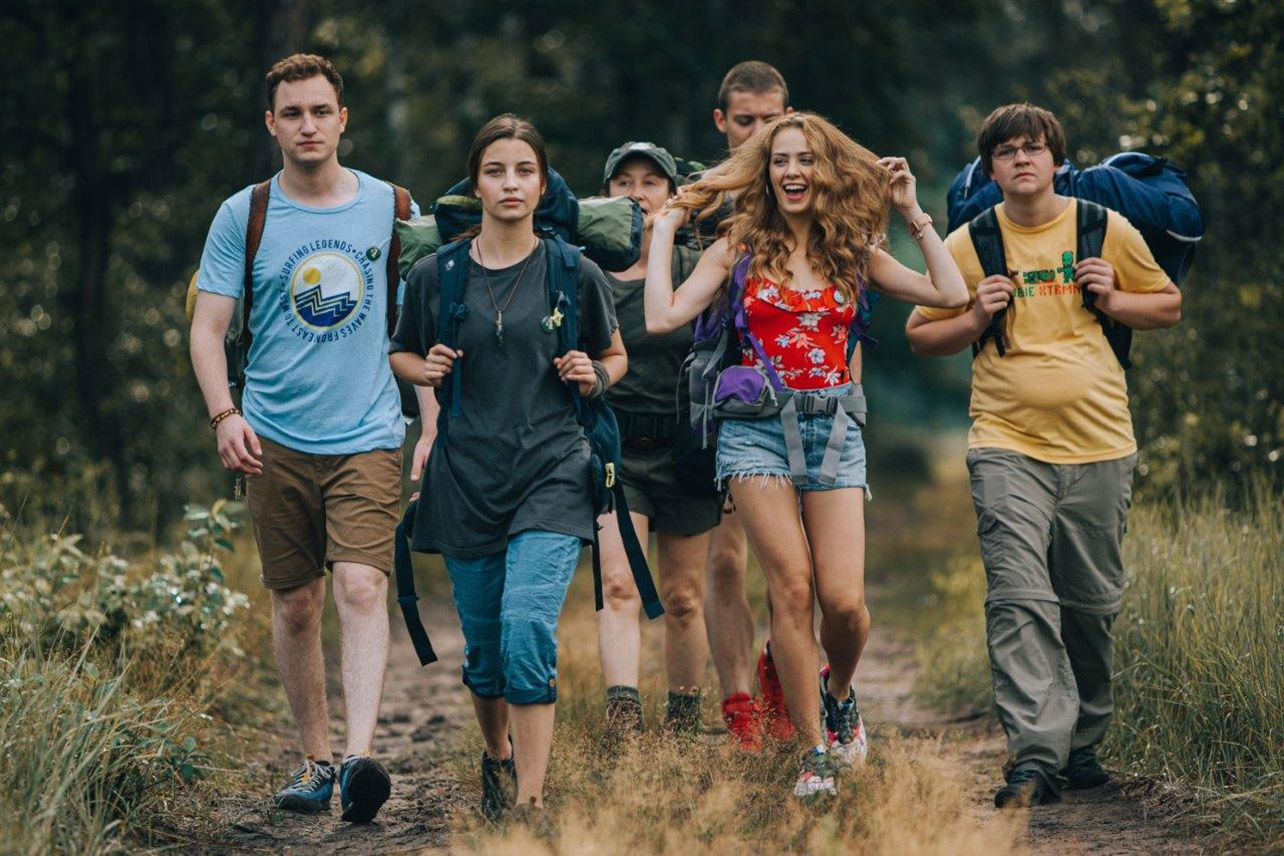
Nobody Sleeps in the Woods Tonight is a Polish horror film with a modern setting. Teens addicted to the screen are sent by their parents to detox in the woods in a kind of rehab camp. Julek (Michal Lupa) is a gamer whose parents don’t seem to appreciate the competition or the money making potential, Aniela (Wiktoria Gasiewska) is selfie-obsessed, and the others are also there so presumably over-consuming some kind of tech, including jock Daniel (Sebastian Dela), homophobic homosexual Bartek (Stanislaw Cywka), and our main protagonist, loner Zosia (Julia Wieniawa-Narkiewicz), though their particulars are apparently unimportant. Suffice to say: they’re addicted, and they’re being marched more or less against their will into the woods by Iza (Gabriela Muskala), a woman who probably wears camo in her off-time too. And this is precisely where the modern stops and this horror becomes a throwback to creature features of yore.

Nobody Sleeps in the Woods Tonight isn’t content with your standard slasher bad guy; they’ve got something truly grotesque tromping through their forest and director Bartosz M. Kowalski capitalizes on the gruesome mystique.

Though Zosia is haunted by her past almost as much as by the monster, it’s Julek who is our true hero, even if he cuts an unlikely figure. He, at least, is bright enough to play by the horror rules, even stating them for everyone’s benefit, especially ours, we the audience who are yelling at least as loud as he is about not splitting up. Not under any circumstances.

This is by no means a classic among the genre, it’s not even a particular stand-out. But if you’re a fan of vintage slasher flicks, you’ll find this full of gore and guts, with an entertaining sprinkling of meta in-jokes. It’s a little familiar in places, a little surprising in others, and altogether not a terrible scary movie. It’s not rich in backstory or concerned with an overarching message, it’s just brutal and bloody and unforgiving.

Cadaver

Leonora’s family is starving. In the wake of a nuclear event, everyone is starving. Leonora (Gitte Witt) and husband Jacob (Thomas Gullestad) are doing their best to keep their young daughter Alice (Tuva Olivia Remman) safe in an increasingly violent and unsettled world, but they cannot put enough food in her belly. Leonora was an actress in the time before the apocalypse so she may not have needed much convincing to take in the new play being mounted in an abandoned hotel, but considering the pay-what-you-can tickets include dinner, it’s a done deal.

The dinner is real enough, but the play turns out to be more like interactive theatre, which is enough to spoil even a starved belly’s appetite. Mathias’ (Thorbjørn Harr) particular brand of dinner theatre requires patrons to wear masks as they discover the actors in different scenarios, macabre or shocking or enticing. But the show blurs the line between performance and reality; the masked guests grow increasingly weary as they pass from one dreadful scene to another. But when Alice goes missing, Leonora’s frantic search turns up some uncomfortable truths and the guests, transforming from spectators to spectacle, must confront the true cost of an evening’s entertainment.

Cadaver has an interesting premise and a disappointing follow-through. It cultivates an atmosphere of dread and tension capably but resolves them predictably. Writer-director Jarand Herdal sets his horror in a world I’d like to know more about but then all but shuts it out, locking down his subjects in an old hotel, the likes of which we’ve seen before, and seen better.

The guests’ desperation and Mathias’ instinct for survival are the most banal and expected conditions in this post-apocalyptic world. I suspect the more interesting stories were taking place out in the streets, just beyond the hotel’s doors.

Memories of Murder

Memories of Murder is a 2003 film by recent Oscar darling Bong Joon Ho. A remastered version is coming out this month, a perfect excuse to revisit this remarkable classic.

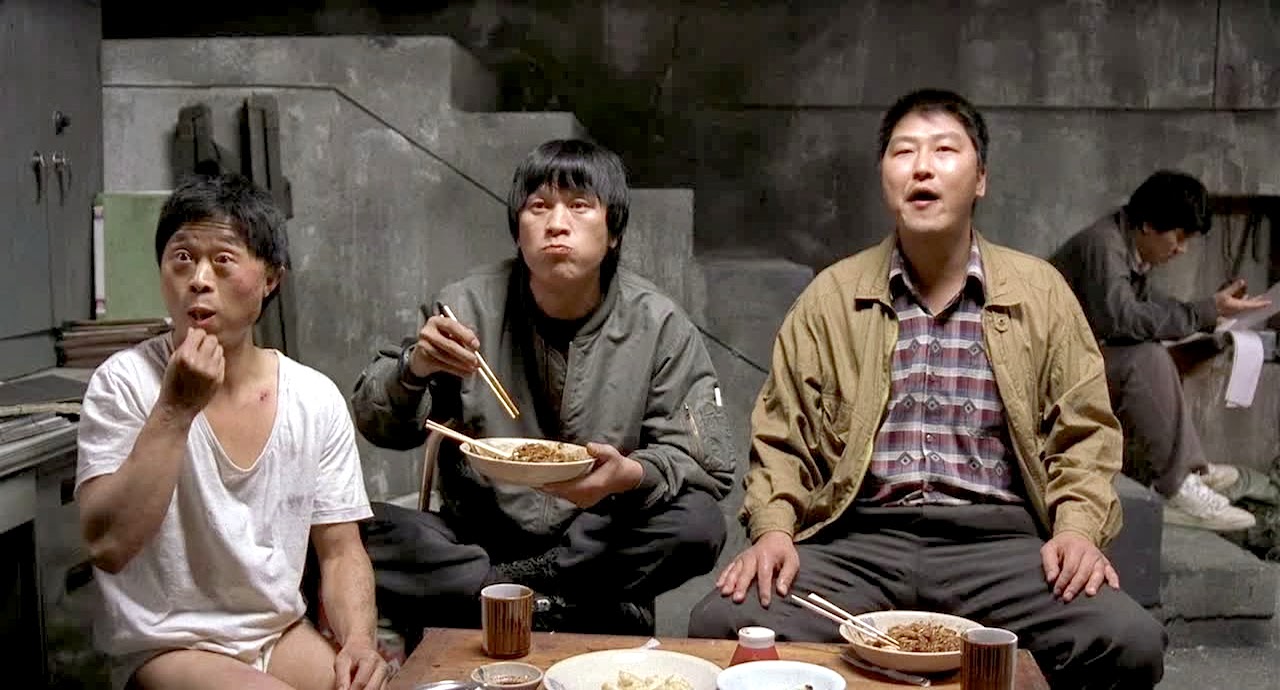
In 1986, Park (Song Kang-ho) and Cho (Kim Roi-ha) are two humble detectives assigned to a double murder investigation in their small South Korean province, already an unusual occurrence. But when the murderer strikes several more times with the same pattern, the inexperienced detectives realize that they are chasing the country’s first documented serial killer. Their skills and gear are rudimentary, so it’s good old fashioned detecting for these two, piecing together the clues in an attempt to solve this important case.

Bong Joon Ho has a unique and inimitable cinematic voice. The film starts out almost bumbling, with a tendency toward slapstick. His signature satire is ever-present, nuanced and cleverly hidden in plain sight underneath broad comedy. Genres blend and tone veers wildly from the expected course, but neither undermines what is ultimately a serious theme. Bong Joon Ho is slowly building to some very real thrills not to mention one hell of a climax.

The detectives’ increasing desperation is well played by a talented cast, including BJH’s frequent collaborator, Song Kang Ho, reflecting tragedy, futility, and humanity. It’s a complex and gripping story about the people tortured by a case well after the victims’ suffering has ended, with consequences that leak beyond professional borders.

Bong Joon Ho takes the time to find beauty, even amid such a brutal emotional and political landscape. The way he juxtaposes images can be as startling as it is brilliant, the effect culminating in a truly unusual film that transcends genre and communicates a fragile and subtle sympathy.

Memories of Murder is a modern masterpiece; look for the remastered release in select theatres beginning this weekend.

Smog Town

If you think your job sucks, trying being an environmental protection official in China.

In some industrial centres, the smog is so thick you practically need a knife to cut through it. A spork at least. Serious harm is being done to the environment, not to mention to people’s health, but that’s not the main concern of an environmental protection officer. I mean, I’m sure that’s in the official job description, but unofficially, though very seriously, the officer’s job is to make sure their region’s numbers are not among the worst in the country. Beijing keeps a very careful watch on each city’s pollution levels, pitting each regional environmental protection office against the others, and the price of failure is shame. Which, in China at least, is a pretty steep price.

Director Meng Han hangs out with us in Langfang, one of China’s most polluted cities. The officials are fighting an uphill battle, an upmountain battle really, with both hands tied behind their backs, and no shoes, and walking pneumonia. Because the environmental protection office must somehow reduce their numbers significantly without being allowed to touch any of the biggest polluters. Instead, the officials play cat and mouse with small time operations run out of people’s driveways and carports. Their emissions are negligible compared to large industries pumping out noxious fumes and degrading the land and sulllying the water, but this is the only kind of change the regional offices are actually allowed to pursue.

Meng Han’s documentary is really a Trojan horse; on the outside it looks like it’s about environmental protection, but once you crack its shell, you’ll find it’s really a commentary on the futility of the job, the hypocrisy of bureaucracy, and the sham lip service our governments pay to our faces about concern for the environment while always valuing profit and efficiency over everything else.

Given these restrictions, these laughable micro targets, our fight against climate change is destined to be a losing one.

This and other titles are screening as part of the Planet In Focus Film Festival – check out their lineup and buy your tickets (and watch at home!) here.

The Binding (Il legame)

Emma (Mia Maestro) and young daughter Sofia (Giulia Patrignani) are visiting her fiancé’s mother in southern Italy, which sounds like a dream scenario, sun kissed summers with wine and pasta, but it turns out this particular corner of southern Italy is less romantic getaway and more death by curse.

Turns out, Emma’s fiancé Francesco (Riccardo Scarmarcio) hasn’t always been a stand up guy. In his youth he got a girl pregnant and instead of a) doing the right thing or b) breaking up with the woman and sending a monthly cheque or c) becoming a deadbeat dad, he opts for d) use some black magic on her to get rid of the problem.

Obviously her evil spirit has been lingering, waiting for the perfect moment, and its malevolent intentions have targeted young Sofia as its victim. It starts with a tarantula bite and gets oh so much worse. To make matters even worse, it’s unclear to Emma, who isn’t fluent in poultices and incantations, whether her in-laws can be trusted or whether the old women and their evil eye are actually the source of the curse.

Is that the actual plot? Probably not. I was only paying half attention because the movie was so dull and boring. It’s supposed to be a horror movie, but the specifics of the situation are so vague and the relationships between characters so unclear that it’s hard to invest in the story or the consequences. I don’t think Sean was faring much better because his only quibble was with the freshness of the tarantula blood. So….

Maybe something was lost in translation. That seems possible. Maybe. I’m not convinced. In fact, I’m still a little resentful that this movie tried to scare me but didn’t try to entertain me. That’s a terrible equation and I’m not impressed to be involved. If you’re willing to be a variable, you can insert yourself on Netflix. Just don’t blame me if The Binding adds up to a pretty generic horror movie.

Apples (Mila)

Any director lucky enough or prescient enough to be working on a movie about global pandemics just as one spread in the real world is probably going to have an automatic in this year, as we are greedy to see our own lives reflected in film, for both the drama and fear instilled by a rapidly spreading virus, and the stillness and isolation as the world shut down in response. These are strange times.

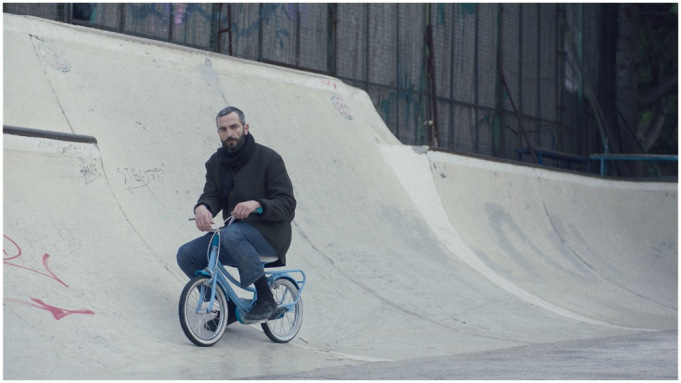
But not all pandemics are created equal. The one writer- (along with Stavros Raptis) director Christos Nikou imagines causes sudden amnesia. After a blinding pain in the head, the victim finds him- or herself void of memory. When Aris, a middle-aged man, wakes to the bus driver shaking him, his wallet is as empty as his head. Transported to hospital by ambulance, he can’t answer any questions, and after a few days on the ward, he is still unclaimed by friend or family. He’s not the only one. In response, a rehab program attempts to fill the void, a recovery method designed to help unclaimed patients build new identities and lives. Living in a sparse apartment and armed with a polaroid camera, he is given daily tasks on a cassette, meant to be performed and captured on film. It’s a strange life, and a lonely one, until he meets a woman on the same path (Sofia Georgovasili).

The treatment is unexpected, jarring, and increasingly bizarre. Just like Nikou’s film. As a feature film debut, it’s bold, and immediately establishes itself as a smoldering new entry among the Greek New Wave of weird cinema. And isn’t it glorious.

More than just memory, Apples is a meditation on nostalgia, reality, grief, and existential reminiscence. But between Nikou and the Disturbed Memory Department of the Neurological Hospital, what Apples really touches deep within its worldwide audience is our collective identity crisis. Sure it’s surreal and inevitably absurdist, but through its analog attempt at rediscovering personality, it’s a subtle condemnation of the hollowness and inauthenticity of the digital age, and it gives us all the space and permission to grieve.

TIFF20: Another Round (Druk)

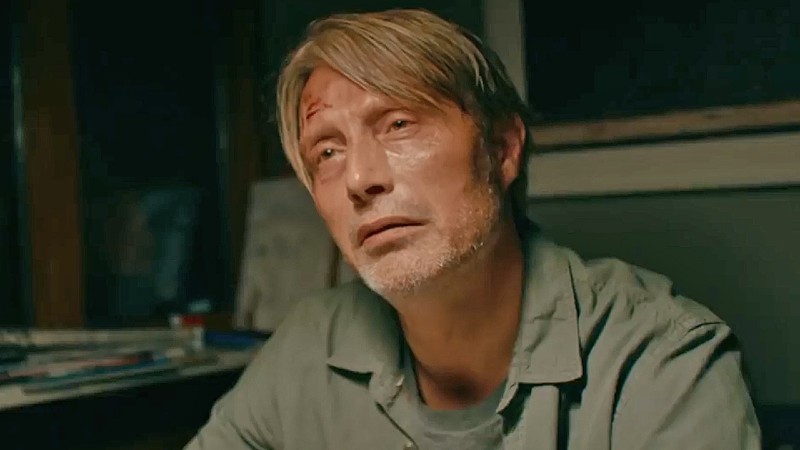
Martin (Mads Mikkelsen) has been burned out and running on autopilot for some time. There’s little time or reason for joy. His job has become dull and burdensome for both himself and his students. I’m not excusing the behaviour that’s to follow, but I am giving you the context in which Martin and friends/colleagues Peter (Lars Ranthe), Tommy (Thomas Bo Larsen), and Nikolaj (Magnus Millang) agree to conduct a social experiment.

Under the guise of “research,” they agree to test the theory that people operate better with a constant 0.05 blood alcohol level. Drinking at work: what could go wrong? Certainly four professionals should know better than to fall for such pseudoscience and likely they do, but caught up in some major midlife malaise, any excuse to numb the drowning desperation sounds like a good one. Drinking all the time to maintain that certain level needs not only commitment but opportunity which does involve some risk. But soon their classrooms are enlivened, their home lives invigorated. Martin and his friends are relaxed, they’re enjoying life again, people notice they’re less inhibited.

You and I can spot the problems coming a mile away, but feeling cocky, and perhaps with slightly impaired judgment, they all agree that since 0.05 is good, more must be better. This is the inevitable folly of man. Soon Martin and his gang are dosing themselves at ever-increasing levels. It’s fun, at first. They’re completely stress-free at work and they’re spending loads of their free time in each other’s company, where everyone is similarly inebriated and having a good time. Everyone else seems so uptight in comparison, but together they mix drinks and dance. They dance! Four white middle aged men just dance around their living rooms unselfconsciously. And since more is so much more fun, even more must be even better right? So now they’re alienating their families and risking their jobs but they don’t care or notice because they’re so intoxicated.

No matter how low they go, director Thomas Vinterberg, who wrote the script with Tobias Lindholm, manages to keep the film quite dignified even when its characters are not. We are witnesses to a social experiment, it’s just not quite the one that Martin and friends set out to prove. It feels dangerously easy for such a film to veer off course into raunchy comedy mode but Vinterberg maintains a steady hand and a thoughtful introspection

Mads Mikkelsen is at his very best in the film, teetering on one ledge or another, giving a thrilling performance that is being constantly and expertly recalibrated. But at its heart, Another Round is an ensemble, and Mikkelsen is very ably supported by Ranthe, Larsen, and Millang. The script gives them each something to chew on, ensuring that the audience gets an impressive menu which ultimately ends in a very satisfying meal.