Tag Archives: horror movies

When I Consume You

Combining horror with family drama, writer-director Perry Blackshear returns to the Fantasia Film Festival with When I Consume You.
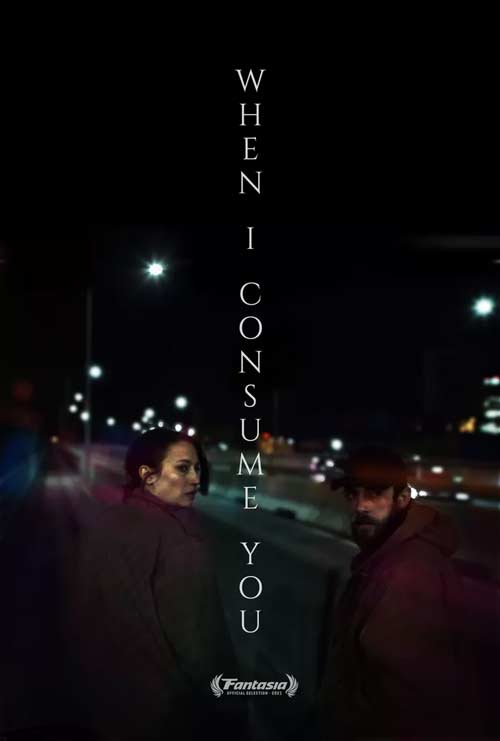
The Premise: Given her history and recent disappointment, Daphne’s death seems open and shut: overdose. But Daphne’s brother Wilson doesn’t buy it. He begins to investigate her murder, and to consider that the perpetrator may be the same supernatural source that’s been behind his family’s struggles for years.

The Verdict: Like Wilson, you’ll have to be open-minded to enjoy this movie. Are you comfortable lurking about in the shadows? Do you believe in paranormal criminals? Bad luck incarnate? Wilson (Evan Dumouchel) has a lot to contend with, and he’ll have to virtually become a whole different person in order to pursue her mysterious stalker. Don’t worry though, he does have someone in his camp: his dead sister Daphne (Libby Ewing). That’s right: it’s just like the movie Creed, if Rocky was a ghost, and Creed didn’t so much want to win boxing matches as avenge his sister’s death. So not really like Creed at all, except for the ‘learning to fight’ montage, and if you think boxing trainers are tough, you haven’t been schooled by a ghost and her various powers of motivation. When I Consume You deals with grief and trauma, but with supernatural forces dotting the edges. The film is disquieting, throwing you off-kilter even once you believe you’ve got the hang of things. Unexpected in intriguing ways, When I Consume You isn’t my favourite film at the festival, but I’ll definitely be thinking of it for a long while after, still muttering to myself that the title says when, not if.

How to watch:

Online screenings on Wednesday, August 18th at 9:30pm EST, and Friday August 20that 9am.

Join us after the screening on August 18 at 11:05pm EDT for a live Q&A with director Perry Blackshear as well as actors Evan Dumouchel, Libby Ewing and MacLeod Andrews. Tickets are $8.
Agnes

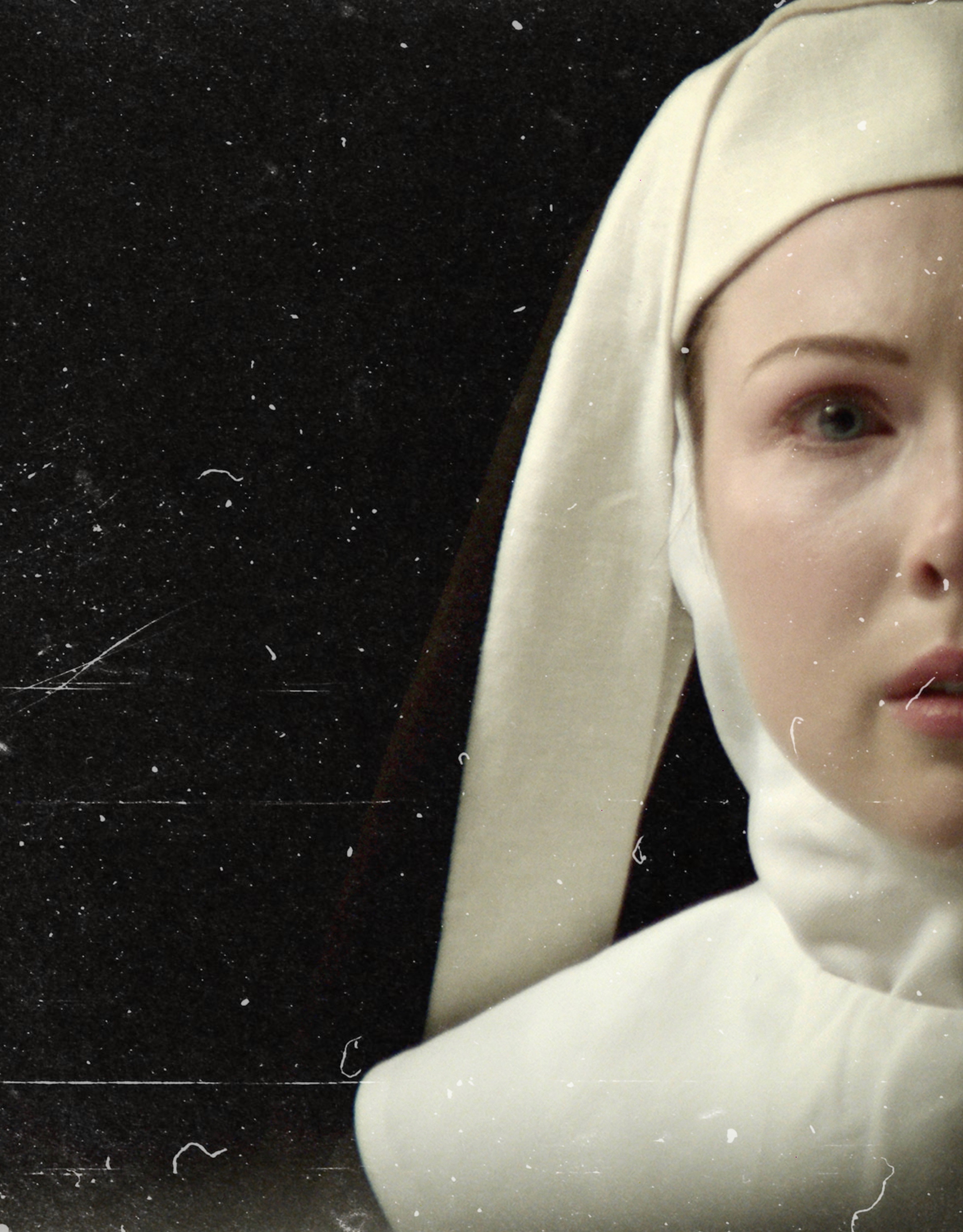
Direct from Montreal’s premiere genre film festival, Fantasia, may I present: Agnes.

Sphenisciphobia is the fear of nuns. That’s going to be relevant very shortly. Are you afraid of nuns? I don’t find them particularly scary myself, but there is something creepy about them, stripped of identity and personality, existing outside of society, of culture, of us.

The Premise: A disgraced priest and his priest-intern (priest-in-training, future priest) present themselves to an extremely cloistered convent where a young nun named Agnes is said to be possessed. What follows is a crisis of faith in more ways than one.

The Verdict: Demonic possession is a favoured horror trope. So are spooky nuns. Here director Mickey Reece combines them in his unique way, offering all the genre’s hallmarks, but poking fun of them at the same time with trademark dark humour. Agnes’ young friend and fellow nun, Sister Mary, is witness to the paranormal terrors, and finds that she cannot abide her life in faith. But leaving the convent halfway through the movie causes not just a tonal shift but a new way for Mary to grapple with her grief. The outside world isn’t easy, and whatever’s haunting Mary is sure to follow. Interesting, Reece doesn’t play up the horror. He’s more interested in the character drama that follows as she takes on the inner demons that aren’t as easy to exorcise.

Starring: Molly C. Quinn, Hayley McFarland, Sean Gunn, Chris Sullivan, Ben Hall, Jake Horowitz

SXSW 2021: Sound of Violence

Alexis is a helpful, happy little girl at the age of 10, and although she’s lost her hearing in an accident, she still loves to listen to music. But when she not only witnesses the brutal murder of her mother, but intervenes, managing to kill the assailant with a meat tenderizer, something very strange happens. The experience awakens synesthetic abilities; spontaneously recovering her hearing, Alexis also discovers that she can “see” sound – the sound of violence in particular.

Cut to: Alexis (Jasmin Savoy Brown) is now a young woman, pursuing her passion through academia. Everything seems to be going well for her, despite having been orphaned and survived a tragedy at such a young age. But not even Alexis’ closest friend and roommate Marie (Lili Simmons) knows that Alexis’ hearing is once again in flux, and before she loses it again, she’s determined to complete her masterpiece. Of course, the addictive synesthesia that haunts and inspires her requires some increasingly gruesome sound design. The music she creates is accompanied by orgasmic cinematography, fueling her obsession with bloody, graphic violence and its beautiful sounds.

Sound of Violence is indeed a horror film; Alexis may be a composer, but the pursuit of her music sends her on a killing spree that will rank this film quite high in terms of gore. You’ll come to distinguish the sounds of hearts being perforated, skin being peeled from bone, bloody stumps still plucking at stringed instruments, blood pouring out of orifices from too much song. It’s a symphony unlike any other. It pushes past conventional boundaries, and I’ll admit, the movie lost me on more than one occasion, having asked of me just a little too much. But those inclined to horror will appreciate the marriage of savagery and sound – not music to my ears, perhaps, not exactly a pop tune meant for radio, but a rare orchestral piece whose movements will surely awaken something in you.

Berlinale 2021: The Scary of Sixty-First

Worst movie EVER. Not to brag, but there are 2485 reviews on this site, and this one is the worst by a LARGE margin.

Noelle (Madeline Quinn) and Addie (Betsey Brown) are best friends, supposedly, who have just moved into a shared apartment in Manhattan. Not only do they move in immediately, they use the furnishings left behind by a previous unknown tenant. I’m developing sympathy scabies just thinking about the used bedding situation, which is reason enough to have given them nightmares on their first night, but this is a horror movie, not a hygiene movie.

The next day a young woman (Dasha Nekrasova) wrestles her way into the apartment, revealing to Noelle that it used to belong to Jeffrey Epstein. Together they deep dive into the conspiracies surrounding his pedophilia, arrest, and “suicide.” Noelle, clearly an impressionable young woman, is immediately 100% on board. They imagine that the apartment was used for orgies, rapes, human trafficking, the whole lot. Addie, meanwhile, seems to have been possessed by the spirit of a small child. She sucks her thumb while masturbating to images of Prince Andrew (who is alleged to a close friend of Epstein’s, and/or a pedophile himself), and by ‘masturbating to,’ I of course mean rubbing magazine images of his face against her crotch and inserting commemorative items from his marriage to Fergie into her various orifices, while squishing oranges between her toes. None of this seems pleasurable, in case you were wondering.

The acting in this movie is very, very, exceptionally, terribly bad. I realize no one with an actual career or future in the movie business would ever, in their right minds, consent to be in such a film, but even considering that it’s total amateur hour, it’s still unbelievably bad, across the board. In fact, the only thing worse than the acting is the “writing” which I’m confident was simply copied and pasted from the dregs of Reddit. Dekrasova and Quinn share writing credit and it’s mystifying that anyone would put their names on this thing. Even the sweaty Reddit trolls hide behind anonymity.

Dekrasova is also the director responsible for this mess, and it’s impossible to tell if she’s got any talent because she hasn’t got any taste. I’m mostly afraid to ask how this thing got financed because I have a feeling I know exactly how, and I’m deeply uncomfortable in having been involved in this even tangentially. Did these girls pick this topic because it was the only way they’d ever get significant screen time and they were willing to sell their souls for it…or worse, do they actually believe this stuff and are willing to serve as mouthpieces?

Whatever the answer, I’m not sure how this was chosen to screen at the Berlin Film Festival. Film Festivals absolutely have a duty to push the boundaries of the art form and challenge us to step outside of our cinematic comfort zones, but this movie isn’t that. It’s just a piece of trash that’s in very poor taste. After all, Epstein was a real man, a real pedophile, with real victims, and this film only serves to trivialize it in the most disturbing and disappointing way.

Red Dot

Engaged and pregnant, Nadja (Nanna Blondell) and David (Anastasios Soulis) travel to the north of Sweden for a hiking trip to hopefully check out the northern lights. A little parking lot scuffle involving scratched cars, racism, and dead deer turns into something much more sinister, turning their romance under the stars into a real nightmare.

Sleeping in their tent wayyyyyy out in the middle of the snowy nowhere and “keeping warm,” they suddenly notice lights on the horizon that aren’t northern. Outside the tent, a red dot appears in the middle of Nadja’s chest, and then David’s head. They can’t see anything, but a red dot would make anyone nervous. Trying to get back to their car, the gunshots start. The first to fall is their dog, Boris. Poor, innocent Boris. But no time for mourning! Unknown psychotic gunmen are out there, apparently very upset about some cosmetic bumper damage. Cold and increasingly wounded, Nadja and David are chased out into the frozen wilderness where crazed shooters are only a portion of their worries. Survival becomes all-consuming and increasingly unlikely.

Director Alain Darborg’s movie really has nowhere to go but deeper and deeper into the fray and we go limping along with it. If you’re in the mood for a harrowing movie about constantly almost dying, this might be right up your alley, or across your frozen tundra or what have you. The pursuit is relentless and after a while, borderline monotonous. And then there’s a twisty ending that’s kind of infuriating because it comes out of absolutely nowhere and is kind of unfair and totally unearned. But there it is. If you’re in it just for the action I bet you can overlook it but if you were hoping for a good, satisfying movie, keep moving, it’s best to look elsewhere.

Sundance 2021: Prisoners of the Ghostland

Prisoners of the Ghostland is a collaboration between America’s most bonkers actor, Nicolas Cage, and Japanese auteur Sion Sono, known for grotesque violence, extreme eroticism, and surreal imagery. I’m not the biggest fan of Nic Cage’s recent reincarnation as a b-movie cartoon, but I thought this combination was made in movie heaven and couldn’t wait to check it out at the Sundance Film Festival.

But you know what? It wasn’t that great. It was okay, but I expected some pretty bananas action from these two knuckleheads and instead Cage seems to be playing it straight, giving us a film that’s far more conventional than I ever would have guessed. Had they embraced the subversive, unhinged kind of film I was expecting/hoping for, Prisoners of the Ghostland could have been an instant cult classic, instead I’m left feeling disappointed after having been promised “the wildest movie I’ve ever made” by Cage himself, which is patently untrue.

Cage plays Hero, a notorious bank robber who’s released from prison in the savage, post-apocalyptic frontier city of Samurai Town in order to rescue the wealthy warlord Governor’s granddaughter, Bernice. The Governor (Bill Moseley) will guarantee Hero’s freedom in exchange for Bernice’s swift return, but straps him into a leather suit programmed to self-destruct in just a few days as a little extra incentive. And while we’re at it, the suit is also loaded with explosives should Hero raise a hand against a woman, and more explosives in the crotch region should Hero pop a boner for Bernice (Sofia Boutella).

Hero does indeed find Bernice, by accident, and I do mean accident – he immediately crashes his car and is rescued by the people in Ghostland, where Bernice is being held. Ghostland is under some mysterious curse that prevents anyone from leaving and is guarded by the “survivors” of a prisoner transport bus crash who were turned into monsters thanks to radiation. The people of Ghostland are obsessed with time, and they’re not even the ones strapped into leather jumpsuits charged with deadly explosives. The town is peppered with crumbling mannequins that house prisoners inside them; Bernice is broken out of her shell but is still voiceless, and not much help against the curse, the cult, the gunslingers, the ghosts, the samurai, or the irradiated convicts.

Prisoners of the Ghostland isn’t a complete wash. There are some crazy-cool visuals, a western-spoof vibe, an interesting soundtrack, and plenty of dirty neon lighting up our Hero’s path. And there’s Chekhov’s gun, of course: if in the first act you have rigged a suit with ball-sac bombs, then in the following one they should explode. And indeed they do. But I wanted more than just scrotal thrills, I wanted a whole anatomy of weird and wonderful, I wanted a rainbow parade of the absurd, I wanted Nic Cage at his best worst most demented, I wanted Cage and Sono to make a movie that would get banned in 17 countries and give me a nosebleed and an ice cream headache and leave me out of breath and intellectually bedazzled. Okay, that’s asking a lot, but I dared to dream big, and what I got was a strange, supernatural cinematic question mark that’s not half as nuts as anything else Cage has made in the last decade.

Saint Maud

Saint Maud is one of those films that will confound you and disturb you while you’re watching, and then haunt you before you even have time to get cocky enough to congratulate yourself for surviving. It is not the kind of horror film that’s going to frighten you. There are no cheap jump scares, no triggering gore. It is simply chilling.

Maud (Morfydd Clark) is a fervently if newly pious woman whose belief bleeds into her work as a hospice nurse. New client Amanda (Jessica Ehle) is a former dancer currently dying of cancer. For the most part they get along but visits from Amanda’s lover Carol have Maud fearing for Amanda’s very soul (which is a matter of some urgency, if it’s not too crude to say). Maud has only recently turned devout (some trauma is vaguely hinted at), and is now of the certain belief that humanity is amoral, lustful, and terribly wicked and needs very badly to be saved. And since God has ever so kindly and every so explicitly told her that He has very special plans for her, Maud connects the dots and finds that perhaps she is meant to be its saviour.

What’s the difference between religious fanaticism and mental illness? Maud’s zealotry is depicted as a compulsion, indeed an obsession. She feels it necessary and right, but there is a gulf between what she believes and what others believe – Amanda specifically, though clearly not solely. However, writer-director Rose Glass leaves a little wiggle room for doubt. Is it possible, is it just the slightest bit possible that God really is speaking to Maud?

Part horror, part psychological thriller, part character-driven drama, Saint Maud can be read in a variety of ways and this expert ambiguity is the film’s coup de grace. Glass has the temerity to respect Maud either way; this dignity, this refusal to dismiss her, is bold and singular. Whether miracle or mental breakdown, Maud is entitled to compassion, which makes Glass’s film all the more deliciously vexatious.

Clark gives a stunning, visceral performance. The story is told almost entirely from her perspective, so where one might see delusion or psychosis, Maud sees only signs from her God, and burning bushes. It’s convincing and disorienting yet Glass always plays it both ways, like that picture of the animal that’s either a rabbit or a duck, depending on how you’re looking at it at any given time. While the intention may be shrouded, Saint Maud is still a deeply satisfying not to mention profoundly atmospheric piece of cinema that’s either supernatural or a psychotic break, and I don’t even care which. It is fascinating, carefully crafted, thematically complex, and fantastically unsettling.

Saint Maud will be available digitally and on demand in North America February 12 2021.

Sundance 2021: Violation

I hardly know what to say or indeed what can be said about a movie such as this.

We have watched many horror films at the 2021 Sundance Film Festival and seen buckets of blood shed, sometimes literally. Why, then, is this the first one that required me to manually enter my birthday, verifying my age? It’s the dick, of course. Americans will tolerate all kinds of blood and guts and gore, but an erect penis makes them shy. This movie, be warned, will have all of the above, and more.

Miriam (Madeleine Sims-Fewer) and husband Caleb (Obi Abili) are on the brink of divorce and are visiting her younger sister Greta (Anna Maguire), who almost seems to rub her happy marriage to Dylan (Jesse LaVercombe) in her face. Not intentionally, I’m sure, but they’re happy, they’re intimate, their relationship is a stark contrast to Miriam’s, which has been cold and dispassionate for months. One night, after a few drinks by the fire, Miriam opens up to Dylan, and the confession turns flirty, the two sharing a kiss before falling asleep by the fire. The next morning, Miriam wakes to Dylan fucking her. Raping her, in fact, though he’ll later tell her it was mutual, that she’d seemed into it, despite being unconscious. This betrayal is the basis for Miriam’s revenge plan, which will be both brutal and elaborate.

Miriam’s tools include a baseball bat, a hoist, a cooler, a motel toilet, but most of all, the sense of outrage and indeed of violation in her heart, powerful motivators indeed.

Violation is as savage as any horror I’ve ever seen, but with a female director (Sims-Fewer co-directs with Dusty Mancinelli) in charge, there are suddenly new aspects to vengeance that we haven’t seen on screen before. Miriam is perhaps emotionally elusive, methodical but still very much guided by a ruinous thirst for revenge. The true horror is of course in the honest way the aftermath of trauma is exposed. Violation is purposely difficult to watch, and even harder to swallow, but that’s because it’s rooted very much in reality, and reenacts what for most victims can only be fantasy. It is deeply unsettling because the emotional damage is just as raw and ruthless as the physical wounds inflicted. It’s the kind of film that dares you to flinch, but as tough as it may be to watch, it may actually hide some valuable if disturbing insight.

Violation will be available via Shudder on March 25 2021.

Sundance 2021: Coming Home In The Dark

Coming Home in the Dark takes only a few minutes to get to the point: Hoaggie (Erik Thomson) and Jill (Miriama McDowell) have brought their sons to a beautiful scenic point for a lovely picnic lunch. The teenage boys are livid of course, to be dragged outdoors, to be forcibly unplugged, even for a minute. But then the family picnic is crashed by some uninvited guests, who hold the family at gunpoint, wanting more from them than just wallets and phones.

Holding them hostage, the two men with guns, Mandrake (Daniel Gillies) and Tubs (Matthias Luafutu), take them on a road trip nightmare that can’t possibly end well. But this isn’t some random stick up. Hoaggie has been specifically targeted because of his past as a school teacher and his survival might hinge on a terrible confession. This is a tale of revenge that skewers us with the question of whether or not silence equals complicity. Is allowing something bad to happen the same as doing the bad thing?

This movie will stun you with its intensity, its brutality, and its emotional impact. It doesn’t quite have enough to fully justify a feature length run time but it’s such an effective gut-punch that I’ll give its sparsity a pass. Though this movie is from New Zealand, I could still relate to the cultural trauma as a Canadian; we have sins in common. Many filmmakers here have worked with the subject but I’ve never seen it done so nakedly honest as this, a horror movie for horrific events. It’s an interesting way to comment on collective trauma and a new way to add to the conversation that clearly needs to keep happening.

Coming Home In The Dark stands on its own merits. More than just gripping terror, it features some magnetic, powerful performances that will make this film hard to shake. James Ashcroft I know I’ll come back to, because I’m certain he has more to say.

Sundance 2021: Censor

Her name is Enid, and she’s a film censor, the person who negotiates the bad language, graphic violence, drug use, and nudity of a film, deciding just how much can be kept in and retain an R rating, and which films will either need to be edited, or bumped up to NC-17 and so on. “I’ve salvaged the tug of war with the intestines. Kept in most of the screwdriver stuff. And I’ve only trimmed the tiniest bit off the end of the genitals, but some things should be left to the imagination.” I love her already.

Enid’s (Niamh Algar) profession is under scrutiny at the moment as a salacious murder is dominating headlines, apparently inspired by a face-eating scene in a movie that she and her partner signed off on. Censor is set in the early 80s, but our culture still hasn’t grown tired of blaming violent movies, music, and video games for all that ails us, and the uproar doesn’t feel dated at all.

One day, while screening yet another nasty from an unending pile, a scene feels eerily familiar. Enid’s little sister disappeared years ago, and as the only witness, Enid’s never been able to provide much detail. But this – ? This scene rings a distant bell, unearthing disturbing memories that haunt Enid well past the film’s end credits. It seems incredible, and her parents’ skepticism is dismissive, but Enid becomes obsessed with linking her sister’s fate to this old film. When she learns the director is filming a sequel, she stalks production, hoping to be reunited with her abducted sister. But the closer she gets, the more we blur the lines between fact and fiction.

Director Prano Bailey-Bond dissolves reality with such subtlety that we hardly notice the point of no return. When, exactly, did Enid cross the line, and is there any going back? This is a send-up to vintage horror that fans of the genre will recognize and appreciate. Algar gives a fulsome performances, worthy of not just a final girl but an actual, flesh and bones character with guilt and grief, guts and glory. Censor is bold and stylish, and once it goes meta, it gains a confidence that is hard to deny.